
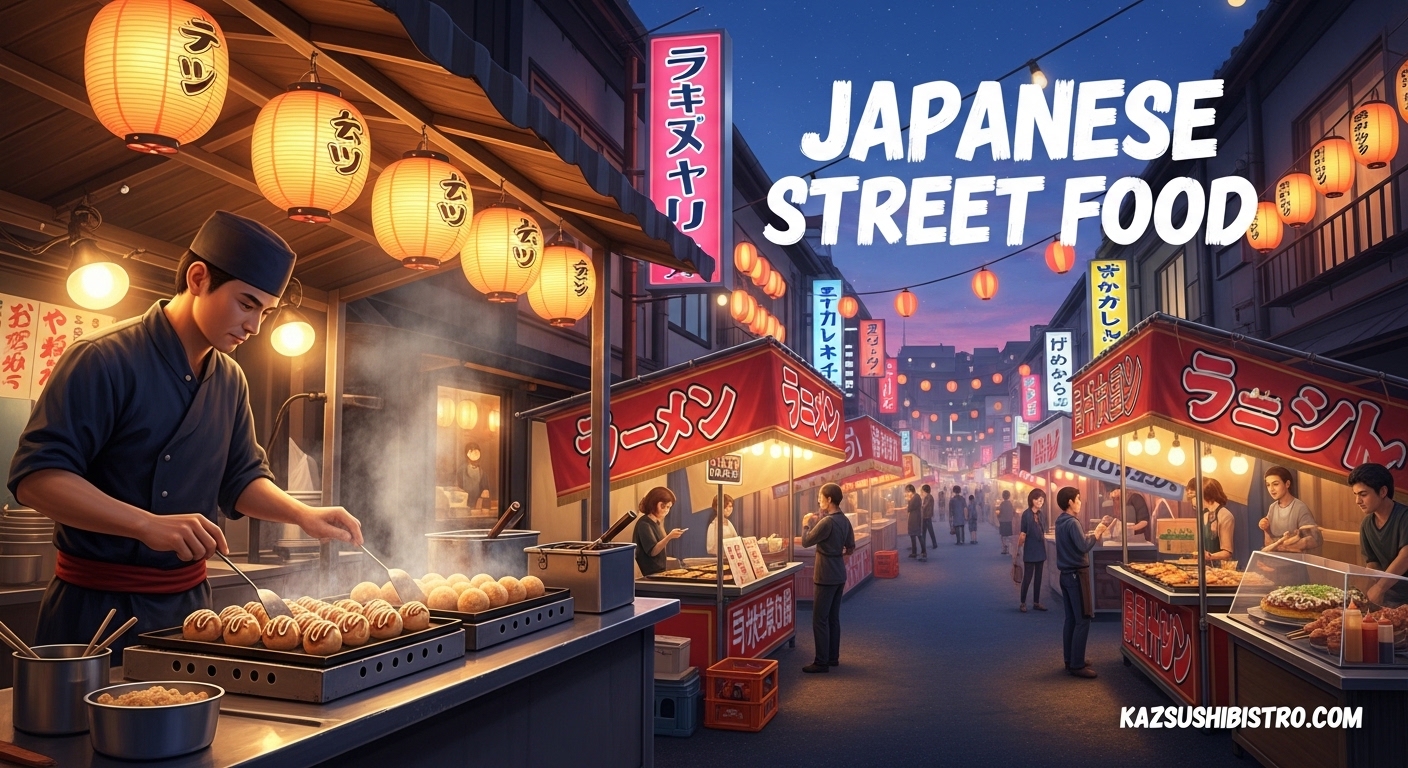
Walking through the narrow lanes of Osaka’s Dotonbori district at night, I was hit by a symphony of sizzling sounds, savory aromas, and the warm glow of countless yatai stalls. That first bite of takoyaki, still steaming from the griddle, changed how I think about casual dining forever. Japanese street food is not just about convenience. It is a window into centuries of culinary tradition, regional pride, and the Japanese obsession with perfecting even the simplest dishes.
In this Japanese street food guide, you will discover 15 essential dishes that define Japan’s outdoor eating culture. I will walk you through where to find them, how to eat them properly, and what local customs you need to know. Whether you are planning your first trip to Tokyo or simply want to understand what makes Japanese street food so special, this guide has you covered.
From the crispy octopus balls of Osaka to the sweet fish-shaped cakes of Tokyo, every dish tells a story. Let us explore them together.
Table of Contents
What is Japanese Street Food?
Japanese street food refers to portable, affordable dishes traditionally sold from outdoor stalls (yatai), food carts, and markets throughout Japan. These foods range from savory items like takoyaki and yakitori to sweet treats like taiyaki and dango, typically consumed immediately at designated eating areas rather than while walking.
The concept of street food in Japan is deeply rooted in the yatai culture that dates back to the Edo period (1603-1868). These mobile food stalls originally served busy workers who needed quick, filling meals. Over centuries, what started as simple nourishment evolved into an art form where vendors compete to perfect their craft.
Today, Japanese street food exists in a fascinating middle ground between tradition and modern convenience. You will find centuries-old family stalls operating next to modern convenience stores (konbini) selling surprisingly high-quality onigiri. Festival food (matsuri food) follows seasonal patterns, while year-round staples anchor neighborhoods with reliable flavors locals trust.
Unlike street food cultures where eating while walking is common, Japan has specific customs around tabe-aruki (eating while walking). Most vendors provide designated eating areas, and consuming food while moving through crowded spaces is generally frowned upon as inconsiderate to others.
Street Food Etiquette in Japan 2026
Understanding street food etiquette in Japan will save you from awkward moments and show respect for local customs. The rules are not complicated, but they matter to Japanese people.
The Tabe-Aruki Rule: Do Not Eat While Walking
In Japan, eating while walking (tabe-aruki) is considered impolite and unhygienic. Food is meant to be consumed while standing near the stall or in designated eating areas. This custom exists for practical reasons: crowded streets, the risk of spills on others, and the belief that food deserves your full attention.
When you purchase street food, look for a nearby bench, standing counter, or simply step to the side near the vendor. Some stalls have small standing tables specifically for this purpose. Take your time, enjoy your food, then continue your journey.
The 80% Rule (Hara Hachi Bu)
The 80% rule, known in Japanese as hara hachi bu, is an Okinawan concept that advises eating until you are 80% full. This practice is believed to contribute to longevity and prevent overeating. When enjoying Japanese street food, this rule becomes particularly useful.
Street food is designed to be tempting and delicious, often leading visitors to overindulge. By stopping at 80% fullness, you leave room to try multiple dishes throughout the day without feeling uncomfortable. It is a mindful approach that lets you experience more variety while respecting your body.
The 1/3 Rule in Japan
The 1/3 rule in Japanese dining refers to the practice of portioning your stomach space: one-third for food, one-third for drink, and one-third left empty. This traditional guideline promotes balanced consumption and prevents the sluggishness that comes from overeating.
For street food explorers, this means pacing yourself. Try a savory dish, have some tea, then move on to something sweet. The empty third gives you flexibility to keep discovering new flavors without hitting a wall.
The 5 Minute Rule
While not as widely discussed as the 80% rule, the 5 minute rule in Japan refers to the window of optimal freshness for certain foods. Many street foods, particularly takoyaki and taiyaki, are meant to be consumed within minutes of preparation when textures are at their peak.
Watch how locals eat: they do not wander off with their food. They stand nearby, eat immediately, and appreciate the food at its absolute best. Follow their lead for the most authentic experience.
Ordering and Payment Tips
Most street food stalls in Japan operate on a cash-only basis, though this is slowly changing in tourist areas. Have small bills and coins ready. Pointing at what you want is universally understood, but a few Japanese phrases help:
- Kore o onegaishimasu (This one, please)
- Ikura desu ka? (How much is it?)
- Oishikatta desu (It was delicious – said when finishing)
Do not rush the vendor. Japanese food preparation, even at street stalls, is treated with care. Watch the process, appreciate the skill, and wait patiently for your order.
Trash Disposal
Public trash cans are rare in Japan. Street food vendors typically have small bins for their own packaging. Return your trash to the stall where you bought the food. Never litter or carry trash long distances looking for a bin.
Some foods come with toothpicks or skewers. Return these to the stall as well, or wrap them in a napkin and dispose of them properly at your accommodation.
Must-Try Japanese Street Foods
Japan’s street food scene offers something for every palate. From savory grilled meats to sweet bean-filled pastries, these 15 dishes represent the essential experiences every visitor should seek out.
Takoyaki (Octopus Balls)
Takoyaki are wheat flour-based balls cooked in a special molded pan, each containing a piece of tender octopus in the center. Originating in Osaka in the 20th century, these golden spheres have become synonymous with Japanese street food culture.
The magic happens on the teppan (iron griddle) where vendors pour batter into半球-shaped molds, add diced octopus, then use special skewers to flip and rotate each ball until perfectly round and crispy outside, gooey inside. The final touch includes takoyaki sauce (similar to Worcestershire), mayonnaise, bonito flakes, and nori.
A good takoyaki stall is identified by the line of locals waiting. The best vendors have decades of practice achieving the perfect balance: crispy exterior, custardy interior, and octopus that is tender not rubbery. Price ranges from 500-800 yen ($3.50-$5.50) for 6-8 pieces.
Osaka remains the spiritual home of takoyaki, though excellent versions exist throughout Japan. Look for stalls advertising their homemade sauce or secret batter recipes.
Yakitori (Grilled Chicken Skewers)
Yakitori translates simply to grilled chicken, but this deceptively simple dish showcases Japanese precision. Skewers of chicken meat, skin, or organs are grilled over charcoal and basted with either tare (sweet soy-based sauce) or salt.
The yakitori spectrum includes options for every preference: momo (thigh), negima (thigh with scallion), tsukune (minced chicken meatballs), tebasaki (wing), and even adventurous cuts like heart or liver. Each piece is grilled to order over binchotan charcoal that imparts a subtle smokiness.
Street yakitori differs from izakaya versions in its accessibility and speed. Stalls often display pre-grilled skewers under warming lamps, finishing them over fresh charcoal when ordered. This creates that perfect combination of caramelized exterior and juicy interior.
Prices start around 150-300 yen ($1.00-$2.00) per skewer. Two to three skewers make a satisfying snack. Look for stalls with visible charcoal grills and high turnover, ensuring freshness.
Okonomiyaki (Savory Pancake)
Okonomiyaki is often described as a Japanese pizza or pancake, though neither comparison does it justice. This dish consists of a batter mixed with shredded cabbage, protein (usually pork or seafood), and egg, all cooked on a flat griddle and topped with okonomiyaki sauce, mayo, bonito flakes, and aonori.
Two distinct regional styles exist: Osaka-style mixes all ingredients into the batter before cooking, while Hiroshima-style layers ingredients with yakisoba noodles sandwiched in between. Both are delicious, though Osaka’s version is more commonly found at street stalls.
The name literally means “grilled as you like it,” and customization is encouraged. Most stalls offer add-ons like mochi, cheese, or extra protein. Watching a skilled vendor flip the massive pancake with two spatulas is part of the entertainment.
Street portions typically cost 600-1,000 yen ($4.00-$7.00). The dish is filling, so consider sharing or making it a light meal rather than a snack.
Onigiri (Rice Balls)
Onigiri are the ultimate Japanese portable food. Triangular or cylindrical balls of seasoned rice wrapped in nori, often with a savory filling hidden in the center. While available at every konbini in Japan, freshly made onigiri from a specialty stall offers a completely different experience.
The rice matters enormously. Good onigiri uses uruchi rice (short-grain Japanese rice) seasoned with salt and sometimes furikake. Fillings range from classic umeboshi (pickled plum) and shake (salted salmon) to modern favorites like tuna mayo or karaage chicken.
Street vendors who specialize in onigiri often make them fresh throughout the day. The nori is typically wrapped separately or applied at the last moment to maintain crispness. This attention to texture separates artisan onigiri from mass-produced versions.
Prices range from 150-400 yen ($1.00-$2.75) depending on size and filling complexity. They keep well for a few hours, making them perfect for picnics or train journeys.
Yakisoba (Fried Noodles)
Yakisoba consists of wheat noodles stir-fried with vegetables (cabbage, carrots, onions) and usually pork, all coated in a sweet-savory sauce similar to Worcestershire. Despite the name containing “soba,” these are not buckwheat noodles but Chinese-style wheat noodles.
This dish is quintessential matsuri food, found at every Japanese festival. Large teppan griddles sizzle with mountains of noodles as vendors rhythmically toss and flip them with metal spatulas. The high heat creates caramelized edges while keeping the noodles chewy.
Standard toppings include beni shoga (pickled ginger), aonori, and katsuobushi (bonito flakes). Some vendors offer modifications like extra vegetables, different proteins, or the famous modan-yaki style where the noodles are cooked with a thin omelet wrapper.
Street portions cost 400-700 yen ($2.75-$5.00). It is substantial enough to be a light meal and deeply satisfying after hours of walking.
Karaage (Japanese Fried Chicken)
Karaage is Japan’s answer to fried chicken, and many argue it surpasses all other versions. Boneless chicken thighs are marinated in soy sauce, ginger, and garlic, then coated in potato starch (katakuriko) and deep-fried until golden.
The potato starch coating is the secret. It creates an ultra-crispy, glass-like exterior that shatters with each bite while sealing in juices. The result is chicken that stays crispy longer than flour-coated versions and delivers a satisfying crunch with every piece.
Street vendors typically serve karaage in paper cones or small boxes, often with a lemon wedge or squeeze of Japanese mayo. It is hot, handheld, and addictive. Quality varies significantly, so look for vendors with visible fryers and high turnover.
Expect to pay 400-800 yen ($2.75-$5.50) for a substantial portion. It pairs perfectly with beer, making it a popular evening snack.
Korokke (Croquettes)
Korokke are Japanese croquettes with a distinctly local character. Mashed potatoes mixed with minced meat, onions, or vegetables are formed into patties, coated in panko breadcrumbs, and deep-fried until golden brown and crispy.
The filling variations are endless. Classic korokke contains ground beef and onions. Curry korokke includes Japanese curry in the mixture. Cream korokke features a bechamel base with crab or mushrooms. Vegetable korokke caters to those avoiding meat.
These patties are comfort food at its finest: creamy interior, crunchy exterior, and satisfyingly savory throughout. They are best eaten immediately while hot, as the texture degrades quickly.
Street korokke costs 150-300 yen ($1.00-$2.00) each. Many stalls offer multiple varieties, making them perfect for sampling different flavors.
Taiyaki (Fish-Shaped Cake)
Taiyaki are fish-shaped cakes made from pancake or waffle batter, traditionally filled with sweet red bean paste (anko). The shape represents sea bream (tai), a fish associated with good fortune in Japan, making taiyaki a lucky food as well as a tasty one.
Modern taiyaki has expanded far beyond anko. Custard cream, chocolate, matcha cream, and sweet potato are common alternatives. Some vendors even offer savory versions with cheese or sausage fillings, though purists prefer the classics.
The best taiyaki have a crispy exterior and generous filling that does not overwhelm the batter. Watch for vendors who make them fresh: batter is poured into fish-shaped molds, filling added, then the mold closed and flipped over a hot griddle.
Prices range from 180-350 yen ($1.25-$2.50). They are best consumed within minutes of cooking when the contrast between crispy shell and warm filling is at its peak.
Dango (Sweet Dumplings)
Dango are chewy rice dumplings made from mochiko (rice flour) and often served on skewers. Their texture is distinctly different from mochi: less sticky, more bouncy, and pleasantly chewy.
The most common variety is mitarashi dango, glazed with a sweet-salty soy sauce reduction that caramelizes slightly when grilled. Sanshoku dango features three colors (pink, white, green) representing spring. Other varieties include goma (sesame), zunda (edamame paste), and anko (red bean).
Street vendors often grill dango over charcoal, adding a subtle smoky note to the sweet glaze. The dumplings are filling despite their small size, thanks to the dense rice flour base.
Expect to pay 150-250 yen ($1.00-$1.75) for a skewer of 3-5 dango. They pair beautifully with green tea and make an ideal afternoon snack.
Senbei (Rice Crackers)
Senbei are traditional Japanese rice crackers with a history stretching back over a thousand years. Made from uruchi rice or glutinous rice, these crackers are baked or fried until crispy, then brushed with soy sauce or other seasonings while still hot.
The variety of senbei is remarkable. Some are thin and delicate, others thick and crunchy. Nori-wrapped senbei combines the cracker with a sheet of seaweed. Sweet versions use sugar glaze instead of soy sauce. Regional specialties include Nara’s ika-senbei (mixed with squid) and Soka senbei from Saitama.
Street vendors often make senbei fresh, pressing rice dough into rounds and grilling them over charcoal. The sound of crackers crackling on the grill and the aroma of caramelizing soy sauce draw customers from blocks away.
Pricing varies widely based on size and ingredients, from 100 yen ($0.70) for simple crackers to 500+ yen ($3.50) for elaborate specialty versions. They keep for weeks, making them excellent edible souvenirs.
Melon Pan (Melon Bread)
Melon pan is a sweet bread with a distinctive appearance: the top is covered in a thin layer of cookie dough scored in a grid pattern, creating a melon-like texture. Despite the name, it contains no melon flavor (with rare exceptions).
The appeal is textural. The cookie top is crispy and sweet, while the bread beneath remains soft and fluffy. When fresh from the oven, the contrast is addictive. Vendors often display melon pan in warming cases to maintain that ideal texture.
Regional variations exist: some versions contain melon flavoring, others are filled with cream or ice cream. The classic plain version remains the standard by which all others are judged.
Street prices range from 150-300 yen ($1.00-$2.00). Look for bakeries or stalls advertising fresh-baked melon pan, as day-old versions lose the signature crunch.
Imagawayaki (Round Pancake with Filling)
Imagawayaki (also called obanyaki in some regions) are round, thick pancakes cooked in special molded pans and filled with sweet red bean paste. They resemble taiyaki in batter and filling but take a simpler circular form.
These cakes have been sold in Japan since the 18th century, making them one of the oldest continuously available street foods. The batter is poured into round molds, anko added, then more batter poured on top. The result is a thick, cake-like disc with warm filling in the center.
Modern vendors offer alternatives to anko: custard cream, chocolate, matcha, and seasonal fruit fillings are increasingly common. The classic anko version remains the benchmark for traditional quality.
Prices are typically 150-250 yen ($1.00-$1.75). They are best eaten warm when the filling is soft and the exterior has a slight crispness.
Mochi (Rice Cakes)
Mochi are soft, chewy rice cakes made from pounded glutinous rice (mochigome). While available year-round, fresh mochi holds a special place in street food culture, particularly during festivals and the New Year period.
The texture is unique: stretchy, chewy, and slightly sweet even in unsweetened forms. Street vendors typically offer fresh mochi in several styles: plain dusted with kinako (roasted soybean flour), filled with anko (daifuku), or grilled (yaki-mochi) with soy sauce glaze.
Watching mochi being pounded fresh is a festival highlight. Two people rhythmically alternate pounding glutinous rice with wooden mallets while a third hand turns the mass between strikes. The result is fresher than any packaged version.
Street mochi costs 100-300 yen ($0.70-$2.00) depending on style and filling. Note that fresh mochi hardens quickly and should be eaten the same day.
Quick Comparison: Japanese Street Foods at a Glance 2026
Use this quick reference to plan your street food adventure. All prices are approximate and vary by location and vendor.
- Takoyaki
- Price: 500-800 yen ($3.50-$5.50) | Best in: Osaka | Dietary: Contains seafood | Best time: Evening
- Yakitori
- Price: 150-300 yen ($1.00-$2.00) per skewer | Best in: Tokyo | Dietary: Meat-based | Best time: Evening
- Okonomiyaki
- Price: 600-1,000 yen ($4.00-$7.00) | Best in: Osaka, Hiroshima | Dietary: Meat/seafood typically | Best time: Lunch or dinner
- Onigiri
- Price: 150-400 yen ($1.00-$2.75) | Best in: Everywhere | Dietary: Many vegetarian options | Best time: Any time
- Yakisoba
- Price: 400-700 yen ($2.75-$5.00) | Best in: Festival settings | Dietary: Meat typically | Best time: Festival evenings
- Karaage
- Price: 400-800 yen ($2.75-$5.50) | Best in: Fukuoka | Dietary: Chicken | Best time: Evening with beer
- Korokke
- Price: 150-300 yen ($1.00-$2.00) | Best in: Everywhere | Dietary: Meat/potato base | Best time: Afternoon snack
- Taiyaki
- Price: 180-350 yen ($1.25-$2.50) | Best in: Tokyo | Dietary: Vegetarian (check fillings) | Best time: Afternoon
- Dango
- Price: 150-250 yen ($1.00-$1.75) | Best in: Kyoto | Dietary: Vegetarian | Best time: With tea
- Senbei
- Price: 100-500 yen ($0.70-$3.50) | Best in: Asakusa (Tokyo) | Dietary: Usually vegetarian | Best time: Souvenir shopping
- Melon Pan
- Price: 150-300 yen ($1.00-$2.00) | Best in: Everywhere | Dietary: Vegetarian | Best time: Morning
- Imagawayaki
- Price: 150-250 yen ($1.00-$1.75) | Best in: Traditional areas | Dietary: Vegetarian | Best time: Afternoon
- Mochi
- Price: 100-300 yen ($0.70-$2.00) | Best in: Festival settings | Dietary: Vegetarian | Best time: Fresh at festivals
Where to Find the Best Street Food in Japan?
Japan’s street food scene varies dramatically by region. Each city has its specialties, and certain districts have become pilgrimage sites for food lovers.
Tokyo
Tokyo offers the most diverse street food landscape in Japan. The sheer size and international nature of the city mean you can find everything from traditional snacks to innovative fusion creations.
Tsukiji Outer Market remains the most famous food destination despite the wholesale auction moving to Toyosu. The outer market streets are lined with vendors selling fresh seafood, tamago (sweet egg omelet), and grilled scallops. While some prices are inflated for tourists, the quality is generally excellent. Arrive early (before 9 AM) to avoid crowds and secure the freshest items.
Nakamise Shopping Street in Asakusa leads to Senso-ji Temple and offers traditional snacks in a historic setting. Look for ningyo-yaki (doll-shaped cakes), kibi dango (millet dumplings), and freshly made senbei. The atmosphere is touristy but charming, with vendors who have served this street for generations.
Ameyoko Market near Ueno Station is a more local experience. This former black market street now sells everything from seafood to street snacks at competitive prices. It is less polished than Tsukiji but more authentic in its chaos.
Takeshita Street in Harajuku caters to younger crowds with trendy, Instagram-friendly snacks: rainbow cotton candy, crepes, and elaborate soft serve. It is worth visiting for the spectacle, though traditionalists may prefer other areas.
Osaka
Osaka is Japan’s street food capital. The city’s nickname “kuidaore” (eat until you drop) reflects its food-obsessed culture.
Dotonbori is the iconic neon-lit district where takoyaki and okonomiyaki were perfected. The quality varies wildly here, from tourist traps selling mediocre food to legendary stalls with decades of history. Follow the locals: stalls with lines of Japanese customers are your best bet.
Kuromon Ichiba Market offers higher-end street food with a focus on fresh seafood and premium ingredients. Prices are higher than typical street stalls, but so is the quality. It is an excellent middle ground between casual street food and formal dining.
Shinsekai is a retro district near the Tsutenkaku Tower where kushikatsu (deep-fried skewers) reigns supreme. The nostalgic atmosphere enhances the experience of eating this working-class comfort food.
Kyoto
Kyoto’s street food reflects its refined cultural heritage. Expect more subtle flavors and elegant presentation than in Osaka.
Nishiki Market (Kyoto’s Kitchen) is a covered shopping street stretching several blocks. Vendors sell high-quality pickles, tofu, seafood, and prepared foods. It is more upscale than typical street food areas but offers a curated introduction to Kyoto flavors.
Gion district offers glimpses of geisha culture alongside street food. Look for yatsuhashi (cinnamon-flavored sweets) and matcha-flavored everything. Evening visits may include sightings of geiko and maiko heading to appointments.
Fushimi Inari shrine path features food stalls catering to pilgrims and hikers. Inari sushi (tofu pouches filled with seasoned rice) and kitsune udon (noodles with fried tofu) honor the fox spirits associated with the shrine.
Fukuoka
Fukuoka on Kyushu island offers a distinct food culture shaped by its history as a port city and proximity to Korea and China.
Yanagibashi Rengo Market is known as “Hakata’s Kitchen” and offers fresh seafood and local specialties. The market is smaller and less touristy than Tokyo or Kyoto equivalents, making it ideal for observing local shopping customs.
Nakasu yatai stalls represent Japan’s most vibrant remaining yatai culture. Around 20 food stalls line the riverbank, each seating 6-8 customers and specializing in different dishes: ramen, oden, yakitori, or tempura. The atmosphere is convivial and distinctly Fukuokan.
Vegetarian and Vegan Street Food Options
Finding vegetarian and vegan street food in Japan requires some knowledge but is absolutely possible. Traditional Japanese Buddhist cuisine (shojin ryori) is plant-based, and many street foods naturally fit these dietary restrictions.
Vegetarian-friendly options: Onigiri (check fillings – many are vegetarian), senbei (usually vegan), dango (vegetarian), mochi (check fillings), melon pan (usually vegetarian), imagawayaki (vegetarian versions), and taiyaki (check fillings – some vendors offer non-dairy options).
Hidden non-vegetarian ingredients to watch for: Dashi (fish-based stock) appears in sauces and batters. Katsuobushi (bonito flakes) top many dishes. Lard or animal fats may be used for frying. Eggs bind many batters. Always ask or observe preparation if strict vegetarianism is required.
Tips for dietary restrictions: Learn the phrase “watashi wa bejitarian desu” (I am vegetarian). Look for the Buddhist swastika (manji) symbol indicating Buddhist cuisine. Visit specialty shops that advertise “bejitarian menu” or similar. Temple areas and vegetarian districts like Kyoto’s offer the safest options.
Seasonal Street Foods
Japanese cuisine is deeply connected to seasons (shun), and street food follows this pattern. Visiting during different times of year reveals unique specialties.
Spring (March-May): Sakura mochi (pink rice cakes wrapped in cherry leaf), strawberry taiyaki, and fresh takenoko (bamboo shoot) dishes appear. Hanami (cherry blossom viewing) picnics feature special seasonal bento and snacks.
Summer (June-August): Kakigori (shaved ice with syrup) becomes essential for surviving humidity. Cold dango, agar jelly cubes, and salted watermelon refresh overheated visitors. Beer gardens and yatai stay open late.
Fall (September-November): Chestnut (kuri) flavors dominate: yokan, manju, and roasted chestnuts sold from carts. Sweet potato (yaki-imo) vendors drive through neighborhoods with distinctive calls. Sanma (Pacific saury) appears at grill stalls.
Winter (December-February): Oden (simmered ingredients in dashi broth) appears at convenience stores and yatai. Hot imagawayaki, freshly roasted senbei, and amazake (sweet rice drink) warm cold hands.
Practical Tips for Street Food Beginners
Navigating Japanese street food for the first time can feel overwhelming. These practical tips will help you eat confidently and avoid common pitfalls.
Price expectations: Budget 1,500-3,000 yen ($10-$20) per day for street food meals. Individual snacks range from 100-1,000 yen ($0.70-$7.00). High-end markets like Nishiki or Kuromon run higher than neighborhood stalls. Festival prices often include a surcharge for the special occasion.
Cash vs. card: Carry cash. Many traditional stalls remain cash-only, particularly in older districts. Small bills and coins are appreciated. Tourist-heavy areas increasingly accept IC cards (Suica, Pasmo) and sometimes credit cards, but cash remains king.
Useful Japanese phrases:
– Kore o onegaishimasu (This one, please)
– Kore wa nan desu ka? (What is this?)
– Ikura desu ka? (How much?)
– Ikaga desu ka? (How is it? / What’s good?)
– Arigato gozaimasu (Thank you)
Peak times to avoid crowds: Visit popular markets like Tsukiji before 9 AM. Weekday afternoons are quieter than weekends. Lunch rush (12-1:30 PM) creates lines everywhere. Evening stalls (after 5 PM) often have the best atmosphere.
Food safety: Japan has strict food safety standards. Street food is generally safe, but use common sense: choose busy stalls with high turnover, avoid food sitting out too long, and watch for proper temperature control (hot foods hot, cold foods cold).
Frequently Asked Questions
What is typical Japanese street food?
Typical Japanese street food includes takoyaki (octopus balls), yakitori (grilled chicken skewers), taiyaki (fish-shaped cakes), onigiri (rice balls), yakisoba (fried noodles), dango (sweet dumplings), and okonomiyaki (savory pancakes). These are commonly found at yatai stalls, festivals, and markets throughout Japan.
What is the 80% rule in Japan?
The 80% rule, called hara hachi bu in Japanese, is a traditional Okinawan practice of eating until you are 80% full. This prevents overeating and is believed to contribute to longevity. When enjoying Japanese street food, stopping at 80% fullness allows you to try more varieties throughout the day.
What is the 1/3 rule in Japan?
The 1/3 rule in Japanese dining suggests dividing your stomach capacity: one-third for food, one-third for drink, and one-third left empty. This promotes balanced consumption and prevents the sluggishness from overeating. It is particularly useful when sampling multiple street foods.
What is a must try Japanese food for first time visitors?
First-time visitors to Japan should prioritize takoyaki in Osaka, yakitori in Tokyo, onigiri from any konbini, taiyaki for a sweet treat, and fresh senbei at traditional markets. These foods are accessible, delicious, and represent the core of Japanese street food culture without requiring adventurous eating.
Is the Tsukiji Market a tourist trap?
Tsukiji Outer Market is not a tourist trap, though some vendors do inflate prices for visitors. The outer market remains an authentic food destination where locals shop alongside tourists. Prices are higher than neighborhood markets but quality is generally excellent. Arrive early and follow the locals to find the best value stalls.
What is the 5 minute rule in Japan?
The 5 minute rule refers to the optimal freshness window for certain Japanese street foods. Dishes like takoyaki and taiyaki are meant to be consumed within minutes of preparation when textures are at their peak. This is why eating immediately at the stall rather than walking away is the custom.
What food is a must try in Japan?
Must-try foods in Japan include takoyaki (Osaka-style octopus balls), authentic yakitori from a charcoal grill, freshly made onigiri, regional ramen varieties, seasonal specialties like sakura mochi in spring, and local market snacks like grilled scallops at Tsukiji. Each region offers unique specialties worth seeking out.
Is it rude to eat while walking in Japan?
Yes, eating while walking (tabe-aruki) is considered rude and unhygienic in Japan. Food should be consumed at designated eating areas near the stall or at standing counters. This custom exists because crowded streets make walking while eating inconsiderate to others, and because food deserves your full attention.
How much does street food cost in Japan?
Japanese street food typically costs between 150-1,000 yen ($1.00-$7.00) per item. Budget 1,500-3,000 yen ($10-$20) per day for street food meals. Individual snacks like dango or onigiri cost 150-400 yen, while substantial items like okonomiyaki run 600-1,000 yen. Premium markets charge 20-50% more than neighborhood stalls.
Can you find vegetarian street food in Japan?
Yes, vegetarian street food is available in Japan. Look for onigiri with vegetarian fillings, senbei rice crackers, dango, mochi, imagawayaki, and taiyaki with non-dairy fillings. Temple areas and specialty shops offer the most reliable options. Learn to check for hidden dashi (fish stock) and katsuobushi (bonito flakes) in sauces.
Conclusion
Japanese street food is more than convenient eating. It is a direct connection to centuries of culinary tradition, regional pride, and the Japanese dedication to craft. Every takoyaki ball flipped on a hot griddle, every yakitori skewer turned over charcoal, every taiyaki pressed into its fish shape represents countless hours of practice and generations of knowledge.
This Japanese street food guide has walked you through 15 essential dishes, the etiquette that surrounds them, and the best places to experience them. Whether you are standing at a yatai stall in Fukuoka, exploring the neon-lit streets of Dotonbori, or simply seeking authentic flavors at your local Japanese market, these foods offer a window into a culture that treats even the simplest dishes with reverence.
Remember the etiquette: do not eat while walking, pace yourself with the 80% rule, and take time to appreciate the skill of the vendor. Start with the basics like onigiri and taiyaki, then work your way to more adventurous flavors. Most importantly, follow the locals. The stalls with lines of Japanese customers are the ones worth waiting for.
Your Japanese street food adventure awaits. Go eat until you drop, as they say in Osaka, but stop just short of 80% full so you can try one more thing.