
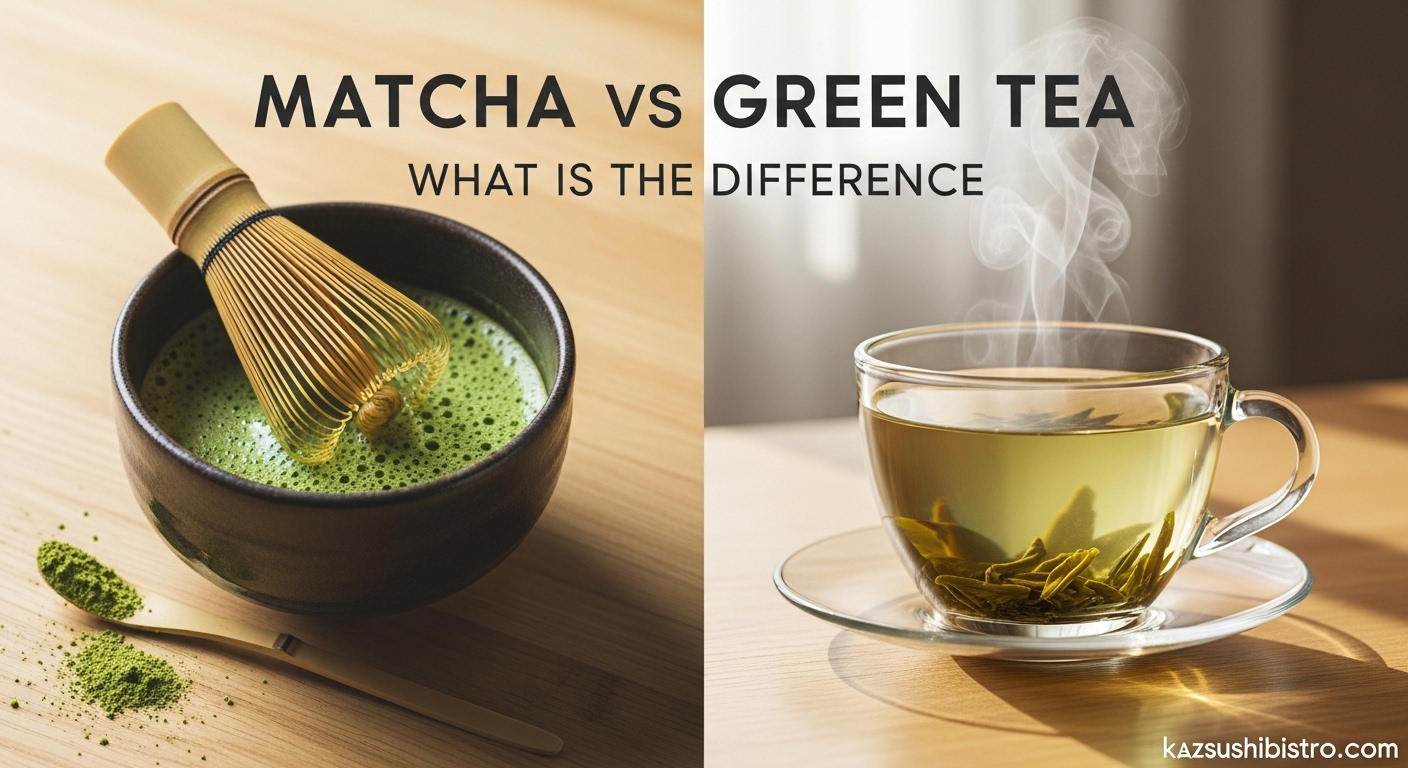
Matcha vs green tea what is the difference? This question confuses many tea drinkers who see both vibrant green powders and loose leaf teas at their local shops. Both come from the same plant, yet they deliver completely different experiences in your cup.
In this guide, I will walk you through exactly how these two Japanese teas differ. You will learn why matcha costs more, which one packs more caffeine, and how to prepare each one correctly.
Table of Contents
What Is Matcha vs Green Tea 2026
Matcha and green tea both originate from the Camellia sinensis plant, the same species that produces black, white, and oolong teas. The difference lies entirely in how farmers grow and process the leaves.
Green tea refers to loose leaves that are grown in sunlight, steamed or pan-fired to stop oxidation, then rolled and dried. You steep these leaves in hot water and discard them after brewing.
Matcha is shade-grown green tea that has been stone-ground into a fine powder. You whisk this powder directly into water and consume the entire leaf. This fundamental difference changes everything from flavor to nutrition.
Here are the key differences at a glance:
- Growing: Green tea grows in sunlight; matcha grows in shade for 3-4 weeks before harvest
- Form: Green tea is loose leaves; matcha is fine powder
- Preparation: Green tea is steeped and removed; matcha is whisked and fully consumed
- Color: Matcha displays a more vibrant green due to increased chlorophyll
- Caffeine: Matcha contains roughly double the caffeine of green tea
- Flavor: Matcha offers intense umami; green tea provides lighter grassy notes
How Matcha and Green Tea Are Grown and Processed?
The cultivation process creates the most significant distinction between these teas. Understanding this helps explain the price difference and nutritional gaps.
Shade-Growing: The Secret to Matcha’s Power
Farmers cover matcha plants with shade cloths or traditional reed screens 20-30 days before harvest. This shading triggers several important chemical changes in the leaves.
The lack of sunlight forces the plant to produce more chlorophyll, creating that signature vibrant green color. It also boosts L-theanine, an amino acid responsible for matcha’s calming yet alert effects.
Green tea receives full sun throughout its entire growth cycle. This produces more catechins, which create a slightly bitter taste but offer different antioxidant benefits.
From Harvest to Cup
After harvesting, matcha leaves undergo a unique steaming, drying, and sorting process to become tencha. Workers remove stems and veins, then slowly grind the leaves using granite stone mills. This grinding process is time-consuming and explains part of matcha’s higher cost.
Green tea leaves are steamed or pan-fired to halt oxidation, then rolled into various shapes and dried. The entire process takes less time and labor than matcha production.
The stone-grinding method preserves more nutrients because the tea remains raw until you consume it. Green tea loses some compounds during the steeping extraction process.
Flavor and Taste Differences
Your taste experience differs dramatically between these two teas. I have found that people usually prefer one over the other based on their flavor preferences.
Matcha delivers an intense umami flavor often described as savory, slightly sweet, and vegetal. High-quality ceremonial grade matcha has minimal bitterness and a smooth, creamy mouthfeel. The whisking creates a frothy texture that feels substantial.
Green tea offers a lighter, more delicate taste with grassy and slightly astringent notes. Depending on the variety, you might detect hints of seaweed, chestnut, or fresh spring vegetables. The flavor is refreshing rather than intense.
Many first-time matcha drinkers find it too strong or bitter initially. This usually happens when using culinary grade powder or incorrect water temperature. Quality ceremonial matcha should taste smooth with a lingering sweet finish.
Caffeine Content Comparison
Caffeine levels represent one of the most practical differences for daily drinkers. If you are sensitive to caffeine, this section matters for your choice.
A typical serving of matcha contains 70mg of caffeine, though this varies by quality and preparation amount. Because you consume the entire leaf, you ingest all the caffeine present in the tea.
Green tea contains 30-50mg per cup depending on steeping time and leaf quality. The steeping process extracts only a portion of available caffeine, leaving significant amounts in the discarded leaves.
Matcha delivers roughly twice the caffeine of green tea. However, the L-theanine in matcha slows caffeine absorption, creating sustained energy without the jitters coffee produces. Many Reddit users in r/tea and r/MatchaEverything report this balanced energy as their primary reason for choosing matcha.
If you want all-day drinking ability, green tea is the better choice. For focused morning energy, matcha wins.
How to Prepare Matcha vs Green Tea
Preparation methods could not be more different. Each requires specific tools and techniques for the best results.
Preparing Matcha
You need a bamboo whisk called a chasen and a small bowl. Sift 1-2 grams of matcha powder into your bowl to break up clumps. Add 2-4 ounces of hot water at 175°F, not boiling.
Whisk rapidly in a “W” motion until the surface becomes frothy with fine bubbles. The suspension should be smooth without grainy texture. Drink immediately before the powder settles.
Preparing Green Tea
Heat water to 160-180°F depending on the tea variety. Place 1 teaspoon of loose leaves in a teapot or infuser. Pour hot water over leaves and steep for 1-3 minutes.
Remove the leaves completely to prevent over-extraction and bitterness. Quality green tea leaves can often be re-steeped 2-3 times, with each infusion revealing different flavor notes.
The key difference: matcha creates a suspension while green tea creates an infusion. You drink matcha powder suspended in water; you drink green tea water that has extracted flavors from leaves.
Nutritional Differences and Health Benefits
Both teas offer impressive health benefits, but matcha delivers concentrated nutrition because you consume the whole leaf.
Antioxidant Power
Matcha contains 3-10 times more catechins than regular green tea. Catechins are powerful antioxidants, particularly EGCG (epigallocatechin gallate), which research links to various health benefits.
A single cup of matcha provides the antioxidant equivalent of 10 cups of regular green tea. This concentration makes matcha particularly valuable for those seeking maximum health benefits from their daily tea ritual.
L-Theanine and Brain Health
Both teas contain L-theanine, an amino acid that promotes relaxation without drowsiness. Matcha contains significantly more due to the shade-growing process.
The combination of L-theanine and caffeine creates a state of “calm alertness.” Forum discussions on r/nutrition frequently mention improved focus and reduced anxiety compared to coffee consumption.
Specific Health Benefits
Research suggests both teas support cardiovascular health, weight management, and metabolic function. The high chlorophyll content in matcha may provide additional detoxification benefits.
Green tea offers a gentler introduction to these benefits for those with caffeine sensitivity. Its lower intensity makes it suitable for drinking throughout the day without overstimulation.
Ceremonial vs Culinary Matcha Grades
Not all matcha is created equal. Understanding grades prevents disappointment and helps you choose the right product for your needs.
Ceremonial grade matcha uses the youngest, most tender leaves from the first spring harvest. It offers the sweetest, most delicate flavor with minimal bitterness. This grade is meant for traditional drinking, not cooking.
Culinary grade matcha uses older leaves or later harvests. It has a stronger, more astringent flavor that holds up in recipes. While perfectly drinkable, it lacks the refinement of ceremonial grade.
Quality indicators include vibrant green color (dull or yellowish suggests old or low-grade matcha), fine powder texture, and fresh grassy aroma. Store matcha in the refrigerator after opening to preserve color and flavor.
Many consumers on forums express confusion about these grades. The price difference is substantial, but ceremonial grade is worth the investment for drinking straight.
Frequently Asked Questions
What’s healthier, green tea or matcha?
Matcha is technically healthier by volume because you consume the entire leaf, delivering 3-10 times more antioxidants and nutrients. However, both offer significant health benefits. Choose matcha for maximum nutrient density or green tea for gentler all-day hydration.
Does matcha have more caffeine than green tea?
Yes, matcha contains approximately 70mg of caffeine per serving compared to 30-50mg in green tea. However, the L-theanine in matcha creates a sustained energy release without the jitters associated with coffee.
Is matcha just ground green tea?
No, matcha is specifically shade-grown tea that has been stone-ground into powder. While it comes from the same Camellia sinensis plant as green tea, the shading process creates different chemical composition and the powder form means you consume the whole leaf rather than just an infusion.
Why is matcha more expensive than green tea?
Matcha costs more due to labor-intensive shade-growing, hand-picking of tender leaves, stem and vein removal, and slow stone-grinding production. The entire process requires significantly more time and skill than regular green tea processing.
Can I substitute green tea powder for matcha?
Green tea powder is not the same as matcha and will not produce the same results. Matcha undergoes specific shade-growing and processing that creates its unique flavor and nutrition profile. Culinary grade matcha is affordable and works better than green tea powder substitutes.
Does matcha lower cortisol?
Matcha contains L-theanine which may help reduce stress and promote relaxation, potentially affecting cortisol levels. However, more research is needed specifically on cortisol reduction. The calming effect comes from L-theanine’s ability to increase alpha brain wave activity.
Can I drink matcha with IBD?
People with inflammatory bowel disease should consult their doctor before consuming matcha. The concentrated compounds and caffeine may irritate sensitive digestive systems. Green tea might be a gentler alternative, but medical guidance is essential.
Does green tea help with nerve damage?
Some studies suggest green tea antioxidants may support nerve health and reduce oxidative stress, but evidence for treating existing nerve damage is limited. The EGCG in green tea shows promise in research, but it should not replace medical treatment for nerve conditions.
Matcha vs Green Tea: Which Should You Choose?
Matcha vs green tea what is the difference comes down to your personal needs and preferences. Both offer remarkable health benefits from the Camellia sinensis plant.
Choose matcha if you want maximum antioxidant intake, sustained energy without coffee jitters, or an immersive Japanese tea experience. The preparation ritual itself provides a moment of mindfulness in your day.
Choose green tea if you prefer lighter flavor, lower caffeine content, or all-day drinking flexibility. It offers a gentle introduction to Japanese teas without the intensity or price point of matcha.
Many tea enthusiasts keep both in their collection. Start your morning with matcha for focused energy, then switch to green tea for afternoon hydration. This approach gives you the benefits of both without overdoing caffeine.
Whatever you choose, invest in quality products stored properly. The difference between fresh, well-processed tea and stale alternatives is dramatic. Your body and taste buds will thank you for choosing authentic Japanese tea made with care.