
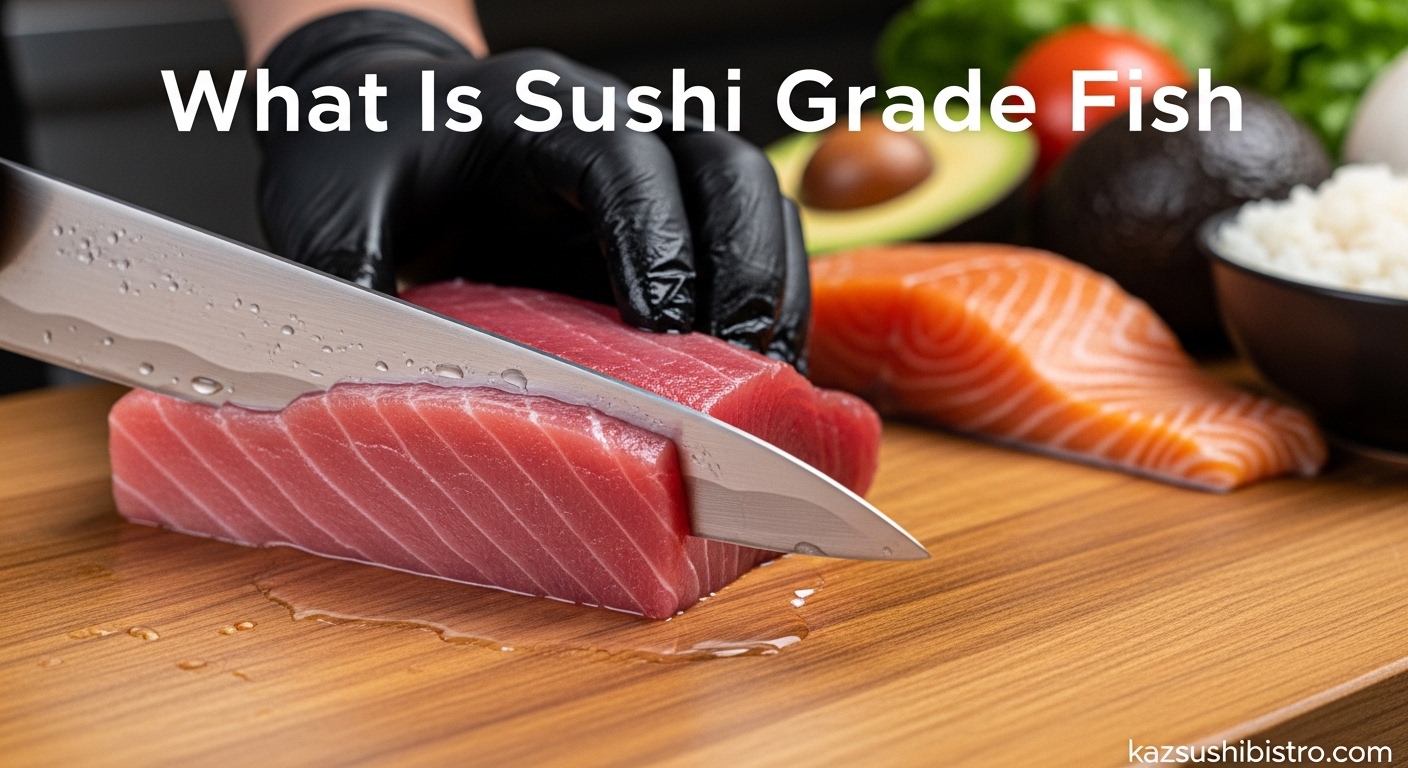
The term “sushi grade fish” has no official legal definition in the United States. It is a marketing term used by fishmongers to indicate fish they consider safe for raw consumption. Understanding what this label actually means can help you make informed decisions when buying fish for homemade sushi, sashimi, or ceviche.
At our restaurant, we get questions about sushi grade fish every single week. People want to know if they can trust grocery store labels, what the freezing requirements are, and whether they are putting themselves at risk by eating raw fish at home.
In this guide, we break down everything you need to know about raw fish safety in 2026. You will learn what the term actually means, the FDA guidelines that matter, which fish are naturally safer, and how to talk to your fishmonger with confidence.
Table of Contents
What Is Sushi Grade Fish?
Sushi grade fish and sashimi grade fish are unregulated marketing terms used by seafood sellers. No government agency certifies fish as “sushi grade,” and there are no standardized requirements a product must meet to carry this label. When you see these terms, they simply mean the seller believes that particular fish is safe to eat raw.
This surprises many home cooks who assume the label carries some official weight. Unlike beef grading by the USDA, fish labeling for raw consumption is largely self-policed by the industry. A fishmonger at a specialty market might have rigorous internal standards, while a grocery store label could mean almost nothing.
The trustworthiness of the “sushi grade” label depends entirely on where you buy your fish. Reputable fish markets that supply restaurants follow strict handling and freezing protocols. They know their reputation depends on not making customers sick. A label at a random supermarket might not carry the same assurance.
What actually makes fish safe for raw consumption comes down to two factors: the species of fish and how it was handled after harvest. Some fish are naturally less prone to parasites. Others require specific freezing protocols to kill parasites before they can be considered safe for raw consumption.
FDA Freezing Guidelines for Raw Fish
The FDA publishes guidelines for fish intended to be served raw, but these are not legally binding regulations. The Food Code recommends specific freezing temperatures and times to kill parasites. Restaurants and fish suppliers follow these guidelines voluntarily to reduce liability and protect customers.
The FDA recommends two main freezing protocols for parasite destruction. Fish can be frozen at -4°F for 7 days, or flash-frozen at -31°F for 15 hours. Both methods effectively kill the parasites that can make humans sick when fish is consumed raw.
Commercial operations often use super freezers that reach -60°F to freeze fish rapidly. This flash freezing preserves texture better than slow freezing while still achieving parasite destruction. The extreme cold stops ice crystals from forming large enough to damage the delicate flesh of the fish.
Home freezers cannot reliably achieve these temperatures. Most residential freezers operate at 0°F, which is too warm to guarantee parasite destruction even over extended periods. The temperature fluctuates when you open the door, and home freezer thermostats are not precise enough for food safety protocols.
Buying pre-frozen sushi grade fish from a reputable source is safer than attempting to freeze fresh fish at home. The fish has already undergone proper parasite destruction protocols using commercial equipment. You simply thaw it properly and use it within a day or two of thawing.
Which Fish Are Safe to Eat Raw?
Not all fish carry the same parasite risk. Tuna species are generally considered safe for raw consumption without freezing because they rarely harbor parasites that can infect humans. This is why you will see fresh tuna labeled for raw use more frequently than other species.
Farmed salmon is another fish that presents lower risk for raw consumption. Farmed Atlantic salmon eat controlled feed that does not contain the intermediate hosts for parasites. Wild salmon, by contrast, eat whatever they encounter in the ocean and carry higher parasite loads.
Other commonly used sushi fish include yellowtail, mackerel, and sea bream. These typically require freezing according to FDA guidelines before being served raw. The specific freezing protocol depends on the species and the harvest location.
Freshwater fish should never be consumed raw under any circumstances. Trout, bass, and other freshwater species can carry parasites that freezing does not kill. They can also harbor bacteria that pose serious health risks when ingested raw.
Always check with your fishmonger about the specific species you plan to use. They can tell you whether the fish was previously frozen and whether it is appropriate for raw consumption. Do not assume that because a fish is sold as “fresh” it is safe to eat raw.
Parasite Risks and How Freezing Destroys Them
Anisakis simplex is the most common parasite found in saltwater fish destined for raw consumption. These worms live in the digestive tracts of marine mammals and spread through the food chain. When humans eat infected raw fish, the worms can attach to the stomach or intestinal wall and cause severe pain and allergic reactions.
Freezing kills anisakis worms and other parasites by crystallizing the fluids inside their bodies. The ice crystals rupture cell walls and destroy the parasite’s ability to survive. The FDA temperature requirements are set specifically to ensure this destruction happens reliably.
Symptoms of parasite infection typically appear within hours of eating infected fish. They include intense abdominal pain, nausea, vomiting, and sometimes allergic reactions including hives and anaphylaxis. The worms cannot survive long in humans and usually die within a few weeks, but the symptoms can be severe enough to require medical intervention.
Cooking fish to 145°F also kills parasites, which is why cooked fish presents no parasite risk. The freezing protocols for raw fish exist specifically to provide the same safety margin without applying heat. This is why proper freezing is non-negotiable for raw fish safety.
Temperature Abuse and Bacterial Contamination
Parasites are not the only safety concern with raw fish. Bacterial contamination and histamine poisoning pose additional risks that freezing does not address. These hazards come from improper handling and storage rather than the natural presence of parasites.
Histamine poisoning, also called scombroid poisoning, occurs when certain fish are stored above 40°F for too long. Tuna, mackerel, mahi-mahi, and bluefish are particularly susceptible. Bacteria convert histidine in the fish muscle to histamine, which cooking cannot destroy.
Symptoms of histamine poisoning appear quickly, usually within minutes to hours. They include flushing, headache, dizziness, burning or tingling in the mouth, and digestive distress. Unlike parasites, histamine poisoning cannot be prevented by freezing or cooking.
The key to preventing bacterial and histamine issues is maintaining the cold chain from boat to table. Fish must be kept on ice immediately after harvest and stored at proper temperatures throughout processing and transport. A break in this chain anywhere along the line creates risk.
When buying fish for raw consumption, ask your fishmonger when the fish arrived and how it has been stored. Fresh fish should smell like the ocean, not like fish. Any ammonia smell or sour odor indicates the fish has been temperature-abused and should not be eaten raw.
How to Buy Sushi Grade Fish?
Buying sushi grade fish requires more than reading labels. You need to evaluate the source, inspect the product, and ask the right questions. A reputable fishmonger will welcome your questions and provide specific information about their handling practices.
Start by asking whether the fish was previously frozen and to what temperature. If the fish has not been frozen to at least -4°F for 7 days, it does not meet FDA guidelines for parasite destruction. Many high-end fish markets sell previously frozen fish labeled as “fresh” because it was thawed that morning.
Visual inspection tells you a lot about fish quality. Look for clear, bright eyes rather than cloudy or sunken ones. The gills should be bright red or pink, not brown or gray. The flesh should spring back when pressed rather than leaving an indentation.
The smell test is the most reliable indicator of freshness. Fresh fish smells like clean seawater or cucumber. Any fishy, sour, or ammonia smell means the fish is past its prime and should not be eaten raw. Trust your nose above all else.
Grocery store fish can be acceptable for raw consumption if it meets all the criteria above. Costco tuna and salmon are frequently used raw by home cooks who verify the source and handling. The key is researching your specific store’s practices rather than assuming all grocery fish is unsafe.
Specialty fish markets that supply restaurants are generally the safest bet. They understand the requirements for raw consumption and have systems in place to maintain proper temperatures. They also handle higher volumes, meaning their fish turns over faster and stays fresher.
We recommend calling ahead to fish markets to ask about their sushi grade selection. Some days they may have more options than others. Building a relationship with a good fishmonger pays dividends when you want to experiment with different species at home.
Safe Handling at Home 2026
Proper handling after purchase is just as important as selecting good fish. Cross-contamination and time-temperature abuse at home can ruin even the highest quality sushi grade fish. Follow these guidelines to keep your raw fish safe.
Transport fish home on ice, especially in warm weather. Do not let it sit in a hot car while you run other errands. The temperature danger zone between 40°F and 140°F is where bacteria multiply rapidly. Minimize the time your fish spends in this range.
Store fish in the coldest part of your refrigerator, typically the back of the bottom shelf. Use it within 24 hours of purchase for best quality and safety. Do not refreeze fish that has been thawed, as this damages texture and can create additional bacterial risk.
Prepare raw fish on a sanitized cutting board used only for seafood. Wash your hands thoroughly before and after handling. Keep raw fish separate from other ingredients to prevent cross-contamination. These basic food safety practices are essential when working with uncooked protein.
If you cannot use the fish within 24 hours, cook it rather than attempting to save it for raw consumption later. Cooked fish keeps longer and the cooking process eliminates the safety concerns that apply to raw fish. Safety should always take priority over your original menu plan.
Frequently Asked Questions
What qualifies fish to be sushi grade?
There is no legal definition for sushi grade fish. The term indicates a fishmonger believes the fish is safe for raw consumption. Typically this means the fish meets FDA freezing guidelines for parasite destruction or comes from species naturally low in parasites.
Can grocery store fish be used for sushi?
Grocery store fish can be used for sushi if it meets the same standards as fish from specialty markets. Ask about freezing history, inspect for freshness, and perform the smell test. Many home cooks successfully use fish from Costco and other grocery stores after proper research.
What does sushi grade mean legally?
Sushi grade has no legal meaning in the United States. It is not regulated by the FDA or any other government agency. The term is purely a marketing designation used by sellers to indicate their assessment of the fish’s suitability for raw consumption.
Which fish are typically labeled sushi grade?
Tuna, farmed salmon, yellowtail, and mackerel are commonly labeled sushi grade. Tuna and farmed salmon have lower parasite risk. Other species require proper freezing to meet safety guidelines. Freshwater fish should never be eaten raw regardless of labeling.
Does freezing fish at home make it sushi grade?
Home freezers cannot reliably make fish safe for raw consumption. Residential freezers operate at 0°F, which is too warm to guarantee parasite destruction. Only fish frozen to -4°F for 7 days or -31°F for 15 hours meets FDA guidelines.
Is sushi grade fish safe to eat raw?
Sushi grade fish from reputable sources is generally safe when proper handling protocols are followed. The safety depends on parasite destruction through freezing, species selection, and maintaining the cold chain. No raw food is completely risk-free, but following FDA guidelines minimizes the risk significantly.
Conclusion
Understanding what sushi grade fish actually means puts you in control of your raw fish consumption. The term itself is unregulated, but the safety protocols behind it are well established. Focus on buying from reputable sources, asking the right questions, and handling fish properly once you get it home.
Raw fish can be a delicious and safe part of your diet when you follow these guidelines. Start with lower-risk species like tuna and farmed salmon. Build a relationship with a trusted fishmonger. And always trust your senses when evaluating freshness.