
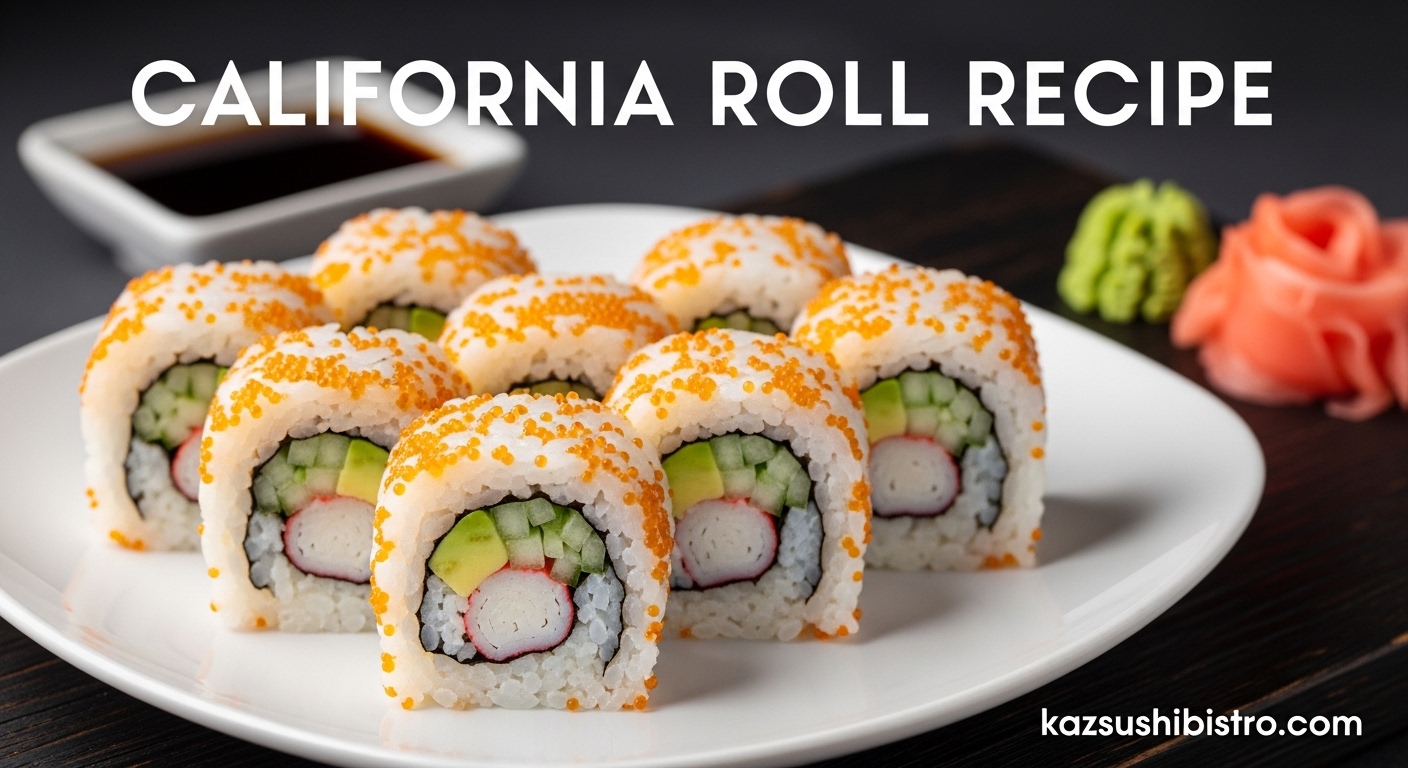
Making California rolls at home is easier than you think. I have taught thousands of home cooks the art of sushi rolling over the years at KAZ Sushi Bistro, and California rolls remain the perfect entry point. This California roll recipe delivers restaurant-quality results using simple ingredients you can find at any grocery store.
In this guide, I will walk you through every step from preparing perfectly seasoned sushi rice to rolling tight, beautiful California rolls. You will learn both the traditional bamboo mat method and a no-mat technique using just a kitchen towel. By the end, you will have the confidence to create fresh, delicious sushi for your family and friends.
Table of Contents
What is a California Roll?
A California roll is an inside-out sushi roll (uramaki) made with seasoned sushi rice on the outside, wrapped around nori (seaweed), crab meat or imitation crab, avocado, and cucumber. Unlike traditional maki rolls with nori on the outside, the rice forms the outer layer, often sprinkled with toasted sesame seeds or tobiko (flying fish roe).
The California roll was created in the 1970s by Chef Hidekazu Tojo at his restaurant in Vancouver, Canada. He developed this roll specifically for Western diners who were hesitant about raw fish and the texture of nori on the outside. By placing rice on the exterior and using cooked crab instead of raw fish, he created a gateway sushi that introduced Japanese cuisine to a whole new audience.
Today, the California roll is the most popular sushi roll worldwide. It appears on virtually every sushi menu and serves as the foundation for countless variations and fusion creations.
Why This Recipe Works?
This California roll recipe incorporates professional techniques we use daily at KAZ Sushi Bistro. I have refined these methods over years of service to ensure consistent, restaurant-quality results in your home kitchen.
The recipe includes two methods for rolling: the traditional bamboo mat approach and a practical no-mat alternative using a kitchen towel. This flexibility means you can start making sushi immediately without special equipment. The rice seasoning ratios have been tested to achieve that perfect balance of sweet, salty, and tangy that defines excellent sushi rice.
Every step includes troubleshooting tips based on common mistakes I see from home cooks. Whether your rice is too sticky, your rolls are falling apart, or you struggle with the inside-out flip technique, you will find solutions here.
California Roll Ingredients
Quality ingredients make the difference between good and exceptional California rolls. Here is everything you need to make 4 rolls (32 pieces total), serving 4 to 6 people as an appetizer.
For the Sushi Rice
- 2 cups Japanese short-grain rice (Calrose or Homai brand work perfectly)
- 2 1/4 cups water (filtered water produces cleaner-tasting rice)
- 3 tablespoons rice vinegar (unseasoned)
- 2 tablespoons granulated sugar
- 1 teaspoon fine sea salt
The type of rice matters significantly. Japanese short-grain rice contains high levels of amylopectin, a starch that creates the sticky texture essential for sushi. Do not substitute long-grain or basmati rice, as they will not hold together.
For the Rolls
- 8 ounces imitation crab sticks (kanikama) or cooked real crab meat
- 2 ripe avocados (Hass variety preferred for creaminess)
- 1 English cucumber or 2 Persian cucumbers (fewer seeds, crisper texture)
- 4 sheets nori (toasted seaweed, cut in half to make 8 half-sheets)
- 2 tablespoons toasted sesame seeds (white, black, or mixed)
- Tezu (vinegar water: 1 cup water + 2 tablespoons rice vinegar) for wetting hands
When selecting avocados, gently press near the stem. A ripe avocado yields slightly to pressure without feeling mushy. For crab, imitation crab sticks (kanikama) are traditional and provide consistent texture and flavor. However, fresh cooked Dungeness crab elevates the roll significantly if you want to splurge.
Cucumber selection affects crunch and moisture. English cucumbers have thin skin and minimal seeds. Persian cucumbers offer superior crunch. If using standard cucumbers, peel them and scoop out the seedy center to prevent excess moisture from making your rolls soggy.
Equipment You’ll Need 2026
You need minimal equipment to make California rolls. Most items are already in your kitchen.
- Bamboo sushi mat (makisu) or a thick clean kitchen towel
- Sharp chef’s knife (8 to 10 inches, very sharp for clean cuts)
- Large wooden or glass bowl (for seasoning rice)
- Rice cooker or medium saucepan (for cooking rice)
- Plastic wrap (cling film)
- Small bowl of water (for wetting knife)
The bamboo mat (makisu) traditionally shapes sushi rolls, but a thick clean towel works surprisingly well as a substitute. The towel’s texture actually grips the rice and nori, helping beginners achieve tighter rolls. A rice cooker simplifies the process, but I will show you the stovetop method as well.
How to Make Sushi Rice
Sushi rice (shari) forms the foundation of every California roll. Properly cooked and seasoned rice should be glossy, slightly sticky, and have a delicate sweet-tart flavor from the sushi-zu (seasoned vinegar).
Step 1: Rinse the Rice
Place the rice in a large bowl and cover with cold water. Swirl gently with your hand for 30 seconds until the water turns milky white. Drain carefully and repeat 3 to 4 times until the water runs nearly clear.
Rinsing removes excess surface starch that would make the rice gummy. Do not skip this step or rush it. Properly rinsed rice cooks up fluffy and separate while still maintaining the stickiness needed for sushi.
Step 2: Cook the Rice
Rice Cooker Method: Transfer rinsed rice and 2 1/4 cups water to your rice cooker. Select the “sushi” or “white rice” setting and start. Let the rice rest for 10 minutes after cooking completes before opening the lid.
Stovetop Method: Combine rinsed rice and 2 1/4 cups water in a medium saucepan. Cover and bring to a boil over high heat. Reduce heat to low and simmer for 15 minutes without lifting the lid. Remove from heat and let stand, covered, for 10 minutes.
The resting period allows moisture to distribute evenly throughout the rice grains. Opening the lid too early releases steam and results in unevenly cooked rice.
Step 3: Prepare the Sushi-Zu (Seasoning)
While the rice cooks, combine rice vinegar, sugar, and salt in a small saucepan. Heat over low, stirring constantly, just until sugar and salt dissolve completely. Remove from heat immediately. Do not let the mixture boil.
This seasoned vinegar mixture is called sushi-zu. It transforms plain rice into sushi rice with that distinctive glossy appearance and balanced flavor. You can make this ahead and store it in the refrigerator for up to 2 weeks.
Step 4: Season the Rice
Transfer the hot cooked rice to a large wooden or glass bowl. Wooden bowls (sushi oke) are traditional because they absorb excess moisture. Pour the sushi-zu evenly over the rice.
Using a rice paddle or wooden spoon, cut and fold the rice to distribute the vinegar mixture. Use a slicing motion rather than stirring to avoid crushing the rice grains. Fan the rice simultaneously with a hand fan or piece of cardboard to help it cool and create the characteristic glossy sheen.
Continue folding and fanning for about 5 minutes until the rice reaches room temperature. The rice should look shiny and smell pleasantly tangy. Cover with a damp kitchen towel until ready to use. Do not refrigerate, as this ruins the texture.
How to Roll California Rolls
Rolling California rolls requires the inside-out (uramaki) technique where rice sits on the outside. This method intimidates beginners, but with practice, you will master the flip and roll motion.
Prepare Your Fillings
Slice the cucumber into long, thin strips about 1/4 inch thick. Cut the avocado in half, remove the pit, peel, and slice into 1/4 inch thick strips. If using imitation crab sticks, split them lengthwise into thinner pieces. For real crab meat, check for any shell fragments and break into bite-sized pieces.
Prepare tezu by mixing 1 cup water with 2 tablespoons rice vinegar in a small bowl. Keep this nearby to wet your hands throughout the rolling process. Vinegar water prevents rice from sticking to your fingers without making them too wet.
Method 1: Rolling with a Bamboo Mat
Step 1: Lay your bamboo mat flat on a clean work surface. Place a half-sheet of nori (rough side up, shiny side down) on the mat. The nori should sit about 1 inch from the edge closest to you.
Step 2: Wet your hands thoroughly with tezu. Grab a handful of sushi rice (about 3/4 cup) and spread it evenly over the nori sheet. Leave a 1-inch strip of bare nori at the top edge farthest from you. Press the rice gently to about 1/4 inch thickness.
Step 3: Sprinkle toasted sesame seeds evenly over the rice. This adds flavor, texture, and that classic California roll appearance.
Step 4 (The Flip): Carefully lift the nori and rice together and flip it over so the rice faces down onto the bamboo mat. The bare nori strip should still be at the top, away from you.
Step 5: Arrange your fillings in a horizontal line across the center of the nori. Use 2 to 3 pieces of crab, 2 strips of avocado, and 2 strips of cucumber. Do not overfill, as this prevents the roll from sealing properly.
Step 6: Lift the bamboo mat edge closest to you with your thumbs while holding the fillings in place with your fingers. Roll the mat forward, tucking the nori over the fillings. Continue rolling forward, using the mat to shape and tighten the roll.
Step 7: When you reach the bare nori strip at the top, moisten it slightly with tezu. Complete the roll and squeeze gently along the length of the mat to tighten and seal the roll. Unroll the mat to reveal your finished California roll.
Method 2: Rolling Without a Mat (Towel Method)
If you do not have a bamboo mat, a thick clean kitchen towel works remarkably well. This method actually helps many beginners because the towel grips the ingredients better than bamboo.
Step 1: Lay a thick kitchen towel flat and cover it completely with plastic wrap. The plastic prevents rice from sticking to the towel fibers.
Step 2: Place a half-sheet of nori on the plastic wrap. Spread seasoned sushi rice evenly over the nori, leaving 1 inch bare at the top. Sprinkle with sesame seeds.
Step 3: Lay a second sheet of plastic wrap directly over the rice. Carefully flip the entire assembly so the rice faces down and the nori faces up. Remove the first layer of plastic wrap.
Step 4: Arrange fillings in the center of the nori as described above.
Step 5: Use the towel to lift and roll, just as you would with a bamboo mat. The towel provides excellent grip and shaping control. Roll forward, tucking tightly, until you reach the bare nori strip. Moisten and seal.
Step 6: Leave the outer plastic wrap in place for cutting. This prevents the rice from sticking to your knife and helps maintain the roll’s shape.
How to Cut California Rolls
Clean, even cuts separate amateur sushi from professional-looking rolls. The key is a very sharp knife and proper technique.
Fill a small bowl with water and wet your knife blade before each cut. This prevents rice from sticking to the blade. A sharp knife is essential. A dull knife will crush and smush the roll rather than slicing cleanly through.
Position your roll with the seam side down on a cutting board. Using one smooth motion, slice the roll in half through the center. Wet your knife again. Cut each half into 2 to 3 equal pieces, depending on your preferred thickness. Traditional California rolls yield 6 to 8 pieces per roll.
Arrange the pieces on a serving plate with the cut sides facing up to showcase the colorful filling pattern. Serve immediately for the best texture and flavor.
California Roll Variations
Once you master the classic California roll, experiment with these popular variations to expand your sushi repertoire.
Spicy California Roll
Mix your crab meat with spicy mayo before rolling. To make spicy mayo, combine 1/4 cup Kewpie mayonnaise (Japanese mayo) with 1 to 2 teaspoons sriracha, adjusting to your heat preference. Some cooks also add a pinch of sugar to balance the spice.
The spicy mayo adds creaminess and heat that complements the cool cucumber and rich avocado. This variation is incredibly popular at sushi restaurants and easy to recreate at home.
Crunchy California Roll
Add tempura flakes inside the roll for a satisfying crunch. You can buy tempura flakes at Asian markets or make your own by drizzling tempura batter into hot oil and frying until golden. The contrast between creamy avocado and crunchy tempura creates an exciting texture combination.
Salmon California Roll
Substitute fresh sushi-grade salmon for the crab meat. This variation bridges the gap between California rolls and more traditional raw fish sushi. The salmon’s richness pairs beautifully with avocado. Make sure to purchase specifically labeled sushi-grade salmon from a reputable fish market.
Vegetarian California Roll
Omit the crab and add extra vegetables. Popular additions include thinly sliced mango, asparagus, roasted red peppers, or cream cheese. The cream cheese addition creates a Philadelphia roll variation that many people love.
Troubleshooting Tips
Even experienced sushi chefs encounter problems. Here are solutions to the most common issues home cooks face.
Rice Not Sticky Enough
If your rice falls apart, you likely used the wrong rice variety or did not add enough sushi-zu. Short-grain Japanese rice is non-negotiable. Also, make sure your vinegar mixture is hot when you add it to the rice, as heat helps absorption.
Nori Gets Soggy
Soggy nori results from rice that is too hot or rolls sitting too long before serving. Always cool your rice to room temperature before rolling. Make rolls just before serving. If you must prepare ahead, wrap unsliced rolls tightly in plastic wrap and refrigerate for no more than 2 hours.
Roll Won’t Seal
Overfilling is the usual culprit. Use less filling, especially with bulky ingredients like avocado. Also, moisten the bare nori strip at the top edge thoroughly before completing the roll. Press firmly along the seam when finished.
Rolls Fall Apart When Cutting
Dull knives smash rolls rather than cutting them. Invest in a quality sharp chef’s knife and hone it before each use. Wet the blade before every single cut. Also, ensure you rolled tightly enough initially.
Rice Sticks to Hands
Keep your tezu bowl nearby and wet your hands frequently. The vinegar water creates a barrier between your skin and the sticky rice. If rice still sticks, your hands may be too wet, causing the rice to dissolve slightly.
Serving Suggestions
Serve California rolls immediately after preparation for optimal texture and flavor. The combination of cool rice, creamy avocado, and crisp cucumber tastes best when fresh.
Traditional accompaniments include soy sauce (or tamari for gluten-free), wasabi paste, and pickled ginger (gari). Offer these on the side so guests can customize their experience. For spicy mayo lovers, serve extra sauce in small dipping bowls.
For a complete sushi night, pair your California rolls with miso soup, edamame, and a simple seaweed salad. A cold Japanese beer or sake complements the meal beautifully. Arrange rolls on a wooden board or ceramic plate with pickled ginger as a colorful garnish.
Frequently Asked Questions
What is traditionally in a California roll?
A traditional California roll contains cooked crab meat or imitation crab (kanikama), ripe avocado, crisp cucumber, seasoned sushi rice, and nori seaweed sheets. The roll is made inside-out (uramaki style) with rice on the outside, often topped with toasted sesame seeds or tobiko (flying fish roe).
How to roll a California roll for beginners?
1) Lay nori on a bamboo mat. 2) Spread a thin layer of seasoned sushi rice over the nori. 3) Sprinkle sesame seeds and flip so rice faces down. 4) Add crab, avocado, and cucumber strips in the center. 5) Roll forward using the mat to tighten and shape. 6) Slice with a sharp, wet knife into 6 to 8 pieces.
What are the 5 main ingredients in sushi?
The 5 main ingredients in sushi are: 1) Sushi rice (short-grain Japanese rice), 2) Nori (seaweed sheets), 3) Seasoned vinegar (rice vinegar with sugar and salt), 4) Protein (fish, seafood, crab, or vegetables), and 5) Vegetables (cucumber, avocado, or other fillings).
What to buy to make California rolls?
You need Japanese short-grain rice, nori sheets, imitation crab or cooked crab meat, ripe avocados, cucumber, rice vinegar, sugar, and salt. For equipment, you need a bamboo mat or thick towel, a sharp knife, and a rice cooker or saucepan. Optional items include sesame seeds, wasabi, soy sauce, and pickled ginger.
What are common sushi making mistakes?
Common mistakes include: 1) Using rice that is too hot, which makes nori soggy. Solution: Cool rice to room temperature first. 2) Rice that is too dry and won’t stick. Solution: Use proper water ratios and add sushi-zu. 3) Overfilling the roll. Solution: Use smaller amounts of filling. 4) Using a dull knife. Solution: Sharpen your knife before cutting.
How to make a good California roll?
Good California rolls require properly seasoned sushi rice with the right balance of sweet and tangy, fresh ripe avocados, quality crab meat, tight rolling technique, and a very sharp knife for clean cuts. Serve immediately with soy sauce, wasabi, and pickled ginger for the best experience.
What is the secret ingredient in sushi rice?
The secret ingredient is seasoned rice vinegar called sushi-zu, a mixture of rice vinegar, sugar, and salt. This seasoning gives sushi rice its signature glossy appearance, slightly sticky texture, and balanced sweet-tart flavor that complements the other ingredients perfectly.
What can I use instead of a bamboo mat?
You can use a thick clean kitchen towel, parchment paper, plastic wrap, or a silicone baking mat instead of a bamboo mat. A thick towel works particularly well because its texture grips the rice and nori, helping you shape tight rolls. Cover the towel with plastic wrap first to prevent sticking.
California Roll Recipe Card
Prep Time: 30 minutes
Cook Time: 30 minutes
Resting Time: 20 minutes
Total Time: 1 hour 20 minutes
Yield: 4 rolls (32 pieces)
Servings: 4 to 6 as appetizer
Ingredients:
- 2 cups Japanese short-grain rice
- 2 1/4 cups water
- 3 tablespoons rice vinegar
- 2 tablespoons sugar
- 1 teaspoon salt
- 4 sheets nori, cut in half
- 8 ounces imitation crab or cooked crab meat
- 2 ripe avocados, sliced
- 1 English cucumber, cut into strips
- 2 tablespoons toasted sesame seeds
- Tezu (1 cup water + 2 tablespoons rice vinegar)
Instructions:
- Rinse rice until water runs clear.
- Cook rice with water using rice cooker or stovetop method.
- Prepare sushi-zu by heating vinegar, sugar, and salt until dissolved.
- Season hot rice with sushi-zu, folding and fanning until room temperature.
- Lay nori on bamboo mat covered with plastic wrap.
- Spread rice over nori, sprinkle with sesame seeds, then flip.
- Arrange crab, avocado, and cucumber in center.
- Roll tightly using the mat, moisten edge, and seal.
- Slice into 8 pieces with a sharp, wet knife.
- Serve immediately with soy sauce, wasabi, and pickled ginger.
Conclusion
You now have everything needed to make professional-quality California rolls at home. This California roll recipe has been refined through years of service at KAZ Sushi Bistro to ensure consistent, delicious results every time.
Remember that practice makes perfect. Your first rolls may not look exactly like restaurant versions, but they will taste fantastic. Focus on proper rice seasoning, tight rolling technique, and sharp knife cuts. Before long, you will roll sushi with confidence and ease.
Gather your ingredients, invite some friends, and enjoy a sushi night at home. The satisfaction of creating beautiful, delicious California rolls yourself is worth every minute of preparation.