
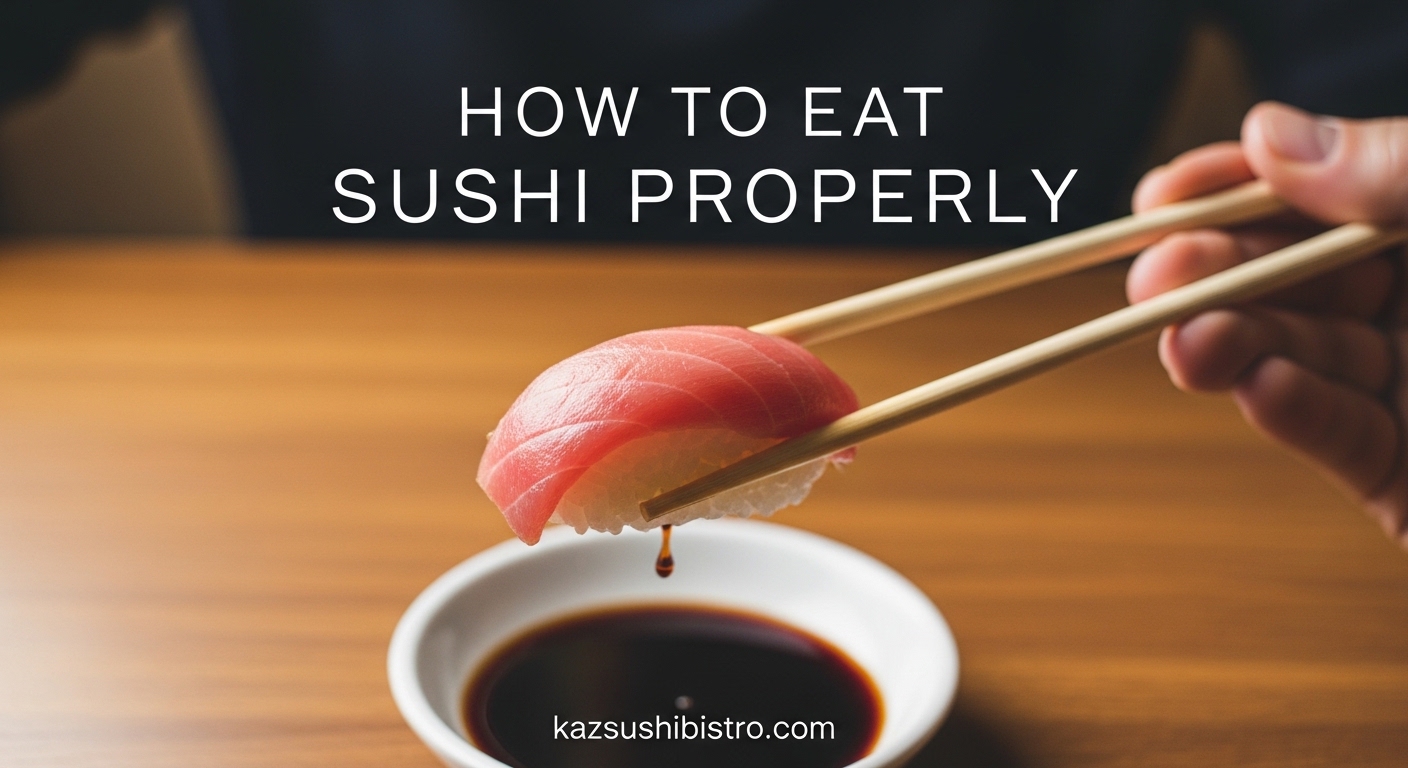
Walking into a sushi restaurant for the first time can feel intimidating. You see other diners using chopsticks with precision, dipping pieces with confidence, and eating in one smooth motion. I remember my first upscale sushi experience in Tokyo – I was so worried about breaking etiquette that I barely enjoyed the meal.
Learning how to eat sushi properly isn’t about following rigid rules for their own sake. It is about respecting the craft of the chef and experiencing flavors exactly as they were designed to be tasted. When you know the basics, you walk into any sushi bar with confidence, whether it is a casual neighborhood spot or an exclusive omakase counter.
This guide covers everything you need to know about sushi etiquette in 2026. You will learn when to use your hands versus chopsticks, how to dip without destroying the rice, and why that little pile of pickled ginger sits on your plate. By the end, you will eat sushi like someone who has been doing it for years.
Table of Contents
Understanding Sushi Types: Nigiri, Sashimi, and Maki
Before diving into technique, you need to know what you are eating. Sushi comes in several distinct forms, and each has its own proper way to be handled and consumed.
Nigiri is the classic hand-pressed sushi – a small mound of vinegared rice topped with a slice of raw fish or other seafood. The word means “hand-pressed” in Japanese, and it is traditionally served in pairs at authentic establishments.
Sashimi is simply slices of raw fish without any rice. While often served alongside sushi, it is technically not sushi at all since sushi by definition includes vinegared rice. You eat sashimi with chopsticks only, never with your hands.
Maki refers to rolled sushi wrapped in nori seaweed. Inside you will find rice and various fillings – fish, vegetables, or both. Temaki, or hand rolls, are cone-shaped versions meant to be eaten immediately after preparation while the nori is still crisp.
Each type demands different handling. Nigiri is designed for finger-eating at traditional counters, while maki rolls are chopstick territory. Sashimi sits on its own plate and never touches your fingers. Understanding these distinctions is the foundation of proper sushi etiquette.
How to Eat Sushi Properly: Hands vs Chopsticks 2026
The most common question beginners ask is whether they should use chopsticks or their hands. The answer depends entirely on what type of sushi you are eating and where you are eating it.
When to Use Your Hands
At traditional sushi bars, especially during omakase experiences, hands are actually preferred for nigiri. The warmth of your fingers helps release the subtle flavors of the fish. Pick up the nigiri gently between your thumb and middle finger, keeping the piece horizontal.
Hand usage signals respect for tradition. Many high-end sushi chefs in Japan consider it the proper way to eat nigiri. Your hands are clean, precise tools that connect you directly to the food.
When to Use Chopsticks
Chopsticks are required for sashimi, maki rolls, and any sushi served on plates rather than directly from the chef’s hand. They are also appropriate for nigiri at more casual restaurants or when you simply feel more comfortable using them.
The key is holding chopsticks correctly and applying gentle pressure. Clamp the sushi firmly enough to lift it but not so hard that you crush the rice or squeeze out wasabi. Practice the pivot motion – holding one stick steady while moving the other to grasp.
The Technique That Prevents Disasters
Turn the nigiri on its side before picking it up. This sideways orientation prevents the rice from falling apart when you dip it. Place your thumb on top of the fish, your index and middle fingers on either side, and your ring finger supporting the bottom.
When dipping, maintain this sideways position. Many beginners hold nigiri flat, which causes the rice to absorb too much soy sauce or crumble into the dish. The sideways method is the secret technique that separates confident sushi eaters from struggling beginners.
Soy Sauce Dipping: The Fish-Side Down Rule
Soy sauce application is where most sushi etiquette mistakes happen. The goal is to enhance the fish’s flavor, not drown it in saltiness or turn the rice into a soy sponge.
Why Fish-Side Down Matters
Always dip the fish side, never the rice side. When rice hits soy sauce, it absorbs liquid like a sponge, falling apart and becoming oversaturated with salt. The fish should kiss the soy sauce lightly while the rice stays relatively dry.
Chef Nobu Matsuhisa emphasizes this point in his teachings – the rice is already seasoned with vinegar and salt. Adding soy sauce to the rice destroys the delicate balance the chef created.
How to Dip Without Destroying Your Sushi
Turn your nigiri fish-side down, then touch just the edge of the fish to the soy sauce. A brief dip – half a second – is all you need. For maki rolls, dip the cut end briefly, or use a piece of pickled ginger to brush soy sauce onto the roll.
Some diners pour a small amount of soy sauce onto their plate rather than dipping directly. This can work for sashimi, but for nigiri, the brief touch method preserves texture better. Practice the sideways hold and quick dip motion until it feels natural.
How Much Soy Sauce Is Too Much
A light coating on the fish is the target. The soy sauce should accent, not dominate. If your sushi looks soaked or if soy drips off when you lift it to your mouth, you have used too much.
High-quality sushi at upscale establishments often comes already seasoned by the chef. In these cases, additional soy sauce is unnecessary and potentially insulting. Watch what the chef does – if they brush sauce onto the fish before serving, skip the dipping entirely.
Wasabi Usage: Mixing, Placement, and Amount
Wasabi confusion ranks among the top questions in sushi etiquette. Should you mix it into your soy sauce? How much should you use? Understanding wasabi helps you appreciate its role in the sushi experience.
The Mixing Debate
Traditionalists will tell you never to mix wasabi into soy sauce. The proper method is to place a small amount directly on the fish before eating. This preserves the distinct flavors of both the wasabi and the soy sauce.
However, modern sushi culture is more forgiving. At casual restaurants, many people create a wasabi-soy paste in their dish. While not traditional, it is acceptable in most American sushi establishments. Save the pure wasabi-on-fish method for upscale omakase experiences.
Proper Wasabi Placement
For the traditional approach, use chopsticks to transfer a small dab of wasabi onto the fish portion of your nigiri. The heat from the wasabi complements the fish without overwhelming it. Then dip the fish side briefly in soy sauce if desired.
Real wasabi – the fresh grated root – is milder and more complex than the green horseradish paste common in American restaurants. If you are lucky enough to be served fresh wasabi, use it sparingly and appreciate its subtle heat.
How Much Wasabi Should You Use
Start with a pea-sized amount or less. Wasabi should enhance, not dominate. The goal is to feel a gentle warmth that clears your sinuses slightly, not a burning sensation that masks the fish flavor entirely.
Many sushi chefs place wasabi between the rice and fish when making nigiri. If you see a thin layer there, additional wasabi is usually unnecessary. Trust the chef’s seasoning – they know exactly how much each piece needs.
The One-Bite Rule and Why It Matters
Traditional sushi etiquette dictates that nigiri should be eaten in one bite. This is not about table manners in the Western sense – it is about experiencing the complete flavor profile the chef assembled.
The Traditional One-Bite Custom
A piece of nigiri is a complete unit designed to be consumed whole. The ratio of rice to fish, the placement of wasabi, and the seasoning all work together in a single bite. Breaking it apart disrupts this balance and can be seen as disrespectful to the chef’s craft.
In Japan, attempting to eat nigiri in multiple bites is considered awkward and inappropriate. The pieces are sized specifically for the average mouth to handle in one motion.
When Two Bites Is Acceptable
American sushi portions are often significantly larger than their Japanese counterparts. If a piece of nigiri is genuinely too large for your mouth, eating it in two bites is acceptable. Turn the piece sideways and bite cleanly through the middle.
The key is making the cut intentional and clean. Do not nibble or take messy bites that cause the rice to crumble. If you must do two bites, do two distinct, confident bites.
Tips for Large American Rolls
Specialty rolls with multiple fillings and toppings present a real challenge. These behemoths were never part of traditional sushi culture and require adaptation. Use your chopsticks to stabilize the roll, take a bite from one end, and finish the remainder in a second bite.
Some diners use their hands for large rolls, which is acceptable at casual establishments. The priority is getting the food to your mouth without it falling apart – use whatever technique works for the size you are served.
Pickled Ginger (Gari): The Palate Cleanser
That pink or beige pile of thin slices on your plate serves a specific purpose. Understanding gari helps you use it correctly and avoid common mistakes that mark you as a beginner.
The Purpose of Ginger
Pickled ginger is a palate cleanser, not a topping. Its sharp, acidic flavor resets your taste buds between different types of fish. After eating a rich piece of toro (fatty tuna), a slice of ginger clears the way for the delicate flavor of snapper to shine through.
The ginger is pickled in rice vinegar and sugar, giving it that distinctive sweet-sour taste. It is called “gari” in Japanese, and it has been part of sushi service for centuries.
When to Eat It
Eat ginger between different pieces of sushi, not on top of them. Take a small slice after finishing one piece and before starting the next. This timing maximizes the palate-cleansing effect.
At omakase experiences where the chef paces your meal, they may serve ginger at specific moments. Follow their lead – if they place fresh ginger on your plate, it signals a transition to a new flavor profile.
Common Mistakes to Avoid
Never place ginger on top of your sushi. This is perhaps the most obvious beginner mistake and one that signals complete unfamiliarity with sushi culture. The flavors clash, and the texture disrupts the carefully balanced piece.
Also avoid using ginger as a chopstick rest or decoration on your plate. It is a functional food item with a specific role in the dining experience. Treat it with the same respect you give the sushi itself.
Order of Eating: Building Your Sushi Experience
The sequence in which you eat sushi matters almost as much as how you eat it. A thoughtful progression builds flavor intensity and prevents palate fatigue.
Light to Dark Fish Progression
Start with lighter, milder fish and work toward richer, fattier varieties. Begin with white fish like snapper or halibut. Move to medium-flavored fish such as yellowtail or salmon. Finish with rich, fatty tuna or eel.
This progression makes sense from a flavor perspective. If you start with fatty tuna, your palate becomes saturated with richness. The subtle flavors of white fish become impossible to appreciate after the fatty assault.
Starting with Lighter Flavors
Begin your meal with delicate options like scallop, flounder, or squid. These mild flavors prepare your palate without overwhelming it. Many sushi chefs recommend starting with a piece of mild white fish followed by something with a bit more texture.
Egg (tamago) is often served at the end of a traditional meal, but some chefs offer it first as a palate primer. Follow the chef’s presentation order when dining omakase – they have planned the progression carefully.
Ending with Richer Pieces
Save the bold flavors for last. Uni (sea urchin), ikura (salmon roe), and fatty tuna (toro) should come toward the end of your meal. These intense flavors deserve a fresh palate to be fully appreciated.
Many omakase meals conclude with a hand roll or a simple piece of tamago. The hand roll provides a textural contrast, while tamago offers a sweet finish that signals the end of the sushi portion of the meal.
Common Beginner Mistakes to Avoid
Even with good intentions, beginners often make etiquette errors. Here are the most common mistakes and how to avoid them.
Mistake 1: Rubbing chopsticks together. This implies the chopsticks are cheap and have splinters. It is considered insulting to the restaurant. If you must, do it under the table discretely, but quality chopsticks should not need this.
Mistake 2: Drowning sushi in soy sauce. Pouring soy sauce over sushi or soaking rice destroys the flavor balance. A light touch is all you need.
Mistake 3: Putting ginger on sushi. Gari is a palate cleanser between pieces, not a topping. Keep it separate from your nigiri and maki.
Mistake 4: Asking for cream cheese or mayo at traditional places. These American adaptations have no place in authentic sushi culture. Save them for casual fusion spots.
Mistake 5: Sending back sushi for being “raw.” Sushi is supposed to be raw. The fish has been flash-frozen and handled properly. This mistake reveals complete unfamiliarity with the cuisine.
Mistake 6: Taking photos without asking. At high-end counters, photography can disrupt the experience for other diners. Ask your chef quietly if photos are acceptable.
Health Considerations: Who Should Be Cautious
Sushi is generally healthy, but certain medical conditions require extra consideration. The PAA questions in search results show significant interest in health-related sushi concerns.
Diabetes Considerations
Type 2 diabetics can eat sushi, but the white rice poses blood sugar challenges. Opt for sashimi (no rice) or request brown rice if available. Avoid tempura rolls and sugary sauces. The protein and healthy fats in fish are actually beneficial for blood sugar management.
Monitor portion sizes and consider pairing sushi with edamame or a salad to slow carbohydrate absorption. The American Diabetes Association lists fish as a recommended protein source for diabetics.
High Cholesterol Concerns
Sushi is generally excellent for high cholesterol. The omega-3 fatty acids in fatty fish like salmon and mackerel actively help lower LDL cholesterol. However, avoid mayo-based sauces, cream cheese, and fried tempura rolls.
Stick to simple nigiri and sashimi for the heart-healthiest option. The combination of lean protein and healthy fats makes sushi a smart choice for cholesterol management.
SIBO and Digestive Issues
For those with Small Intestinal Bacterial Overgrowth (SIBO), sushi rice can be problematic due to its high starch content. The fermentation potential of white rice may trigger symptoms in sensitive individuals.
If you have SIBO, sashimi is your safest bet. The fish itself is generally well-tolerated, and you avoid the fermentable carbohydrates entirely. Ask about preparation methods to ensure no hidden sugars in marinades.
GLP-1 Medications (Mounjaro, Ozempic, Wegovy)
Those taking GLP-1 medications for diabetes or weight management can eat sushi, but portion awareness is key. These medications slow gastric emptying, so large meals may cause discomfort.
Start with smaller portions than you would normally eat. The high protein content in fish is beneficial, but the rice may feel heavier in your stomach. Consider sashimi or ordering fewer pieces and adding more if hunger persists.
FAQs
What is the proper way to eat sushi
The proper way to eat sushi depends on the type. For nigiri, use your hands or chopsticks to pick up the piece, turn it fish-side down, dip lightly in soy sauce, and eat in one bite with the fish touching your tongue first. For sashimi, use chopsticks only. For maki rolls, chopsticks are standard. Always use pickled ginger between pieces as a palate cleanser, not as a topping.
Can you eat sushi with your hands
Yes, eating sushi with your hands is not only acceptable but traditionally preferred for nigiri at authentic sushi bars. The warmth of your fingers helps release the fish’s subtle flavors. Use chopsticks for sashimi and maki rolls. At casual restaurants, either method is fine – use what feels most comfortable.
Should you put wasabi in soy sauce
Traditional etiquette says no – place wasabi directly on the fish instead. However, at casual restaurants, mixing wasabi into soy sauce is common and generally accepted. For upscale omakase experiences, follow tradition and apply wasabi to the fish, then dip fish-side down briefly in plain soy sauce.
Why do you eat ginger between sushi
Pickled ginger (gari) serves as a palate cleanser between different pieces of sushi. Its sharp, acidic flavor resets your taste buds so you can fully appreciate the next piece’s unique flavor profile. Never place ginger on top of sushi – eat it between pieces only.
Can type 2 diabetics eat sushi
Yes, type 2 diabetics can eat sushi. The fish provides healthy protein and omega-3 fatty acids. However, the white rice can spike blood sugar, so consider sashimi (no rice), brown rice options, or limiting portion sizes. Avoid tempura rolls and sugary sauces.
Is sushi ok to eat with high cholesterol
Yes, sushi is generally excellent for high cholesterol. Fatty fish like salmon and mackerel contain omega-3 fatty acids that help lower LDL cholesterol. Choose simple nigiri and sashimi, avoiding mayo-based sauces, cream cheese, and fried tempura rolls for the healthiest option.
Conclusion
Learning how to eat sushi properly transforms your dining experience from anxious to enjoyable. The key principles are simple: use hands for nigiri at traditional spots, always dip fish-side down, eat in one bite when possible, and let ginger cleanse your palate between pieces.
Remember that sushi etiquette exists to enhance flavor, not to create barriers. At casual American restaurants, minor deviations from tradition are completely acceptable. Save strict adherence for omakase counters and high-end Japanese establishments where the chef’s craft demands maximum respect.
Whether you are managing diabetes, watching your cholesterol, or simply wanting to feel more confident at the sushi bar, the techniques in this guide apply to 2026 and beyond. Order with confidence, eat with pleasure, and appreciate the centuries of tradition in every piece.