
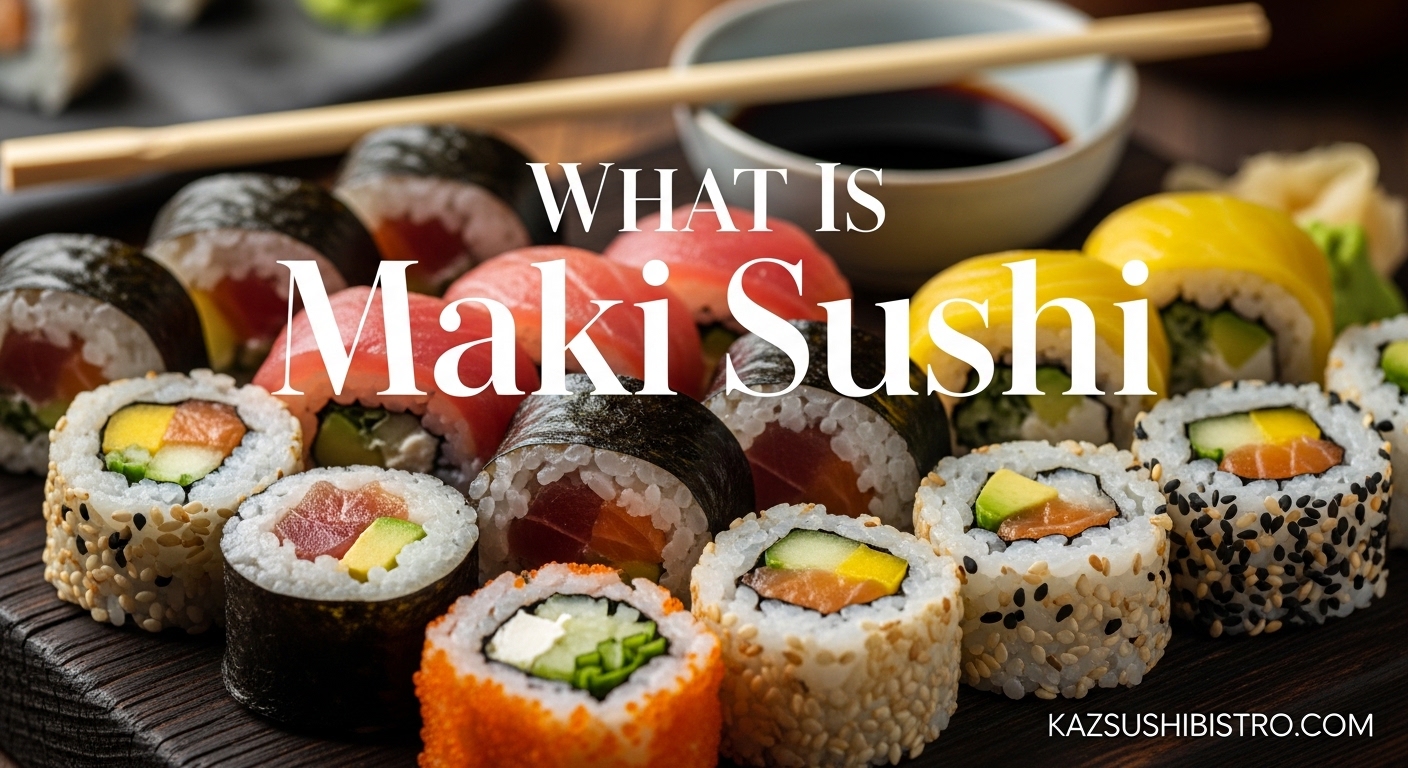
Maki sushi is a type of rolled sushi where vinegared rice and various fillings are wrapped in a sheet of nori (seaweed) and sliced into bite-sized pieces. The word maki means “to roll” in Japanese, making this style one of the most recognizable and accessible forms of sushi worldwide. I remember the first time I encountered maki at a local Japanese restaurant – the neat cylindrical pieces arranged on a wooden board looked almost too perfect to eat, yet the combination of flavors and textures made them irresistible.
Understanding maki sushi opens the door to appreciating Japanese cuisine fundamentals. Whether you are ordering at a sushi bar for the first time or attempting to make rolls at home, knowing what distinguishes maki from other sushi types helps you make informed choices. This guide covers everything from the Japanese meaning of maki to the different roll varieties, key ingredients, and how maki compares to nigiri and sashimi.
Table of Contents
What Does Maki Mean in Japanese?
Maki literally translates to “rolled” or “to roll” in Japanese, derived from the verb maku. This simple yet descriptive term perfectly captures the essential technique that defines this sushi style. The naming convention follows a straightforward pattern in Japanese cuisine where preparation methods become the dish’s identity.
The cultural significance extends beyond mere description. In Japanese culinary tradition, the rolling technique represents precision and care. The bamboo mat used for rolling, called a makisu, shares the same root word, emphasizing how integral the rolling action is to the craft. When Japanese chefs speak of making maki, they refer to an entire process that has been refined over centuries.
Understanding this etymology helps clarify common confusion. Many beginners wonder if “maki” and “sushi roll” are different things. In practice, they refer to the same concept, though purists might distinguish between traditional Japanese maki and Westernized adaptations. The fundamental rolling technique remains consistent whether you are making a simple cucumber roll or an elaborate inside-out creation.
Key Ingredients That Make Maki Sushi 2026
Four essential components define authentic maki sushi. Each ingredient plays a specific role in creating the harmonious balance of flavors and textures that characterizes well-made rolls.
Nori: The Seaweed Wrapper
Nori is dried seaweed processed into thin, paper-like sheets that wrap around the rice and fillings. High-quality nori appears almost black with a slight greenish tint and carries a subtle ocean aroma. The best nori sheets are toasted before use, which enhances their crispness and nutty flavor. Poor quality nori can taste fishy or chewy, ruining the entire roll experience.
I learned the hard way that nori moisture matters tremendously. Once exposed to damp rice for too long, nori loses its signature crunch and becomes rubbery. This is why experienced sushi chefs work quickly when assembling rolls, ensuring the nori maintains its texture until the moment of eating.
Sushi Rice: The Foundation
The rice used in maki, called shari or sumeshi, starts with short-grain Japanese rice cooked until sticky and seasoned with a mixture of rice vinegar, sugar, and salt. This vinegared rice provides the characteristic tangy flavor that balances the other ingredients. The stickiness is crucial – it allows the rice to hold together when rolled and sliced.
Getting the rice right requires attention to detail. The rice must be cooled to room temperature before rolling. Hot rice will make the nori soggy and can partially cook delicate raw fish fillings. Many home cooks underestimate how important properly seasoned rice is to the final result. Without the vinegar seasoning, you simply have rice rolls, not sushi.
Fillings: Endless Variations
The center of a maki roll can contain virtually any combination of ingredients. Traditional Japanese fillings include fresh raw fish like tuna or salmon, cooked seafood such as shrimp or crab, vegetables like cucumber and avocado, and Japanese omelet called tamago. The key is balance – each filling should complement the others without overwhelming the palate.
Western adaptations have expanded the possibilities dramatically. Cream cheese, spicy mayonnaise, tempura flakes, and even tropical fruits like mango now appear in creative rolls. While purists might debate whether these innovations constitute “authentic” maki, they have undeniably broadened sushi’s appeal worldwide.
The Bamboo Mat (Makisu)
A makisu is the bamboo rolling mat essential for creating tight, uniform maki rolls. Thin bamboo strips woven together with cotton thread create a flexible yet sturdy surface for shaping. The mat allows precise pressure application, ensuring the roll compacts evenly without crushing delicate fillings.
Home cooks can find makisu at Asian grocery stores or online for under ten dollars. While not absolutely required for simple rolls (some people use plastic wrap and a towel), the bamboo mat produces noticeably better results. With practice, the rolling motion becomes muscle memory, and the mat essentially becomes an extension of your hands.
The Four Main Types of Maki Sushi
Not all maki rolls are created equal. Japanese tradition recognizes several distinct styles, each with specific characteristics, dimensions, and appropriate occasions. Understanding these differences helps you navigate sushi menus and appreciate the craftsmanship behind each variety.
Hosomaki: Thin and Elegant
Hosomaki translates to “thin rolls” and represents the most traditional maki style. These rolls typically measure about one inch in diameter and contain just one filling ingredient. Common varieties include kappa maki (cucumber), tekka maki (tuna), and tamago maki (sweet omelet).
The simplicity of hosomaki demands quality ingredients. With only one filling to showcase, there is nowhere to hide subpar fish or vegetables. These rolls represent sushi minimalism at its finest – perfect rice, crisp nori, and a single pristine ingredient working in harmony. I often recommend hosomaki to beginners precisely because their straightforward nature teaches you to appreciate fundamental sushi quality.
Futomaki: Thick and Festive
Futomaki means “thick rolls” and typically measures two to two-and-a-half inches in diameter. Unlike hosomaki, futomaki contains multiple fillings arranged in a colorful pattern, making them visually striking when sliced. Traditional fillings might include seasoned kanpyo (dried gourd), cooked spinach, shiitake mushrooms, and sweet omelet.
In Japan, futomaki holds special significance during holiday celebrations, particularly Setsubun (the beginning of spring). The colorful cross-section when sliced symbolizes good fortune and prosperity. Making futomaki requires more skill than hosomaki because the multiple fillings must be positioned precisely to create an attractive pattern when cut.
Uramaki: Inside-Out Innovation
Uramaki, or “inside-out rolls,” feature rice on the outside and nori on the inside, completely reversing the traditional configuration. This style emerged in North America during the 1960s when Japanese chefs in Los Angeles created the California roll to accommodate American diners hesitant about visible seaweed.
The most famous uramaki include the California roll (crab, avocado, cucumber), the spicy tuna roll, and the rainbow roll. Making uramaki requires additional technique – the chef must spread rice directly on the bamboo mat covered with plastic wrap, flip it, add nori and fillings, then roll carefully to keep the rice exterior intact. Sesame seeds or tobiko (flying fish roe) often coat the rice exterior for added flavor and visual appeal.
Many sushi enthusiasts do not realize uramaki is actually an American invention. Japanese chefs in California developed this style specifically for Western palates. Today, uramaki has traveled back to Japan and appears on menus there, though traditionalists still prefer classic nori-outside rolls.
Temaki: Hand Rolls for Immediate Enjoyment
Temaki means “hand rolls” and differs significantly from other maki types. Rather than a cylinder cut into pieces, temaki forms a cone shape designed to be eaten immediately without slicing. Nori wraps around rice and fillings in a cone configuration, with one end open and pointed while the other remains round and filled.
Temaki offers a more casual, interactive dining experience. The nori stays crisp because it is assembled to order and consumed immediately. Fillings often extend visibly from the open top, creating an appetizing presentation. Many Japanese families make temaki at home during gatherings, setting out ingredients so guests can assemble their own custom cones.
The structural difference matters practically. Because temaki is not sliced, it accommodates larger, more substantial fillings that would not work in cut rolls. Chunks of fresh fish, larger vegetable strips, and generous portions of roe all work beautifully in hand roll form.
How Maki Differs from Other Sushi Types?
Understanding maki requires distinguishing it from other common sushi styles. While all are part of Japanese culinary tradition, each offers different eating experiences, preparation methods, and ingredient combinations.
Maki vs Nigiri: Rolled vs Topped
Nigiri sushi consists of hand-pressed vinegared rice topped with a slice of fish or other ingredient. Unlike maki, nigiri contains no nori (except occasionally a thin strip securing the topping), and the rice forms a rectangular base rather than being rolled. The topping remains the visual and flavor focus.
Many sushi beginners start with maki because the nori wrapper and rice-to-filling ratio feels less intimidating than placing a slice of raw fish directly on rice. However, nigiri actually showcases fish quality more prominently since there are no other ingredients to mask imperfections. Both styles have their place – maki for variety and flavor combinations, nigiri for appreciating premium fish.
Maki vs Sashimi: Rolled vs Pure
Sashimi consists solely of thinly sliced raw fish served without rice. It is not technically sushi at all since the word sushi refers specifically to vinegared rice. Sashimi focuses entirely on the quality and presentation of the seafood itself.
The comparison illuminates what maki adds to the equation. Maki combines the rice element with nori and fillings to create complex flavor and texture profiles. Sashimi offers pure, unadulterated fish appreciation. Neither is superior – they serve different purposes and appeal to different preferences.
Maki vs Temaki: Cut Rolls vs Hand Rolls
While both maki and temaki involve rolling, the similarity ends there. Traditional maki forms a cylinder sliced into bite-sized pieces, creating multiple servings from one roll. Temaki remains whole as a single-serving cone meant for immediate consumption. The sliced format of maki makes it ideal for sharing and appetizers, while temaki provides a more personal, interactive experience.
| Type | Rice Position | Nori Usage | Typical Shape | Serving Style |
|---|---|---|---|---|
| Hosomaki | Inside | Outside wrap | Thin cylinder | 6-8 pieces |
| Futomaki | Inside | Outside wrap | Thick cylinder | 4-6 pieces |
| Uramaki | Outside | Inside wrap | Medium cylinder | 6-8 pieces |
| Temaki | Inside | Cone wrapper | Cone | Whole, hand-held |
| Nigiri | Base | Occasional strip | Oval mound | Individual pieces |
| Sashimi | None | None | Thin slices | Arranged on plate |
This table summarizes the key distinctions between maki varieties and other popular sushi types. Use it as a reference when ordering or discussing sushi with friends.
How to Make Maki Sushi at Home
Creating maki at home requires practice, but the process is accessible to home cooks willing to invest some time learning proper technique. The satisfaction of slicing through a tight roll to reveal a perfect spiral of rice and fillings makes the effort worthwhile.
Step 1: Prepare Your Ingredients
Start with properly cooked and seasoned sushi rice cooled to room temperature. Prepare your chosen fillings by cutting them into uniform strips about half an inch thick and four inches long. Lay out your bamboo mat (makisu) with bamboo strips running horizontally, and position a sheet of nori rough-side up on top.
Wet your hands before handling rice to prevent sticking. Spread a thin, even layer of rice across the nori, leaving about one inch of bare nori at the top edge. This bare edge allows the roll to seal properly. The rice layer should be thin enough that you can see the nori through it in spots.
Step 2: Add Fillings and Roll
Arrange your chosen fillings in a line across the center of the rice. Do not overfill – three to four ingredients maximum for futomaki, just one for hosomaki. Lift the edge of the bamboo mat closest to you and begin rolling away from yourself, tucking the nori and rice over the fillings.
Use gentle but firm pressure as you roll, squeezing the mat slightly to compress the roll without crushing it. Continue rolling until the bare nori edge reaches the mat, then unroll slightly, moisten the bare edge with water, and complete the final roll to seal. The seam should end up on the bottom.
Step 3: Slice and Serve
Let the completed roll rest seam-side down for a minute before slicing. Use a sharp, wet knife to cut the roll in half first, then cut each half into thirds for standard six-piece maki. Wipe and re-wet the knife between cuts for clean slices. Serve immediately with soy sauce, pickled ginger, and wasabi on the side.
Common beginner mistakes include using too much rice (makes rolling difficult), overfilling with ingredients (causes bursting), and not wetting the knife (creates ragged cuts). Do not be discouraged if your first attempts look imperfect – even professional chefs spent months mastering these techniques.
Popular Maki Fillings and Variations
The filling combinations for maki rolls seem endless, ranging from traditional Japanese ingredients to creative Western interpretations. Understanding popular varieties helps you order confidently and eventually create your own combinations.
Traditional Japanese Favorites
Classic maki fillings reflect Japan’s coastal geography and agricultural traditions. Kappa maki contains only cucumber, named after mythical Japanese water imps said to love cucumbers. Tekka maki features raw tuna, the name referencing gambling houses where this simple roll sustained players through long sessions. Kampyo maki uses seasoned dried gourd, offering a unique sweet-savory flavor profile.
These traditional rolls typically contain just one filling, allowing the quality of that single ingredient to shine. The simplicity also makes them lighter and less expensive than elaborate rolls with multiple components. When I want to judge a sushi restaurant’s quality, I always order kappa maki and tekka maki first.
American Innovations
The California roll revolutionized Western sushi by substituting avocado for toro (fatty tuna) and adding cooked crab meat. This combination proved that sushi could succeed without raw fish, opening the cuisine to hesitant American diners. The roll’s popularity spawned countless variations including the spicy California roll and the rainbow roll.
Spicy tuna rolls combine chopped raw tuna with spicy mayonnaise, offering heat and richness that appeals to American palates. Philadelphia rolls add cream cheese to smoked salmon, creating a fusion of Jewish deli and Japanese cuisine. Dragon rolls top eel and cucumber with avocado slices arranged to resemble dragon scales.
While purists sometimes dismiss these Western creations, they have undeniably expanded sushi’s global reach. Many of these rolls have even returned to Japan, where they are sometimes labeled “American-style” sushi. The cross-cultural exchange continues as chefs worldwide experiment with local ingredients in maki format.
FAQs
What is maki vs sushi?
Maki refers specifically to rolled sushi where rice and fillings are wrapped in nori. Sushi is the broader category that includes maki, nigiri (rice topped with fish), and other varieties. Think of sushi as the umbrella term and maki as one specific type beneath it. When people say ‘sushi roll,’ they typically mean maki.
What does maki in sushi mean?
Maki means ‘rolled’ or ‘to roll’ in Japanese, coming from the verb maku. It describes the preparation method where ingredients are rolled together using a bamboo mat (makisu). The term emphasizes the cylindrical shape and rolling technique that defines this sushi style.
Is maki sushi cooked or raw?
Maki can contain either cooked or raw ingredients depending on the filling. Traditional rolls like tekka maki contain raw tuna, while kappa maki uses cooked cucumber. Western adaptations often feature cooked crab, shrimp tempura, or smoked salmon. The rice and nori are never raw, but the fillings vary based on the specific roll.
Which is better maki or nigiri?
Neither is objectively better – they serve different purposes. Maki offers variety through multiple fillings and is often more approachable for beginners. Nigiri showcases premium fish quality more directly since the fish sits atop rice without other ingredients. Many sushi lovers enjoy both, choosing maki for flavor combinations and nigiri for appreciating exceptional fish.
What is the difference between maki and sashimi?
Maki contains vinegared rice wrapped in nori with various fillings, while sashimi is simply sliced raw fish served without rice. Sashimi focuses entirely on the fish quality, whereas maki combines rice, nori, and fillings for complex flavor profiles. Sashimi is not technically sushi since sushi requires vinegared rice.
What is the bamboo mat called for making maki?
The bamboo mat used for rolling maki is called a makisu in Japanese. It consists of thin bamboo strips woven together with cotton thread, creating a flexible surface that allows precise pressure application when forming tight, uniform rolls. Makisu are inexpensive and widely available at Asian grocery stores and online.
Can you make maki without a bamboo mat?
Yes, though results vary. You can use plastic wrap and a clean kitchen towel as an alternative, though achieving tight rolls becomes more difficult. Some people use silicone sushi rolling mats designed for easier cleaning. However, a traditional makisu produces the best results and costs less than ten dollars, making it worth the small investment for anyone making maki regularly.
Conclusion
Maki sushi represents one of the most accessible and versatile entry points into Japanese cuisine. Understanding what maki means – simply “rolled” in Japanese – demystifies this popular food and provides foundation for exploring the different varieties from hosomaki to uramaki. The combination of vinegared rice, nori seaweed, and carefully chosen fillings creates endless possibilities for both traditional and creative expressions.
Whether you are ordering at a restaurant or attempting to make rolls at home, the knowledge you have gained about maki sushi types, ingredients, and techniques will serve you well. Start with simple hosomaki to appreciate fundamental quality, then explore futomaki and temaki as your confidence grows. Remember that maki, like all culinary arts, rewards practice and attention to quality ingredients.
The next time you sit down at a sushi bar or gather friends for a home rolling session, you will understand exactly what makes maki special. From the precise rolling technique to the balance of flavors in each bite, maki sushi offers a delicious window into Japanese culinary tradition that continues evolving 2026.