
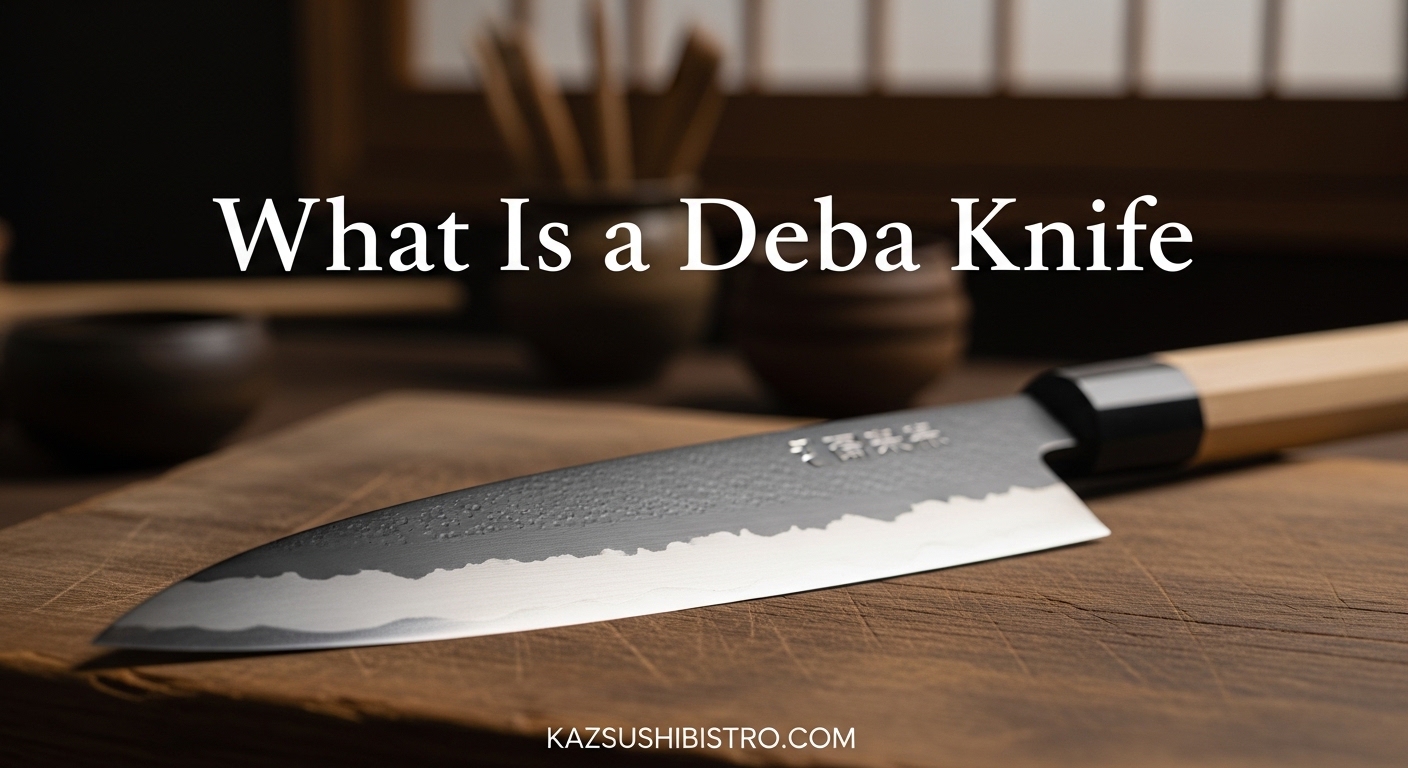
A deba knife is a thick, heavy, single-bevel Japanese kitchen knife specifically designed for fish butchery. It features a triangular blade profile with a sturdy heel, wide belly, and precise tip that allows chefs to remove fish heads, cut through small bones, and produce clean fillets with exceptional control. This traditional knife dates back centuries to the blade-making city of Sakai, Japan, where master craftsmen developed the distinctive geometry that makes the deba indispensable for professional sushi chefs and serious home cooks alike.
If you have ever watched a sushi chef break down a whole fish with seemingly effortless precision, you have likely witnessed a deba in action. The knife’s substantial weight and thick spine provide the force needed to sever fish heads and cut through pin bones, while its razor-sharp edge delivers the clean cuts essential for high-quality sashimi and sushi.
In this complete guide, you will learn everything about what makes a deba knife unique. We will explore its anatomy and construction, compare different steel types and blade geometries, examine the various deba styles available today, and explain proper techniques for fish butchery. Whether you are considering your first deba purchase or want to understand why sushi chefs revere this knife, this article will give you the knowledge to appreciate this remarkable Japanese culinary tool.
Table of Contents
What Is a Deba Knife 2026
A deba knife (deba bōchō in Japanese, meaning “pointed carving knife”) is a specialized blade designed primarily for breaking down whole fish. Unlike the thin, flexible fillet knives common in Western kitchens, the deba features a thick, heavy spine that tapers dramatically toward a sharp, precise tip. This unique geometry creates a knife that functions as both a cleaver and a precision filleting tool.
The traditional deba originated in Sakai, Japan, a city near Osaka that has been the center of Japanese blade-making since the 14th century. Sakai craftsmen initially produced swords for samurai, but after Japan unified and sword production declined, these master smiths applied their skills to kitchen knives. The deba emerged during the Edo period as Japanese cuisine developed sophisticated techniques for preparing fish, and it remains one of the three essential knives in traditional Japanese cuisine alongside the yanagiba and usuba.
Key Characteristics That Define a Deba
The most distinctive feature of a deba is its triangular blade profile. The spine near the handle (called the heel or machi) measures between 5 and 8 millimeters thick, providing substantial heft for cutting through fish heads and small bones. This thickness gradually tapers toward the tip, creating a blade that transitions from heavy-duty chopper to delicate precision instrument along its length.
Traditional debas feature single-bevel construction, meaning only one side of the blade is ground to create the cutting edge. The flat back side (ura) has a slight concave grind called the urasuki, which helps food release from the blade and reduces friction during cutting. This asymmetrical design creates a blade that cuts with exceptional precision but requires technique to master.
The weight distribution of a deba differs significantly from Western knives. A typical 165mm deba weighs between 200 and 300 grams, with most of that mass concentrated near the heel. This forward-weighted design allows gravity to assist in cutting through tough materials while the sharp edge requires minimal pressure to slice through flesh.
How a Deba Differs From Western Fillet Knives
Western fillet knives feature thin, flexible blades designed to follow the contour of fish bones and remove skin with minimal waste. These knives excel at separating flesh from flatfish and producing boneless fillets, but they lack the structural integrity to cut through fish heads or ribs. A Western fillet knife bends when it encounters resistance, making it unsuitable for the initial butchery steps.
The deba takes the opposite approach. Its rigid, heavy construction allows it to power through fish heads and small bones that would damage a flexible fillet knife. Sushi chefs use the deba for the entire breakdown process, from removing the head to filleting and portioning. The tradeoff is that the deba requires more skill to use effectively, particularly when following bone structures closely.
For home cooks accustomed to Western knives, the deba initially feels foreign. The asymmetrical single bevel pulls the blade in the direction of the ground side, a phenomenon called “steering” that requires compensation in cutting technique. The substantial weight and thickness also demand a different grip and cutting motion than lightweight Western blades.
Anatomy of a Deba Knife
Understanding the anatomy of a deba knife helps you appreciate why this blade performs so differently from other kitchen knives. Each section of the blade serves a specific purpose in the fish butchery process, and the materials used in construction significantly affect performance and maintenance requirements.
Blade Sections and Their Functions
The heel of the deba (called the kiriha or shank) handles the heavy work. This thick, sturdy section near the handle chop through fish heads, cut through rib bones, and split joints in poultry when needed. The substantial mass concentrated here delivers the force necessary for these demanding tasks without risking damage to the blade.
The belly (center section) performs the bulk of filleting work. This section maintains enough thickness for structure while beginning the taper toward the tip. When breaking down a fish, chefs use the belly to separate flesh from the spine and ribs, cutting along the bone structure with long, drawing strokes.
The tip (kissaki) provides surgical precision for detailed work. Despite the deba’s reputation as a heavy knife, the carefully tapered tip removes pin bones, trims around collars, and makes intricate cuts that preserve the quality of the flesh. A skilled chef can use the tip to separate flesh from skin with virtually zero waste.
Single Bevel vs Double Bevel Construction
Traditional Japanese debas feature single-bevel construction, with the cutting edge ground on only the right side of the blade (for right-handed users). This asymmetrical design creates a blade that cuts with exceptional precision because the flat back side acts as a guide against the material being cut. The single bevel also allows for extremely acute edge angles, producing sharper cuts than double-bevel knives can achieve.
The back side (ura) of a single-bevel deba features a slight concave grind called the urasuki. This hollow grind serves multiple purposes: it reduces the surface area contacting food, preventing sticking; it allows for easier sharpening by creating a defined reference surface; and it contributes to the blade’s food-release properties. Maintaining this urasuki during sharpening is essential for proper single-bevel knife maintenance.
For left-handed users or those who prefer more familiar handling, yo-deba models offer double-bevel construction similar to Western knives. These Western-style debas feature symmetrical grinding on both sides, eliminating the steering behavior of single-bevel blades. While purists prefer traditional single-bevel debas for ultimate precision, yo-deba knives provide an accessible entry point for beginners or those who need a knife for both fish butchery and general kitchen tasks.
Steel Types and Their Properties
Carbon steel debas dominate professional kitchens in Japan. White steel (shirogami) represents the purest form, offering maximum sharpness potential and ease of sharpening. This steel contains minimal impurities, allowing it to take an extremely fine edge ideal for precise fish work. The tradeoff is that white steel rusts easily and requires diligent maintenance.
Blue steel (aogami) adds chromium and tungsten to the carbon steel base, creating a more durable blade that holds its edge longer between sharpenings. Professional chefs often prefer blue steel for debas because the additional toughness helps prevent chipping when cutting through small bones. Blue steel #1 offers the highest carbon content and sharpness potential, while blue steel #2 provides a balance of edge retention and durability.
Stainless steel debas appeal to home cooks and fishing boat users who prioritize low maintenance over ultimate sharpness. Modern stainless formulations like AUS-8, VG-10, and powder metallurgy steels offer respectable edge retention with dramatically reduced rust susceptibility. While they cannot achieve the same acute edge angles as carbon steel, quality stainless debas still outperform most Western knives for fish butchery. For beginners, stainless steel provides a forgiving introduction to deba ownership.
Handle Types and Construction
Traditional Japanese deba handles (wa-handle) use magnolia wood (ho-no-ki), a soft, lightweight material that remains grippy even when wet. The wood’s natural oils resist water absorption, making it ideal for kitchen environments. Buffalo horn bolsters at the handle’s end (kakumaki) provide a decorative accent and help prevent the wood from splitting.
Handle shapes vary between octagonal (hachigata) and D-shaped (D-gata) profiles. Octagonal handles offer versatility for various grip styles and work well for both right and left-handed users. D-shaped handles provide a more secure grip for right-handed users but feel awkward for left-handed chefs. Some manufacturers offer left-handed versions with reversed D-shapes or symmetrical octagonal options.
Western-style debas often feature yo-handles with full tang construction and riveted scales, similar to German or French chef knives. These handles feel familiar to cooks trained on Western knives and provide the heft and balance some users prefer. The choice between traditional wa-handles and Western yo-handles largely comes down to personal preference and what feels comfortable during extended use.
Deba Knife Uses and Techniques
The deba knife serves as the primary tool for fish butchery in Japanese cuisine, handling tasks that range from heavy chopping to delicate filleting. Understanding proper techniques helps you get the most from this versatile blade while avoiding common mistakes that lead to chipping or poor results.
Primary Use: Fish Butchery
Breaking down whole fish represents the core function of a deba knife. The process begins with removing the head, using the thick heel to chop through the spine just behind the gills. The substantial weight of the blade does most of the work; the chef simply guides the knife and lets gravity provide the force. A clean chop severs the spine without crushing the flesh.
After removing the head, chefs use the belly of the deba to cut along the spine and separate the fillet from the skeleton. The blade’s height and flat back side allow precise control when following bone structures. Unlike flexible fillet knives that bend away from bones, the rigid deba maintains contact with the spine, producing maximum yield from each fish.
The tip handles detailed work during breakdown. Removing pin bones, trimming around the collar (kama), and cleaning around the belly cavity all require the precision the deba’s tapered tip provides. Experienced chefs can completely break down a fish using only a deba, transitioning seamlessly from heavy chopping to delicate trimming without switching tools.
Working With Small Bones
A properly constructed deba can cut through small fish bones without chipping, but this capability has limits. Pin bones in the lateral line, rib bones in smaller fish, and the spine of fish under about 10 pounds fall within the deba’s capabilities. The thick spine and robust construction handle these tasks that would damage thinner knives.
However, the deba is not a cleaver for thick bones. Large fish spines, heavy ribs from big game fish, and especially vertebrae from meat animals exceed what a deba should cut. Attempting to chop through these heavy bones chips the fine edge and can crack the blade. For big bones, use a dedicated cleaver rather than your deba.
The technique for cutting through small bones matters as much as the blade construction. Cut with confidence using the heel of the knife, letting the weight do the work rather than forcing the blade. Attempting to saw through bones or apply lateral pressure increases chipping risk. When in doubt, use kitchen shears for thick sections rather than risking your deba’s edge.
Secondary Uses: Poultry and Cartilage
Many chefs use their deba for breaking down poultry, particularly for tasks involving joints and cartilage. The heel section easily severs wing joints, separates drumsticks from thighs, and splits breastbone cartilage. The knife’s rigidity provides control when cutting through joints that would cause flexible knives to skate or slip.
Some cooks adapt debas for other meat preparation tasks, using the heavy heel to trim silver skin and the sharp belly to portion cuts. While purists reserve their deba for fish, the knife’s versatility extends to any protein requiring both force and precision. The key is understanding which sections of the blade suit each task.
Cartilage and soft bone tasks suit the deba well. Removing breastbone cartilage from chickens, trimming connective tissue, and splitting rib sections all fall within the knife’s capabilities. The substantial blade provides the feedback needed to feel when you have cut through connective tissue versus hitting actual bone.
What You Should Never Use a Deba For
Vegetables and the deba do not mix well. The thick blade and single-bevel geometry produce uneven cuts on vegetables, crushing cell walls rather than slicing cleanly. The asymmetrical grind causes the knife to steer through vegetables, making straight cuts difficult. For vegetable prep, use an usuba, nakiri, or gyuto instead.
Heavy bones from large animals absolutely require avoidance. Pork bones, beef bones, and thick fish vertebrae exceed what any deba should attempt. These tasks require dedicated cleavers designed for impact resistance. Using a deba on heavy bones chips the edge, risks cracking the blade, and voids most manufacturer warranties.
Frozen foods also pose risks for deba knives. The extreme hardness of frozen material can chip even the toughest blades. Always thaw fish and meat completely before using your deba. If you regularly process frozen items, invest in a heavy-duty cleaver and keep your deba for fresh fish work only.
Beginner Technique Tips
If you are new to single-bevel knives, expect a learning curve. The asymmetrical grind pulls the blade toward the beveled side during cuts, a phenomenon called steering. Compensate by angling your cuts slightly away from the bevel direction. Right-handed users cutting with a traditional deba should angle the blade slightly left of their intended cut line, letting the pull of the bevel correct the path.
Grip matters significantly with a deba. Hold the handle with your dominant hand while using your non-dominant hand to stabilize the fish. Apply downward pressure on the spine with your non-dominant fingers when making heavy cuts through heads or bones. For delicate filleting work, grip closer to the blade for better control.
Let the knife’s weight do the work. The deba’s substantial heft provides cutting force without requiring muscle. For heavy cuts, lift the blade and let it fall rather than forcing it through material. For filleting, use long, smooth drawing strokes rather than sawing motions. The sharp edge requires minimal pressure to slice through flesh.
Deba vs Fillet Knife: When to Use Each
Both deba and Western fillet knives excel at fish preparation but shine in different scenarios. The deba works best for round fish like tuna, snapper, grouper, and salmon where you need to remove heads and cut through pin bones. Its rigidity provides control when following contours and cutting through resistance points.
Flexible fillet knives outperform debas for flatfish like flounder, sole, and halibut. The thin, bendable blade follows the contours of flatfish bones more closely, producing higher yields on these species. For skinning tasks where you need to separate flesh from skin with minimal waste, a flexible fillet knife often works faster than a deba.
Many serious fish cooks own both tools and choose based on the species at hand. The deba handles the heavy work of breaking down whole fish, while a flexible fillet knife finishes skinning and detailed trimming. If you only process fish occasionally, a yo-deba (double-bevel deba) offers a middle ground that handles most tasks adequately without requiring multiple knives.
Types of Deba Knives
The deba category includes several variations designed for specific tasks and user preferences. Understanding these types helps you choose the right knife for your needs, whether you are a home cook processing occasional fish or a professional breaking down dozens daily.
Hon-Deba: The Traditional Choice
Hon-deba (true deba) represents the classic thick-bladed design most people picture when thinking of deba knives. These blades feature the full 5-8mm spine thickness, substantial weight, and aggressive taper that define the category. Professional sushi chefs overwhelmingly prefer hon-deba for their primary fish knife.
The hon-deba comes in various lengths, with 165mm and 180mm representing the most common sizes. A 165mm hon-deba suits fish up to about 15 pounds, while 180mm handles larger specimens. Some manufacturers produce 210mm debas for tuna and other massive fish, though these specialized sizes see less use outside professional settings.
Hon-deba construction typically uses carbon steel for maximum sharpness potential, though stainless options exist for users prioritizing low maintenance. The traditional single-bevel design dominates this category, though some manufacturers offer double-bevel “Western-style” hon-debas for broader appeal.
Ko-Deba: Precision in a Small Package
Ko-deba (small deba) features shorter blades between 120mm and 150mm, designed for precise work on smaller fish. These knives offer the same thick, sturdy construction as their larger cousins but in a more maneuverable size. Many chefs use ko-deba for aji (horse mackerel), sardines, and other small species where a full-size deba feels unwieldy.
Home cooks often find ko-deba models more approachable than larger sizes. The reduced blade length feels less intimidating for beginners learning proper technique. For those processing mainly panfish, trout, and smaller sea bass, a 120-135mm ko-deba provides adequate capability without excessive bulk.
Despite their smaller size, ko-deba knives maintain the thick spine and single-bevel design of traditional debas. They chop through small fish heads and cut pin bones with the same authority as larger models. The tradeoff is reduced capability for big fish, where the short blade cannot span the width of larger specimens.
Mioroshi-Deba: The Hybrid Approach
Mioroshi-deba represents a hybrid between deba and yanagiba, featuring a thinner, narrower blade than traditional hon-deba. These knives work well for both butchery and slicing tasks, serving cooks who want one knife for multiple functions. The reduced thickness makes mioroshi-deba lighter and more agile than hon-deba.
The thinner blade cuts through fish with less resistance, making mioroshi-deba feel faster for filleting work. However, the reduced spine thickness limits bone-cutting capability compared to hon-deba. Users must be more selective about what bones they attempt to cut, as the thinner edge chips more easily on tough materials.
Professional chefs sometimes use mioroshi-deba for specific tasks like breaking down smaller tuna or when they need to transition quickly between butchery and slicing. For home cooks wanting a versatile Japanese knife that handles fish butchery without being too specialized, a mioroshi-deba offers an appealing middle ground.
Yo-Deba: Western-Style Double Bevel
Yo-deba (Western deba) adapts the traditional design for users preferring double-bevel construction. These knives feature symmetrical grinding on both sides, eliminating the steering behavior of single-bevel blades. For left-handed users, those trained on Western knives, or anyone wanting a more forgiving learning experience, yo-deba provides accessible entry into deba ownership.
The yo-deba maintains the thick spine and heavy construction of traditional debas but with a blade profile more familiar to Western users. Some models feature Western-style handles with full tang construction, while others use traditional wa-handles with double-bevel blades. This versatility makes yo-deba popular in restaurants with diverse staff knife preferences.
Many users adopt yo-deba as a general-purpose heavy knife rather than a specialized fish tool. The double-bevel design handles vegetables adequately (though still not ideally) and works for meat preparation tasks. For cooks wanting one heavy knife that handles fish butchery plus occasional other duties, yo-deba offers practical versatility.
Kanisaki-Deba: Specialized for Shellfish
Kanisaki-deba (crab-cutting deba) features a specialized blade shape designed for processing crab and lobster. These knives typically have a shorter, more triangular blade optimized for cutting through shell joints and splitting carapaces. The robust construction handles the demanding work of shellfish preparation without the risk of chipping associated with thinner knives.
The kanisaki-deba often features a more pronounced curve on the blade’s edge, allowing users to lever open shell sections after initial cuts. This specialized geometry makes the knife less ideal for filleting work but highly effective for its intended purpose. Professional seafood processors working with crustaceans favor this variation.
For home cooks who regularly prepare crab or lobster, a kanisaki-deba represents a worthwhile specialty addition. While expensive for occasional use, those processing shellfish weekly appreciate having a tool specifically designed for the task. The knife’s durability when cutting through shell material justifies the investment for serious seafood enthusiasts.
Size Selection Guide
Choosing the right deba size depends on the fish you typically process. For fish under 2 pounds (trout, panfish, small sea bass, mackerel), a 120-135mm ko-deba provides adequate blade length with excellent maneuverability. The smaller size feels less intimidating and offers better control for detailed work.
For medium fish between 2 and 15 pounds (salmon, snapper, grouper, smaller tuna), the 165mm size serves as the versatile standard. This length provides enough blade to span most fish while remaining manageable for users of various skill levels. Most chefs and serious home cooks choose 165mm as their primary deba size.
The 180mm deba suits larger fish over 15 pounds and users with larger hands. The extra length helps when breaking down big salmon, halibut, and tuna. However, the larger size feels unwieldy for smaller fish and requires more skill to control. Beginners should master a 165mm deba before considering larger sizes.
Care and Maintenance
Proper care extends the life of your deba knife and maintains its performance through years of use. Carbon steel debas require more attention than stainless, but all deba knives benefit from proper handling, cleaning, and storage practices.
Cleaning Your Deba
Hand wash your deba immediately after use with warm water and mild soap. Never put a deba in the dishwasher; the harsh chemicals, high temperatures, and mechanical action damage both blade and handle. Dry the knife thoroughly with a clean towel, paying special attention to the edge and any crevices where water might collect.
For carbon steel debas, immediate drying proves especially important. Any moisture left on the blade causes rust spots within hours. Some users lightly oil carbon steel blades after cleaning, particularly if storing the knife for extended periods. Food-grade mineral oil or camellia oil works well for this purpose.
The handle requires care as well. Traditional magnolia wood benefits from occasional oiling to prevent drying and cracking. Buffalo horn bolsters should be wiped clean but do not require oiling. Western-style handles with synthetic scales need only wiping clean, though wooden scales benefit from the same oiling as traditional wa-handles.
Storage Solutions
Store your deba where the edge remains protected. Magnetic strips work well, keeping the knife accessible while preventing contact with other utensils that might dull the edge. Ensure the magnetic strength adequately supports the deba’s weight, as these knives run heavier than typical kitchen blades.
Blade guards or saya (wooden scabbards) provide excellent protection for drawer storage. A well-fitted saya prevents the edge from contacting other items while allowing air circulation to prevent moisture buildup. For travel or professional transport, a saya proves essential for protecting your investment.
Avoid tossing your deba into a drawer with other utensils. Metal-on-metal contact damages the fine edge, and the knife risks injury when you reach into the drawer. If drawer storage is your only option, use a blade guard and designate a specific section for knife storage separate from other tools.
Sharpening Basics
Sharpening a single-bevel deba requires different technique than double-bevel Western knives. You primarily sharpen the beveled side (omote) while maintaining the flat back side (ura). Water stones between 1000 and 6000 grit handle most sharpening needs, with some users finishing on 8000+ grit for polished edges.
Begin sharpening on the beveled side, maintaining the existing angle (typically around 10-12 degrees). Work through your stone progression until you raise a burr along the entire edge. Then, lightly polish the back side on a high-grit stone to remove the burr and maintain the urasuki concave grind. Never aggressively grind the back side, as this destroys the knife’s geometry.
Professional sushi chefs sharpen daily, but home users typically maintain edges weekly or monthly depending on use. Touch up the edge with a leather strop between full sharpening sessions to maintain performance. If you are uncomfortable sharpening single-bevel knives, professional sharpening services specialize in Japanese blades and ensure proper geometry maintenance.
Addressing Chipping Concerns
Chipping represents the most common damage to deba knives, particularly for beginners learning proper technique. Small chips along the edge often occur when cutting through bones or when the knife contacts hard surfaces like ceramic plates or metal sinks. Understanding that minor chipping is normal helps set realistic expectations.
Prevent chips by cutting only appropriate materials with proper technique. Avoid twisting the blade while cutting through bones, and never use your deba on frozen fish or heavy animal bones. Use a cutting board with some give (end-grain wood or soft synthetic) rather than hard surfaces like glass or ceramic.
Minor chips resolve through normal sharpening, as you gradually grind the edge back to a continuous line. Larger chips may require aggressive stone work or professional attention. If your deba chips frequently, evaluate your technique and the materials you are cutting; persistent chipping suggests improper use rather than blade defects.
Frequently Asked Questions
What is the purpose of the deba knife?
The deba knife serves as a specialized tool for fish butchery, designed to remove fish heads, cut through small bones, and produce clean fillets. Its thick, heavy construction provides the force needed for chopping through fish heads while its tapered tip allows precise filleting work. Sushi chefs rely on deba knives as their primary tool for breaking down whole fish.
Can a deba knife cut through bones?
A deba knife can cut through small fish bones including pin bones, rib bones of smaller fish, and fish spines under about 10 pounds. The thick heel section handles these tasks that would damage thinner knives. However, deba knives cannot cut through heavy bones from large animals or thick fish vertebrae without risking chips or cracks.
What is the difference between a deba knife and a santoku knife?
A deba knife is thick, heavy, and specialized for fish butchery, while a santoku is a thinner, lighter general-purpose knife for vegetables, meat, and fish. The deba features a single bevel and triangular shape designed for cutting through fish heads and bones. A santoku has a double bevel and flatter profile suited for slicing and chopping but cannot handle the heavy tasks a deba performs.
What size deba knife should I get?
For most home cooks and professionals, a 165mm deba serves as the versatile standard, handling fish from 2 to 15 pounds effectively. Choose a 120-135mm ko-deba for smaller fish under 2 pounds, or an 180mm deba for larger fish over 15 pounds or if you have larger hands. Beginners should start with 165mm as the most manageable all-purpose size.
Is a deba knife worth it for home use?
A deba knife is worth the investment if you regularly process whole fish and value clean, professional-quality fillets. For occasional fish cooking, a flexible Western fillet knife may suffice. However, if you enjoy preparing sushi or sashimi at home, or process fish weekly or more, the deba’s performance justifies its typically $150-$300 price range for quality entry-level models.
Conclusion
A deba knife represents one of the most specialized and capable tools in Japanese cuisine. Its thick, heavy construction and distinctive triangular profile enable fish butchery techniques impossible with Western fillet knives. From removing heads to producing pristine sashimi-grade fillets, the deba handles every step of fish breakdown with authority and precision.
Understanding what a deba knife is helps you decide whether this traditional blade belongs in your kitchen. If you regularly process whole fish, aspire to prepare sushi at home, or simply appreciate fine cutlery, a deba offers capabilities no other knife matches. The learning curve with single-bevel steering and the maintenance requirements of carbon steel reward your investment with unmatched performance.
Start with a 165mm hon-deba or yo-deba from a reputable maker like Tojiro, Misono, or Sakai Takayuki. Learn proper technique for cutting through fish heads and following bone structures. Maintain your blade with careful cleaning and regular sharpening. With practice, you will understand why sushi chefs consider the deba indispensable and why this centuries-old design remains unmatched for fish butchery in 2026.