
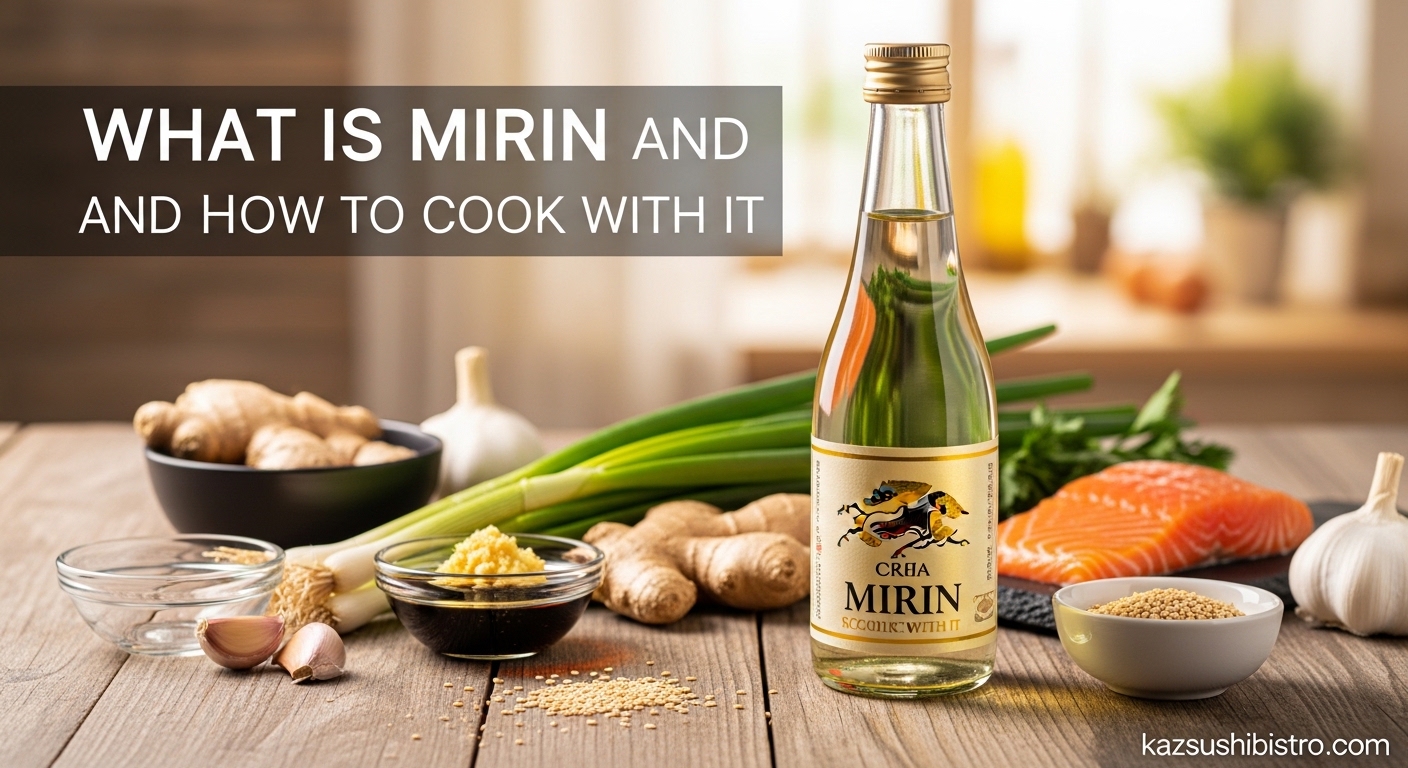
I still remember the first time I tasted proper homemade teriyaki sauce. The glaze had this gorgeous sheen, a depth of flavor I couldn’t quite place, and a subtle sweetness that didn’t overpower the chicken. My Japanese friend revealed the secret: mirin. That bottle of golden liquid had transformed my cooking, and I have been experimenting with it ever since. Whether you are new to Japanese cuisine or looking to refine your skills, understanding what is mirin and how to cook with it will open up a world of flavor possibilities in your kitchen.
Mirin is a sweet Japanese rice wine essential to authentic Japanese cooking. It adds umami depth, subtle sweetness, and that signature glossy finish to everything from teriyaki sauce to marinades. In this guide, I will share everything I have learned about this versatile ingredient over years of cooking, including how to choose the right type, when to use it, and what to do when your bottle runs dry.
Table of Contents
What Is Mirin?
Mirin (pronounced “mee-ruhn”) is a sweet Japanese cooking wine made from fermented glutinous rice. It contains approximately 8 to 14 percent alcohol by volume and adds a unique combination of sweetness, acidity, and umami to dishes. Unlike drinking sake, mirin is specifically crafted for culinary applications.
The magic of mirin lies in its fermentation process. Traditional production involves combining steamed glutinous rice with koji (a cultured rice mold) and shochu (a distilled spirit). This mixture ferments for 40 to 60 days, during which enzymes break down starches into sugars. The result is a golden liquid with complex flavor that cannot be replicated by simply adding sugar to other ingredients.
What does mirin taste like? The flavor profile balances sweetness with a gentle acidity and deep umami undertones. When heated, the alcohol content reduces while the sugars caramelize, creating a glossy glaze that adheres beautifully to proteins and vegetables. This characteristic shine makes mirin indispensable for authentic teriyaki and yakitori preparations.
Mirin has been a staple in Japanese kitchens for over 400 years. Originally developed as a sweetened sake for drinking, it evolved into a cooking ingredient during the Edo period. Today, it remains one of the essential seasonings in Japanese cuisine alongside soy sauce, sake, and dashi.
How Mirin Is Made 2026
Understanding how mirin is made helps explain why quality matters so much. Traditional hon mirin production follows a meticulous process that takes months to complete. The method has remained largely unchanged for centuries, which explains why authentic mirin commands a higher price than commercial alternatives.
The process begins with mochi rice, a glutinous short-grain variety that provides the starches needed for fermentation. This rice is steamed until tender, then combined with koji mold (Aspergillus oryzae). The koji contains enzymes that convert rice starches into fermentable sugars. Shochu, a distilled spirit typically made from barley or rice, is added to halt fermentation before all sugars convert to alcohol.
This arrested fermentation leaves significant residual sugar in the final product, creating mirin’s characteristic sweetness. The mixture ages for 40 to 60 days, developing complex flavors through slow enzymatic activity. Finally, the liquid is pressed from the rice solids and aged further before bottling.
Commercial aji mirin takes shortcuts. Manufacturers add glucose syrup or high-fructose corn syrup to fermented rice liquor rather than allowing natural sugar development. This reduces production time from months to days but sacrifices depth of flavor. When you taste hon mirin side by side with aji mirin, the difference is immediately apparent.
Types of Mirin: Hon Mirin, Aji Mirin, and Shio Mirin
Not all mirin is created equal. Japanese law recognizes three distinct categories, each with different ingredients, alcohol content, and culinary applications. Choosing the right type makes a significant difference in your cooking results.
| Type | Alcohol Content | Key Characteristics | Best For |
|---|---|---|---|
| Hon Mirin (True Mirin) | 14% ABV | Traditional production, 40-60 day fermentation, no added sugars | Serious cooking, teriyaki, marinades |
| Aji Mirin (Mirin-Style Seasoning) | Less than 1% ABV | Added sweeteners, shorter production, milder flavor | Casual cooking, budget-conscious |
| Shio Mirin (Salt Mirin) | 14% ABV with 1.5% salt | Contains salt to avoid alcohol taxes, same base as hon mirin | Household use where alcohol content is desired |
Hon mirin represents the gold standard. With 14% alcohol content and no additives, it delivers the full depth of flavor that traditional Japanese cooking demands. The extended fermentation creates complex compounds that enhance umami in ways commercial versions cannot match. I keep hon mirin for special dishes and when I want restaurant-quality results.
Aji mirin, sometimes labeled “mirin-style seasoning” or “mirin-fu chomiryo,” dominates supermarket shelves. The extremely low alcohol content (under 1%) makes it accessible and affordable, but the added sweeteners create a one-dimensional flavor. This type works fine for casual weeknight stir-fries but falls short for dishes where mirin plays a starring role.
Shio mirin emerged as a creative solution to Japanese alcohol taxation. By adding 1.5% salt, manufacturers created a product classified as a seasoning rather than an alcoholic beverage. This maintains the 14% alcohol content of hon mirin while reducing price and regulatory restrictions. The salt content requires adjusting other seasonings in your recipe.
Mirin vs Sake vs Rice Vinegar: What’s the Difference?
Confusion between mirin, sake, and rice vinegar ranks among the most common questions I hear from home cooks. These three Japanese pantry staples share rice as their base ingredient but serve completely different culinary functions. Understanding their distinctions prevents recipe mishaps and opens up substitution possibilities when needed.
| Ingredient | Alcohol Content | Sweetness | Primary Use |
|---|---|---|---|
| Mirin | 8-14% | High (natural sugars) | Sweetening, glazing, marinades |
| Sake | 15-20% | Low to none | Deglazing, tenderizing, depth |
| Rice Vinegar | None | Very low | Acidity, brightness, pickling |
Mirin versus sake presents the trickiest comparison because both contain alcohol and come from fermented rice. Sake undergoes complete fermentation, converting nearly all sugars to alcohol. Mirin arrests fermentation early, preserving those residual sugars. When cooking, sake adds depth and helps tenderize proteins through its enzymes. Mirin brings sweetness and that signature glossy finish. You cannot simply swap one for the other without adjusting other ingredients in your recipe.
Mirin versus rice vinegar confuses many beginners because both appear in Japanese recipes and look somewhat similar in the bottle. Rice vinegar contains no alcohol and offers sharp acidity without sweetness. Mirin provides alcohol content, significant sweetness, and only mild acidity. Some people suggest using rice vinegar with sugar as a mirin substitute, but this creates a completely different flavor profile. The vinegar lacks the complex fermentation compounds and umami depth that mirin contributes.
Can you substitute mirin for sake in cooking? Sometimes, but with important caveats. Replacing sake with mirin adds sweetness you may not want. If your recipe calls for sake and you only have mirin, reduce or eliminate other sweeteners like sugar or honey. The reverse substitution (sake for mirin) requires adding sugar, typically one teaspoon per tablespoon of sake, though this still misses some of mirin’s complexity.
How to Cook with Mirin
Learning how to cook with mirin transformed my Japanese-inspired dishes from “pretty good” to “restaurant quality.” The key lies in understanding when to add it, how much to use, and which dishes benefit most from its unique properties. After years of experimentation, here are the techniques that deliver consistent results.
1. Create Authentic Teriyaki Sauce
Teriyaki represents mirin’s most famous application. The classic ratio combines equal parts soy sauce and mirin with half as much sugar. I prefer a 2:2:1 ratio of soy sauce to mirin to sugar, simmered until the mixture thickens slightly. The mirin provides sweetness while creating that iconic lacquered finish on grilled chicken, salmon, or beef. Apply the glaze during the final minutes of cooking to prevent burning.
2. Tenderize Meats with Marinades
Mirin works beautifully in marinades thanks to its mild acidity and enzymes. Combine mirin with soy sauce, ginger, and garlic for a classic Japanese marinade that penetrates deeply into chicken, pork, or beef. Marinate delicate fish for 15 to 30 minutes. Chicken and pork benefit from 2 to 4 hours. Tougher beef cuts can marinate overnight. The mirin helps break down proteins while adding subtle sweetness that balances the saltiness of soy sauce.
3. Add Depth to Stir-Fries
A splash of mirin at the end of cooking adds dimension to vegetable and protein stir-fries. I typically add one tablespoon for a two-person serving, drizzling it in during the final 30 seconds over high heat. This creates a light glaze without making the dish taste obviously sweet. The alcohol burns off quickly, leaving behind only flavor compounds.
4. Enhance Soups and Broths
Adding mirin to Japanese soups and broths creates a more rounded flavor profile. One tablespoon per cup of dashi or broth adds subtle sweetness that balances the savory elements. This technique works particularly well with miso soup, providing a counterpoint to the fermented soybean paste’s intensity. Start with less and adjust to taste, as different miso varieties vary significantly in saltiness.
5. Season Sushi Rice
Proper sushi rice requires a seasoned vinegar mixture that includes mirin. The traditional combination mixes rice vinegar, mirin, sugar, and salt, heated briefly to dissolve the solids. This seasoning liquid gives sushi rice its characteristic sheen and balanced sweet-sour flavor. Without mirin, the rice tastes flat and misses the subtle depth that makes great sushi memorable.
6. Create Glossy Glazes
Brushing mirin onto grilled or roasted foods during the final minutes of cooking creates an attractive glossy finish. This technique, called “mirin boshi” in Japanese cuisine, works beautifully on fish, vegetables, and even meatballs. The sugars in mirin caramelize quickly under high heat, creating a restaurant-quality presentation that looks as good as it tastes.
7. Balance Salad Dressings
A small amount of mirin adds complexity to Asian-inspired salad dressings. Try combining mirin with rice vinegar, sesame oil, soy sauce, and a touch of ginger for a versatile dressing that works on everything from simple greens to seaweed salads. The mirin bridges the gap between the vinegar’s sharpness and the oil’s richness.
When do you add mirin during cooking? Generally, add mirin early when you want the alcohol to cook off and the sugars to integrate into sauces. For glazing effects, add it during the final minutes. For marinades, include it from the start. Avoid adding mirin to already-finished dishes, as the raw alcohol taste can be unpleasant.
Mirin Substitutes: What to Use When You’re Out
Running out of mirin mid-recipe happens to everyone. Fortunately, several substitutes can approximate mirin’s function, though none perfectly replicate its complex fermentation character. Here are the best alternatives ranked by effectiveness.
Best Option: Sake and Sugar
Combine one tablespoon of sake with one teaspoon of sugar to replace one tablespoon of mirin. This creates the closest approximation because sake shares mirin’s rice base and fermentation origins. The sugar adds the necessary sweetness. Use white sugar for a neutral sweetness or brown sugar for added depth. This substitution works in virtually any recipe calling for mirin.
Good Alternative: Dry Sherry and Sugar
Dry sherry provides a similar alcohol content and mild sweetness to mirin. Mix one tablespoon of dry sherry with half a teaspoon of sugar. The sherry’s nutty undertones add an interesting dimension, though they will slightly alter the final flavor profile. Avoid sweet sherry varieties, which overwhelm dishes with excessive sweetness.
Acceptable in a Pinch: Rice Vinegar and Sugar
Combine one tablespoon of rice vinegar with half a teaspoon of sugar. This lacks the alcohol content and fermentation complexity of mirin but provides the sweet-sour balance needed in many recipes. The vinegar’s sharpness requires reducing any other acidic ingredients in your recipe. This substitution works better in marinades and dressings than in glazes.
Emergency Substitute: White Wine and Sugar
Dry white wine mixed with sugar can work in Western-fusion applications. Use one tablespoon of wine with one teaspoon of sugar. Choose a neutral wine like Pinot Grigio rather than an oaky Chardonnay. This substitution significantly changes the flavor profile, so use it only when other options are unavailable.
Non-Alcoholic Option: Apple Juice and Rice Vinegar
Mix two tablespoons of apple juice with one teaspoon of rice vinegar for a completely alcohol-free alternative. The apple juice provides natural sweetness and some complexity, while the vinegar adds necessary acidity. This works for those avoiding alcohol entirely, though the flavor differs significantly from true mirin.
Can you use water instead of mirin? Only if you must. Water provides moisture but none of the flavor, sweetness, or glazing properties. If substituting water, increase other seasonings to compensate. This should be a last-resort option when cooking for someone with alcohol restrictions and no other substitutes available.
How to Store Mirin Properly
Proper storage keeps your mirin fresh and flavorful for months. The high sugar and alcohol content make mirin relatively shelf-stable, but certain practices extend its life and maintain quality. Here is what you need to know about storing both opened and unopened bottles.
Unopened mirin stores well in a cool, dark pantry for years. The alcohol and sugar act as natural preservatives. Keep bottles away from direct sunlight and heat sources, which degrade quality over time. Hon mirin actually improves slightly with age, developing more complex flavors similar to how wine matures.
Do you need to refrigerate mirin after opening? For aji mirin with its low alcohol content, yes. Refrigeration prevents spoilage and maintains flavor integrity. For hon mirin and shio mirin with 14% alcohol, refrigeration is recommended but not strictly required. I refrigerate all mirin types to be safe, and because cold temperatures slow any gradual flavor degradation.
How long does mirin last? Unopened bottles remain good indefinitely when stored properly. Opened hon mirin lasts 6 to 12 months refrigerated. Opened aji mirin should be used within 3 to 6 months. Signs of spoilage include cloudiness, off odors, or mold formation. Trust your senses. If the mirin smells or looks wrong, discard it.
Does mirin go bad? Eventually, yes. While the alcohol and sugar inhibit bacterial growth, flavor compounds degrade over time. Older mirin loses its subtle aromatics and tastes increasingly one-dimensional. For best results in cooking, use opened mirin within 6 months. Mark the opening date on the bottle with a permanent marker to track freshness.
Frequently Asked Questions
Does the alcohol cook out of mirin?
Is mirin halal?
What is the difference between hon mirin and aji mirin in actual cooking?
Can you drink mirin like sake?
Where can I buy quality mirin?
Is mirin the same as rice vinegar?
Conclusion
Understanding what is mirin and how to cook with it opens up a world of authentic Japanese flavors in your home kitchen. This sweet rice wine does far more than add sweetness. It creates glossy glazes, tenderizes meats, balances savory elements, and adds umami depth that transforms ordinary dishes into memorable meals.
Start with a quality hon mirin for your pantry staple. Experiment with teriyaki sauces, marinades, and stir-fries. When you run out, remember that sake with sugar makes the best substitute. Store your mirin properly, use it within six months of opening, and pay attention to the type you are buying.
Japanese cuisine has revered mirin for centuries for good reason. Once you start cooking with it regularly, you will find yourself reaching for that golden bottle again and again. The subtle sweetness and beautiful sheen it provides have earned mirin its place as an essential ingredient in my kitchen, and I suspect it will in yours too.