
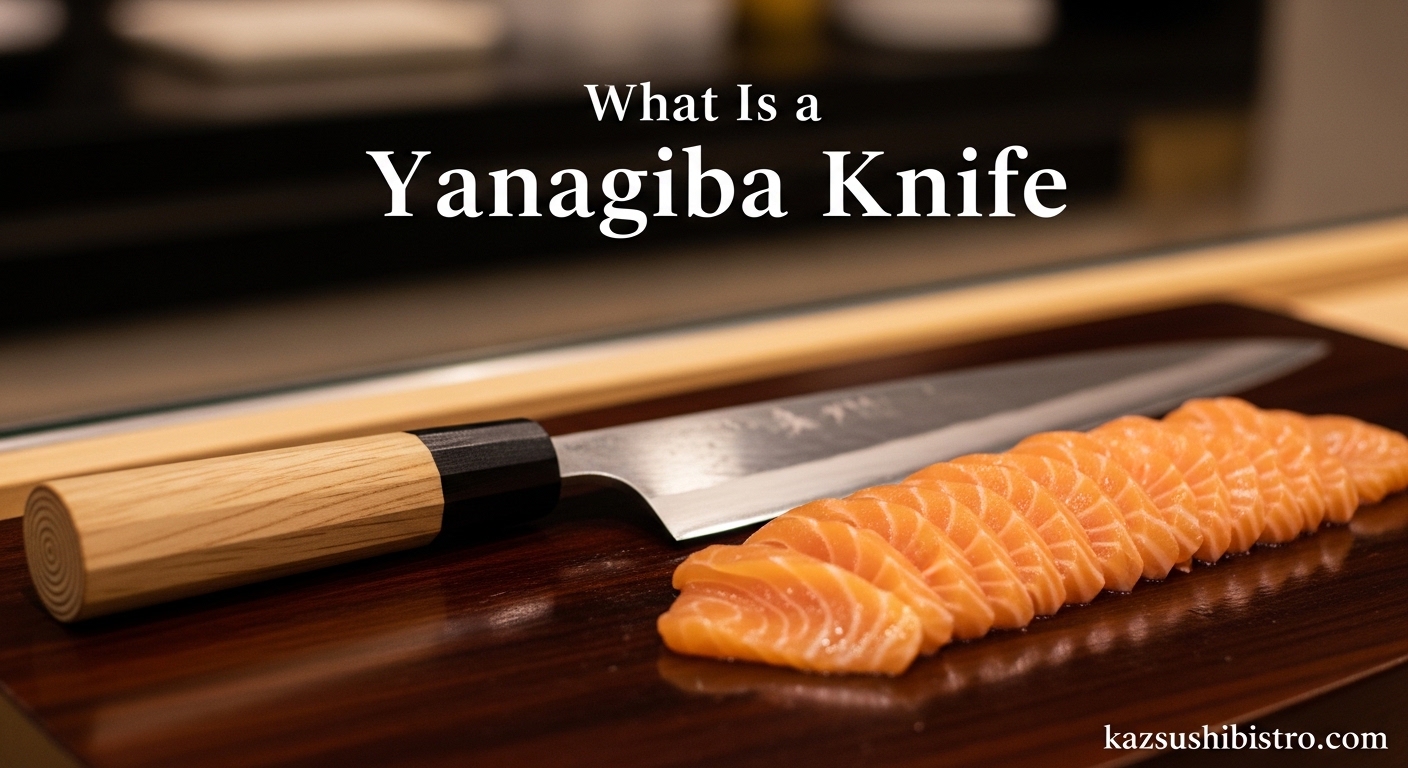
A yanagiba knife is a traditional Japanese single-bevel slicing knife designed specifically for preparing sashimi and sushi. Its name, 柳刃包丁 (yanagi-ba-bōchō), literally translates to “willow blade knife” in reference to its long, thin, graceful profile. The single bevel edge is sharpened on one side only, allowing for extremely precise pull-cut slicing of boneless fish without tearing or bruising the delicate flesh.
If you have ever wondered why sushi chefs create those perfect, mirror-like cuts on salmon and tuna, the yanagiba is the secret behind that technique. In this guide, I will explain exactly what makes this knife special, how its unique construction works, and whether it deserves a place in your kitchen.
Table of Contents
What Is a Yanagiba Knife?
The yanagiba is one of the three essential traditional Japanese kitchen knives, alongside the deba (heavy cleaver for fish butchery) and usuba (vegetable knife). While Western cooks might reach for a chef’s knife for almost every task, Japanese cuisine assigns specific tools to specific jobs.
The name breaks down beautifully: “yanagi” means willow tree, and “ba” means blade. When you look at a yanagiba, the connection becomes obvious. The blade curves gently like a willow branch, with a pointed tip and narrow spine that allows it to glide through fish with minimal resistance.
These knives typically measure between 240mm and 360mm in blade length, though 270mm and 300mm are the most common sizes found in professional kitchens. The blade is remarkably thin, often just 3-4mm at the spine near the handle, tapering to a razor-sharp edge that measures fractions of a millimeter.
Understanding Single Bevel Construction 2026
The defining characteristic of a yanagiba knife is its single bevel construction. Unlike Western knives that are sharpened equally on both sides to create a symmetrical V-shaped edge, the yanagiba is ground on one side only.
For right-handed users, the bevel is on the right side of the blade. This creates a wedge effect that pushes the slice away from the blade as you cut, preventing the fish from sticking. It also allows the edge to be sharpened to an incredibly acute angle, typically around 15 degrees or less.
According to forum discussions I reviewed, many home cooks worry about damaging expensive single bevel knives. One user noted that a quality yanagiba in the $200 to $300 range provides significant improvement over cheaper options. The precision of single bevel construction is why professional sushi chefs use a yanagiba for roughly 90% of their slicing work.
Yanagiba Blade Anatomy
Three distinct features define the yanagiba blade anatomy: the shinogi line, the urasuki concave, and the koba edge. Understanding these terms helps explain why this knife performs so differently from Western alternatives.
The Shinogi Line
The shinogi is the blade ridge line that runs along the knife, separating the flat beveled face from the upper blade surface. It creates a distinct angle that reduces friction as the knife passes through fish. Think of it as the backbone of the blade geometry.
The Urasuki Concave
On the back side of the blade (the non-beveled side), you will find a subtle concave grind called the urasuki. This hollow creates an air pocket between the blade and the food, preventing sticking and allowing the slice to fall away cleanly. Without this feature, fish would cling to the blade and ruin the clean cut surface.
The Koba Edge
The koba refers to the micro-bevel along the cutting edge itself. This tiny secondary bevel strengthens the edge and helps maintain sharpness through repeated use. When sharpening a yanagiba, you are primarily maintaining this koba edge while preserving the overall single bevel geometry.
What Is a Yanagiba Knife Used For?
The yanagiba serves one primary purpose: slicing boneless fish fillets for sashimi and sushi with maximum precision and minimal damage to the flesh. The long blade allows you to complete each slice in a single, continuous stroke without sawing back and forth.
When you saw through fish with a shorter knife, you create rough, torn surfaces that oxidize quickly and lose their fresh appearance. The yanagiba’s single-stroke cutting action produces the smooth, shiny cut surface that distinguishes professional sashimi from amateur attempts.
The Pull-Cut Technique
Using a yanagiba requires mastering the pull-cut technique. Unlike Western knives that often use a rocking or push-cut motion, the yanagiba is drawn backward toward you in one smooth motion. You start with the heel of the blade at the top of the fish, then pull the knife back and slightly down in a single arc.
This technique takes practice. The single bevel naturally wants to steer slightly toward the beveled side, so you learn to compensate with subtle pressure adjustments. Many beginners find this frustrating at first, which leads directly to the common question of whether a yanagiba is appropriate for home cooks.
Common Yanagiba Blade Lengths
Choosing the right blade length depends on your intended use and available storage space. Here are the standard options:
- 240mm (9.4 inches): The shortest common size, suitable for home cooks with limited space. Works well for smaller fish and home-sized fillets.
- 270mm (10.6 inches): The most versatile length, popular with both serious home cooks and professionals. Handles most fish sizes comfortably.
- 300mm (11.8 inches): The professional standard. Ideal for large tuna and salmon sides, allowing full single-stroke cuts on wide fillets.
- 330mm+ (13+ inches): Specialty sizes for professional sushi bars handling very large fish regularly.
For most home cooks, a 270mm yanagiba offers the best balance of capability and practicality. It fits in standard knife blocks and handles everything from salmon to tuna with ease.
Steel Types and Construction Methods
Yanagiba knives come in several steel varieties, each with distinct characteristics. Understanding these options helps you choose a knife that matches your maintenance willingness and performance needs.
Carbon Steel Options
White steel (shirogami) and blue steel (aogami) represent the traditional choices. White steel takes an incredibly sharp edge and sharpens easily, but it rusts if not dried immediately after use. Blue steel adds chromium and tungsten for better edge retention and rust resistance, though it is slightly harder to sharpen.
Stainless Steel Options
VG-10 and similar stainless steels offer convenience for home cooks who do not want to worry about rust. While they do not reach quite the same sharpness as carbon steel, they require minimal maintenance. Forum discussions suggest stainless options from brands like Shun work well for beginners.
Construction Types
Honyaki construction uses a single piece of steel, differentially hardened to create a hard edge and softer spine. These are premium knives that can warp if abused but offer exceptional performance. San-mai construction sandwiches hard steel between softer stainless layers, offering durability and easier maintenance at a lower price point.
Left-Handed Yanagiba Options
If you are left-handed, you need a specially made yanagiba with the bevel on the left side. Using a right-handed single bevel knife as a lefty causes the blade to wedge into the food and steer unpredictably.
The challenge is availability. Most manufacturers produce far more right-handed knives, and left-handed versions often carry a premium price. Some brands do not offer left-handed options at all. If you cannot find a true left-handed yanagiba, a double-bevel sujihiki becomes the practical alternative.
Yanagiba vs Sujihiki: Which Should You Choose?
The sujihiki is the double-bevel alternative to the yanagiba, and choosing between them depends on your priorities. The yanagiba offers ultimate precision for raw fish but demands proper technique and maintenance. The sujihiki provides versatility for slicing cooked proteins and vegetables while being easier to use and sharpen.
Forum insights reveal that many home cooks end up preferring the sujihiki for general use because of its flexibility. However, if your primary goal is making sashimi that looks like it came from a high-end sushi bar, the yanagiba remains unmatched.
A common misconception is that the yanagiba works well for vegetables. Based on forum discussions and my own experience, this is not true. The single bevel and thin blade can chip on hard vegetables. The yanagiba is truly a single-purpose tool.
Is a Yanagiba Good for Beginners?
The question of whether beginners should buy a yanagiba comes up constantly in cooking forums. The honest answer depends on your commitment level and expectations.
If you make sashimi or sushi occasionally, a double-bevel sujihiki or even a sharp Western slicing knife will serve you adequately. The learning curve for single bevel technique is real, and the price of quality yanagiba knives ($200 and up for decent options) represents a significant investment.
However, if you are passionate about Japanese cuisine and willing to practice the pull-cut technique, starting with a mid-range yanagiba around $150 to $200 makes sense. Look for stainless steel or stainless-clad carbon options from reputable brands like Tojiro or Kikuichi to minimize maintenance headaches while learning.
One forum user summarized it well: spending under $150 often results in disappointment, while the jump from $200 to $300 knives provides noticeable improvements in steel quality and construction.
Care and Maintenance Tips
Proper care extends the life of your yanagiba significantly. For carbon steel knives, wipe the blade dry immediately after each use. Do not let acidic foods sit on the blade, as they will cause discoloration and potentially pitting.
Store your yanagiba in a way that protects the edge. Magnetic strips work well if you place the spine against the magnet first. Knife blocks are fine if the slot fits properly. Avoid drawer storage where the blade can bang against other utensils.
Sharpening a single bevel knife requires different technique than double bevel Western knives. You sharpen primarily on the beveled side, then polish the back side to remove the burr. Many owners send their yanagiba to professional sharpeners periodically, maintaining the edge at home with a leather strop or fine stone between professional sessions.
Frequently Asked Questions
What is a yanagiba knife used for?
A yanagiba knife is used primarily for slicing boneless fish fillets for sashimi and sushi. Its long, single-bevel blade allows for precise pull-cut slicing that creates smooth, shiny cut surfaces without tearing or bruising the delicate fish flesh. It excels at cutting salmon, tuna, and other raw fish in single, continuous strokes.
Is a yanagiba good for beginners?
A yanagiba can be challenging for beginners due to the learning curve of single bevel technique and the pull-cut motion required. Beginners who occasionally make sushi may prefer starting with a double bevel sujihiki knife, which is more forgiving and versatile. However, dedicated home cooks willing to practice can successfully learn yanagiba technique with a mid-range stainless steel option.
Why is a yanagiba knife only sharpened on one side?
A yanagiba is single bevel because this construction allows for an extremely sharp edge angle and creates a wedge effect that pushes slices away from the blade. The single bevel enables the precise pull-cut technique essential for creating clean, mirror-like surfaces on sashimi. It also allows the back side (urasuki) to be hollowed, preventing fish from sticking to the blade.
Can I use a yanagiba for vegetables?
No, a yanagiba should not be used for vegetables. The thin, hard blade can chip on hard vegetables like carrots or squash. The yanagiba is designed specifically as a single-purpose tool for slicing boneless fish. For vegetables, use a dedicated vegetable knife like a nakiri or usuba.
What length yanagiba should I buy?
For most home cooks, a 270mm (10.6 inch) yanagiba offers the best balance of capability and practicality. This length handles most home-sized fish fillets while fitting in standard knife storage. Professional sushi chefs often prefer 300mm (11.8 inch) blades for large tuna and salmon sides, while 240mm works for those with limited storage space.
Conclusion
A yanagiba knife represents the pinnacle of specialized tools for Japanese cuisine. Its single bevel construction, willow blade profile, and pull-cut technique enable the precise sashimi preparation that defines professional sushi presentation.
For home cooks, the decision comes down to passion and frequency of use. If you regularly prepare raw fish and want authentic results, investing in a quality yanagiba rewards your commitment. For occasional sushi makers, a double bevel sujihiki provides versatility without the learning curve.
Understanding what a yanagiba knife is and how it works helps you make an informed decision. Whether you add one to your collection or not, appreciating the craftsmanship behind this traditional Japanese kitchen knife deepens your connection to the art of sushi making.