
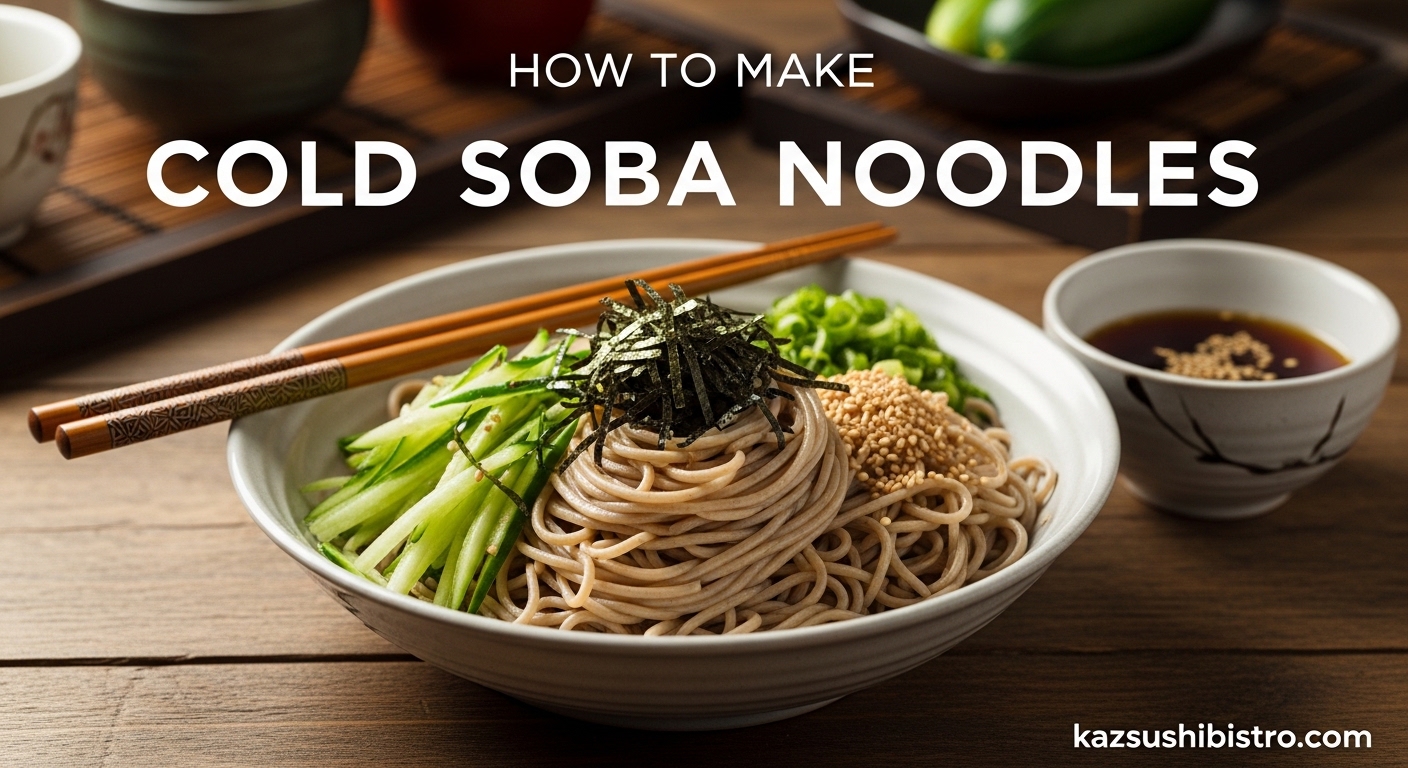
Learning how to make cold soba noodles at home is one of the most rewarding skills you can add to your summer cooking repertoire. In just 15 minutes, you can create a restaurant-quality dish that is light, refreshing, and deeply satisfying on a hot day.
At KAZ Sushi Bistro, we have served thousands of bowls of zaru soba to our guests. The technique is surprisingly simple once you understand the fundamentals. I am going to walk you through everything from selecting the right buckwheat noodles to achieving that perfect chewy texture that makes cold soba so addictive.
Whether you are looking for a quick weeknight dinner, a healthy lunch option, or an authentic Japanese experience at home, this guide covers it all. You will learn the proper ice bath technique, how to make or choose a dipping sauce, and which toppings transform a simple bowl into something extraordinary.
Table of Contents
What is Zaru Soba?
Zaru soba is the Japanese term for cold buckwheat noodles served with a savory dipping sauce. The name comes from the bamboo mat (zaru) traditionally used to drain and present the noodles. This presentation is not just decorative. The elevated mat allows air to circulate, keeping the noodles cool and preventing them from sticking together.
Unlike hot soba served in broth, cold soba relies on a concentrated dipping sauce called tsuyu or mentsuyu. You take a portion of noodles with your chopsticks, dip them briefly in the sauce, then slurp them up. The contrast between the chilled noodles and the room-temperature sauce creates a refreshing experience that is perfect for summer.
The flavor profile is distinctly nutty from the buckwheat, with a clean, almost grassy finish. When properly cooked, the noodles have a bouncy, slightly chewy texture called “al dente” in Italian cooking but known as “koshi” in Japanese. This texture is the hallmark of well-made soba and what separates a good bowl from a great one.
Ingredients for Cold Soba Noodles
The ingredient list for cold soba is refreshingly short. Quality matters here because each component shines through. You want to look for dried soba noodles made with buckwheat flour. Most packages contain a blend of 80% buckwheat and 20% wheat flour, which provides the best texture. Pure 100% buckwheat soba (called “juwari soba”) is available for those avoiding gluten, though it is more delicate to work with.
For the dipping sauce, you have two options. Store-bought mentsuyu is widely available at Asian markets and many grocery stores. Look for brands that list dashi as the first ingredient. Alternatively, you can make your own with just four ingredients: dashi stock, soy sauce, mirin, and sake. I will share my preferred homemade recipe below.
Traditional toppings include nori seaweed cut into thin strips, fresh wasabi or grated ginger, and daikon radish grated finely. Sesame seeds, sliced scallions, and shiso leaves add color and complementary flavors. For a more substantial meal, consider adding sliced cooked egg, grilled tofu, or flaked salmon.
How to Make Cold Soba Noodles: Step-by-Step 2026
Let me walk you through the exact process we use at the restaurant to achieve perfect cold soba every time. The key is timing and temperature management.
Step 1: Prepare Your Dipping Sauce
If using store-bought mentsuyu, dilute it according to package directions. The typical ratio is one part concentrate to two or three parts cold water. I prefer a 1:3 ratio for summer when you want something lighter. If making homemade sauce, combine 1 cup dashi, 3 tablespoons soy sauce, 2 tablespoons mirin, and 1 tablespoon sake in a small pot. Bring to a quick boil, then cool completely. You can make this up to two weeks ahead and store it in the refrigerator.
Step 2: Cook the Noodles
Bring a large pot of unsalted water to a rolling boil. Unlike pasta, soba noodles should never be cooked in salted water. The salt can make the delicate buckwheat exterior gummy. Add the dried soba noodles, stirring gently to separate them. Cook according to package directions, typically 3 to 5 minutes depending on thickness.
The noodles are done when they soften completely but still have a slight resistance when bitten. This is that perfect al dente texture. Overcooked soba becomes mushy and loses its characteristic nuttiness. I recommend testing a strand 30 seconds before the package time suggests.
Step 3: The Ice Bath Technique
Immediately drain the noodles and transfer them to a large bowl of ice water. This stops the cooking instantly and firms up the texture. Use plenty of ice. The colder the water, the better the noodles will set. Let them chill for about 30 seconds to 1 minute until they feel cold to the touch.
The ice bath serves two purposes. It halts cooking to prevent overcooking, and it tightens the surface starch, giving the noodles that signature slippery, firm texture. Do not skip this step. Room temperature cooling will result in soggy, sticky noodles.
Step 4: Rinse Thoroughly
Drain the ice bath and rinse the noodles under cold running water. Use your hands to gently agitate the strands, removing excess surface starch. This prevents clumping and gives the noodles their beautiful glossy appearance. Rinse until the water running off is clear rather than cloudy.
Some traditionalists prefer to rub the noodles gently between their palms during rinsing. This removes more starch and creates an even smoother texture. If you prefer your soba with more grip, a lighter rinse will preserve more of the starchy coating.
Step 5: Drain and Plate
Let the rinsed noodles drain completely. Shake off excess water but do not squeeze them. Arrange the noodles on a traditional bamboo zaru mat if you have one, or simply plate them in a neat mound on a shallow bowl or plate. The presentation matters less than ensuring the noodles are not sitting in a puddle of water.
Pour your prepared dipping sauce into small individual bowls, about one-third full. Place toppings in small dishes alongside. The traditional way to eat is to add your desired toppings to the dipping sauce, then dip the noodles briefly before eating.
Making the Perfect Dipping Sauce (Tsuyu/Mentsuyu)
The dipping sauce is what elevates simple cold noodles into zaru soba. A good tsuyu balances umami depth with subtle sweetness and a clean finish. The base is always dashi, a Japanese stock made from kombu seaweed and dried bonito flakes.
Store-bought mentsuyu is a perfectly acceptable shortcut. Japanese home cooks use it regularly. When shopping, look for bottles labeled “concentrated tsuyu” or “mentsuyu.” Avoid products with high fructose corn syrup high on the ingredient list. Better brands use real mirin and sake in their formulation.
To make your own, start with good dashi. You can use instant dashi powder (hon-dashi is a reliable brand), though making it from scratch with kombu and katsuobushi will give superior results. Combine 1 cup dashi with 3 tablespoons light soy sauce, 2 tablespoons mirin, and 1 tablespoon sake. Bring to a boil for 30 seconds to burn off the alcohol, then cool. Taste and adjust. Some prefer a sweeter sauce and add a teaspoon of sugar.
The dilution ratio depends on your preference and the brand. Start with one part sauce to three parts cold water for a light summer dipping sauce. For a richer, more intense experience, use one part sauce to two parts water. You can always adjust after tasting.
Toppings and Garnishes for Cold Soba
Traditional zaru soba keeps toppings minimal to let the noodles and sauce shine. The essential trio is nori, wasabi, and scallions. Cut nori sheets into thin strips about one-quarter inch wide. Grate fresh wasabi if available, or use a high-quality wasabi paste. Slice scallions paper-thin on a sharp diagonal for visual appeal.
Grated daikon radish is another classic addition. The fine, watery texture of grated daikon adds cooling refreshment that complements the cold noodles. Some diners like to mix a spoonful into their dipping sauce for added pungency. A little goes a long way.
For more substantial meals, consider these additions. A soft-boiled egg sliced in half adds protein and richness. Grilled or pan-fried tofu cubes provide vegetarian protein with a pleasant texture contrast. Flaked cooked salmon, sliced ham, or shredded chicken turn the dish into a complete meal.
Vegetable options include cucumber cut into matchsticks, thinly sliced bell peppers, or baby spinach leaves. These add crunch and color. Sesame seeds, both white and black, provide visual interest and nutty flavor that echoes the buckwheat.
Expert Tips and Variations
After years of making soba at home and in professional kitchens, I have collected some tips that make a real difference. First, never cook soba in advance and store it dressed. The noodles will absorb sauce and become soggy within minutes. Cook just before serving, or store plain noodles and sauce separately if meal prepping.
To prevent sticking, make sure your rinse is thorough. The cold water wash removes surface starch that causes clumping. If you must store cooked noodles for a short time, toss them with just a drop of sesame oil to keep them separate.
For a low-sodium version, look for reduced-sodium soy sauce and use a higher dilution ratio for your dipping sauce. You can also make the sauce with more dashi and less soy base. Some brands of soba noodles themselves are quite high in sodium, so check labels if this is a concern.
A salad-style variation is popular in the West. Instead of dipping, toss the chilled noodles with a ginger-soy dressing and plenty of raw vegetables. This works beautifully for picnics and packed lunches since there is no separate sauce to spill. Use a dressing made with rice vinegar, soy sauce, sesame oil, grated ginger, and a touch of honey.
Health Benefits and Dietary Considerations
Soba noodles offer several nutritional advantages over wheat pasta. Buckwheat is naturally high in protein, providing about 8 grams per serving compared to 7 grams in regular pasta. It is also rich in rutin, a flavonoid that supports cardiovascular health, and contains all eight essential amino acids.
For those with celiac disease or gluten sensitivity, 100% buckwheat soba (juwari soba) is naturally gluten-free. However, most soba sold in stores contains wheat flour. Always check the ingredient list. Look for packages that say “100% buckwheat” or “juwari” if you need to avoid gluten completely. Be aware that even 100% buckwheat soba is often processed in facilities that handle wheat.
Diabetics often find soba to be a better choice than wheat pasta due to its lower glycemic index. The buckwheat flour slows digestion and prevents rapid blood sugar spikes. A typical serving of cold soba contains about 200 to 250 calories, making it suitable for calorie-controlled diets.
For people with IBS, soba can be a good alternative to wheat pasta. Buckwheat is low in FODMAPs when consumed in moderate portions. However, the high fiber content might bother some individuals during flare-ups. The simple preparation of cold soba without heavy sauces is often easier to digest than cream-based pasta dishes.
Pairing Cold Soba with Sushi
At KAZ Sushi Bistro, we often recommend cold soba as an appetizer or palate cleanser between sushi courses. The clean, nutty flavor prepares the palate without overwhelming it. The temperature contrast between cold noodles and room-temperature fish is refreshing and sets up the next piece of sushi beautifully.
If you are planning a sushi dinner at home, consider serving small portions of zaru soba between the sashimi and nigiri courses. The portion should be modest, about one-third of a normal serving. This keeps the appetite engaged without filling up your guests before the main event.
For beverage pairings, cold soba loves crisp, dry drinks. A chilled junmai ginjo sake complements the nuttiness of the buckwheat. Dry white wines like sauvignon blanc or gruner veltliner work well for wine drinkers. Even a cold Japanese lager can be perfect on a hot afternoon.
The shared flavor profile between cold soba and many sushi items makes them natural companions. Both feature clean flavors, subtle sweetness, and umami depth. The simplicity of soba does not compete with the complexity of good sushi. Instead, it creates a harmonious dining experience that showcases Japanese culinary philosophy.
Frequently Asked Questions
How do you make cold soba?
Cook dried soba noodles in unsalted boiling water for 3 to 5 minutes until al dente. Drain and immediately transfer to an ice bath to stop cooking. Rinse under cold water to remove starch, then drain thoroughly. Serve with diluted mentsuyu dipping sauce and toppings like nori, wasabi, and scallions.
Are soba noodles ok for diabetics?
Yes, soba noodles are generally a good choice for diabetics. Buckwheat has a lower glycemic index than wheat, meaning it causes slower, more gradual blood sugar increases. A typical serving contains about 200 to 250 calories with 8 grams of protein. Choose 100% buckwheat varieties for the best glycemic control.
Are soba noodles good for IBS?
Soba can be suitable for IBS sufferers in moderation. Buckwheat is naturally low in FODMAPs. The simple preparation of cold soba without heavy sauces is easier to digest than cream-based dishes. However, the fiber content may bother some during flare-ups. Start with a small portion to test your tolerance.
Can celiac patients eat soba?
Celiac patients can eat soba only if it is 100% buckwheat (juwari soba) and certified gluten-free. Most store-bought soba contains wheat flour. Always check labels carefully and look for gluten-free certification. Be aware that even 100% buckwheat soba may be processed in facilities that handle wheat.
How long should you cook soba noodles?
Cook soba noodles for 3 to 5 minutes depending on thickness and brand. Follow package directions but start testing 30 seconds before the recommended time. The noodles should be tender but still have slight resistance when bitten. Overcooking results in mushy, gummy noodles.
Can you meal prep with soba noodles?
Yes, but store components separately. Cooked soba noodles will keep in the refrigerator for 2 to 3 days when tossed with a drop of oil to prevent sticking. Store dipping sauce separately in a sealed container. Combine just before eating to prevent soggy noodles. Do not dress noodles until ready to serve.
Conclusion
Now you know exactly how to make cold soba noodles at home that rival what you would find at a Japanese restaurant. The technique is straightforward: cook the noodles briefly, shock them in ice water, rinse thoroughly, and serve with a well-balanced dipping sauce. The magic lies in the details, the timing, the thorough rinsing, and the quality of your ingredients.
Start with good dried soba from a reputable brand. Do not skip the ice bath. Take time to rinse away the surface starch. These three steps make the difference between amateur and professional results. Once you taste properly prepared cold soba, with that bouncy texture and clean nutty flavor, you will understand why this simple dish has been beloved in Japan for centuries.
Experiment with different toppings and find your perfect dipping sauce ratio. Whether you prefer traditional minimalist garnishes or loaded protein-rich bowls, the foundation remains the same. Make a batch this week and discover why cold soba deserves a permanent spot in your summer recipe collection.