
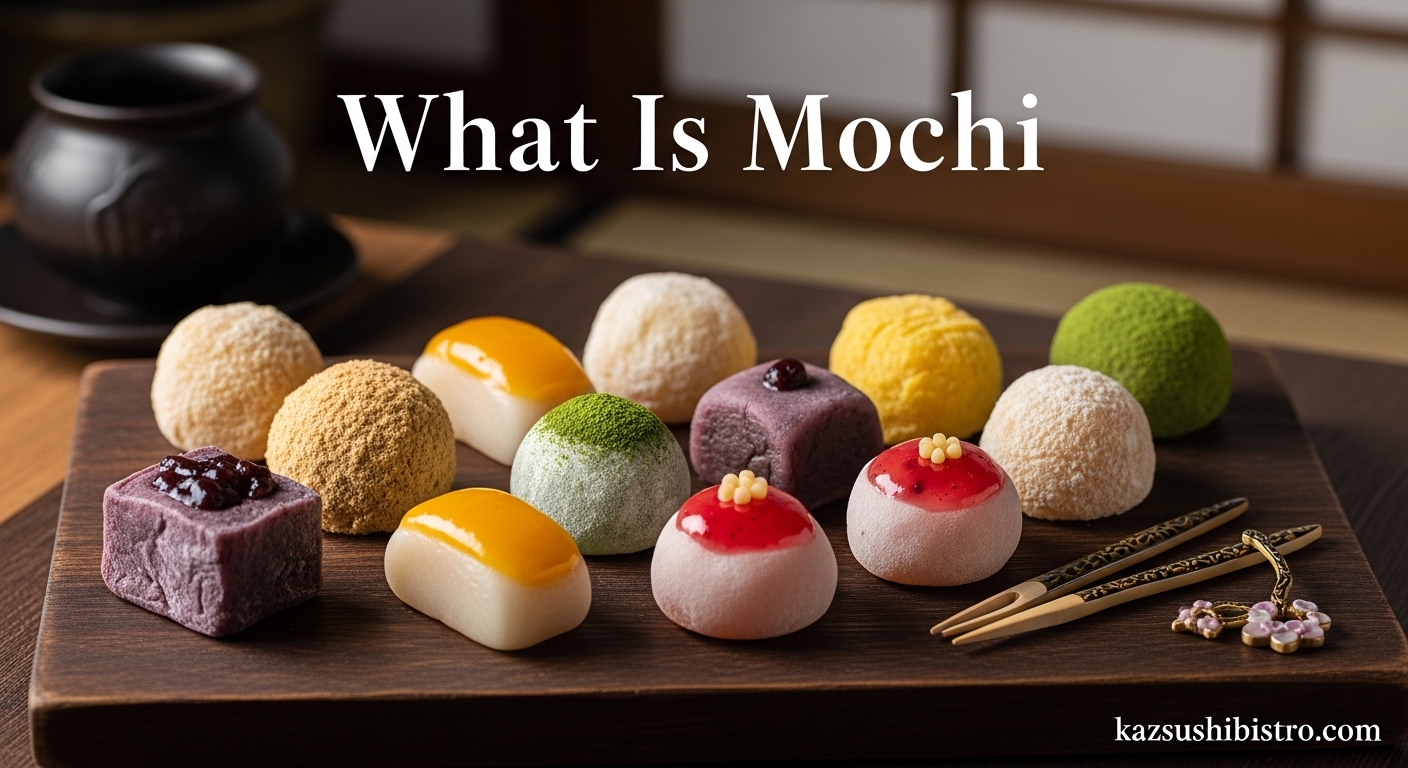
Mochi (pronounced MOH-chee) is a traditional Japanese rice cake made from mochigome, a short-grain japonica glutinous rice that is steamed and pounded into a soft, chewy paste. The resulting treat has a unique stretchy texture and subtle sweetness that can be enjoyed plain or filled with ingredients like sweet red bean paste. This centuries-old food holds deep cultural significance in Japan and has captured the attention of food lovers worldwide in recent years.
When I first tried mochi at a small wagashi shop in Tokyo, I was immediately struck by its pillowy-soft exterior and the way it stretched with each bite. That experience sparked my fascination with this ancient Japanese confection.
In this guide, I will walk you through everything you need to know about mochi. You will learn what mochi is made of, how it is prepared using both traditional and modern methods, the different types available, and why this simple rice cake remains such an important part of Japanese culture today.
Table of Contents
What Is Mochi 2026
Mochi is a Japanese rice cake created from mochigome, a specific variety of short-grain glutinous rice that differs from the standard rice eaten at daily meals. The word “glutinous” refers to the rice’s sticky quality when cooked, not the presence of gluten, making mochi naturally gluten-free.
The defining characteristic of mochi is its texture. Properly made mochi is chewy, stretchy, and slightly elastic. When you pull a piece of fresh mochi, it should extend noticeably before breaking. This texture comes from the starch structure of mochigome rice and the pounding process that breaks down the grains into a cohesive paste.
Traditional mochi contains only two ingredients: mochigome rice and water. Modern variations may include small amounts of sugar or cornstarch to adjust the texture or sweetness level. The rice is first soaked overnight, then steamed until tender, and finally pounded repeatedly while hot to create the smooth, dough-like consistency that defines mochi.
The Special Rice Behind Mochi
Mochigome is not interchangeable with regular Japanese rice. This short-grain japonica variety contains higher levels of amylopectin, a type of starch that creates the characteristic stickiness when heated and pounded. The grains are rounder and more opaque than standard sushi rice.
When steamed, mochigome becomes incredibly soft and gel-like. This property allows the rice to be pounded into a smooth mass without remaining grainy. The final product has a neutral, slightly sweet flavor that serves as the perfect canvas for various fillings and toppings.
History and Cultural Significance
The history of mochi stretches back over two thousand years to Japan’s Jomon Period. Archaeological evidence suggests that early forms of pounded rice cakes were made as offerings to the gods and spirits. Over centuries, the preparation evolved into the refined technique used today.
By the Heian Period (794-1185), mochi had become an essential part of religious ceremonies and imperial court rituals. The practice of mochitsuki, the traditional mochi-pounding ceremony, developed during this era and remains an important cultural activity today.
Mochi and Japanese New Year
No discussion of mochi is complete without mentioning its role in Japanese New Year celebrations, known as Oshogatsu. Mochi is the centerpiece of several important traditions during this holiday.
Kagami mochi is a decorative stack of two round mochi cakes topped with a bitter orange, displayed in homes during the New Year period. This symbolizes hope for a fortunate year ahead. On January 11th, families perform Kagami Biraki, the “mirror opening” ceremony, where they break and eat the kagami mochi to bring good luck.
Another New Year tradition is ozoni, a savory soup containing mochi that varies by region. Some families prepare it with miso broth, while others use clear dashi. The mochi in ozoni becomes soft and stretchy when heated, creating a comforting texture that many Japanese people associate with the start of a new year.
Symbolism and Meaning
Mochi carries powerful symbolic weight in Japanese culture. Its stretchy texture represents longevity and the hope for a long life. The round shape of kagami mochi symbolizes family continuity and the cycles of time. Because mochi is extremely filling and energy-dense, it is also associated with strength and vitality.
These associations make mochi a popular gift during celebrations, weddings, and other significant life events. Giving someone mochi is a way of wishing them prosperity and good health.
How Mochi Is Made
The process of making mochi has evolved significantly over time. Today, you will find both traditional ceremonial methods and convenient modern techniques that home cooks can use in their own kitchens.
Traditional Mochitsuki Ceremony
Mochitsuki is the traditional art of mochi-making that transforms steamed rice into the beloved chewy treat. This process requires coordination, timing, and physical effort.
The ceremony begins with soaking mochigome rice overnight to ensure even cooking. The soaked rice is then placed in a seiro, a special bamboo steamer, and steamed for approximately 30 to 40 minutes until the grains become translucent and tender.
Once steamed, the hot rice is transferred to an usu, a large stone or wooden mortar. Using a kine, a heavy wooden mallet, one person pounds the rice while another turns and wets the mass between strikes. This teamwork prevents the mallet from sticking and ensures even pounding. The rhythmic pounding continues until the rice becomes a smooth, sticky dough with no visible grain texture.
The hot mochi is then quickly shaped by hand into rounds, squares, or other forms before it cools and becomes difficult to work with. During New Year celebrations, entire communities often gather for mochitsuki, making it a social event as much as a culinary one.
Modern Methods for Home Cooks
Most mochi consumed today is made using modern equipment that produces consistent results without the physical demands of traditional pounding. Commercial manufacturers use machines that replicate the pounding action on an industrial scale.
For home cooks, microwave mochi has become a popular shortcut. This method uses mochiko, sweet rice flour that has already been processed from mochigome. By mixing mochiko with water and microwaving the mixture in short intervals while stirring between each burst, you can create small batches of mochi in under 10 minutes.
While microwave mochi lacks the complex flavor developed during the traditional steaming and pounding process, it offers a convenient way to enjoy fresh mochi at home. I have found this method particularly useful for making small quantities of daifuku with seasonal fruit fillings.
Traditional vs Modern Comparison
| Aspect | Traditional Mochitsuki | Modern/Microwave Method |
|---|---|---|
| Primary Ingredient | Whole mochigome rice | Mochiko rice flour |
| Preparation Time | 2-4 hours | 10-15 minutes |
| Equipment Needed | Usu, kine, seiro | Microwave, bowl |
| Texture | Complex, slightly grainy | Smooth, uniform |
| Flavor Depth | Rich, developed from steaming | Mild, straightforward |
| Best For | Ceremonies, large batches | Quick home preparation |
Types of Mochi
One of the most exciting aspects of exploring mochi is discovering the incredible variety of forms it takes across Japan. From sweet confections to savory snacks, mochi adapts to countless preparations. Here are the most popular types you should know about.
Daifuku
Daifuku is the round, stuffed mochi that most people picture when they think of this treat. The name means “great luck,” and these palm-sized cakes are traditionally filled with anko, a sweet red bean paste made from azuki beans.
Modern daifuku variations include ichigo daifuku, which contains a whole fresh strawberry inside, and matcha daifuku, where the mochi itself is flavored with green tea powder. The contrast between the chewy exterior and creamy filling makes daifuku one of the most beloved wagashi varieties.
Kagami Mochi
As mentioned earlier, kagami mochi serves a ceremonial rather than culinary purpose for most of the New Year period. These decorative mochi stacks are not meant to be eaten until the Kagami Biraki ceremony.
The two-tiered structure represents the passing of time from one year to the next. The daidai orange on top symbolizes the continuation of family lineages, as the word for this citrus fruit also means “generation after generation.”
Kiri Mochi
Kiri mochi refers to rectangular blocks of unsweetened mochi that are cut into individual portions. This is the practical, everyday form of mochi that Japanese households keep in their pantries.
To eat kiri mochi, you must first soften it through grilling, boiling, or microwaving. Grilled kiri mochi develops a crispy exterior while maintaining a gooey center, making it perfect for topping with soy sauce or wrapping in nori seaweed. It is also the standard type used in ozoni soup.
Isobe Maki
Isobe maki combines grilled mochi with savory flavors. Small pieces of kiri mochi are grilled until puffed and blistered, then wrapped in nori seaweed and brushed with soy sauce.
The combination of crispy-chewy mochi, salty soy sauce, and fragrant nori creates an addictive snack that balances the richness of the rice cake. This preparation showcases how mochi works equally well in savory applications.
Yomogi Mochi
Yomogi mochi incorporates yomogi, Japanese mugwort, into the rice dough. The herb imparts a distinctive green color and earthy, slightly bitter flavor that complements sweet fillings like anko.
This variety, also known as kusa mochi (grass mochi), is particularly popular in spring when fresh yomogi is available. The herbal notes create a more sophisticated flavor profile than plain white mochi.
Ohagi and Bota Mochi
Ohagi and bota mochi are essentially the same confection with different names depending on the season. These consist of a ball of mochi rice partially coated with sweet toppings rather than fully enclosed in a mochi wrapper.
The traditional coating is anko, but kinako (roasted soybean flour) mixed with sugar is another classic option. During the autumn equinox, these are called ohagi after the bush clover that blooms then. In spring, they are called bota mochi, referencing the peony flower.
Other Notable Varieties
Sakura mochi is a pink-colored, leaf-wrapped variety associated with cherry blossom season. The mochi is tinted with red food coloring and wrapped in a pickled cherry leaf that imparts a subtle salty-sweet flavor.
Hishi mochi features three colored layers (pink, white, and green) arranged in a diamond shape. This decorative type is associated with Hinamatsuri, the Doll Festival celebrated in March.
Mizu shingen mochi gained internet fame as a “raindrop cake” due to its translucent, water-drop appearance. This modern creation uses agar rather than rice to achieve its distinctive look.
Mochi Types Comparison
| Type | Appearance | Flavor Profile | Best Occasion |
|---|---|---|---|
| Daifuku | Round, smooth | Sweet, with anko filling | Everyday treat, gift |
| Kagami Mochi | Stacked rounds with orange | Plain, decorative | New Year ceremony |
| Kiri Mochi | Rectangular blocks | Neutral, versatile | Soup, grilling |
| Isobe Maki | Nori-wrapped squares | Savory, salty | Snack, side dish |
| Yomogi Mochi | Green, herb-flecked | Earthy, slightly bitter | Spring season |
| Ohagi/Bota Mochi | Rice ball with coating | Sweet, nutty | Equinox celebrations |
| Sakura Mochi | Pink, leaf-wrapped | Floral, salty-sweet | Cherry blossom viewing |
What Is Mochi Ice Cream
Mochi ice cream represents a brilliant fusion of Japanese tradition and Western dessert innovation. This popular treat consists of small balls of ice cream wrapped in a thin layer of soft mochi dough, creating a handheld dessert that is both familiar and exotic to Western palates.
The invention of mochi ice cream is credited to Frances Hashimoto, a Japanese-American businesswoman who developed the concept in the 1980s at her family’s Los Angeles bakery. Hashimoto recognized that the chewy texture of mochi could serve as the perfect edible wrapper for ice cream, eliminating the need for cones or bowls.
Unlike traditional mochi, which is typically filled with anko or eaten plain, mochi ice cream uses the rice cake as a thin, elastic skin around flavors like vanilla, strawberry, matcha, and mango. The mochi layer must be thin enough to bite through easily when frozen, yet thick enough to hold the ice cream without breaking.
Is Mochi Actually Ice Cream
To answer the common question directly: mochi ice cream is indeed ice cream at its center, surrounded by a mochi wrapper. It is not traditional mochi, but rather a modern dessert that incorporates mochi as an ingredient.
Traditional mochi and mochi ice cream differ significantly in preparation, texture, and cultural context. Traditional mochi is a standalone confection with deep historical roots, while mochi ice cream is a contemporary fusion food designed for convenience and novelty.
Brands like My/Mochi and Little Moons have popularized mochi ice cream globally, introducing many people to the concept of mochi for the first time. For many consumers in Western countries, mochi ice cream serves as a gateway to exploring traditional Japanese mochi varieties.
Is Mochi Healthy
The health profile of mochi depends entirely on the type you are eating and the quantity you consume. Plain mochi made from just rice and water is relatively simple nutritionally, while filled and flavored varieties can contain significant amounts of sugar.
A typical serving of plain mochi (about 30 grams) contains approximately 100 calories, mostly from carbohydrates. Mochi is naturally fat-free and provides a quick source of energy from its high starch content. This makes it popular among athletes in Japan who need fast fuel.
Nutritional Benefits
Mochi is naturally gluten-free, which makes it suitable for people with celiac disease or gluten sensitivity. The confusion around “glutinous rice” leads many to incorrectly assume mochi contains gluten, but the term only describes the sticky texture.
The concentrated rice provides sustained energy, and traditional fillings like anko made from azuki beans offer protein and fiber. Some varieties incorporating mugwort or sesame add additional nutrients and antioxidants.
Important Safety Considerations
Mochi poses a genuine choking hazard that everyone should take seriously. The dense, sticky texture can block airways if not chewed thoroughly. This risk is highest among elderly people and young children who may have difficulty chewing properly.
Every year in Japan, several deaths occur from mochi-related choking incidents, particularly during New Year when consumption peaks. The Japanese government and media regularly issue warnings reminding people to cut mochi into small pieces and chew slowly.
If you are serving mochi to children or elderly individuals, always cut it into bite-sized pieces and ensure they eat slowly while sitting upright. Never eat mochi while lying down or engaged in physical activity.
Moderation Is Key
While plain mochi is not inherently unhealthy, it is calorie-dense and can spike blood sugar due to its high glycemic index. People with diabetes should consume mochi in moderation and pair it with protein or fat to slow absorption.
Commercial mochi products, particularly mochi ice cream, often contain added sugars and preservatives. Reading ingredient labels helps you make informed choices about what you are eating.
Frequently Asked Questions
What does mochi taste like?
Mochi has a subtle, naturally sweet flavor with a distinctive chewy, stretchy texture. Plain mochi tastes similar to plain rice but with a more complex, developed flavor from the steaming and pounding process. When filled with anko (red bean paste), the overall taste becomes sweet and slightly earthy. The texture is often described as pillowy, elastic, and satisfyingly dense.
Is mochi healthy for you?
Plain mochi made from just rice and water is naturally gluten-free and low in fat, providing quick energy from carbohydrates. However, it is calorie-dense and can cause blood sugar spikes. Filled varieties like daifuku contain added sugar from sweet bean paste. The main health concern is choking risk, especially for elderly people and children, due to mochi’s sticky, dense texture. Always eat slowly and cut into small pieces.
What is mochi actually made of?
Traditional mochi is made from mochigome, a short-grain glutinous rice native to Japan. The rice is soaked overnight, steamed until tender, and pounded into a smooth, elastic dough. Some modern recipes use mochiko (sweet rice flour) mixed with water as a shortcut. Traditional mochi contains no gluten, wheat, or dairy, making it suitable for many dietary restrictions.
Is mochi actually ice cream?
Traditional mochi is not ice cream; it is a Japanese rice cake. However, mochi ice cream is a popular modern fusion dessert where a thin layer of mochi dough wraps a ball of ice cream. So while mochi itself is simply pounded rice, the term mochi ice cream specifically refers to ice cream surrounded by an edible mochi wrapper invented in the 1980s by Frances Hashimoto in Los Angeles.
What is the difference between mochi and dango?
Mochi and dango are both Japanese rice-based confections but differ in preparation and texture. Mochi is made from pounded glutinous rice (mochigome), creating a stretchy, elastic texture. Dango is made from rice flour (mochiko) mixed with water and formed into balls without pounding, resulting in a firmer, more dough-like consistency. Dango is typically served on skewers, while mochi comes in various shapes depending on the type.
How do you store mochi properly?
Fresh mochi should be consumed within 1-2 days for the best texture. For longer storage, refrigerate mochi for up to one week or freeze for up to one month. Refrigerated mochi becomes hard and must be softened by grilling, microwaving, or boiling before eating. Frozen mochi should be thawed at room temperature or heated directly from frozen. Never store mochi at room temperature for extended periods as it can mold or dry out.
Conclusion
What is mochi? It is far more than just a Japanese rice cake. Mochi represents centuries of culinary tradition, cultural symbolism, and the remarkable transformation of simple ingredients through technique and patience.
From the ceremonial mochitsuki gatherings that bring communities together to the quiet pleasure of eating a freshly made daifuku with a cup of green tea, mochi offers a unique window into Japanese culture. Its distinctive chewy texture, created through the labor-intensive process of pounding steamed mochigome rice, remains unmatched by any other food.
Whether you are drawn to the traditional varieties like anko-filled daifuku or prefer the modern convenience of mochi ice cream, there is a type of mochi for every palate. Just remember to eat slowly, chew thoroughly, and appreciate the craftsmanship that goes into each piece.
If you have never tried mochi before, I encourage you to start with a simple daifuku from a local Japanese market or bakery. Pay attention to the stretch of the dough, the subtle sweetness of the rice, and the satisfying contrast of textures. Once you understand what is mochi and experience it firsthand, you will appreciate why this ancient food continues to captivate people around the world in 2026.