
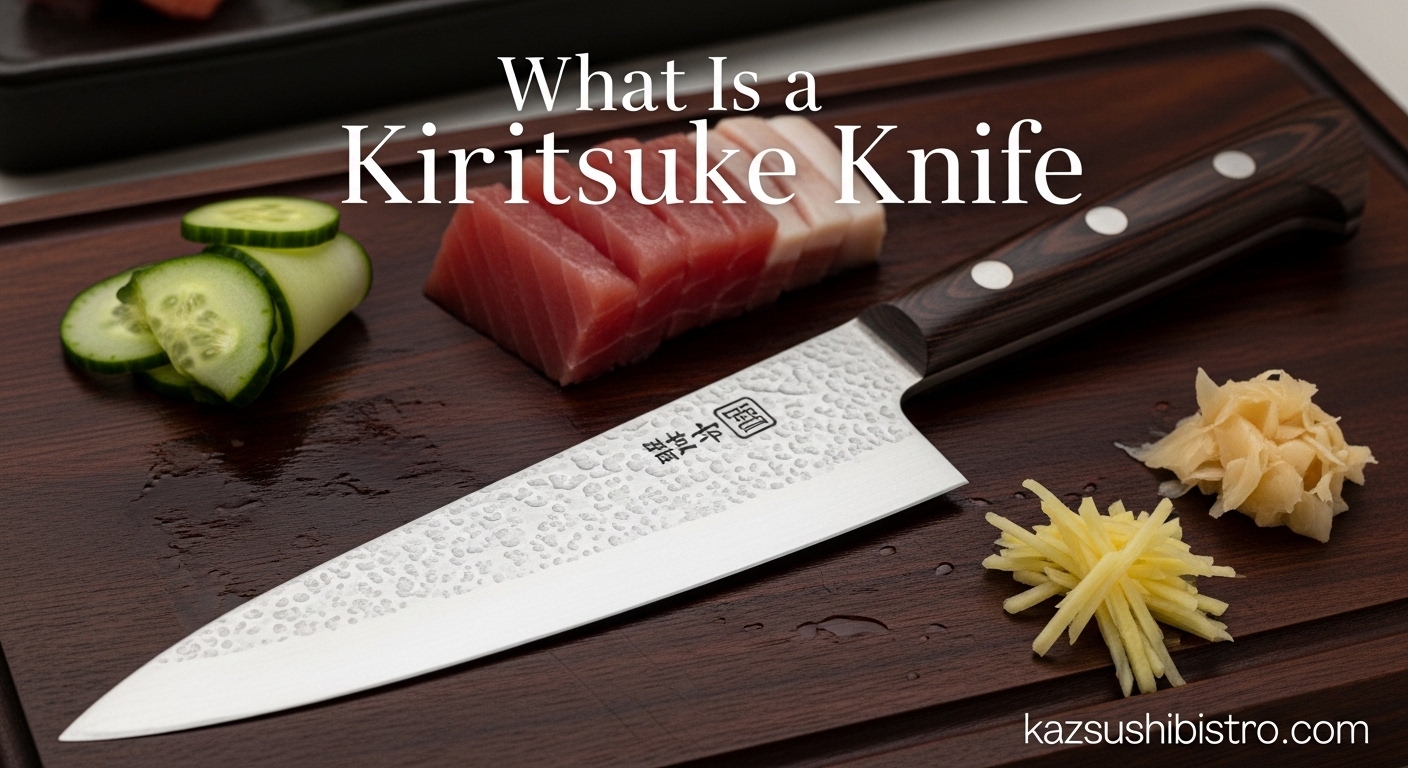
A Kiritsuke knife is a traditional Japanese multi-purpose kitchen knife that combines the best features of two specialized blades: the Yanagiba (used for slicing raw fish) and the Usuba (designed for vegetables). This hybrid Japanese kitchen knife has earned a reputation as one of the most versatile and prestigious knives in professional kitchens.
In this guide, I will explain exactly what makes a Kiritsuke knife unique, how it differs from other Japanese chef knives, and whether this distinctive blade deserves a place in your kitchen. You will learn about the iconic K-tip design, the difference between single bevel and double bevel versions, and the specific cutting techniques that make this knife shine.
Table of Contents
What Is a Kiritsuke Knife?
The word “Kiritsuke” roughly translates to “to cut off” or “to slit open” in Japanese, which perfectly describes this knife’s primary function. Historically, the Kiritsuke was reserved exclusively for the head chef or executive chef in traditional Japanese restaurant hierarchies.
This knife serves as a hybrid between two specialized Japanese blades. The long, flat edge profile comes from the Yanagiba, making it exceptional for slicing fish with clean, precise cuts. The sturdy spine and vegetable-friendly geometry borrow from the Usuba, allowing skilled users to perform intricate vegetable work.
Traditional Kiritsuke knives feature a single bevel edge, meaning the blade is ground on only one side. This design creates an incredibly sharp edge that slices through delicate proteins without tearing or crushing the flesh. The flat edge profile enables a smooth push-cutting motion that produces paper-thin slices ideal for sashimi presentation.
In 2026, you will find two main categories of Kiritsuke knives on the market. The traditional single-bevel version remains popular among professional sushi chefs and serious enthusiasts. The modern double-bevel adaptation, sometimes called a Kiritsuke-Gyuto hybrid, has gained popularity among home cooks seeking the distinctive look with more forgiving handling characteristics.
Key Characteristics That Define a Kiritsuke 2026
Several distinctive features set the Kiritsuke apart from other Japanese kitchen knives. Understanding these characteristics helps explain both the knife’s capabilities and its limitations.
The K-Tip (Reverse Tanto) Design
The most visually striking feature is the K-tip, also called a reverse tanto or Kengata tip. Unlike the rounded belly of a Western chef’s knife, the Kiritsuke’s tip features a sharp, angled geometry that resembles a tanto blade turned upside down.
This angular tip excels at precise, detailed work. You can use the tip to make intricate decorative cuts on vegetables, score fish skin cleanly, or remove blemishes with surgical precision. The flat edge leading to the tip creates a straight cutting plane that maintains contact with the board throughout the slice.
Flat Edge Profile
Unlike the curved belly of a Gyuto or Western chef’s knife, the Kiritsuke features a nearly flat edge from heel to tip. This design prioritizes push-cutting and pull-cutting techniques over the rocking motion most home cooks learned with European-style knives.
The flat profile provides more of the blade in contact with the cutting board during each stroke. This maximizes efficiency when slicing through vegetables or fish in a single smooth motion. However, it also means the knife requires a different technique that takes time to master.
Single Bevel vs Double Bevel
Traditional Kiritsuke knives use a single bevel edge, ground only on one side with a concave back (urasuki). This creates an incredibly sharp cutting edge that slices with minimal resistance. The asymmetrical grind also helps the knife release from sticky foods like raw fish or starchy potatoes.
Single bevel knives have a learning curve because they tend to “steer” or pull slightly toward the beveled side during cuts. Modern double-bevel Kiritsuke knives grind both sides equally, making them more intuitive for cooks familiar with Western knives. The double-bevel version sacrifices some maximum sharpness for improved ease of use.
Traditional vs Modern Kiritsuke: Understanding the Difference
When shopping for a Kiritsuke knife in 2026, you will encounter two distinct categories. Understanding the differences helps ensure you choose the right tool for your skill level and intended use.
The Traditional Single-Bevel Kiritsuke
Traditional Kiritsuke knives maintain the single-bevel construction that defined these blades for generations. These knives require specialized sharpening knowledge and a specific cutting technique to use effectively. The urasuki (concave back) helps prevent food from sticking but also makes the blade more delicate.
I have spoken with professional chefs who describe the traditional Kiritsuke as a “chef’s knife for those who have mastered the basics.” The flat edge and single bevel reward precise technique with unmatched cutting performance. However, the same characteristics make this knife frustrating for beginners who have not yet developed proper knife skills.
The Modern Double-Bevel Kiritsuke
The modern Kiritsuke-Gyuto hybrid combines the distinctive K-tip aesthetic with double-bevel edge geometry. These knives function more like a standard chef’s knife while maintaining the visual appeal and some of the cutting characteristics of traditional Japanese knives.
For home cooks transitioning from Western knives, the double-bevel Kiritsuke offers a gentler learning curve. You can use familiar rocking motions (though push-cutting still works better) and sharpen the knife on standard whetstones without mastering the complex techniques required for single-bevel maintenance.
What Is a Kiritsuke Knife Used For?
The Kiritsuke earned its reputation as a versatile kitchen tool through its ability to handle multiple tasks with precision. While not truly an “all-purpose” knife in the Western sense, it excels at specific applications where precision matters.
Sashimi and Fish Preparation
The Kiritsuke’s long, flat edge makes it ideal for slicing raw fish into paper-thin pieces. The single-bevel version creates exceptionally clean cuts that preserve the delicate texture of fresh sashimi-grade fish. The sharp K-tip helps remove skin and separate flesh from bone with minimal waste.
I have watched sushi chefs use the Kiritsuke to create slices so thin they appear translucent. The flat edge maintains even pressure across the entire length of the cut, preventing the ragged edges that can occur with curved-bellied knives.
Vegetable Cutting and Precision Work
Despite its fish-slicing heritage, the Kiritsuke performs admirably with vegetables. The flat edge excels at push-cutting through firm vegetables like daikon radish, carrots, and potatoes. The K-tip enables precise decorative cuts and intricate garnishing work that would be difficult with a rounded tip.
Tasks like creating fine julienne cuts, turning vegetables, or making precise brunoise dice all benefit from the Kiritsuke’s geometry. The knife’s length (typically 240-270mm) provides enough blade to handle large vegetables while the flat profile ensures even, consistent cuts.
What NOT to Use a Kiritsuke For
The Kiritsuke has clear limitations that experienced users respect. The thin, delicate tip can chip or break if used for heavy-duty tasks like cutting through bones, joints, or frozen foods. I have read countless forum posts from frustrated owners who damaged their tips attempting tasks better suited to a cleaver or heavier-duty knife.
The flat edge also makes rock-chopping (the technique of keeping the tip on the board and rocking the heel up and down) virtually impossible. If your cooking style relies heavily on this motion, a Gyuto or Santoku would serve you better than a traditional Kiritsuke.
Kiritsuke vs Other Japanese Knives
Understanding how the Kiritsuke compares to other popular Japanese knives helps clarify when this blade makes sense for your needs. Each knife design represents different compromises between versatility and specialization.
Kiritsuke vs Gyuto
The Gyuto (literally “beef sword”) serves as the Japanese answer to the Western chef’s knife. It features a curved belly that enables rocking cuts and a more forgiving double-bevel edge. While the Gyuto handles a wider range of tasks adequately, the Kiritsuke excels at specific precision work.
Most home cooks find the Gyuto more intuitive for daily use. The Kiritsuke rewards users who have mastered proper cutting technique with superior performance on fish and vegetables. If you can only own one premium Japanese knife, the Gyuto offers more versatility. If you want a specialized tool for Japanese cuisine, the Kiritsuke delivers unmatched performance.
Kiritsuke vs Yanagiba
The Yanagiba represents the pure specialized sashimi knife with an even longer, thinner blade optimized exclusively for raw fish. While the Yanagiba produces the absolute finest sashimi cuts, it struggles with vegetables and other tasks outside its narrow specialization.
The Kiritsuke offers a compromise: slightly less specialized fish performance in exchange for genuine vegetable capability. For home cooks who want to experiment with sashimi but also need a knife that handles vegetables, the Kiritsuke provides better value than owning both a Yanagiba and an Usuba.
Kiritsuke vs Santoku
The Santoku (“three virtues” knife) was designed for home cooks as a general-purpose blade for meat, fish, and vegetables. It typically features a shorter blade (165-180mm) and a flatter profile than Western knives but with more belly than a Kiritsuke.
The Santoku offers an easier entry point into Japanese knives with more forgiving handling. The Kiritsuke demands more skill but rewards that investment with superior performance on specific tasks. Think of the Santoku as a practical daily driver and the Kiritsuke as a precision instrument for special occasions.
Is a Kiritsuke Good for Beginners?
This question generates heated debate in knife enthusiast communities. Based on extensive research and forum discussions, I can offer a nuanced answer that depends on which type of Kiritsuke you consider.
Traditional single-bevel Kiritsuke knives present genuine challenges for beginners. The steering effect of the asymmetrical edge requires conscious correction during cuts. The delicate tip demands respect and proper technique to avoid damage. The flat edge rewards proper push-cutting but frustrates those accustomed to rocking.
However, modern double-bevel Kiritsuke knives offer a much more beginner-friendly entry point. The symmetrical edge behaves predictably, and the K-tip aesthetic provides visual satisfaction even as you develop proper technique.
Forum discussions consistently recommend starting with a 210mm double-bevel Kiritsuke if you are new to Japanese knives. This size provides enough blade to appreciate the Kiritsuke’s strengths without the unwieldy length of traditional 270mm professional models. The community also emphasizes investing in proper instruction rather than trying to self-teach the push-cutting technique.
Maintenance and Care Tips
Proper maintenance ensures your Kiritsuke knife serves you well for years. The specific care requirements vary significantly between single-bevel and double-bevel versions.
Single-bevel Kiritsuke knives require specialized sharpening technique. You must maintain not just the primary bevel but also the urasuki (concave back) and ensure the blade remains straight. Most owners send these knives to professional sharpeners or invest significant time learning the craft on inexpensive practice blades.
Double-bevel Kiritsuke knives sharpen more conventionally on whetstones, though the asymmetric grind still requires attention. Use stones between 1000 and 6000 grit for regular maintenance, and consider protecting the delicate K-tip with a saya (wooden sheath) or blade guard during storage.
Regardless of bevel type, hand wash and immediately dry your Kiritsuke after use. Carbon steel versions require extra vigilance against rust, while stainless steel offers more forgiveness at the cost of some edge retention.
Frequently Asked Questions
What is the Kiritsuke knife used for?
A Kiritsuke knife is primarily used for slicing raw fish (sashimi) and precision vegetable work. Its flat edge and sharp K-tip excel at push-cutting techniques that produce clean, even slices. The knife also handles decorative cuts, fish skin removal, and detailed garnishing tasks that require precision.
What is the difference between a kiritsuke and a chef’s knife?
A Kiritsuke features a flat edge profile and angular K-tip compared to the curved belly and rounded tip of a Western chef’s knife. Kiritsuke knives use push-cutting and pull-cutting techniques rather than rocking motions. Traditional versions have a single bevel edge, while chef’s knives typically have double bevels. The Kiritsuke excels at precision slicing but requires more skill to use effectively.
Is a kiritsuke good for beginners?
Traditional single-bevel Kiritsuke knives are challenging for beginners due to the learning curve and delicate tip. However, modern double-bevel Kiritsuke-Gyuto hybrids offer a more beginner-friendly option. New users should start with a 210mm double-bevel model and focus on learning proper push-cutting technique before advancing to traditional single-bevel versions.
Can a kiritsuke be used as an all-purpose knife?
While the Kiritsuke can handle fish and vegetables well, it is not a true all-purpose knife. The flat edge makes rock-chopping difficult, and the delicate tip can be damaged by heavy-duty tasks like cutting through bones or frozen foods. For true all-purpose use, a Gyuto or Santoku would serve most cooks better than a Kiritsuke.
What’s the difference between a kiritsuke and a Gyuto?
The Gyuto features a curved belly for rocking cuts and typically comes with a double-bevel edge, making it more versatile for general kitchen tasks. The Kiritsuke has a flat edge optimized for push-cutting and a distinctive K-tip for precision work. While the Gyuto serves as a daily workhorse, the Kiritsuke excels at specialized tasks like sashimi preparation and decorative vegetable cutting.
Conclusion
A Kiritsuke knife represents the pinnacle of Japanese kitchen knife design for those who value precision above all else. This hybrid blade combines the fish-slicing prowess of the Yanagiba with the vegetable capabilities of the Usuba, wrapped in a distinctive package that commands respect in any kitchen.
Whether you choose a traditional single-bevel version or a modern double-bevel hybrid, the Kiritsuke knife offers a unique cutting experience that rewards patience and proper technique. For home cooks serious about Japanese cuisine or professionals seeking a versatile precision tool, the Kiritsuke deserves serious consideration as your next knife investment in 2026.