
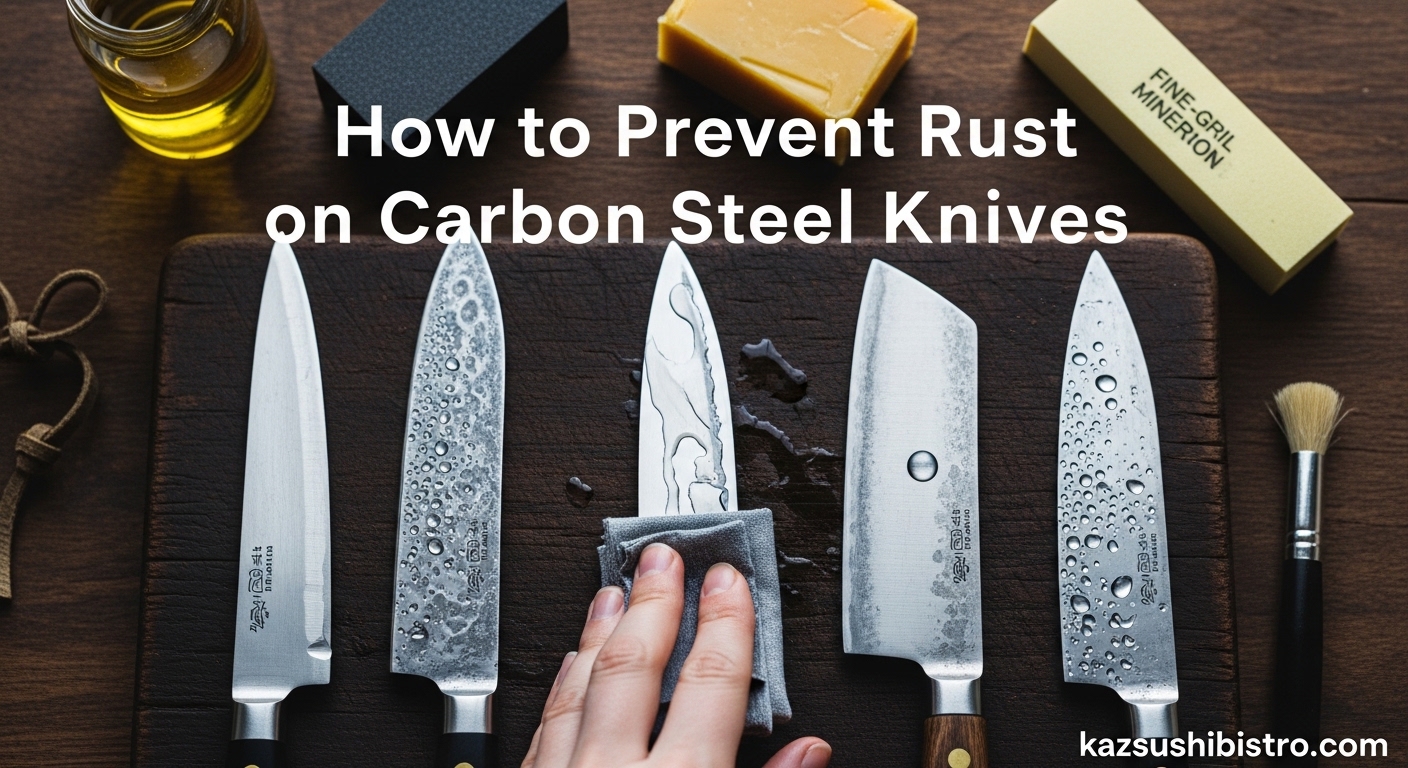
I learned about carbon steel knife care the hard way. After investing in a beautiful Japanese gyuto, I left it in the sink overnight. The orange spots that greeted me the next morning taught me everything I needed to know about rust prevention.
Carbon steel knives are sharper, easier to sharpen, and hold their edge longer than stainless steel. But they demand respect. Without proper care, that high-carbon blade will develop rust within hours of exposure to moisture.
In this guide, I will show you exactly how to prevent rust on carbon steel knives. You will learn the daily habits that protect your investment, how to develop a protective patina, and what to do if rust appears anyway.
Table of Contents
Why Carbon Steel Knives Rust (And Why That is Actually Okay)
Understanding why rust forms helps you prevent it. Carbon steel contains iron, carbon, and minimal chromium. When iron meets oxygen and moisture, oxidation creates iron oxide. We call it rust.
The Science of Iron Oxide Formation
Rust is an electrochemical reaction. Water acts as an electrolyte, allowing electrons to flow between iron atoms and oxygen molecules. This creates hydrated iron(III) oxide, the reddish-brown flaky substance we all recognize.
The reaction speeds up with salt, acids, and humidity. Cutting tomatoes or onions introduces acids that accelerate oxidation. A damp kitchen environment provides the moisture needed for the reaction to continue.
Carbon Steel vs Stainless Steel: The Chromium Difference
Stainless steel contains at least 10.5% chromium. This element forms a passive layer of chromium oxide that protects the iron beneath. Carbon steel typically contains less than 1% chromium, leaving it vulnerable.
That lack of chromium is actually a feature, not a bug. Carbon steel can be forged thinner and harder. It takes a keener edge and responds better to sharpening stones. You trade rust resistance for performance.
Patina vs Rust: Understanding the Distinction
Not all discoloration is bad. A patina is a stable, dark gray or blue-gray oxidation layer that actually protects your blade from further corrosion. It develops naturally as you use your knife.
Rust is active, flaky, and destructive. It eats into the metal and will continue spreading until removed. Learning to tell the difference saves you from unnecessary panic and unnecessary scrubbing.
Think of patina like seasoning on a cast iron pan. It is a protective layer that improves with age. Rust is like rot. It destroys what it touches.
The Daily Care Routine That Stops Rust Before It Starts
Rust prevention is a habit, not a one-time treatment. Establishing a daily routine takes less than two minutes but saves hours of restoration work later.
Hand Wash Only: Why Dishwashers Destroy Carbon Steel
Never put a carbon steel knife in the dishwasher. The combination of harsh detergents, high heat, and prolonged moisture exposure will create rust spots in a single cycle. I have seen knives come out with visible oxidation after one mistake.
Hand washing is simple. Use warm water, mild dish soap, and a soft sponge. Clean the blade immediately after use. Do not let food residue sit, especially acidic ingredients like tomatoes, citrus, or vinegar.
Wash the handle too. Bacteria collects where the blade meets the handle. A clean knife is a safe knife.
The 30-Second Drying Rule
Moisture is the enemy. After washing, dry your knife within 30 seconds. Use a clean, absorbent towel. Pay special attention to the edge and the area near the handle where water collects.
Some cooks follow up with a second dry using a paper towel. This removes any moisture the first towel missed. In humid climates, this extra step makes a real difference.
Do not air dry. Leaving a wet knife on a drying rack gives rust time to form. Even a few minutes of standing water can start the oxidation process.
Oiling Your Blade: Food-Grade Mineral Oil and Alternatives
After drying, apply a thin coat of protective oil. Food-grade mineral oil is the standard recommendation. It is cheap, widely available, and completely safe for kitchen use.
Put two or three drops on a paper towel. Wipe the entire blade, including the spine and near the handle. You want a barely visible sheen, not a dripping wet surface.
Camellia oil is the traditional Japanese choice. It is more expensive but has a pleasant, neutral smell and excellent protective properties. Tsubaki brand camellia oil is widely trusted by knife enthusiasts.
Forum users report that paste wax works even better than oil for long-term storage. Renaissance Wax and Bowers Paste Wax create a harder barrier that lasts longer. These are worth considering for seasonal storage or high-humidity environments.
Avoid cooking oils like olive or vegetable oil. They go rancid and become sticky. They can actually attract moisture rather than repel it.
How to Force a Patina on Your Carbon Steel Knife
Natural patina develops over weeks or months of use. Forcing a patina accelerates this process, giving you immediate rust protection. It also creates a distinctive, personalized appearance.
Coffee Patina Method: Step by Step
The coffee patina method is popular because it uses kitchen ingredients and creates an even, dark gray finish. Here is the exact process that works:
Step 1: Brew strong coffee. Use about three times the normal grounds for the water amount. Let it cool to room temperature.
Step 2: Find a container that fits your blade. A tall drinking glass or plastic container works well. You want the knife fully submerged without touching the sides.
Step 3: Submerge the blade for 15 to 30 minutes. Check every 10 minutes to monitor the color change. The steel will darken progressively.
Step 4: Remove and rinse thoroughly with clean water. Dry completely and oil the blade immediately.
Step 5 (Optional): For a darker patina, repeat the process two or three times. Some users alternate coffee soaks with mustard applications for interesting patterns.
Vinegar Patina Method: Pros and Cons
White vinegar or apple cider vinegar creates a patina faster than coffee. The acetic acid reacts aggressively with the steel surface.
Submerge the blade for 5 to 10 minutes only. Any longer risks etching the surface too deeply. Rinse immediately after the time is up.
The downside is that vinegar removes the kurouchi finish found on many Japanese knives. That black, textured forge scale is traditional and desirable. Once vinegar strips it, you cannot get it back.
Vinegar also creates a stronger smell that lingers. Several washings may be needed before the knife smells neutral again.
Mustard Patina for Patterns
Yellow mustard contains vinegar and turmeric, both of which react with carbon steel. The thick consistency lets you paint patterns on the blade.
Use a brush or toothpick to apply mustard in stripes, waves, or any design you like. Let it sit for 20 to 30 minutes. The pattern will etch into the steel where the mustard touched.
Rinse thoroughly and oil the blade. The result is a custom, artistic patina unique to your knife.
What to Expect During the Process
New patina looks uneven at first. Different shades of gray, blue, and purple appear as the blade reacts to various foods. This is normal and desirable.
The patina will continue developing as you cook. Onions, garlic, and acidic ingredients speed up the process. Within a month of regular use, your blade will have a mature, protective surface.
A forced patina reduces but does not eliminate the need for oiling. Continue your daily care routine even after developing a good patina.
Cutting Acidic Foods Without Triggering Rust
Tomatoes, citrus fruits, onions, and pickles are delicious but hard on carbon steel. The acids react immediately with the blade surface. Without proper aftercare, you will see discoloration within minutes.
The key is speed. Cut your ingredients, then clean the knife immediately. Do not let acidic residue sit while you finish cooking. A quick rinse and dry prevents the reaction from taking hold.
For extended prep sessions, keep a damp cloth nearby. Wipe the blade between different ingredients. This removes acids before they can etch the steel.
Some cooks designate one knife for acidic foods and accept that it will develop patina faster. Others prefer to wipe frequently and maintain a cleaner appearance. Either approach works if you stay consistent with care.
If you notice a metallic smell or taste on foods after cutting, your patina is still developing. This fades as the protective layer matures. It is harmless but can be surprising the first time you experience it.
How to Remove Rust From a Carbon Steel Knife
Even with perfect care, rust happens. Maybe you left the knife wet for an hour too long. Maybe humidity spiked overnight. The good news is that light surface rust is easy to remove.
Light Rust: Rust Eraser Method
For small, fresh rust spots, a rust eraser is the gentlest solution. These are rubber blocks impregnated with abrasive compound. They look like large pencil erasers.
Work in one direction, following the grain of the steel if visible. Apply moderate pressure and rub until the orange disappears. Wipe the blade clean and oil immediately after.
Rust erasers cost about $5 and last for years. They are essential for any carbon steel knife owner. I keep one in my knife drawer for quick touch-ups.
Medium Rust: Bar Keepers Friend Technique
For more stubborn oxidation, Bar Keepers Friend cleanser works wonders. Make a paste with powder and a little water. Apply with a soft cloth or non-scratch sponge.
Rub gently in circular motions. The oxalic acid in the product dissolves rust without aggressive scratching. Rinse thoroughly when the rust is gone.
Bar Keepers Friend is safe for kitchen use but removes patina along with rust. Your blade will look fresh and shiny afterward. You will need to rebuild the patina through use or forcing.
Prevention After Removal
Once you remove rust, that spot is more vulnerable to future oxidation. The protective patina was removed along with the rust.
Oil the affected area extra carefully for the next week. Consider forcing a patina on that specific spot if the rest of your blade is already darkened. This creates uniform protection.
If rust keeps returning to the same spot, examine your drying technique. You may be missing moisture in a groove or near the handle. A hair dryer on low heat can help dry problem areas.
Proper Storage for Carbon Steel Knives
How you store your knife matters as much as how you clean it. The right storage keeps moisture away and protects the edge from damage.
Daily Storage: Magnetic Strips and Blocks
Magnetic strips are popular for carbon steel knives. They keep blades visible, accessible, and away from drawer moisture. Mount the strip away from sinks and steam sources.
Make sure the magnet is strong enough to hold the knife securely. A falling knife damages the edge and poses a safety risk. Test the hold before trusting it with your full knife collection.
Knife blocks work well if they are completely dry inside. Moisture trapped in the slot will rust your blade from the hidden edge inward. Look for blocks with open bottoms that allow air circulation.
In-drawer trays are acceptable if your kitchen is dry. In humid climates, drawers trap moisture. Check your knives weekly if you store them this way.
Long-Term Seasonal Storage With Desiccants
If you will not use a knife for months, take extra precautions. Clean and dry the blade thoroughly. Apply a heavier coat of oil than you would for daily use.
Wrap the oiled knife in a soft cloth or paper towel. This absorbs any ambient moisture. Place it in a box or drawer with desiccant packets.
Silica gel packets work well. You can buy them in bulk or save them from packaged goods. Rice is a traditional alternative, though less effective than commercial desiccants.
Check stored knives monthly. If you see condensation inside the wrapping, remove the knife, clean it, and re-oil. Renaissance Wax provides longer protection than mineral oil for extended storage.
High Humidity Climate Solutions
Living near the coast or in tropical regions makes rust prevention harder. The ambient moisture in the air is enough to cause oxidation over time.
Increase your oiling frequency. Daily application may be necessary instead of weekly. Consider using paste wax for its longer-lasting protection.
Run a dehumidifier in your kitchen if possible. Keeping relative humidity below 50% dramatically reduces rust risk. Small closet dehumidifiers are affordable and effective.
Some users report success with VCI (volatile corrosion inhibitor) paper. Wrap the knife in this special paper before storage. It releases protective vapors that prevent oxidation.
Sharpening Basics That Protect Your Blade
Sharp knives resist rust better than dull ones. A polished edge has less surface area exposed to moisture. The microscopic teeth of a dull edge trap water and food particles.
Whetstone Angles: 15 to 20 Degrees
Japanese carbon steel knives typically use a 15-degree sharpening angle per side. Western-style carbon steel often uses 20 degrees. Check your manufacturer’s recommendation if unsure.
Lower angles create sharper edges but are more delicate. Higher angles are more durable but cut less aggressively. Match your angle to your cutting style.
Use stones from 1000 grit for maintenance up to 6000 or 8000 grit for polishing. Higher grit stones create a smoother, more rust-resistant surface. Finish with a leather strop for the best edge.
Why Sharp Knives Resist Rust Better
A refined edge has fewer pits and scratches where moisture collects. The smooth surface sheds water rather than holding it. This is why professional chefs strop their knives daily.
Carbon steel sharpens easily on quality stones. Take advantage of this by maintaining a high polish. Ten minutes of weekly sharpening prevents both rust and the frustration of a dull blade.
After sharpening, clean the blade carefully. Metal particles and stone residue can trap moisture. Rinse, dry, and oil before putting the knife away.
FAQs
Can you prevent carbon steel from rusting?
You cannot completely prevent carbon steel from rusting, but you can control it. Regular cleaning, immediate drying, and oiling create conditions where rust cannot form. A developed patina provides additional protection. The goal is managing oxidation rather than eliminating it entirely.
What can I put on carbon steel to prevent rust?
Food-grade mineral oil is the standard choice for daily protection. Camellia oil is the traditional Japanese option with excellent properties. For long-term storage, paste wax like Renaissance Wax or Bowers Paste Wax provides superior protection. Avoid cooking oils which go rancid. Apply a thin layer after each use.
Should you oil a carbon steel knife?
Yes, you should oil a carbon steel knife after each use. Apply two to three drops of food-safe oil to a paper towel and wipe the entire blade. This creates a barrier between the steel and atmospheric moisture. Oiling takes 30 seconds and prevents hours of restoration work later.
How to get rid of rust on a carbon steel knife?
For light rust, use a rust eraser rubbing gently until the orange disappears. For medium rust, make a paste with Bar Keepers Friend and water, then rub with a soft cloth. Rinse thoroughly and oil immediately after removal. Prevention after removal is critical since the protective patina is also removed.
Will vinegar damage carbon steel?
Vinegar will etch carbon steel and can remove the kurouchi finish found on many Japanese knives. While it is useful for forcing a patina, the change is permanent. Extended exposure can pit the blade surface. Use vinegar intentionally for patina creation, but avoid accidental contact.
Conclusion: How to Prevent Rust on Carbon Steel Knives?
Preventing rust on carbon steel knives comes down to three daily habits. Wash by hand immediately after use. Dry thoroughly within 30 seconds. Apply a thin coat of food-safe oil before storing.
Developing a protective patina through regular use or forced methods gives you an additional layer of defense. Proper storage in dry conditions with adequate air circulation completes your rust prevention strategy.
Carbon steel rewards attentive owners with superior sharpness and edge retention. The extra care becomes second nature after a few weeks. Your knives will last generations with this simple routine.
Start today with your daily care protocol. If rust appears, address it immediately with a rust eraser or Bar Keepers Friend. With consistent attention, your carbon steel knives will develop beautiful patina and serve you well for decades.