
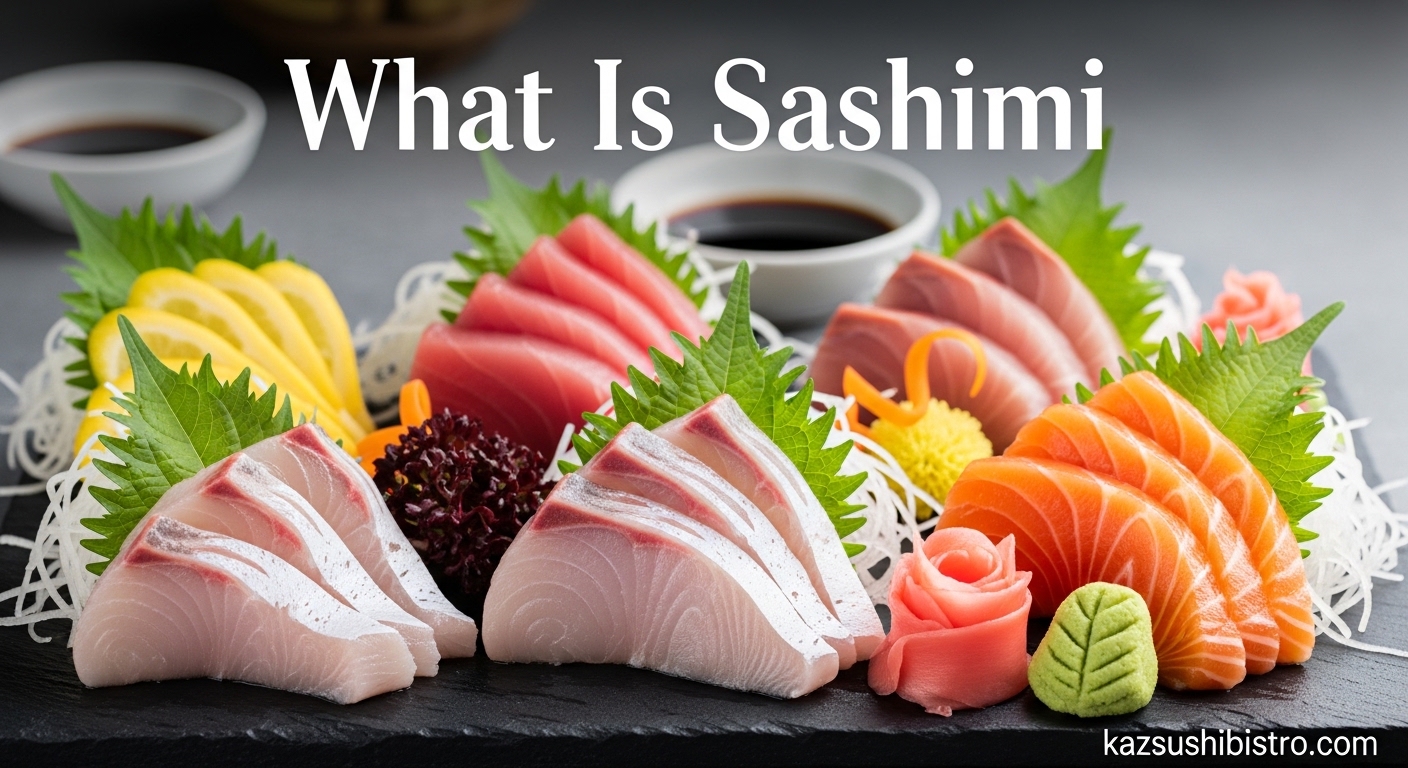
If you have ever wondered what those beautiful thin slices of raw fish are called at Japanese restaurants, you are about to get a complete education. Sashimi represents one of the purest expressions of Japanese culinary artistry. It showcases fish at its absolute freshest without the masking flavors of sauces, marinades, or cooking.
In this guide, I will walk you through everything you need to know about sashimi in 2026. We will cover what it actually is, how it differs from sushi and nigiri, the best types of fish to look for, and how to eat it properly without embarrassing yourself at a high-end omakase counter. By the end, you will understand why this simple dish commands such respect in Japanese cuisine.
Table of Contents
What Is Sashimi?
Sashimi is a Japanese delicacy consisting of fresh raw fish or seafood sliced into thin pieces and served without rice. The word itself comes from the Japanese terms sashi (meaning pierced or stuck) and mi (meaning meat). Some linguists believe the name originated from the practice of sticking the fish’s tail or fin to the slice to identify which fish was being served.
Unlike cooked preparations that can hide imperfections, sashimi exposes every aspect of the fish. The texture must be perfect. The color should be vibrant. The flavor needs to be clean without any fishy odor. This is why only the highest quality fish can be served this way.
Traditional sashimi emphasizes seasonal ingredients in Japanese cuisine. You will find different fish featured depending on the time of year. Spring brings cherry trout and sea bream. Summer offers sea bass and bonito. Fall delivers mackerel and salmon. Winter showcases fatty tuna and yellowtail at their peak.
Sashimi vs Sushi vs Nigiri 2026
This is the question I hear most often from people new to Japanese dining. These three terms get thrown around interchangeably in casual conversation, but they refer to completely different preparations. Understanding the distinction will make ordering at a Japanese restaurant much less intimidating.
Sashimi is simply sliced raw fish served alone. No rice. No seaweed. Just the fish, often arranged artfully on a plate with garnishes. It is the purest form and puts all the focus on the quality of the seafood itself.
Sushi refers to vinegared rice combined with other ingredients, which might include raw fish but does not have to. The word sushi actually refers to the sour flavor of the rice, not the fish. California rolls, cucumber rolls, and egg tamago are all types of sushi that contain no raw fish at all.
Nigiri sits somewhere between the two. It consists of a small mound of hand-pressed vinegared rice topped with a slice of raw fish or other seafood. The rice is warm and the fish is cool, creating a temperature contrast that sushi chefs perfect over years of training.
Here is a simple comparison:
- Sashimi: Raw fish only, no rice, served as slices or pieces
- Sushi: Vinegared rice with various fillings and toppings, often rolled in seaweed
- Nigiri: Hand-pressed rice topped with raw fish, served as individual pieces
Popular Types of Sashimi
Walk into any reputable Japanese restaurant and you will find a menu full of fish names that might seem unfamiliar. Here are the most popular varieties you will encounter and what makes each special.
Maguro (Tuna)
Tuna is arguably the most prized fish for sashimi. It comes in several grades depending on the fat content. Akami is the lean red meat that most people picture when they think of tuna sashimi. Chutoro is the medium-fatty portion with a richer flavor and buttery texture. Otoro is the fattiest belly meat that practically melts in your mouth and commands the highest prices.
Bluefin tuna was historically the most sought-after variety, though sustainability concerns have made it less common in 2026. Many restaurants now feature bigeye or yellowfin tuna as more responsible alternatives that still deliver excellent flavor.
Sake (Salmon)
Salmon sashimi has become incredibly popular worldwide, though it was not traditionally eaten raw in Japan. Norwegian salmon farming introduced the fish to Japanese cuisine in the 1980s, and it quickly became a favorite for its mild flavor and appealing orange-pink color.
The best salmon for sashimi has visible fat lines running through the flesh. These white stripes indicate the fish was well-fed and will have that buttery texture people love. Wild salmon can carry parasites, so it is always frozen before being served raw.
Hamachi (Yellowtail)
Yellowtail offers a perfect middle ground for sashimi beginners. It has a clean, mild flavor that is not too fishy. The texture is firm yet yielding. The pale pink color looks beautiful on a plate.
What many people do not realize is that hamachi specifically refers to young yellowtail. As the fish matures, it becomes buri, which has a stronger flavor and firmer texture. Both are excellent, but hamachi is generally preferred for sashimi.
Saba (Mackerel)
Mackerel presents a stronger flavor profile that divides diners. People either love its rich, oily character or find it too intense. The fish is typically cured in vinegar before serving, which firms up the flesh and balances the oiliness with a pleasant tang.
Because mackerel spoils quickly, it must be extremely fresh to be served as sashimi. This makes it a good test of a restaurant’s quality standards. If the saba tastes clean rather than fishy, you are in good hands.
Other Notable Varieties
Uni (sea urchin) delivers a unique creamy texture and briny ocean flavor that people either adore or avoid. Hotate (scallop) offers sweetness and a satisfying bite. Ika (squid) has a slightly crunchy texture when fresh. Ebi (shrimp) is often served cooked but can be enjoyed raw when extremely fresh. Tai (sea bream) is a traditional favorite for celebrations in Japan.
How to Eat Sashimi Properly
Part of the pleasure of sashimi is the ritual of eating it. There is a certain etiquette that shows respect for the chef and the ingredients. None of these rules are ironclad, but following them will enhance your experience.
Start with the garnishes on your plate. You will typically find shredded daikon radish called tsuma, shiso leaves, and possibly some cucumber. These are meant to be eaten between different types of fish to cleanse your palate. The tsuma also aids digestion when eaten with the fatty fish.
Soy sauce should be used sparingly. Pour a small amount into the dish provided. The chef has already selected fish that tastes excellent on its own. Drowning it in soy sauce masks the subtle flavors you are paying to experience.
Wasabi etiquette is important to understand. If your sashimi already has wasabi between the fish and rice (in the case of nigiri), do not add more. For pure sashimi, you can mix a small amount of wasabi into your soy sauce or apply it directly to the fish. Fresh wasabi from the plant is milder and more complex than the green paste most restaurants serve, which is actually horseradish with food coloring.
Use your chopsticks to pick up the sashimi. Dip the fish side lightly into the soy sauce, not the rice side if eating nigiri. Eat it in one bite if possible. Chewing slowly allows you to appreciate the texture and flavor development.
Sashimi Preparation and Safety
The safety of eating raw fish concerns many first-time sashimi diners. These concerns are valid but manageable with proper knowledge about how sashimi-grade fish is handled.
The term sashimi-grade or sushi-grade has no official government definition in most countries. It is a marketing term used by fishmongers to indicate fish they believe is safe to eat raw. The key factor is not freshness in the traditional sense, but rather proper freezing protocols that kill parasites.
The FDA recommends freezing fish intended for raw consumption to -35 degrees Celsius for 15 hours, or -20 degrees Celsius for 7 days. This eliminates parasites like anisakis that can cause serious illness. Many people do not realize that virtually all sashimi served in restaurants has been frozen, even if it is marketed as fresh.
Tuna is an exception to this rule. Deep-water tuna do not host the same parasites as coastal fish, so it can be served truly fresh. This is why high-end restaurants charge premium prices for fresh tuna and why it tastes noticeably different from frozen varieties.
The ikejime technique represents the gold standard for fish handling. This Japanese method involves immediately spiking the fish through the brain after catching it. This prevents stress hormones from flooding the flesh and preserves the texture. Fish processed this way stay fresh longer and taste noticeably better.
If you are making sashimi at home, buy from a reputable fishmonger who understands sashimi-grade standards. Look for clear eyes, shiny scales, and firm flesh. The fish should smell like the ocean, not fishy. Keep it refrigerated and consume it the same day you purchase it.
Garnishes and Presentation
The visual presentation of sashimi matters almost as much as the taste. Japanese cuisine emphasizes aesthetics deeply, and a plate of sashimi is essentially edible art.
The white radish tsuma serves both decorative and functional purposes. Chefs shred it into fine threads or carve it into elaborate shapes. When eaten, it provides a refreshing crunch and aids digestion of the rich fish.
Shiso leaves add a bright, minty-basil flavor that complements fatty fish beautifully. Their jagged green leaves provide color contrast against the pale fish. Wasabi is often shaped into a small mound or decorative pattern using a grater.
The plate itself becomes part of the presentation. Dark ceramic or slate backgrounds make the colors of the fish pop. Ice beds keep the fish at proper temperature while adding texture to the display. Even the arrangement of different fish types follows principles of balance and seasonal reference.
FAQs
What is the difference between sashimi and sushi?
Sashimi is thinly sliced raw fish served without rice. Sushi is vinegared rice combined with various ingredients, which may or may not include raw fish. Nigiri is a specific type of sushi consisting of rice topped with raw fish.
Why do I feel weird after eating sashimi?
Feeling unwell after eating sashimi could indicate a few issues. You might be sensitive to histamines that develop in fish after catching. Some people react to parasites if the fish was not properly frozen. Others simply have trouble digesting large amounts of rich, fatty fish. Start with small portions and choose reputable restaurants with proper handling protocols.
Is sashimi just raw tuna?
No, sashimi includes many types of fish and seafood. While tuna is popular, salmon, yellowtail, mackerel, sea bream, scallop, squid, and sea urchin are all commonly served as sashimi. The variety depends on seasonality and regional availability.
Is sashimi good or bad for you?
Sashimi is generally healthy when consumed from reputable sources. It is high in protein, omega-3 fatty acids, and various nutrients while being low in calories and carbohydrates. However, pregnant women, young children, elderly individuals, and those with compromised immune systems should avoid raw fish due to potential parasite and bacteria risks.
What does sashimi mean in Japanese?
Sashimi comes from the Japanese words sashi meaning pierced or stuck and mi meaning meat. The name likely originated from the practice of sticking the fish tail to the slice to identify the variety being served.
Is sashimi safe to eat?
Yes, sashimi is safe when prepared properly. Reputable restaurants use fish that has been frozen to temperatures that kill parasites. The FDA recommends freezing at -35C for 15 hours or -20C for 7 days. Deep-water tuna is an exception and can be served fresh without freezing.
Can I make sashimi at home?
You can make sashimi at home if you buy properly handled fish from a trusted fishmonger who sells sashimi-grade products. Look for clear eyes, shiny scales, firm flesh, and a clean ocean smell. Keep the fish refrigerated and consume it the same day. Never use regular grocery store fish intended for cooking.
What is the best fish for sashimi?
Tuna, particularly the fatty otoro belly cut, is considered the most prized sashimi fish. However, the best choice depends on personal preference. Salmon offers mild flavor and buttery texture for beginners. Yellowtail provides clean taste with firm texture. Mackerel delivers intense flavor for adventurous eaters.
Conclusion
Sashimi offers one of the most direct ways to experience the quality of seafood in Japanese cuisine. What seems like a simple dish, thinly sliced raw fish, actually represents years of fishing expertise, careful handling, and knife skills refined over decades.
If you have never tried sashimi before, start with milder varieties like salmon or yellowtail. Visit a reputable restaurant with good reviews for freshness. Ask the chef for recommendations based on what is seasonal and at peak quality. Do not be afraid to ask questions.
Understanding what sashimi is, how it differs from sushi and nigiri, and how to appreciate it properly opens up a world of culinary experience. In 2026, this traditional Japanese delicacy continues to gain appreciation worldwide as diners seek pure, unadulterated flavors. Your first perfect piece of melting tuna belly might just convert you into a lifelong enthusiast.