
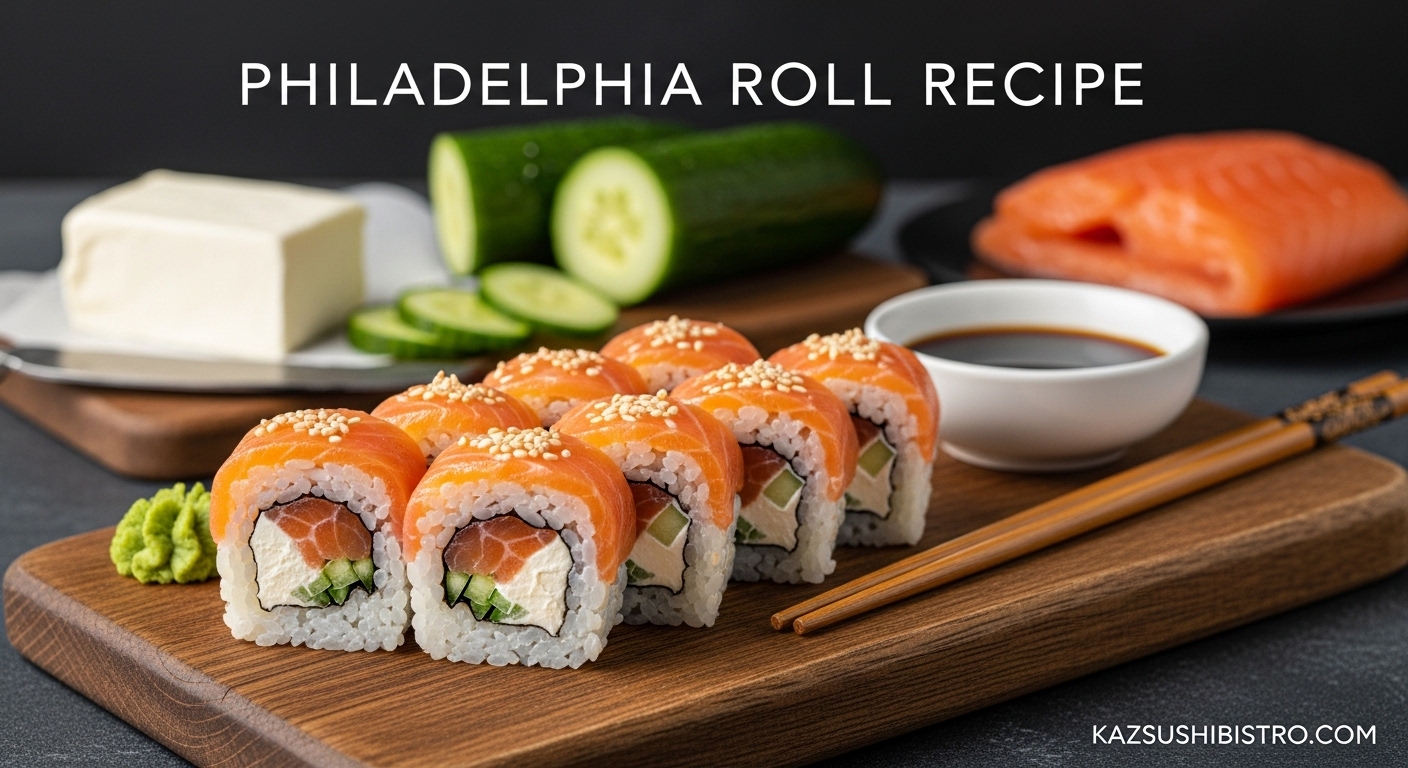
If you have ever ordered sushi at a restaurant, there is a good chance you have encountered the Philadelphia Roll. This creamy, smoky roll has become one of the most popular sushi items in America. The good news is that you can make Philadelphia Roll Recipe right in your own kitchen with the right ingredients and techniques.
In this guide, I will walk you through everything you need to know to create restaurant-quality Philadelphia rolls at home. We will cover the ingredients, the tools you need, and give you step-by-step instructions that even beginners can follow. By the time you finish reading, you will feel confident enough to host your own homemade sushi night.
Table of Contents
What Is a Philadelphia Roll?
A Philadelphia Roll is a classic American-style sushi roll that features smoked salmon, cream cheese, and cucumber wrapped in nori seaweed with seasoned sushi rice. The combination of silky salmon and tangy cream cheese creates a flavor that reminds many people of a bagel with lox, which is why this roll has become so popular with both sushi lovers and newcomers to Japanese cuisine.
The name “Philadelphia Roll” actually has an interesting origin story. The roll was invented in Philadelphia in the 1970s or 1980s, long before sushi became mainstream in America. A sushi chef at a restaurant in Center City Philadelphia created this roll using Philadelphia brand cream cheese, which was widely available and popular in the city. The name stuck, and today you will find Philadelphia rolls on menus across the country.
You might also hear this roll referred to as a “Japanese Bagel Roll.” This alternate name comes from the fact that the flavor profile closely resembles a classic New York-style bagel topped with smoked salmon and cream cheese. The versatility and approachable taste have made the Philadelphia Roll Recipe a gateway dish for many people who are new to eating sushi.
Ingredients for Philadelphia Rolls 2026
Before you start rolling, let us make sure you have everything on hand. The beauty of a Philadelphia Roll is that it requires just a handful of ingredients, and most of them are easy to find at your local grocery store or Asian market.
Sushi Rice and Seasoning
You will need 2 cups of Japanese short-grain rice, which is essential for getting the right sticky texture that holds the roll together. For seasoning the rice, gather 1/4 cup rice vinegar, 2 tablespoons sugar, and 1 teaspoon salt. These simple ingredients transform plain cooked rice into the seasoned sushi rice you taste in restaurants.
Fish and Dairy
The star proteins in a Philadelphia Roll are 6 to 8 ounces of smoked salmon, which you should look for at your grocery store or fish market. For the signature creamy element, you need 4 ounces of cream cheese. Many sushi chefs recommend freezing the cream cheese for about 30 minutes before slicing it into sticks, as this makes it much easier to handle and prevents it from squishing when you roll.
Vegetables and Nori
A seedless cucumber cut into thin matchstick strips adds a refreshing crunch that balances the richness of the salmon and cream cheese. You will also need 4 to 6 sheets of nori seaweed, which you can find in the Asian foods section of most supermarkets. Finally, 1 tablespoon of sesame seeds gives the roll a nutty finish and visual appeal.
Dipping Sauces
While not part of the roll itself, you will want to have soy sauce, wasabi, and pickled ginger ready for serving. These traditional accompaniments enhance the flavors of your homemade Philadelphia Roll Recipe and complete the authentic sushi experience.
Tools and Equipment Needed
Having the right tools makes a significant difference when making sushi at home. The most important item is a bamboo sushi rolling mat, which you can purchase for just a few dollars online or at kitchen supply stores. This mat helps you apply even pressure while rolling, resulting in tight, uniform rolls.
You will also need a very sharp knife, preferably a sushi knife or chef’s knife with a thin blade. Dull knives crush the roll instead of cleanly slicing it, which is why many home cooks find that a sharp knife alone dramatically improves their results. Some people even dampen the blade with a wet towel between cuts to prevent sticking.
Other helpful tools include a rice paddle for spreading and mixing the rice, a small bowl for serving dipping sauces, and a cutting board. If you do not have a bamboo mat, you can use a clean kitchen towel with plastic wrap laid over it, though the bamboo option produces more consistent results.
How to Prepare Sushi Rice
The foundation of any great sushi roll is properly prepared rice. Do not skip this step or rush through it, as the seasoned rice is what holds everything together and provides that signature slightly tangy, lightly sweetened flavor.
Rinsing the Rice
Place your short-grain rice in a fine-mesh strainer and rinse it under cold water until the water runs mostly clear. This removes excess starch from the surface of the grains, which prevents the rice from becoming gummy or mushy when cooked. Rinsing usually takes about 2 to 3 minutes of gentle swirling.
Cooking the Rice
Add the rinsed rice to your rice cooker or a pot with the appropriate amount of water. If using a pot, use a 1:1.2 ratio of rice to water. Cook the rice according to your rice cooker instructions, or bring to a boil, reduce heat to low, cover, and cook for 18 to 20 minutes until all water is absorbed. Let the rice rest for 10 minutes after cooking to finish steam-cooking.
Seasoning with Rice Vinegar
While the rice is still warm, combine your rice vinegar, sugar, and salt in a small microwave-safe bowl. Heat for 30 seconds and stir until the sugar dissolves completely. Transfer the rice to a large wooden or glass bowl, pour the seasoning mixture over it, and fold gently with a rice paddle. Do not stir aggressively, as this breaks the grains. Allow the rice to cool to room temperature before using it for rolling.
Step-by-Step Rolling Instructions
Now comes the fun part. Rolling sushi takes a bit of practice, but do not get discouraged if your first few attempts are not perfect. Even professional sushi chefs spent months perfecting their technique. Follow these steps carefully, and you will be turning out beautiful Philadelphia rolls in no time.
Spreading the Rice
Place a sheet of nori shiny-side down on your bamboo mat. Wet your hands with water to prevent sticking, then grab a handful of sushi rice. Gently spread the rice in an even layer over the nori, leaving about a 1-inch border at the top edge. The layer should be thin enough that you can almost see the nori through it, but thick enough to provide a good base for the fillings.
Adding the Fillings
Along the bottom third of the nori, place your fillings in a horizontal line. Start with a few strips of smoked salmon, then add 2 to 3 sticks of cream cheese, and finish with a line of cucumber matchsticks. You do not need to over-stuff the roll; using too many fillings actually makes it harder to roll and increases the chance of it falling apart.
Rolling Tightly
Lift the bottom edge of the mat with your thumbs and begin rolling forward, using your fingers to keep the fillings in place. Apply firm, even pressure as you roll, but not so much that you crush the ingredients. Continue rolling until the rice-covered edge meets the bare nori edge, then seal the roll by pressing gently. Give the roll one more light squeeze to ensure it is tight and holds together.
Slicing the Roll
Transfer the roll to a cutting board and let it rest for 2 to 3 minutes before slicing. This brief rest allows the rice to set slightly, which helps the roll hold its shape when cut. Using your sharpest knife, slice the roll into 6 to 8 equal pieces. Clean the knife between cuts for the cleanest presentation, or simply wipe it with a damp cloth.
Serving and Dipping Sauces
Presentation matters when it comes to sushi. Arrange your sliced Philadelphia rolls on a platter with the cut sides facing up to show off the beautiful spiral of salmon, cream cheese, and cucumber inside. Sprinkle with sesame seeds for a finishing touch.
For dipping, pour a small amount of soy sauce into a shallow dish. Add a tiny dab of wasabi to the soy sauce if you enjoy the heat. Place a small pile of pickled ginger alongside, which serves as a palate cleanser between bites. Some people also enjoy a drop of sriracha or a squeeze of lime for added flavor.
Pro Tips for Perfect Philadelphia Rolls
After making Philadelphia rolls many times, I have picked up several tricks that make a big difference. First, freeze your cream cheese for 30 minutes before cutting it into sticks. This simple trick, which comes from experienced sushi makers, makes the cream cheese firm enough to slice cleanly without squishing or crumbling. It also prevents the cream cheese from making the rice soggy as you assemble the roll.
Second, keep a bowl of water nearby and wet your hands frequently while handling the rice. Sushi rice is incredibly sticky, and wetting your fingers prevents it from clinging to everything. Some people add a small amount of rice vinegar to the water for extra tackiness control.
Third, if your rolls are falling apart, you might be rolling too loosely or using too little rice. Try applying more pressure when rolling, and make sure your rice layer is thick enough to create a good seal when you roll the edge over.
Fourth, for the best texture, use your Philadelphia rolls within a few hours of making them. If you need to store them, wrap each roll tightly in plastic wrap and keep it in the refrigerator for up to 24 hours. The rice will firm up in the fridge, so let the rolls come to room temperature for about 15 minutes before eating for the best texture.
Philadelphia Roll vs Other Sushi Rolls
If you are new to sushi, you might wonder how the Philadelphia Roll compares to other popular rolls. Understanding these differences helps you appreciate what makes this roll unique and decide which one suits your taste preferences.
The California Roll is the most famous alternative and uses imitation crab, avocado, and cucumber instead of smoked salmon and cream cheese. The California Roll has a milder, more subtle flavor profile, while the Philadelphia Roll Recipe offers a bolder, smokier taste thanks to the salmon. The Alaska Roll is actually quite similar to the Philadelphia Roll, as both use smoked salmon, but the Alaska Roll typically includes only salmon and cucumber without the cream cheese.
The Boston Roll is another close relative that swaps the smoked salmon for shrimp or lobster and often includes cucumber and mayo. Each of these rolls has its own devoted following, but the Philadelphia Roll stands out for its creamy, indulgent character that appeals to people who enjoy rich, flavorful foods.
Making Philadelphia Rolls Ahead of Time
One question I hear frequently is whether you can prepare Philadelphia rolls in advance for a party or meal prep. The answer is yes, with some caveats. You can assemble and slice the rolls up to 24 hours ahead, but for the best quality, prepare them no more than a few hours before serving.
If you are hosting a sushi night with guests, I recommend preparing all the components ahead of time. Wash and cut your cucumber, slice your cream cheese into sticks, and have your smoked salmon ready to go. Keep these ingredients refrigerated until your guests arrive, then do the actual rolling together as an interactive activity. This approach takes the pressure off you as the host and makes the experience more fun for everyone.
Frequently Asked Questions
What does a Philadelphia roll have in it?
A Philadelphia Roll contains smoked salmon, cream cheese, and cucumber wrapped in nori seaweed with seasoned sushi rice. Some variations also include avocado or sesame seeds. The combination of creamy cheese, smoky fish, and crunchy cucumber creates the signature flavor that makes this roll so popular.
Does sushi have a lot of calories?
Sushi calorie content varies widely depending on the roll type and ingredients used. A typical Philadelphia Roll contains approximately 250 to 350 calories per roll (6 to 8 pieces). The cream cheese and rice contribute most of the calories, while the smoked salmon and cucumber add protein and fiber with minimal calories.
What’s the difference between a Philadelphia roll and a California roll?
The main difference is the filling. A California Roll uses imitation crab, avocado, and cucumber with no dairy, while a Philadelphia Roll features smoked salmon and cream cheese. The California Roll has a milder, more subtle flavor, whereas the Philadelphia Roll offers a bolder, smokier taste reminiscent of a bagel with lox.
What’s the difference between a Philadelphia roll and an Alaska roll?
An Alaska Roll and a Philadelphia Roll are quite similar, as both feature smoked salmon. The key difference is that an Alaska Roll contains only salmon and cucumber without cream cheese. The Philadelphia Roll Recipe adds cream cheese for an extra creamy, tangy element that makes it more indulgent and unique.
Conclusion
Making your own Philadelphia Roll Recipe at home is a rewarding experience that lets you enjoy restaurant-quality sushi without leaving your kitchen. The combination of smoky salmon, creamy cheese, and crisp cucumber wrapped in seasoned rice and nori creates a flavor that has earned this roll its status as an American sushi favorite.
Remember the key tips we covered: freeze your cream cheese for easier handling, keep your hands wet while working with rice, apply firm pressure when rolling, and use a sharp knife for clean cuts. With a little practice, you will be turning out beautiful Philadelphia rolls that rival your favorite sushi restaurant.
Whether you are hosting a sushi night with friends, preparing a special dinner for two, or simply looking to expand your cooking skills, this Philadelphia Roll Recipe is a fantastic choice. Give it a try and discover why this roll has remained popular for decades.