
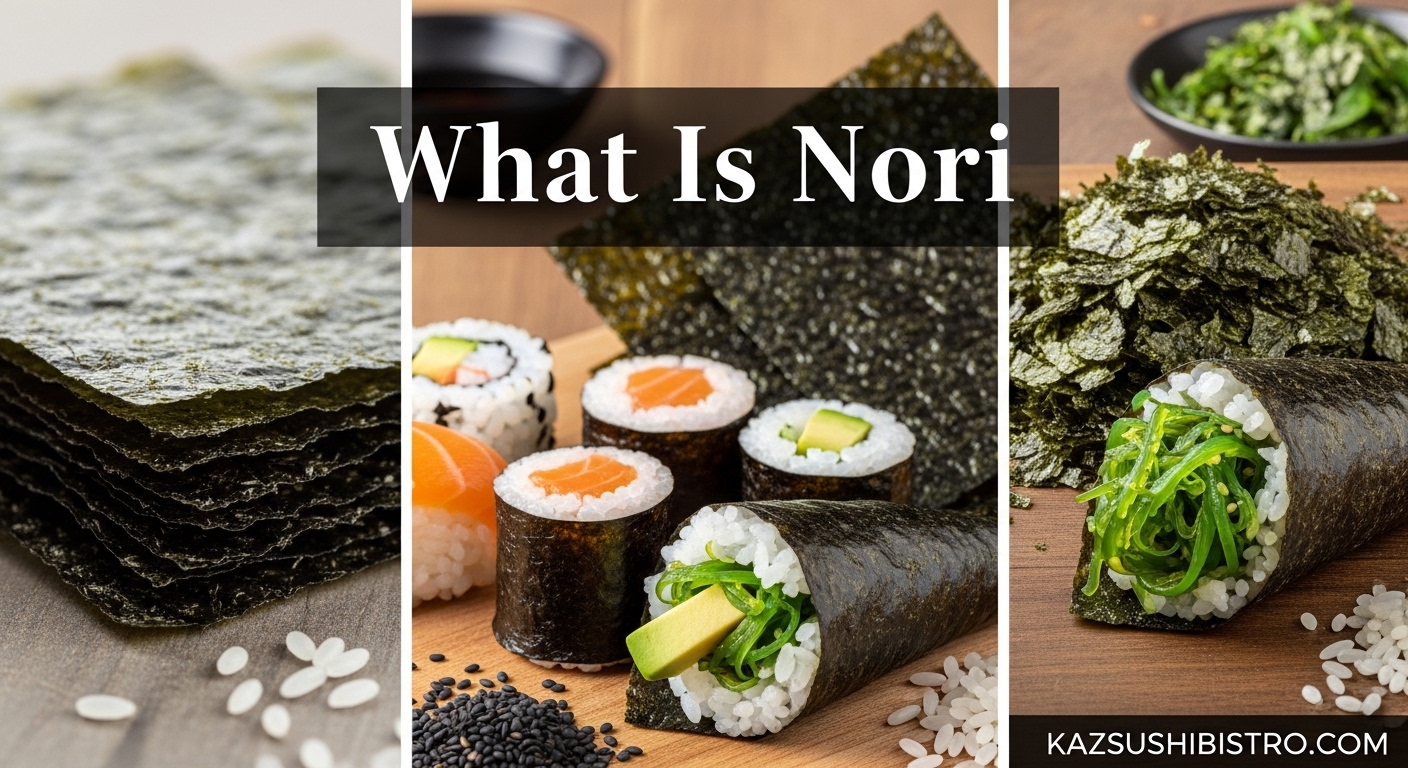
Nori is a dried edible seaweed that forms the foundation of Japanese cuisine. It’s made from species of red algae, primarily from the genus Pyropia, which are harvested, processed into thin sheets, and used to wrap sushi rolls, garnish rice balls, and add umami flavor to countless dishes. If you’ve ever eaten sushi or onigiri, you’ve already experienced nori’s unique combination of crispy texture and savory, ocean-inspired taste.
In this guide, I’ll walk you through everything you need to know about nori. We’ll explore what it’s made from, why it tastes the way it does, its impressive nutritional profile, and how to select and store it properly. Whether you’re a home cook experimenting with Japanese recipes or simply curious about this sea vegetable, you’ll find practical answers to the most common questions people ask about nori.
Table of Contents
What Is Nori and Where Does It Come From
Nori is a type of edible seaweed scientifically classified as red algae from the genus Pyropia (formerly Porphyra). In its natural state, nori seaweed appears red with folded blades. The transformation to the dark green or black sheets we recognize happens during the drying and toasting process.
The production of nori follows a method similar to paper-making. Harvesters collect seaweed, shred it into small pieces, wash it thoroughly with water, and press it into thin sheets. These sheets are then dried and typically toasted to develop their characteristic flavor and crispy texture. The finest nori traditionally comes from the coastal waters of Japan, particularly from regions like Chiba, Miyagi, and the Seto Inland Sea.
While “seaweed” is a broad term encompassing many marine algae species, nori specifically refers to the dried sheet form used in Japanese cooking. Other seaweeds like wakame, kombu, and hijiki serve different culinary purposes and undergo different processing methods.
What Does Nori Taste Like
Nori delivers a complex flavor profile that makes it instantly recognizable. The primary taste is umami, that savory fifth flavor that lingers on your tongue. This umami comes from three key compounds: glutamic acid, inosinic acid, and guanylic acid, which work together to create a deeply satisfying, almost meaty flavor without any animal products.
The texture is equally distinctive. High-quality nori feels paper-thin and shatters with a satisfying crispness when you bite into it. Fresh nori should never feel chewy or rubbery. You’ll also notice subtle briny notes that remind you of the ocean, though well-processed nori should not taste fishy or overwhelming.
Toasted nori (called yakinori) has a more developed, nutty flavor compared to untoasted varieties. Some people detect slight sweetness underneath the savory notes, especially in premium grades. The overall experience is light yet flavorful, adding depth without heaviness.
Nutritional Benefits and Health Considerations
Nori packs remarkable nutritional density into its thin, lightweight sheets. It’s rich in vitamins A, B2, B12, and C, along with essential minerals including iodine, iron, potassium, calcium, magnesium, and zinc. A single sheet contains significant protein and fiber relative to its calorie content.
The vitamin B12 content deserves special attention. Nori stands out as one of the few plant-based sources of this essential nutrient, making it particularly valuable for vegans and vegetarians who might otherwise struggle to meet their B12 requirements through diet alone.
The iodine in nori supports thyroid health and proper hormone regulation. The iron content helps transport oxygen throughout your body, while the vitamin C present aids in iron absorption. Nori also contains compounds that may support immune function and overall cellular health.
However, moderation matters. The iodine concentration, while beneficial in appropriate amounts, means you should not consume excessive quantities of nori daily. Most people can safely enjoy nori as part of a balanced diet without concerns. If you have thyroid conditions or specific dietary restrictions, consult your healthcare provider about appropriate serving sizes.
Different Types and Grades of Nori
Nori comes in several forms, each suited to different culinary applications. Understanding these variations helps you choose the right type for your cooking needs.
Yakinori refers to toasted nori sheets, the most common form found in grocery stores. The toasting process enhances flavor and creates that satisfying crispness. Ajitsuke-nori describes seasoned nori, typically flavored with soy sauce, sugar, and sometimes sesame oil, popular as a snack or rice accompaniment. Kizami-nori consists of thinly shredded strips used as a garnish for noodles, soups, and rice dishes.
The Japanese grading system helps consumers identify quality levels. Gold grade represents the highest quality with uniform color, minimal holes, and superior flavor. Silver grade offers excellent quality with slight variations. Blue, Red, and Green grades indicate progressively more economical options that may have more imperfections or inconsistent texture but remain perfectly usable for cooking.
When shopping, look for packages that clearly indicate the grade and origin. Japanese-produced nori typically commands higher prices but offers more consistent quality compared to mass-produced alternatives from other regions.
Korean Gim vs Japanese Nori
Though both come from similar red algae species, Korean gim and Japanese nori differ significantly in preparation and usage. Understanding these distinctions helps you select the right product for your intended dish.
Korean gim undergoes seasoning during production, typically with sesame oil and salt, creating a ready-to-eat snack that’s flavorful on its own. The texture tends to be slightly more delicate and brittle. Japanese nori remains unseasoned in its standard form, designed to complement other ingredients rather than dominate the flavor profile.
For sushi and onigiri, Japanese nori works better because its neutral flavor allows the rice and fillings to shine. For eating straight with rice or as a standalone snack, Korean gim offers immediate satisfaction without additional preparation. Both deliver excellent nutrition, so your choice depends primarily on culinary application.
How to Use Nori in Your Kitchen
Nori’s versatility extends far beyond sushi rolls. Once you understand its applications, you’ll find yourself reaching for those dark green sheets constantly.
For sushi and maki rolls, place the nori sheet shiny-side down on your bamboo mat, spread seasoned rice evenly, add fillings, and roll tightly. The nori binds everything together while adding that essential umami foundation.
Onigiri (rice balls) typically use nori as a wrapper or strip that you hold while eating, preventing sticky fingers while adding flavor and texture. Tear smaller pieces to garnish miso soup or sprinkle kizami-nori over noodles for visual appeal and taste.
You can also cut nori into strips for tempura, crumble it as a topping for salads, or use it to wrap onigirazu (rice sandwiches). Some cooks blend toasted nori into seasoning powders or use it to crust fish and tofu before cooking.
How to Select Quality Nori
Choosing good nori requires attention to several visual and textural indicators. I learned these selection tips after years of working with different brands and grades.
Start by checking the origin. Japanese-produced nori generally offers more consistent quality, with Ariake Bay and Kyushu regions particularly renowned. Look for deep green to black color without faded or brownish patches, which indicate age or poor processing. The sheets should feel crisp and brittle, not soft or pliable.
Hold the package up to light. Quality nori shows minimal pinholes and even thickness throughout. Check the grade designation on the package; gold or silver grades indicate higher quality suitable for sushi, while lower grades work fine for cooking and crumbling.
Smell the nori when you open the package. Fresh, quality nori carries a pleasant briny aroma without mustiness or excessive fishiness. Avoid packages with broken pieces or excess powder at the bottom, which suggest rough handling or age.
Proper Storage for Maximum Freshness
Nori’s biggest enemy is moisture. Once exposed to humidity, those crispy sheets turn chewy and rubbery within minutes. Proper storage preserves both texture and flavor.
Keep unopened nori packages in a cool, dark pantry away from heat sources. Once opened, transfer sheets to an airtight container or resealable bag with a desiccant packet. Some home cooks store opened nori in the freezer, which works well if you let it come to room temperature before opening to prevent condensation.
Unopened nori typically lasts 6-12 months when stored properly. Check the package date and try to use opened packages within 2-3 weeks for optimal crispness. While expired nori won’t make you sick, the texture degrades significantly and the flavor becomes flat.
If your nori loses crispness, you can briefly toast it over low heat or in a dry pan to restore some texture, though it never fully recovers its original quality.
Troubleshooting Common Nori Problems
After helping countless home cooks with their sushi attempts, I’ve identified the most common nori issues and their solutions.
Chewy or rubbery nori almost always results from moisture absorption. This happens when rice is too hot or too wet during rolling, when fillings release liquid, or when nori sits exposed to humid air. Solutions include cooling rice completely before rolling, patting fillings dry, and working quickly in dry conditions.
Nori tearing during rolling usually indicates either stale sheets or excessive filling. Use fresh, crisp nori and resist the urge to overstuff rolls. Rolling too slowly also causes problems as the rice begins to soften the nori before you finish.
Fishy or off flavors suggest old or improperly stored nori. Quality nori tastes briny and clean, not fishy. If your nori smells musty or tastes unpleasant, discard it and purchase fresh sheets from a reputable source.
Once nori absorbs moisture and becomes chewy, toasting won’t fully restore it. Prevention matters more than correction with this delicate ingredient.
Frequently Asked Questions
What does nori taste like?
Nori has a savory umami flavor with subtle briny notes. It tastes slightly salty with a hint of natural sweetness underneath. The texture is paper-thin and crispy when fresh, shattering pleasantly when bitten. Toasted nori (yakinori) develops a nutty, more complex flavor compared to untoasted varieties.
Are seaweed and nori the same?
Nori is a specific type of seaweed, but not all seaweed is nori. Seaweed is a broad term covering many marine algae species. Nori specifically refers to dried sheets made from red algae of the genus Pyropia, used primarily in Japanese cuisine. Other seaweeds like wakame, kombu, and hijiki serve different purposes.
What is nori called in English?
In English, nori is simply called ‘nori’ or ‘nori seaweed.’ Some sources refer to it as ‘toasted laver’ or ‘edible seaweed sheets,’ though ‘nori’ has become the standard term internationally. The word comes from Japanese, where it originally referred to all edible seaweeds before becoming specific to the sheet form.
Is nori good or bad for you?
Nori is generally very good for you. It’s rich in vitamins A, B2, B12, and C, plus minerals like iodine, iron, and potassium. It’s one of the few plant-based sources of vitamin B12, making it valuable for vegans. However, due to its concentrated iodine content, excessive daily consumption isn’t recommended for people with certain thyroid conditions.
Why is my nori chewy?
Chewy nori results from moisture absorption. This happens when rice is too hot or wet during rolling, when fillings release liquid, or when nori sits in humid air too long. To prevent this, cool rice completely before rolling, pat fillings dry, work quickly, and store nori in airtight containers away from moisture. Once chewy, nori cannot fully regain its crispness.
Why can’t you eat a lot of nori?
While nori is nutritious, it contains concentrated iodine. Excessive iodine intake can affect thyroid function, particularly for people with existing thyroid conditions. Most people can safely enjoy nori regularly as part of a balanced diet, but eating very large quantities daily isn’t recommended without medical guidance.
Is it okay to eat expired nori sheets?
Expired nori won’t make you sick, but the quality degrades significantly. The texture becomes soft and chewy rather than crisp, and the flavor becomes flat or stale. While safe to eat, expired nori won’t deliver the pleasant eating experience you’re looking for. Store nori properly and use within the recommended timeframe for best results.
Is it safe to eat nori every day?
For most healthy people, eating nori daily in moderate amounts is safe and nutritious. However, because nori contains concentrated iodine, those with thyroid conditions should consult their healthcare provider about appropriate serving sizes. Balance nori consumption with other foods rather than making it your primary dietary component.
Conclusion
Nori is a dried edible seaweed made from red algae that serves as a cornerstone of Japanese cuisine. Its unique combination of umami flavor, crispy texture, and impressive nutritional profile makes it valuable for home cooks and health-conscious eaters alike. From wrapping sushi rolls to garnishing soups, nori adds depth and satisfaction to countless dishes.
Now that you understand what nori is, how to select quality sheets, and how to avoid common problems like chewiness, you’re ready to work with this versatile ingredient confidently. Start with simple applications like onigiri or miso soup garnish, then expand to homemade sushi rolls as your comfort grows. Quality nori, properly stored and handled, will transform your Japanese cooking from good to exceptional.