
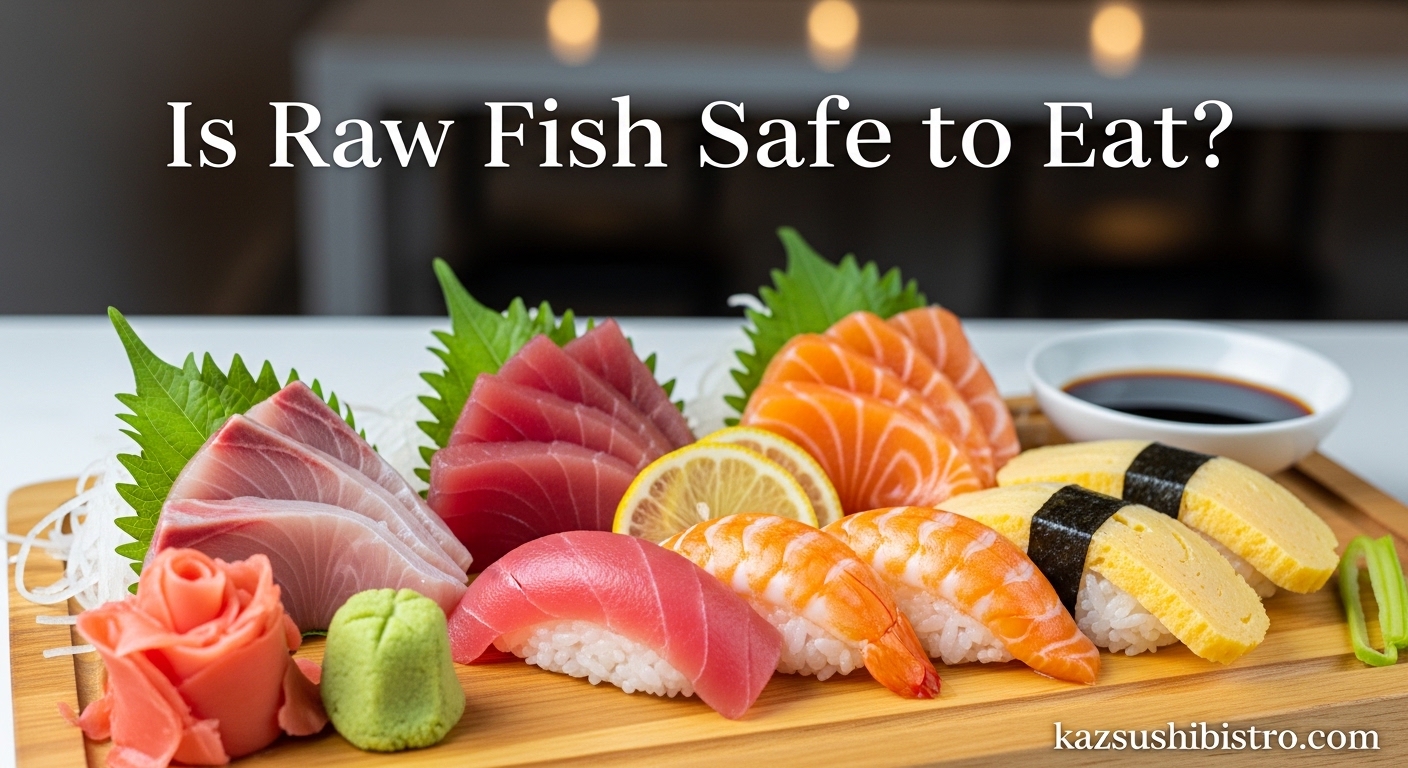
Is raw fish safe to eat? The answer is yes, for most healthy adults, when the fish has been properly handled, frozen, and sourced from reputable suppliers. At KAZ Sushi Bistro, we have served thousands of guests safely over the years, and our team follows strict protocols to ensure every piece of fish that reaches your plate meets the highest safety standards.
Raw fish has been a dietary staple in many cultures for centuries, particularly in Japan where sushi and sashimi hold deep cultural significance. Yet many diners still wonder about the risks of parasites, bacteria, and foodborne illness. Our guide explains exactly how raw fish becomes safe to eat, which fish are safest, and who should avoid it entirely.
Table of Contents
The Short Answer: Raw Fish Safety at a Glance 2026
Yes, raw fish is safe to eat for most healthy people when these conditions are met:
- The fish has been frozen to FDA guidelines: either at -4°F (-20°C) for 7 days or at -31°F (-35°C) for 15 hours to kill parasites
- It was sourced from a reputable supplier with proper handling and cold chain protocols
- It was prepared in a clean environment with proper food safety practices
- The consumer is not in a high-risk group (pregnant, elderly, immunocompromised, or young children)
The risk of getting sick from properly prepared raw fish at a reputable restaurant is extremely low. The FDA estimates that when proper freezing protocols are followed, the risk of parasitic infection drops to nearly zero. However, bacterial contamination remains a concern if handling protocols are not followed meticulously.
How Raw Fish Becomes Safe to Eat?
Raw fish does not start out inherently dangerous, but it can harbor parasites and bacteria that proper preparation eliminates. Understanding how restaurants like ours make raw fish safe will help you make informed decisions whether dining out or preparing fish at home.
The Role of Deep Freezing in Killing Parasites
Freezing is the single most important step in making raw fish safe to eat. The FDA has established specific protocols that commercial suppliers must follow to eliminate parasites. Fish intended for raw consumption must be frozen to either -4°F (-20°C) for a minimum of 7 days, or flash-frozen to -31°F (-35°C) for at least 15 hours.
These freezing temperatures kill Anisakis simplex worms and tapeworm larvae that may be present in certain fish species. At KAZ Sushi Bistro, we only work with suppliers who provide documentation showing their freezing protocols meet or exceed FDA standards. This freezing step is why you cannot simply catch a fish and eat it raw without proper treatment.
Not all home freezers can reach these temperatures consistently. Standard home freezers typically maintain 0°F (-18°C), which is insufficient for the rapid freezing needed to kill parasites effectively. This is one reason we recommend purchasing from reputable fish markets that specialize in sushi-grade seafood rather than attempting to prepare raw fish from standard grocery store offerings.
Sourcing from Reputable Suppliers
The quality of raw fish begins with the supplier. At KAZ Sushi Bistro, we have established relationships with trusted fish markets that specialize in sushi-grade seafood. These suppliers understand that the fish they provide will be consumed raw, and they maintain rigorous standards from boat to table.
Traceability matters enormously in raw fish safety. Our suppliers can tell us exactly when and where each fish was caught, how quickly it was chilled after capture, and the precise freezing protocols used. This chain of custody documentation gives us confidence in every piece of fish we serve.
Reputable suppliers also conduct visual inspections and laboratory testing when necessary. They reject fish showing any signs of spoilage, discoloration, or parasitic infection. This pre-screening at the supplier level adds another layer of protection before fish ever reaches our kitchen.
What Does Sushi-Grade Actually Mean?
The term sushi-grade causes confusion because it has no official FDA definition. Unlike USDA beef grades, sushi-grade is not a regulated standard. Instead, it is a marketing term used by fish markets to indicate that the fish has been frozen according to FDA parasite destruction guidelines and is suitable for raw consumption.
At KAZ Sushi Bistro, when we say sushi-grade, we mean fish that has been commercially frozen to kill parasites and sourced from suppliers with verifiable handling protocols. The term implies that the fish is fresh enough, handled properly, and frozen correctly to be eaten raw.
Be cautious of sushi-grade labels at standard grocery stores without asking questions. True sushi-grade fish should come with documentation or from a fishmonger who can explain their freezing and handling procedures. If someone cannot tell you how the fish was frozen or where it came from, it is not truly sushi-grade regardless of what the label claims.
Understanding the Real Risks of Raw Fish
While raw fish is generally safe when properly prepared, understanding the specific risks helps you make informed decisions and recognize when to seek help if problems arise.
Parasite Concerns: Anisakis and Tapeworms
Anisakis simplex, also known as the herring worm, is the most common parasite found in raw fish. These worms can cause anisakiasis, a condition that leads to severe abdominal pain, nausea, and vomiting within hours of consumption. The good news is that proper freezing kills Anisakis larvae completely.
Tapeworms, specifically Diphyllobothrium latum from certain freshwater and anadromous fish, present another parasitic risk. Tapeworm infections can cause vitamin B12 deficiency, digestive issues, and in rare cases, intestinal obstruction. Again, proper freezing protocols eliminate this risk entirely.
The freezing requirements exist specifically because these parasites cannot survive extended exposure to deep cold. Once fish has been frozen according to FDA guidelines, any parasites present are dead and pose no threat to consumers. This is why freezing documentation is so critical for raw fish safety.
Bacterial Contamination: Vibrio and Salmonella
Unlike parasites, freezing does not kill bacteria. Vibrio vulnificus, a bacterium found in warm coastal waters, can cause serious illness called vibriosis. Symptoms include watery diarrhea, abdominal cramping, nausea, fever, and chills. For most healthy people, vibriosis is unpleasant but not dangerous, though it can be life-threatening for those with compromised immune systems or liver disease.
Salmonella, while more commonly associated with poultry and eggs, can also contaminate seafood through cross-contamination or polluted waters. Salmonella infection causes diarrhea, fever, and abdominal cramps that typically appear 12 to 72 hours after infection.
Proper handling is the key to preventing bacterial contamination. At KAZ Sushi Bistro, we maintain strict temperature controls, sanitize all surfaces between preparations, and train our staff extensively in food safety protocols. Bacterial risks come primarily from improper handling after the freezing step, which is why choosing a reputable restaurant matters.
Mercury and Environmental Pollutants
Methylmercury, a neurotoxin that accumulates in fish tissue, presents a different type of risk. Unlike parasites and bacteria, mercury is not eliminated by freezing or cooking. The risk is dose-related, meaning occasional consumption poses minimal concern, but frequent consumption of high-mercury fish can lead to neurological problems.
High-mercury species include shark, swordfish, king mackerel, tilefish, and bigeye tuna. Pregnant women and young children should avoid these entirely. However, many sushi-grade fish like salmon, yellowtail, and albacore tuna contain relatively low mercury levels and are safe for regular consumption in moderation.
The benefits of eating raw fish, particularly the omega-3 fatty acids that support heart and brain health, generally outweigh the risks for most people. The key is choosing the right species and varying your selections to minimize any single contaminant exposure.
What Raw Fish Is Safe to Eat?
Not all fish are equally safe for raw consumption. Some species naturally carry higher parasite risks, while others are rarely affected. Understanding which fish are safest helps you make better choices whether dining at KAZ Sushi Bistro or preparing sushi at home.
Fish generally considered safe for raw consumption include:
- Tuna (maguro) – All species of tuna have extremely low parasite risk, making them among the safest raw fish
- Farmed salmon – Aquaculture salmon is fed controlled diets and raised in environments that minimize parasite exposure
- Yellowtail (hamachi) – This popular sushi fish is typically farmed or comes from clean waters with proper freezing
- Scallops – These shellfish are generally safe when properly handled and sourced
- Sea bream (tai) – A traditional sashimi fish with good safety profiles when properly frozen
- Fluke (hirame) – Properly frozen fluke is a staple in high-end sushi establishments
Fish to avoid or approach with caution:
- Freshwater fish – Never eat freshwater fish raw due to high parasite loads
- Wild Pacific salmon – Higher parasite risk than farmed; must be properly frozen
- Herring and sardines – Common hosts for Anisakis parasites
- High-mercury species – Shark, swordfish, king mackerel, tilefish, and bigeye tuna should be limited or avoided
Farmed fish generally carry lower parasite risks than wild-caught fish because their controlled environments limit exposure to intermediate hosts. This is why farmed salmon is considered safer for raw consumption than wild salmon, contrary to what many people assume about wild being inherently better.
Who Should Not Eat Raw Fish?
While raw fish is safe for most healthy adults, certain groups face higher risks from foodborne illness and should avoid raw seafood entirely. If you fall into any of these categories, we recommend enjoying our cooked sushi options or other menu items instead.
Pregnant women should avoid raw fish due to both foodborne illness risks and mercury concerns. The immune system changes during pregnancy make women more susceptible to infections that could harm both mother and baby. Listeria, though rare in fish, poses particular risks during pregnancy.
Young children under 5 have developing immune systems that may not handle bacterial or parasitic infections as effectively as adult immune systems. Children also have lower body weight, meaning any toxins have a more concentrated effect.
Adults 65 and older often experience reduced immune function and slower recovery from foodborne illness. What might cause mild discomfort in a younger adult could lead to serious complications in elderly individuals.
Immunocompromised individuals include anyone with weakened immune systems due to conditions like HIV/AIDS, cancer treatment, organ transplants, or autoimmune disorders. These individuals cannot fight infections effectively and face severe risks from bacteria like Vibrio and Salmonella.
People with liver disease are particularly vulnerable to Vibrio vulnificus infections. This bacterium can cause bloodstream infections in those with compromised liver function, with mortality rates exceeding 50% in high-risk individuals.
If you have any of these conditions, KAZ Sushi Bistro offers numerous cooked alternatives including tempura rolls, teriyaki dishes, and grilled seafood options that deliver the same quality without the raw fish risks.
Is It Safe to Eat Raw Fish from the Grocery Store?
Many home cooks want to try making sushi, but grocery store fish requires careful evaluation. Most supermarket fish is intended for cooking and has not been frozen to parasite-killing temperatures.
How to Select Safe Fish at Home
If you want to prepare raw fish at home, start by finding a dedicated fish market that specializes in sushi-grade seafood. These markets understand the difference between cooking-grade and raw-consumption fish and will have proper freezing documentation.
Visual indicators of fresh, safe fish include:
- Clear, bright eyes (not cloudy or sunken)
- Firm flesh that springs back when pressed
- Bright red gills (not brown or gray)
- Mild ocean smell (not fishy or ammonia-like)
- Shiny, metallic skin without discoloration
Ask your fishmonger direct questions. Can they tell you when and where the fish was caught? Do they have freezing documentation showing it met FDA protocols? If they cannot answer these questions confidently, do not eat that fish raw.
Home Freezing Guidelines
If you catch fish yourself or buy fresh fish without freezing documentation, you can freeze it at home, but standard home freezers present challenges. Most home freezers cannot reach -31°F needed for rapid flash-freezing. The alternative protocol requires maintaining -4°F for 7 full days, which few home freezers can guarantee consistently.
Commercial blast freezers used by sushi suppliers freeze fish so quickly that ice crystals remain small, preserving texture. Slow home freezing creates larger ice crystals that damage cell structure, resulting in mushy fish when thawed. For both safety and quality reasons, we recommend purchasing pre-frozen sushi-grade fish rather than attempting home freezing.
Is It Safe to Eat Sushi Every Day?
Sushi enthusiasts often wonder about daily consumption. While properly prepared raw fish is safe from an infection standpoint, mercury accumulation presents a valid concern for frequent eaters.
The FDA recommends that adults eat 2-3 servings of fish per week, with each serving being 4 ounces. For raw fish specifically, limiting consumption to 2-3 times per week allows you to enjoy the health benefits while minimizing mercury exposure.
If you eat sushi daily, choose low-mercury options. Salmon, yellowtail, albacore tuna, and shrimp contain significantly less mercury than bigeye tuna, swordfish, or mackerel. Varying your fish selection also provides a broader range of nutrients and reduces any single-contaminant risks.
At KAZ Sushi Bistro, we rotate our offerings seasonally to provide variety and encourage our regular guests to try different options rather than ordering the same fish repeatedly. This variety supports both safety and nutritional balance.
Warning Signs After Eating Raw Fish
Even with proper precautions, it is important to know the symptoms of foodborne illness so you can seek medical attention if needed. Different pathogens cause different symptoms and timelines.
Symptoms of parasitic infection (Anisakis) typically appear within hours and include severe abdominal pain, nausea, vomiting, and sometimes allergic reactions like hives or itching. These symptoms can be intense but usually resolve once the parasite is expelled or removed.
Symptoms of bacterial infection (Vibrio, Salmonella) usually develop 12 to 72 hours after eating and include watery diarrhea, abdominal cramps, nausea, vomiting, fever, and chills. Most healthy adults recover within a few days without medical treatment.
When to seek medical attention:
- Symptoms persist more than 3 days
- You develop a fever over 101.5°F
- You experience severe abdominal pain or bloating
- You have bloody diarrhea
- You show signs of dehydration (excessive thirst, dark urine, dizziness)
- You are in a high-risk group (pregnant, elderly, immunocompromised)
Serious complications from properly prepared raw fish are rare. Most foodborne illness cases trace back to improper handling, contaminated water, or fish that was not properly frozen. At KAZ Sushi Bistro, our safety record reflects the strict protocols we follow to prevent any of these issues.
Frequently Asked Questions
Why do Japanese people eat raw fish without getting sick?
Can you eat raw fish straight from the ocean?
How long after eating raw fish do you get sick?
Is farmed salmon safe to eat raw?
What’s the difference between sushi and sashimi?
What are the chances of getting sick from raw fish?
How do sushi chefs prevent parasites?
Is store-bought sushi safe to eat?
Conclusion
Is raw fish safe to eat? For most healthy adults eating at reputable establishments like KAZ Sushi Bistro, the answer is a confident yes. The combination of FDA-compliant freezing protocols, careful supplier selection, and professional handling makes raw fish one of the safest protein choices available when guidelines are followed.
At KAZ Sushi Bistro, we have built our reputation on serving exceptional sushi and sashimi that meets the highest safety standards. Every piece of fish we serve has been frozen to parasite-killing temperatures, sourced from trusted suppliers, and handled with meticulous care in our kitchen.
If you are in a high-risk group, we invite you to enjoy our extensive menu of cooked options including tempura, teriyaki, and grilled seafood dishes. For everyone else, we welcome you to experience the fresh flavors of properly prepared raw fish with complete confidence in its safety.