
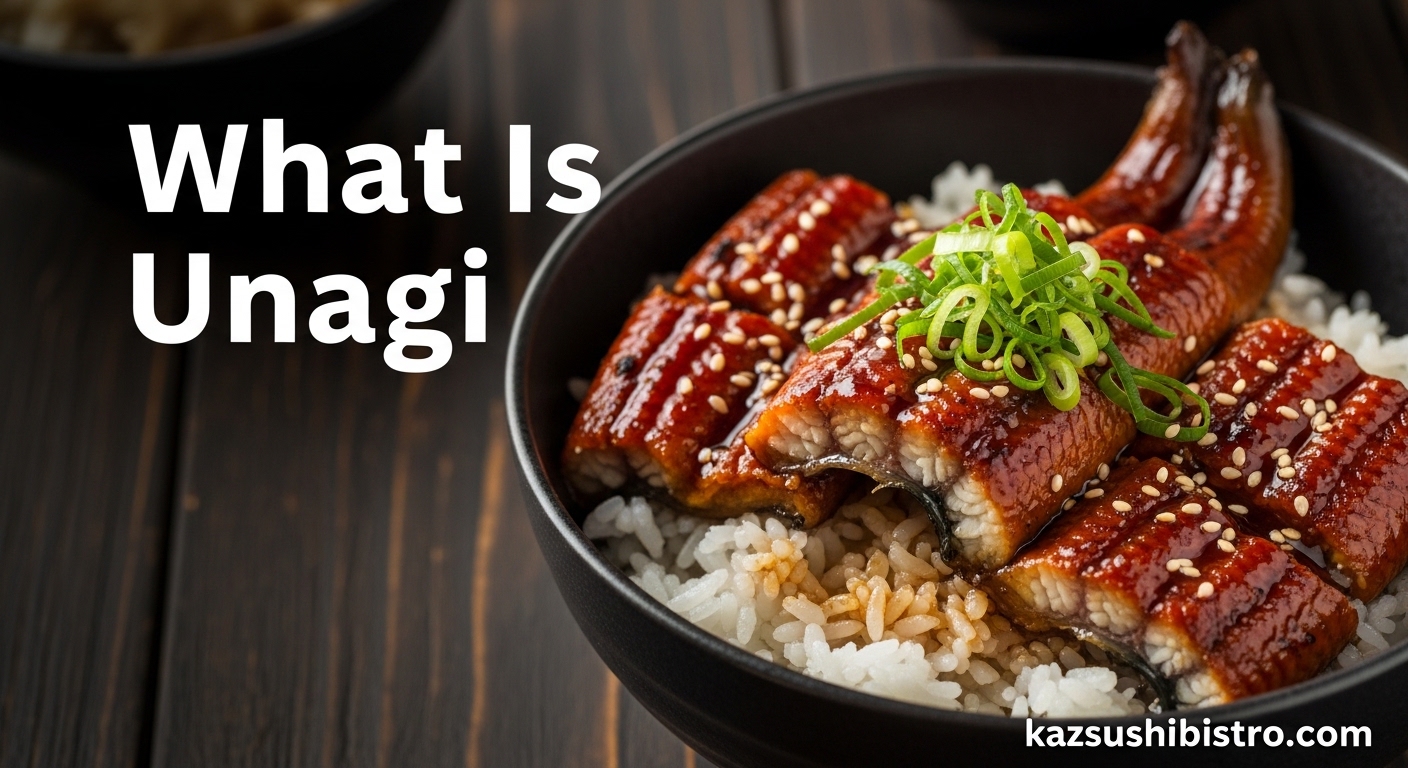
Unagi (ウナギ) is the Japanese word for freshwater eel, specifically referring to the species Anguilla japonica. This elongated, snake-like fish holds a special place in Japanese cuisine, prized for its rich, fatty meat and sweet-savory flavor when prepared using traditional methods.
At KAZ Sushi Bistro, we serve unagi to guests who want to experience one of Japan’s most beloved culinary traditions. Whether you are new to Japanese cuisine or a seasoned enthusiast, understanding what unagi is will deepen your appreciation for this remarkable ingredient.
In this guide, we will explore everything about unagi. You will learn how it differs from anago, the traditional kabayaki preparation method, popular dishes, taste characteristics, nutritional benefits, and the cultural significance that makes unagi a summertime staple in Japan.
Table of Contents
What Is Unagi? Understanding the Basics 2026
Unagi refers specifically to freshwater eel in Japanese, and most commonly denotes Anguilla japonica, the Japanese eel. These remarkable creatures are born in the ocean, swim to freshwater rivers and lakes to mature, then return to the ocean to spawn.
Freshwater eels have elongated bodies that can grow up to one meter in length. Their skin is smooth and slimy, with small scales embedded beneath the surface. The meat is dense, fatty, and rich in natural oils that create the distinctive flavor profile unagi is famous for.
Japanese eel populations have faced challenges due to overfishing and habitat changes. Much of the unagi served today comes from aquaculture operations that raise eels from juvenile glass eels caught in the wild. This practice allows restaurants to continue serving this traditional delicacy while working toward more sustainable approaches.
The popularity of unagi extends far beyond Japan. Japanese restaurants worldwide feature unagi dishes on their menus, and frozen prepared unagi has made this delicacy accessible to home cooks. At KAZ Sushi Bistro, we source our unagi carefully to ensure quality and flavor consistency.
Unagi vs Anago: Know the Difference
Many diners confuse unagi with anago, but these are distinctly different creatures with different culinary applications. Understanding the difference helps you order with confidence and appreciate what each variety brings to the table.
Unagi is freshwater eel, while anago is saltwater conger eel. This habitat difference creates significant variations in taste, texture, and preparation methods. When you see “eel” on a sushi menu, asking whether it is unagi or anago will help set your expectations correctly.
| Feature | Unagi (Freshwater Eel) | Anago (Saltwater Conger Eel) |
|---|---|---|
| Habitat | Rivers, lakes, freshwater | Ocean, saltwater |
| Scientific Name | Anguilla japonica | Conger myriaster |
| Taste | Rich, fatty, bold flavor | Milder, sweeter, delicate |
| Texture | Firm, buttery, substantial | Soft, fluffy, tender |
| Preparation | Grilled with sweet sauce (kabayaki) | Simmered or lightly grilled |
| Common Dishes | Unadon, unaju, nigiri | Tempura, nigiri, simmered |
| Price | Higher, premium ingredient | More affordable |
| Availability | Summer specialty, Doyo no Ushi no Hi | Year-round |
Unagi has a meatier, more substantial texture that falls apart in your mouth like slow-cooked meat. Anago is lighter and fluffier, with a more delicate flavor profile that some diners prefer for sushi.
When dining at KAZ Sushi Bistro, our servers can guide you through both options. Unagi works beautifully in rich, sauce-forward preparations while anago shines in lighter applications where its subtle sweetness can be appreciated.
The Kabayaki Method: How Unagi Is Prepared
Kabayaki is the traditional Japanese preparation method that transforms raw unagi into the glazed, grilled delicacy most people recognize. This technique involves filleting, skewering, grilling, and basting the eel with a sweet soy-based sauce called tare.
The preparation begins with live eels that are gutted and filleted. Skilled chefs use precise knife work to split the eel down the back or belly depending on regional style. The fillets are then skewered on wooden sticks to hold them flat during grilling.
The grilling process happens over charcoal, which imparts a subtle smoky flavor that complements the rich eel meat. Chefs grill the unagi twice, first to cook the meat through, then again after applying the tare sauce to create a caramelized glaze.
Tare sauce is the soul of kabayaki. This glaze combines soy sauce, mirin (sweet rice wine), sake, and sugar, simmered until it reaches the perfect consistency. Each restaurant guards its tare recipe closely, often maintaining a master batch for years and adding fresh ingredients daily to develop deep, complex flavors.
Japan has two primary regional styles of kabayaki. The Kanto style, from the eastern region including Tokyo, splits the eel down the back and grills it with the skin side down first. The Kansai style, from the western region including Osaka and Kyoto, splits the eel down the belly and grills the flesh side first.
Kanto chefs believe the richer, fattier back meat benefits from starting skin-side down to render the fat slowly. Kansai chefs prefer starting flesh-side down to create a crispy exterior. Both methods produce delicious results, and the debate over which is superior continues among unagi enthusiasts.
Another preparation method is shirayaki, where the eel is grilled without sauce to showcase the pure flavor of the meat. This style appears less frequently on menus but offers a different perspective on unagi’s natural taste.
Popular Ways to Eat Unagi September 2026
Japanese cuisine offers several beloved preparations for unagi, each highlighting different aspects of this versatile ingredient. From rice bowls to sushi, these dishes have earned devoted followings both in Japan and internationally.
Unadon is perhaps the most famous unagi dish. The name combines “unagi” with “donburi,” the Japanese word for rice bowl. In this preparation, grilled kabayaki eel fillets rest atop a bed of steamed white rice, with extra tare sauce drizzled over everything. The sauce seeps into the rice, creating a sweet-savory flavor that defines comfort food in Japanese cuisine.
Unaju presents the same ingredients in a more formal presentation. The unagi and rice are arranged in a lacquered box called a jubako, with the eel placed over rice in an elegant layered display. This presentation is typical of upscale unagi restaurants and special occasions.
Nigiri sushi features unagi as a topping for hand-pressed sushi rice. The grilled eel sits atop a small mound of vinegared rice, often secured with a thin strip of nori seaweed and brushed with tare sauce. Unagi nigiri is often called unakyu when paired with cucumber, combining the rich eel with refreshing crunch.
Hitsumabushi is a Nagoya specialty that offers a unique dining experience. In this preparation, unagi is chopped into smaller pieces and served over rice in a wooden bowl with various accompaniments. Diners enjoy hitsumabushi in four stages: first plain, then with condiments, then with broth as ochazuke tea rice, and finally however you prefer.
Unakyu rolls combine unagi with cucumber in maki sushi. The contrast between the rich, warm eel and cool, crisp cucumber creates a balanced bite that works well for those new to unagi. At KAZ Sushi Bistro, we prepare unakyu with attention to the temperature contrast that makes this roll special.
Umaki wraps unagi in a thin omelet, creating a breakfast-friendly preparation that pairs the savory eel with fluffy egg. This less common preparation showcases unagi’s versatility beyond the standard kabayaki presentation.
What Does Unagi Taste Like?
Unagi delivers a distinctive taste experience that has earned it legendary status in Japanese cuisine. The flavor is rich, bold, and unmistakably savory, with a natural fattiness that coats the palate.
The texture is where unagi truly shines. Properly prepared unagi falls apart in your mouth with minimal chewing. The meat has a buttery quality that melts on the tongue, leaving a pleasant richness that lingers pleasantly.
The tare sauce adds a sweet-savory dimension that balances the natural oiliness of the eel. The sauce caramelizes slightly during the final grilling, creating a glossy glaze that adds depth without overwhelming the meat’s natural flavor.
When you first taste quality unagi, you will notice the interplay between the smoky char from the grill, the sweet mirin in the sauce, and the umami-rich soy base. The eel meat itself has a clean, non-fishy flavor that surprises many first-time diners.
At KAZ Sushi Bistro, we have served unagi to hundreds of guests experiencing it for the first time. The most common reaction is surprise at how approachable the flavor is. Despite its exotic appearance, unagi tastes familiar in the way that well-prepared comfort food should taste.
The fat content gives unagi a substantial mouthfeel that satisfies hunger more than lighter fish preparations. This is why unagi has earned its reputation as a stamina food, perfect for hot summer days when appetite might otherwise flag.
Nutritional Benefits of Unagi
Unagi is not only delicious but also packed with nutrients that have made it a valued health food in Japan for centuries. The combination of protein, vitamins, and healthy fats creates a nutritional profile that supports the traditional belief in unagi as a stamina booster.
Protein content in unagi is substantial, with a typical serving providing roughly 15-20 grams of high-quality protein. This makes unagi an excellent choice for diners seeking satisfying meals that support muscle maintenance and overall health.
Vitamins A and E appear in significant amounts in unagi. Vitamin A supports eye health and immune function, while Vitamin E acts as an antioxidant that protects cells from damage. These vitamins are fat-soluble, meaning they absorb well from the fatty eel meat.
Unagi contains beneficial fatty acids including omega-3 and omega-6 in balanced proportions. These fats support cardiovascular health and provide anti-inflammatory benefits. The fat content also helps the body absorb the fat-soluble vitamins present in the meat.
Minerals including calcium, potassium, and magnesium appear in unagi, supporting bone health, muscle function, and electrolyte balance. The eel’s diet in freshwater environments contributes to this mineral content.
The Japanese tradition of eating unagi during summer stems partly from these nutritional benefits. The protein and healthy fats provide sustained energy during hot weather when lighter meals might leave you hungry shortly after eating.
One nutritional consideration is sodium content, primarily from the tare sauce. Diners watching sodium intake should enjoy unagi as an occasional treat rather than a daily staple. At KAZ Sushi Bistro, we can answer questions about preparation methods and sauce ingredients for guests with dietary concerns.
Cultural Significance: Doyo no Ushi no Hi
Unagi holds a special place in Japanese culture that extends far beyond its culinary merits. The tradition of eating unagi during summer centers around Doyo no Ushi no Hi, a specific day that drives unagi consumption throughout Japan.
Doyo no Ushi no Hi occurs during the hottest period of summer, typically falling sometime in late July or early August. The tradition holds that eating unagi on this day provides stamina and helps combat summer fatigue during the challenging heat.
The custom dates back to the Edo period when an unagi restaurant commissioned a famous scholar to create marketing for slow summer sales. The scholar recommended eating unagi on days designated as “ushi no hi” (day of the ox) during the doyo period, connecting the food to traditional calendar beliefs.
Whether the marketing origin diminishes the tradition is debatable, as the nutritional benefits of unagi genuinely support energy levels during hot weather. Japanese people continue to observe this custom 2026, with unagi restaurants seeing their busiest days of the year on Doyo no Ushi no Hi.
The cultural importance of unagi appears in literature, art, and media throughout Japanese history. Famous unagi restaurants have operated for centuries, with some establishments in Tokyo tracing their lineage back over two hundred years.
At KAZ Sushi Bistro, we honor this cultural heritage by preparing unagi with traditional techniques. We believe that understanding the cultural context enhances the dining experience, connecting each bite to centuries of Japanese culinary tradition.
Sustainability and Responsible Sourcing
Wild Japanese eel populations have faced serious challenges, leading to conservation concerns that conscious diners should understand. The species is classified as endangered, with habitat loss, overfishing, and changing ocean conditions threatening wild populations.
Aquaculture operations produce most unagi served in restaurants today. These facilities raise eels from glass eels captured during their migration from the ocean to freshwater. While this practice supports the industry, it still relies on wild-caught juveniles.
Sustainable sourcing initiatives are developing, including closed-loop aquaculture systems that raise eels from eggs to market size without wild capture. These technologies are still scaling but represent the future of responsible unagi production.
Restaurants committed to sustainability work with suppliers who follow responsible practices. At KAZ Sushi Bistro, we stay informed about sourcing developments and make purchasing decisions that balance quality with environmental responsibility.
Diners can support sustainability by enjoying unagi as a special treat rather than an everyday choice. The traditional Japanese approach of eating unagi on specific occasions aligns well with conservation goals, making the experience more meaningful while reducing pressure on populations.
When ordering unagi at any restaurant, asking about sourcing shows that diners care about these issues. This consumer interest drives the industry toward more sustainable practices as suppliers respond to market demands for responsibility.
FAQs: Common Questions About Unagi
What did Ross actually mean by unagi?
In the TV show Friends, Ross claimed ‘unagi’ was a concept from karate representing a state of total awareness. This was a fictional usage for comedic effect. In reality, unagi is simply the Japanese word for freshwater eel. The show’s writers created the karate reference as a joke about Ross’s pretentiousness.
Is unagi an eel or fish?
Unagi is a fish, specifically a freshwater eel. Eels are a type of fish belonging to the order Anguilliformes. Unagi refers to the Japanese eel species Anguilla japonica. While eels have a snake-like appearance that differs from typical fish shapes, they are classified as fish and not reptiles.
What is in Unagi sushi?
Unagi sushi typically contains grilled freshwater eel prepared kabayaki style, vinegared sushi rice, and tare sauce (sweet soy glaze). Some preparations add nori seaweed to secure the eel to the rice. Unakyu rolls combine unagi with cucumber for added crunch and freshness.
Is unagi cooked or raw?
Unagi is always cooked. Unlike some sushi fish that is served raw, unagi undergoes thorough cooking through the kabayaki grilling process. The eel is grilled over charcoal until fully cooked and glazed with sauce. This cooking process is essential for both food safety and developing the characteristic flavor.
What is unagi sauce made of?
Unagi sauce, called tare, is made from soy sauce, mirin (sweet rice wine), sake, and sugar. The ingredients are simmered together until reduced to a thick, glossy glaze. Many restaurants maintain master batches of tare for years, adding fresh ingredients daily to develop complex, deep flavors.
Why is unagi expensive?
Unagi commands high prices due to supply challenges from endangered wild populations, labor-intensive preparation requiring skilled knife work and grilling, and the costs of aquaculture operations. Each eel must be individually processed, and the kabayaki preparation demands experienced chefs.
Conclusion: What Is Unagi
Unagi is freshwater eel, specifically the Japanese species Anguilla japonica, prepared using the traditional kabayaki method of grilling with sweet tare sauce. This delicacy offers a unique combination of rich, buttery flavor and tender texture that has earned it legendary status in Japanese cuisine.
From the rice bowl comfort of unadon to the elegant presentation of unaju, from nigiri sushi to the multi-stage experience of hitsumabushi, unagi appears in preparations suited to every dining occasion. The cultural significance of Doyo no Ushi no Hi connects each serving to centuries of tradition.
At KAZ Sushi Bistro, we prepare unagi with respect for these traditions, using quality ingredients and careful technique. We invite you to experience this remarkable ingredient and understand why it has captivated Japanese diners for generations.
Now that you know what unagi is, how it differs from anago, and what to expect from the dining experience, you are ready to order with confidence. Visit us to taste unagi prepared by chefs who understand the craft behind this exceptional ingredient.