
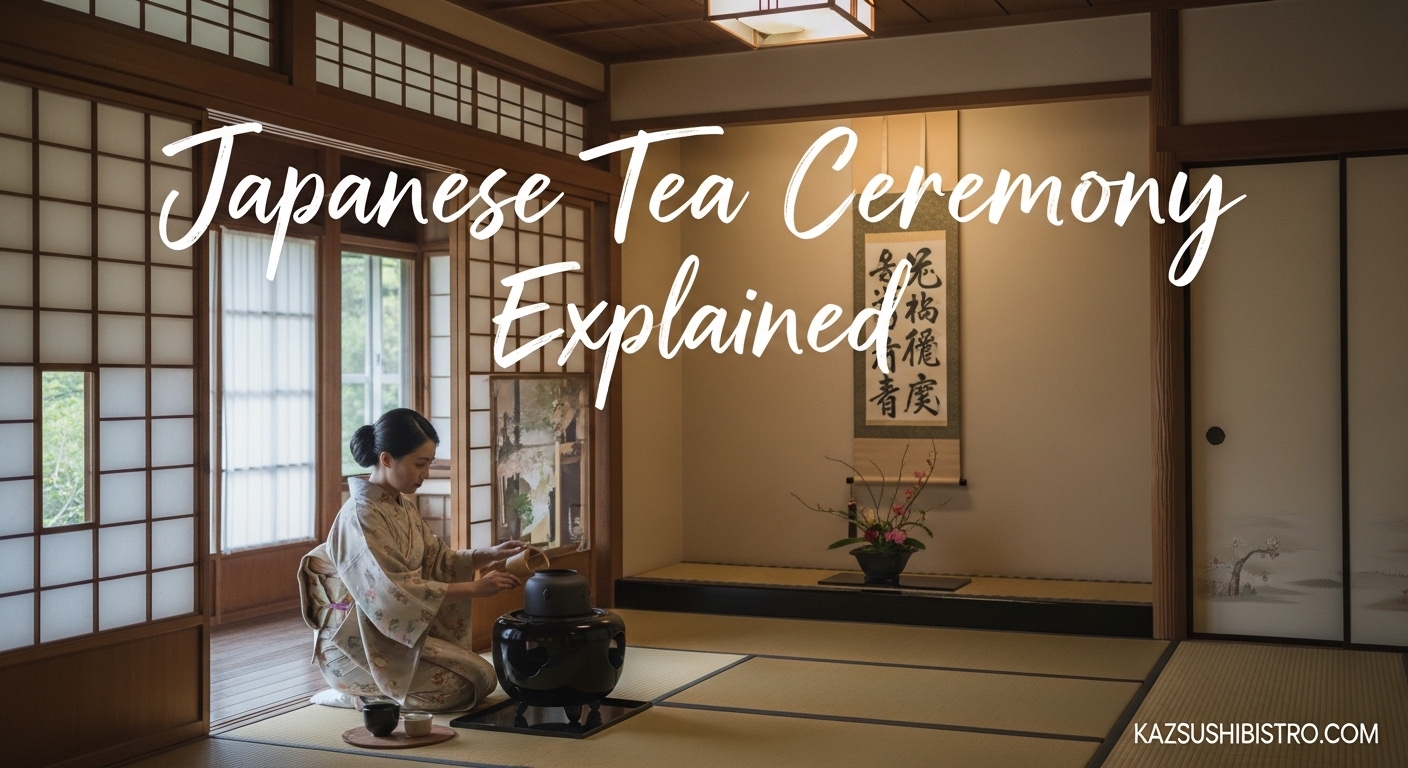
The Japanese tea ceremony represents far more than simply drinking matcha. Known as sadō or chadō (the way of tea) and chanoyu (hot water for tea), this centuries-old practice transforms the simple act of preparing and sharing tea into a profound cultural art form.
At KAZ Sushi Bistro, we believe understanding the tea ceremony deepens your appreciation for all Japanese cultural traditions, including the mindful approach we bring to our cuisine. This guide explains everything you need to know about the Japanese tea ceremony explained in detail, from its Zen Buddhist roots to the precise choreography of a formal gathering.
By the end, you will understand why millions of visitors seek out this experience each year, how to participate respectfully as a guest, and how the principles of tea ceremony can enhance your own daily life.
Table of Contents
What Is the Japanese Tea Ceremony 2026
The Japanese tea ceremony is a ritualized practice of preparing, serving, and drinking matcha green tea that emphasizes harmony, respect, purity, and tranquility. Every movement, from entering the tea room to the final sip of tea, follows precise choreography refined over centuries.
Unlike casual tea drinking, chanoyu creates a sacred space where host and guest share a moment of complete presence. The practice developed from Zen Buddhist meditation traditions and remains deeply connected to Japanese spirituality and aesthetics.
Three terms describe this art: chanoyu refers to the gathering itself, while sadō and chadō literally mean “the way of tea,” emphasizing the lifelong journey of mastery rather than any single performance.
History and Origins of Chanoyu
From China to Japan: The 8th Century Beginnings
Tea first reached Japan from China during the Tang Dynasty, brought by Buddhist monks who valued the drink for its meditative properties. According to legend, the monk Eichu served tea to Emperor Saga in 815 CE, marking one of the earliest recorded tea ceremonies in Japan.
For centuries, tea remained primarily a medicinal and religious beverage consumed within temples. The aristocracy eventually adopted tea drinking, but it was not until much later that the formal ceremony we recognize today began taking shape.
The Muromachi Period and Tea Competitions
During the 14th to 16th centuries, tea drinking exploded in popularity among samurai and wealthy merchants. Tocha, elaborate tea-tasting competitions, became fashionable entertainment where participants guessed the origin of different teas.
Wealthy collectors displayed prized Chinese tea utensils in special rooms, creating early versions of the dedicated tea space. However, this ostentatious approach to tea contradicted the Buddhist values of simplicity and humility that would eventually define the true way of tea.
Sen no Rikyu and the Way of Tea
In the 16th century, tea master Sen no Rikyu transformed chanoyu from aristocratic display into spiritual practice. Rikyu stripped away excess ornamentation, emphasizing rustic Japanese ceramics over imported Chinese treasures and humble bamboo utensils over elaborate gold and silver.
Rikyu established the four principles that define tea ceremony to this day: wa (harmony), kei (respect), sei (purity), and jaku (tranquility). His aesthetic of wabi-sabi — finding beauty in imperfection and impermanence — fundamentally shaped Japanese culture.
Today, three main schools carry Rikyu’s teachings: Urasenke, Omotesenke, and Mushakoji-senke. Each preserves slightly different interpretations of the master’s principles while sharing the core philosophy that every tea gathering offers a unique, unrepeatable experience.
The Philosophy Behind the Tea Ceremony
The Four Principles: Wa, Kei, Sei, Jaku
Every aspect of the tea ceremony embodies four foundational principles that guide both host and guest. Wa (harmony) creates unity between people, nature, and objects within the tea room. Hosts select utensils and decorations that reflect the season, while guests arrive with open hearts ready to connect.
Kei (respect) demands that everyone present honor each other regardless of social status. The tea room traditionally has a small entrance requiring even samurai lords to leave their swords outside and crawl in humbly. This physical equality reinforces spiritual respect.
Sei (purity) extends beyond physical cleanliness to mental clarity. Guests rinse their hands and mouths at the garden water basin before entering, symbolizing the washing away of worldly concerns. The tea space becomes a purified environment for authentic encounter.
Jaku (tranquility) emerges naturally when the other three principles align. This is not forced silence but a profound peace that comes from complete presence. In this state, the simple act of sharing tea becomes a form of moving meditation.
Ichi-go Ichi-e: Treasuring the Unrepeatable Moment
The concept of ichi-go ichi-e teaches that each gathering represents a once-in-a-lifetime meeting. The same people will never gather in the same way again, making every moment precious and irreplaceable.
This philosophy encourages complete presence. When you participate in tea ceremony, you set aside past regrets and future worries to fully inhabit the now. The seasonal flowers in the alcove will wilt, the conversation will end, and this exact configuration of souls will never recur.
At KAZ Sushi Bistro, we embrace this same philosophy in our omakase dining experiences. Each meal, like each tea gathering, offers a unique moment of connection between chef and guest that can never be replicated exactly.
Omotenashi: The Heart of Japanese Hospitality
Omotenashi describes the wholehearted hospitality that anticipates guest needs before they are expressed. A skilled tea master observes subtle cues — posture, facial expression, even the weather — to create an experience perfectly suited to the moment.
This service philosophy extends far beyond tea ceremony. The finest Japanese restaurants practice omotenashi by reading tables and adjusting service accordingly. A guest shivering from cold receives tea at a warmer temperature. Someone arriving stressed finds the tea room arranged to promote calm.
True omotenashi expects nothing in return. The host creates beauty and comfort purely for the guest’s sake, finding joy in the giving itself. This selfless attention to others’ wellbeing represents one of Japan’s most refined cultural achievements.
Zen Buddhism and the Tea Mind
Chanoyu developed from Zen Buddhist meditation practices that use simple, repetitive activities to quiet the mind. The precise movements of tea preparation — measuring tea, whisking matcha, folding the napkin — become forms of samu, or meditation through work.
Modern research supports what monks discovered centuries ago. The deliberate pace and sensory focus of tea ceremony activates the parasympathetic nervous system, reducing cortisol and inducing relaxation. Participants report decreased anxiety and increased clarity that persists hours after the ceremony ends.
You need not practice Buddhism to benefit from the tea mind. The ceremony simply offers a structured way to step outside normal consciousness and experience pure presence. For those of us juggling demanding schedules, this reset proves remarkably restorative.
Types of Tea Ceremonies
Chaji: The Formal Full Ceremony
A chaji represents the complete tea ceremony experience, lasting approximately four hours and including a full kaiseki meal followed by two types of tea. This formal gathering demands months of preparation and represents the pinnacle of tea mastery.
The event begins with the host receiving guests in a waiting room, then guiding them through the garden to the tea house. After the seasonal meal, guests receive koicha (thick tea) shared communally from a single bowl, followed by usucha (thin tea) served individually.
Chaji gatherings often occur during specific seasons or to celebrate special occasions. The extended duration allows profound conversation and deep connection that shorter ceremonies cannot achieve. Experiencing a true chaji remains a bucket-list item for serious Japan travelers.
Chakai: The Simpler Gathering
Chakai offers a more accessible introduction to tea ceremony, typically lasting 45 minutes to one hour. These lighter gatherings serve only usucha with simple wagashi sweets rather than a full meal.
Most tourist experiences and casual tea gatherings follow the chakai format. The shorter duration makes participation feasible for those with limited time, while still conveying the essential beauty and philosophy of chanoyu.
Many tea houses in Kyoto and other cultural centers offer chakai specifically designed for international visitors. These experiences often include English explanations that help guests understand the deeper significance of what they witness.
Koicha and Usucha: Thick and Thin Tea
The tea ceremony features two distinct matcha preparations with different social meanings. Koicha (thick tea) uses approximately three grams of matcha whisked with just enough hot water to form a smooth, intense liquid the consistency of paint. Guests share a single bowl in a gesture of intimacy and trust.
Usucha (thin tea) prepares the same matcha with more water, creating a lighter beverage closer to what most Westerners recognize. Each guest receives their own bowl, making this the standard for casual gatherings and tourist experiences.
The transition from koicha to usucha within a formal chaji mirrors the gathering’s social arc. Thick tea unites everyone in shared experience, while thin tea allows individual appreciation as the event concludes.
What Happens During a Japanese Tea Ceremony
Step 1: Entering the Tea House Through the Roji
The ceremony begins in the roji, the dewy garden path leading to the tea house. This outer garden represents the secular world that guests are leaving behind. As you walk the stepping stones, you consciously shift from ordinary consciousness to tea mind.
The roji is intentionally simple, often featuring moss, stone lanterns, and a few carefully placed plants. Seasonal elements change throughout the year, with cherry blossoms in spring and maple leaves in autumn. This natural beauty begins the process of calming the mind before any tea is served.
Step 2: Purification at the Tsukubai
Before entering the tea house, guests purify themselves at the tsukubai, a stone water basin positioned near the entrance. Using a bamboo ladle, you wash your hands and rinse your mouth, symbolically cleansing yourself of worldly dust.
This physical act carries profound psychological meaning. The water represents purity of intention. By washing, you commit to approaching the gathering with a clean heart and open mind, leaving conflicts and concerns outside.
Step 3: Entering the Chashitsu
The chashitsu (tea house) typically measures just four and a half tatami mats, creating an intimate space for only a few guests. You enter through a small square door called the nijiriguchi, forcing you to bow and humble yourself before entering.
Inside, you first admire the tokonoma (alcove) displaying a hanging scroll and seasonal flower arrangement. These elements set the theme for the gathering and demonstrate the host’s artistic sensibility. Only after appreciating this focal point do guests take their seated positions.
Step 4: Receiving the Wagashi Sweet
Before any tea appears, the host serves wagashi, a traditional Japanese sweet designed to complement matcha’s bitterness. These seasonal confections might feature cherry blossom flavors in spring or chestnut in autumn.
You consume the wagashi entirely before tea arrives. The sweetness prepares your palate for the astringent matcha to come, creating a balanced flavor experience. This sequence also teaches patience and sequence — each element has its proper place in the order of things.
Step 5: Watching the Temae Preparation
The temae refers to the choreographed procedure of preparing tea. Every movement follows centuries of refinement — how the tea scoop enters the container, the angle of the whisk, the precise amount of water added to the bowl.
As a guest, you observe this performance in respectful silence. The tea master works with meditative concentration, each gesture flowing into the next without hesitation. This is not entertainment to be consumed but an invitation to shared presence. You witness skill refined over decades of practice.
Step 6: Receiving and Drinking the Tea
When the tea is ready, the host presents it with a bow. You receive the bowl with both hands, then rotate it twice clockwise before drinking. This positions the bowl’s decorated front away from you, showing humility — you drink from the “back” as a sign of respect.
Traditionally, guests take three sips to finish the tea, making a slight slurping sound on the final sip to indicate appreciation. The three sips represent entering, dwelling in, and departing from the moment — a microcosm of the gathering itself.
Step 7: Examining the Chawan
After drinking, you examine the tea bowl (chawan) that held your tea. You admire its shape, glaze, and any imperfections that make it unique. This moment of aesthetic appreciation connects you to the countless hands that shaped, fired, and used this bowl across generations.
Finally, you wipe the rim where you drank with your right hand, then return the bowl to the host with gratitude. The ceremony concludes with quiet conversation before guests depart, carrying the calm of the tea room back into the world.
The Tea House and Essential Equipment
Chashitsu: Architecture of Tranquility
The traditional tea house embodies wabi-sabi aesthetics through humble materials and thoughtful design. Walls of mud plaster, tatami straw mat flooring, and wooden beams create an environment of natural simplicity that encourages relaxation.
The ro (sunken hearth) or furo (portable brazier) provides heat for water depending on the season. Winter ceremonies use the sunken hearth built into the floor, while warmer months feature the portable brazier that can be positioned for optimal guest comfort.
Every architectural element serves both practical and philosophical purposes. The low ceiling encourages humility. The natural materials connect occupants to the earth. The small size prevents crowds and maintains intimacy. Even the imperfections in hand-crafted walls become objects of beauty.
Essential Utensils and Their Meaning
Each tea ceremony tool carries centuries of meaning. The chawan (tea bowl) represents the vessel of hospitality. No two bowls are identical — raku ware bowls are hand-shaped and fired individually, making each one unique.
The chasen (bamboo whisk) creates the frothy consistency that makes matcha distinctive. Crafted from a single piece of bamboo split into fine tines, this tool requires replacement every few months as the bamboo degrades.
The chashaku (tea scoop) and natsume (tea caddy) complete the core equipment. The scoop transfers matcha from container to bowl, while the caddy stores the precious green tea powder. Together, these simple bamboo tools enable the entire ceremony.
Seasonal Adaptations
Tea ceremony changes with the seasons in ways visible and subtle. The hanging scroll in the tokonoma reflects the time of year through calligraphy or painting. Flower arrangements shift from cherry to peony to chrysanthemum. Even the furo brazier position adjusts for summer cooling or winter warmth.
This sensitivity to shun (seasonality) connects directly to Japanese cuisine. Just as tea masters honor the season through their choices, traditional chefs select ingredients at their peak. At KAZ Sushi Bistro, we share this reverence for what nature offers each moment.
Japanese Tea Ceremony Etiquette for Guests
What to Wear to a Tea Ceremony
Western business casual attire works perfectly for most tea ceremony experiences. Choose subdued colors and avoid bright patterns or logos that might distract from the atmosphere. Dark pants and a simple blouse or button-down shirt demonstrate respect without requiring traditional dress.
If you own a kimono, tea ceremony offers the perfect occasion to wear it. However, many venues provide rental kimonos specifically for this experience. The combination of traditional dress and traditional practice creates a more immersive cultural encounter.
What Not to Wear at a Tea Ceremony
Avoid strong perfumes and colognes that would disrupt the subtle fragrance of tea and incense. Skip jewelry that might clink against the tea bowl — long necklaces and dangling bracelets create unwanted noise. Strong fragrances overpower the delicate sensory experience that defines chanoyu.
Shorts, tank tops, and revealing clothing are inappropriate for traditional settings. While tourist-oriented venues may be more flexible, covering shoulders and knees shows respect for the cultural significance of the space. Remove hats before entering the tea room.
Seiza and Proper Sitting
The traditional position for tea ceremony is seiza — kneeling with legs folded beneath you on the tatami. This formal posture demonstrates respect and creates stability. However, seiza becomes uncomfortable for those unaccustomed to it.
Most modern tea houses accommodate guests who cannot maintain seiza. You may request permission to sit cross-legged or with legs to the side. The host wants you comfortable enough to appreciate the experience — physical pain defeats the purpose of tranquility.
Key Phrases to Know
Three phrases help you participate gracefully. When receiving your tea, say “Otemae chodai itashimasu” — roughly “I humbly receive your tea preparation.” This acknowledges the host’s effort and skill.
Before drinking, turn to the guest beside you and say “Osaki ni” — “Excuse me for going first.” This small courtesy maintains social harmony even in simple moments. Finally, thank the host with “Keigu” or “Thank you for the effort” when departing.
Common Etiquette Mistakes to Avoid
Never step on the threshold when entering the tea room — this symbolic barrier deserves respect. Keep feet flat on the tatami rather than crossing legs casually. Avoid loud conversation or checking your phone, which shatters the atmosphere the host worked to create.
Photography varies by venue. Some allow photos before the ceremony begins, while others prohibit cameras entirely. Ask permission rather than assuming. When in doubt, remain silent and observe — your hosts will guide you appropriately.
Experiencing Tea Ceremony in 2026
Where to Experience Authentic Tea Ceremony
Kyoto remains the spiritual home of tea ceremony, with countless venues ranging from historic temples to modern cultural centers. The Urasenke and Omotesenke schools operate public tea rooms where visitors can experience authentic practice. Many gardens and museums throughout the city also offer regular demonstrations.
Beyond Kyoto, tea houses exist in every major Japanese city. Tokyo’s Happo-en and Hama-rikyu Gardens host accessible ceremonies for tourists. Even smaller cities maintain tea schools that occasionally welcome visitors. Researching options before your trip helps secure reservations at popular venues.
What to Expect as a Tourist
Expect to pay between 2,000 and 8,000 yen for a tourist-oriented tea ceremony experience in 2026. Shorter chakai gatherings cluster at the lower end, while extended chaji experiences with meals command premium prices. English-speaking hosts typically cost slightly more but offer invaluable context.
Group sizes range from intimate gatherings of four to larger demonstrations of twenty or more. Smaller groups provide deeper connection with the host and more opportunity for questions. Many travelers report that even tourist-oriented ceremonies feel profoundly moving when approached with open hearts.
Bringing the Spirit to Daily Life
You need not travel to Japan to embrace tea ceremony principles. Creating a simple home matcha practice offers similar benefits. Choose one special bowl for your tea. Prepare it with full attention to each step. Drink in silence, savoring the flavor and the moment.
The philosophy of ichi-go ichi-e applies to every meal, every conversation, every sunset. By approaching ordinary moments with tea ceremony mindfulness, you transform daily life into something extraordinary. This is the true gift of chanoyu — not the ritual itself but the awareness it cultivates.
From Tea House to Dining Table
The principles underlying Japanese tea ceremony extend naturally into fine Japanese dining. Both traditions practice omotenashi, anticipating guest needs before they arise. Both honor seasonality, adjusting offerings to match what nature provides. Both create intimate spaces where meaningful connection flourishes.
At KAZ Sushi Bistro, we draw from this same cultural well. Our chefs approach each dish with the same mindfulness a tea master brings to the temae. We select ingredients at their peak, present them with aesthetic care, and serve with wholehearted attention to your experience.
Whether you enjoy matcha in a centuries-old Kyoto tea house or savor omakase at our restaurant, you participate in the same living tradition. Japanese culture has refined hospitality into an art form — one that nourishes body and spirit alike.
Frequently Asked Questions
What is the point of a Japanese tea ceremony?
The Japanese tea ceremony creates a sacred space for mindful presence and authentic human connection. Beyond drinking matcha, it offers moving meditation, cultivates the four principles of harmony, respect, purity, and tranquility, and embodies the philosophy of ichi-go ichi-e — treasuring each unrepeatable moment.
How long does a tea ceremony take?
A formal chaji ceremony lasts approximately four hours and includes a kaiseki meal followed by two types of tea. Shorter chakai gatherings typically last 45 to 60 minutes and serve only thin tea with sweets. Tourist experiences usually follow the chakai format for accessibility.
What should I wear to a Japanese tea ceremony?
Western business casual attire in subdued colors works perfectly for most tea ceremonies. Avoid bright patterns, strong fragrances, and revealing clothing. If you have a kimono, tea ceremony offers an ideal occasion to wear it, though many venues provide rental options.
What not to wear at a tea ceremony?
Avoid strong perfumes and colognes that disrupt the sensory experience. Skip noisy jewelry that might clink against tea bowls. Shorts, tank tops, and revealing clothing are inappropriate. Hats should be removed before entering the tea room.
What does 3 sips mean in Japan?
In tea ceremony, guests traditionally take three sips to finish their matcha. These sips represent entering, dwelling in, and departing from the moment — a microcosm of the gathering itself. A slight slurping sound on the final sip indicates appreciation for the tea.
Is it worth it to do a tea ceremony in Japan?
Yes, experiencing an authentic tea ceremony in Japan is worth it for travelers interested in culture, mindfulness, or unique experiences. Even tourist-oriented ceremonies offer profound moments of tranquility and insight into Japanese philosophy. The combination of ritual, aesthetics, and hospitality creates lasting memories.
What to expect at a Japanese tea ceremony?
Expect a choreographed sequence beginning with garden entry and purification, followed by admiring seasonal decorations, receiving traditional sweets, watching the tea master prepare matcha, drinking tea in a specific manner, and concluding with quiet conversation. The atmosphere is calm, respectful, and deeply focused.
How much does a tea ceremony cost in Japan?
Tourist-oriented tea ceremonies in Japan typically cost between 2,000 and 8,000 yen depending on duration, group size, and inclusion of English explanation. Shorter chakai experiences start around 2,000-3,000 yen, while formal chaji ceremonies with meals may cost 10,000 yen or more.
Conclusion
The Japanese tea ceremony explained in this guide offers far more than cultural trivia. Chanoyu provides a practical framework for bringing mindfulness, respect, and presence into any moment. Whether you experience it in a Kyoto tea house or practice its principles at your own table, the way of tea enriches life.
At KAZ Sushi Bistro, we honor this tradition by bringing the same attention to your dining experience that tea masters bring to every ceremony. The philosophy of omotenashi guides our service. The principle of ichi-go ichi-e reminds us that each meal shared represents a unique, precious encounter.
We invite you to explore Japanese culture through both tea and cuisine. The path begins with a single bowl — whether filled with frothy matcha or adorned with seasonal sushi. From there, the journey of discovery unfolds one mindful moment at a time.