
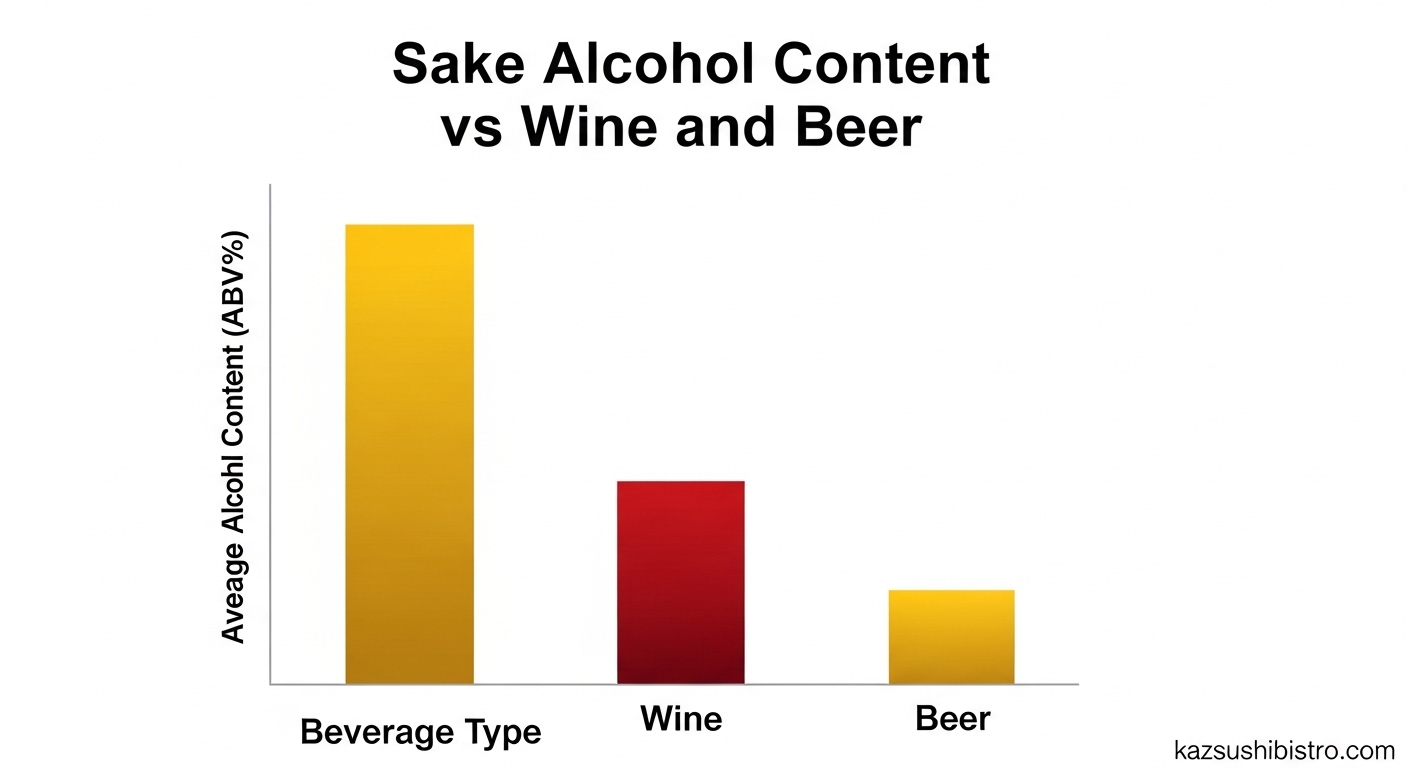
Quick Answer: Sake typically contains 15-20% alcohol by volume (ABV), making it stronger than most wines (11-14% ABV) and significantly stronger than beer (4-7% ABV). A standard serving of sake delivers about the same alcohol as a glass of wine, but the smooth, subtle taste can mask its potency. Understanding these differences helps you enjoy sake responsibly while appreciating its unique place between wine and spirits.
Table of Contents
Understanding Sake Alcohol Content
Sake alcohol content compared to wine and beer reveals a fascinating middle ground in the world of alcoholic beverages. Most sake falls between 15% and 16% ABV, though some varieties range from 10% all the way up to 20%.
This positioning makes sake unique. It sits comfortably between the lighter strength of beer and wine and the punch of distilled spirits like vodka or whiskey (typically 40% ABV). The result is a drink you can savor over a meal without the rapid intoxication of hard liquor, but with more kick than your average glass of wine.
The Brewing Process Behind Sake’s Strength
Sake achieves its alcohol content through a process called multiple parallel fermentation. Unlike beer brewing, where starch conversion and fermentation happen in separate steps, sake production occurs simultaneously.
Koji mold breaks down rice starches into sugars while yeast converts those sugars into alcohol at the same time. This efficient process allows sake to reach higher alcohol concentrations than beer, which typically tops out around 7% ABV before yeast becomes inactive.
The rice polishing ratio also affects final alcohol content. Premium sakes like Ginjo and Daiginjo use rice milled to 60% or less of its original size, creating cleaner fermentation and consistent alcohol levels. More polished rice often produces sake with refined, precise ABV percentages.
Side-by-Side Comparison: Sake vs Wine vs Beer 2026
When comparing sake alcohol content to wine and beer, the numbers tell a clear story. Here is how these three popular beverages stack up:
| Beverage | Typical ABV Range | Standard Serving | Alcohol per Serving |
|---|---|---|---|
| Sake | 15-20% | 1.5 oz (ochoko) | 0.23 oz pure alcohol |
| Wine | 11-14% | 5 oz | 0.60 oz pure alcohol |
| Beer | 4-7% | 12 oz | 0.48-0.84 oz pure alcohol |
These figures reveal an important insight about serving sizes. While sake has higher alcohol by volume, the traditional Japanese serving size is much smaller than a wine glass or beer pint. This cultural difference means you consume less total alcohol per pour, even though the liquid itself is stronger.
How Sake Compares to Wine
Sake and wine share similar alcohol percentages, with sake typically edging out wine by a few percentage points. Most wines range from 11% to 14% ABV, while sake hovers around 15-16% for standard varieties.
However, the drinking experience differs significantly. Wine’s tannins, acidity, and fruit-forward flavors signal its alcoholic strength to your palate. Sake, by contrast, often tastes remarkably smooth and subtle despite containing more alcohol. This disconnect between taste and potency leads many first-time drinkers to underestimate sake’s effects.
Forum discussions reveal this confusion repeatedly. Users on Reddit’s r/Sake community frequently mention that sake is “deceptively strong” and “goes down too easy.” One experienced drinker noted: “It depends on the type, but clear sake usually runs 12-15% ABV. Cloudy sake can hit 20%. Either way, it is about the same alcohol as a comparable amount of wine.”
How Sake Compares to Beer
The difference between sake and beer is dramatic. Beer typically contains 4-7% ABV, meaning sake is roughly two to four times stronger by volume. A single ochoko (1.5 oz) of 16% ABV sake contains approximately the same alcohol as 6-7 ounces of average beer.
To put this in practical terms: one standard sake serving equals about half a beer in alcohol content. This equivalency explains why traditional Japanese drinking sessions involve frequent small pours rather than large glasses. The pacing allows for sustained enjoyment without rapid intoxication.
Many beginners ask: “How many shots of sake equal a beer?” The answer depends on your definitions, but generally 2-3 standard ochoko pours of sake provide roughly the same alcohol as one 12-ounce beer. This math helps when switching between beverages or tracking consumption.
Types of Sake and Their Alcohol Levels
Not all sake shares the same alcohol content. Different brewing styles and dilution levels create a spectrum of strengths to suit various preferences and occasions.
Junmai-shu (Pure Rice Sake)
Junmai varieties contain only rice, water, koji, and yeast with no added distilled alcohol. These sakes typically range from 15% to 16% ABV. The category includes:
- Junmai: 15-16% ABV, full-bodied and rich
- Junmai Ginjo: 15-16% ABV, more refined and aromatic
- Junmai Daiginjo: 15-16% ABV, highly polished rice, elegant and complex
Honjozo and Added-Alcohol Sakes
Honjozo sake includes a small amount of distilled alcohol added after fermentation. This technique lightens the body and enhances aromas. Honjozo typically measures 15-16% ABV, similar to Junmai varieties.
Genshu (Undiluted Sake)
Genshu represents sake in its most potent form. Unlike standard sake, which brewers dilute with water before bottling to reach 15-16% ABV, genshu remains at its natural fermentation strength. These undiluted sakes pack 17% to 20% ABV and deliver a more intense drinking experience.
The higher alcohol content makes genshu ideal for sipping slowly or enjoying with rich, flavorful foods. Many genshu enthusiasts appreciate the fuller body and more pronounced rice character that comes with the concentrated form.
Nigori (Cloudy Sake)
Nigori sake appears milky or cloudy because brewers leave some rice solids in the final product. These unfiltered sakes often surprise drinkers with their strength. While some nigori varieties match standard sake at 14-16% ABV, others especially sweeter styles can reach up to 20% ABV.
The suspended rice particles give nigori a creamy texture and subtle sweetness that masks its alcoholic punch. First-time nigori drinkers should check the label carefully, as the pleasant taste can lead to faster consumption than intended.
Low-Alcohol and Session Sakes
A growing category of sessionable sakes offers lower alcohol alternatives. These varieties typically range from 8% to 12% ABV, making them closer to wine or strong beer in strength. Options like Gekkeikan Free and various sparkling sakes cater to health-conscious drinkers or those seeking extended drinking sessions without heavy intoxication.
Serving Size and Responsible Drinking
Understanding sake alcohol content compared to wine and beer matters most when it comes to drinking responsibly. The traditional Japanese approach offers valuable guidance for modern drinkers.
Standard Sake Serving Sizes
Traditional sake service uses small ceramic cups called ochoko, typically holding 1.5 to 2 ounces. This modest portion size reflects centuries of wisdom about pacing and moderation. A single ochoko of 16% ABV sake delivers roughly the same alcohol as 2 ounces of 12% wine.
By contrast, many Western bars serve sake in wine glasses or larger vessels, significantly increasing the alcohol per pour. When ordering sake outside traditional Japanese restaurants, ask about portion sizes to track your consumption accurately.
The Yawaragimizu Technique
Japanese drinking culture incorporates a practice called yawaragimizu literally “softening water.” This refers to drinking water between sake servings or alongside your sake. The practice serves dual purposes: it helps pace consumption and reduces the dehydrating effects of alcohol.
Forum discussions among sake enthusiasts consistently recommend this approach. Regular sake drinkers report fewer hangovers and better next-day feelings when they follow the yawaragimizu tradition. Premium sake also tends to produce cleaner mornings than lower-quality options, according to community experiences shared online.
Temperature and Perception
Serving temperature affects how we perceive sake’s strength. Hot sake (called atsukan) often tastes smoother and less alcoholic than chilled sake, even at identical ABV levels. The warmth opens aromas and softens edges, potentially leading to faster drinking.
Chilled sake preserves more precise flavors and can taste sharper, sometimes emphasizing the alcoholic presence. Neither temperature changes the actual alcohol content, but both influence how quickly and comfortably you consume each pour.
Frequently Asked Questions
How many shots of sake equal a beer?
Two to three standard ochoko pours (1.5 oz each) of 16% ABV sake roughly equal one 12-ounce beer in total alcohol content. The math works out to about 0.72 ounces of pure alcohol in three sake servings versus 0.48-0.84 ounces in a typical beer. Individual tolerance and consumption speed also affect how you feel.
Does sake get you more drunk than wine?
Sake and wine contain similar alcohol percentages, so they produce comparable intoxication when consumed in equivalent amounts. However, sake’s smooth taste often leads to faster drinking, which can result in feeling drunk more quickly. The experience depends more on your pace and total consumption than the beverage itself.
Is sake stronger than vodka?
No, sake is significantly weaker than vodka. Standard sake contains 15-20% ABV while vodka typically measures 40% ABV. Vodka and other distilled spirits contain roughly twice the alcohol concentration of sake. One ounce of vodka delivers about the same alcohol as two ounces of sake.
Can one shot of sake get you drunk?
A single shot or ochoko of sake (1.5 oz at 16% ABV) typically produces only mild effects or a slight buzz for most adults. Factors like body weight, tolerance, food consumption, and drinking speed all influence the outcome. On an empty stomach, one serving might be noticeable. With food, most people feel minimal effects.
Does hot sake have more alcohol than cold sake?
No, serving temperature does not change alcohol content. Hot sake (atsukan) and cold sake from the same bottle contain identical ABV. However, temperature affects perception. Hot sake often tastes smoother and less alcoholic, which may lead to faster consumption. Always check the bottle label for actual ABV regardless of serving temperature.
Conclusion
Sake alcohol content compared to wine and beer places this Japanese beverage in a unique middle position. At 15-20% ABV, sake is stronger than wine (11-14%) and significantly stronger than beer (4-7%), yet well below distilled spirits. Understanding these differences helps set proper expectations and drink responsibly.
The key takeaway is this: sake’s smooth, subtle flavor can mask its alcoholic strength. Whether you choose a standard Junmai at 15% ABV or venture into undiluted Genshu at 20%, remember that small servings and steady pacing lead to the most enjoyable experience. Practice yawaragimizu, savor each ochoko, and appreciate sake for what it is: a refined beverage that bridges the gap between casual wine and powerful spirits.