
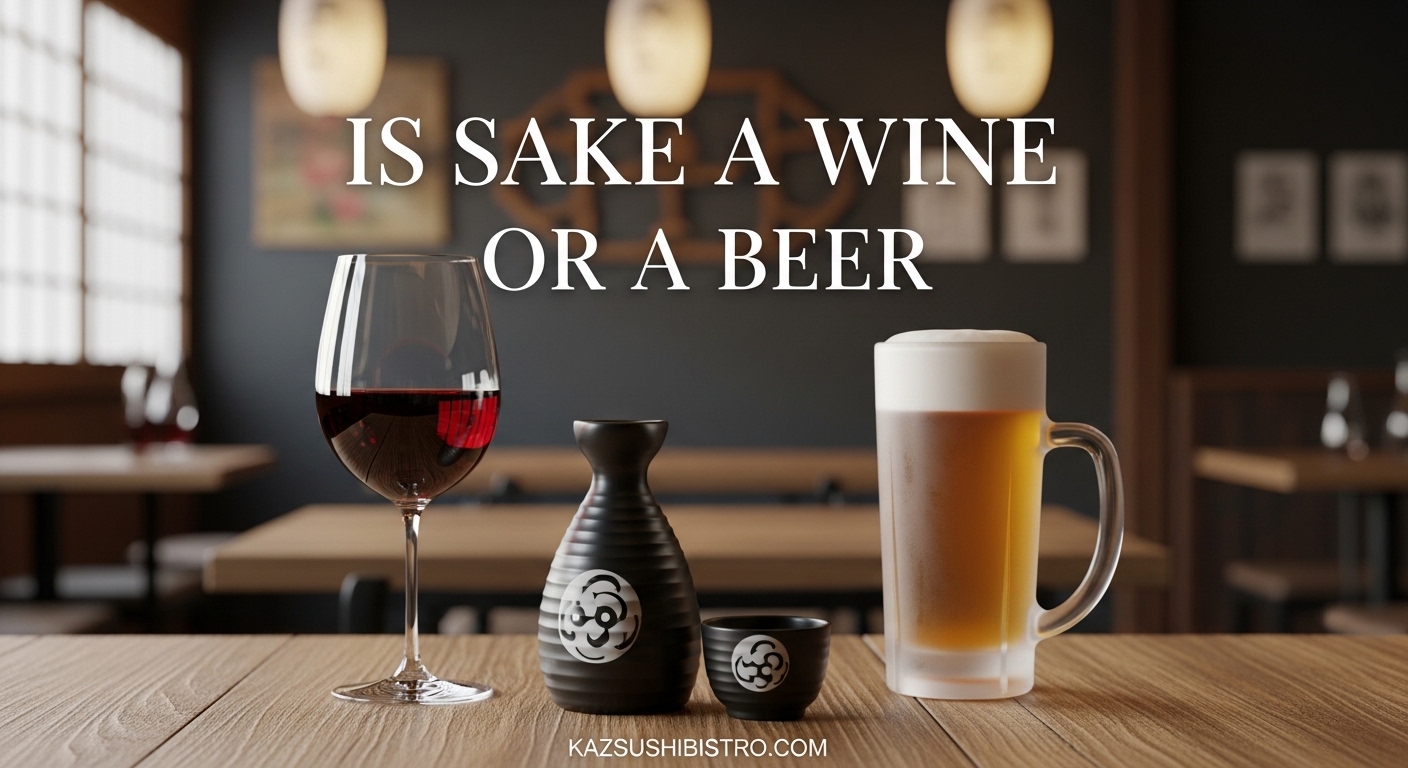
Walk into any liquor store looking for sake and you might find yourself scratching your head. Is it in the wine aisle? The beer section? Or perhaps tucked away with the spirits? This confusion is completely normal. For centuries, sake has defied easy categorization in Western alcohol frameworks, leaving many drinkers puzzled about what they’re actually buying. Our team at KAZ Sushi Bistro has guided thousands of guests through their first sake experiences, and the “wine or beer” question comes up nearly every night.
In this guide, you’ll get a definitive answer to the classification question, understand why sake is called “rice wine” when it’s brewed like beer, and learn the unique process that makes sake completely different from both. By the end, you’ll understand exactly what makes this 2,500-year-old Japanese beverage stand in a category of its own.
Table of Contents
Sake Is Neither Wine Nor Beer: The Definitive Answer 2026
Sake is neither wine nor beer. It is a unique alcoholic beverage category unto itself, created through a brewing process that shares elements with beer production but produces a beverage with characteristics closer to wine.
Here are the key facts that define sake’s unique position:
- Production method: Sake is brewed from grain (rice), similar to beer, using a fermentation process involving mold and yeast
- Alcohol content: Sake typically contains 15-17% ABV, placing it closer to wine (12-15%) than beer (4-6%)
- Appearance and serving: Sake is clear and still like wine, not carbonated like most beer
- Ingredient profile: Sake contains no hops like beer and no tannins like wine, creating a completely different flavor experience
The Japanese term for sake is nihonshu, which literally translates to “Japanese alcohol.” This naming reflects the beverage’s deep cultural significance in Japan, where it has been produced for over two millennia as a distinct category without Western classification confusion.
Why Is Sake Called Rice Wine If It’s Not Actually Wine?
The “rice wine” nickname creates most of the confusion about sake’s classification. Understanding where this term came from helps explain why so many people mistakenly believe sake is a type of wine.
The term “rice wine” emerged when Western merchants first encountered sake in the 16th and 17th centuries. These traders needed a way to describe this unfamiliar beverage to European consumers. Since sake looked like wine (clear, still, served in similar vessels) and had comparable alcohol content, calling it “rice wine” seemed like the most logical choice for marketing purposes.
The nickname stuck. Even today, many labels and menus still refer to sake as “Japanese rice wine” or simply “rice wine.” This historical accident has led to generations of confusion about how sake is actually made and what category it belongs to.
In Japan, the confusion doesn’t exist. The term nihonshu carries no implications of being wine-like. Japanese consumers understand sake as its own established category with distinct grades, brewing methods, and serving traditions that have nothing to do with grape wine.
How Sake Is Made: The Unique Brewing Process
Sake production differs fundamentally from both winemaking and beer brewing, though it shares more technical similarities with beer. The process starts with special rice varieties called sakamai that are specifically cultivated for brewing purposes.
Step 1: Rice Polishing
The rice kernels are milled or “polished” to remove the outer layers. This step is crucial because the outer portions contain proteins and fats that can create off-flavors. Premium sakes like ginjo and daiginjo undergo more extensive polishing, removing 40-50% of the grain or more.
Step 2: Washing, Soaking, and Steaming
The polished rice is carefully washed to remove any remaining bran dust, then soaked to achieve the precise moisture content needed for steaming. The rice is steamed rather than boiled, creating firmer grains that work better for the next critical step.
Step 3: Koji Mold Cultivation
This is where sake production diverges dramatically from beer brewing. A portion of the steamed rice is inoculated with Aspergillus oryzae, a beneficial mold known as koji in Japanese. Over 48-72 hours in a warm, humid room, the koji mold grows on the rice, producing enzymes that will convert starch to sugar.
Koji is the secret ingredient that makes sake possible. Without this mold, the brewers would have no way to access the fermentable sugars locked inside rice starch. Beer brewers use a different process called malting to achieve similar results with barley.
Step 4: Yeast Starter (Moto)
Brewers create a yeast starter culture called moto by mixing koji rice, water, yeast, and lactic acid bacteria. This starter ferments for about two weeks, building up a strong population of yeast cells that will power the main fermentation.
Step 5: Moromi Fermentation
The main fermentation happens in a large tank called the moromi. Here, brewers add the remaining steamed rice, koji rice, water, and the yeast starter in three additions over four days. This builds up the fermenting mash gradually.
Step 6: Parallel Fermentation
During the moromi stage, something remarkable happens. The koji enzymes continue breaking down rice starch into sugar while the yeast simultaneously converts that sugar into alcohol. This happens in the same tank at the same time.
Winemakers don’t face this challenge because grapes already contain sugar. Beer brewers handle starch-to-sugar conversion first (mashing), then add yeast in a separate step (fermentation). Sake’s parallel approach is completely unique among major alcoholic beverages.
Step 7: Pressing and Finishing
After 18-32 days of fermentation, the mash is pressed to separate the liquid sake from the rice solids. The sake may be filtered, pasteurized, diluted to standard strength (usually 15-16% ABV), and aged briefly before bottling.
Sake vs Wine: Understanding the Key Differences
Despite the “rice wine” nickname, sake and wine share fewer similarities than most people assume. The differences start with ingredients and extend through every aspect of production, chemistry, and taste.
Ingredients: Grapes vs Rice
Wine begins with fruit. Grapes contain natural sugars that yeast can ferment directly into alcohol. This single-ingredient simplicity defines winemaking across all varieties, from light white wines to heavy reds.
Sake begins with grain. Rice contains starch, not sugar, requiring the koji mold conversion step before fermentation can begin. This fundamental difference in starting material creates a completely different production path.
The Tannin Factor
One of wine’s defining characteristics is tannin content. Tannins come from grape skins, seeds, and stems, creating that drying sensation in your mouth when you drink red wine. They also give wine its aging potential and contribute significantly to food pairing interactions.
Sake contains no tannins. Zero. This absence creates a smoother, softer mouthfeel and makes sake more versatile for pairing with foods that clash with wine tannins, such as delicate sashimi or soy sauce-based dishes.
Acidity Levels
Wine typically has a pH between 3.0 and 3.6, making it relatively acidic. This acidity acts as a natural preservative and contributes to wine’s crisp, refreshing qualities. Some wines, especially from cooler climates, can taste quite sharp.
Sake is much less acidic, with a pH typically between 4.0 and 4.8. This lower acidity creates a softer, rounder drinking experience. For people who find wine too sharp or harsh, sake often provides a more approachable alternative.
Alcohol Content Comparison
Most wines range from 11-15% ABV, with the majority falling between 12-14%. This moderate alcohol level allows wine to be consumed in larger portions without overwhelming the drinker.
Sake typically contains 15-17% ABV, slightly higher than most wines. Premium styles like junmai and daiginjo often sit at the higher end of this range. The serving size reflects this difference, sake is traditionally consumed in smaller portions than wine.
Fermentation Method
Wine fermentation is simple and direct. Yeast consumes the natural grape sugars, producing alcohol as a byproduct. No starch conversion is needed because the sugar is already present.
Sake requires the parallel fermentation process described earlier. This more complex method allows sake brewers to achieve higher alcohol concentrations than beer brewers can typically reach with sequential fermentation.
Sake vs Beer: Understanding the Key Differences
Sake’s brewing process shares the most technical similarities with beer production, both start with grain, both require starch conversion, and both use fermentation. Yet the final products couldn’t be more different in taste, alcohol content, and drinking experience.
Starch Conversion Methods
Beer brewers use malting to access fermentable sugars. Barley grains are soaked, allowed to germinate slightly, then dried in a kiln. This process activates natural enzymes that can break down starch. Different kilning temperatures create different malt styles that give beer its color and flavor foundation.
Sake brewers use koji mold instead of malting. The Aspergillus oryzae mold produces different enzymes than germinating barley, creating different sugar profiles and flavor compounds. This biological difference is one reason sake and beer taste nothing alike despite both being grain-based.
The Hop Question
Hops define beer’s character. These cone-shaped flowers add bitterness, aroma, and preservation qualities to beer. Every beer style, from delicate pilsners to aggressive IPAs, relies on hops for its identity. Without hops, you don’t have beer.
Sake contains no hops. None. This absence removes the bitter, herbal, floral, or citrus notes that beer drinkers expect. Instead, sake develops its flavor profile from the rice itself, the koji mold, and the yeast, creating a much cleaner, more subtle taste experience.
Carbonation Levels
Most beer is carbonated. The bubbles come from carbon dioxide produced during fermentation, either naturally in the bottle or through forced carbonation. This effervescence is considered essential to beer’s refreshing quality.
Sake is still. It contains no intentional carbonation, making it more similar to wine in mouthfeel. Some modern craft sakes experiment with slight carbonation, but traditional sake is completely still, allowing subtle flavors to come through without interference from bubbles.
Alcohol Content Gap
Beer typically contains 4-6% ABV, with stronger styles reaching 8-10% and extreme examples hitting 12% or higher. The standard 12-ounce beer serving reflects this moderate strength.
Sake’s 15-17% ABV puts it in a completely different league. This higher alcohol content comes from the parallel fermentation process, which allows yeast to work in a sugar-rich environment longer than in beer brewing. The result is a beverage more than twice as strong as typical beer.
Gluten Content
Beer contains gluten because barley and wheat (the primary beer grains) are gluten-containing cereals. This makes standard beer off-limits for people with celiac disease or gluten sensitivity.
Sake is naturally gluten-free. Rice contains no gluten, and the koji mold doesn’t introduce any gluten during production. For people avoiding gluten, sake represents a safe alternative to beer that still offers the depth and complexity of a brewed grain beverage.
Side-by-Side Comparison: Sake vs Wine vs Beer
Sometimes a direct comparison makes the differences clearest. Here’s how all three beverages stack up across key characteristics:
| Characteristic | Sake | Wine | Beer |
|---|---|---|---|
| Base ingredient | Rice (starch) | Grapes (sugar) | Barley/wheat (starch) |
| Starch-to-sugar conversion | Koji mold | Not needed | Malting |
| Typical alcohol content | 15-17% ABV | 12-15% ABV | 4-6% ABV |
| Contains hops | No | No | Yes |
| Contains tannins | No | Yes (especially red) | No |
| Carbonation | Still | Still | Carbonated |
| Acidity (pH) | 4.0-4.8 | 3.0-3.6 | 4.0-4.6 |
| Fermentation type | Parallel | Simple | Sequential |
| Gluten content | Gluten-free | Gluten-free | Contains gluten |
| Sulfites | None or minimal | Usually present | Usually present |
| Umami content | High | Low | Moderate |
What Makes Sake Unique: The Power of Parallel Fermentation
If there’s one technical element that defines sake’s uniqueness, it’s parallel fermentation. This process deserves deeper explanation because nothing else in the alcoholic beverage world works quite like it.
Understanding Saccharification and Fermentation Together
In brewing terminology, saccharification means converting starch into sugar. Fermentation means converting sugar into alcohol. In every other major beverage category, these processes happen separately.
Beer brewers mash their grains first, converting all the starch to sugar before adding yeast. Winemakers skip saccharification entirely because grapes provide sugar directly. Distillers typically handle these as separate steps before and during distillation.
Sake brewers let both processes happen simultaneously in the same tank. As koji enzymes break down rice starch into glucose, yeast immediately consumes that glucose and produces alcohol. The koji works from the outside of rice grains inward, constantly exposing new starch for conversion while yeast works throughout the liquid.
Why This Matters for Alcohol Content
This parallel process creates a unique fermentation environment. The yeast always has fresh sugar available, but never so much that it becomes overwhelmed. This steady supply allows sake yeast to survive longer and work harder than beer yeast typically can.
Beer yeast usually quits when alcohol reaches 8-12% ABV, poisoned by the very alcohol it creates. Sake yeast regularly achieves 18-20% ABV in the fermentation tank before the brewer dilutes it to drinking strength. No other brewed beverage reaches these concentrations naturally.
The Umami Connection
Parallel fermentation also explains sake’s distinctive savory quality. The koji mold and yeast activity produces amino acids, particularly glutamate, which creates the savory taste known as umami. Sake contains 5-10 times more amino acids than wine.
This umami content makes sake exceptional for food pairing. It creates natural bridges to fermented foods, soy-based dishes, and rich proteins that can clash with wine. The “fifth taste” in sake complements the fifth taste in food.
No Sulfites Needed
Most wines contain added sulfites to preserve freshness and prevent oxidation. Many beer styles also use sulfites for stability. These compounds can trigger headaches or allergic reactions in sensitive individuals.
Quality sake typically contains no added sulfites. The pasteurization process and high alcohol content provide natural preservation without chemical additives. For people sensitive to sulfites, sake often provides a headache-free alternative to wine.
How Sake Is Classified Legally
The confusion about sake’s category isn’t just academic. It has real legal and regulatory implications, particularly in the United States where the Alcohol and Tobacco Tax and Trade Bureau (TTB) had to create special rules for this unique beverage.
The TTB’s Dual Treatment
In the United States, the TTB treats sake differently depending on the context. For production and taxation purposes, sake falls under beer regulations. This classification makes sense from a process standpoint since sake is brewed from grain using fermentation.
However, for labeling and advertising purposes, the TTB treats sake as wine. This reflects consumer expectations and retail practices, stores typically stock sake with wines, and consumers expect wine-style labeling with vintage dates and producer information.
This dual classification acknowledges what the beverage industry and consumers have long understood: sake doesn’t fit neatly into either category.
Why the Legal Classification Matters
For brewers, the beer classification affects licensing requirements, production facility standards, and tax rates. Sake breweries in the U.S. must navigate beer-style regulations while producing a beverage that drinks like wine.
For consumers, the wine classification affects where you find sake in stores, how it’s labeled, and what serving suggestions appear on bottles. You won’t find sake next to craft beer at your local shop, you’ll find it in the wine section or in a dedicated Japanese beverage area.
Types of Sake You Should Know
Understanding that sake is its own category opens the door to exploring its many styles. Japanese law defines specific grades based on rice polishing ratios and ingredient purity.
Junmai: Pure Rice Sake
Junmai translates to “pure rice” and indicates that the sake contains only rice, water, koji, and yeast, with no added alcohol. These sakes tend to have fuller bodies, richer flavors, and higher acidity than other styles. Junmai can be made with any rice polishing ratio, making it a broad but reliable category.
Ginjo and Daiginjo: Premium Aromatic Styles
Ginjo sakes use rice polished to 60% or less of its original size (removing at least 40% of the outer grain). Daiginjo represents the pinnacle, requiring 50% or more of the grain to be polished away.
This extensive polishing removes proteins and fats that can create off-flavors, leaving mostly pure starch. The result is exceptionally clean, fragrant, and elegant sake with pronounced fruit and floral aromatics. These are the styles that most resemble fine white wines in delicacy and price point.
Honjozo: Added Alcohol Tradition
Honjozo sakes contain a small amount of distilled alcohol added during production. This isn’t done to increase strength but to extract aromatic compounds and create a lighter, more fragrant style. Honjozo must still use rice polished to at least 70%.
Understanding the Polishing Ratio
The seimai buai or polishing ratio appears on premium sake labels as a percentage. This number tells you what percentage of the original rice grain remains after polishing. Lower numbers mean more polishing, more labor, and typically higher quality and price.
Frequently Asked Questions
Is sake considered a wine or a beer?
Sake is neither wine nor beer. It is a unique alcoholic beverage category with its own distinct brewing process. While sake is brewed from grain like beer, it contains no hops and has alcohol content closer to wine (15-17% ABV). The Japanese term nihonshu reflects its status as a completely separate beverage tradition.
Can sake lower cholesterol?
Some research suggests that moderate sake consumption may have neutral to positive effects on cholesterol profiles compared to other alcoholic beverages. Sake contains compounds like peptides from rice that may support cardiovascular health. However, alcohol consumption should always be moderate, and sake is not a treatment for high cholesterol. Consult a healthcare provider for cholesterol management.
Does sake get you very drunk?
Sake can lead to intoxication more quickly than beer due to its higher alcohol content (15-17% ABV vs 4-6% for beer). However, sake typically affects drinkers more gently than spirits or wine for equivalent amounts of pure alcohol. Many drinkers report fewer hangover symptoms with quality sake compared to wine, possibly due to the absence of sulfites and congeners. As with any alcohol, pace yourself and consume with food.
Is sake good for GERD?
Sake is generally lower in acidity than wine, with a typical pH of 4.0-4.8 compared to wine’s 3.0-3.6. This lower acidity may make sake more tolerable for some people with acid reflux or GERD compared to wine. However, alcohol can relax the lower esophageal sphincter, potentially worsening reflux symptoms in some individuals. Those with GERD should consult their doctor about alcohol consumption.
Does sake have histamine?
Sake generally contains lower histamine levels than wine or beer. Wine, particularly red wine, contains significant histamines that can trigger reactions in sensitive individuals. Sake’s production process doesn’t create the same histamine compounds found in fermented grape products. However, all fermented beverages contain some histamine, and individual reactions vary. Those with histamine intolerance should approach sake cautiously at first.
Conclusion: Is Sake a Wine or a Beer?
Sake is neither wine nor beer. After exploring the brewing process, ingredient differences, and unique characteristics that define this 2,500-year-old Japanese beverage, the answer is clear: sake occupies its own distinct category in the world of alcohol.
The confusion stems from historical marketing decisions that labeled sake as “rice wine” for Western consumers who had no frame of reference for this unique product. But sake’s parallel fermentation process, grain-based brewing, and distinctive flavor profile create something completely different from both wine and beer.
Next time you’re in a restaurant or liquor store, you’ll know exactly why sake deserves its own section. Whether you choose a crisp daiginjo for a special occasion or a hearty junmai for everyday drinking, you’re experiencing a beverage category that stands alone, crafted through techniques found nowhere else in the world of fermentation.