
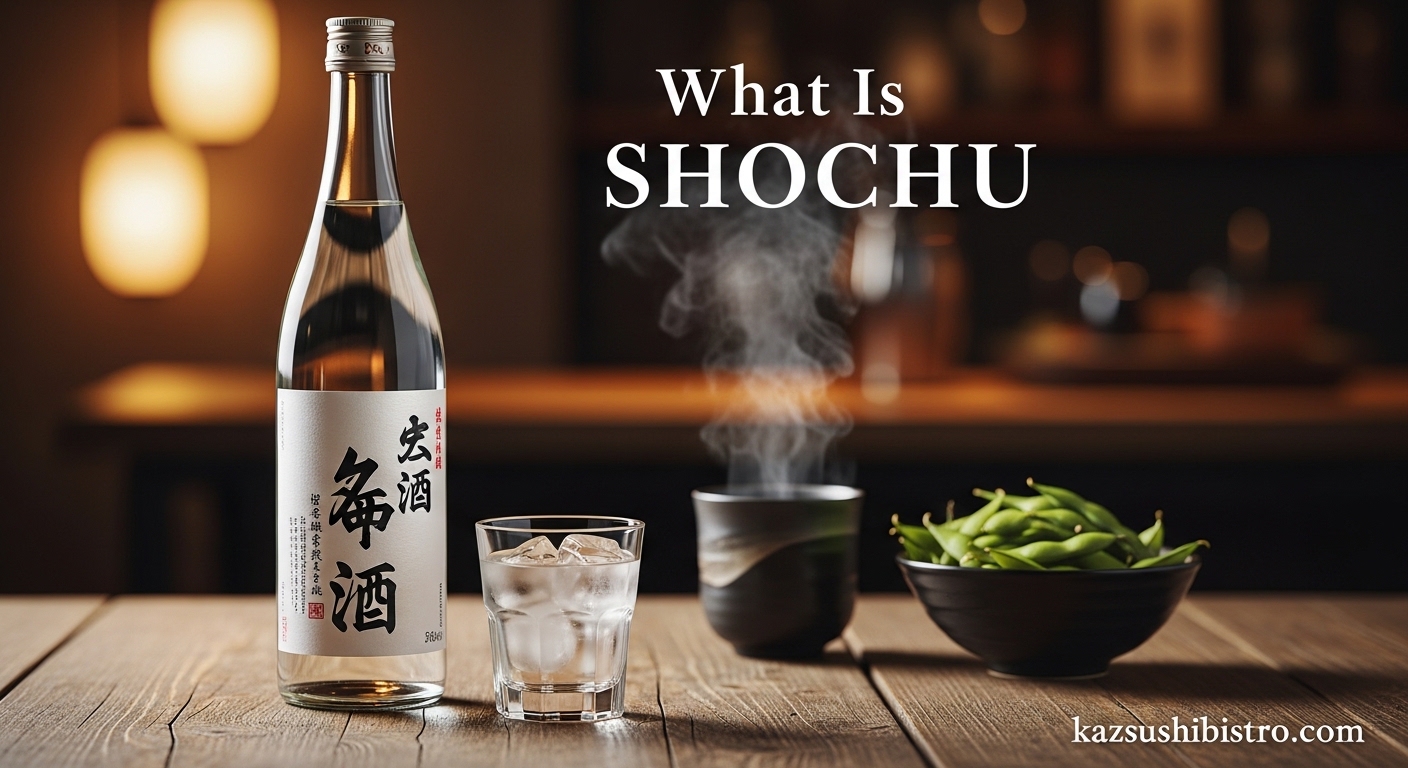
Shochu is a Japanese distilled spirit made from koji-fermented grains and vegetables. Unlike brewed sake, shochu undergoes single distillation, resulting in 20-25% ABV. It’s typically made from rice, barley, sweet potato, buckwheat, or brown sugar.
I’ve watched shochu transform from a regional curiosity into one of the fastest-growing Japanese spirits in American restaurants. At our restaurant, we’ve seen guests move beyond sake and discover what locals in Japan have known for centuries. Shochu offers something genuinely different: a spirit that pairs with food better than almost anything else in the bottle.
This guide explains everything you need to know about shochu in 2026. Whether you’re a sake enthusiast looking to expand your palate or simply curious about Japanese spirits, you’ll leave with practical knowledge you can use at your next dinner out or home gathering.
Table of Contents
What Is Shochu?
Shochu (pronounced SHOW-choo) is Japan’s native distilled spirit with a history stretching back over 500 years. The word itself breaks down simply: “sho” means to burn or singe, while “chu” refers to alcohol. This name describes the heating process during distillation.
Unlike sake, which is brewed like beer through fermentation alone, shochu is distilled. This distinction matters because distillation concentrates alcohol and creates a completely different drinking experience. A typical shochu contains 20-25% alcohol by volume, though some varieties reach 35-45%.
The magic of shochu lies in koji, a mold called Aspergillus oryzae that breaks down starches into fermentable sugars. Every shochu producer cultivates their own koji strain, often kept secret for generations. This mold is also essential for soy sauce, miso, and sake production, making it one of Japan’s most important culinary organisms.
Japanese law recognizes 54 approved ingredients for shochu production. The most common bases include sweet potato (imo), barley (mugi), rice (kome), buckwheat (soba), and brown sugar (kokuto). Each base creates a distinctly different flavor profile, which we’ll explore in detail later.
How Is Shochu Made?
Understanding shochu production reveals why this spirit tastes so different from other distilled beverages. The process combines ancient fermentation techniques with precise distillation methods that haven’t changed fundamentally in centuries.
The Role of Koji in Fermentation
Production begins when steamed base ingredients are inoculated with koji spores. The mold grows for 40-48 hours, breaking down complex starches into simple sugars through a process called saccharification. This dual-purpose organism both converts starches and produces enzymes that create umami compounds.
The koji-covered base, now called “koji-mai” or “koji-mugi,” gets mixed with water and yeast in a two-stage fermentation process. First comes the primary mash (saccharification), followed by the secondary fermentation where yeast converts sugars into alcohol. This parallel fermentation is unique to East Asian alcohol production and creates complex flavor profiles impossible through simple fermentation.
Distillation Methods: Honkaku vs Korui
After fermentation completes (typically 10-30 days depending on ingredients), the liquid called “moromi” undergoes distillation. Here’s where authentic shochu distinguishes itself from mass-produced alternatives.
Honkaku shochu (authentic shochu) uses single distillation in a pot still. This preserves the original flavors and aromas of the base ingredients, creating what enthusiasts call a “liquid expression” of the source material. Single distillation captures subtle compounds that double or triple distillation would strip away.
Some producers use vacuum distillation, which lowers the boiling point and preserves delicate aromatic compounds that atmospheric distillation might destroy. This technique produces exceptionally smooth, fragrant shochu particularly popular with rice and barley bases.
Types of Shochu: Flavors and Base Ingredients 2026
The base ingredient determines shochu’s fundamental character more than any other factor. When guests ask me what shochu tastes like, my answer always begins with “that depends on what it’s made from.”
Imo Shochu (Sweet Potato)
Sweet potato shochu dominates production in Kagoshima and Miyazaki prefectures on Kyushu island. These shochu carry an earthy, sometimes funky aroma that shocks first-time drinkers but rewards those who persist. Think of it like Islay scotch or funky natural wine, challenging at first but deeply satisfying once you adjust.
The flavor range spans from clean and mineral-driven to intensely earthy with notes of roasted sweet potato, anise, and umami. Daiyame shochu famously exhibits an unexpected lychee aroma despite containing no fruit. I recommend imo shochu for adventurous drinkers who enjoy bold flavors.
Mugi Shochu (Barley)
Barley shochu offers the most accessible entry point for newcomers. These spirits typically present nutty, toasty, and subtly sweet characteristics reminiscent of fresh bread with black pepper notes. One Redditor described it perfectly as “tasting like fresh bread with black pepper notes.”
Iichiko represents perhaps the best-known mugi shochu internationally, and for good reason. Its clean profile works beautifully across all serving styles. Many drinkers who claim they don’t enjoy shochu change their minds after trying a quality barley expression.
Kome Shochu (Rice)
Rice shochu shares its base ingredient with sake but diverges completely in character through distillation. Where sake is delicate and aromatic, rice shochu presents a cleaner, more fruit-forward profile with subtle sweetness.
These work particularly well in cocktails where you want a neutral but characterful base. The lighter body makes kome shochu ideal for warm-weather drinking and food pairing with delicate preparations.
Kokuto Shochu (Brown Sugar)
Despite the name, brown sugar shochu contains zero sugar. All sugars convert to alcohol during fermentation and distillation. What remains is a rich, caramel-like spirit with surprising depth.
Production concentrates almost exclusively in the Amami Islands between Kyushu and Okinawa. The maritime climate and unique island environment create distinctive expressions unavailable elsewhere.
Soba Shochu (Buckwheat)
Buckwheat shochu remains relatively rare compared to other categories. These spirits exhibit nutty, grainy characteristics with a pleasant dryness. They’re naturally gluten-free since distillation removes all proteins, though celiac sufferers should verify with specific producers.
Shochu vs Sake vs Soju: What’s the Difference?
Confusion between these three East Asian spirits frustrates bartenders and restaurant staff everywhere. The names sound similar, bottles look comparable, and all originate from the same region. But they’re fundamentally different products.
| Characteristic | Shochu | Sake | Soju |
|---|---|---|---|
| Production Method | Distilled | Brewed | Distilled |
| Typical ABV | 20-25% | 15-16% | 16-20% |
| Base Ingredients | 54 approved options | Rice primarily | Rice, wheat, tapioca |
| Additives | None (honkaku) | Water only | Often sweeteners, citric acid |
| Origin | Japan | Japan | Korea |
| Key Flavor Driver | Base ingredient | Rice, yeast, water | Added flavors common |
Shochu vs Sake
The critical distinction: shochu is distilled while sake is brewed. Think whiskey versus beer. Sake reaches its 15-16% ABV through fermentation alone, while shochu requires distillation to hit 20-25%.
This creates different drinking experiences entirely. Sake works beautifully as an aperitif or with lighter courses. Shochu’s higher proof and concentrated flavors stand up to richer foods and longer meals. In Japan, locals often drink shochu more frequently than sake precisely because it pairs better with izakaya-style dining.
Shochu vs Soju
This confusion causes the most frustration. The names sound similar, and both are clear spirits from East Asia. But authentic shochu and mass-market soju share little beyond appearance.
Traditional Korean soju and honkaku shochu follow similar production philosophies: single distillation, no additives, emphasis on ingredient quality. However, the vast majority of soju sold today, especially in export markets, is mass-produced industrial alcohol diluted with water and sweetened with added sugars or flavorings.
Authentic shochu never contains added sweeteners, citric acid, or artificial flavors. The law prohibits it. When you taste real shochu, you’re experiencing the actual distilled essence of rice, barley, or sweet potato with nothing else added.
How to Drink Shochu: Serving Styles and Traditions
Shochu rewards experimentation across temperatures and dilutions. Unlike whiskey or wine where there’s a “correct” serving temperature, shochu transforms dramatically depending on how you prepare it.
Neat or On the Rocks
Drinking shochu at room temperature or over ice preserves its full character. This works best for premium honkaku expressions where you want to taste the base ingredient clearly. Start here when trying a new bottle to understand its fundamental nature.
Add a single large ice cube for slow dilution. As the ice melts, you’ll experience how the shochu evolves. Some drinkers find that slight opening from melting ice improves drinkability, especially for higher-proof expressions.
Mizuwari (With Water)
Mizuwari literally means “cut with water” and represents the most common serving style in Japanese homes and restaurants. The standard ratio starts at 6 parts shochu to 4 parts water, though many prefer 5:5 or even more dilute.
Use soft mineral water rather than tap water. The minerals interact interestingly with shochu’s compounds, often enhancing rather than dulling the flavor. Room temperature water preserves the shochu’s character while cold water creates a refreshing highball-like experience.
Oyuwari (With Hot Water)
Adding hot water transforms shochu entirely. The gentle heat releases aromatic compounds that remain dormant at lower temperatures. This preparation works beautifully in winter and creates a soothing, warming drink.
Heat water to 70-80 degrees Celsius, not boiling. Pour the hot water into your cup first, then add shochu. This order matters because it prevents shocking the spirit with excessive heat. The ideal ratio is typically 6:4 hot water to shochu.
Try this with barley shochu especially. The hot water releases toasty, bread-like aromatics that feel incredibly comforting on cold evenings.
Chu-Hi (Shochu Highballs)
The ubiquitous canned chu-hi drinks dominating Japanese convenience stores start with shochu, carbonated water, and flavoring. Making your own at home produces far superior results.
Mix shochu with club soda and a squeeze of fresh citrus for a refreshing, sessionable drink. The low ABV compared to whiskey means you can enjoy several over a long meal without excessive intoxication. Many bartenders describe chu-hi as “sessionable” precisely because you can drink longer while maintaining composure.
Shochu Cocktails
Creative bartenders have embraced shochu as a cocktail base. Its lower proof creates lighter drinks than whiskey or gin cocktails, while the umami character adds complexity impossible with neutral spirits.
Try substituting shochu for gin in a Negroni, or use it as a base for sour-style cocktails. The koji-derived umami plays beautifully with savory ingredients like tomato juice or celery. Barley shochu works particularly well in highball variations with ginger beer.
Is Shochu a Healthy Alcohol Choice?
Let’s be clear: no alcohol is truly healthy. The healthiest choice is always drinking less or not at all. That said, shochu offers certain advantages compared to other alcoholic beverages for those who choose to drink.
Zero Sugar, Naturally
Authentic honkaku shochu contains no sugar whatsoever. All sugars present in the base ingredient convert completely to alcohol during fermentation and distillation. What remains is pure alcohol, water, and the aromatic compounds from the original ingredient.
This distinguishes shochu dramatically from wine (which contains residual sugar), cocktails (which often include sweeteners), and mass-market soju (which frequently has added sugars). For people monitoring sugar intake, shochu represents a genuinely sugar-free option.
Lower Calorie Content
A standard serving of shochu contains approximately 15-20 calories per milliliter of pure alcohol. Compare this to vodka (about 30 calories per milliliter of alcohol) or beer (approximately 45 calories per 100ml).
The math favors shochu for calorie-conscious drinkers. A typical mizuwari preparation delivers alcohol satisfaction with fewer total calories than equivalent servings of most other spirits or beer. Factor in the lack of sugar and carbs, and shochu becomes attractive for those following low-carb or ketogenic diets.
Gluten-Free by Nature
Distillation removes all proteins from the finished product. Even barley or wheat-based shochu contains no gluten in the final spirit. However, celiac sufferers should exercise caution and verify with producers, as some facilities process multiple products.
Rice, sweet potato, and buckwheat shochu are naturally gluten-free from source through production. These represent the safest choices for anyone with gluten sensitivity.
Potential Health Benefits
Some research suggests shochu may increase urokinase enzyme levels, potentially supporting heart health through improved blood flow. These studies remain preliminary and shouldn’t justify drinking. However, the absence of congeners (toxic byproducts of fermentation) in properly distilled shochu may contribute to the reported “cleaner” feeling some drinkers experience.
Many shochu enthusiasts report fewer hangover effects compared to wine or darker spirits. While individual tolerance varies enormously, the purity of authentic shochu, containing no additives, sulfites, or coloring agents, likely contributes to this perception.
What Food Pairs Best with Shochu?
At KAZ Sushi Bistro, we’ve developed extensive shochu pairing experience. The spirit’s umami content and variety of expressions make it extraordinarily food-friendly, arguably more versatile than sake for diverse cuisine.
Imo Shochu and Rich Foods
Sweet potato shochu’s earthy intensity stands up to boldly flavored dishes. Think grilled meats, miso-glazed preparations, and fermented foods. The funk in imo shochu actually complements similarly funky ingredients like aged cheese, natto, or strongly seasoned fish.
Try pairing imo shochu with our grilled miso black cod or braised pork belly dishes. The combination creates a umami amplification effect where both food and drink taste richer than either does alone.
Mugi Shochu and Izakaya Classics
Barley shochu’s nutty, toasty character loves grilled and fried foods. Yakitori, karaage (Japanese fried chicken), tempura, and grilled vegetables all find their match here. The slight dryness cuts through fat while the toasty notes echo caramelized surfaces.
At our restaurant, we particularly enjoy mugi shochu with our robata-grilled items. The charcoal character in the food resonates with the roasted grain notes in the glass.
Kome Shochu and Delicate Preparations
Rice shochu’s clean profile works with sushi, sashimi, and light vegetable preparations. The subtle fruit notes complement fish without overwhelming it. We often recommend kome shochu to guests who enjoy sake but want something different.
Serve kome shochu slightly chilled with our omakase selection. The temperature and purity let the fish’s natural flavors shine while providing a more substantial backbone than most sake offers.
Frequently Asked Questions About Shochu
What kind of alcohol is shochu?
Shochu is a Japanese distilled spirit made from fermented grains and vegetables. Unlike sake which is brewed, shochu is distilled, typically reaching 20-25% ABV. It’s koji-fermented and single-distilled from ingredients like rice, barley, or sweet potato.
What does shochu taste like?
Shochu taste varies by base ingredient: Sweet potato (imo) is earthy and subtly sweet; Barley (mugi) is nutty and toasty; Rice (kome) is clean and fruity; Brown sugar (kokuto) is rich and caramel-like. All have an underlying umami from koji fermentation.
Is shochu the same as soju?
No. Shochu (Japanese) and soju (Korean) are different spirits. Authentic shochu is single-distilled with no additives, while mass-market soju is often multi-distilled with added sweeteners and citric acid. Shochu emphasizes natural ingredient flavors; soju is typically more neutral.
Which is stronger, shochu or sake?
Shochu is stronger. As a distilled spirit, shochu typically contains 20-25% ABV (up to 45% for some varieties), while sake is brewed and contains 15-16% ABV. This difference in production method creates the ABV gap.
Is shochu considered a healthy drink?
Among alcoholic beverages, shochu has health advantages: it’s naturally sugar-free, gluten-free, low in calories (about 30% fewer than vodka), and may promote heart health by increasing urokinase enzyme. However, no alcohol is truly healthy, and moderation is essential.
Conclusion
Shochu represents one of Japan’s greatest beverage traditions, yet remains surprisingly underappreciated outside its homeland. What is shochu? It’s a distilled spirit that bridges the gap between sake’s delicacy and Western spirits’ intensity, offering food-pairing versatility unmatched by either.
I’ve watched countless guests discover their new favorite drink through shochu. Start with barley shochu if you’re new. Experiment with different serving temperatures. Try it with food. The spirit rewards curiosity and punishes preconceptions.
Visit us at KAZ Sushi Bistro to explore our shochu selection with expert guidance. Whether you prefer earthy sweet potato expressions or clean rice distillates, there’s a shochu waiting to become your regular pour. The journey into Japanese spirits doesn’t end with sake. In many ways, it truly begins with shochu.