
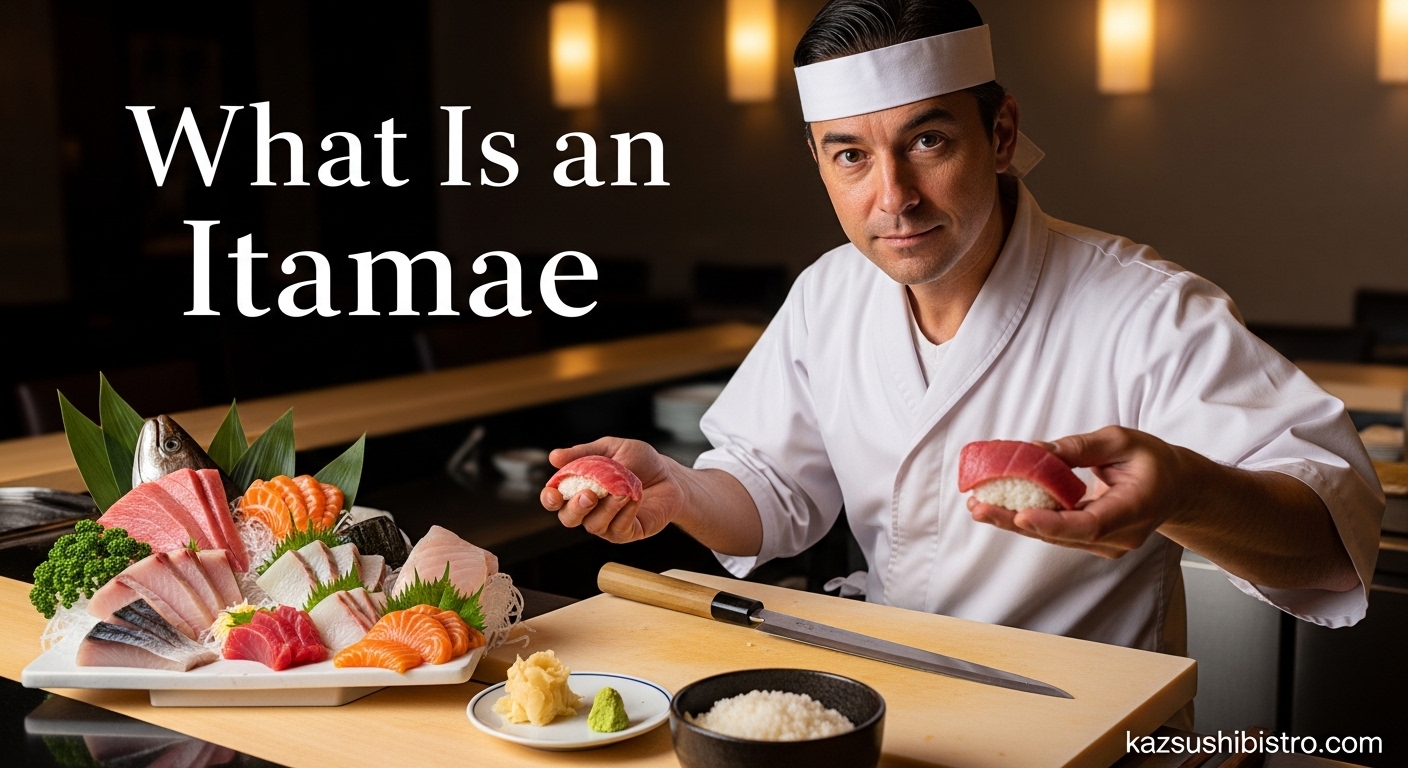
An itamae (板前) is a highly skilled Japanese sushi chef who has earned the right to stand at the cutting board through years of rigorous apprenticeship. The term literally translates to “in front of the board,” referring to the wooden cutting board where sushi is prepared. Becoming an itamae typically requires a decade or more of dedicated training, making it one of the most demanding culinary paths in the world.
I have spent years studying Japanese culinary traditions, and the journey of an itamae never fails to fascinate me. These masters represent the pinnacle of craftsmanship in Japanese cuisine, combining technical precision with deep cultural knowledge.
In this guide, you will learn exactly what defines an itamae, the grueling training process they endure, the specific skills they must master, and why these chefs hold such a prestigious position in Japanese culture. Whether you are curious about the chefs behind your favorite sushi restaurant or considering this career path yourself, this article covers everything you need to know.
Table of Contents
What Is an Itamae? The Definition and Meaning 2026
An itamae (板前) is a master sushi chef who has completed the traditional Japanese apprenticeship system and earned the right to work independently at the sushi counter. The word breaks down into two parts: ita (板) meaning “board” and mae (前) meaning “in front of.” Together, they describe the chef’s position literally standing in front of the cutting board.
The term carries significant weight in Japan. Not every person who makes sushi can call themselves an itamae. This title represents a level of mastery that comes only after years of learning every aspect of the craft, from cleaning the kitchen to preparing perfect sushi rice to butchering fish with precision.
The itamae serves as both cook and host, preparing food while interacting directly with customers seated at the sushi counter. This dual role requires not just culinary skill but also the ability to read customers, recommend dishes, and create a welcoming atmosphere known as omotenashi (hospitality).
The Path to Becoming an Itamae: Years of Training
Becoming an itamae is not a quick process. The traditional apprenticeship system, which remains the standard path in Japan, typically takes 10 years or more to complete. Some masters say it takes longer to become a true itamae than to become a doctor.
The training follows a strict hierarchy where apprentices start with the most basic tasks and gradually earn the right to learn more complex skills. This system, while demanding, ensures that every itamae has a deep, intuitive understanding of every element of sushi preparation.
Stage One: The Foundation (Years 1-2)
New apprentices begin with tasks that may seem unrelated to making sushi. They spend their first one to two years primarily cleaning, washing dishes, and observing the itamae at work. During this period, apprentices are not allowed to touch fish or make rice.
This phase teaches respect for the workspace and discipline. Apprentices learn to notice everything happening in the kitchen without speaking. The goal is to develop the mindset of a craftsman before learning the technical skills.
Stage Two: Mastering the Rice (Years 2-5)
After proving themselves through cleaning duties, apprentices are allowed to learn sushi rice preparation. This is not a minor task. Sushi rice, called shari, is the foundation of sushi, and its preparation is considered one of the most difficult skills to master.
Apprentices spend years learning to wash, soak, cook, and season rice to the exact standards of their master. They must develop a feel for the proper texture, temperature, and vinegar balance. Many apprentices report spending two to three years just on rice before moving to the next stage.
Stage Three: Wakiita – Near the Board (Years 5-8)
The intermediate position is called wakiita (脇板), which translates to “near the board” or “side of the board.” At this stage, apprentices work alongside the itamae and are allowed to handle fish and prepare ingredients, though they still do not serve customers directly.
Wakiita learn to butcher fish, prepare toppings (called neta), and assist the master chef during service. They continue to refine their knife skills and develop their understanding of different fish species, seasonal availability, and optimal preparation methods.
This stage can last three to four years or longer, depending on the apprentice’s progress and the master’s standards. Some apprentices remain wakiita for many years before earning full itamae status.
Stage Four: Full Itamae Status (Year 10 and Beyond)
Finally, after approximately a decade of training, an apprentice may be recognized as a full itamae. This recognition comes from the master chef, not from any formal certification or exam. The new itamae can now stand at the board alone, serve customers directly, and train their own apprentices.
Even after reaching this level, learning never stops. Master itamae continue to refine their skills throughout their careers, pursuing the concept of kodawari (uncompromising dedication to perfection).
The Learning Philosophy: Minarau and Nusumu no Gei
Traditional itamae training relies on two key concepts. Minarau (見習う) means learning by watching. Apprentices are expected to observe the master carefully and figure out techniques through observation rather than explicit instruction.
Nusumu no gei (盗むの芸) translates to “stealing the art.” This describes how apprentices must internalize skills by watching, remembering, and practicing on their own. The master demonstrates but does not teach in the Western sense. The apprentice must actively “steal” the knowledge through dedicated observation.
Essential Skills Every Itamae Must Master
The skills required of an itamae extend far beyond simply putting fish on rice. These masters must achieve excellence across multiple domains to earn and keep their title.
Knife Skills and Hocho Mastery
An itamae’s relationship with their knives is deeply personal. Japanese sushi chefs use specialized knives called hocho, each designed for specific tasks. The three main types are the yanagiba (for slicing sashimi), deba (for butchering fish), and usuba (for cutting vegetables).
Itamae typically own their own knives and care for them meticulously. A single high-quality hocho can cost thousands of dollars. The sharpening process alone takes years to master, with apprentices spending considerable time learning to maintain the perfect edge on carbon steel blades.
Sushi Rice Perfection
Many itamae will tell you that sushi is really about the rice, not the fish. The rice must be cooked to the proper texture, seasoned with the right balance of rice vinegar, salt, and sugar, and maintained at the perfect temperature for service.
The itamae must develop the ability to form nigiri with consistent size, shape, and density while working quickly during busy service. Each piece should contain exactly the right amount of rice, lightly compressed so it holds together without being too firm.
Fish Knowledge and Butchery
An itamae must know hundreds of fish species intimately. They understand which fish are in season, how to identify freshness, and the optimal preparation method for each variety. This knowledge includes understanding the fish’s diet, habitat, and how these factors affect flavor.
The butchery skills required are precise. The itamae must know how to break down whole fish efficiently, removing bones while preserving the best flesh. Different fish require different cutting techniques to maximize texture and flavor.
Nigiri Technique and Temperature Control
Forming nigiri (hand-pressed sushi) is an art that takes years to develop. The rice must be warm, the fish at the proper temperature, and the wasabi application precise. A skilled itamae can form perfect nigiri in seconds, applying just the right pressure.
Forum discussions among sushi enthusiasts reveal that great itamae pay close attention to serving temperature. Each type of seafood has an optimal temperature for flavor and texture. A master chef will rest fish at the proper temperature before serving and may adjust based on the season and customer preference.
Omotenashi: The Spirit of Hospitality
Technical skill alone does not make an itamae. They must also embody omotenashi, the Japanese concept of wholehearted hospitality. This means anticipating customer needs, adjusting service based on individual preferences, and creating a comfortable dining atmosphere.
The itamae watches customers carefully to gauge their pace, preferences, and mood. They might adjust the size of nigiri, recommend seasonal items, or simply engage in pleasant conversation. This personal connection between chef and diner is a defining feature of authentic sushi-ya (sushi shop) culture.
Fugu Certification
While not required of all itamae, the ability to prepare fugu (pufferfish) represents the highest level of trust and skill. Fugu contains tetrodotoxin, a deadly poison that requires precise removal of specific organs. Chefs must obtain a special license from the Japanese government to serve fugu, which involves rigorous training and examination.
Not every itamae pursues fugu certification, but those who do demonstrate their commitment to mastering even the most dangerous aspects of Japanese cuisine.
Itamae in Japanese Culture: More Than a Chef
The itamae holds a unique and respected position in Japanese society. They are not merely cooks but representatives of cultural traditions that stretch back centuries.
The Shokunin Spirit
Itamae embody the concept of shokunin (職人), which describes a master craftsman who has dedicated their life to perfecting a specific skill. A shokunin is not satisfied with good enough. They pursue improvement constantly, even after decades of practice.
This mindset values process over outcome. The itamae focuses on performing each action correctly, whether washing rice or slicing fish, trusting that excellence will follow from proper technique. This philosophy extends beyond the kitchen into all aspects of life.
Counter Culture and Customer Relationships
Traditional sushi restaurants feature a counter where customers sit facing the itamae. This arrangement creates an intimate relationship between chef and diner that does not exist in most Western restaurants.
Regular customers at a sushi-ya develop ongoing relationships with their itamae. The chef remembers their preferences, asks about their families, and tailors the meal accordingly. This personal connection is part of what makes dining at a traditional sushi counter a unique experience.
The Evolution: Female Itamae
For most of history, the itamae profession was exclusively male. Traditional beliefs held that women’s hands were too warm for handling sushi rice, or that the demanding hours were unsuitable for women. These barriers have gradually broken down.
Today, female itamae exist, though they remain rare. Women like Yuki Chizui have earned respect as master chefs, proving that skill and dedication matter more than gender. The industry continues to evolve, with more women entering the profession each year.
Chef Ken Cruz, the first Mexican chef to win the US Japanese Restaurant Sushi Chef of the Year award, also demonstrates how the profession is becoming more inclusive internationally. These pioneers show that the itamae path, while demanding, is open to anyone with sufficient dedication.
Itamae vs Shokunin vs Sushi Chef: Understanding the Difference
Confusion often arises around the various terms used for sushi chefs. Understanding the distinctions helps appreciate the level of mastery an itamae represents.
Itamae vs Wakiita
The wakiita is an intermediate position between apprentice and full itamae. While wakiita can prepare ingredients and assist at the board, they do not serve customers independently or train apprentices. Think of wakiita as a sous chef position, while itamae is the executive chef.
Some chefs remain wakiita for many years before advancing, while others may never reach full itamae status. The progression depends entirely on the master’s assessment of readiness.
Itamae vs Shokunin
All itamae are shokunin, but not all shokunin are itamae. Shokunin refers broadly to any master craftsman, whether a carpenter, swordsmith, or chef. Itamae specifically describes a sushi chef who has completed the traditional apprenticeship.
The terms are often used together to emphasize both the specific role (itamae) and the philosophical approach (shokunin). A chef might be described as an “itamae with true shokunin spirit.”
Itamae vs General “Sushi Chef”
Anyone who makes sushi could be called a sushi chef in English, but this translation loses important nuance. In Japan, calling someone an itamae implies they have completed the traditional training path.
Modern sushi schools can teach basic skills in months rather than years. Graduates of these programs may work as sushi chefs but would not be considered itamae in the traditional sense. The distinction matters in Japan, where the title carries cultural weight.
Modern Paths to Becoming an Itamae
While the traditional apprenticeship remains the gold standard, modern alternatives have emerged for those seeking to enter the profession.
Traditional Apprenticeship in Japan
The most respected path involves moving to Japan and apprenticing under an established master. This requires Japanese language skills, significant financial resources to support yourself during unpaid or low-paid years, and immense dedication.
International students who pursue this path report that the cultural adjustment is often as challenging as the culinary training. Understanding Japanese workplace culture, hierarchy, and communication styles is essential for success.
Sushi Schools and Modern Training
For those unable to commit to a decade-long traditional apprenticeship, sushi schools offer accelerated programs. These range from short courses teaching basics to year-long programs covering advanced techniques.
While graduates of these programs can find employment at sushi restaurants, they typically start at lower positions and must still gain years of experience before being recognized as true itamae. The schools provide technical knowledge but cannot replicate the full immersion of traditional training.
International Opportunities
As sushi has spread globally, opportunities for non-Japanese chefs have expanded. High-end restaurants in major cities increasingly hire international staff and may provide structured training programs. However, the most prestigious positions still typically go to those with Japanese training.
Some international chefs spend years working their way up in Japanese restaurants abroad, then travel to Japan for additional training before opening their own establishments.
Salary and Career Viability
Itamae earnings vary dramatically based on location, restaurant prestige, and experience level. Entry-level apprentices in Japan often earn little or nothing during their first years. Established itamae at high-end restaurants can earn comfortable salaries, while celebrity chefs like Jiro Ono command premium prices.
Many itamae eventually open their own sushi-ya, where earnings depend on business success. The financial path is uncertain, which is why passion for the craft must drive the career choice rather than profit expectations.
Frequently Asked Questions About Itamae
How do you pronounce itamae?
What does itamae mean in Japanese?
How long does it take to become an itamae?
What is a wakiita?
Do sushi chefs make good money?
Can women be itamae?
How do sushi chefs prevent parasites?
Is itamae sushi expensive?
Conclusion: Appreciating the Art of the Itamae
Now you understand what is an itamae: a master sushi chef who has dedicated a decade or more to perfecting one of the world’s most demanding culinary arts. The title represents far more than technical skill. It signifies a commitment to the shokunin spirit, a deep understanding of ingredients, and the ability to create memorable dining experiences through omotenashi.
The next time you sit at a sushi counter, watch the chef’s movements with new appreciation. Notice the precision of each cut, the care in forming nigiri, the attention to temperature and timing. If you are fortunate enough to dine at an establishment run by a true itamae, you are not just eating a meal. You are experiencing the result of years of dedicated craftsmanship.
Whether you dream of becoming an itamae yourself or simply want to understand the craft behind your favorite food, the world of Japanese sushi mastery offers endless depth to explore. The tradition continues to evolve, welcoming new practitioners while honoring the timeless principles that have defined this remarkable profession for centuries.