
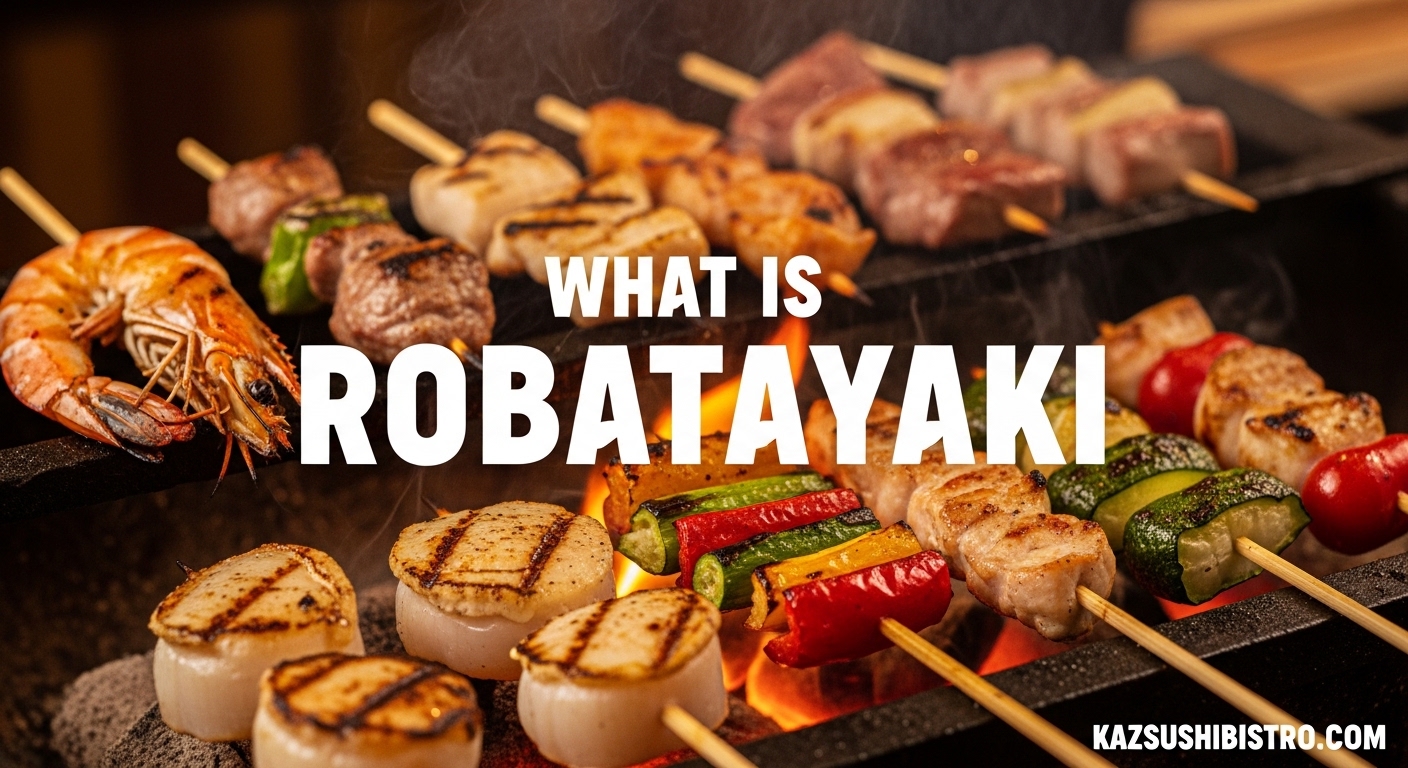
Have you ever sat at a counter while a chef grilled fresh scallops over glowing white charcoal right before your eyes? That magical experience is robatayaki, one of Japan’s most captivating cooking traditions. At KAZ Sushi Bistro, we believe understanding this art form deepens your appreciation for authentic Japanese cuisine.
In this guide, I will walk you through everything you need to know about robatayaki. You will learn its literal meaning, fascinating origin story from northern Japanese fishermen, and why this cooking method creates flavors that regular grilling simply cannot match.
Table of Contents
What Is Robatayaki? (Definition and Literal Meaning)
Robatayaki (炉端焼き, pronounced roh-bah-tah-yah-kee) literally translates to “fireside-cooking” in Japanese. The word combines “robata” (炉端) meaning “by the fireplace” and “yaki” (焼き) meaning “grilled” or “cooked over fire.”
At its heart, robatayaki is a traditional Japanese cooking method where fresh ingredients are grilled over hot binchotan charcoal and served to diners seated around a counter. The style resembles barbecue but with distinctly Japanese techniques, ingredients, and presentation that elevate it to an art form.
What makes robatayaki special is the combination of theater and taste. You sit at a U-shaped counter surrounding the grill. You watch skilled chefs select your ingredients, place them precisely over the charcoal, and flip them at exact moments to achieve perfect caramelization.
The Origins of Robatayaki: From Fishermen’s Boats to Fine Dining
Hokkaido Fishermen and the Birth of Fireside Cooking
The story of robatayaki begins on the cold northern seas of Japan. In the 1800s, fishermen in Hokkaido needed a way to cook their fresh catch while working on boats. They placed charcoal braziers on the sand in the center of their vessels and grilled seafood right after catching it.
This practical cooking method served two purposes. The fishermen stayed warm around the fire during harsh weather, and they enjoyed seafood at its absolute freshest. The tradition of gathering around a central heat source became deeply embedded in northern Japanese culture.
The 1950 Sendai Restaurant That Popularized Robata
While fishermen practiced early forms of fireside cooking for decades, robatayaki as we know it today emerged in 1950. A restaurant in Sendai called “Robata” formalized the dining experience, creating the counter seating and presentation style that spread across Japan.
This restaurant introduced several elements now considered essential. The U-shaped counter allowed guests to watch cooking from all angles. The use of wooden paddles (oar-shaped serving boards) to present food referenced the fishing boat origins. The focus on ultra-fresh ingredients set a standard that continues today.
By the 1970s, robatayaki restaurants spread to major cities like Tokyo and Osaka. What started as fishermen’s practical cooking evolved into a sought-after dining experience combining theater, tradition, and exceptional flavor.
How Robatayaki Works: The Art of Binchotan Charcoal Grilling?
The Role of Binchotan Charcoal
Binchotan charcoal makes robatayaki possible. This traditional Japanese charcoal comes from oak branches heated at extremely high temperatures until they become carbonized white charcoal. The result burns at over 1000°C (1800°F) while producing almost no smoke.
The unique properties of binchotan transform grilling. Its dense structure burns for hours at steady temperatures. The infrared heat sears food surfaces instantly while preserving interior moisture. The lack of smoke means you taste the ingredient, not charcoal flavor.
Chefs arrange binchotan in the robata grill to create heat zones. Some areas burn hotter for initial searing. Cooler zones allow gentle finishing. This temperature control lets chefs cook multiple ingredients simultaneously while each receives exactly the right heat.
Heat Zones and Temperature Control
Mastering a robata grill requires understanding heat distribution. Chefs spread charcoal across a long, narrow hearth called an “irori.” They position ingredients at specific distances from the heat source depending on thickness and cooking time.
Thick cuts of meat or whole fish sit closer to the charcoal for intense heat. Delicate vegetables rest further away for gentle cooking. Skewers rotate constantly for even browning. The chef adjusts positions every few seconds based on visual cues.
DIY vs Chef-Grilled Options
Modern robata restaurants offer two experiences. Some maintain traditional chef-grilled service where professionals handle all cooking. Others provide “self-grill” options where diners cook ingredients themselves at tableside grills.
Chef-grilled robatayaki offers the classic experience. You watch experts who have trained for years manipulate the charcoal and ingredients with precision. Self-grill options appeal to groups wanting interactive dining, though results depend on your grilling skills.
Robatayaki vs Other Japanese Grilling Styles
Robatayaki vs Yakitori
The most common confusion involves robatayaki and yakitori. Both use charcoal grilling and skewers, but they differ significantly. Yakitori specifically means “grilled chicken” and focuses exclusively on chicken parts served on bamboo skewers.
Robatayaki encompasses all ingredients. Seafood, beef, pork, vegetables, and even desserts appear on robata grills. While yakitori chefs specialize in chicken preparation, robata chefs master diverse ingredients requiring different heat treatments.
Robatayaki vs Yakiniku
Yakiniku, meaning “grilled meat,” refers to Japanese-style Korean barbecue. Diners cook thin slices of marinated meat on gas or charcoal grills built into their tables. The experience is social and interactive, with groups cooking together.
Robatayaki centers on chef expertise rather than diner participation. You observe professionals working with charcoal rather than cooking yourself. The ingredients tend toward whole seafood and thick cuts rather than thinly sliced meats.
Robatayaki vs Hibachi and Teppanyaki
Many Americans confuse these terms because “hibachi restaurants” in the United States often serve teppanyaki. True hibachi refers to small charcoal braziers used for heating, not cooking. Teppanyaki uses flat iron griddles where chefs cook in front of guests.
Robatayaki uses open charcoal grills, not griddles. The flavor differs dramatically because ingredients contact direct flame and smoke rather than a metal surface. Robatayaki emphasizes subtle natural flavors while teppanyaki often features butter-heavy preparations.
Popular Robatayaki Foods: What to Order 2026
Must-Try Seafood: Scallops, Sazae, and Hokke
Seafood dominates robatayaki menus, and scallops rank as the signature dish. Fresh hotate (scallops) grill until the edges caramelize while the center remains sweet and tender. The natural sweetness intensifies over binchotan without any sauce needed.
Sazae, or turban shell, offers a textural adventure. These spiral shells contain firm, sweet meat that requires precise timing. A skilled chef knows exactly when to pull sazae from the heat to achieve the perfect balance of tenderness and chew.
Hokke, or Okhotsk atka mackerel, represents northern Japanese fishing heritage. This oily fish develops crispy skin over charcoal while the flesh stays moist. The combination of textures makes hokke a favorite among regular robata diners.
Meat and Vegetable Options
Beyond seafood, robata grills handle meats beautifully. Wagyu beef skewers melt in your mouth when cooked quickly over high heat. Chicken thigh develops incredible umami through Maillard reaction on the charcoal surface. Pork belly caramelizes into crispy-edged bites.
Vegetables transform over binchotan. Asparagus spears char slightly while staying crisp inside. Shiitake mushrooms concentrate their earthy flavor. Eggplant absorbs smoky notes that complement its natural creaminess. Even simple onions become sweet and complex after charcoal contact.
The Robatayaki Dining Experience: What to Expect
Counter Seating and Chef Interaction
When you enter a robata restaurant, you will likely sit at a U-shaped counter surrounding the grill. This arrangement creates intimacy between diners and chefs. You can ask questions, make special requests, and watch the cooking process unfold inches away.
The atmosphere differs from typical Western dining. Robata restaurants encourage interaction with the cooking process. Chefs often explain ingredients, suggest timing for eating, and demonstrate techniques. This educational element enhances appreciation for the food.
The Wooden Paddle Tradition
One of robatayaki’s most distinctive features is the serving method. Chefs place finished dishes on long wooden paddles resembling boat oars. They extend these paddles across the counter to present your food, maintaining the fishing boat heritage.
This theatrical presentation serves practical purposes too. The paddle keeps hot dishes away from the chef’s hands while crossing the counter. The wooden surface absorbs excess moisture, keeping fried or grilled items crisp. And the visual creates a memorable moment worth photographing.
Etiquette Tips for First-Time Diners
Visiting your first robatayaki restaurant requires understanding a few customs. Order gradually rather than everything at once. Robata dishes taste best immediately after cooking, so chefs prefer sending items as they finish rather than letting food sit.
Accept the paddle with both hands when the chef presents it. This small gesture shows respect for the service tradition. Eat promptly while ingredients remain at optimal temperature. And feel free to engage with the chef, who often enjoys explaining their craft to interested diners.
Modern Robatayaki: Beyond Japan
Robatayaki has expanded far beyond Japanese shores. International cities from New York to London now feature robata restaurants. Some maintain strict traditional methods, importing binchotan from Japan and training chefs in authentic techniques.
Other establishments fuse robata methods with local ingredients. Australian robata restaurants might grill Moreton Bay bugs instead of Japanese shellfish. California versions feature local vegetables alongside traditional offerings. These adaptations introduce robatayaki to new audiences while respecting core techniques.
Finding authentic robatayaki outside Japan requires looking for specific markers. Check if the restaurant uses real binchotan charcoal rather than gas or regular charcoal. Look for counter seating around an open grill rather than private tables. And ask about the chef’s training background to ensure genuine expertise.
Frequently Asked Questions About Robatayaki
What is the difference between yakitori and robata?
Yakitori refers specifically to grilled chicken skewers, while robatayaki encompasses all ingredients including seafood, beef, pork, and vegetables. Yakitori restaurants focus exclusively on chicken parts, whereas robata chefs master diverse ingredients requiring different grilling techniques and heat levels.
What is a robata grill used for?
A robata grill is used to cook fresh ingredients over binchotan charcoal at extremely high temperatures. Chefs grill seafood, meat, and vegetables while diners sit at a surrounding counter watching the cooking process. The grill creates unique flavors through smokeless infrared heat that seals in moisture.
Is robatayaki healthy?
Yes, robatayaki is generally considered healthy cooking. The high heat of binchotan charcoal seals in nutrients without requiring excessive oil or butter. Ingredients retain their natural flavors, reducing the need for heavy sauces. Fresh seafood and vegetables form the menu core, offering lean protein and nutrients.
What is binchotan charcoal?
Binchotan is a traditional Japanese white charcoal made from oak branches carbonized at extreme temperatures. It burns smokeless at over 1000°C, producing infrared heat that sears food surfaces instantly while preserving interior moisture. The dense charcoal burns for hours with steady, consistent heat ideal for grilling.
Conclusion: Why You Should Experience Robatayaki 2026
Robatayaki offers something rare in modern dining: genuine connection between food, preparation, and people. You watch ingredients transform from raw to remarkable through precise technique. You taste flavors that only centuries-old charcoal methods can produce.
Whether you visit an authentic robata restaurant in Tokyo or find a skilled practitioner in your home city, this experience deepens your appreciation for Japanese culinary craft. The combination of theater, tradition, and exceptional taste makes robatayaki unforgettable.
Understanding what robatayaki truly is prepares you to seek authentic experiences and recognize quality. Look for binchotan charcoal, counter seating, and skilled chefs. Order scallops, sazae, and whatever fresh catch shines that day. And most importantly, engage with the moment as fire, food, and craft come together before your eyes.