
Japan consistently ranks among the countries with the highest life expectancy in the world. In 2026, Japanese women live an average of 88 years, while men reach 82 years. The island of Okinawa, known as a Blue Zone, has one of the highest concentrations of centenarians globally. What fuels this remarkable longevity? The answer lies largely on the plate.
Traditional Japanese cuisine, known as washoku, offers a powerful combination of nutrient-dense ingredients, time-tested cultural practices, and mindful eating habits. But you might wonder: Is Japanese food really that healthy? After diving deep into the research, I can tell you the answer is a resounding yes. The science backs it up, and the results speak for themselves in the health statistics of the Japanese population.
In this guide, I will explain exactly why Japanese food earns its reputation as one of the healthiest dietary patterns on Earth. We will explore the nutritional science, the cultural wisdom, and the practical habits you can adopt starting today. Whether you are looking to improve your heart health, manage your weight, or simply eat better, understanding the principles behind Japanese cuisine can transform your relationship with food.
Table of Contents
What Is Washoku? Understanding the Traditional Japanese Diet
Washoku literally translates to “harmony of food.” In 2013, UNESCO recognized washoku as an Intangible Cultural Heritage, placing it alongside French gastronomy and Mediterranean cuisine as one of the world’s most significant food cultures. This recognition was not just about taste. It acknowledged the nutritional wisdom, sustainability, and social cohesion embedded in Japanese culinary traditions.
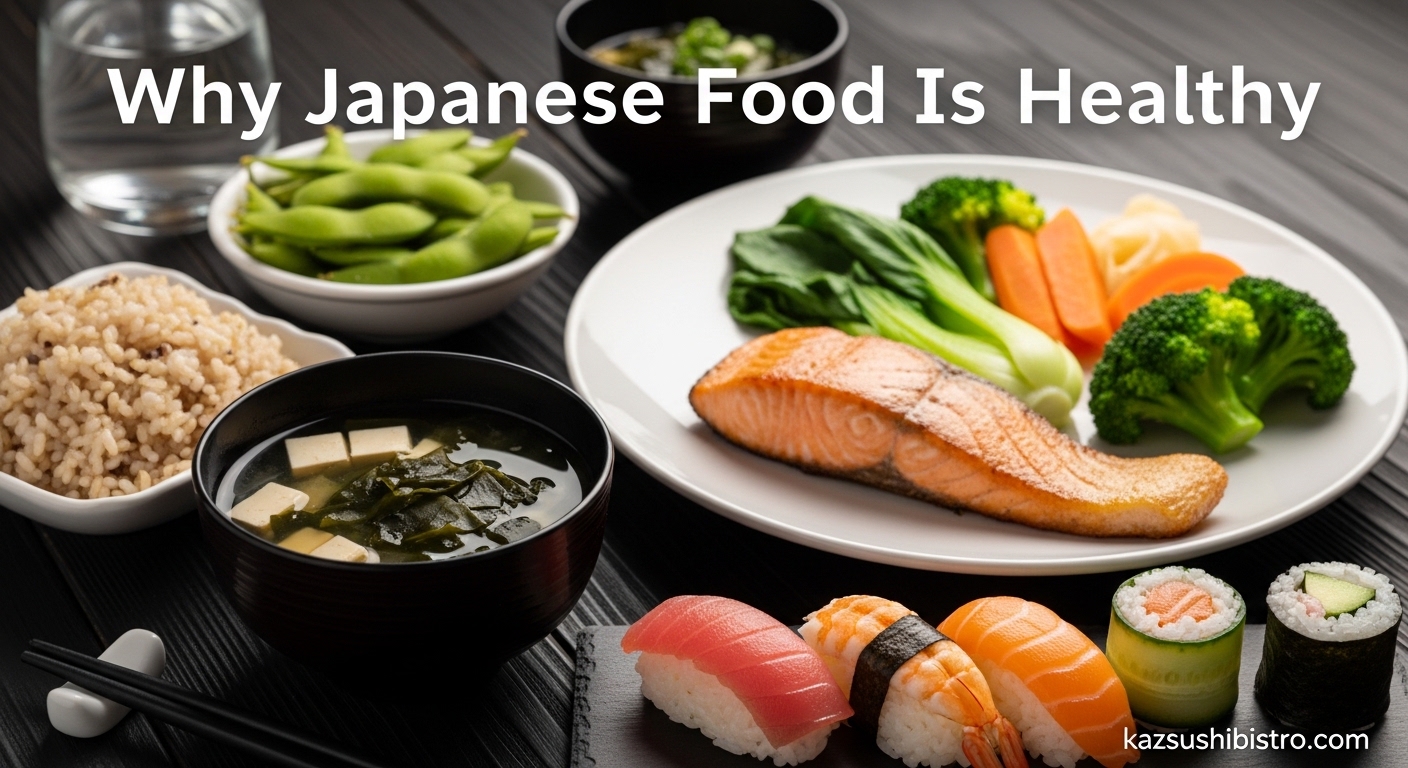
The foundation of washoku rests on the principle of ichiju-sansai: one soup and three dishes. A traditional meal consists of a bowl of steamed rice, a bowl of miso soup, a main protein dish (typically fish), and two vegetable side dishes. This structure naturally creates nutritional balance without counting calories or macros.
Japanese cooking also follows the concept of shun, which means eating ingredients at their peak seasonality. A chef in Kyoto once told me that strawberries taste different in April than they do in June. This attention to seasonal freshness ensures maximum nutrient density. Vegetables harvested at their prime contain higher levels of vitamins, minerals, and phytonutrients compared to produce grown out of season or shipped long distances.
The five colors principle guides meal composition as well. White (rice, daikon), black/brown (mushrooms, seaweed), green (vegetables), red (fish, pickled plum), and yellow (egg, ginger) should all appear on the plate. Each color represents different phytonutrients that support various aspects of health.
Why Japanese Food Is Healthy: 7 Evidence-Based Reasons 2026
Let me break down the specific reasons why Japanese food supports optimal health. These points draw from nutritional science, epidemiological research, and centuries of traditional wisdom.
1. Rich in Omega-3 Fatty Acids from Seafood
The Japanese diet features seafood as a primary protein source, consumed at a rate of 50-70 kilograms per person annually. Compare this to the United States, where seafood consumption averages just 7 kilograms per year. This difference matters enormously for health outcomes.
Fatty fish like salmon, mackerel, sardines, and tuna deliver high concentrations of eicosapentaenoic acid (EPA) and docosahexaenoic acid (DHA). These omega-3 fatty acids reduce inflammation, lower triglycerides, and support brain function. Studies show that populations with high fish consumption have lower rates of cardiovascular disease and cognitive decline.
2. High in Fermented Foods for Gut Health
Fermentation sits at the heart of Japanese cuisine. Miso, natto, soy sauce, tsukemono (pickled vegetables), and amazake all undergo fermentation processes that create beneficial bacteria and bioactive compounds.
Miso alone contains hundreds of enzymes and millions of probiotic bacteria per gram. These microorganisms support a diverse gut microbiome, which research now links to immune function, mental health, and metabolic regulation. The Japanese consume an estimated 19 grams of fermented soy products daily, contributing to their exceptional digestive health.
Natto deserves special mention. This fermented soybean dish contains nattokinase, an enzyme that supports cardiovascular health by promoting healthy blood flow. It also provides vitamin K2, crucial for bone density and calcium metabolism.
3. Abundant Sea Vegetables and Minerals
Japanese cuisine incorporates seaweed in ways that Western diets rarely do. Nori wraps sushi. Kombu flavors dashi broth. Wakame floats in miso soup. These sea vegetables deliver unique nutrients difficult to obtain from land plants.
Seaweed provides iodine, essential for thyroid function and metabolism. It contains fucoxanthin, a carotenoid with antioxidant and anti-inflammatory properties. Sea vegetables also offer calcium, magnesium, iron, and trace minerals often depleted in modern agricultural soils.
The fiber in seaweed acts as a prebiotic, feeding beneficial gut bacteria and producing short-chain fatty acids that nourish the intestinal lining. This combination of prebiotic fiber and mineral density makes sea vegetables nutritional powerhouses.
4. Minimal Processing and Fresh Ingredients
Traditional Japanese cooking preserves the integrity of ingredients. Methods like steaming, quick blanching, and raw preparation maintain water-soluble vitamins that high-heat cooking destroys. A piece of sashimi contains the full omega-3 content of raw fish. Lightly steamed vegetables retain their fiber and micronutrients.
This minimal processing stands in stark contrast to the ultra-processed foods dominating Western diets. The Japanese consume far fewer packaged snacks, sugary beverages, and refined flour products. Their calories come primarily from whole foods in their natural or lightly prepared states.
5. Low in Saturated Fat and Added Sugars
The traditional Japanese diet derives less than 15% of calories from fat, with minimal saturated fat from animal sources. Red meat appears occasionally, not daily. Cooking oils are used sparingly. This fat profile supports cardiovascular health and healthy cholesterol levels.
Added sugars also remain low in traditional washoku. Sweetness comes naturally from vegetables, fruits, and small amounts of mirin or sake in cooking. Desserts are not a daily expectation but an occasional treat. This low sugar intake protects against insulin resistance, type 2 diabetes, and the inflammation associated with excessive sugar consumption.
6. Powerful Antioxidants from Green Tea and Soy
Green tea consumption in Japan averages 3-4 cups per person daily. This habit delivers a steady supply of epigallocatechin gallate (EGCG), a catechin with potent antioxidant effects. EGCG protects cells from oxidative damage, supports brain health, and may reduce cancer risk. Matcha, the powdered green tea used in tea ceremonies, delivers these compounds in concentrated form.
Soy products provide another antioxidant class: isoflavones. These phytoestrogens, found in tofu, edamame, and miso, offer cellular protection and may support hormonal balance. Population studies link regular soy consumption to reduced risk of hormone-dependent cancers and improved bone density in postmenopausal women.
7. Balanced Macronutrients and High Fiber
The Japanese diet achieves macronutrient balance without rigid tracking. Carbohydrates come primarily from rice, vegetables, and noodles. Protein comes from fish, tofu, and moderate amounts of meat. Fats come from fish, nuts, seeds, and small amounts of oil.
Fiber intake is notably high due to the vegetable-forward meal structure. Each traditional meal includes multiple vegetable dishes, providing both soluble and insoluble fiber. This fiber supports digestive regularity, feeds gut bacteria, and promotes satiety that prevents overeating.
Scientific Evidence: What Research Says About Japanese Food
Research published in the British Medical Journal provides compelling evidence for the health benefits of Japanese eating patterns. A landmark study followed over 36,000 men and 42,000 women for 15 years, tracking their adherence to traditional dietary guidelines.
The results were striking. Participants who followed the traditional Japanese diet most closely had a 15% lower risk of all-cause mortality compared to those with the lowest adherence. Specifically, they showed reduced mortality from heart disease and stroke. The protective effects remained significant even after adjusting for age, smoking, exercise, and other lifestyle factors.
Okinawa presents another fascinating case study. This southern Japanese prefecture has one of the highest concentrations of centenarians in the world. Research attributes much of this longevity to traditional dietary patterns that emphasize sweet potatoes, vegetables, tofu, and fish while minimizing meat and processed foods.
Additional studies link Japanese dietary patterns to reduced risk of type 2 diabetes, certain cancers, and cognitive decline. The combination of anti-inflammatory omega-3s, antioxidant-rich plant foods, and gut-supporting fermented products creates a synergistic effect that promotes overall wellness.
Cultural Eating Practices That Boost Health
The health benefits of Japanese food extend beyond ingredients to the cultural practices surrounding eating. These habits, developed over centuries, support metabolic health and prevent overconsumption.
Hara Hachi Bu: The 80% Rule
Hara hachi bu is an Okinawan saying that translates to “eat until you are 80% full.” This practice creates natural calorie restriction without hunger or deprivation. It takes about 20 minutes for satiety signals to reach the brain from the stomach. By stopping before feeling completely full, practitioners avoid the overshoot that leads to discomfort and excess calorie consumption.
Research on caloric restriction consistently shows benefits for longevity markers, metabolic health, and disease prevention. Hara hachi bu achieves these benefits through behavior rather than strict dieting. The practice becomes automatic over time, creating sustainable eating patterns.
Mindful Eating and Presentation
Japanese culinary culture emphasizes visual beauty and appreciation. The saying “you eat with your eyes first” reflects this philosophy. Elaborate presentation encourages slower eating and greater satisfaction with smaller portions.
Chopsticks also play a role. Eating with chopsticks naturally slows consumption compared to forks or spoons. This slower pace allows satiety signals to register before overeating occurs. The physical act of picking up small bites also promotes mindfulness.
Portion Control and Variety
Traditional Japanese meals feature small portions of multiple dishes rather than large servings of one or two items. This variety ensures diverse nutrient intake while controlling overall calories. Each component occupies its own dish, making it easy to gauge appropriate portions.
The practice of serving food on individual plates rather than family-style also helps. When the plate is empty, the meal is finished. There is no temptation to continue picking at shared dishes after satisfying hunger.
Addressing Common Concerns: Rice, Sodium, and Misconceptions
Skepticism about Japanese food health often centers on two concerns: white rice and sodium. Let me address these directly with the context they deserve.
Isn’t White Rice Unhealthy?
White rice has developed a poor reputation in Western nutrition circles, often lumped with processed grains and blamed for blood sugar spikes. This criticism misses important context about how rice functions within the Japanese diet.
First, portion sizes matter. A typical Japanese rice bowl contains about 150-200 grams of cooked rice, roughly one cup. This portion provides energy without excess. Second, rice is never eaten alone. It accompanies vegetables, protein, and fermented foods that slow digestion and moderate blood sugar response.
The fiber from accompanying vegetables, the protein from fish or tofu, and the healthy fats from small amounts of oil or sesame all work together to create a balanced glycemic load. Research on Japanese dietary patterns shows no association between moderate rice consumption and diabetes risk when the overall diet is healthy.
What About All That Sodium?
Soy sauce, miso, and pickled vegetables do contain sodium. Critics point to Japan’s historically high salt intake as a health concern. However, the complete picture reveals important nuances.
Traditional Japanese diets balance sodium with potassium from abundant vegetables and seaweed. Potassium helps regulate blood pressure and counteracts sodium’s effects. Additionally, fermented soy products like miso contain compounds that may actually support cardiovascular health despite their sodium content.
Modern Japanese health guidelines now recommend reducing sodium intake, and younger generations consume less than their grandparents did. The traditional pattern of high vegetable intake, however, provided protection even with higher sodium levels.
The Overlooked Mental Health Benefits of Japanese Eating
While most discussions of Japanese food focus on physical health, the mental and emotional benefits deserve attention. These aspects are frequently missing from Western nutritional analyses but profoundly impact overall wellness.
The connection to nature inherent in seasonal eating supports psychological health. Research shows that awareness of natural cycles and connection to food sources reduces stress and improves mood. The Japanese practice of appreciating the seasons through food creates regular moments of mindfulness.
Communal eating also plays a role. Traditional meals are social occasions shared with family or friends. This social connection, increasingly recognized as a health determinant, accompanies every nutritious bite. The absence of food anxiety around Japanese eating patterns also matters. Unlike restrictive Western diets that create stress and guilt, washoku offers abundance within balance.
Finally, the umami-rich flavors of Japanese cuisine provide satisfaction that prevents the cravings and deprivation cycles common in Western weight loss attempts. When food tastes deeply satisfying at moderate portions, willpower becomes less necessary.
How to Start Eating Like Japanese Today: Practical Tips
You do not need to move to Tokyo or find obscure ingredients to benefit from Japanese eating principles. Here are practical steps for incorporating these healthy patterns into your life:
Begin with breakfast transformation. Replace sugary cereals or pastries with a Japanese-style breakfast. Try salmon, rice, miso soup, and a small vegetable dish. This protein-rich start stabilizes blood sugar and provides sustained energy.
Add vegetables first. Before removing anything from your diet, add Japanese-style vegetable preparations. Blanched greens with sesame dressing, pickled vegetables, or simple steamed broccoli with soy sauce increase fiber and nutrient intake.
Practice hara hachi bu. Consciously stop eating when you feel about 80% full. Eat slowly, put down chopsticks or utensils between bites, and check in with your body’s signals. This one practice can transform your relationship with food.
Introduce fermented foods gradually. Start with a small bowl of miso soup daily. Add pickled vegetables as side dishes. These foods support digestion and add complex flavors that make healthy eating enjoyable.
Swap protein sources. Replace some meat meals with fish, tofu, or tempeh. Fatty fish twice weekly provides omega-3s. Tofu and tempeh offer plant protein with beneficial compounds.
Drink green tea regularly. Replace sugary beverages with green tea. The ritual of preparation and the gentle caffeine boost provide benefits beyond the antioxidants.
Frequently Asked Questions
Is Japanese food really that healthy?
Yes, Japanese food is genuinely healthy when referring to traditional washoku. Research published in the British Medical Journal shows that adherence to traditional Japanese dietary guidelines reduces mortality risk by 15%. The combination of omega-3 rich seafood, fermented foods, abundant vegetables, and mindful eating practices creates a dietary pattern associated with the world’s highest life expectancy and lowest obesity rates.
Why do Japanese people eat so healthy?
Japanese people eat healthy due to cultural traditions passed through generations, seasonal eating practices, and food education from childhood. School lunch programs teach balanced eating. Cultural concepts like hara hachi bu (stopping at 80% full) prevent overeating. The availability of fresh, high-quality ingredients and social expectations around food also support healthy choices.
What is the 80% rule in Japan?
The 80% rule, known as hara hachi bu in Japanese, is a traditional Okinawan practice of eating until you are 80% full. This creates natural calorie restriction without hunger. It takes 20 minutes for satiety signals to reach the brain, so stopping before feeling completely full prevents overeating. Research links this practice to longevity and healthy weight maintenance.
Is Japanese food healthier than American food?
Traditional Japanese food is generally healthier than the typical American diet. The Japanese diet contains more vegetables, fish, fermented foods, and whole foods while having less saturated fat, added sugars, and processed ingredients. Japan has an obesity rate of 4% compared to 42% in America, and lower rates of heart disease and type 2 diabetes. However, modern Japanese fast food exists and should be distinguished from traditional washoku.
What is the healthiest Japanese food to eat?
The healthiest Japanese foods include fatty fish like salmon and mackerel for omega-3s, fermented soy products like natto and miso for gut health, sea vegetables like wakame and kombu for minerals, green tea for antioxidants, and tofu for plant protein. A traditional ichiju-sansai meal with rice, miso soup, fish, and two vegetable dishes provides optimal nutrition.
Can I lose weight eating Japanese food?
Yes, many people successfully lose weight eating Japanese food. The diet is naturally lower in calories while being high in nutrients and fiber, promoting satiety. Cultural practices like hara hachi bu prevent overeating. The emphasis on vegetables, lean proteins, and minimal processed foods supports sustainable weight management without restrictive dieting. Forum users report weight loss after switching to Japanese eating patterns.
Conclusion: A Path to Better Health Through Japanese Cuisine
The evidence is clear: why Japanese food is healthy comes down to a powerful combination of nutrient-dense ingredients, time-tested cultural practices, and a holistic approach to eating. From the omega-3 rich seafood to the gut-supporting fermented foods, from the mindful practice of hara hachi bu to the simple elegance of seasonal ingredients, washoku offers a blueprint for sustainable wellness.
You do not need to abandon your culinary heritage to benefit. Start with small changes. Add a bowl of miso soup to your breakfast. Replace one meat dinner with fish. Practice stopping at 80% full. These incremental shifts can lead to profound improvements in how you feel, how you look, and how long you live.
The Japanese have been perfecting these practices for centuries. In 2026, with all our modern nutritional science, we are finally catching up to what traditional wisdom knew all along. Food is medicine, balance is health, and eating well is one of life’s greatest pleasures.