
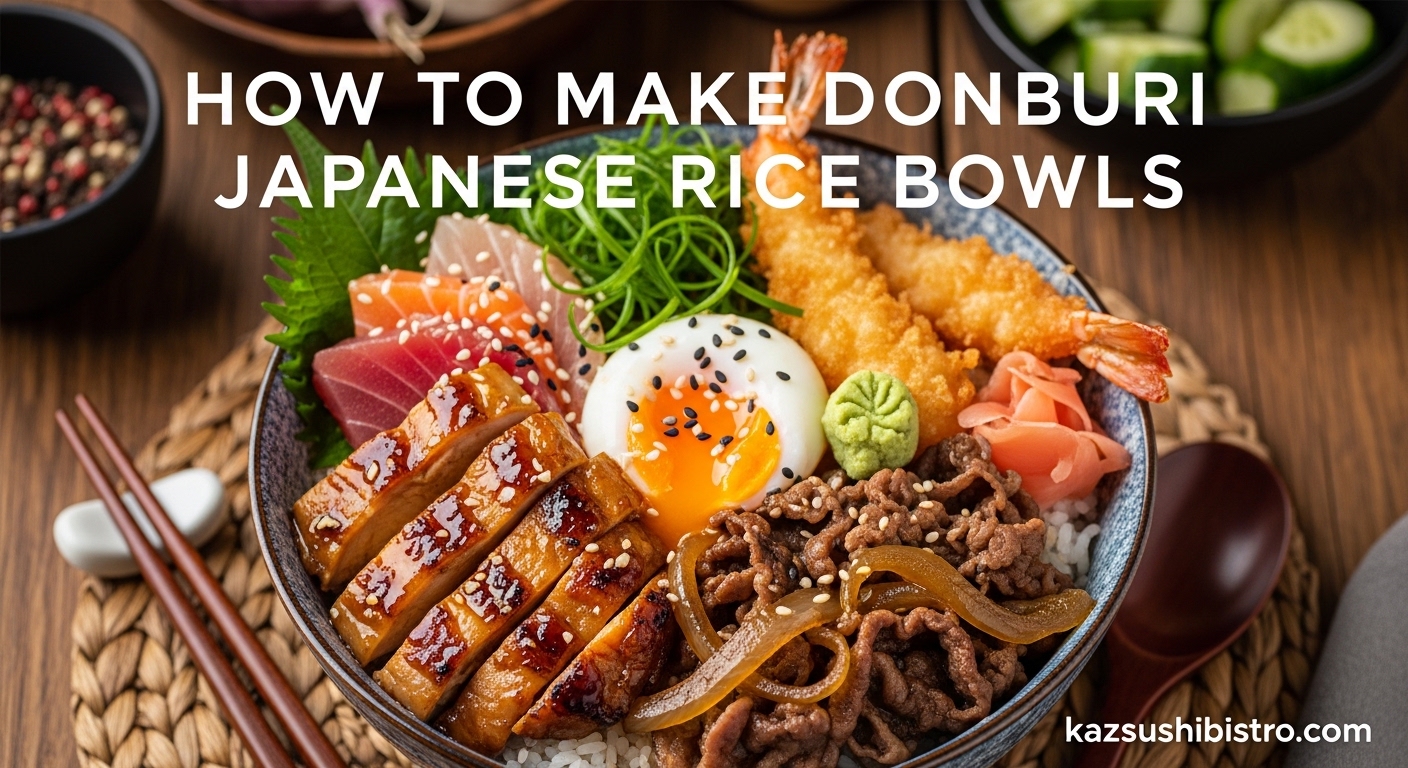
Nothing beats the satisfaction of a steaming bowl of donburi after a long day. At KAZ Sushi Bistro, we’ve spent years perfecting these one-bowl wonders that deliver authentic Japanese comfort food in under 30 minutes. This guide will teach you how to make donburi at home with the same techniques we use in our kitchen.
Whether you are craving the classic oyakodon with its silky egg coating or a hearty gyudon loaded with tender beef, you will find everything you need here. We will cover the essential ingredients, step-by-step recipes for the most popular variations, and professional tips that separate restaurant-quality results from average home cooking.
By the end of this guide, you will understand the foundations of donburi cooking, know how to select the right ingredients, and have the confidence to create these satisfying rice bowls any night of the week.
Table of Contents
What is Donburi?
A donburi is a Japanese rice bowl dish consisting of steamed short-grain rice topped with savory simmered ingredients. The word itself literally means “bowl” in Japanese, but it has come to represent an entire category of one-bowl meals that combine carbohydrates, protein, and vegetables in perfect harmony.
The history of donburi dates back to the late 1600s in Japan’s Edo period. Street vendors began serving quick meals in oversized bowls to busy workers who needed nourishing food fast. Over centuries, regional variations developed across Japan, with each prefecture adding local ingredients and flavors to create unique interpretations.
What distinguishes authentic donburi from generic rice bowls is the tsuyu, or savory sauce, that binds everything together. This umami-rich broth typically combines dashi stock, soy sauce, mirin, and sake. The sauce partially absorbs into the rice, creating a cohesive dish where every bite delivers balanced flavor rather than separate components sitting on top of each other.
Today, donburi remains one of Japan’s most beloved comfort foods. You will find donburi shops on nearly every corner in Tokyo, ranging from quick-service chains like Yoshinoya serving gyudon to specialized restaurants perfecting a single variation like unadon with premium eel.
Essential Ingredients for Authentic Donburi
Great donburi starts with quality ingredients. After cooking thousands of rice bowls at KAZ Sushi Bistro, we have identified the non-negotiable components that make the difference between good and exceptional results.
The Rice Foundation
Short-grain Japanese rice is essential for authentic donburi. Look for varieties like Koshihikari or Calrose, which have the sticky texture that holds together when topped with savory sauce. Long-grain rice simply will not deliver the proper mouthfeel or sauce absorption.
Rinse your rice thoroughly until the water runs nearly clear. This removes excess starch and prevents gummy texture. For stovetop cooking, use a 1:1.2 rice-to-water ratio. If using a rice cooker, follow the marked lines for white rice. The rice should be slightly firmer than you might prefer for plain eating, as it will absorb sauce from the topping.
The Four Pillars of Donburi Sauce
Every donburi sauce builds upon four fundamental ingredients. Dashi provides the umami foundation. This Japanese stock combines kombu kelp and bonito flakes for an oceanic depth that defines the flavor profile. High-quality soy sauce adds saltiness and color. Use Japanese brands like Kikkoman or Yamasa for authentic results.
Mirin brings subtle sweetness and that characteristic sheen to the sauce. This sweet rice wine balances the saltiness while helping proteins caramelize slightly during cooking. Sake adds complexity and helps tenderize meats. The alcohol burns off during cooking, leaving behind depth without harshness.
The standard ratio for donburi sauce is 4 parts dashi, 1 part soy sauce, 1 part mirin, and 1 part sake. Adjust to taste, increasing mirin slightly for sweeter profiles or soy sauce for saltier results.
Proteins and Toppings
Chicken thighs work better than breast meat for oyakodon. The higher fat content stays tender during simmering and carries more flavor. For gyudon, look for thinly sliced beef ribeye or chuck from Asian markets, or ask your butcher to slice it paper-thin.
Traditional garnishes include sliced green onions, nori seaweed strips, beni shoga (pickled ginger), and shichimi togarashi (seven-spice blend). These add color, texture, and flavor contrast that elevate the final presentation.
Ingredient Substitution Guide
We understand that Japanese ingredients are not always available. For dashi, substitute 1 cup of low-sodium chicken stock with 1/2 teaspoon of instant dashi powder. In a pinch, use chicken stock alone, though the umami depth will be reduced.
If mirin is unavailable, combine 1 tablespoon of sake with 1/2 teaspoon of sugar. For a non-alcoholic option, use 1 tablespoon of rice vinegar with 1/2 teaspoon of sugar. When sake is unavailable, dry sherry or Chinese cooking wine works in equal amounts.
For proteins, ground chicken makes an excellent soboro don when sliced thigh meat is unavailable. Thinly sliced pork belly substitutes well for beef in a pinch. Firm tofu cubes work for vegetarian variations.
Popular Donburi Variations
Japan boasts dozens of regional donburi variations, each with devoted fans. Understanding the differences helps you choose the right recipe for your mood and available ingredients. Below is our comparison of the seven most popular styles you will encounter.
| Donburi Type | Main Protein | Key Characteristics | Cooking Time | Difficulty |
|---|---|---|---|---|
| Oyakodon | Chicken thighs + egg | Silky egg coating, sweet-savory sauce | 15 minutes | Beginner |
| Gyudon | Thinly sliced beef | Rich beef flavor, onion sweetness | 20 minutes | Beginner |
| Katsudon | Breaded pork cutlet | Crispy panko meets savory egg | 30 minutes | Intermediate |
| Tendon | Assorted tempura | Crispy fried seafood and vegetables | 40 minutes | Intermediate |
| Unadon | Grilled eel (unagi) | Rich, sweet glaze, premium option | 15 minutes (with pre-cooked eel) | Beginner |
| Soboro Don | Ground chicken | Fluffy egg and savory meat crumble | 20 minutes | Beginner |
| Chukadon | Stir-fried vegetables + meat | Chinese-inspired, colorful, crunchy | 25 minutes | Intermediate |
Oyakodon: The Beloved Classic
Oyakodon, meaning “parent-and-child bowl,” combines chicken and egg in a poetic reference to their familial relationship. This is the most popular home-cooked donburi in Japan, and for good reason. It comes together in 15 minutes using a single pan, requires minimal ingredients, and delivers incredible comfort.
The defining characteristic is the egg, which is only partially cooked into soft, custardy ribbons that bind the chicken and sauce together. When done correctly, the egg should be 70-80% set with runny pockets that create a sauce when broken.
Gyudon: Beef Bowl Perfection
Gyudon chains dominate Japan’s fast-food landscape for a reason. This beef bowl delivers maximum satisfaction with minimal effort. Paper-thin beef slices simmer with onions until meltingly tender, absorbing the sweet-savory sauce that pools into the waiting rice below.
The secret to great gyudon is using well-marbled beef and cooking it just until the pink disappears. Overcooking toughens the meat, while undercooking leaves it chewy. The onions should be soft and sweet, having surrendered their harsh raw edge to the simmering broth.
Katsudon: Crispy Comfort
Katsudon features a breaded pork cutlet (tonkatsu) simmered briefly in egg and sauce until the coating softens slightly while maintaining some crunch. This variation requires more prep than others since you must fry the cutlet first.
The contrast between crispy panko exterior and tender pork interior creates textural interest that other donburi lack. Students in Japan eat katsudon before exams because “katsu” sounds like the word for “victory,” making it a tradition believed to bring good luck.
Regional Variations Across Japan
Beyond the popular nationwide styles, regional donburi variations showcase local ingredients. Hakata in Fukuoka specializes in kashiwa don, featuring local chicken simmered with root vegetables. Hokkaido produces butadon using local pork and sweet miso-based sauces.
Kansai region favors lighter dashi flavors, while Kanto (Tokyo area) prefers stronger soy sauce seasoning. Coastal areas feature kaisen don with fresh sashimi, while mountain regions focus on vegetables and mountain vegetables (sansai). Exploring these regional styles opens endless possibilities for home cooks willing to experiment.
How to Make Donburi: Classic Oyakodon Recipe
Oyakodon is the perfect starting point for learning how to make donburi. This recipe serves two and takes approximately 15 minutes from start to finish. We have refined this method over years of service at KAZ Sushi Bistro to eliminate common problems like rubbery eggs or bland sauce.
Video recommendation: For visual learners, we recommend watching the technique demonstration from Sudachi Recipes on YouTube for the proper egg cooking method.
Ingredients
For the rice:
- 2 cups uncooked short-grain Japanese rice
- 2 1/2 cups water
For the topping (serves 2):
- 2 boneless chicken thighs, cut into 1-inch pieces
- 1 medium onion, thinly sliced
- 2 large eggs, lightly beaten (70% mixed, leave some white visible)
- 1/2 cup dashi broth
- 2 tablespoons soy sauce
- 2 tablespoons mirin
- 1 tablespoon sake
- 1 teaspoon sugar (optional, for extra sweetness)
For garnish:
- 2 green onions, thinly sliced
- 1 sheet nori, cut into thin strips
- Shichimi togarashi (optional, for heat)
Step 1: Prepare the Rice
Rinse the rice under cold water until the water runs nearly clear, about 3-4 washes. This removes surface starch that would make the rice gummy. Combine rice and water in a heavy-bottomed pot or rice cooker.
If cooking stovetop: Bring to a boil over high heat, then reduce to low, cover, and simmer for 12 minutes. Remove from heat and let steam for 10 minutes without lifting the lid. Fluff with a rice paddle.
Step 2: Create the Sauce Base
In a 10-inch oyakodon pan or small skillet, combine dashi, soy sauce, mirin, sake, and sugar. Bring to a gentle simmer over medium heat. The sauce should barely bubble, not boil vigorously.
Taste and adjust seasoning. It should be savory with a noticeable sweetness from the mirin. Add more soy sauce if too sweet, or a pinch more sugar if too salty.
Step 3: Cook the Chicken and Onions
Add sliced onions to the simmering sauce and cook for 2 minutes until slightly softened. Add chicken pieces, spreading them in a single layer. Simmer for 3-4 minutes until the chicken is mostly cooked through but not completely done.
Flip the chicken pieces once during cooking. The key here is not overcooking, as the chicken will continue cooking in the next step.
Step 4: Master the Egg Technique
This is the critical step that separates good oyakodon from great oyakodon. Lightly beat the eggs, but only about 70-80% of the way. You want visible streaks of white remaining. This creates the layered, ribbon-like texture that defines authentic oyakodon.
Drizzle the eggs evenly over the chicken and onions. Do not stir. Cover the pan and cook for 30-45 seconds until the eggs are half-set. The top should still look wet and custardy.
Remove from heat immediately. The residual heat will finish cooking the eggs to the perfect soft-set stage.
Step 5: Assembly and Plating
Fill each serving bowl about 2/3 full with hot rice, leaving room at the top for the topping. Slide the cooked oyakodon mixture from the pan directly over the rice, dividing evenly between two bowls.
The sauce should pool around the edges and partially absorb into the rice. Top with sliced green onions and nori strips. Add a sprinkle of togarashi for heat if desired.
Serve immediately while the egg is still custardy and the sauce is hot. The entire dish should be consumed within 5 minutes of plating for optimal texture.
Pro Tips for Perfect Donburi
After cooking thousands of rice bowls at KAZ Sushi Bistro, we have learned several techniques that consistently elevate home cooking to restaurant quality. These pro tips address the most common problems we see from home cooks.
Rice Preparation Secrets
Always rinse rice until the water runs clear. Skipping this step results in gluey texture that ruins the dish. For extra flavor, substitute 1/4 cup of the cooking water with sake.
Rest the cooked rice for 10 minutes after cooking. This allows moisture to distribute evenly. Never use cold or day-old rice for donburi. The warmth is essential for proper sauce absorption.
Preventing Overcooked Eggs
The most common oyakodon mistake is overcooking the eggs into rubbery curds. Remember that eggs continue cooking from residual heat after you remove the pan from the stove. Stop cooking when they look 70% done.
Room temperature eggs work better than cold ones. Cold eggs seize up faster when hitting the hot pan. Let your eggs sit out for 15 minutes before cooking.
The 70-80% mixing technique is crucial. Fully scrambled eggs become crumbly and dry. Partially mixed eggs create the custardy ribbons that make oyakodon special.
Sauce Balancing and Taste Adjustment
Donburi sauce should taste slightly stronger when sampled alone from the pan, as it will dilute when poured over rice. If it tastes perfect in the pan, it will be bland in the final dish.
Add a pinch of instant dashi powder if the sauce tastes flat. This boosts umami without adding saltiness. A few drops of unseasoned rice vinegar can brighten overly heavy sauces.
For chicken-based donburi, adding a slice of ginger to the simmering sauce eliminates any poultry odor. This is especially helpful when using chicken that has been frozen.
Meal Prep and Storage Strategies
While donburi is best fresh, you can prepare components ahead. Mix the sauce ingredients and store refrigerated for up to 5 days. Pre-slice onions and store in an airtight container.
Pre-cooked rice stores well frozen. Portion into single servings and freeze for up to 1 month. Microwave directly from frozen with a damp paper towel covering.
Never pre-cook the egg topping. Eggs must be made fresh for each serving. However, you can pre-cook the chicken and onions in sauce, then add fresh eggs when reheating.
How to Serve and Pair Your Donburi
Presentation elevates home cooking into a dining experience. At KAZ Sushi Bistro, we follow traditional Japanese plating principles that maximize visual appeal and flavor harmony.
Traditional Accompaniments
A proper Japanese donburi meal includes supporting elements that balance the rich, savory main bowl. Miso soup provides warmth and additional umami. A small dish of pickled vegetables (tsukemono) offers acidic contrast that cuts through the richness.
Common pairings include miso soup with wakame seaweed, cucumber sunomono (vinegared salad), or pickled daikon. Green tea is the traditional beverage, though cold barley tea (mugicha) is refreshing in summer months.
Restaurant-Style Plating Tips
Use donburi bowls that are wider than they are tall. This provides surface area for the topping while allowing easy access with chopsticks. Traditional Japanese donburi bowls hold approximately 400-500ml.
Fill rice only 2/3 of the way up the bowl. This leaves room for the topping and prevents overflow. The sauce should pool around the edges, creating a visible border of savory broth against the white rice.
Garnish placement matters. Arrange green onions in a small mound on one side. Place nori strips perpendicular to the onions for visual contrast. A sprinkle of togarashi adds color while signaling spice level.
Serve on a small tray or plate with the accompanying miso soup and pickles arranged at 10 o’clock and 2 o’clock positions. This creates a balanced presentation that shows intentionality.
Frequently Asked Questions
What is the difference between donburi and rice bowls?
A donburi is specifically a Japanese rice bowl where the topping is simmered in a savory sauce and served over short-grain rice. The sauce partially absorbs into the rice, creating a unified dish. Generic rice bowls typically involve separate components placed on top of rice without the cohesive sauce integration that defines donburi.
What kind of rice is best for donburi?
Short-grain Japanese rice is best for donburi. Look for varieties like Koshihikari or Calrose, which have the sticky texture that holds together when topped with savory sauce. The rice should be slightly firmer than usual, as it will absorb sauce from the topping. Avoid long-grain rice, which does not provide the proper texture or sauce absorption.
What do you put in a donburi bowl?
A donburi bowl contains steamed short-grain rice topped with proteins simmered in savory sauce. Common proteins include chicken and egg (oyakodon), beef (gyudon), pork cutlet (katsudon), tempura (tendon), or grilled eel (unadon). The sauce typically combines dashi broth, soy sauce, mirin, and sake. Garnishes include green onions, nori seaweed, and pickled ginger.
How to make donburi sauce for rice bowl?
Donburi sauce combines 4 parts dashi broth, 1 part soy sauce, 1 part mirin, and 1 part sake. Bring to a gentle simmer and add your protein and vegetables. The sauce should taste slightly stronger than desired, as it dilutes when poured over rice. Adjust sweetness with additional mirin or sugar, and add saltiness with more soy sauce to taste.
What is the most popular donburi?
Oyakodon is the most popular donburi both in Japan and internationally. This chicken and egg rice bowl is beloved for its quick 15-minute preparation, minimal ingredients, and comforting flavor. In Japan, gyudon (beef bowl) is also extremely popular, with chain restaurants like Yoshinoya serving millions of bowls annually.
Are donburi bowls healthy?
Donburi can be a healthy, balanced meal when prepared thoughtfully. A typical bowl provides carbohydrates from rice, protein from meat or eggs, and nutrients from onions and garnishes. To make healthier donburi, use brown rice instead of white, choose lean proteins like chicken breast, and reduce the amount of sauce to control sodium. Adding extra vegetables also boosts nutritional value.
What sauce do they use for donburi?
Donburi uses tsuyu, a savory sauce made from dashi broth, soy sauce, mirin, and sake. The exact ratios vary by region and personal preference, but the standard is 4:1:1:1. Some variations use sweet soy glaze (for unadon) or tentsuyu (tempura dipping sauce for tendon). The sauce should be savory with subtle sweetness and visible umami depth.
What kind of rice is used for donburi?
Donburi traditionally uses short-grain Japanese rice, also called sushi rice or Japonica rice. Popular varieties include Koshihikari, Calrose, and Akitakomachi. These varieties have higher starch content than long-grain rice, creating the sticky texture that holds together when topped with sauce. The rice is cooked slightly firmer than for plain eating to better absorb the savory toppings.
Conclusion
Learning how to make donburi opens up a world of quick, satisfying meals that bring authentic Japanese comfort food to your table. The techniques you have learned here, from proper rice preparation to the 70-80% egg mixing method, will serve you across all donburi variations.
Start with oyakodon to master the fundamentals, then branch out to gyudon, katsudon, and regional variations as your confidence grows. Remember that great donburi balances sweet and savory, achieves proper egg texture, and uses quality short-grain rice as the foundation.
The beauty of donburi lies in its simplicity and adaptability. With one pan, basic ingredients, and 15-20 minutes, you can create restaurant-quality Japanese rice bowls that rival anything from a Tokyo donburi shop. Gather your ingredients, heat your pan, and enjoy the satisfaction of authentic Japanese comfort food made in your own kitchen.