
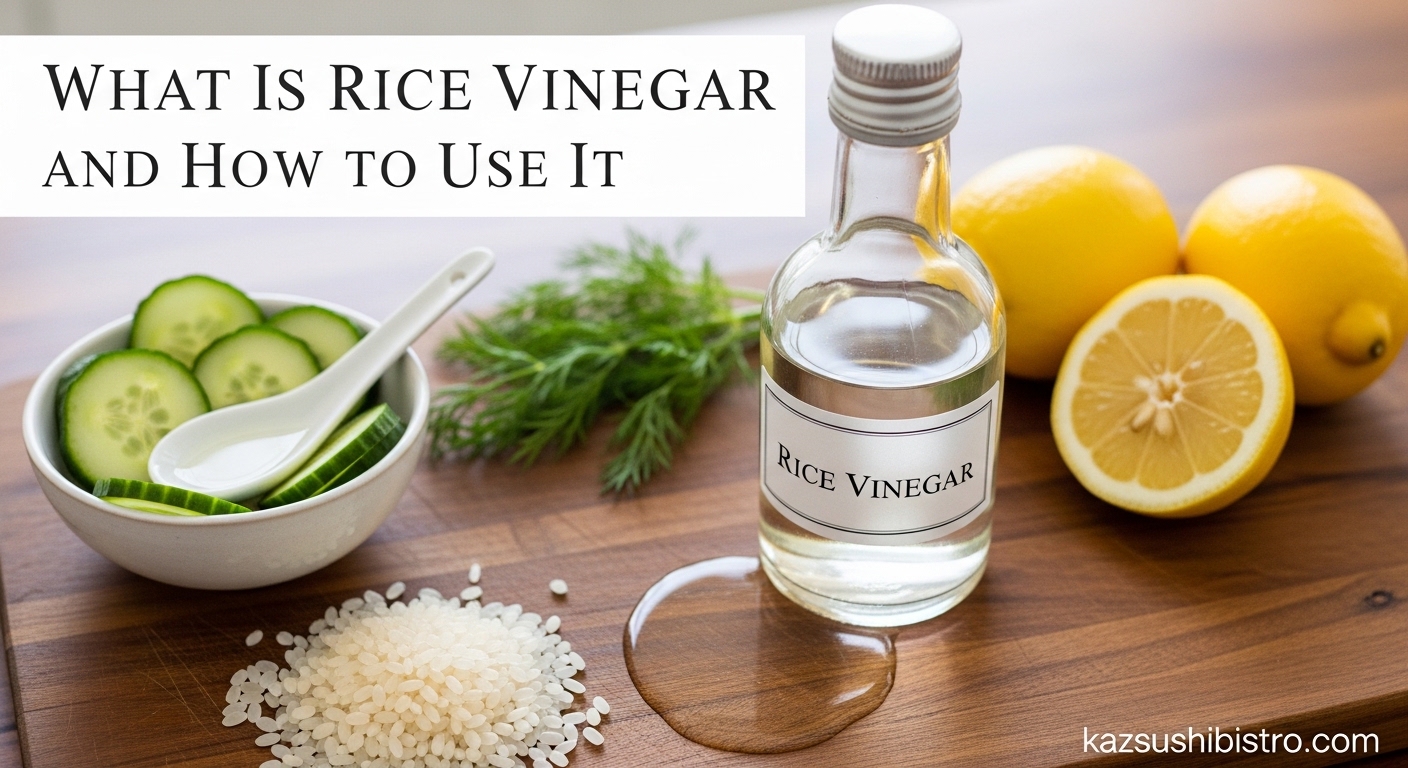
Rice vinegar sits in a quiet corner of most grocery stores, often overlooked by home cooks reaching for the more familiar white or apple cider varieties. If you have ever wondered what makes this pale, delicate liquid a staple in Asian kitchens worldwide, you are not alone. I spent years cooking without it, substituting harsher vinegars in my stir-fries and wondering why my homemade sushi rice never tasted quite right.
The answer was simple: I needed rice vinegar. This fermented rice product brings a mild, sweet acidity that enhances dishes without the aggressive punch of distilled white vinegar. Made from fermented rice through a two-step process where rice first becomes sake and then acetic acid, rice vinegar typically contains about 5% acetic acid but tastes far gentler than its Western counterparts.
In this guide, I will explain everything you need to know about rice vinegar: what it is, the different types available, and exactly how to use it in your cooking. Whether you are making sushi rice for the first time or looking to improve your marinades and salad dressings, you will find practical, tested advice here. By the end, you will understand why this humble ingredient deserves a permanent spot in your pantry.
Table of Contents
What Is Rice Vinegar?
Rice vinegar is a mild, slightly sweet vinegar made from fermented rice. Known as Komezu in Japan, it has been a kitchen staple across Asia for centuries, prized for its ability to add balanced acidity without overwhelming other flavors.
The production process begins with rice that undergoes fermentation to create sake or a similar rice wine. This alcohol then undergoes a second fermentation, converting it into acetic acid through the action of acetic acid bacteria. The result is a clear or pale yellow liquid with approximately 4-5% acetic acid content, significantly milder than white vinegar which typically ranges from 5-8%.
The history of rice vinegar in Japan stretches back to the Edo period (1603-1868), where it became essential for preserving fish and creating the vinegared rice that forms the foundation of sushi. Today, it remains irreplaceable in Japanese cuisine and has spread throughout Asian cooking, from Chinese stir-fries to Korean marinades. Its mellow character comes from the natural sweetness of rice, making it less sharp than grain-based vinegars.
Types of Rice Vinegar 2026
Not all rice vinegar is created equal. Walking down the Asian foods aisle, you will find several distinct varieties, each suited to different culinary applications. Understanding these differences helps you choose the right bottle for your specific needs.
Unseasoned Rice Vinegar (White Rice Vinegar)
This is the pure, unadulterated form of rice vinegar. Made simply from fermented rice with no additives, it offers the cleanest, most straightforward flavor profile. The taste is mildly acidic with subtle sweetness and a clean finish that does not linger on the palate.
I keep unseasoned rice vinegar on hand for recipes where I want to control the seasoning myself. It works beautifully in salad dressings where you balance it with your preferred oil, salt, and sweetener. It is also the vinegar of choice for pickling vegetables when you want the natural flavors to shine through.
Seasoned Rice Vinegar
Seasoned rice vinegar, sometimes labeled sushi vinegar or sushi-zu, comes pre-mixed with salt, sugar, and sometimes a touch of mirin. This ready-to-use variety saves time when making sushi rice, eliminating the need to measure and mix separate seasonings.
The added seasonings make this variety sweeter and saltier than its unseasoned counterpart. While convenient for sushi, I do not recommend it for general cooking where you want full control over salt and sugar levels. It can make salad dressings too sweet or marinades overly salty if you are not careful.
Black Rice Vinegar
Originating from China, black rice vinegar (Chinkiang vinegar) is made from fermented black glutinous rice, sometimes with the addition of other grains like wheat, barley, or sorghum. The aging process gives it a deep, almost smoky flavor and a dark brown to black color.
This variety carries a complex, malty taste with notes reminiscent of balsamic vinegar but distinctly Asian in character. It is essential in northern Chinese cooking, particularly for braised dishes, dipping sauces, and as a finishing touch for dumplings. The depth it adds to a simple stir-fry sauce is remarkable.
Red Rice Vinegar
Red rice vinegar gets its distinctive color from the fermentation of red yeast rice, a traditional Chinese ingredient. It tastes less acidic than white rice vinegar with a pleasant, almost wine-like sweetness.
This variety appears most commonly in Chinese seafood dishes and soups. It is also popular as a dipping sauce component, often mixed with ginger and sugar. While less common in home kitchens, it offers a unique flavor profile worth exploring if you cook Chinese cuisine regularly.
Summary Comparison
Unseasoned rice vinegar offers the most versatility for general cooking. Seasoned rice vinegar excels specifically for sushi rice. Black rice vinegar brings depth to Chinese braises and sauces. Red rice vinegar adds distinctive character to seafood and dipping applications.
How to Use Rice Vinegar?
Rice vinegar earns its place in your kitchen through sheer versatility. From the obvious applications like sushi rice to less expected uses in baking and meat tenderizing, this ingredient proves its value across countless recipes.
Making Perfect Sushi Rice
The most famous application for rice vinegar is sushi rice. The vinegar not only seasons the rice but also helps achieve that characteristic glossy appearance and slightly sticky texture. For every 2 cups of uncooked short-grain rice, I mix 3 tablespoons of unseasoned rice vinegar with 2 tablespoons of sugar and 1 teaspoon of salt, heating gently until dissolved.
Once your rice cooks, transfer it to a wide, non-metallic bowl. Drizzle the vinegar mixture over the hot rice using a cutting motion with a rice paddle or wooden spoon. Fan the rice while mixing to help it cool and absorb the seasoning evenly. The result should taste slightly sweet, slightly tart, and perfectly balanced.
Stir-Fry Sauces and Marinades
Stir-fries benefit enormously from a splash of rice vinegar at the right moment. Adding it too early causes the sharp acidity to cook off, leaving little flavor. The best approach is to add rice vinegar in the final minute of cooking, tossing it with the hot ingredients just before serving.
For marinades, rice vinegar works as both a flavoring agent and tenderizer. Its mild acidity breaks down proteins without making meat mushy, as harsher vinegars can. A basic marinade I use combines 3 tablespoons rice vinegar, 2 tablespoons soy sauce, 1 tablespoon sesame oil, 1 teaspoon grated ginger, and 2 minced garlic cloves per pound of chicken or pork.
Salad Dressings
Rice vinegar creates lighter, more delicate salad dressings than wine vinegars. Its subtle sweetness means you often need less oil to balance the acidity. A simple 2:1 oil to vinegar ratio works beautifully, whereas wine vinegar typically needs 3:1.
Try mixing rice vinegar with a neutral oil like grapeseed, a touch of Dijon mustard as an emulsifier, honey or sugar to taste, and salt and pepper. This basic formula adapts endlessly: add sesame oil and ginger for Asian salads, or herbs like cilantro and mint for Southeast Asian flavors.
Pickling Vegetables
Quick-pickled vegetables take minutes with rice vinegar. Unlike lengthy fermentation pickling, quick pickles use vinegar to acidify vegetables immediately. Slice cucumbers, carrots, radishes, or red onions thinly and pack them into jars.
Heat equal parts rice vinegar and water with salt and sugar to taste (I use 1 teaspoon salt and 2 tablespoons sugar per cup of liquid). Pour the hot brine over the vegetables and let cool. They are ready in 30 minutes and last refrigerated for several weeks.
Tenderizing Meat
The mild acid in rice vinegar tenderizes meat gently without altering texture excessively. It works particularly well with tougher cuts like flank steak, pork shoulder, or chicken thighs. The key is timing: 30 minutes to 2 hours is sufficient for thin cuts, while thicker pieces can handle up to 4 hours.
Beyond tenderizing, the vinegar adds a subtle brightness that balances rich, fatty meats. Korean bulgogi traditionally uses rice vinegar or similar acidic components to cut through the marbled beef.
Fried Rice and Noodles
A splash of rice vinegar at the end of cooking transforms fried rice from good to restaurant-quality. Add 1-2 teaspoons to the wok or pan just before removing from heat. The vinegar brightens all the flavors without making the dish taste sour.
For noodle dishes like lo mein or chow mein, rice vinegar in the sauce adds that elusive “something” that makes takeout versions taste better than homemade attempts. Try adding 1 tablespoon to your standard noodle sauce recipe.
Asian Braised Dishes (Nimono)
Japanese nimono dishes feature vegetables, tofu, or fish simmered in seasoned broth. Rice vinegar often appears in these preparations, adding subtle acidity that balances the sweetness of mirin and the saltiness of soy sauce.
The vinegar helps cut through the richness of fatty fish or dense root vegetables, keeping the dish tasting light despite long cooking times. A classic combination includes dashi broth, soy sauce, mirin, and a touch of rice vinegar.
Sweet and Sour Sauces
Traditional sweet and sour sauce relies on rice vinegar for its characteristic tang. The vinegar’s natural sweetness means you need less added sugar to achieve the right balance. For a basic sauce, combine 1/4 cup rice vinegar, 3 tablespoons ketchup, 2 tablespoons sugar, 2 tablespoons soy sauce, and 1 teaspoon cornstarch mixed with water.
Simmer until thickened and glossy. This sauce works with chicken, pork, tofu, or vegetables, and stores refrigerated for up to a week.
Hot and Sour Soup
Authentic hot and sour soup depends on the interplay between white pepper (the hot) and rice vinegar (the sour). The vinegar must be added at the very end of cooking to preserve its bright flavor. Start with 2 tablespoons for a pot serving four, adjusting to taste.
Baking Applications
Less commonly known, rice vinegar works in baking as an acid to activate baking soda. Its mild flavor makes it ideal for delicate cakes or Asian-style steamed buns where white vinegar might taste too harsh. Replace other vinegars 1:1 in recipes calling for acid.
Rice Vinegar vs Other Vinegars
Understanding how rice vinegar differs from other common vinegars helps you substitute intelligently and choose the right acid for each dish.
Rice Vinegar vs White Vinegar
White vinegar, made from distilled grain alcohol, carries a sharp, aggressive acidity that can overwhelm delicate dishes. Rice vinegar offers roughly half the perceived acidity despite similar acetic acid percentages, thanks to its natural sweetness.
For substitution purposes, use half as much white vinegar when replacing rice vinegar, and add a pinch of sugar to compensate for the missing sweetness. Going the other direction, you can replace white vinegar with rice vinegar 1:1 in most recipes, though the result will be milder.
Rice Vinegar vs Rice Wine Vinegar
These terms often confuse home cooks. Technically, rice vinegar and rice wine vinegar are the same product: vinegar made from fermented rice. Some brands use one term, some use the other. However, rice wine (like sake or mirin) is different entirely: it is an alcoholic beverage, not vinegar.
Always check labels carefully. If the bottle lists significant alcohol content, it is rice wine, not vinegar. Mirin, a sweet rice wine, contains about 14% alcohol and is much sweeter than any rice vinegar.
Rice Vinegar vs Apple Cider Vinegar
Apple cider vinegar brings fruity notes and slightly more aggressive acidity than rice vinegar. It works as a substitute in Western-style salads and marinades but adds a distinct apple flavor that may not suit Asian recipes.
For substitution, use slightly less apple cider vinegar than the rice vinegar called for, or dilute with water. The 1:1 substitution works in a pinch but will change the final flavor profile.
Rice Vinegar vs Mirin
Mirin is a sweet rice wine used in Japanese cooking, not a vinegar. It contains about 40-50% sugar and 14% alcohol, offering sweetness and a subtle tang but little real acidity. You cannot substitute mirin for rice vinegar directly, though some recipes use both.
If a recipe calls for mirin and you only have rice vinegar, add sugar to compensate: for every tablespoon of mirin, use 1 tablespoon rice vinegar plus 1/2 teaspoon sugar.
Substitution Summary
For rice vinegar: use half the amount of white vinegar plus sugar, use slightly less apple cider vinegar, or use equal amounts of champagne vinegar. Avoid balsamic or red wine vinegar as substitutes: their strong flavors overwhelm dishes designed for rice vinegar’s subtlety.
Health Benefits of Rice Vinegar 2026
Beyond its culinary applications, rice vinegar offers several health benefits that make it a smart choice for health-conscious cooks.
Low Calorie and Low Sodium
Pure rice vinegar contains essentially no calories and no sodium, making it ideal for flavor enhancement in restricted diets. Even seasoned varieties contribute minimal calories compared to creamy dressings or oil-based sauces. Using rice vinegar-based dressings instead of mayonnaise or oil-heavy alternatives significantly reduces calorie intake.
Blood Sugar Management
Research suggests vinegar consumption may help moderate blood sugar spikes after meals. The acetic acid in rice vinegar appears to slow carbohydrate digestion and improve insulin sensitivity. For people with diabetes or prediabetes, this makes rice vinegar a valuable tool in meal planning.
Studies specifically examining rice vinegar have shown promising results for blood sugar control when consumed with carbohydrate-rich meals. However, as with any dietary change, diabetics should consult their healthcare provider before making rice vinegar a regular part of their routine.
Digestive Aid
The acetic acid in rice vinegar may support digestive health by promoting the growth of beneficial gut bacteria and improving mineral absorption from foods. Traditional Asian medicine has long used vinegars for digestive complaints, and modern research is beginning to support some of these traditional uses.
Antioxidant Properties
Rice vinegar contains amino acids and antioxidants that may help combat oxidative stress in the body. Black rice vinegar in particular shows high antioxidant levels due to its extended fermentation and aging process. These compounds contribute to overall cellular health.
Weight Management
Adding vinegar to meals may increase feelings of fullness, potentially reducing overall calorie consumption. The sharp flavor also satisfies taste receptors, potentially reducing cravings for sweeter, more calorie-dense foods.
How to Store Rice Vinegar?
Proper storage ensures your rice vinegar maintains its quality and flavor over time. The good news is that rice vinegar is remarkably stable and requires minimal care.
Pantry Storage
Unopened rice vinegar stores indefinitely in a cool, dark pantry. The high acidity prevents bacterial growth and spoilage. Keep bottles away from direct sunlight and heat sources like the stove, which can degrade quality over time.
After Opening
Once opened, rice vinegar remains stable for years at room temperature. Unlike wine or some other condiments, it does not oxidize significantly when exposed to air. I keep mine in the pantry door for easy access, and it has stayed fresh for over three years.
Should You Refrigerate Rice Vinegar?
Refrigeration is optional but not necessary for rice vinegar. The high acid content preserves the vinegar perfectly well at room temperature. However, if you live in an extremely hot climate or use rice vinegar infrequently, refrigeration can help maintain peak flavor for longer periods.
Some people prefer the taste of refrigerated rice vinegar in cold applications like salad dressings, but this is purely a matter of personal preference. The vinegar itself does not require cold storage for safety.
Shelf Life and Signs of Spoilage
Properly stored rice vinegar lasts indefinitely, though manufacturers typically suggest using it within 2 years for best flavor. Over very long storage periods (5+ years), you might notice slight darkening or sediment formation. These changes do not indicate spoilage, just natural aging.
True spoilage in vinegar is rare but would show as mold growth on the surface, an off-putting odor, or unusual cloudiness. If any of these appear, discard the vinegar.
Non-Culinary Uses
Beyond the kitchen, rice vinegar serves purposes in personal care and household applications.
Hair and Scalp Care
Rice vinegar rinses have a long history in Asian beauty traditions. The mild acidity helps balance scalp pH, potentially reducing dandruff and improving hair shine. To try this, dilute 1-2 tablespoons of rice vinegar in 1 cup of water and use as a final rinse after shampooing.
The acetic acid helps remove product buildup and smooths the hair cuticle, creating shine. Unlike harsher apple cider vinegar treatments, rice vinegar is gentle enough for regular use on most hair types.
Skin Applications
Some skincare enthusiasts use diluted rice vinegar as a toner, claiming it helps balance skin pH and reduce acne. The natural acids may offer mild exfoliation. Always dilute significantly (1 part vinegar to 10 parts water) and patch test before applying to your face.
Frequently Asked Questions
What is rice vinegar mostly used for?
Rice vinegar is primarily used in Asian cooking for sushi rice, stir-fry sauces, marinades, salad dressings, and pickling vegetables. Its mild, slightly sweet flavor makes it ideal for dishes where you want acidity without harshness. The most famous application is seasoning sushi rice, where it provides the characteristic sweet-tart flavor.
Is rice vinegar ok for diabetics?
Yes, rice vinegar is generally considered safe for diabetics and may even be beneficial. Research suggests that the acetic acid in vinegar can help moderate blood sugar spikes after carbohydrate-rich meals. Rice vinegar contains no sugar (in its unseasoned form) and no carbohydrates, making it suitable for diabetic meal plans. However, seasoned rice vinegar contains added sugar, so diabetics should check labels and use unseasoned varieties.
Do I refrigerate rice vinegar after opening?
No, refrigeration is not necessary for rice vinegar after opening. The high acidity (4-5% acetic acid) preserves the vinegar at room temperature indefinitely. You can store opened rice vinegar in a cool, dark pantry for years. Refrigeration is optional and primarily a matter of personal preference, though it may help maintain peak flavor in very hot climates.
Is rice vinegar good for scalp?
Rice vinegar may benefit scalp health when used as a diluted rinse. The mild acidity helps balance scalp pH, potentially reducing dandruff and removing product buildup. Traditional Asian beauty practices have long used rice vinegar rinses to improve hair shine and scalp condition. To use, dilute 1-2 tablespoons in 1 cup of water and apply as a final rinse after shampooing.
What is the difference between seasoned and unseasoned rice vinegar?
Unseasoned rice vinegar is pure fermented rice vinegar with no additives. Seasoned rice vinegar contains added salt, sugar, and sometimes mirin, making it ready to use for sushi rice. Seasoned rice vinegar tastes sweeter and saltier than unseasoned. For general cooking, unseasoned rice vinegar offers more control, while seasoned rice vinegar provides convenience specifically for sushi preparation.
Can I substitute white vinegar for rice vinegar?
You can substitute white vinegar for rice vinegar, but use half the amount and add a pinch of sugar to compensate for rice vinegar’s natural sweetness. White vinegar is sharper and more aggressive in flavor, so starting with less prevents overpowering your dish. For best results, champagne vinegar or apple cider vinegar make closer substitutes than white distilled vinegar.
Conclusion
Rice vinegar stands out as one of the most versatile and approachable vinegars in any kitchen. Its mild, sweet acidity enhances dishes without dominating them, making it perfect for delicate applications like sushi rice and salad dressings. Whether you choose unseasoned rice vinegar for general cooking or seasoned rice vinegar for convenient sushi preparation, this ingredient rewards experimentation.
From tenderizing meats to brightening stir-fries, from quick pickles to traditional braises, rice vinegar proves its worth across countless recipes. Its health benefits, including potential blood sugar moderation and digestive support, add to its appeal. With proper storage, a single bottle lasts years, ready whenever inspiration strikes.
If you have not cooked with rice vinegar before, start with a simple application: make a basic vinaigrette or add a splash to your next stir-fry just before serving. Once you taste the difference this subtle acidity makes, you will understand why it has remained essential in Asian cooking for centuries. Pick up a bottle on your next grocery trip and discover what rice vinegar can do for your cooking.