
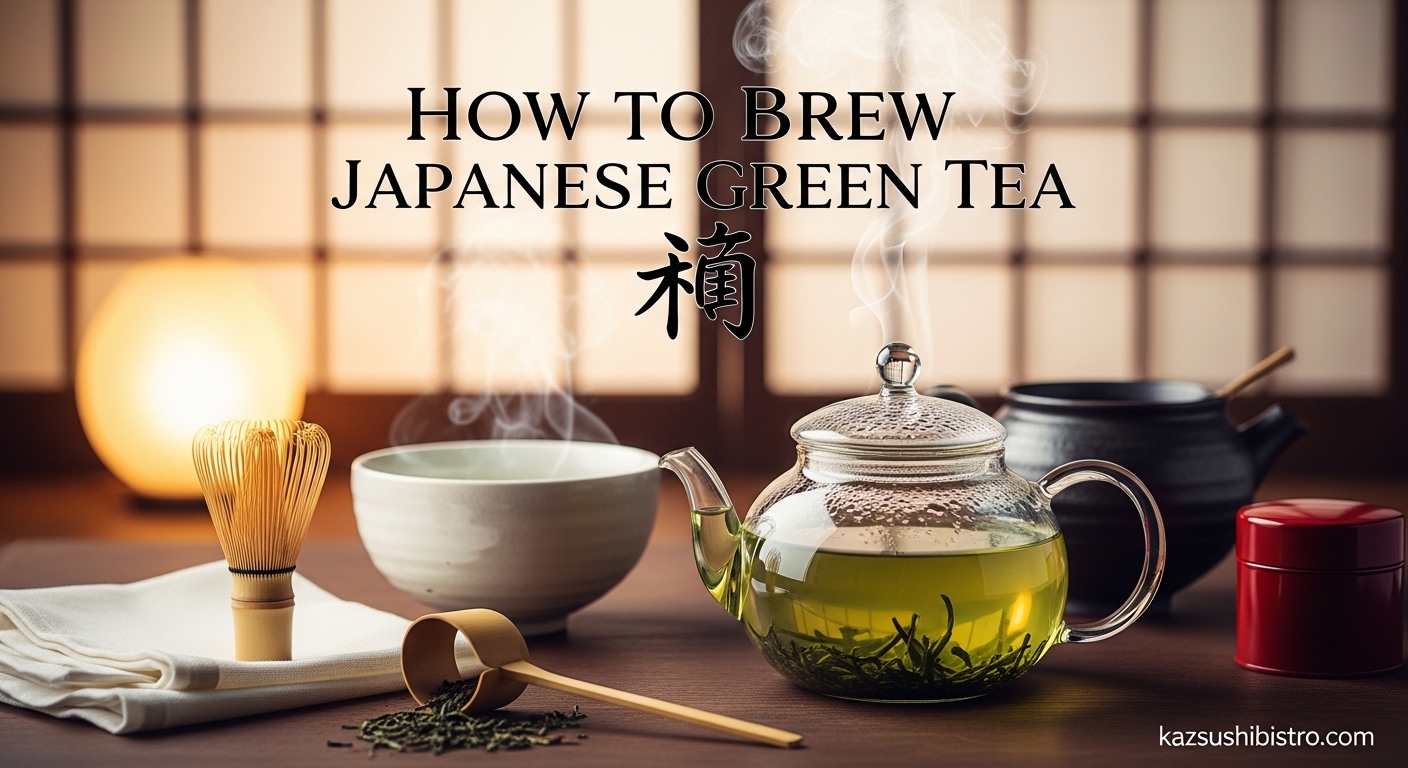
I spent six months working alongside tea masters in Kyoto learning the subtle art of Japanese green tea brewing. What struck me most was how a difference of just 5 degrees in water temperature could transform a smooth, umami-rich cup into something bitter and harsh. This guide shares everything I learned about how to brew Japanese green tea at home with the same precision and care practiced in traditional Japanese homes.
Whether you are starting with your first tin of sencha or looking to perfect your gyokuro technique, the methods here will give you consistent, delicious results. We will cover exact measurements, proper water temperatures, and the specific techniques for each major tea type. You will also learn the common mistakes that ruin good tea leaves and how to avoid them.
Table of Contents
Understanding Japanese Green Tea Types 2026
All Japanese green teas come from the same plant, Camellia sinensis, but the processing method creates distinctly different flavors and brewing requirements. Knowing which type you have is the first step to brewing it correctly.
Sencha: The Everyday Classic
Sencha represents about 80 percent of all tea produced in Japan. The leaves are steamed immediately after picking to stop oxidation, then rolled into needle shapes and dried. This steaming process gives sencha its characteristic fresh, grassy aroma and vibrant green color. The flavor balances sweetness from theanine with mild astringency from catechins.
Most households in Japan keep sencha as their daily drinking tea. It offers the best balance of quality and affordability, with excellent varieties available from regions like Shizuoka, Kagoshima, and Kyoto. When brewed correctly, sencha delivers a clean, refreshing cup with a sweet finish.
Gyokuro: The Shade-Grown Treasure
Gyokuro stands apart because growers shade the tea plants for about three weeks before harvest. This shading process increases chlorophyll and theanine production while reducing catechin development. The result is an incredibly sweet, smooth tea with almost no bitterness and a deep umami flavor often described as brothy or savory.
Because of the labor-intensive shading process, gyokuro commands higher prices than sencha. It is typically reserved for special occasions or quiet moments when you want to savor something exceptional. The brewing method differs significantly from sencha, requiring lower temperatures to extract sweetness without pulling out harsh tannins.
Genmaicha: The Toasted Rice Blend
Genmaicha combines green tea leaves with roasted brown rice, creating a nutty, toasty flavor profile that many newcomers to Japanese tea find approachable. The roasted rice adds a warm, popcorn-like aroma that complements the fresh grassiness of the tea base. Traditional genmaicha was originally a way to stretch expensive tea leaves, but today it is enjoyed for its unique character.
The base tea for genmaicha is usually a lower-grade sencha or bancha, though premium versions use higher-quality leaves. The addition of rice makes this tea naturally lower in caffeine and easier on the stomach. It pairs beautifully with savory foods and makes an excellent afternoon tea.
Hojicha: The Roasted Alternative
Hojicha starts as regular green tea leaves that undergo an additional roasting process over charcoal. This roasting turns the leaves brown and dramatically changes the flavor profile. The result is a toasty, caramel-like tea with almost no bitterness and significantly reduced caffeine content.
Because of its low caffeine and gentle nature, hojicha is popular in Japan for evening drinking and for serving to children or elderly people. The warm, roasty flavor feels comforting and substantial, making it ideal after meals or during cold weather. Hojicha can handle higher brewing temperatures than other Japanese green teas without becoming bitter.
Matcha: The Powdered Experience
Matcha deserves mention because many people associate it with Japanese green tea, though the preparation method differs completely from loose-leaf teas. For matcha, growers shade the plants before harvest, then steam, dry, and stone-grind the leaves into a fine powder. You whisk this powder directly into water, consuming the entire leaf rather than steeping and removing it.
While matcha preparation requires its own guide, understanding its place in the Japanese tea family helps clarify why loose-leaf brewing follows different rules. The principles of water quality and temperature still apply, but the equipment and technique diverge significantly from what we cover here.
Essential Equipment for Brewing Japanese Green Tea
You do not need expensive tools to brew excellent Japanese green tea, but having the right equipment makes the process easier and more consistent. Here is what I use daily after testing dozens of setups.
The Kyusu: Your Brewing Vessel
A kyusu is the traditional Japanese teapot, characterized by its side-mounted handle and built-in strainer. The side handle design allows you to pour with your wrist in a natural position while the strainer catches leaves as you tilt the pot. Most kyusu have a fine mesh strainer at the spout opening, which works better than ball infusers that constrain leaf expansion.
Kyusu come in various materials including ceramic, clay, and glass. Tokoname clay kyusu are prized because the porous clay absorbs tea oils over time, gradually improving the flavor of subsequent brews. For beginners, a simple ceramic or glass kyusu between 300ml and 500ml works perfectly. The key feature to look for is the built-in strainer that filters as you pour.
If you do not have a kyusu, you can use any teapot with an infuser basket, or even a French press in a pinch. The goal is to give the leaves room to expand while making it easy to separate them from the water quickly when steeping ends.
Water Temperature Control
Water temperature makes or breaks Japanese green tea. The most common mistake home brewers make is using boiling water, which scorches the delicate leaves and extracts harsh tannins. You need a reliable way to hit specific temperatures between 60°C and 90°C depending on the tea type.
An electric kettle with temperature control offers the most convenience, allowing you to set exact degrees and maintain them. Models from brands like Fellow, Bonavita, or even basic Zojirushi models work well. If you use a standard kettle, you will need a kitchen thermometer to check the water before pouring.
The Yuzamashi: Your Cooling Pitcher
The yuzamashi is a ceramic cooling pitcher that rarely appears in Western tea guides but proves invaluable for Japanese green tea brewing. You pour boiling water into the yuzamashi first, which immediately drops the temperature by about 10°C. Then you transfer this cooled water to your teapot.
Beyond temperature control, the yuzamashi serves as a measuring vessel. Japanese tea brewing typically works in small volumes, and the yuzamashi helps you portion exactly the right amount of water for your number of guests. A standard 300ml yuzamashi serves two people perfectly.
If you do not have a yuzamashi, you can achieve similar results by pouring boiling water into your teacups first to cool it, then transferring to the teapot. However, having a dedicated cooling pitcher streamlines the process and becomes second nature with practice.
Measuring Tools
Precision matters in Japanese tea brewing. A small digital scale measuring in grams helps you portion tea leaves consistently. Most guidelines specify grams per 100ml of water, making a scale more reliable than volume measurements like teaspoons.
For water measurement, either use a scale (1ml of water weighs 1g) or markings on your yuzamashi or kyusu. Some kyusu have volume markings inside, which eliminates the need for separate measuring.
A small timer, whether on your phone or a dedicated kitchen timer, helps you hit exact steeping durations. When brewing at lower temperatures, an extra 15 seconds can noticeably change the flavor extraction.
How to Brew Japanese Green Tea: The Basic Method
This foundational method works for most sencha varieties and can be adapted for other tea types by adjusting temperature and time. I recommend mastering this process before exploring variations.
Step 1: Prepare Your Equipment
Start by boiling fresh, filtered water. Water quality significantly impacts tea flavor, and Japanese green tea performs best with soft water low in mineral content. Hard water with high calcium or magnesium levels can dull the delicate flavors and create a flat cup.
Heat your kyusu by rinsing it with hot water, then discard that water. This preheating maintains stable brewing temperature when you add your leaves and fresh water. Place your measured tea leaves into the warmed pot.
Step 2: Cool the Water to the Right Temperature
For standard sencha, you want water at 70°C to 80°C (158°F to 176°F). If your kettle does not have temperature control, pour boiling water into your yuzamashi or teacups and wait about 30 seconds. You can also use the traditional Japanese cooling method: pour boiling water into one cup, then transfer to a second cup, then to the kyusu. Each transfer drops the temperature by roughly 10°C.
Using a thermometer removes the guesswork. Insert it into the water after the cooling step to verify you have hit your target range before proceeding.
Step 3: Add Water and Steep
Pour the cooled water over the tea leaves, filling your kyusu to the desired volume. For two people, use about 200ml of water and 10g of tea leaves. The water should cover all leaves completely, allowing them to float freely.
Place the lid on your kyusu and start your timer. For sencha at 70-80°C, steep for 60 seconds. The leaves will slowly unfurl, releasing their flavor into the water. Do not stir or agitate the leaves during steeping.
Step 4: Pour Completely
This step matters more than most beginners realize. When the timer ends, pour every last drop of liquid out of the kyusu into your cups. Leaving any water in the pot causes the remaining leaves to continue steeping, which ruins the flavor profile for your next infusion.
Pour in stages if serving multiple people, alternating between cups to ensure each serving has equal strength. The first drops are the strongest, so this alternating method balances the concentration.
Step 5: Serve and Enjoy
Japanese green tea is best enjoyed fresh, while the aromatics are still active. Take a moment to appreciate the color and aroma before drinking. The first sip should reveal the balance between sweetness and astringency that defines quality sencha.
Tea-Specific Brewing Guides
Each Japanese green tea type has optimal brewing parameters that bring out its best characteristics. Use these specific guidelines rather than one-size-fits-all instructions.
| Tea Type | Water Temperature | Steeping Time | Leaf Amount (per 200ml) |
|---|---|---|---|
| Sencha | 70-80°C (158-176°F) | 60 seconds | 10g |
| Gyokuro | 50-60°C (122-140°F) | 2 minutes | 10g |
| Genmaicha | 80-90°C (176-194°F) | 60 seconds | 10-12g |
| Hojicha | 90-100°C (194-212°F) | 30 seconds | 10g |
Sencha Brewing Details
For standard sencha, maintain water temperature between 70°C and 80°C. Higher temperatures within this range produce more astringency and a bolder flavor, while lower temperatures emphasize sweetness. I typically start at 75°C and adjust based on the specific tea.
Use approximately 5g of leaves per 100ml of water. For a standard 300ml kyusu serving two people, measure 10-12g of leaves. The steeping time of 60 seconds works for most sencha, though lighter teas might need 90 seconds to fully develop their flavor.
When pouring, tilt the kyusu slowly to avoid agitating the leaves excessively. The built-in strainer should catch all leaf particles, giving you a clean, clear cup. If you notice fine particles escaping, your strainer mesh may be too coarse for that particular tea.
Gyokuro Brewing Details
Gyokuro requires the most delicate handling of any Japanese green tea. The extremely low brewing temperature of 50°C to 60°C extracts the sweet amino acids while leaving harsh tannins behind. This is significantly cooler than most people expect, which is why gyokuro often tastes bitter when brewed incorrectly.
The longer steeping time of 2 minutes allows the cool water to slowly draw out the umami compounds. Be patient here; cutting the time short results in a weak, underdeveloped cup. The leaf amount remains similar to sencha at about 5g per 100ml.
Because gyokuro leaves are typically higher quality and more delicate, handle them gently. The first infusion produces the most prized liquid, sometimes called the “dew of heaven” by tea enthusiasts. Take small sips to appreciate the complex, layered sweetness.
Genmaicha Brewing Details
Genmaicha tolerates higher temperatures than pure leaf teas because the roasted rice components do not develop bitterness when exposed to heat. Brew between 80°C and 90°C for best results. The rice flavors extract more readily at these temperatures.
You can use slightly more leaf for genmaicha, up to 6g per 100ml, because the rice dilutes the overall tea strength. The 60-second steeping time brings out the nutty, toasted character without making the brew too heavy.
Some genmaicha varieties include matcha powder dusted on the leaves. These “matcha-iri” genmaicha will produce a cloudy, more vibrant green cup. Stir the leaves gently before measuring if you have this type, as the matcha can settle.
Hojicha Brewing Details
Hojicha is the most forgiving Japanese green tea to brew. The roasting process stabilizes the leaves, allowing you to use near-boiling water between 90°C and 100°C without creating bitterness. This makes hojicha ideal for beginners or for brewing in situations where precise temperature control is difficult.
The short 30-second steeping time reflects how readily the roasted flavors extract. You can extend this to 60 seconds for a stronger cup, but hojicha naturally produces a robust flavor even with brief steeping. The shorter time also means hojicha works well for quick cups throughout the day.
The leaves of hojicha are often larger and more broken than other Japanese teas due to the roasting process. This does not indicate lower quality; it is simply a characteristic of the production method. The strainer in your kyusu should handle these pieces easily.
Re-Steeping Japanese Green Tea
One of the greatest values in Japanese green tea is the ability to re-steep the same leaves multiple times. Quality leaves often yield three to four excellent infusions, with each one offering a different flavor profile.
For the second infusion, reduce the steeping time significantly. Many experienced brewers on tea forums recommend pouring the second infusion almost immediately, within 10 to 20 seconds. The leaves are already hydrated and open, so they release flavor much faster.
The third infusion returns to a slightly longer steep, around 30 to 60 seconds depending on the tea. Some brewers increase the water temperature slightly for later infusions to extract remaining compounds. By the fourth infusion, you may need 90 seconds or more to get full flavor.
Each infusion reveals different aspects of the tea. The first is typically the most aromatic and complex. The second often has the strongest body and most pronounced umami. The third and fourth become lighter and more subtle, with sweetness lingering longer.
Do not leave wet leaves sitting in your kyusu between infusions. If you plan to re-steep within the same day, leave the lid off to prevent over-steaming. For longer gaps, transfer the leaves to a small dish in the refrigerator and use them within 24 hours.
Cold Brewing Japanese Green Tea
Cold brewing offers an entirely different expression of Japanese green tea, producing smooth, sweet results with no risk of bitterness. This method works particularly well for sencha and gyokuro during warm months.
To cold brew, place 10g of tea leaves in 500ml of cold, filtered water. Refrigerate for 4 to 6 hours for sencha, or up to 8 hours for gyokuro. The slow extraction draws out sweet compounds while leaving harsh tannins behind.
Strain the leaves and serve the tea over ice or chilled. The result lacks the aromatic intensity of hot-brewed tea but offers remarkable smoothness and clarity. Many people prefer cold-brewed gyokuro specifically because the method emphasizes its natural sweetness.
You can prepare cold-brewed tea before bed and enjoy it the next morning. The concentrated brew keeps well in the refrigerator for 2 to 3 days. Dilute with additional water if the flavor is too strong for your taste.
Frequently Asked Questions
How to brew Japanese green teas?
Use 5g of tea leaves per 100ml of water. Heat water to 70-80°C for sencha, 50-60°C for gyokuro, 80-90°C for genmaicha, or 90-100°C for hojicha. Steep for 30 seconds to 2 minutes depending on tea type, then pour completely until the last drop. Re-steep the same leaves 2-3 more times with shorter steeping durations.
How long should I steep Japanese green tea?
Sencha steeps for 60 seconds at 70-80°C. Gyokuro needs 2 minutes at 50-60°C for full umami extraction. Genmaicha steeps for 60 seconds at 80-90°C. Hojicha only needs 30 seconds at 90-100°C due to its roasted nature. Adjust timing based on personal taste preferences.
What is the best water temperature for green tea?
Water temperature varies by tea type. Sencha brews best at 70-80°C (158-176°F). Delicate gyokuro requires cooler water at 50-60°C (122-140°F). Genmaicha handles 80-90°C (176-194°F). Roasted hojicha can use 90-100°C (194-212°F). Using boiling water for any Japanese green tea except hojicha creates bitterness.
Does green tea lower ferritin levels?
Green tea contains tannins and polyphenols that can inhibit iron absorption when consumed with meals. Studies suggest drinking green tea between meals rather than with them if you are concerned about iron levels. Consult a healthcare provider about specific concerns regarding ferritin and iron status.
Is green tea ok for hypertension?
Japanese green tea contains less caffeine than coffee and includes L-theanine, which may promote relaxation. Some research suggests moderate green tea consumption may support healthy blood pressure levels. However, individuals with hypertension should monitor their response and consult healthcare providers about caffeine intake.
Can I drink green tea on Adderall?
Green tea contains caffeine which can interact with stimulant medications like Adderall, potentially increasing side effects such as jitteriness or elevated heart rate. The L-theanine in green tea may somewhat moderate caffeine effects. Consult your prescribing physician about timing and quantities that work safely with your medication.
How many times can you re-steep green tea?
Quality Japanese green tea leaves can be re-steeped 3 to 4 times. The second infusion often produces the strongest flavor. Reduce steeping time for subsequent infusions: second steep for 10-20 seconds, third for 30-60 seconds, fourth for 90+ seconds. Each infusion reveals different flavor characteristics.
Why does my green tea taste bitter?
Bitterness usually results from water that is too hot, steeping for too long, or using too many leaves. Japanese green tea requires cooler water than black tea. Try reducing temperature by 5-10 degrees and shortening steep time by 15-30 seconds. Quality fresh leaves also produce less bitterness than old or low-grade tea.
Conclusion
Learning how to brew Japanese green tea is a journey of small refinements. The guidelines here give you a solid foundation, but personal taste should always guide your final adjustments. Try changing one variable at a time, whether temperature, timing, or leaf amount, and note how the cup changes.
The best cup of Japanese green tea is the one that tastes right to you. Start with these methods, pay attention to the results, and within a few weeks you will develop an intuitive sense for bringing out the best in each tea type. The mindful practice of brewing becomes its own reward, offering a few moments of calm focus before you even take your first sip.