
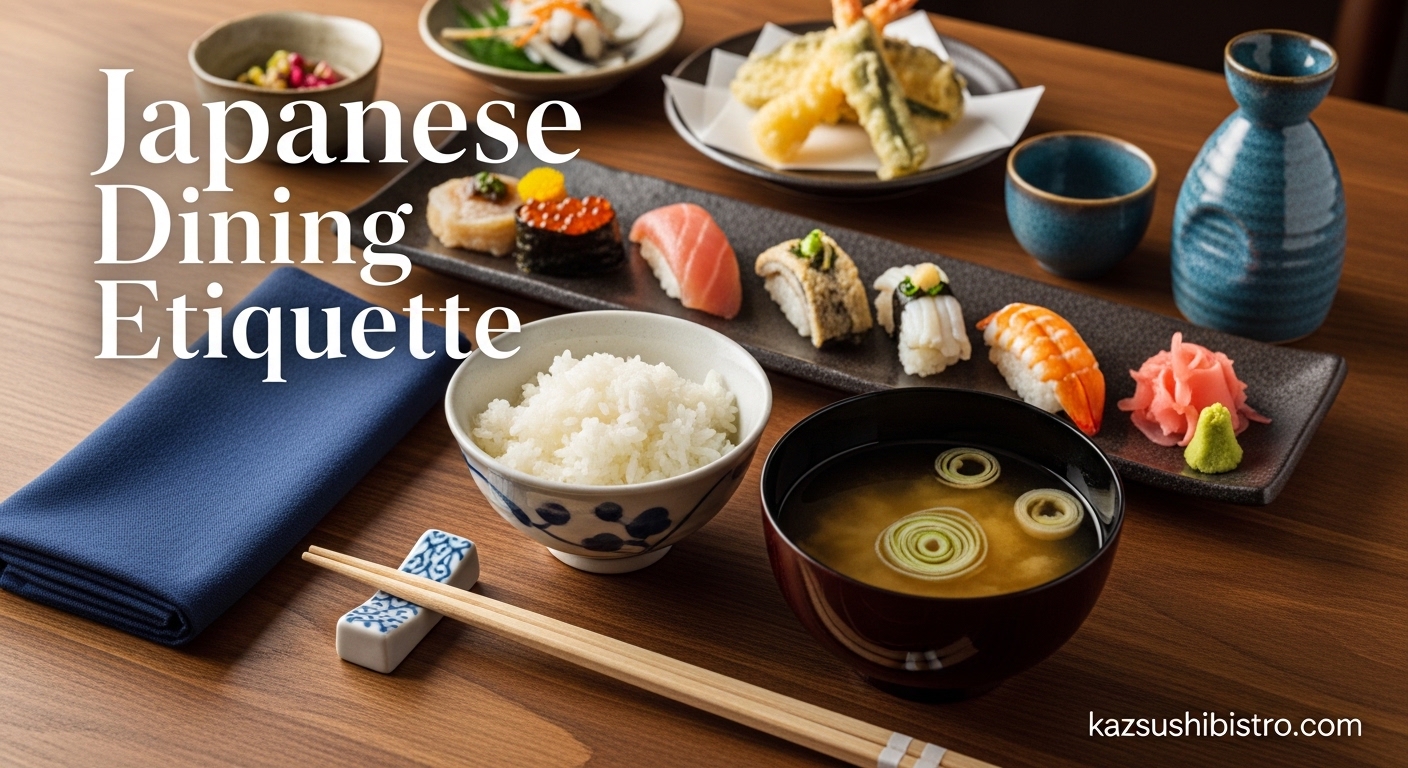
My first meal at a traditional Japanese izakaya in Tokyo was equal parts exciting and terrifying. I watched my host gracefully navigate the small plates, lift her rice bowl with one hand, and somehow manage to convey respect through every movement. Meanwhile, I sat frozen, worried about offending the chef who had spent hours preparing our meal.
That night taught me that Japanese dining etiquette is not about rigid rules designed to trip up foreigners. It is a beautiful expression of gratitude toward the food, the person who prepared it, and everyone sharing the table with you. Whether you are planning a trip to Japan, dining at a local Japanese restaurant, or invited to a Japanese friend’s home, understanding these customs will transform your experience from stressful to deeply meaningful.
In this Japanese dining etiquette guide, you will learn the essential phrases that bookend every meal, the chopstick rules that prevent embarrassing mistakes, and the subtle customs that show you truly appreciate the culture. I have organized everything into clear sections so you can quickly reference what you need before your next Japanese meal.
Table of Contents
Essential Japanese Phrases Before and After Meals 2026
The most fundamental aspect of Japanese dining etiquette involves two simple phrases that frame every meal. These expressions of gratitude are so deeply woven into the culture that skipping them feels as odd to Japanese people as forgetting to say hello.
Itadakimasu: The Pre-Meal Gratitude
Before taking your first bite, bring your hands together in a prayer-like gesture and say itadakimasu (ee-tah-dah-kee-mahss). This phrase literally means I humbly receive and carries profound significance. It acknowledges the life given by the ingredients, the effort of the farmers who grew them, the work of the chef who prepared them, and everyone involved in bringing this meal to your table.
The gesture matters too. Press your palms together at chest level, close your eyes briefly if you wish, and bow your head slightly. In casual settings among friends, a simple verbal itadakimasu without the hand gesture is acceptable. In formal settings or when dining with elders, use both the gesture and the full phrase. During my three months traveling through Japan, I noticed that even young children murmur this phrase automatically before eating.
Gochisousama Deshita: Giving Thanks After Eating
When you finish your meal, repeat the hand gesture and say gochisousama deshita (goh-chee-soh-sah-mah desh-tah). This longer phrase translates roughly to it was a feast or thank you for the meal. The deshita ending adds formality and completion, signaling that the dining experience has concluded.
Saying gochisousama deshita directly to the chef or host carries extra weight. When I stayed at a ryokan in Kyoto, the elderly owner visibly beamed when I used this phrase after breakfast. She told me through a translator that most foreign guests simply leave without acknowledging the meal. That small moment of connection reminded me why these customs matter.
Kampai: Toasting Properly
When drinks are served, wait for someone to initiate a toast with kampai (kahm-pie), the Japanese equivalent of cheers. Do not take a sip until everyone has clinked glasses and the kampai has been said. This rule applies whether you are drinking beer, sake, tea, or even soft drinks.
Here is a practical tip I learned the hard way: when toasting with sake cups, lift your cup slightly higher than the other person’s cup to show respect, especially if they are your senior. In business settings, use two hands to hold your glass when receiving a pour. These small details signal awareness of hierarchy and social dynamics.
Chopstick Etiquette: The Rules You Must Know
Chopsticks, or hashi in Japanese, are the primary utensils for most Japanese meals. Mastering basic chopstick technique takes practice, but avoiding major taboos is more important than perfect form. Japanese people understand that foreigners may struggle with chopsticks. They do not expect flawless technique, but they appreciate awareness of cultural boundaries.
How to Hold Chopsticks Correctly
Hold the first chopstick stationary, resting it between the base of your thumb and the side of your ring finger. Grip the second chopstick like a pencil, holding it with your thumb, index finger, and middle finger. The movement comes from the top chopstick only. The bottom chopstick stays fixed.
If you are struggling, asking for a fork is not rude in most restaurants, especially in tourist areas. However, making an effort with chopsticks shows respect. When I dined at a high-end sushi counter in Osaka, the chef appreciated my chopstick use even though I fumbled occasionally. He told me through gestures that the effort mattered more than perfection.
The Five Major Chopstick Taboos
Japanese culture has specific names for chopstick mistakes. These are the behaviors to absolutely avoid:
Tate-bashi (Standing Chopsticks): Never stick your chopsticks vertically into a bowl of rice. This resembles incense sticks at Buddhist funerals and is considered extremely disrespectful. Always lay chopsticks horizontally across your plate or bowl when not in use, or place them on the provided hashi-oki (chopstick rest).
Sashi-bashi (Stabbing Chopsticks): Do not use chopsticks to spear food, even if you cannot pick it up gracefully. If you are struggling with a slippery piece of food, ask for a fork or ask someone to help. Stabbing food is associated with anger and aggression in Japanese culture.
Hiroi-bashi (Passing Chopsticks): Never pass food directly from your chopsticks to someone else’s chopsticks. This mimics a funeral ritual where bone fragments are passed between chopsticks. If you want to share food, place it on the other person’s plate first.
Neburi-bashi (Licking Chopsticks): Do not lick your chopsticks to clean them, even if sauce has dripped on them. This is considered unhygienic and childish. If your chopsticks become messy, use your napkin or oshibori (wet towel) to wipe them.
Mayoi-bashi (Wandering Chopsticks): Do not hover your chopsticks over different dishes while deciding what to eat. This creates a perception of greed and indecision. Decide what you want before picking up your chopsticks, then commit to that choice.
Other Chopstick Behaviors to Avoid
Beyond the major five taboos, avoid these behaviors as well: pointing with chopsticks (like pointing a finger), waving chopsticks around while talking, using chopsticks to pull dishes closer to you, and using chopsticks to dig through a dish searching for specific ingredients. These actions are seen as impolite or inconsiderate to others at the table.
When resting your chopsticks, always use the hashi-oki (chopstick rest) if provided. If no rest is available, you can fold the paper wrapper from disposable chopsticks into a makeshift rest. Never lay chopsticks directly on the table. During a casual dinner at an izakaya, I noticed the owner proactively provided chopstick rests when he saw guests placing chopsticks on plates. It was a gentle, non-judgmental way of guiding proper behavior.
Japanese Table Manners: Do’s and Don’ts
Understanding the fundamental principles behind Japanese table manners helps you navigate new situations even when you do not know the specific rule. The core concept is omotenashi, the Japanese spirit of hospitality and consideration for others.
What You Should Always Do
Lift small bowls of rice, soup, and side dishes toward your mouth rather than bending down to the table. This prevents spills and shows proper form. Hold the bowl with your non-dominant hand while eating, keeping the bowl slightly lifted throughout the meal.
Finish all the food served to you. Leaving rice in your bowl or food on shared plates suggests the meal was not delicious or that you were served too much. In Japan, finishing your plate is the highest compliment to the cook. During a home visit in Hokkaido, my host mother smiled broadly when I finished every grain of rice. She explained that an empty plate tells the cook their effort was appreciated.
Serve others before yourself when dining with a group. Pour drinks for companions before filling your own glass. Offer food from communal plates to others before taking your portion. This principle of serving others first demonstrates humility and group harmony.
Use the opposite end of your chopsticks when taking food from communal plates. This is the clean, unused end that has not touched your mouth. Some restaurants provide serving chopsticks specifically for shared dishes. Use those if available.
What You Should Never Do
Do not blow your nose at the table. If you need to clear your nose, excuse yourself and go to the restroom. Sniffling quietly is acceptable, but blowing your nose is considered extremely rude in Japanese dining culture.
Do not talk with food in your mouth. Japanese meals emphasize quiet appreciation of food. While conversation is welcome between bites, speaking with a full mouth is frowned upon.
Do not move dishes around to create space for yourself. The arrangement of dishes on a Japanese table follows traditional patterns. Moving plates disrupts this aesthetic and can be seen as selfish. Work with the space as arranged.
Do not use too much soy sauce or wasabi. Drowning food in condiments suggests you do not appreciate its natural flavor. The chef prepared the food with specific seasoning in mind. Over-seasoning can be seen as an insult to their skill.
How to Eat Rice Properly
Rice is sacred in Japanese culture. Treat it with respect by holding the rice bowl in your hand, never leaving it on the table while eating. Bring the bowl to your mouth and use chopsticks to guide rice in. Do not pour soy sauce directly on white rice. This is considered crude and masks the subtle flavor of the rice.
If you are served ochazuke (tea rice) or rice with toppings, follow the specific customs for that dish. But plain white rice should be enjoyed as is, appreciating its texture and subtle sweetness. When I attended a traditional tea ceremony, the host explained that rice represents the foundation of Japanese cuisine. Treating it casually shows a lack of understanding of this cultural foundation.
How to Eat Sushi: The Proper Way
Sushi dining has its own set of customs that differ from other Japanese meals. Understanding these rules shows respect for the sushi chef’s craft and enhances your tasting experience.
Nigiri Sushi: Hand or Chopsticks?
For nigiri sushi (fish on top of rice), you can use either your hands or chopsticks. Using your hands is actually the traditional method and is perfectly acceptable even at high-end sushi restaurants. In fact, many sushi chefs prefer customers use their hands because it prevents damaging the delicate fish or rice.
If using chopsticks, hold the nigiri sideways and pick it up gently from the sides. Never stab the chopsticks through the fish. If using your hands, lift the nigiri with your thumb on top of the fish and your fingers supporting the rice from below.
The Proper Way to Dip in Soy Sauce
Turn the nigiri fish-side down when dipping into soy sauce. The rice should not touch the soy sauce. Dipping rice-side first causes the rice to fall apart and absorb too much sauce, overpowering the fish’s flavor. A light touch of soy sauce on the fish is all you need.
Some high-end sushi chefs pre-season each piece with the perfect amount of soy sauce and wasabi. At these restaurants, you should not add any additional soy sauce. Trust the chef’s judgment. I learned this lesson at a 20-course omakase in Ginza where the chef individually brushed each piece with his preferred soy sauce blend. Adding more would have ruined his careful balance.
Wasabi Rules
Do not mix wasabi into your soy sauce dish to create a paste. This is a common Western habit but is not done in Japan. Sushi chefs place the optimal amount of wasabi between the fish and rice. If you need more wasabi, place a small amount directly on top of the fish before eating.
For sashimi (raw fish without rice), you can mix wasabi into the soy sauce on your plate. However, use a light touch. The purpose of wasabi is to enhance the fish’s flavor, not mask it. Fresh wasabi has a subtle heat that dissipates quickly. The goal is a gentle accent, not a burning sensation.
Ginger: The Palate Cleanser
The pickled ginger served alongside sushi is not a topping. It is a palate cleanser meant to be eaten between different types of fish. Do not place ginger on top of your sushi. Eat a small slice between pieces to reset your taste buds. This allows you to appreciate the distinct flavor of each type of fish.
During my sushi apprenticeship observation in Tsukiji, the chef explained that ginger’s acidity neutralizes fish oils on the palate. Eating it with the sushi defeats this purpose. Think of it as a reset button, not a condiment.
Slurping Noodles: Why It Is Encouraged
One of the most surprising customs for Western visitors is that slurping noodles is not just acceptable in Japan. It is encouraged. Understanding why this is acceptable will help you embrace the experience without self-consciousness.
Why Slurping Is Good Manners
Slurping cools hot noodles as they enter your mouth, allowing you to eat ramen, soba, and udon at the optimal temperature. More importantly, the slurping sound signals to the chef that you are enjoying the meal. It is an audible form of appreciation.
In Japanese culture, eating quietly can suggest you are not enjoying the food. The sound of enthusiastic slurping tells the cook their broth is delicious and their noodles have the perfect texture. When I ate at a famous ramen shop in Fukuoka, the chef nodded approvingly at my slurping. He later told my guide that silent eating made him worry something was wrong with the dish.
Nu-Hara: The Noodle Harassment Concern
While slurping is generally acceptable, there is a modern concept called nu-hara (noodle harassment). This refers to excessively loud or messy slurping that bothers other diners. The key is slurping with enthusiasm but not creating a spectacle. Keep your face close to the bowl to minimize splatter. Lift the bowl with one hand while slurping.
In business settings or very formal restaurants, moderate your slurping slightly. You do not need to be silent, but avoid the theatrical slurping you might see at casual ramen shops. Context matters. A business lunch requires different behavior than a late-night ramen run with friends.
Ramen, Soba, and Udon Specifics
For ramen, bring the bowl close to your face and use chopsticks to guide noodles into your mouth while slurping. Drinking the broth directly from the bowl at the end is acceptable and shows you enjoyed it. Some ramen shops expect this.
For soba and udon, the etiquette is similar but slightly more refined. These noodles have subtler flavors that benefit from careful slurping. The broth for these noodles is meant to be appreciated, not just consumed as fuel. Take time to taste the dashi base.
Drinking Customs and Pouring Rules
Japanese drinking culture intertwines deeply with dining. Whether you are drinking sake, beer, or tea, following proper pouring customs shows awareness of group dynamics and respect for hierarchy.
The Rule: Never Pour Your Own Drink
The fundamental rule of Japanese drinking etiquette is that you never pour your own drink. You pour for others, and they pour for you. This creates a reciprocal relationship of service and gratitude. When someone fills your glass, lift it slightly with both hands to receive the pour. Say thank you after they finish.
If your glass is empty and no one has noticed, do not fill it yourself. Instead, offer to pour for someone else. This will usually prompt them to notice your empty glass and offer to pour for you. This reciprocal system maintains social harmony.
Sake Pouring Specifics
When pouring sake, use both hands on the bottle as a sign of respect, especially when serving superiors or elders. For casual settings among friends, one hand is acceptable. Hold the sake cup with one hand while pouring with the other.
There is a specific pouring technique where you hold the bottle with your palm facing upward and your fingers underneath. This is the respectful grip for serving others. When receiving sake, hold your cup with both hands if someone senior is pouring for you.
Business Drinking vs Casual Drinking
Business drinking in Japan follows stricter hierarchy rules. Junior employees pour for senior employees first. You should not drink before the most senior person at the table has initiated the kampai toast. In very formal settings, observe how Japanese colleagues behave and follow their lead.
In casual settings at izakayas or with friends, these rules relax significantly. Among peers, pouring etiquette is more about being considerate than following strict hierarchy. However, always pour for others before filling your own glass, regardless of the setting.
Using Oshibori: The Japanese Wet Towel
Most Japanese restaurants provide a hot or cold wet towel, called oshibori, when you are seated. This small towel serves an important purpose, but using it incorrectly signals poor manners.
When and How to Use Oshibori
Use the oshibori to clean your hands before eating. In summer, you might receive a cold towel. In winter, it will be warm. Both are refreshing and prepare you for the meal. Wipe both hands thoroughly, including between your fingers.
After using it, fold the oshibori neatly and place it on the table beside your plate. Do not place it on your lap. Do not use it to wipe your face or neck, even if you are sweating. The oshibori is strictly for hand cleaning.
What Not to Do with Oshibori
Never use the oshibori to wipe your mouth during or after the meal. Use your napkin for that. Do not crumple the oshibori into a ball. Treat it as a respected item by folding it neatly. Some people use oshibori to wipe tables or clean spills. This is inappropriate. Ask for extra napkins if needed.
At very formal kaiseki restaurants, the oshibori might be presented on a small tray or dish. Leave it on that dish when finished rather than placing it directly on the tablecloth. These subtle details show awareness of the dining environment’s formality level.
How to Eat Specific Japanese Foods
Beyond general rules, specific Japanese dishes have their own customs. Knowing these details shows deep appreciation for Japanese cuisine.
Miso Soup Etiquette
Drink miso soup directly from the bowl rather than using a spoon. Lift the bowl with both hands and sip from the edge. The solid ingredients (tofu, wakame seaweed, vegetables) should be eaten with chopsticks. Do not stir miso soup with chopsticks. The soup is meant to be enjoyed as served, with ingredients settled in their intended positions.
When you finish the soup, it is acceptable to tip the bowl slightly to drink the last drops. This is one of the few situations where tilting a bowl is proper. The broth is considered the essence of the soup, and finishing it completely shows appreciation.
Sashimi Rules
Eat sashimi in one bite if possible. Sashimi is sliced to be the perfect size for a single bite. Cutting sashimi with chopsticks is considered clumsy. If a piece is too large, it is better to take a bite and return the remainder to your plate rather than trying to cut it.
Apply wasabi directly to the sashimi, then dip lightly in soy sauce. Or you can mix wasabi into the soy sauce dish for sashimi, unlike with sushi. The key is moderation. High-quality sashimi should be tasted primarily for the freshness of the fish, not the condiments.
Curry Rice Customs
Japanese curry rice, called kare raisu, is eaten with a spoon rather than chopsticks. This is one of the few Japanese dishes where spoons are standard. The etiquette is similar to Western soup eating. Spoon the curry and rice together rather than eating rice and curry separately.
If the curry is served on a flat plate rather than a bowl, you can push the rice slightly to gather curry sauce. However, do not mash or mix the rice completely into the curry. Japanese curry rice is meant to have distinct elements that complement each other.
Tempura Dining
Tempura is served with a tentsuyu dipping sauce or simply with salt. Dip tempura lightly in the sauce, or sprinkle salt directly on the tempura. Do not drench tempura in sauce. The light batter is designed to be crispy, and too much sauce makes it soggy.
Eat tempura quickly while it is hot and crispy. Letting tempura sit while you eat other dishes ruins the texture. In high-end tempura restaurants, each piece is fried and served individually so you eat it at the perfect moment. Follow the chef’s timing in these settings.
Business Dining Etiquette in Japan
Dining with Japanese business colleagues requires heightened awareness of hierarchy and formality. The meal is not just about food. It is a continuation of professional relationships.
Seating Hierarchy
In traditional Japanese restaurants, seating follows strict hierarchy. The most senior person sits furthest from the entrance, in the position called kamiza (upper seat). Junior members sit closer to the entrance, called shimoza (lower seat). If you are hosting, sit in shimoza to show humility. If you are a guest, wait to be shown your seat rather than choosing yourself.
In Western-style restaurants or modern settings, these rules may be relaxed. However, in tatami rooms or traditional establishments, following seating hierarchy is expected. When in doubt, allow the most senior Japanese person to sit first and follow their lead.
Serving Order and Language
At business meals, serve senior colleagues first. Pour their drinks before anyone else’s. Begin eating only after the senior person has started. Use polite language forms called keigo when speaking to superiors. If you do not know keigo, speak simply and politely rather than trying to use casual Japanese.
During a business dinner in Tokyo, I noticed that conversation flowed more freely after several rounds of drinks. This is common in Japan. The formal business talk happens early in the meal. As drinking continues, the atmosphere becomes more relaxed. This transition is normal and expected.
Avoiding Common Business Dining Mistakes
Do not discuss controversial topics like politics or sensitive business issues early in the meal. Save serious business talk for after rapport has been established. Do not refuse food or drink abruptly. If you cannot eat something, explain politely with a specific reason. If you do not drink alcohol, have a medical or personal reason ready. Simply saying you do not drink may be seen as refusing to participate.
Never begin eating before the kanpai toast, even if your food is getting cold. Wait for the senior person to initiate the toast. This shows patience and respect for protocol. The wait is part of the ritual, not an inconvenience.
Handling Dietary Restrictions Politely
If you have food allergies, religious dietary requirements, or strong preferences, communicating these respectfully in Japan requires cultural awareness.
How to Communicate Allergies
Prepare a card in Japanese explaining your allergy before traveling. Show it to servers when ordering. Major allergens like shellfish, peanuts, and gluten are increasingly understood in Japan. However, language barriers can make communication difficult. A written card ensures clarity.
Be specific about what you cannot eat. Japanese cuisine uses many ingredients that might not be obvious. Dashi (broth) often contains fish or shellfish. Miso may contain gluten. Soy sauce contains wheat. These hidden ingredients can trigger allergies even in seemingly safe dishes.
Politely Refusing Food
If you are offered food you cannot eat, refuse gently but firmly. Say something like sumimasen, taberaremasen (excuse me, I cannot eat this) with a bow. Do not go into lengthy explanations unless asked. Japanese hosts appreciate brevity and humility in these situations.
Offer an alternative if possible. If you cannot eat the sashimi being served, ask if there is a cooked option available. This shows you want to participate in the meal, not reject their hospitality. I once attended a dinner where a vegetarian colleague brought his own small container of tofu. He explained his dietary restrictions humbly and offered to share his tofu with anyone interested. The hosts appreciated his preparation and consideration.
Vegetarian and Vegan Dining
Vegetarianism is not as common in Japan as in Western countries. Many Japanese dishes that appear vegetarian contain fish-based dashi. Buddhist temple cuisine, called shojin ryori, is traditionally vegan and may be your best option for authentic meat-free Japanese dining.
When dining at regular restaurants, clearly specify no meat, no fish, and no dashi if you are vegan. The concept of vegetarianism sometimes only excludes visible meat pieces in Japan. Hidden ingredients require explicit communication.
FAQs
What are the basic Japanese table manners I should know?
The essential Japanese table manners include saying ‘itadakimasu’ before eating and ‘gochisousama deshita’ after finishing, lifting small bowls toward your mouth rather than bending down, finishing all food on your plate, serving others before yourself, and using the opposite end of chopsticks for communal dishes. Always pour drinks for others before filling your own glass.
What is the proper way to use chopsticks in Japan?
Hold the bottom chopstick stationary between your thumb base and ring finger. Grip the top chopstick like a pencil using thumb, index, and middle fingers. Move only the top chopstick to pick up food. Never stick chopsticks vertically in rice, pass food chopstick-to-chopstick, spear food, lick chopsticks, or hover them over dishes while deciding.
Is it rude to slurp noodles in Japan?
No, slurping noodles is encouraged in Japan. The slurping sound cools hot noodles and signals enjoyment to the chef. It is considered good manners at ramen, soba, and udon shops. However, avoid excessively loud slurping (called nu-hara or noodle harassment) in business settings or formal restaurants.
What should I not do when eating sushi?
Never rub chopsticks together to remove splinters at the sushi counter. Do not mix wasabi into soy sauce. Dip nigiri fish-side down, never rice-side first. Do not place pickled ginger on top of sushi. Avoid using too much soy sauce. At high-end sushi counters, do not add extra condiments as the chef has already seasoned each piece perfectly.
How do Japanese people greet before and after meals?
Before eating, Japanese people bring their hands together and say ‘itadakimasu’ meaning I humbly receive. This acknowledges the life of the ingredients and the work of those who prepared the meal. After finishing, they say ‘gochisousama deshita’ meaning it was a feast, expressing gratitude for the food received.
Can I use my hands to eat sushi?
Yes, using your hands to eat nigiri sushi is traditional and perfectly acceptable. Many sushi chefs actually prefer customers use their hands because it prevents damaging the delicate fish or rice. Hold nigiri with your thumb on the fish and fingers supporting the rice from below. Sashimi should always be eaten with chopsticks.
What are the rules for pouring drinks in Japan?
Never pour your own drink in Japan. Always pour for others and let them pour for you. Hold the bottle with both hands when pouring for seniors or in business settings. Lift your glass with both hands to receive a pour. Wait for someone to initiate a kampai toast before drinking. This reciprocal system maintains social harmony.
Conclusion: Embracing Japanese Dining Etiquette
Mastering Japanese dining etiquette is not about memorizing rigid rules to avoid embarrassment. It is about embracing a philosophy of gratitude, respect, and consideration for others. Every custom, from saying itadakimasu to pouring drinks for companions, reinforces the interconnectedness between people, food, and the natural world.
Do not worry about being perfect. Japanese people understand that foreigners are learning their customs. What matters most is showing awareness and making an effort. A sincere attempt to follow etiquette, even if imperfect, demonstrates respect that transcends language barriers.
As you prepare for your next Japanese meal, remember these core principles: express gratitude for the food, show respect to those who prepared it and share it with you, and conduct yourself with consideration for everyone at the table. With these values as your foundation, you will navigate any Japanese dining situation with confidence and cultural sensitivity. Japanese dining etiquette is ultimately about connection, and your willingness to learn these customs opens doors to deeper experiences and meaningful relationships.