
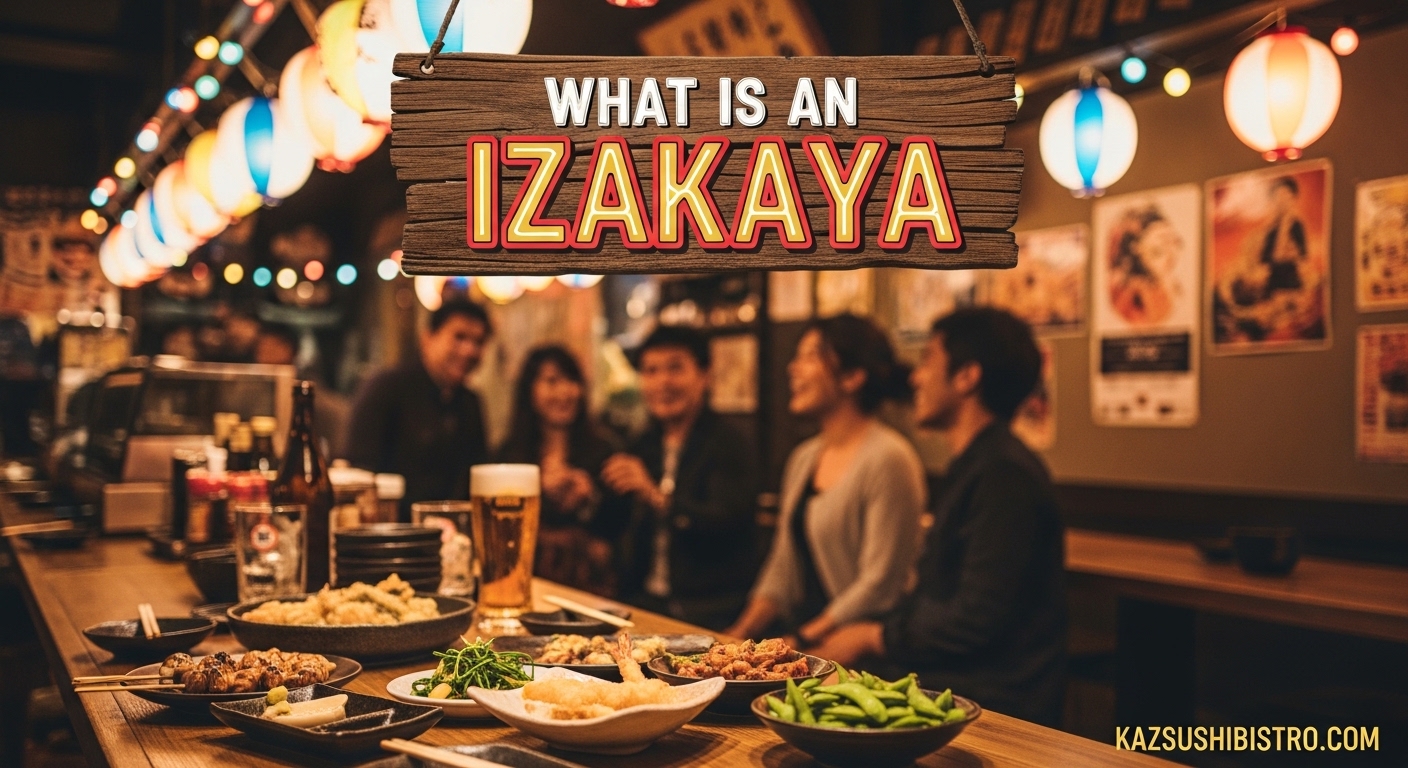
Walk down any street in Tokyo after 6 PM, and you will see them everywhere: small establishments with glowing red paper lanterns hanging outside, the smell of grilled meat drifting through noren curtains, and the sound of laughter spilling onto the sidewalk. These are izakayas, the heartbeat of Japanese social dining culture. But what is an izakaya exactly, and why do they matter so much to Japanese life?
An izakaya (居酒屋) is a traditional Japanese pub that serves alcoholic drinks alongside small plates of food in a casual, social atmosphere. Think of it as Japan’s answer to a British pub, a Spanish tapas bar, and an American gastropub all rolled into one experience. Unlike Western bars where food is often an afterthought, or restaurants where drinks complement the meal, izakayas exist in perfect balance between the two.
I spent three weeks exploring izakayas across Tokyo, Osaka, and Kyoto last year, and I came away with a deep appreciation for what these places represent. They are not just spots to eat and drink. They are where colleagues bond after work, where friends celebrate weekends, and where strangers become friends over shared plates of yakitori. In this guide, I will break down everything you need to know about izakaya culture, from the meaning behind the word to the etiquette you should know before visiting.
Table of Contents
What Is an Izakaya? Definition and Etymology
The word izakaya breaks down beautifully when you look at the kanji characters: 居酒屋. The first character (居, “i”) means “to stay” or “to remain.” The second (酒, “saka”) means “alcohol” or “sake.” The third (屋, “ya”) means “shop” or “place.” Put together, izakaya literally translates to “a place to stay and drink alcohol.” Some linguists describe it as “stay-drink-place,” which captures the essence perfectly.
This etymology reveals the core philosophy of izakaya culture. These establishments are designed for lingering. You arrive, you settle in, you order drinks and small plates throughout the evening, and you stay for hours. There is no rush to finish your meal and leave. The entire business model encourages extended socializing.
Historically, izakayas evolved from sake shops (sakaya) that began allowing customers to drink on the premises. During the Edo period (1603-1868), sake shops started offering small snacks to accompany their drinks, and the izakaya concept was born. Over time, these evolved into the full-fledged dining establishments we know today, though the connection to sake remains strong.
What Makes an Izakaya Different from Regular Restaurants and Bars
Understanding what separates an izakaya from other dining and drinking establishments helps explain why they occupy such a unique place in Japanese culture. I have heard tourists describe izakayas as “a cross between a pub and a tapas bar,” which is accurate but only scratches the surface.
At a regular restaurant in Japan, the focus is on the food. You order courses or set meals, and drinks are secondary. At a bar, the focus is on drinking, and food options are typically limited to snacks. An izakaya strikes a deliberate balance. The food is designed specifically to pair with drinks, not the other way around. The dishes are salty, savory, and designed to make you want another sip of beer or sake.
The dining style is fundamentally different too. At most Japanese restaurants, you order your meal, it arrives, you eat, and you leave. At an izakaya, you order drinks first, then you add small dishes throughout the evening as the conversation flows. Food arrives when it is ready, not in a coordinated sequence. You might get your edamame in five minutes, your yakitori in fifteen, and your sashimi twenty minutes later. This relaxed approach to service is intentional, not disorganized.
The atmosphere is another key differentiator. Izakayas are intentionally casual and noisy. You are expected to laugh, talk loudly, and relax. This contrasts sharply with the quiet, contemplative atmosphere of many traditional Japanese restaurants. As one Reddit user in r/JapanTravelTips put it: “It’s a casual bar/pub with a friendly atmosphere, drinks of all kinds, and usually small-plate style of food meant to be eaten with the drinks.”
What Food Is Served at an Izakaya 2026
The food menu at an izakaya is extensive and designed for sharing. Dishes come in small portions so groups can order multiple items and try everything. This is part of the social experience: passing plates, discussing flavors, and discovering new favorites together.
Yakitori is perhaps the most iconic izakaya food. These grilled chicken skewers come in endless varieties: thigh meat (momo), breast (sasami), skin (kawa), cartilage (nankotsu), and even organs like liver (reba) and heart (hatsu). They are grilled over charcoal and basted with either salt (shio) or a sweet soy-based sauce (tare). The smell of yakitori grilling is part of the izakaya sensory experience.
Karaage, Japanese fried chicken, is another staple. Unlike American fried chicken with thick batter, karaage uses a light potato starch coating that fries up shatteringly crisp while keeping the chicken juicy inside. It is typically marinated in ginger, garlic, and soy sauce before frying, giving it a depth of flavor that pairs perfectly with cold beer.
Edamame, those young soybeans still in their pods, are the classic izakaya starter. You pop them directly from pod to mouth, salting your fingers as you go. They are the perfect drinking snack: salty, addictive, and light enough that you can eat them by the handful without filling up.
Beyond these staples, izakaya menus typically include sashimi, tempura, grilled fish, tofu dishes, salads, and various vegetables. Many izakayas specialize in specific types of cuisine: some focus on seafood, others on grilled meats, others on creative fusion dishes. The variety is part of the appeal.
One thing that confuses first-time visitors is the otoshi, a small appetizer that arrives automatically shortly after you sit down. This is not free, even though you did not order it. It is a table charge that usually costs a few hundred yen (roughly $3-5), and it serves as a small welcome dish while you decide on your order. Understanding this custom prevents awkward moments when the bill arrives.
Drinks at an Izakaya: From Sake to Highballs
While the food gets much of the attention, drinks are the foundation of the izakaya experience. The beverage menu is designed to complement the salty, savory flavors of the food while encouraging continued ordering throughout the evening.
Beer is the most popular choice at izakayas, especially as a first drink. Japanese beer culture is deeply tied to izakaya dining, and many people kick off their evening with a draft beer (nama biiru) before moving on to other options. The crisp, refreshing quality of Japanese lagers pairs beautifully with fried and grilled foods.
Sake holds a special place at izakayas, given the historical connection to sake shops. You will find sake served warm (atsukan) or chilled (reishu), depending on the season and the quality of the sake. Winter evenings often call for warm sake in small ceramic cups, while summer calls for chilled sake in glassware. Many izakayas offer a rotating selection of seasonal sakes from different regions of Japan.
Shōchū, a distilled spirit usually made from barley, sweet potatoes, or rice, is another izakaya staple. It is stronger than sake (typically 25% alcohol versus sake’s 15%), and it can be served straight, on the rocks, diluted with water (mizuwari), or mixed with hot water (oyuwari). Sweet potato shōchū (imo-jōchū) has a distinctive earthy flavor that divides drinkers, some loving it and others finding it challenging.
Highballs, particularly whiskey highballs, have surged in popularity at izakayas in recent years. A simple mix of Japanese whiskey and sparkling water over ice, the highball is refreshing, low-calorie, and endlessly drinkable. Many izakayas now offer highball variations made with different whiskeys, shōchū, or even flavored sodas.
For non-drinkers, izakayas offer soft drinks, teas, and non-alcoholic cocktails. However, the culture is distinctly drinking-focused, so teetotalers might find the atmosphere less engaging than those partaking in alcohol.
The Izakaya Dining Experience: How It Works
Walking into an izakaya for the first time can feel intimidating, especially if you do not speak Japanese. Understanding the typical flow of an izakaya evening helps reduce that anxiety. I remember my first izakaya experience in Shinjuku: I stood at the entrance confused about whether to wait to be seated or seat myself. Here is what I learned.
Most izakayas require you to remove your shoes and place them in a locker or cubby near the entrance. You will then be led to your table, which might be at regular chairs, a counter, or a tatami mat area where you sit on the floor. Some izakayas, particularly standing bars called tachinomi, have no seating at all.
Once seated, a server will bring you a damp towel (oshibori) to clean your hands, along with the otoshi appetizer I mentioned earlier. You will also receive menus, which at traditional izakayas may be entirely in Japanese with no pictures. Chain izakayas and tourist-friendly spots typically offer picture menus or English translations.
The ordering process is flexible. You start with drinks, then add food items as you go. You do not order everything at once. As you finish dishes, you order more. Food arrives when it is ready, which means dishes come at different times. This is completely normal. Share everything that arrives, keep ordering drinks, and relax into the rhythm.
Payment happens at the end, either at your table or at a counter near the exit. Unlike Western bars where you pay as you go or start a tab, izakayas typically track everything and present a single bill when you are ready to leave. Tipping is not expected or necessary in Japan, so simply pay the amount on the bill.
One of the best things about izakaya culture is that lingering is encouraged. Spending three hours at an izakaya is completely normal and expected. You are not taking up a table that could turn over for more customers. The entire business model is built on customers staying for extended social sessions.
A Brief History of Izakaya Culture
The izakaya has deep roots in Japanese history, stretching back to the Edo period when Japan was under the rule of the Tokugawa shogunate. During this time of relative peace and prosperity, a merchant class emerged with disposable income and a desire for leisure activities. Enterprising sake shop owners realized they could increase sales by allowing customers to drink on the premises rather than just buying bottles to take home.
These early izakayas were simple affairs. A sake shop might place a few stools inside or set up barrels outside for customers to sit on. They offered small snacks to accompany the drinks: pickles, simple grilled items, whatever was available. The concept proved popular, and dedicated drinking establishments began appearing across Edo (modern-day Tokyo).
The post-World War II era saw an explosion in izakaya popularity. As Japan rebuilt and industrialized, office workers needed places to unwind after long days. Izakayas filled that need perfectly, offering affordable drinks and food in a social atmosphere. The 1950s and 1960s saw the rise of the salaryman culture, and izakayas became synonymous with after-work drinking sessions.
Today, izakaya culture continues to evolve. While traditional establishments still thrive, large chains have standardized the experience for mass appeal. Modern izakayas experiment with fusion cuisine, craft cocktails, and international influences. Yet the core concept remains unchanged: a place to stay, drink, and connect with others over shared plates of comforting food.
Types of Izakaya: From Traditional to Modern
Not all izakayas are the same. Understanding the different types helps you choose the right experience for your mood, group size, and comfort level with Japanese language and customs.
Traditional independent izakayas (jizake-ya or mom-and-pop shops) offer the most authentic experience. These are often small, family-run establishments with handwritten menus, regular customers who know the owner, and an intimate atmosphere. The challenge for tourists is that these places rarely have English menus, and the owners may not speak English. However, the experience of being welcomed into a neighborhood spot is unmatched.
Chain izakayas like Watami, Torikizoku, and Uotami dominate the landscape in major cities. These offer standardized menus, picture-based ordering systems, and often English language support. They are less atmospheric than traditional spots but more accessible for first-time visitors. The food is consistent and affordable, and you know what to expect.
Tachinomi, or standing bars, are a specific type of izakaya where patrons stand at counters rather than sitting. These are typically smaller, cheaper, and faster-paced than full izakayas. You stop in for a quick drink and snack, then move on. They are popular near train stations for commuters catching a quick drink before heading home.
Akachōchin refers to izakayas marked by red paper lanterns hanging outside. These lanterns signal that the establishment is an izakaya, and they create the iconic streetscape you see in Japanese cities. The term has become almost synonymous with izakaya itself.
Yokocho alleys deserve special mention. These narrow lanes, like the famous Omoide Yokocho in Shinjuku or Ebisu Yokocho, are packed with tiny izakayas and food stalls. They offer a time-travel experience back to post-war Japan, with cramped spaces, smoky atmospheres from grilling meat, and a sense of community among strangers packed shoulder to shoulder.
Izakaya Etiquette: Tips for First-Time Visitors
Izakaya etiquette is more relaxed than at formal Japanese restaurants, but there are still customs worth knowing. Based on my experiences and the advice I gathered from forums like r/JapanTravelTips, here are the key things to keep in mind.
First, understand the otoshi system. That small dish that arrives unannounced shortly after you sit down is not a gift. It is a table charge, typically costing 300-500 yen per person. It is perfectly normal, not a scam, and you should not refuse it or ask to have it removed. Eat it and enjoy it as part of the experience.
Shoe removal is standard at most izakayas. Look for the entrance area (genkan) where you will see shelves or lockers for shoes. Wear shoes that slip on and off easily. If you are sitting at a tatami mat table, never step on the mat with your shoes or even your bare feet that have touched the floor outside the mat area.
When pouring drinks, follow Japanese custom: pour for others, not yourself. If your companion’s glass is empty or nearly so, offer to refill it. They will likely reciprocate. This mutual pouring is part of the social ritual. For beer, hold the glass with two hands while someone pours for you as a sign of respect.
Ordering can happen throughout the evening. Do not feel pressured to order everything at once. Start with drinks and a few dishes, then add more as the night progresses. Food comes when ready, so do not expect coordinated courses.
Tipping is not necessary or expected in Japan, including at izakayas. The price on the menu is what you pay, plus tax. Simply pay the bill presented at the end of your meal.
Finally, do not worry about spending too much time. Lingering for hours is completely acceptable and expected. You are not being rude by occupying a table for three hours. That is precisely how izakayas are meant to be experienced.
Frequently Asked Questions About Izakaya
What does izakaya mean in Japanese?
What is the difference between restaurants and izakayas?
What is izakaya food?
Is it rude to not finish food at an izakaya?
Why do izakayas charge for otoshi?
How long should you stay at an izakaya?
What should I wear to an izakaya?
These questions come up repeatedly in travel forums and from first-time visitors. Understanding these basics before your visit will make your izakaya experience smoother and more enjoyable. The most important thing to remember is that izakaya culture values relaxation and social connection above rigid rules.
What Is an Izakaya: Wrapping Up
An izakaya is far more than a restaurant or a bar. It is a cornerstone of Japanese social culture, a place where the boundaries between food and drink, between stranger and friend, blur into an experience that stays with you long after the evening ends. The kanji tell the story: 居酒屋, a place to stay and drink.
Whether you are planning a trip to Japan or simply want to understand this cultural institution better, I hope this guide has given you the knowledge and confidence to walk into an izakaya and feel at home. Start with a cold beer, order some yakitori and edamame, and let the evening unfold at its own pace.
If you do visit Japan, make visiting an izakaya a priority. Do not let language barriers or unfamiliar customs hold you back. The experience of sharing small plates, clinking glasses with friends old and new, and soaking in the atmosphere of these beloved establishments is one of the true highlights of Japanese culture. The red lanterns are waiting.