
I still remember my first meal at a traditional Japanese restaurant. I was so focused on not dropping food that I didn’t notice my chopsticks were crossed on my bowl until my host gently corrected me. That moment taught me that chopstick etiquette rules aren’t just about following tradition – they’re about showing respect.
If you’ve ever felt nervous about dining with chopsticks, you’re not alone. Many people worry about accidentally offending their hosts or looking clumsy. The good news is that most Japanese people are forgiving of foreigners’ mistakes, and understanding a few key rules will boost your confidence dramatically.
In this guide, I’ll walk you through the essential chopstick etiquette rules you should know. We’ll cover the ten most important taboos (called kiraibashi in Japanese), explain why these customs exist, and give you practical tips for recovering gracefully if you slip up.
Table of Contents
Chopstick Etiquette Rules You Should Know: The 10 Essential Rules 2026
Japanese culture has specific names for each chopstick taboo. Understanding both the rule and its Japanese term helps cement it in your memory. Here are the ten essential chopstick etiquette rules every diner should know.
Rule 1: Never Stick Chopsticks Upright in Rice (Tatebashi)
This is the most serious chopstick offense. Standing chopsticks upright in a bowl of rice resembles incense sticks at Buddhist funerals. This act, called tatebashi, is deeply associated with death and mourning rituals.
If you need to put your chopsticks down temporarily, always place them on a chopstick rest or across your plate. Never plant them vertically in your rice bowl, even as a joke.
Rule 2: Don’t Pass Food Chopstick-to-Chopstick
Passing food directly from your chopsticks to someone else’s is called hiroibashi. This practice mirrors a specific funeral ritual where bone fragments are passed between chopsticks after cremation.
Instead, place food on the other person’s plate or use serving chopsticks (toribashi) when available. At hot pot restaurants like shabu-shabu or sukiyaki establishments, communal serving chopsticks are always provided for this reason.
Rule 3: Don’t Rub Disposable Chopsticks Together (Kosuribashi)
Many first-time diners rub disposable wooden chopsticks together to remove splinters. This practice, known as kosuribashi, is considered rude because it implies the restaurant uses cheap, low-quality chopsticks.
Modern waribashi (disposable chopsticks) are typically smooth and well-made. If you do encounter a splinter, quietly remove it or simply ask for a replacement pair instead of rubbing them together.
Rule 4: Always Use Chopstick Rests (Hashioki)
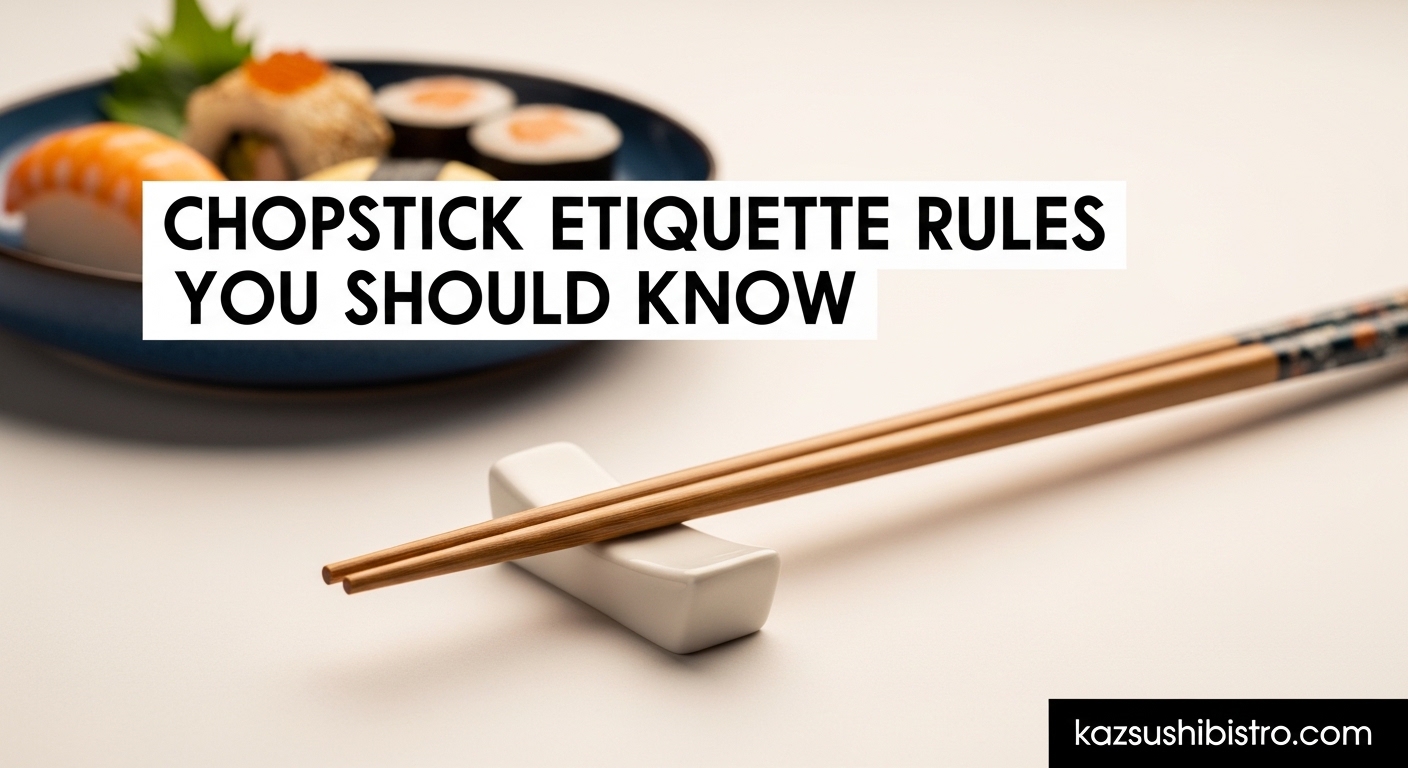
When you need to pause between bites, place your chopsticks on the designated rest called hashioki. The proper placement is with the tips pointing to the left and the handles resting on the right side.
If no hashioki is provided, you can create one from the paper wrapper that comes with waribashi. Simply fold the wrapper into a triangular stand. I’ll explain exactly how to do this later in the article.
Rule 5: Don’t Spear Food with One Chopstick
Using one chopstick to spear food like a fork is called tsukibashi or sashibashi. Chopsticks work as a pair and should always be used together. Spearing food is seen as clumsy and improper.
If you’re struggling to pick up a particular piece of food, use both chopsticks together. For very difficult items like tofu or fishballs, it’s acceptable to use the serving spoon or ask for assistance rather than resorting to spearing.
Rule 6: Don’t Lick or Suck on Chopsticks (Neburibashi)
Licking sauce or food residue from your chopsticks is called neburibashi. This habit is considered unhygienic and impolite, similar to licking a fork in Western dining.
Resist the urge to clean your chopsticks with your mouth. If food is stuck to them, use your napkin or a tissue to wipe them clean between bites.
Rule 7: Don’t Hover Over Shared Dishes (Mayoibashi)
Hovering your chopsticks over shared plates while deciding what to pick up is called mayoibashi (literally “hesitating chopsticks”). This is considered inconsiderate because your chopsticks may drip sauce or touch foods you don’t intend to take.
Decide what you want before reaching for the shared dish. If you touch something with your chopsticks, etiquette requires you to take that piece rather than putting it back.
Rule 8: Don’t Point or Gesture with Chopsticks (Sashibashi)
Waving your chopsticks to point at people, dishes, or objects is called sashibashi. Your chopsticks are eating utensils, not conversation props. Pointing with them shows a lack of respect toward your dining companions and the food.
Put your chopsticks down completely if you need to gesture during conversation. Keep them in your hand only when actively eating.
Rule 9: Don’t Move Plates with Chopsticks (Yosebashi)
Using chopsticks to pull dishes closer to yourself is called yosebashi. This can damage the table surface and is considered lazy manners.
Always use your free hand to move plates and bowls. The only exception is for very small sauce dishes, which you may carefully adjust with your chopsticks if necessary.
Rule 10: Don’t Cross Chopsticks on Your Bowl
Crossing chopsticks on top of your rice bowl resembles the character for “death” in some interpretations. It also looks like the ceremonial placement of chopsticks at funerals.
When temporarily finished eating, place chopsticks parallel to each other on the hashioki or across your plate. Never leave them crossed on your bowl, even if you’re planning to continue eating.
Why These Rules Exist: The Cultural Connection
Understanding the cultural significance behind chopstick etiquette makes the rules easier to remember. The two most serious taboos – tatebashi (upright chopsticks) and passing food chopstick-to-chopstick – both stem from Buddhist funeral customs.
In Japanese Buddhist funeral ceremonies, rice bowls are placed before the deceased with chopsticks standing upright, resembling incense sticks burning for the departed. Similarly, after cremation, family members use chopsticks to pass bone fragments between them in a ritual called kotsuage.
These associations with death make certain chopstick behaviors deeply uncomfortable for Japanese people. Even younger generations who may not follow strict religious practices still recognize these taboos as fundamental cultural knowledge.
The other rules exist to show respect for your dining companions and the food itself. Practices like neburibashi (licking chopsticks) and mayoibashi (hovering) are seen as inconsiderate to others at the table. By following these customs, you demonstrate awareness and respect for Japanese cultural values.
Regional Differences: Japan, China, and Korea
One common source of confusion is the difference between chopstick customs across Asian cultures. While some rules are universal, others vary significantly between Japan, China, and Korea.
In Japan, chopsticks (hashi) typically have pointed tips and relatively short lengths. Japanese etiquette is generally the most formal and strict, with specific names for each taboo (kiraibashi) and detailed rules about placement and handling.
Chinese chopsticks are usually longer with blunter tips, reflecting the tradition of communal dining where dishes are shared across larger tables. Chinese etiquette is less formal than Japanese in some ways, though the core taboos about upright chopsticks in rice remain consistent.
Korean dining differs significantly because metal chopsticks are traditional, and spoons are used alongside chopsticks for rice and soup. Koreans typically use chopsticks for side dishes only, never for rice. The taboo about upright chopsticks exists in Korea as well, rooted in similar cultural associations with death.
When dining out, observe the customs of the specific cuisine being served. At a Japanese restaurant, follow Japanese etiquette. At a Chinese or Korean establishment, their respective customs apply. When in doubt, asking your server politely about local customs is always appreciated.
Proper Chopstick Placement and Resting
Knowing what to do with your chopsticks when you’re not actively eating is just as important as knowing what not to do. Proper placement shows you’re paying attention to etiquette even during pauses.
When resting between bites, place your chopsticks on the hashioki with the tips pointing left and the handles on the right. This is the standard position that indicates you’re still eating but taking a momentary pause.
If no chopstick rest is provided, you can create one from the waribashi wrapper. Fold the paper in half lengthwise, then fold it again into a triangular stand. This simple origami trick solves the problem elegantly and shows you know proper etiquette.
Alternatively, you can place chopsticks across your plate or bowl rim, parallel to each other. Never cross them, and never let the tips touch the table surface. At formal restaurants, the staff will always provide a proper rest.
When you’ve completely finished eating, place your chopsticks horizontally across your plate or return them to their original paper sleeve. In some contexts, placing them back on the hashioki in the left-pointing position signals you’re done.
What To Do If You Make a Mistake
Here’s the most reassuring thing I can tell you: most Japanese people are very forgiving of chopstick mistakes made by foreigners. They recognize that you’re making an effort and appreciate that you’re trying to learn their customs.
If you accidentally stick your chopsticks upright in rice, simply remove them immediately and place them properly. A quick “sumimasen” (excuse me) acknowledges the mistake without making a big deal of it. Don’t panic or over-apologize – just correct the action and move on.
When you drop chopsticks or fumble with food, it’s perfectly fine to ask for help. At casual izakayas or family restaurants, minor etiquette lapses are hardly noticed. At formal business dinners, simply focus on the major taboos (upright rice, passing food, funeral associations) and don’t worry about minor details.
If you’re really struggling with chopsticks, asking for a fork is acceptable. Most Japanese restaurants catering to tourists keep forks available. Request one quietly with “fōku o onegaishimasu” and use it without shame. Making the effort to learn chopsticks while knowing your limits is more respectable than refusing to try.
Practical Tips for First-Time Diners
Walking into a Japanese restaurant for the first time can feel intimidating. These practical tips will help you navigate your meal with confidence.
Start by focusing on your grip technique before worrying about etiquette. Hold the top chopstick like a pencil, resting it between your thumb and fingers. The bottom chopstick stays stationary against your ring finger. Practice the opening and closing motion until it feels natural.
Choose easier foods for your first attempts. Grilled items like yakitori, tempura, and larger pieces of sushi are more forgiving than slippery noodles or soft tofu. Build your confidence with manageable foods before tackling challenging dishes.
Remember that even Japanese people struggle with certain foods. Fishballs, silken tofu, and round items are genuinely difficult to pick up. If you see Japanese diners using alternative methods for these items, you can too.
Context matters enormously. At a casual ramen shop or family izakaya, strict etiquette matters less than at a formal kaiseki dinner. Match your behavior to the setting. When dining with friends in casual settings, relax and enjoy the experience. For business dinners or formal occasions, be more mindful of the rules.
Consider bringing your own chopsticks if you dine at Japanese restaurants regularly. Personal chopsticks are increasingly common and show a commitment to the dining culture. Just make sure they’re appropriate for the setting.
FAQ: Common Chopstick Etiquette Questions
Is it rude to rub disposable chopsticks together?
Rubbing waribashi together is considered bad etiquette because it implies the restaurant uses cheap, low-quality chopsticks. However, if there are actual splinters that could hurt you, quietly removing them is acceptable. The best approach is to check for quality issues discreetly and ask for a replacement pair if needed rather than making a show of rubbing them.
What do I do if there’s no chopstick rest provided?
If no hashioki is available, you can create a makeshift rest from the paper wrapper that comes with disposable chopsticks. Fold the wrapper into a triangular stand. Alternatively, place your chopsticks across your plate or bowl rim, keeping them parallel and uncrossed.
Can I use chopsticks to spear food if I can’t pick it up?
Spearing food with one chopstick (tsukibashi) is considered improper and clumsy. If you can’t pick up a difficult item like tofu or fishballs, use both chopsticks together or ask for a spoon. Many Japanese restaurants provide small spoons for precisely this reason.
Are the rules different for casual dining?
Yes, context matters significantly. At casual ramen shops, izakayas, or family restaurants, strict etiquette is less important than at formal kaiseki dinners. The major taboos (upright chopsticks in rice, passing food chopstick-to-chopstick) apply everywhere, but minor rules can be relaxed in casual settings.
Is it okay to ask for a fork at a Japanese restaurant?
Yes, asking for a fork is perfectly acceptable. Most Japanese restaurants catering to tourists keep forks available. Request one politely with fōku o onegaishimasu and use it without shame. Making the effort to learn chopsticks while knowing your limits is more respectable than refusing to try or struggling excessively.
Why are there different chopstick rules in different Asian countries?
Each Asian culture developed distinct dining customs based on their history, religion, and cuisine. Japan’s strict etiquette reflects Buddhist funeral associations and formal dining traditions. China’s customs accommodate larger communal tables. Korea’s metal chopsticks and spoon usage developed from historical practices. When dining out, follow the customs of the specific cuisine being served.
Can I use chopsticks as hair accessories?
Using chopsticks as hair accessories is inappropriate in dining contexts. Decorative hair sticks are different from eating utensils. Never remove your eating chopsticks to style your hair, as this is unhygienic and disrespectful. Keep dining chopsticks for eating only.
How strict are Japanese people about chopstick etiquette?
Most Japanese people are quite forgiving of foreigners’ mistakes. They recognize you’re making an effort and appreciate the attempt to learn their customs. Younger generations are generally less strict than older ones. Focus on the major taboos (funeral-related customs) and don’t worry excessively about minor details.
Conclusion: Chopstick Etiquette Rules You Should Know
Learning chopstick etiquette rules isn’t about perfection – it’s about showing respect for Japanese culture and making your dining companions comfortable. By understanding the ten essential rules we’ve covered, you’re already ahead of most first-time diners.
Remember the two most important principles: never stick chopsticks upright in rice (tatebashi) and never pass food chopstick-to-chopstick. These funeral associations are deeply meaningful to Japanese people. Everything else is secondary to these core customs.
Don’t let fear of mistakes prevent you from enjoying Japanese cuisine. Most Japanese people appreciate any effort to learn their customs. Practice your grip at home with simple foods, focus on the major taboos when dining out, and recover gracefully from any slip-ups with a simple sumimasen.
The next time you sit down at a sushi counter or ramen shop, you’ll have the confidence to navigate your meal with proper etiquette. Your hosts will notice, and your dining experience will be all the richer for it.