
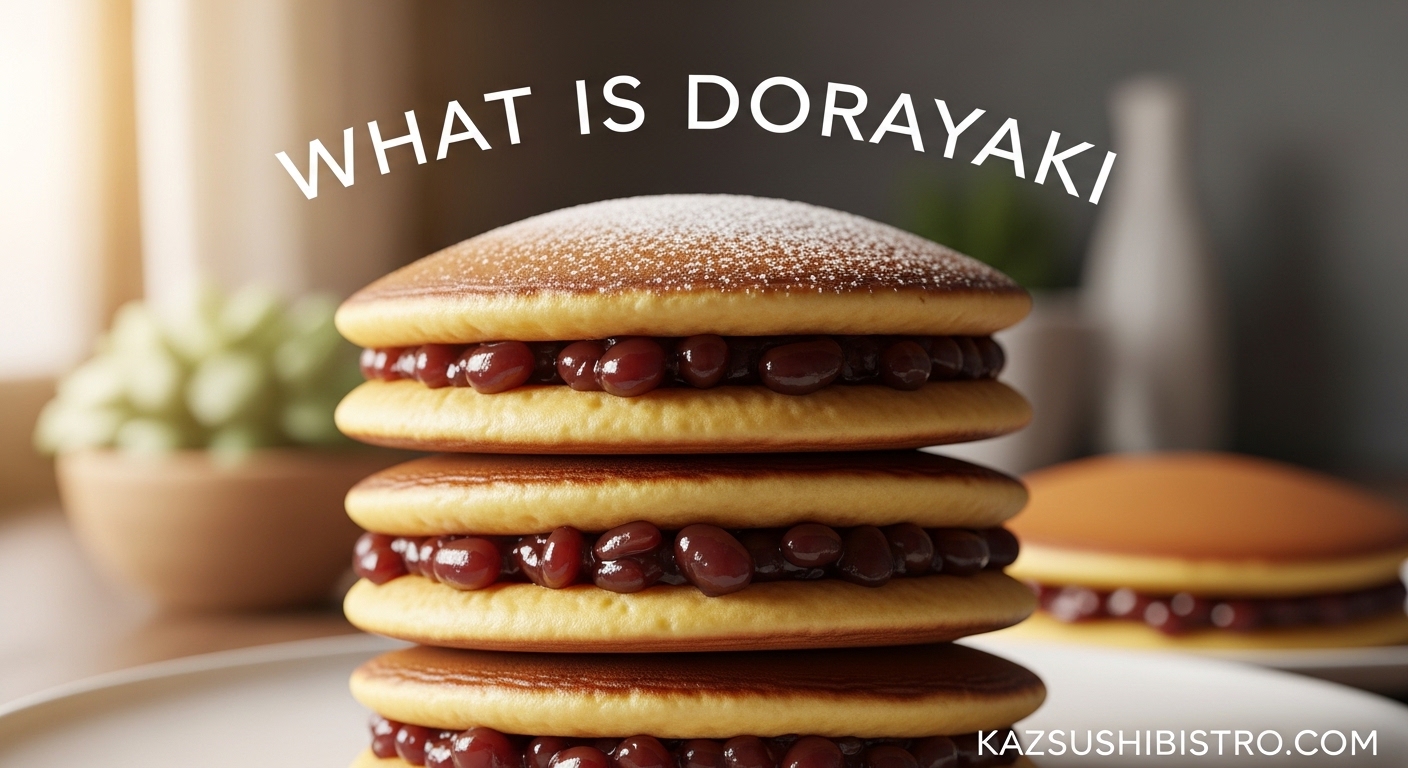
Dorayaki is a traditional Japanese confection (wagashi) consisting of two fluffy, honey-sweetened pancake-like patties sandwiched around a filling of sweet red bean paste (anko). This beloved Japanese sweet has captured hearts worldwide through its distinctive shape, delicate texture, and perfect balance of flavors.
When I first encountered dorayaki at a small wagashi shop in Tokyo, I immediately understood why this humble confection has remained popular for over a century. The golden-brown pancakes released a subtle honey aroma, while the creamy anko filling offered a sweetness that felt comforting rather than overwhelming. It was the kind of treat that makes you pause and appreciate the craftsmanship behind Japanese sweets.
In this guide, I will walk you through everything you need to know about what is dorayaki, from its fascinating history rooted in samurai legend to its modern pop culture fame through Doraemon. Whether you are curious about trying your first dorayaki or want to understand the cultural significance behind this iconic dessert, you will find all the answers here.
Table of Contents
What Is Dorayaki?
At its core, dorayaki is a Japanese sweet that resembles two small pancakes pressed together with a generous filling inside. The name itself offers a clue to its origins: “dora” means “gong” in Japanese, referring to the round, golden shape that resembles the traditional percussion instrument used in temples and ceremonies.
The outer layers are made from a castella-style batter, giving them a texture distinctly different from Western pancakes. They are thinner, more delicate, and possess a slight chewiness that complements the smooth filling. Honey is traditionally added to the batter, creating a subtle sweetness and beautiful golden color when cooked.
The classic filling consists of anko, a sweet paste made from azuki (red) beans. The beans are cooked until soft, then sweetened and mashed into a smooth, spreadable consistency. This combination might sound simple, but the balance between the fluffy pancakes and the rich bean paste creates a textural experience that has made dorayaki one of Japan’s most enduring traditional sweets.
Key Ingredients and Preparation
Understanding what goes into making dorayaki helps appreciate the skill involved in creating this wagashi. The pancake batter typically includes eggs, sugar, honey, flour, and a small amount of water or milk. Baking powder is often added to create the characteristic fluffiness that distinguishes dorayaki from denser pancakes.
The honey is not just for sweetness, it also helps the pancakes develop that appealing golden-brown exterior while keeping the interior moist. Some traditional recipes use mirin (sweet rice wine) to enhance the flavor profile and create a more tender texture.
The filling is where personal preference and regional variations come into play. Anko paste comes in two main styles. Tsubuan features whole or partially crushed beans, offering a rustic texture with visible bean pieces throughout. Koshian is completely smooth, with the beans strained to remove skins and create a velvety, uniform paste. Both styles are widely available, and many shops offer both options to suit different tastes.
Preparation involves cooking the batter on a flat griddle or pan, similar to making pancakes but with more attention to achieving uniform thickness and that characteristic golden color. The cooked pancakes are paired by size, filled with anko, and gently pressed together to create the finished dorayaki.
History and Origins of Dorayaki 2026
The history of dorayaki stretches back centuries and is wrapped in a charming legend involving one of Japan’s most famous warriors. The origin story traces back to the 12th century and involves Benkei, a warrior monk known for his strength and loyalty.
According to the legend, Benkei accidentally left his gong (dora) at a farmer’s house where he had taken shelter. The resourceful farmer, not wanting the metal instrument to go to waste, used the round shape as a mold to make pancakes. He filled these pancakes with sweet bean paste, creating the first dorayaki. While this tale may be more folklore than fact, it beautifully explains the name and connects the sweet to Japan’s rich warrior heritage.
The modern form of dorayaki, as we know it today, was developed in the early 20th century. Usagiya, a confectionery shop in Tokyo’s Ueno district, is credited with creating the sandwich-style dorayaki in 1914. Before this innovation, dorayaki was typically a single round pancake folded over the filling, more like a taco. The owner of Usagiya had the idea to use two separate pancakes, which made the sweet easier to eat and transport.
Usagiya remains in operation today and continues to be a pilgrimage site for dorayaki enthusiasts. Their original recipe has been carefully preserved, and visitors can taste a piece of history while watching the skilled artisans prepare the sweets using traditional methods. The shop has become synonymous with quality dorayaki, and many consider their version the gold standard against which all others are measured.
Regional Variations
While dorayaki is known nationwide, the Kansai region (which includes Osaka, Kyoto, and Nara) has its own name for this sweet: mikasa. This regional variation is named after Mount Wakakusa in Nara, which locals call Mount Mikasa due to its rounded, gong-like shape when viewed from certain angles.
The mikasa variation sometimes features slight differences in preparation, with some shops in the Kansai area using different proportions of ingredients or cooking methods that result in a slightly different texture. However, the core concept remains the same: two pancakes sandwiching sweet red bean paste.
Modern Variations and Fillings
While traditional dorayaki features red bean paste, modern confectioners have embraced creativity with alternative fillings. Matcha cream offers a sophisticated twist, combining the earthy bitterness of green tea with the sweet pancakes. Custard cream (known as purin dora) appeals to those who prefer Western-style flavors, while chestnut paste provides a seasonal autumn treat that pairs beautifully with the honey pancakes.
Sakura (cherry blossom) versions appear during spring, incorporating pickled cherry blossom leaves or petals into the filling for a delicate floral flavor that celebrates Japan’s iconic season. Some innovative shops have experimented with chocolate, sweet potato, and even fruit-based fillings, though these remain variations rather than replacements for the classic anko version.
Strawberry and cream combinations have gained popularity, particularly among younger consumers and international visitors who might find the traditional red bean paste an acquired taste. These modern interpretations help introduce new audiences to the dorayaki format while respecting the original structure.
How Dorayaki Compares to Similar Japanese Sweets
Japanese cuisine offers several pancake-like sweets that can be confusing for newcomers. Understanding the differences helps appreciate what makes dorayaki unique. Here is how dorayaki compares to two similar treats:
| Feature | Dorayaki | Taiyaki | Imagawayaki |
|---|---|---|---|
| Shape | Round, flat pancakes | Fish-shaped cake | Round, thick cake |
| Batter | Castella-style, fluffy | Pancake-like, thicker | Pancake-like, thick |
| Cooking | Griddle pan | Fish-shaped mold | Special round mold |
| Texture | Soft, slightly chewy | Crispy outside, soft inside | Thick, cake-like |
| Fillings | Primarily anko | Anko, custard, chocolate | Anko, custard, cream |
| Origin | Tokyo/Ueno | Tokyo (Meiji era) | Tokyo (Imado area) |
Taiyaki is perhaps the most visually distinctive, shaped like a sea bream fish and cooked in specialized molds that create a crispy exterior. The fish shape is considered auspicious, as “tai” (sea bream) sounds similar to the Japanese word for “happy occasion.” While taiyaki uses a similar batter concept, the cooking method creates a very different texture experience.
Imagawayaki (also known as obanyaki in some regions) uses a thick batter poured into round molds, creating a substantial cake-like treat with filling in the center. The texture is more bread-like than dorayaki’s delicate pancake approach. All three share the common thread of being beloved street foods and festival treats, often found at the same events.
Cultural Significance and the Doraemon Connection
No discussion of dorayaki would be complete without addressing its most famous advocate: Doraemon, the robotic cat from the future who stars in one of Japan’s most beloved anime and manga series. For many people worldwide, Doraemon served as their introduction to this traditional Japanese sweet, creating a fascinating bridge between ancient confectionery and modern pop culture.
Doraemon’s obsession with dorayaki is a defining character trait. The blue robotic cat is depicted as willing to do almost anything for this treat, and his weakness for dorayaki is often used as a plot device in stories. But why dorayaki specifically? The backstory adds another layer of charm to this already endearing character.
According to the series lore, Doraemon’s love for dorayaki originated when his earless, afraid-of-mice self received a dorayaki from his girlfriend in the future. This emotional connection transformed dorayaki from a simple snack into a comfort food tied to acceptance and affection. The writers chose dorayaki deliberately: it is a universally loved sweet that represents home, comfort, and simple pleasures in Japanese culture.
The Doraemon connection has had a real-world impact on dorayaki sales and recognition. International viewers who might never have encountered wagashi suddenly found themselves curious about this “Japanese red bean pancake” that their favorite character loved so much. Specialty shops have embraced this connection, offering Doraemon-themed dorayaki packaging and even shape variations that reference the character.
Beyond Doraemon, dorayaki appears in other Japanese media. The 2015 film “Sweet Bean” (An) tells the story of a dorayaki shop owner and his elderly employee who makes exceptional anko paste, exploring themes of craftsmanship, acceptance, and finding purpose. The film brought international attention to the artistry involved in traditional dorayaki making and the cultural significance of wagashi in Japanese communities.
How to Eat and Serve Dorayaki
Dorayaki can be enjoyed either at room temperature or slightly warmed, depending on personal preference and the specific type. Traditional anko-filled dorayaki is most commonly eaten at room temperature, which allows the flavors to fully develop and the textures to reach their ideal state. The pancakes remain soft, and the bean paste maintains its smooth consistency.
Some modern variations, particularly those with cream or custard fillings, are best enjoyed chilled. Refrigeration helps these dairy-based fillings maintain their structure and provides a refreshing contrast to the sweet components. However, traditionalists generally prefer their dorayaki unchilled to preserve the intended texture of the honey pancakes.
Dorayaki pairs beautifully with Japanese green tea, particularly matcha or sencha. The slight bitterness of the tea balances the sweetness of the confection, creating a harmonious tasting experience that is central to Japanese tea ceremony traditions. Many wagashi shops serve dorayaki with a cup of freshly brewed tea, encouraging customers to slow down and savor the moment.
Nutritional Benefits of the Key Ingredients
While dorayaki is undoubtedly a treat, the key ingredient of azuki beans offers some surprising health benefits. These small red beans have been used in traditional Chinese and Japanese medicine for centuries and are considered one of the healthiest legumes available.
Azuki beans are excellent sources of plant-based protein and dietary fiber, making them more nutritionally substantial than many other dessert ingredients. They contain significant amounts of folate, manganese, and potassium, along with antioxidants that support overall health. The beans are naturally low in fat and provide sustained energy through their complex carbohydrates.
Of course, the sugar added to create anko paste and the honey in the pancakes means dorayaki should be enjoyed in moderation as part of a balanced diet. However, compared to many Western desserts, the use of bean paste rather than heavy cream or excessive butter does offer a different nutritional profile that some find easier to digest and more satisfying in smaller portions.
Frequently Asked Questions
What is dorayaki made of?
Do you eat dorayaki cold or hot?
What is the taste of dorayaki?
How do you say dorayaki in English?
Is dorayaki a Japanese sweet?
Why is dorayaki popular in Japan?
Why does Doraemon like dorayaki?
Are dorayaki and Taiyaki the same?
Conclusion
What is dorayaki? It is more than just a Japanese sweet pancake with red bean filling. It is a piece of edible history, a pop culture icon, and a testament to the Japanese philosophy of finding perfection in simplicity. From the legendary connection to the warrior Benkei to its starring role in Doraemon’s adventures, dorayaki carries centuries of culture in every bite.
The beauty of dorayaki lies in its balance: the fluffy honey pancakes against the smooth anko, the subtle sweetness against the earthy beans, the ancient tradition against modern interpretations. Whether you enjoy it at a historic shop in Tokyo’s Ueno district, a convenience store in Osaka, or from your own kitchen, dorayaki offers a genuine taste of Japanese confectionery artistry.
If you have never tried dorayaki, I encourage you to seek it out. Start with the traditional anko version to experience the authentic flavor that has captivated Japan for generations. Pair it with a cup of green tea, take a moment to appreciate the craftsmanship, and understand why this humble sweet has earned its place as one of Japan’s most beloved wagashi. Once you taste that perfect balance of honey pancakes and red bean paste, you might just find yourself joining Doraemon in the ranks of devoted dorayaki enthusiasts.