
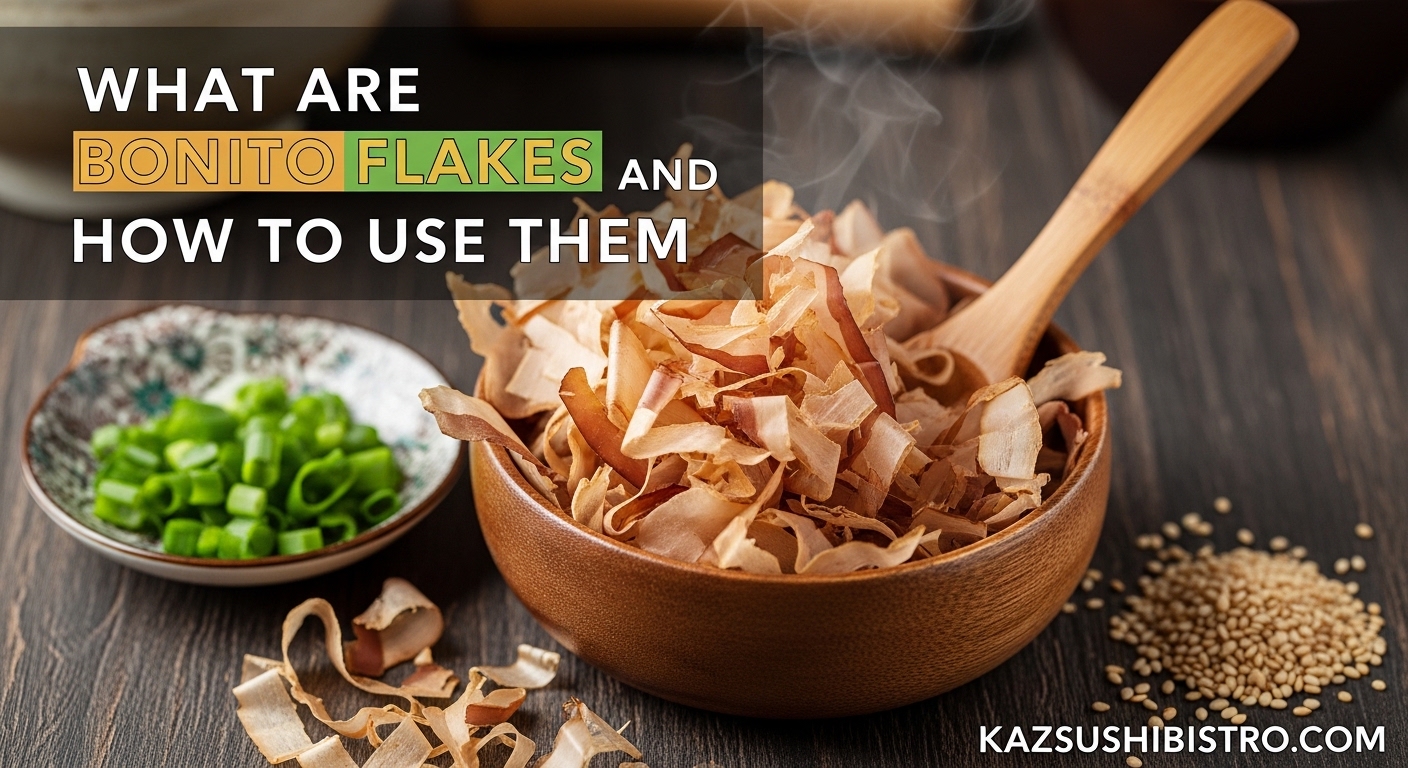
Bonito flakes, known as katsuobushi in Japanese, are one of the most essential ingredients in traditional Japanese cooking. These tissue-paper thin shavings of dried, smoked skipjack tuna deliver an intense burst of umami flavor that forms the foundation of countless Japanese dishes. You have probably seen them gracefully “dancing” on top of hot takoyaki or melting into a bowl of steaming miso soup.
At our restaurant, we use bonito flakes daily to make dashi stock, the savory broth base for everything from clear soups to simmered vegetables. This guide will walk you through exactly what bonito flakes are, how they are made, and the many ways you can use them in your own kitchen 2026. Whether you are just starting to explore Japanese cuisine or looking to refine your dashi-making skills, you will find practical tips and techniques here.
Table of Contents
What Are Bonito Flakes? (Katsuobushi Explained)
Bonito flakes are wafer-thin shavings shaved from blocks of dried, smoked, and sometimes fermented skipjack tuna. The Japanese term katsuobushi specifically refers to this prepared ingredient, though the two terms are often used interchangeably outside Japan.
The fish used is skipjack tuna (katsuo in Japanese), a relative of tuna that swims in warm ocean waters. After catching, the fish undergoes a meticulous preservation process that can take months for traditional varieties. The result is a hard, wood-like block that professional chefs shave fresh using a specialized box grater called a katsuo kezuriki.
Pre-shaved bonito flakes sold in bags at Asian grocery stores offer convenience for home cooks. These shavings are incredibly light and airy with a distinctive smoky, savory aroma that hints at the depth of flavor they contain. A single pinch can transform a simple broth into something deeply satisfying.
True honkarebushi, the highest grade of katsuobushi, goes through multiple cycles of smoking, drying, and mold fermentation over six months or longer. This lengthy process concentrates the umami compounds and develops complex flavors that cheaper, quick-smoked versions cannot match.
How Katsuobushi Is Made 2026
Traditional katsuobushi production is an art form that has been refined over centuries. The process begins with filleting fresh skipjack tuna and removing the bones, skin, and dark bloodline meat. Clean fillets are then arranged on wooden frames for the first stage of preservation.
The smoking phase lasts anywhere from a few days to several weeks depending on the quality grade. Wood fires slowly dehydrate the fish while imparting a subtle smoky flavor. Artisans carefully control temperature and smoke density to avoid burning or over-drying the fillets.
After smoking, some varieties undergo fermentation with beneficial mold cultures similar to those used in aged cheeses. This mold breaks down proteins into flavorful amino acids, concentrating the umami essence. The fillets may be sun-dried and re-inoculated with mold multiple times, with each cycle lasting weeks.
Finally, the hardened blocks are shaved into delicate flakes. Traditional shaving produces different grades: hanakatsuo (flower bonito) are light and thin for dashi, while thicker shavings called kezuribushi work better as garnish. Most home cooks buy pre-shaved flakes packaged in airtight bags.
How to Use Bonito Flakes in Cooking
Bonito flakes serve two main purposes in Japanese cooking: as a core ingredient for building flavor in stocks and sauces, and as a finishing garnish that adds visual appeal and a hit of umami. Understanding when and how to use them makes all the difference between subtle depth and overwhelming fishiness.
As an ingredient, bonito flakes are almost always combined with dried kelp (kombu) to make dashi stock. This pairing creates what Japanese chefs call “umami synergy” – the inosinate from bonito and glutamate from kombu multiply each other’s savory effect. Dashi forms the base of miso soup, noodle broths, simmering liquids, and dipping sauces.
Bonito flakes also make an excellent garnish for hot dishes. The thin shavings curl and wave when they contact steam, creating the famous “dancing bonito” effect. Sprinkle them over takoyaki (octopus balls), okonomiyaki (savory pancakes), and hiyayakko (chilled tofu) right before serving for maximum visual impact and flavor.
You can eat dried bonito flakes straight from the package if you enjoy their intense, smoky taste. Some people snack on them like jerky, though their texture is quite different – papery and brittle rather than chewy. They also work well as a seasoning for rice, salads, and even pasta dishes when you want a savory boost.
A word of caution from our kitchen: start with small amounts if you are new to bonito. The flavor is potent and can quickly overpower other ingredients. Many home cooks report dishes tasting “too fishy” when they first experiment, but this usually comes from using too much rather than a problem with the ingredient itself.
Quick Uses for Bonito Flakes
- Sprinkle over steamed rice with soy sauce for a simple meal
- Mix into stir-fried vegetables just before serving
- Add to savory pancake batter for extra depth
- Use as a topping for chilled tofu with ginger and scallions
- Fold into egg dishes and omelets
- Season pasta aglio e olio instead of anchovies
How to Make Dashi Stock with Bonito Flakes
Dashi is the soul of Japanese cooking, and bonito flakes are its heart. This simple stock requires just two ingredients besides water: kombu (dried kelp) and katsuobushi. Making dashi at home takes under 30 minutes and delivers a freshness that instant dashi powder cannot replicate.
The key is timing and temperature control. Kombu releases its glutamates best in water heated to about 140-176 degrees Fahrenheit. Boiling kombu makes the stock bitter and slimy. Bonito flakes release their inosinate quickly and should never be boiled or they turn bitter and fishy.
Step 1: Prepare the Kombu Base
Place one 4-inch piece of dried kombu in 4 cups of cold water. Let it soak for 30 minutes, or up to overnight in the refrigerator. This cold extraction draws out the glutamates without any risk of bitterness.
Transfer the kombu and soaking water to a pot. Heat over medium-low until small bubbles appear just before boiling. This usually takes 8-10 minutes. The target temperature is around 176 degrees Fahrenheit if you are using a thermometer.
Remove the kombu just before the water boils. You can save this piece of kombu for making niban dashi (second extraction dashi) or slice it into thin strips for a side dish called tsukudani.
Step 2: Add the Bonito Flakes
Bring the kombu-infused water to a gentle boil. Turn off the heat completely and immediately add one packed cup of bonito flakes. They will sink at first, then float to the surface as they absorb water and release their flavor.
Let the flakes steep for 1-2 minutes. Do not stir or agitate them during this time. The flakes will gradually sink to the bottom of the pot as they give up their essence.
Strain the liquid through a fine-mesh sieve lined with cheesecloth or paper towel. Do not squeeze the flakes or the dashi becomes cloudy and bitter. This first extraction is called ichiban dashi – the clearest and most flavorful, perfect for clear soups and delicate dishes.
Making Niban Dashi (Second Extraction)
Do not throw away the used bonito flakes and kombu. You can extract a second, lighter dashi called niban dashi that works well for simmered dishes and stews where clarity matters less.
Return the spent flakes and kombu to the pot with 4 cups of fresh cold water. Bring to a boil, then reduce heat and simmer for 10 minutes. Add a small handful of fresh bonito flakes at the end, steep for 1 minute, then strain. This yields a milder stock that still brings plenty of umami to heartier preparations.
The Science of Umami Synergy
Dashi exemplifies umami synergy in action. Kombu provides glutamate, the amino acid responsible for the basic umami taste. Bonito contributes inosinate, a nucleotide that amplifies glutamate’s savory effect. Together, they create a flavor profile greater than the sum of their parts.
This is why dashi made with both ingredients tastes dramatically better than broth made with just one or the other. The combination hits multiple receptors on your tongue simultaneously, creating a fuller, more satisfying sensation than single-source umami.
Why Do Bonito Flakes Move and Dance?
If you have ever watched bonito flakes placed on hot food, you have witnessed the mesmerizing “dancing flake” phenomenon. The thin shavings appear to writhe and wave as if alive, curling up and moving around the plate.
This movement is actually a simple physical reaction to heat and moisture. Bonito flakes are sliced tissue-paper thin from blocks that have been completely dehydrated. When they contact steam or hot liquid, the moisture rehydrates one side faster than the other. This uneven absorption causes the paper-thin shavings to curl and twist as they expand.
The light, airy structure of the flakes means even small air currents from rising steam can move them around. As they continue absorbing moisture, they eventually become soft and settle down. The entire dance lasts only a few seconds to a minute depending on the temperature of the food.
Chefs have used this effect as garnish for centuries because it adds visual drama to a dish. The movement signals freshness – old or stale bonito flakes that have absorbed ambient moisture will not curl as dramatically. Watching the flakes dance on your takoyaki is a reliable sign that you are getting quality katsuobushi.
Bonito vs Tuna: Understanding the Difference
There is considerable confusion about the relationship between bonito, skipjack tuna, and regular tuna. Understanding the distinction helps you choose authentic ingredients and appreciate why skipjack is preferred for katsuobushi.
True Japanese katsuobushi is made from skipjack tuna (Katsuwonus pelamis), called katsuo in Japanese. This fish is smaller than bluefin or yellowfin tuna, with darker red meat and a more pronounced flavor. Despite being called “tuna” in English, skipjack is technically a different species within the same family.
The term “bonito” properly refers to a separate genus of fish (Sarda) that includes Atlantic bonito and Pacific bonito. These are related to but distinct from skipjack tuna. However, in English usage, “bonito flakes” has become the generic term for katsuobushi regardless of the exact fish species used.
Some manufacturers, particularly outside Japan, use other tuna species or even mackerel to make cheaper “bonito” flakes. These substitutes can work in a pinch but lack the specific inosinate profile that makes true skipjack-based dashi so distinctive. For the most authentic flavor, look for products labeled specifically as skipjack tuna or katsuobushi.
Price is often an indicator of authenticity. Genuine Japanese katsuobushi made through traditional methods commands a premium. If a product seems suspiciously cheap, it may be made from substitute fish or shortcut processes that compromise flavor.
What to Do With Used Bonito Flakes
One of the most common questions we see from home cooks is what to do with bonito flakes after making dashi. Many people instinctively discard them, assuming the flavor has been completely extracted. This wastes a versatile ingredient that still has plenty to offer.
Used bonito flakes mixed with fresh ones create okaka, a savory condiment made by combining the flakes with soy sauce. The moisture from the sauce rehydrates the spent flakes, creating a chunky umami paste perfect for mixing into rice balls (onigiri) or spreading on toast.
Another traditional use is tsukudani, a preservation method where spent kombu and bonito are simmered with soy sauce, mirin, and sugar until the liquid reduces to a glaze. This creates a flavorful condiment that keeps for weeks in the refrigerator. It is excellent over rice or as a filling for onigiri.
Used flakes also work well in stir-fries where they will be cooked further. Add them to vegetable sautés, fried rice, or pasta dishes. The additional cooking helps break down the fibers and distribute the remaining umami throughout the dish.
You can even blend used flakes into a powder and use them as a seasoning salt. Mix with sea salt and perhaps some dried seaweed powder for a homemade furikake-style rice topping. The key is recognizing that “spent” bonito still contains flavor and nutrition even after dashi extraction.
How to Store Bonito Flakes Properly
Freshness matters enormously with bonito flakes. Like coffee or spices, katsuobushi loses its volatile aromatic compounds quickly once exposed to air. Proper storage preserves the umami punch that makes this ingredient worthwhile.
Unopened packages of bonito flakes stay fresh for several months when stored in a cool, dark pantry. Once you open the bag, transfer the flakes to an airtight container immediately. Oxygen is the enemy of katsuobushi flavor – every exposure degrades the delicate inosinate compounds.
Refrigeration is recommended after opening, though not strictly necessary if you will use the flakes within a few weeks. We refrigerate all our opened bonito at the restaurant to maintain maximum freshness. Use a glass jar with a tight seal or a vacuum-sealed container for best results.
Freezing works well for long-term storage if you buy in bulk. Divide into small portions and freeze in airtight bags. Thaw only what you need for immediate use. Frozen bonito flakes keep their flavor for six months or longer.
Signs that bonito flakes have gone bad include a dull gray color instead of pinkish-brown, a rancid or musty smell instead of smoky-savory, and a soft or damp texture instead of papery crispness. If your flakes no longer dance when placed on hot food, they have likely absorbed too much ambient moisture and lost their potency.
Health Benefits of Bonito Flakes
Bonito flakes offer more than just flavor – they provide significant nutritional value as well. Being essentially concentrated fish protein, katsuobushi is rich in amino acids, particularly those involved in umami taste.
A single serving delivers a substantial protein boost with minimal fat or carbohydrates. This makes bonito an excellent seasoning for people watching their weight or following high-protein diets. The flakes contain all nine essential amino acids, making them a complete protein source.
Bonito is naturally high in minerals including iron, calcium, and B vitamins. The traditional smoking and drying process concentrates these nutrients while preserving the fish without chemical additives. Quality katsuobushi contains no preservatives, just fish, smoke, and time.
Some research suggests that the inosinate in bonito may have metabolism-supporting properties. Japanese traditional medicine has long valued katsuobushi for recovery from fatigue and support of digestive health. Modern science continues to explore these traditional uses.
One concern people raise is sodium content. Plain bonito flakes are actually quite low in sodium – the saltiness in Japanese dishes comes from added soy sauce and miso, not the katsuobushi itself. If you are watching sodium intake, simply reduce the other salty ingredients in your dashi-based recipes.
Frequently Asked Questions
What exactly is a bonito flake?
Bonito flakes, called katsuobushi in Japanese, are tissue-paper thin shavings of dried, smoked, and sometimes fermented skipjack tuna. They deliver an intense umami flavor and are used primarily to make dashi stock or as a garnish on Japanese dishes like takoyaki and okonomiyaki.
Can dried bonito flakes be eaten raw?
Yes, dried bonito flakes can be eaten straight from the package without cooking. They have an intense, smoky, savory flavor and a papery texture. Some people enjoy them as a snack, though they are more commonly used as an ingredient in cooking or as a garnish on hot dishes.
Are you supposed to eat bonito flakes?
Bonito flakes are meant to be eaten either as an ingredient in dishes or as a garnish. When used in dashi stock, the flakes are strained out and typically not consumed directly, though they can be saved for secondary uses. When sprinkled on dishes as a topping, you eat them along with the food.
Do I refrigerate bonito flakes after opening?
Refrigeration is recommended after opening to maintain maximum freshness, though it is not strictly necessary if you use them within a few weeks. The key is storing them in an airtight container away from light, heat, and moisture. Properly stored bonito flakes maintain their flavor for several months.
Why do bonito flakes move on hot food?
Bonito flakes appear to dance because they are extremely thin and dehydrated. When they contact steam or hot food, moisture rehydrates one side faster than the other, causing them to curl and twist. Rising heat currents can also move the lightweight flakes around the plate.
Are bonito flakes healthy to eat?
Yes, bonito flakes are a healthy ingredient. They are high in protein, low in fat, and contain essential amino acids, iron, calcium, and B vitamins. They contain minimal sodium on their own and no preservatives when traditionally made. The umami compounds may also support metabolism and digestive health.
Is bonito better than tuna?
Bonito (skipjack tuna) and regular tuna are different fish with different culinary uses. Skipjack tuna is preferred for katsuobushi because it develops better umami flavor during the smoking and drying process. For eating as fresh fish, bluefin or yellowfin tuna are often preferred for their milder taste and texture.
What can I do with used bonito flakes after making dashi?
Used bonito flakes still have flavor and can be repurposed. Mix them with soy sauce to make okaka for rice balls, simmer them into tsukudani condiment, add them to stir-fries, or blend them into a seasoning powder. Do not throw them away – they provide excellent secondary uses.
Conclusion
Bonito flakes are one of the most versatile and essential ingredients in Japanese cooking. From the foundational dashi stock that underpins miso soup and noodle broths to the dramatic garnish dancing atop your takoyaki, katsuobushi brings irreplaceable depth and umami to countless dishes.
Understanding what bonito flakes are, how they are made, and the many ways to use them opens up authentic Japanese cooking in your own kitchen. Start with a simple dashi preparation, experiment with garnishes on hot foods, and remember that even the spent flakes have value in secondary recipes.
The key takeaways for working with bonito flakes: buy quality skipjack-based katsuobushi when possible, store opened packages airtight in the refrigerator, start with small amounts to avoid overpowering dishes, and never throw away used flakes without considering their second life in okaka or tsukudani. With these principles in mind, you will discover why Japanese chefs consider katsuobushi indispensable to their cuisine 2026.