
Japanese noodles, called men (麺) in Japanese, are a staple of Japanese cuisine dating back to the 9th century when wheat noodles arrived from China. Every region of Japan has developed its own unique noodle traditions, from the rich tonkotsu broths of Fukuoka to the delicate buckwheat soba of Nagano. Whether you are planning a trip to Japan or simply want to expand your home cooking repertoire, understanding the different types of Japanese noodles will transform how you experience this beloved comfort food.
I have spent years exploring noodle shops across Japan, from tiny yatai street stalls in Fukuoka to centuries-old soba houses in Kyoto. The variety is staggering, yet most Japanese noodles fall into eight main categories. Each type has distinct ingredients, textures, and traditional serving methods that make it uniquely suited to specific dishes and occasions.
Table of Contents
Types of Japanese Noodles (September 2026)
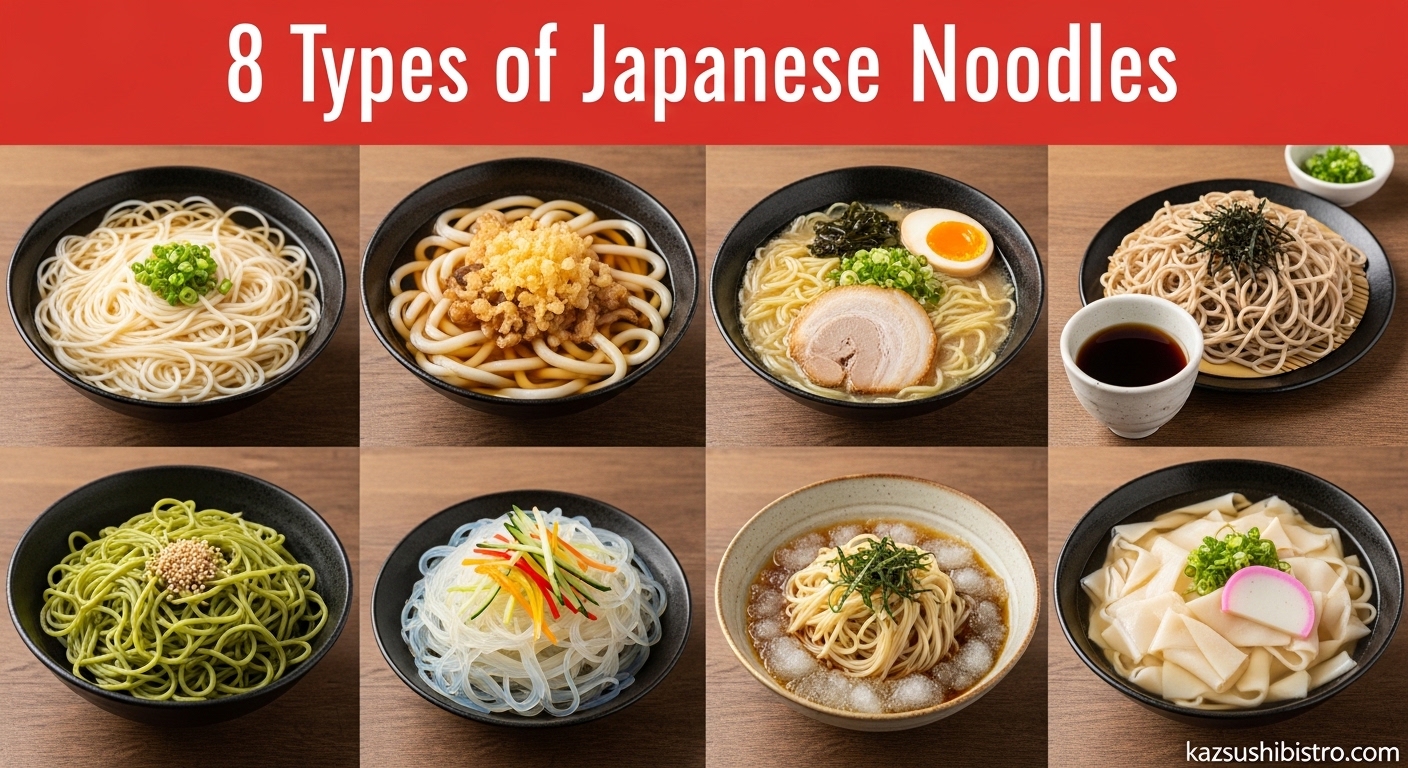
There are eight main types of Japanese noodles, each made from different ingredients and served in distinct ways:
- Ramen – Wheat noodles made with kansui (alkaline water), served in rich broth
- Udon – Thick, chewy wheat noodles with a delightfully bouncy texture
- Soba – Buckwheat noodles with a nutty flavor and firm bite
- Yakisoba – Stir-fried wheat noodles with savory sauce, popular at festivals
- Somen – Ultra-thin wheat noodles served cold, perfect for hot summer days
- Hiyamugi – Medium-thickness wheat noodles, often with colorful variations
- Shirataki – Translucent konjac noodles with virtually zero calories
- Harusame – Glass noodles made from mung bean or potato starch
Beyond these eight main types, Japan boasts countless regional specialties and seasonal variations. Some noodles contain 100% buckwheat while others blend wheat and alternative flours for unique textures and flavors.
Ramen: The World-Famous Japanese Noodle
Ramen noodles are thin, wheat-based noodles made with kansui, an alkaline mineral water that gives them their characteristic yellow color and springy texture. The word “ramen” actually derives from the Chinese “lamian” (pulled noodles), though modern Japanese ramen is cut rather than stretched.
The magic of ramen lies not just in the noodles but in the broth. Japanese ramen falls into four main categories defined by their soup base. Tonkotsu ramen from Fukuoka features a creamy, pork bone broth simmered for hours until it turns milky white. Shoyu ramen uses a soy sauce-based clear broth that highlights the noodle flavor. Shio ramen offers a lighter, salt-based soup perfect for appreciating delicate toppings. Miso ramen, originating from Hokkaido, incorporates fermented soybean paste for a rich, hearty flavor profile.
Ramen noodles vary significantly by region. Hakata-style ramen from Fukuoka uses thin, straight noodles that cook quickly in the hot tonkotsu broth. Sapporo ramen features wavy, medium-thick noodles that cling to the rich miso soup. Kitakata ramen from Fukushima Prefecture uses flat, curly noodles with a distinctive chewy texture called koshi.
Traditional ramen toppings create a complete meal. Chashu (braised pork belly) adds richness, while menma (fermented bamboo shoots) contributes an earthy crunch. A soft-boiled onsen egg with a custardy yolk creates the perfect finishing touch. Nori seaweed, green onions, and corn (especially in Sapporo) round out the classic presentation.
Udon: Thick and Chewy Wheat Noodles
Udon noodles are thick, white wheat noodles ranging from 2-4 millimeters in diameter. They possess a distinctive chewy texture called koshi that noodle enthusiasts prize above all else. When properly made, udon should offer resistance when bitten, then yield with a satisfying snap.
The thickness of udon makes it ideal for absorbing broth while maintaining its structural integrity. Unlike thin ramen noodles that can become soggy, udon retains its toothsome quality even after sitting in hot soup. This makes it perfect for both simple broths and complex stews.
Udon enjoys numerous serving styles. Kake udon presents the noodles in a hot dashi-based broth with minimal toppings, letting the noodle texture shine. Kitsune udon adds sweet aburaage (fried tofu pouches) that soak up the savory soup. Tempura udon pairs the noodles with crispy battered shrimp or vegetables. Tanuki udon features crispy tempura batter bits scattered on top for textural contrast.
Cold udon offers refreshing summer options. Zaru udon serves chilled noodles on a bamboo mat with dipping sauce on the side. Bukkake udon (Kagawa style) presents cold noodles with concentrated dashi poured over top. These cold preparations showcase the pure flavor and texture of well-made udon.
Soba: Nutty Buckwheat Noodles
Soba noodles contain buckwheat flour, giving them a distinctive brownish-gray color and nutty, earthy flavor. Traditional soba ranges from 100% buckwheat (juwari soba) to blends containing wheat flour (nihachi soba with 80% buckwheat, 20% wheat). The higher the buckwheat content, the more delicate and harder to make the noodles become.
For those with gluten sensitivities, soba presents one of the best Japanese noodle options. Pure buckwheat soba contains no gluten, though you must check labels carefully as many commercial varieties add wheat for easier handling. The naturally gluten-free buckwheat grain offers impressive nutritional benefits including high protein, fiber, and essential amino acids.
Soba carries deep cultural significance in Japan. Eating toshikoshi soba (year-crossing soba) on New Year’s Eve is a nationwide tradition symbolizing longevity and the cutting away of the old year’s hardships. Soba shops traditionally see their busiest day on December 31st as families line up before midnight.
Cold soba reigns supreme in summer months. Zaru soba serves chilled noodles on a bamboo sieve with tsuyu dipping sauce on the side. Mori soba offers a similar presentation without the bamboo mat. Hot soba called kake soba or nyumen provides warming comfort during winter, often topped with tempura, mountain vegetables, or duck.
Yakisoba: The Stir-Fried Festival Favorite
Despite its name containing “soba,” yakisoba actually uses wheat noodles similar to ramen. The name reflects the older Japanese usage of “soba” to mean any noodle, not specifically buckwheat. Yakisoba noodles are typically steamed Chinese-style noodles that arrive pre-cooked, making them perfect for quick stir-frying.
Yakisoba holds a special place in Japanese festival culture. Walk through any matsuri (festival) and you will smell the distinctive aroma of yakisoba being prepared on large teppanyaki griddles. The sizzle of noodles hitting hot metal, the sweet-savory sauce caramelizing, and the crowd of people waiting with paper plates creates an atmosphere of pure summer joy.
The classic yakisoba preparation includes pork, cabbage, carrots, and onions stir-fried with the noodles. Yakisoba sauce (similar to Worcestershire sauce but sweeter and thicker) provides the signature flavor. Toppings include beni shoga (pickled ginger), aonori (green seaweed powder), and katsuobushi (bonito flakes) that dance from the heat.
Regional variations abound. Yakisoba-pan stuffs the noodles into a hot dog bun for portable eating. Fujinomiya yakisoba from Shizuoka Prefecture uses stiffer noodles and sardine powder for a heartier taste. Some versions incorporate local seafood or mountain vegetables, creating hyper-local specialties.
Somen: The Thin Summer Noodle
Somen represents the thinnest Japanese wheat noodle, measuring less than 1.3 millimeters in diameter. These delicate white strands cook in under two minutes and offer a silky, refreshing texture perfect for hot summer days. The extreme thinness makes somen ideal for cold preparations where the noodle itself cools quickly.
The most famous somen experience is nagashi somen (flowing noodles). Restaurants set up bamboo chutes with running water; diners catch the noodles with chopsticks as they flow past. This interactive dining style originated in Kyoto and has become a sought-after summer activity. The rushing water keeps noodles perfectly chilled while adding entertainment to the meal.
Traditional somen service presents the noodles on a bed of ice or in a glass bowl with chilled tsuyu dipping sauce. Garnishes include sliced scallions, ginger, and myoga (Japanese ginger). The light flavor profile means somen pairs beautifully with delicate toppings rather than heavy sauces.
In winter, somen transforms into nyumen – hot somen served in dashi broth with vegetables. This preparation showcases the versatility of these thin noodles across seasons. The wheat base provides a neutral canvas that adapts to both delicate summer and hearty winter preparations.
Hiyamugi: The Middle-Ground Noodle
Hiyamugi occupies the middle ground between thick udon and thin somen, measuring 1.3-1.7 millimeters in diameter. These wheat noodles offer a compromise: more substance than somen but lighter than udon. They traditionally serve as cold noodles during summer months.
Color variations distinguish hiyamugi from other noodles. Manufacturers often create tri-color versions using natural ingredients: pink from plum (ume), green from matcha tea, and the original white. This creates a visually striking presentation especially popular during summer festivals and family meals.
Hiyamugi serves similarly to somen – chilled with dipping sauce and simple garnishes. The slightly thicker body means these noodles hold up better when not served immediately, making them practical for home preparation. They offer an excellent entry point for those finding somen too delicate but udon too filling.
Shirataki: The Zero-Calorie Konjac Noodle
Shirataki noodles come from the konjac yam (konnyaku), a fibrous root vegetable native to East Asia. These translucent, gelatinous noodles contain virtually zero calories and minimal carbohydrates, making them popular among those watching their weight or managing blood sugar. The main component is glucomannan fiber, which expands in the stomach to promote fullness.
Traditional shirataki has a distinct aroma that some find off-putting. The solution is simple: drain the liquid, rinse thoroughly, then boil or pan-fry the noodles until dry. This process removes the natural odor and improves the texture from rubbery to pleasantly chewy.
Shirataki excels in hot pot dishes like sukiyaki and nikujaga (meat and potato stew). The noodles absorb surrounding flavors while adding bulk without calories. Modern low-carb dieters have embraced shirataki as a pasta substitute, though the texture differs significantly from wheat noodles.
Harusame: Japanese Glass Noodles
Harusame means “spring rain” in Japanese, describing the appearance of these thin, transparent noodles. Made from potato starch or mung bean starch, harusame turn clear when cooked and possess a slightly chewy, elastic texture. They differ from Chinese glass noodles (fen si) primarily in thickness and source ingredients.
These noodles require brief soaking in warm water before use. Once rehydrated, they work beautifully in salads, absorbing dressings while maintaining their springy texture. Harusame salad with cucumber, ham, and vinegar dressing is a popular Japanese home cooking staple, especially during summer.
Harusame also appears in hot pot dishes and spring rolls. Their neutral flavor accepts any seasoning, while their transparent appearance adds visual interest. The mung bean variety offers a slightly sweeter taste compared to potato-based harusame.
Regional Noodle Specialties
Beyond the eight main types, Japan’s regions have developed distinctive noodle traditions worth seeking out. These local specialties often represent the pinnacle of noodle craftsmanship and offer experiences unavailable elsewhere.
Sanuki Udon from Kagawa
Kagawa Prefecture on Shikoku Island calls itself the “Udon Prefecture,” producing the most famous regional udon variety. Sanuki udon (named for the region’s historical name) features square-cut edges and exceptional koshi texture. Local wheat and specific mineral content in the water contribute to the distinctive chewiness.
Sanuki udon shops typically offer self-service style. Customers select noodle temperature (hot or cold), then add toppings from a buffet-style counter. Tempura, onsen eggs, and various fried items complete the meal. The regional specialty kama-age udon serves noodles straight from the cooking pot with minimal seasoning to highlight their pure flavor.
Inaniwa Udon from Akita
Inaniwa udon from Akita Prefecture represents a completely different approach. These hand-stretched noodles (tenobe) are thinner and flatter than standard udon, with a smooth, almost silky texture. The 300-year-old tradition involves carefully stretching and folding the dough multiple times to develop the unique mouthfeel.
The labor-intensive process makes Inaniwa udon a luxury product, often sold in elegant gift boxes. When cooked, the noodles become slightly translucent and possess a delicacy rare in the typically robust udon category. They represent the artisan pinnacle of Japanese noodle craftsmanship.
Kishimen from Nagoya
Nagoya’s contribution to the noodle world is kishimen, flat udon noodles that look like Italian tagliatelle. These wide, ribbon-like noodles cook quickly and offer a softer texture than round udon. The flat shape provides more surface area for sauce adherence.
Kishimen traditionally serves in a light, sweet broth distinct from standard dashi. Curry kishimen represents a regional comfort food, combining the flat noodles with Japanese curry roux. Nagoya stations famously have kishimen stands where travelers grab quick bowls before their trains.
Sapporo Ramen from Hokkaido
Sapporo invented miso ramen in the 1950s, creating a rich, hearty soup perfect for Hokkaido’s harsh winters. The style features wavy, medium-thick noodles, sweet corn, butter, and bean sprouts alongside the standard chashu and egg. The combination creates a meal substantial enough to fuel snow country living.
Sapporo’s Ramen Yokocho (Ramen Alley) in Susukino district packs tiny shops into a narrow corridor. Each shop guards its proprietary miso blend, creating subtle variations on the classic formula. The concentration of options makes it a pilgrimage site for ramen enthusiasts visiting Japan.
Hakata Ramen from Fukuoka
Fukuoka’s Hakata district perfected tonkotsu ramen, the milky pork bone broth that has conquered the world. The style uses thin, straight noodles that cook in seconds and kaedama (extra noodle refills) so diners can enjoy multiple portions with their broth. Yatai food stalls along the river serve this style into the late hours.
Hakata ramen offers intense customization. Diners specify noodle firmness (barikata for very hard, futsu for normal, yawa for soft), broth richness, and oil level. This granular control lets each customer create their perfect bowl.
How to Cook and Serve Japanese Noodles 2026
Each noodle type requires specific preparation to achieve optimal texture. Understanding these basics will elevate your home cooking from acceptable to restaurant-quality.
Basic Cooking Guidelines
Ramen noodles cook in 1-3 minutes depending on thickness; fresh noodles require less time than dried. Udon needs 8-12 minutes for dried varieties, 2-3 minutes for fresh. Soma cooks in 5-8 minutes dried, 1-2 minutes fresh. Somen is the quickest at 1-2 minutes. Always cook noodles in plenty of boiling water to prevent sticking.
The critical step most home cooks miss is proper cooling. For hot preparations, drain noodles and return them briefly to the pot with a splash of cooking water to loosen. For cold noodles, shock immediately in ice water to stop cooking and remove surface starch. Drain thoroughly before plating.
Broth and Dipping Sauce Basics
Dashi forms the foundation of most Japanese noodle soups. The basic version combines kombu (kelp) and katsuobushi (dried bonito flakes) steeped in water. For dipping sauces (tsuyu), combine dashi with soy sauce and mirin in roughly 4:1:1 ratio. Adjust to taste – some prefer stronger or sweeter profiles.
Ramen broths require more complex preparation. Tonkotsu needs 12+ hours of pork bone simmering. Shoyu and shio bases start with chicken or vegetable stock enhanced with their respective seasonings. Miso ramen involves blending miso paste into a rich chicken or pork broth just before serving.
Topping Suggestions
Classic toppings enhance without overwhelming. For ramen: chashu, menma, nori, scallions, and egg. For udon: tempura, aburaage, wakame, and scallions. For soba: tempura, tororo (grated yam), oroshi (grated daikon), and scallions. For somen: ginger, myoga, and sliced scallions.
Seasonal toppings add variety. Spring brings bamboo shoots and mountain vegetables. Summer offers cooling cucumber and tomato. Autumn delivers mushrooms and chestnuts. Winter provides hearty options like duck and root vegetables.
Frequently Asked Questions
What are the most famous noodles in Japan?
The three most famous Japanese noodles are ramen (wheat noodles in rich broth), udon (thick, chewy wheat noodles), and soba (buckwheat noodles with nutty flavor). These are considered the ‘big three’ and appear everywhere from convenience stores to Michelin-starred restaurants.
Are Japanese noodles healthy?
Some Japanese noodles are healthier than others. Soba made with 100% buckwheat is gluten-free and rich in protein, fiber, and minerals. Shirataki contains virtually zero calories and is high in fiber. However, ramen with salty broth and fatty toppings is less healthy. The healthiest preparations feature clear dashi broths and vegetable toppings.
Why do Japanese people slurp their noodles?
Japanese people slurp noodles for three reasons: First, slurping aerates the noodles and broth, enhancing flavor perception and aroma. Second, it cools hot noodles for immediate eating. Third, audible slurping signals appreciation to the chef, similar to saying ‘this is delicious’ without words.
Which Japanese noodles are gluten-free?
Gluten-free Japanese noodles include 100% soba (juwari soba made with only buckwheat flour), shirataki (konjac yam noodles), harusame (glass noodles made from mung bean or potato starch), and rice noodles. Many commercial soba varieties contain wheat flour for easier handling, so always check labels for ‘juwari’ designation.
What are Japanese noodles made of?
Japanese noodles are made from various ingredients depending on type: wheat flour (ramen, udon, somen, hiyamugi, yakisoba), buckwheat flour (soba), konjac yam (shirataki), mung bean or potato starch (harusame), and rice flour (rice noodles). Ramen also contains kansui, an alkaline mineral water that gives it the characteristic yellow color.
How many types of Japanese noodles are there?
There are 8 main types of Japanese noodles: ramen, udon, soba, yakisoba, somen, hiyamugi, shirataki, and harusame. Beyond these, Japan boasts countless regional varieties and specialty preparations, from flat kishimen in Nagoya to hand-stretched Inaniwa udon from Akita.
Conclusion
The world of Japanese noodles offers endless variety for every palate and dietary need. From the rich, comforting depths of tonkotsu ramen to the light, refreshing silkiness of cold somen, these eight main types represent just the beginning of your exploration. I encourage you to seek out authentic Japanese noodles in your area or try preparing them at home using the techniques outlined in this guide.
Remember that Japanese noodles are more than just food – they carry centuries of tradition, regional pride, and cultural meaning. Whether you are slurping soba on New Year’s Eve for longevity or catching nagashi somen on a summer afternoon, you are participating in living history. The best way to understand types of Japanese noodles is simple: eat more of them.