
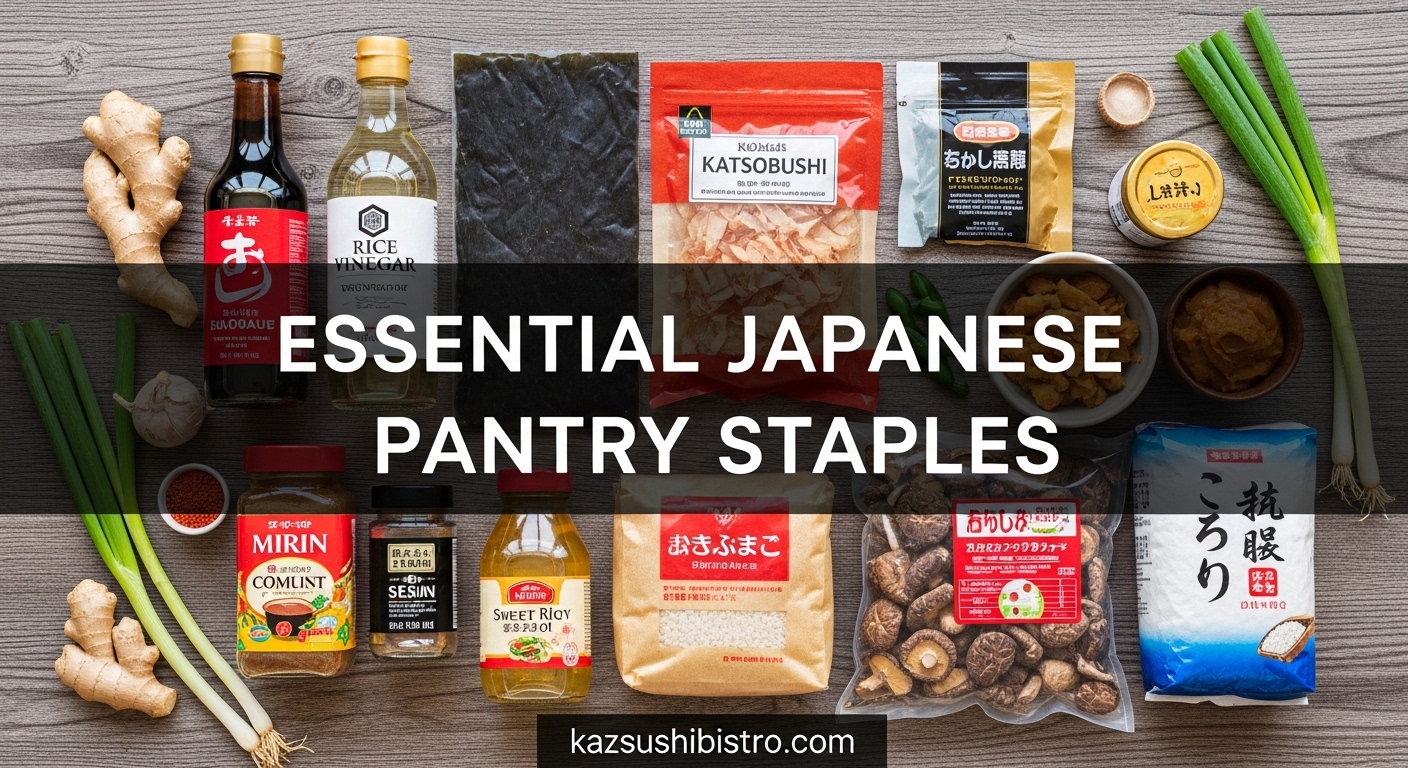
Building a Japanese pantry from scratch can feel overwhelming at first glance. Walk into any Asian grocery store and you’ll face an ocean of bottles, packages, and mysterious ingredients with labels you might not understand. I remember standing in the sauce aisle for 20 minutes during my first trip, completely paralyzed by the sheer variety of soy sauces alone.
The secret to stocking a practical Japanese pantry lies in understanding one fundamental concept: SaShiSuSeSo (さしすせそ). This mnemonic represents the five essential seasonings that form the backbone of Japanese cooking. Memorize this principle, and you’ll know exactly what to buy first.
What are the 5 S’s in Japanese cooking? They are:
- Satō (砂糖) – Sugar
- Shio (塩) – Salt
- Su (酢) – Vinegar
- Shōyu (醤油) – Soy sauce
- Miso (味噌) – Fermented soybean paste
These five seasonings, combined with dashi stock, create the foundation of washoku – traditional Japanese cuisine recognized by UNESCO as an Intangible Cultural Heritage. Every Japanese home cook keeps these ingredients on hand. Once you understand this framework, building your pantry becomes simple and systematic.
In this guide, I’ll walk you through every essential Japanese pantry staple you need. You’ll learn what each ingredient does, how to choose quality products, where to store them, and which brands I trust after years of cooking Japanese food at home.
Table of Contents
Quick Reference: The Core Japanese Pantry 2026
Before diving into details, here is your quick-start shopping list. These are the items I reach for constantly when cooking Japanese meals:
Essential Condiments (The SaShiSuSeSo):
- Soy sauce (shoyu) – Koikuchi (dark) for general use
- Miso paste – White (shiro) miso for beginners
- Mirin – Authentic hon-mirin, not aji-mirin
- Sake – Cooking sake (ryorishu)
- Rice vinegar (komezu) – Unseasoned
- Sugar – Regular granulated works; caster sugar preferred
- Salt – Sea salt or fine table salt
Dashi Foundation:
- Kombu (dried kelp) – Ma-kombu or Hidaka-kombu
- Katsuobushi (dried bonito flakes) – Hon-katsuobushi
- Instant dashi powder (optional backup) – Hondashi or dashi packets
Rice and Noodles:
- Japanese short-grain rice (uruchi mai) – Koshihikari variety
- Dried udon noodles
- Dried soba (buckwheat) noodles
Dry Pantry Goods:
- Nori sheets (yaki-nori) – Toasted, for sushi and onigiri
- Wakame (dried seaweed) – For miso soup
- Panko breadcrumbs – For crispy coatings
- Sesame seeds (goma) – Both white and black
- Toasted sesame oil – For finishing dishes
- Shichimi togarashi – Seven-spice blend
- Furikake – Rice seasoning mix
- Potato starch (katakuriko) – For thickening
Start with these items, and you can make dozens of authentic Japanese dishes. Now let’s explore each category in depth.
Essential Condiments and Seasonings: The Foundation of Flavor
Japanese cooking relies on a relatively small collection of seasonings used in precise combinations. Master these, and you understand 80% of Japanese flavor profiles. The following condiments represent your highest priority purchases.
Shoyu (Soy Sauce): The Salty Backbone
Soy sauce, or shoyu (醤油, pronounced “show-you”), might be the single most important condiment in Japanese cooking. This fermented seasoning provides saltiness, umami depth, and rich brown color to countless dishes. Understanding the types matters because they serve different purposes.
Koikuchi shoyu (濃口醤油) is the standard dark soy sauce you’ll want for everyday cooking. It accounts for about 80% of soy sauce consumption in Japan. The word koikuchi literally means “thick mouth” – referring to its rich, full-bodied flavor. This is your workhorse soy sauce for marinades, stir-fries, dipping sauces, and general seasoning.
Usukuchi shoyu (淡口醤油), or light soy sauce, actually contains more salt than koikuchi despite its lighter color. The name refers to its lighter hue, not salt content. Cooks use it when they want seasoning without darkening the food – think chawanmushi (savory egg custard), light soups, or delicate simmered vegetables.
Tamari (たまり) is a byproduct of miso production with little to no wheat content. It has a thicker consistency and more intense flavor than standard shoyu. Many people prefer tamari for gluten-free cooking, though check labels as some brands still contain wheat. Use tamari for dipping sashimi or as a finishing sauce.
For beginners, I recommend starting with a quality koikuchi shoyu. Look for brands like Kikkoman or Yamasa – both widely available at regular grocery stores. If you can visit an Asian market, Yamaroku or Ninben offer artisanal options aged in traditional wooden barrels.
Storage tip: Keep soy sauce in a cool, dark place. Once opened, it stays good for about a year at room temperature. The refrigerator extends this to two years, though cold temperatures can cause salt crystals to form.
Miso: Fermented Umami Powerhouse
Miso (味噌, “mee-soh”) represents the soul of Japanese fermentation. This paste of soybeans, salt, and koji (the fermentation starter Aspergillus oryzae) delivers unmatched savory depth. The fermentation process can last anywhere from a few weeks to several years, dramatically affecting flavor.
The color spectrum tells you much about a miso’s character. White miso (shiro miso) undergoes short fermentation – typically under three months. The result is a sweet, mild paste with a light beige color. Shiro miso works beautifully in dressings, light soups, and glazes where you want subtle umami without overwhelming other flavors.
Red miso (aka miso) ferments longer, often a year or more. The extended aging creates a saltier, more robust flavor with deep mahogany color. Aka miso stands up to hearty ingredients like pork, eggplant, and root vegetables. It adds incredible depth to braises and rich soups.
Beyond these basics, you’ll encounter regional varieties. Hatcho miso from Aichi prefecture uses only soybeans – no rice koji – creating an intensely dark, almost meaty paste. Mugi miso incorporates barley koji for a slightly sweet, earthy profile popular in southern Japan. Shinshu miso from the Nagano region represents a middle-ground yellow miso with balanced sweet-salty notes.
If you’re building your first Japanese pantry, start with white miso. Brands like Hikari Miso or Maruman offer consistent quality in resealable containers. Once comfortable, add a red miso to expand your range.
Storage is critical: Miso is alive with beneficial bacteria. Always refrigerate after opening in an airtight container. A thin layer of plastic wrap pressed directly onto the surface prevents oxidation and darkening. Properly stored, miso lasts months – even years – in the refrigerator, with flavor gradually deepening over time.
Mirin and Sake: The Sweet and Savory Pair
These two rice alcohols cause endless confusion for beginners. Both derive from fermented rice, but they serve completely different functions in cooking. Understanding the difference transforms your Japanese cooking.
Mirin (味醂, “mee-rin”) is a sweet cooking wine with low alcohol content (around 14%). True mirin, called hon-mirin (本味醂), contains no added salt and offers natural sweetness from rice saccharification. This sweetness balances salty soy sauce in teriyaki sauces, glazes, and simmered dishes. Mirin also helps ingredients absorb flavors and adds a subtle luster to finished dishes.
The problem: Much of what Western stores label “mirin” is actually aji-mirin (味みりん) or “mirin-style seasoning.” These products contain corn syrup, high fructose corn syrup, and salt – essentially seasoned cooking wine masquerading as true mirin. Check ingredients carefully. Real mirin lists only glutinous rice, koji, and shochu (distilled alcohol).
Quality brands to seek: Kikkoman Manjo, Mitsukan, or Takara. True hon-mirin costs more but the flavor difference is significant.
Sake (酒, “sah-keh”) in cooking, called ryorishu (料理酒), serves multiple purposes. The alcohol helps eliminate fishy odors from seafood. It adds umami and depth through amino acids. And it tenderizes proteins through enzymes. Unlike mirin, cooking sake is not sweet – though some brands add small amounts of salt to make them unpalatable for drinking (and thus sold as food products, avoiding alcohol taxes).
Can you use drinking sake for cooking? Absolutely – in fact, many Japanese cooks prefer it. A basic junmai or honjozo sake works beautifully. Just avoid premium aromatic styles like ginjo, whose delicate flavors cook off anyway.
Storage: Unopened bottles stay good for years. Once opened, refrigerate both mirin and sake. They’ll last several months chilled.
Rice Vinegar: Brightness and Balance
Rice vinegar, komezu (米酢, “koh-meh-zoo”), provides the acidic brightness that balances Japanese dishes. Made from fermented rice, it’s milder and less harsh than Western distilled vinegars. The gentle acidity makes it perfect for delicate applications.
You’ll encounter two main types. Plain rice vinegar (白酢, shirozu or just komezu) is unseasoned and versatile. Use it for pickling vegetables, making sunomono (vinegared salads), and general cooking. Seasoned rice vinegar (awasezu or sushi vinegar) contains added sugar and salt, designed specifically for seasoning sushi rice.
For pantry building, buy plain rice vinegar first. You can always season it yourself for sushi. Look for brands like Mitsukan or Kikkoman – both produce clean, consistent products.
Substitution note: While some sources suggest substituting other vinegars, rice vinegar has a unique mildness. Apple cider vinegar works in a pinch for cooking, but for sushi rice and pickles, rice vinegar is irreplaceable.
Dashi: The Soul of Japanese Cooking
If SaShiSuSeSo provides the seasonings, dashi (出汁, “dah-shee”) provides the soul. This simple stock of kelp and dried fish creates the umami foundation of miso soup, noodle broths, simmered dishes, and countless other preparations. Without dashi, Japanese food loses its essential character.
What is dashi exactly? At its core, dashi extracts flavor from kombu (kelp) and katsuobushi (dried bonito flakes) through brief simmering. Unlike Western stocks that cook for hours, dashi takes minutes – preserving the delicate, clean flavors that define Japanese cuisine.
Making proper dashi requires understanding its two primary ingredients.
Kombu: The Ocean’s Umami
Kombu (昆布, “kom-boo”) is dried kelp, specifically from the Laminaria family. This seaweed is nature’s most concentrated source of natural glutamates – the compounds responsible for umami. Japanese cooks have used kombu for centuries to add savory depth without meat.
Several varieties exist, each with distinct characteristics. Ma-kombu (真昆布) from Hokkaido is the premium choice – wide, thick leaves yielding clear, elegant stock with maximum umami. Hidaka-kombu (日高昆布) is thinner and more affordable, producing stock faster though with slightly less refinement. Rishiri-kombu (利尻昆布) creates very clean, light dashi prized in Kyoto cuisine.
When shopping, look for kelp that’s wide, thick, and covered with a white powdery substance. This powder is crystallized mannitol and umami compounds – a sign of quality, not mold. Avoid kombu that looks thin, brownish, or has dark spots.
Store kombu in a cool, dry place. It keeps practically forever when dry. After making dashi, don’t discard the used kombu – slice it thinly and simmer with soy sauce and mirin to make tsukudani, a savory condiment.
Katsuobushi: Smoky Elegance
Katsuobushi (鰹節, “kah-tsoo-oh-boo-shee”) consists of skipjack tuna (bonito) that’s been boiled, smoked, fermented, and dried into rock-hard blocks. Shaved into paper-thin flakes, these provide the smoky, savory backbone of dashi.
The traditional production process takes months. Fish are filleted, simmered, deboned, then repeatedly smoked and dried. Finally, they’re inoculated with Aspergillus glaucus mold and fermented in sealed chambers. The result is hon-katsuobushi (true katsuobushi) – incredibly hard, dark blocks with complex flavor.
For home cooking, you typically buy kezuribushi – pre-shaved flakes. These come in different qualities. Hana-katsuobushi (花鰹節) uses the thickest, heartiest shavings from the center of the block, yielding richest flavor. Standard kezuribushi works fine for everyday dashi.
Pre-shaved katsuobushi loses potency quickly. Buy in small packages and use within weeks of opening. Refrigeration extends freshness slightly. You’ll know katsuobushi is too old when it smells fishy rather than smoky-savory.
How to Make Basic Dashi
Making dashi takes less than 30 minutes. Here’s the standard method for ichiban dashi (first extraction dashi) – the clear, refined stock used for soups and dipping sauces:
Ingredients:
- 4 cups cold water
- 10-gram piece kombu (about 4×4 inches)
- 10 grams katsuobushi (about 1 cup loosely packed)
Method:
- Place kombu in cold water. Let soak for 30 minutes (or overnight in refrigerator for deeper flavor).
- Heat water with kombu over medium heat. Just before boiling (small bubbles appear), remove kombu. Boiling makes kombu slimy and bitter.
- Bring liquid to a gentle boil. Add katsuobushi. Let boil for 30 seconds, then turn off heat.
- Let katsuobushi sink to bottom (about 2 minutes).
- Strain through fine mesh or cheesecloth. Do not squeeze – this extracts bitterness.
The result is golden, aromatic dashi ready for miso soup, noodle broths, or simmering vegetables. The used katsuobushi can be combined with fresh kombu for a second extraction (niban dashi) – still flavorful, perfect for braises and stewed dishes.
For convenience, instant dashi powder (Hondashi is the most common brand) provides acceptable results. It’s essentially concentrated dashi in granule form. While purists frown on it, busy home cooks use it regularly. Keep a jar for emergencies, but learn to make real dashi when time allows – the difference is noticeable.
Rice and Noodles: The Japanese Carbohydrate Trinity
No Japanese pantry is complete without the staple carbohydrates that anchor most meals. Rice accompanies nearly every Japanese dish, while noodles provide quick, satisfying meals on their own.
Japanese Rice: Not All Rice Is Equal
Japanese rice, uruchi mai (粳米), refers specifically to short-grain japonica rice. This variety differs fundamentally from long-grain rice in texture, starch content, and cooking behavior. The grains stick together when cooked, creating that characteristic sticky texture essential for eating with chopsticks and forming onigiri.
The most prized variety is Koshihikari (越光, “koh-shee-hee-kah-ree”), developed in Niigata prefecture. This rice commands premium prices for its sweet flavor, perfect gloss, and ideal texture. Other excellent varieties include Hitomebore (一目惚れ), Akitakomachi (あきたこまち), and Sasanishiki (ササニシキ).
For everyday cooking, any short-grain Japanese rice works well. Look for “Japanese rice” or “sushi rice” on the package. California-grown Koshihikari offers excellent quality at reasonable prices. Brands like Nishiki, Kokuho Rose, or Tamanishiki are widely available.
Avoid “Calrose” rice labeled as sushi rice unless specified as short-grain japonica. While Calrose is technically japonica, the quality varies significantly.
Cooking tips: Rinse rice thoroughly until water runs mostly clear – this removes excess starch that makes rice gummy. Use a 1:1.1 ratio of rice to water (slightly more water than rice by volume). Soak rice 30 minutes before cooking for better texture. A dedicated rice cooker produces most consistent results, though stovetop cooking works with practice.
Storage: Keep rice in airtight containers in cool, dark places. White rice lasts about a year. Brown rice (genmai) goes rancid faster due to the oil-rich bran layer – use within 3-6 months, or refrigerate.
Noodles: Udon, Soba, and Ramen
Japanese noodles fall into three main categories, each with distinct textures and traditional preparations. Dried versions keep indefinitely and cook quickly – perfect pantry staples.
Udon (うどん) are thick wheat noodles with delightfully chewy texture. Fresh udon from the refrigerated section offers best texture, but dried udon works excellently for home cooking. These substantial noodles star in hot soups like kake udon (simple dashi broth) or kitsune udon (with sweet fried tofu).
Cooking dried udon takes 10-12 minutes in boiling water. Look for brands with simple ingredient lists – flour, water, salt. Sanuki udon from Kagawa prefecture represents the gold standard.
Soba (そば) means buckwheat in Japanese. These thin noodles contain varying percentages of buckwheat flour mixed with wheat. Higher buckwheat content (80-100%) offers more flavor but delicate texture prone to breaking. Standard nihachi soba (二八そば, 80% wheat, 20% buckwheat) provides good balance for beginners.
Soba tastes delicious hot in soups, but truly shines cold with dipping sauce (zaru soba). The nutty buckwheat flavor pairs perfectly with dashi-based mentsuyu dipping sauce.
Cooking tip: Boil soba vigorously and stir frequently to prevent sticking. Rinse thoroughly under cold water to remove surface starch – this stops cooking and firms texture. Never soak soba in hot cooking water; it becomes mushy instantly.
Ramen (ラーメン) noodles are wheat noodles alkalized with kansui (alkaline mineral water), giving their characteristic yellow color and springy texture. While fresh ramen belongs in the refrigerator, dried ramen keeps well. Look for packages specifically labeled as ramen noodles – their texture differs significantly from Italian pasta or other Asian wheat noodles.
Storage: All dried noodles keep for a year or more in pantry. Once opened, transfer to airtight containers to prevent absorbing moisture and odors.
Pantry Dry Goods: Texture and Depth
Beyond liquids and noodles, Japanese cooking relies on various dry goods that add texture, umami, and visual appeal. These keep well and transform simple preparations into complete meals.
Nori and Seaweed Varieties
Seaweed isn’t just wrapping for sushi – it’s a nutritional powerhouse and flavor enhancer used throughout Japanese cooking. Several types deserve pantry space.
Yaki-nori (焼き海苔) is the toasted seaweed sheet used for sushi rolls and onigiri. Quality varies enormously. Look for ajitsuke-nori (seasoned) for eating plain, or plain yaki-nori for making sushi. Premium nori is dark green-black, uniformly smooth, and brittle. Cheap nori looks brownish and rubbery.
Buy full sheets (about 8×7 inches) for rolling sushi. Half sheets work for onigiri wrapping. Once opened, nori deteriorates quickly – store in airtight containers away from moisture. Toasting briefly over a flame revives slightly stale nori.
Wakame (わかめ) is the tender seaweed floating in miso soup. Dried wakame expands enormously when rehydrated – a little goes a very long way. It requires no cooking; just soak in water for 5 minutes before using. Rich in minerals and subtly sweet, wakame also appears in salads and sunomono.
Store wakame in airtight containers. It keeps indefinitely when dry.
Hijiki (ひじき), though less common in Western cooking, offers incredible nutritional density. This black, twig-like seaweed requires longer cooking but provides deep ocean flavor in simmered dishes.
Panko: The Crispy Coating
Panko (パン粉, “pahn-koh”) is Japanese-style breadcrumbs – and they’re nothing like the fine, sandy Western variety. Panko consists of large, flaky shards of crustless white bread, dried to create an airy, crisp coating.
The unique structure creates more surface area than regular breadcrumbs, resulting in lighter, crunchier coatings that absorb less oil. This is why tonkatsu (breaded pork cutlet) achieves that impossibly light, shatteringly crisp crust.
Use panko for any breaded Japanese dish: tonkatsu, chicken katsu, croquettes (korokke), or baked seafood. It also makes an excellent crispy topping for mac and cheese or casseroles.
Quality panko lists only wheat flour and yeast as ingredients. Store in airtight containers for up to a year. Panko absorbs moisture readily, so seal tightly.
Sesame: Seeds and Oil
Sesame appears constantly in Japanese cooking in multiple forms. Understanding the differences helps you use them appropriately.
Sesame seeds (goma) come raw or toasted. Raw white sesame seeds offer mild, nutty flavor and crunchy texture. Toasted sesame seeds (iri-goma) have deeper, more intense flavor and golden color. Both appear as toppings, in dressings, and ground into sauces.
Black sesame seeds provide similar flavor with dramatic visual contrast. They’re especially popular in sweets and as garnishes.
For maximum flavor, toast raw seeds yourself in a dry pan until fragrant and just starting to pop. Store-bought toasted seeds lose potency over time.
Sesame oil comes in two varieties for Japanese cooking. Standard sesame oil is light and nutty, suitable for cooking at moderate temperatures. Toasted sesame oil is dark amber with intense aroma – use only as a finishing oil, never for cooking. A few drops of toasted sesame oil transforms finished dishes.
Keep sesame oil refrigerated after opening to prevent rancidity. The toasted variety especially degrades quickly at room temperature.
Essential Seasonings and Spices
While Japanese cuisine isn’t spice-heavy like some Asian traditions, several seasoning blends deserve pantry space.
Shichimi togarashi (七味唐辛子, “shee-chee-mee toh-gah-rah-shee”) means “seven-flavor chili pepper.” This blend contains coarsely ground red chili plus six other ingredients: typically roasted orange peel, black sesame, white sesame, ground ginger, nori, and hemp seed or sansho pepper. The result is spicy but complex, with citrus and nutty notes.
Sprinkle shichimi over udon, soba, hot pot dishes, or anything needing heat with dimension. Quality brands like S&B or House Foods are widely available.
Furikake (ふりかけ) is rice seasoning mix – essentially flavored confetti for sprinkling over plain rice. Dozens of varieties exist: salmon, seaweed, egg, wasabi, and more. While purists might consider it a shortcut, furikake transforms leftover rice into an appealing meal. Keep a jar for busy weeknights.
Sansho (山椒) is Japanese mountain pepper – related to but distinct from Sichuan pepper. It provides citrusy, tongue-numbing brightness often paired with grilled eel (unagi) or hot pot. Ground sansho appears in some shichimi blends.
Potato starch (katakuriko) serves as thickener in Japanese cooking. Unlike cornstarch, it creates glossy, clear coatings perfect for an (sweet bean paste), fruit glazes, and coating fried chicken (karaage). It also gives that characteristic silky texture to stir-fried dishes. Keep a bag in your pantry – it keeps indefinitely.
Storage and Buying Guide: Making Your Staples Last
Now that you know what to buy, let’s talk about keeping your investment fresh. Japanese ingredients vary dramatically in storage requirements – some need refrigeration, others improve with age.
Refrigerated vs Pantry Storage
Always refrigerate after opening:
- Miso paste – prevents darkening and preserves beneficial cultures
- Mirin – maintains flavor integrity
- Sake – prevents oxidation and souring
- Toasted sesame oil – prevents rancidity
- Opened tofu and aburaage – obvious fresh products
Pantry storage works fine:
- Soy sauce – stable at room temperature for up to a year
- Rice vinegar – acidic enough to stay stable
- Unopened sesame oil – stable until opened
- Dried seaweeds, noodles, rice – keep dry and cool
- Katsuobushi – actually improves slightly with careful aging
- Sugar and salt – indefinitely stable
One special case: kombu. Dried kombu keeps for years in the pantry. Some cooks deliberately age premium kombu for months or years, believing it develops deeper flavor.
Shelf Life Guidelines
Here’s how long staples last once opened:
- Soy sauce: 1 year pantry, 2 years refrigerated
- Miso: 3-6 months optimally, but safe for 1-2 years refrigerated
- Mirin: 6-12 months refrigerated
- Cooking sake: 6 months refrigerated
- Rice vinegar: 2+ years pantry
- Katsuobushi: 2-4 weeks (buy small amounts frequently)
- Toasted sesame oil: 6 months refrigerated
- Panko: 6-12 months airtight
- Nori: 2-4 weeks once opened (oxidizes quickly)
Finding Authentic Products
The biggest challenge for beginners is distinguishing authentic products from imitations. Here’s what to watch for:
Mirin: Check ingredients. Hon-mirin lists only glutinous rice, rice koji, and shochu. Aji-mirin contains corn syrup, fructose, salt, and often artificial flavor.
Soy sauce: Traditional brewing (honjozo) takes months and produces complex flavor. Chemical soy sauce (chokkyushikomi) is made in days with hydrolyzed soy protein – avoid it. Labels usually indicate brewing method; when in doubt, stick with known brands like Kikkoman or Yamasa.
Miso: Refrigerated miso in natural food sections typically offers better quality than shelf-stable varieties. Look for short ingredient lists: soybeans, rice or barley, salt, koji. Avoid products with alcohol (preservative) when possible.
Dashi ingredients: Kombu should have white powdery coating (mannitol crystals). Katsuobushi should smell smoky and savory, never fishy or rancid.
Where to Buy
For beginners, I recommend this sourcing strategy:
Regular grocery stores: Kikkoman soy sauce, basic rice vinegar, and sometimes mirin/sake are increasingly available. This is your easiest starting point.
Asian markets (H-Mart, 99 Ranch, local Japanese markets): Better selection, fresher products, lower prices on staples. You’ll find multiple miso varieties, authentic mirin, fresh tofu, and proper Japanese rice.
Online retailers: When local options fail, several reliable sources ship nationwide:
- Umami Cart – Curated Japanese ingredients
- Japanese Taste – Direct from Japan
- Mitsuwa Marketplace – Major Japanese grocery with online ordering
- Nijiya Market – California-based chain with online store
Amazon: Convenient but check seller ratings carefully. Counterfeit or old product can be an issue. Buy directly from Amazon or highly-rated specialty sellers, not unknown third parties.
Getting Started: Your First Japanese Pantry
If all this feels overwhelming, take a breath. You don’t need everything at once. I’ve guided dozens of friends through building their first Japanese pantry, and there’s a proven order that works.
Phase 1: The Absolute Essentials (Buy These First)
Start with these five items, and you can make a surprising variety of dishes:
- Soy sauce – Kikkoman koikuchi, available everywhere
- Miso paste – White miso, any reputable brand
- Mirin – Hon-mirin if you can find it; Kikkoman Manjo works
- Rice vinegar – Unseasoned, Mitsukan or Kikkoman
- Dashi – Hondashi granules to start; upgrade to kombu/katsuobushi later
With these, you can make: miso soup, teriyaki sauce, basic dipping sauces, sunomono, and simple nimono (simmered dishes).
Phase 2: Expand Your Range (Add These Next)
Once comfortable with basics, add:
- Japanese rice – Koshihikari variety
- Sake – Basic cooking sake
- Nori – For onigiri and simple sushi
- Panko – For tonkatsu and crispy coatings
- Sesame oil – Toasted variety
Now you can tackle: onigiri, chicken katsu, stir-fries, and fried rice.
Phase 3: Complete Your Pantry
Finally, round out with specialty items based on your cooking interests:
- Real kombu and katsuobushi (ditch the powder)
- Red miso for heartier dishes
- Noodles (udon, soba)
- Wakame and other seaweeds
- Shichimi togarashi and furikake
Simple Starter Recipes
Once you have Phase 1 ingredients, try these beginner-friendly recipes to build confidence:
Miso Soup (5 minutes): 2 cups dashi, 2 tablespoons white miso, wakame, tofu cubes. Dissolve miso in warm dashi (never boiling – it kills the culture), add other ingredients, heat gently.
Teriyaki Sauce (2 minutes): Equal parts soy sauce, mirin, and sake, plus half part sugar. Simmer 2 minutes until slightly thickened. Use on salmon, chicken, or tofu.
Sunomono (10 minutes): Thinly slice cucumber, salt 10 minutes, squeeze out water. Dress with rice vinegar, sugar, and a touch of soy sauce. Top with sesame seeds.
Common Beginner Mistakes
Watch out for these pitfalls I see repeatedly:
Boiling miso: Never boil miso soup after adding the paste. High heat destroys beneficial enzymes and creates bitterness. Warm gently.
Buying aji-mirin: That $3 bottle of “mirin” at regular grocery stores? It’s probably corn syrup with salt. Check labels or buy from Asian markets.
Using long-grain rice: Jasmine or basmati won’t work for Japanese dishes. The texture is completely wrong. Source proper short-grain Japanese rice.
Overcooking kombu: If kombu boils, it gets slimy and releases bitter compounds. Remove just before boiling.
Storing katsuobushi forever: Those bonito flakes lose potency quickly. Small, frequent purchases beat one giant bag that goes stale.
FAQs
What are the three staples of Japanese cuisine?
The three traditional staples of Japanese cuisine are rice, miso soup, and tsukemono (pickled vegetables). Rice forms the center of nearly every meal. Miso soup provides daily nourishment and umami. Pickles add digestive benefits and palate-cleansing acidity. Together, they represent the foundation of washoku (traditional Japanese food) recognized by UNESCO.
What are the 5 S’s in Japanese cooking?
The 5 S’s refer to SaShiSuSeSo, a mnemonic for the five essential Japanese seasonings in order of use when cooking: Satō (sugar), Shio (salt), Su (vinegar), Shōyu (soy sauce), and Miso. This order reflects the traditional sequence for seasoning dishes. Understanding SaShiSuSeSo helps home cooks balance the five fundamental tastes in Japanese cuisine.
What is the difference between sake and mirin?
Sake is rice wine used for cooking to add umami, tenderize proteins, and remove fishy odors. It is not sweet. Mirin is sweet cooking rice wine that adds sweetness, gloss, and mild alcohol content (14%). Mirin balances salty ingredients in teriyaki and glazes. While both come from fermented rice, they serve completely different flavor functions and are not interchangeable.
How long does miso paste last?
Miso paste lasts 3-6 months optimally when refrigerated, but remains safe to eat for 1-2 years. The high salt content and active fermentation preserve it. Store in an airtight container with plastic wrap pressed directly on the surface to prevent oxidation and darkening. Miso actually improves with age, developing deeper, more complex flavors over time in the refrigerator.
Can I substitute regular vinegar for rice vinegar?
Apple cider vinegar can substitute for rice vinegar in cooked dishes, though the flavor will differ. For sushi rice and sunomono (Japanese vinegared salads), rice vinegar is irreplaceable. Its mild, slightly sweet character defines these preparations. Distilled white vinegar is too harsh for Japanese cooking. If substituting, use slightly less and add a pinch of sugar.
What is the best miso for beginners?
White miso (shiro miso) is best for beginners. It has a mild, slightly sweet flavor from short fermentation that works in dressings, light soups, and glazes without overwhelming other ingredients. It’s more forgiving and versatile than stronger red miso varieties. Look for refrigerated white miso from brands like Hikari Miso or Maruman at Asian markets or natural food stores.
Do I need to refrigerate soy sauce?
Opened soy sauce does not require refrigeration but lasts longer when chilled. At room temperature, it stays good for about one year. Refrigerated, it lasts up to two years. The high salt content preserves soy sauce naturally. However, refrigeration prevents subtle flavor degradation and salt crystal formation that can occur with temperature fluctuations in pantry storage.
Where can I buy authentic Japanese ingredients?
Authentic Japanese ingredients are available at Asian grocery chains (H-Mart, Mitsuwa, 99 Ranch), local Japanese markets, and increasingly at well-stocked regular grocery stores. Online sources include Umami Cart, Japanese Taste, Mitsuwa Marketplace, and Nijiya Market. For beginners, Kikkoman products provide reliable quality at regular supermarkets. Always check ingredient labels for authenticity markers.
Conclusion
Building a Japanese pantry is a journey, not a destination. Start with the SaShiSuSeSo principle – sugar, salt, vinegar, soy sauce, and miso – and you’ll have the foundation for countless dishes. Add dashi ingredients to unlock the true soul of Japanese cooking. Gradually expand your collection of noodles, seaweeds, and specialty seasonings as your confidence grows.
The beauty of Japanese cuisine lies not in complexity, but in the thoughtful balance of a few high-quality ingredients. A well-stocked Japanese pantry doesn’t require dozens of obscure items. With the 15-20 staples covered in this guide, you can prepare everything from simple weeknight dinners to elaborate weekend projects.
Don’t feel pressured to buy everything at once. Start with Phase 1 essentials. Make miso soup. Try a simple teriyaki. Get comfortable with these foundational flavors. Each new ingredient you add will expand your possibilities, but the core seasonings remain your constant companions.
By 2026, Japanese ingredients are more accessible than ever in Western markets. Take advantage of this availability. Visit an Asian market, explore unfamiliar aisles, and start building your pantry one quality ingredient at a time. Your efforts will be rewarded with meals that capture the authentic taste of Japan in your own kitchen.