
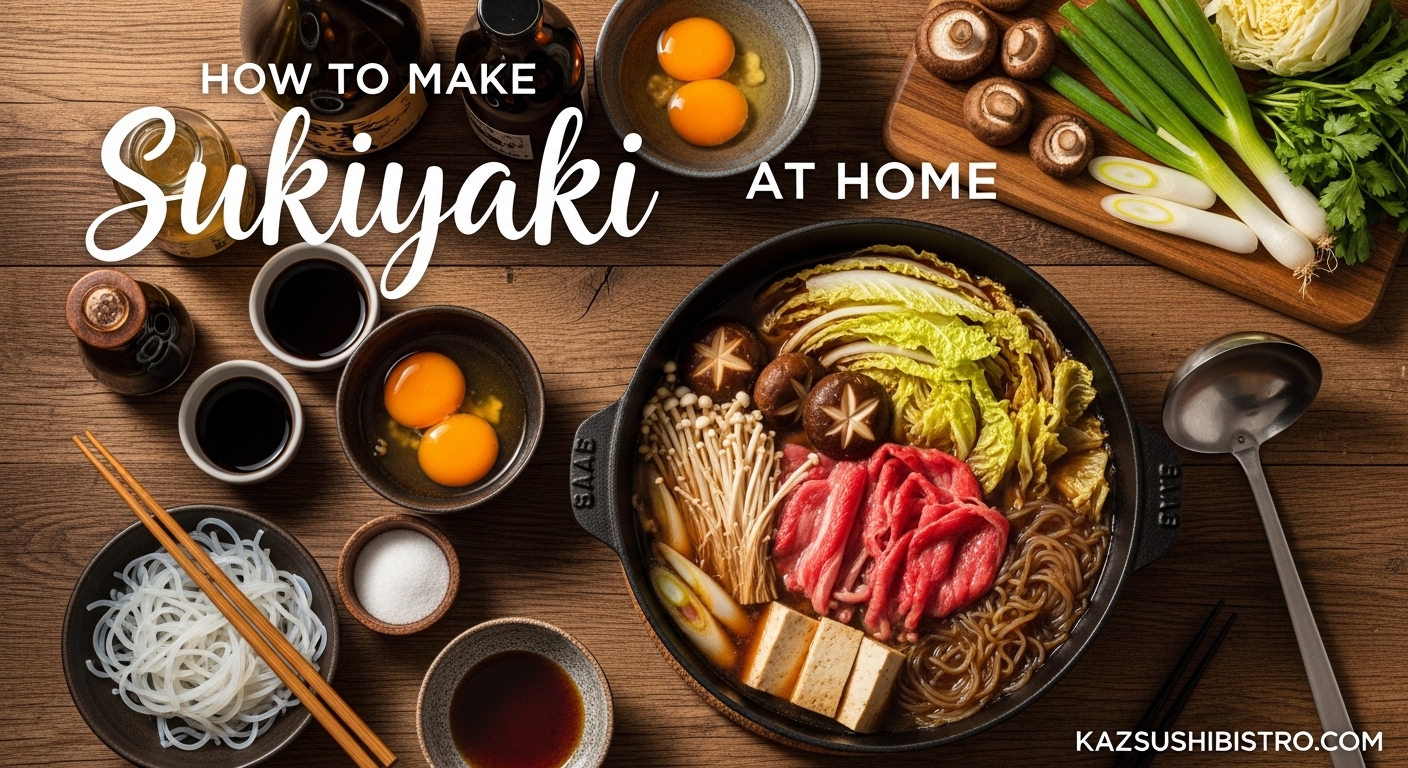
When I first tasted authentic sukiyaki at a tiny restaurant in Osaka, I knew I had to learn how to make sukiyaki at home. That bubbling cast iron pot filled with paper-thin marbled beef, sweet-savory sauce, and tender vegetables completely changed how I thought about dinner parties. After dozens of attempts and refinements, I have perfected a method that brings this beloved Japanese hot pot experience to any home kitchen.
In this guide, I will walk you through everything you need to know about making authentic sukiyaki. You will learn the difference between Kansai and Kanto styles, master the warishita sauce with exact ratios, and discover the techniques that make restaurant-quality sukiyaki possible in your own dining room. Whether you are a complete beginner or looking to refine your technique, this recipe will become your go-to for memorable gatherings.
Table of Contents
What Is Sukiyaki?
Sukiyaki is a Japanese nabemono hot pot dish featuring thinly sliced beef, tofu, vegetables, and noodles simmered in a sweet and savory soy-based sauce called warishita. The name comes from “suki” (spade) and “yaki” (grilled), referring to the cooking method that originally used a spade-shaped farm tool over a fire.
Historically known as gyunabe (beef pot), sukiyaki emerged during the Meiji era when eating beef became more accepted in Japan. Today it represents one of the most social dining experiences in Japanese cuisine. Families and friends gather around a single bubbling pot, cooking and eating together in an interactive meal that can last for hours.
What sets sukiyaki apart from other hot pot dishes is its distinctive flavor profile. The combination of soy sauce, mirin, sake, and sugar creates an addictively sweet-salty broth that coats every ingredient. The fat from well-marbled beef mingles with the sauce, creating a richness that keeps everyone reaching for more.
Kansai Style vs Kanto Style: Two Ways to Make Sukiyaki 2026
Japanese home cooks debate which regional style produces better sukiyaki. Understanding both methods helps you choose the approach that fits your preferences and equipment.
Kansai style (western Japan including Osaka) sears beef slices first in the hot pot with a little rendered fat. The meat caramelizes slightly before warishita sauce is added, creating deeper flavors. Vegetables go in after the beef has partially cooked, and everything simmers together.
Kanto style (eastern Japan including Tokyo) takes a different approach. The warishita sauce simmers first in the pot, often with kombu dashi for extra depth. Ingredients go in raw and cook together in the flavorful liquid. This method is more like a traditional soup and produces a lighter, more soupy result.
This guide follows the Kansai method because it delivers more complex flavors and creates that signature caramelized beef taste. The technique also works better for first-timers since you can control each ingredient’s cooking time more precisely.
Equipment You’ll Need
Making sukiyaki at home requires minimal specialized equipment. Most kitchens already have everything needed to create an authentic experience.
- Cast iron pot (sukiyaki nabe): A wide, shallow cast iron pot conducts heat evenly and maintains temperature. A 10-12 inch skillet or traditional sukiyaki pot works perfectly.
- Heat source: A portable gas stove placed on your dining table creates the most authentic experience. Electric hot pots or induction burners work well too.
- Chopsticks or tongs: Long cooking chopsticks or small tongs help move ingredients without splashing.
- Small bowls: Each diner needs a small bowl for their beaten egg dipping sauce.
Do not have a portable stove? You can cook sukiyaki on your regular stovetop and transfer the pot to the table. The communal eating experience matters more than the cooking location.
Complete Sukiyaki Ingredients and Substitutions
Authentic sukiyaki balances protein, vegetables, and noodles in one harmonious pot. Here is what you need for 4 generous servings.
Protein
- Thinly sliced beef (1.5 to 2 pounds): Look for well-marbled ribeye, chuck roll, or sirloin cut paper-thin. Pre-sliced shabu shabu beef from Asian markets saves time.
- Grilled tofu (1 block, about 14 oz): Yaki dofu holds its shape better than silken tofu. Regular firm tofu works if you press it first.
Vegetables
- Napa cabbage (1 small head, about 1 pound): Cut into 2-inch chunks. The leaves absorb the warishita beautifully.
- Tokyo negi or long green onion (3-4 stalks): These mild Japanese leeks add sweetness. Substitute with regular green onions or leeks.
- Shiitake mushrooms (8-10 caps): Fresh shiitake provides meaty texture. Remove stems and score caps decoratively.
- Enoki mushrooms (1 package): These delicate white mushrooms cook in seconds and add visual appeal.
- Shungiku (chrysanthemum greens, 1 bunch): The signature sukiyaki green with a peppery, herbal flavor. Substitute with watercress, spinach, or tong ho.
Noodles
- Shirataki noodles (2 packages, about 14 oz): These translucent yam noodles absorb sauce without getting soggy. Always boil them separately first to remove odor.
Warishita Sauce Base
- Soy sauce (1/2 cup): Use Japanese soy sauce like Kikkoman for authentic flavor.
- Mirin (1/2 cup): Sweet cooking sake adds sweetness and gloss.
- Sake (1/2 cup): Dry sake balances the sweetness. Cooking sake works fine.
- Sugar (2-3 tablespoons): White sugar dissolves quickly. Adjust to taste.
For Dipping
- Pasteurized eggs (1 per person): Each diner beats one raw egg in their bowl for dipping cooked ingredients.
Choosing the Right Beef for Sukiyaki
The beef makes or breaks your sukiyaki. You want well-marbled cuts where fat weaves through the meat in thin white streaks. This marbling melts into the sauce, creating that signature rich flavor.
Ribeye offers the best balance of flavor and tenderness. Chuck roll provides excellent marbling at a lower price point. Splurge on wagyu if you are celebrating something special, but good quality USDA Choice or Prime beef works beautifully for everyday sukiyaki.
The slices must be thin enough to cook in 30 seconds. Look for pre-sliced shabu shabu or sukiyaki beef at Asian markets. If slicing yourself, freeze the beef for 30 minutes first, then cut against the grain into 1/8-inch slices. A sharp knife and steady hand are essential.
How to Make Warishita (Sukiyaki Sauce)
Warishita is the soul of sukiyaki. This sweetened soy sauce mixture seasons every ingredient in the pot. Getting the ratio right ensures balanced flavor without overwhelming saltiness.
The classic ratio follows 1:1:1 proportions. Combine equal parts soy sauce, mirin, and sake, then add sugar to taste. I prefer 2 tablespoons of sugar per cup of liquid, but you can increase to 3 tablespoons if you like sweeter sukiyaki.
For a standard batch serving 4 people, mix 1/2 cup soy sauce, 1/2 cup mirin, 1/2 cup sake, and 2-3 tablespoons sugar in a bowl. Stir until the sugar dissolves completely. Some cooks heat the mixture briefly to meld flavors, but cold preparation works perfectly fine.
Make extra warishita and keep it nearby while cooking. As ingredients release moisture, the pot can get too watery. Adding more concentrated warishita restores the proper flavor balance.
How to Make Sukiyaki at Home: Step-by-Step (September 2026)
Now we bring everything together. This process takes about 45 minutes from prep to first bite, but the interactive cooking continues throughout the meal.
Step 1: Preparing Your Ingredients
Start by prepping all ingredients before heating the pot. This mise en place approach keeps cooking smooth and stress-free.
- Cut napa cabbage into 2-inch chunks, separating leaves.
- Slice Tokyo negi or green onions into 2-inch diagonal pieces.
- Remove shiitake stems and score caps with a decorative cross pattern.
- Trim enoki mushroom roots and separate into small bundles.
- Cut grilled tofu into 1-inch thick rectangles.
- Blanch shirataki noodles in boiling water for 2 minutes, drain, and cut into shorter lengths.
Arrange everything on a large platter in groups. This presentation looks beautiful and helps diners choose what they want to cook next.
Step 2: Cooking Sukiyaki at the Table
Heat your cast iron pot over medium-high heat. Add a small piece of beef fat or neutral oil to grease the surface. Once hot, lay several slices of beef in a single layer.
Let the beef sear for 10-15 seconds until it just starts to brown. Pour about 1/4 cup of warishita over the meat. The sauce will bubble and reduce immediately, creating a glossy coating on the beef. This is your first taste, and diners can grab these pieces right away.
Push the partially cooked beef to one side. Add tofu, tough vegetables (shiitake, cabbage stems), and some warishita. Pour in just enough sauce to cover the bottom of the pot, about 1/2 cup total.
Cover and simmer for 3-4 minutes. Then add tender vegetables like cabbage leaves, enoki, and shungiku. Arrange everything so each ingredient is in contact with the sauce. Cook uncovered for another 2-3 minutes until vegetables are tender but not mushy.
Add shirataki noodles in the final minutes. They just need to heat through and absorb some sauce. As ingredients disappear from the pot, add more beef and vegetables in batches. Continue until everyone is satisfied.
Step 3: How to Eat Sukiyaki the Authentic Way
Each diner receives a small bowl and a raw egg. Crack the egg into your bowl and beat it lightly with chopsticks. This becomes your personal dipping sauce.
When ingredients are ready, transfer them from the communal pot to your bowl. Dip each piece in the beaten egg before eating. The egg cools the hot food slightly and adds silky richness that complements the sweet-savory warishita.
Many people outside Japan worry about raw egg safety. Using pasteurized eggs eliminates salmonella risk completely. Look for pasteurized eggs at grocery stores, or use high-quality farm-fresh eggs if you trust the source. The egg dipping is essential to authentic sukiyaki, so do not skip this step.
Pro Tips for the Best Sukiyaki Results
After making sukiyaki dozens of times for family and friends, I have learned several tricks that elevate the experience from good to exceptional.
- Adjust seasoning constantly: Taste the sauce after each batch. Add more warishita if it tastes weak, or a splash of sake if too salty.
- Do not overcook the beef: Thin slices need only 30-60 seconds total. Remove them while still pink for maximum tenderness.
- Blanch shirataki separately: Always boil these yam noodles first to remove the natural odor. Skip this step and your sukiyaki smells unpleasant.
- Designate a nabe bugyo: Assign one person as the “hot pot commissioner” who controls cooking and portions. This Japanese tradition ensures everyone gets fair shares.
- Save room for shime: When ingredients run low, add cooked rice or udon noodles to the remaining sauce. This final course (called shime) is often the best part.
Vegetarian and Alternative Sukiyaki Options
Sukiyaki adapts beautifully to dietary restrictions. One of my closest friends is vegetarian, and we have developed a meat-free version she claims rivals the original.
Replace beef with firm tofu, king oyster mushrooms, or seitan. These proteins provide satisfying texture and absorb the warishita just like meat. Double the mushroom varieties for extra umami depth.
For vegan sukiyaki, swap the egg dip for ponzu sauce or sesame dressing. The warishita itself is naturally vegan if you use kombu dashi instead of any bonito-based stock additions.
Chicken sukiyaki (tori sukiyaki) uses skinless thigh meat cut into bite pieces. Pork sukiyaki substitutes thinly sliced belly or shoulder. Both follow the same cooking method with delicious results.
Sukiyaki vs Shabu Shabu: What’s the Difference?
Many people confuse sukiyaki with shabu shabu because both are Japanese beef hot pots. The differences are significant once you know what to look for.
Sukiyaki uses a sweetened soy-based sauce (warishita) that flavors everything during cooking. Ingredients simmer together in the seasoned broth. Shabu shabu uses plain kombu dashi broth without seasoning. Diners dip cooked ingredients into separate sauces after removing them from the pot.
The cooking method differs too. Sukiyaki sears beef first, then simmers vegetables in sauce. Shabu shabu swishes thin beef slices briefly in boiling broth, then adds vegetables later. Sukiyaki tastes sweet-savory throughout, while shabu shabu highlights the natural flavors of each ingredient with dipping sauce accents.
Choose sukiyaki when you want bold, complex flavors and a more communal cooking experience. Choose shabu shabu when you prefer lighter tastes and individual customization. Both create memorable meals, but sukiyaki wins for cold winter nights when you crave something rich and comforting.
Frequently Asked Questions
What ingredients are in a sukiyaki?
Traditional sukiyaki contains thinly sliced marbled beef, grilled tofu (yaki dofu), napa cabbage, shiitake mushrooms, enoki mushrooms, shungiku (chrysanthemum greens), Tokyo negi (long green onion), and shirataki noodles. Everything simmers in warishita sauce made from soy sauce, mirin, sake, and sugar. Diners dip cooked ingredients in raw beaten egg before eating.
What kind of meat is best for sukiyaki?
Well-marbled beef produces the best sukiyaki. Look for ribeye, chuck roll, or sirloin with visible white fat streaks throughout. The marbling melts into the sauce creating rich flavor. Pre-sliced shabu shabu beef from Asian markets works perfectly. For special occasions, splurge on wagyu. Avoid lean cuts which become tough and dry.
What is the best base for sukiyaki broth?
The best sukiyaki base is warishita, a mixture of equal parts soy sauce, mirin, and sake with added sugar. The classic 1:1:1 ratio creates balanced sweet-savory flavor. Some Kanto style recipes add kombu dashi for extra depth, but simple warishita works perfectly. Make extra sauce to add as the pot cooks and ingredients release moisture.
What kind of noodles are used in sukiyaki?
Shirataki noodles are traditional in sukiyaki. These translucent yam-based noodles absorb sauce without getting soggy. Always boil shirataki separately for 2 minutes first to remove odor, then drain and add to the pot. Some variations use udon noodles for the final shime course. Avoid wheat noodles which become mushy in the sauce.
Conclusion
Learning how to make sukiyaki at home opens up a world of interactive dining that brings people together. The combination of sweet-savory warishita, tender marbled beef, and fresh vegetables creates a meal that engages all the senses.
Start with quality ingredients, follow the Kansai method for best results, and do not skip the raw egg dipping tradition. With practice, you will develop an intuition for seasoning adjustments and timing that makes each sukiyaki night better than the last.
Gather your favorite people around a bubbling pot this 2026 and discover why sukiyaki has remained one of Japan’s most beloved dishes for over a century. The memories you create will last long after the final bowl of shime.