
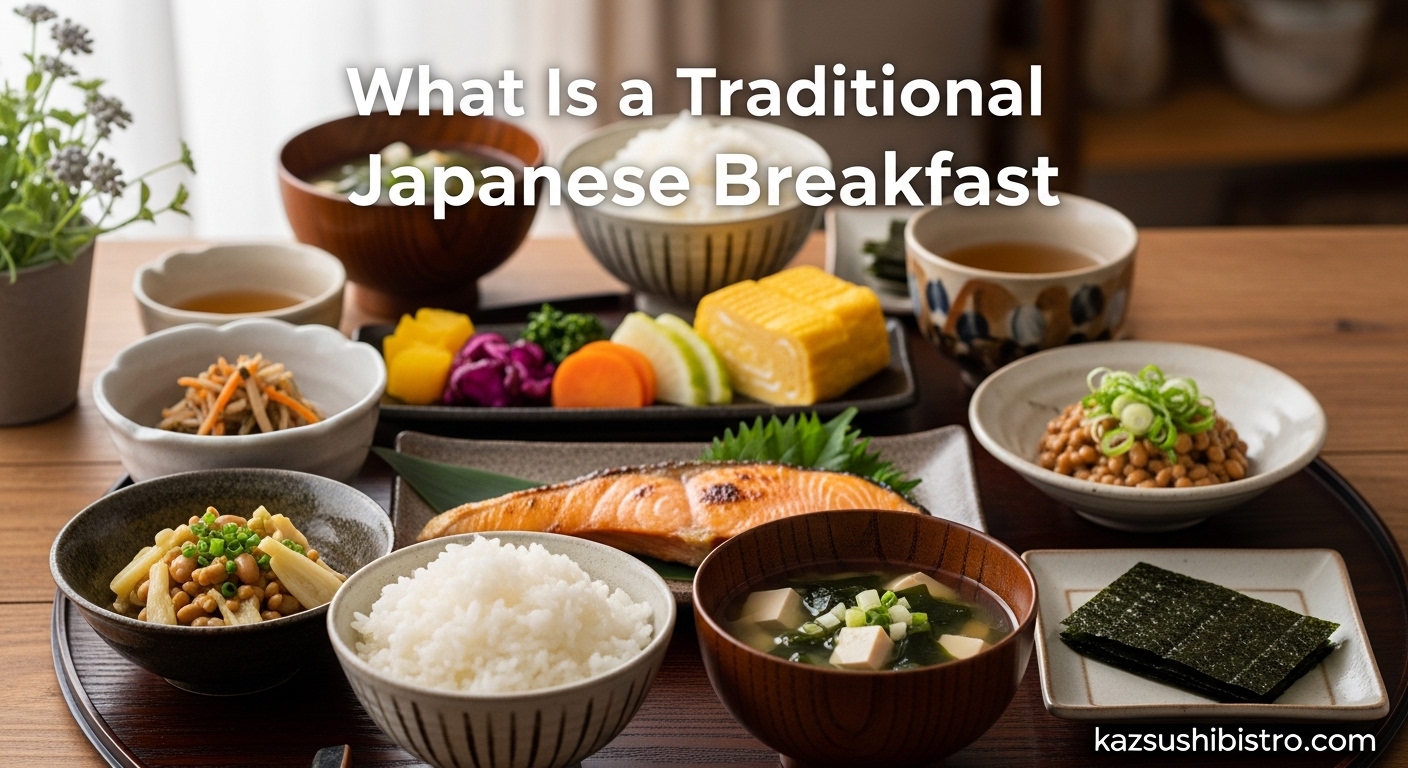
When I first sat down to a traditional Japanese breakfast at a ryokan in Kyoto, I did not expect a full spread that resembled a complete dinner. Multiple small dishes surrounded my bowl of steamed rice, each offering a different texture, flavor, and color. This is what makes a traditional Japanese breakfast so unique. It is not a quick bowl of cereal or a piece of toast. It is a balanced, intentional meal designed to fuel your entire morning.
A traditional Japanese breakfast follows a specific structure called Ichiju Sansai, which translates to one soup and three side dishes. This concept sits at the heart of Japanese food philosophy, prioritizing balance, variety, and nutrition over speed or convenience. Every component serves a purpose, from the umami-rich miso soup to the protein-packed grilled fish.
In this guide, I will walk you through exactly what defines a traditional Japanese breakfast. You will learn the key components, understand the cultural significance behind each element, and discover how to experience this meal either at a restaurant or in your own kitchen.
Table of Contents
What Is a Traditional Japanese Breakfast Called?
In Japan, breakfast is called asagohan (朝ご飯), which literally means morning rice. The word gohan itself refers to both rice and meals in general, highlighting how central rice is to Japanese dining culture. When someone invites you to eat asagohan, they are inviting you to share a proper morning meal, not just grab something quick.
The term washoku (和食) describes traditional Japanese cuisine as a whole, and breakfast is considered one of its purest expressions. Unlike Western breakfasts that often lean sweet, Japanese breakfast remains distinctly savory. The meal is designed around the concept of ichiju sansai, a template that has guided Japanese home cooking for generations.
Understanding these terms helps you appreciate the intention behind every dish on the table. When you see asagohan on a menu or hear it in conversation, you now know it represents something more meaningful than simply eating first thing in the morning.
The Ichiju Sansai Framework 2026
The foundation of any traditional Japanese breakfast is ichiju sansai (一汁三菜). This translates to one soup and three side dishes. Add a bowl of rice to this structure, and you have the complete template for a balanced morning meal.
This framework is not rigid or limiting. Instead, it offers flexibility within a structured approach. The soup provides warmth and hydration. The three side dishes ensure you get protein, vegetables, and fermented foods in every meal. The rice serves as the anchor, providing sustained energy through complex carbohydrates.
The beauty of ichiju sansai lies in its adaptability. A busy weekday morning might feature simpler sides like pickled vegetables and a piece of grilled fish. A weekend or special occasion breakfast could include more elaborate preparations like rolled omelets or simmered vegetables. The structure remains constant even as the specific dishes change with seasons and availability.
Core Components of a Traditional Japanese Breakfast
A traditional Japanese breakfast consists of several distinct components, each contributing specific flavors, textures, and nutritional benefits. Let me break down the essential elements you will find in an authentic asagohan spread.
Steamed Rice (Gohan)
Rice is the centerpiece of every Japanese breakfast. Short-grain Japanese rice, with its slightly sticky texture and subtle sweetness, serves as the foundation of the meal. Most traditional breakfasts use plain white rice, though brown rice has become increasingly popular for health-conscious diners.
The rice bowl sits at the front of your setting, and you typically eat from it directly. Unlike Western dining where you might pile everything onto one plate, Japanese breakfast keeps components separate. You take a bite of rice, then a bite of fish, then some pickles, appreciating each element individually.
For breakfast specifically, the rice is usually prepared fresh that morning. Some households keep a rice cooker running overnight, ensuring warm rice is ready when they wake. The comforting warmth of freshly steamed rice sets the tone for the entire meal.
Miso Soup (Miso Shiru)
Miso soup accompanies nearly every Japanese breakfast. This simple broth combines dashi (a stock made from kelp and dried bonito flakes) with miso paste, creating a savory, umami-rich soup that wakes up your palate.
The ingredients floating in your miso soup vary by season and preference. Common additions include tofu cubes, wakame seaweed, sliced green onions, or small clams. These additions transform the basic broth into something more substantial while keeping it light enough for morning consumption.
Miso itself is a fermented soybean paste, offering probiotics that support digestive health. Starting your day with this warm, savory soup provides hydration and primes your stomach for the solid foods to follow.
Grilled Fish (Yakizakana)
Fish provides the primary protein in traditional Japanese breakfast. Salted and grilled salmon is the most common choice, though mackerel, sea bream, or saury appear depending on the region and season.
The preparation is intentionally simple. A light salting draws out moisture and concentrates flavor. Grilling over direct heat creates crispy skin while keeping the flesh moist and tender. A squeeze of lemon or a dab of grated daikon radish typically accompanies the fish, cutting through the richness with acidity.
This protein source offers omega-3 fatty acids and high-quality protein without the heaviness of meat. The portion size is modest, usually just a few ounces, providing satisfaction without the sluggishness that can follow a heavy morning meal.
Tamagoyaki (Japanese Rolled Omelette)
Tamagoyaki adds another protein element while contributing a touch of sweetness to balance the savory dishes. This rolled omelette is made by cooking thin layers of seasoned egg in a special rectangular pan, then rolling them together into a neat log.
The egg mixture typically includes dashi, soy sauce, and a small amount of sugar or mirin. This creates a slightly sweet, deeply savory flavor profile that complements the other breakfast components. The texture is custardy and tender, offering a contrast to the chewy rice and flaky fish.
Not every household serves tamagoyaki daily, but it appears frequently enough to be considered a breakfast staple. It is also a popular item in convenience store breakfast sets throughout Japan.
Tsukemono (Pickled Vegetables)
Pickled vegetables provide acidity, crunch, and digestive benefits to the Japanese breakfast table. Tsukemono comes in endless varieties, from simple salt-pickled cucumbers to complex fermented preparations like takuan (yellow daikon pickles).
These pickles serve multiple functions. They cleanse the palate between bites of richer foods. They add vibrant color to the meal, which traditionally emphasizes visual presentation. They also contribute beneficial bacteria from fermentation, supporting gut health first thing in the morning.
A small dish of pickles might seem insignificant, but it is essential to the complete breakfast experience. The bright, acidic punch wakes up your taste buds and prepares them for the next bite.
Natto (Fermented Soybeans)
Natto divides opinion even among Japanese people. These fermented soybeans have a distinctive sticky texture and pungent aroma that some find challenging. However, those who enjoy natto consider it a breakfast essential.
The fermentation process creates long, stringy threads when stirred. Natto is typically seasoned with soy sauce and hot mustard, then mixed vigorously until frothy. Some eat it straight over rice, while others combine it with raw egg or chopped green onions.
Despite its polarizing nature, natto offers remarkable nutritional benefits. It is rich in protein, vitamin K2, and nattokinase, an enzyme associated with heart health. Many Japanese families serve natto daily, viewing it as a superfood that justifies the acquired taste.
Nori (Seaweed)
Dried seaweed sheets add umami depth and satisfying crunch to the breakfast table. Nori comes in various preparations, from plain toasted sheets to ones seasoned with sesame oil or soy sauce.
The traditional way to eat nori at breakfast is to wrap it around a bite of rice, creating a simple hand roll called onigiri when filled, or just a wrapped bite when eaten immediately. The combination of warm rice and crisp nori is texturally satisfying and deeply flavorful.
Nori provides minerals like iodine and iron, along with a concentrated dose of umami from natural glutamates. It takes up minimal space on the table but contributes significantly to the overall flavor balance.
Green Tea (Ryokucha)
No Japanese breakfast is complete without tea. Hot green tea, typically ryokucha or a standard sencha, accompanies the meal. Unlike Western breakfast beverages like coffee or orange juice, green tea is sipped throughout the meal rather than consumed separately.
The tea’s slight bitterness and astringency cut through the richness of the fish and egg, cleansing the palate between bites. It also aids digestion and provides a gentle caffeine boost without the jitters associated with coffee.
Some households serve hojicha, a roasted green tea with a nutty flavor and lower caffeine content. Others prefer genmaicha, green tea blended with toasted brown rice for a more substantial, grain-forward flavor.
What Is a Full Japanese Breakfast: Quick Overview 2026
To summarize the complete traditional Japanese breakfast experience, here are the key components organized by the ichiju sansai framework:
- One Soup: Miso soup with seasonal ingredients like tofu, seaweed, or vegetables
- Three Side Dishes: Grilled fish (protein), a vegetable dish (often simmered or pickled), and an egg preparation or fermented item
- Rice: Steamed short-grain Japanese rice as the foundation
- Accompaniments: Pickled vegetables, nori sheets, and green tea
This structure ensures every meal delivers balanced nutrition through a variety of flavors and textures. The combination of carbohydrates, proteins, healthy fats, and fermented foods provides sustained energy throughout the morning without the crash associated with sugar-heavy Western breakfasts.
Cultural Significance of Japanese Breakfast
Traditional Japanese breakfast reflects deeper cultural values that extend beyond simple nutrition. The emphasis on balance mirrors the Japanese aesthetic principle of wa, or harmony. Every component has its place, and no single element overwhelms the others.
Seasonality plays a crucial role as well. Japanese cuisine, including breakfast, follows the concept of shun, eating ingredients at their peak freshness. Summer breakfasts might feature chilled tofu and refreshing cucumber pickles, while winter spreads include hearty simmered vegetables and warming miso soup with root vegetables.
The communal aspect matters too. Preparing and sharing asagohan strengthens family bonds. The meal demands some preparation, creating a ritual that slows down the morning rush. In a world of grab-and-go breakfasts, the traditional Japanese approach insists on taking time to nourish both body and spirit.
Where to Experience an Authentic Japanese Breakfast?
The most memorable way to experience a traditional Japanese breakfast is at a ryokan, a traditional Japanese inn. These establishments take pride in their morning meals, often featuring local specialties and seasonal ingredients you cannot find elsewhere. The presentation alone is worth the stay, with each dish arranged in beautiful ceramic ware that enhances the dining experience.
Japanese business hotels often include breakfast as part of the room rate, offering a more casual but still authentic version of the traditional meal. While not as elaborate as a ryokan breakfast, these buffets introduce you to the core components in an accessible format.
Outside Japan, Japanese restaurants that serve weekend brunch may offer traditional breakfast sets. Look for places that advertise asagohan or Japanese-style breakfast on their menus. The quality varies, but a well-executed traditional breakfast at a Japanese restaurant can transport you across the Pacific, if only for a meal.
How to Make Japanese Breakfast at Home?
Preparing a traditional Japanese breakfast at home is more approachable than it appears. You do not need to make every component from scratch every morning. Japanese home cooks rely heavily on preparation and smart shortcuts.
Start with the basics: good quality Japanese rice and miso paste. Invest in a rice cooker if you eat rice regularly. It removes the guesswork and keeps rice warm for hours. For miso soup, prepare dashi in advance and store it in the refrigerator, or use instant dashi powder when time is short.
Grilled fish sounds intimidating, but it is surprisingly simple. A countertop fish roaster or even a regular oven can produce excellent results. Salt your fish the night before, then grill for 10-15 minutes while your rice cooks. Alternatively, keep frozen pre-grilled fish on hand for busy mornings.
Pickled vegetables and nori keep for weeks in the refrigerator, making them easy staples to have ready. Natto is sold in individual containers that require no preparation beyond opening and seasoning. With these shortcuts, you can assemble a respectable traditional Japanese breakfast in under 20 minutes.
For beginners, I recommend starting with just three components: rice, miso soup, and one protein like grilled salmon or tamagoyaki. Add pickles and nori as you get comfortable with the routine. Over time, you can expand your repertoire to include more elaborate side dishes.
Frequently Asked Questions
What do the Japanese eat to stay thin?
Traditional Japanese breakfast supports healthy weight through balanced nutrition rather than restriction. The meal emphasizes portion control, fermented foods, and nutrient density over calorie counting. High protein from fish and eggs, fiber from vegetables, and complex carbohydrates from rice create satiety without excess calories.
Do Japanese eat eggs for breakfast?
Yes, eggs appear frequently in Japanese breakfast, most commonly as tamagoyaki, a rolled omelette seasoned with dashi and soy sauce. Some people also enjoy onsen tamago, soft-poached eggs with custard-like yolks, or raw eggs mixed with rice and soy sauce.
What is a full Japanese breakfast?
A full traditional Japanese breakfast follows the ichiju sansai structure: steamed rice, miso soup, grilled fish, three side dishes (typically including vegetables, eggs, and pickles), plus accompaniments like natto, nori, and green tea. This balanced spread provides protein, carbohydrates, vegetables, and fermented foods in one meal.
What do Japanese eat for quick breakfast?
Modern Japanese breakfast options include onigiri (rice balls) from convenience stores, toast with butter and jam, yogurt with fruit, or simple rice with natto and miso soup. Many busy professionals opt for Western-style breakfasts during the week, saving traditional spreads for weekends.
Conclusion
A traditional Japanese breakfast is more than just a meal. It is an expression of cultural values, a commitment to balanced nutrition, and a daily ritual that sets a positive tone for the hours ahead. Understanding what is a traditional Japanese breakfast opens doors to appreciating Japanese cuisine at a deeper level.
The ichiju sansai framework offers a template that anyone can adapt to their own kitchen, regardless of cooking skill or ingredient availability. Start simple, with rice and miso soup. Add components as you grow comfortable. Before long, you might find yourself looking forward to these savory morning meals as much as I do.
Whether you experience asagohan at a ryokan in Japan, a local Japanese restaurant, or your own dining table, the principles remain the same. Balance, seasonality, and intention transform breakfast from fuel into something truly nourishing. In 2026, as more people seek alternatives to processed morning foods, the traditional Japanese breakfast offers a time-tested path to starting the day right.