
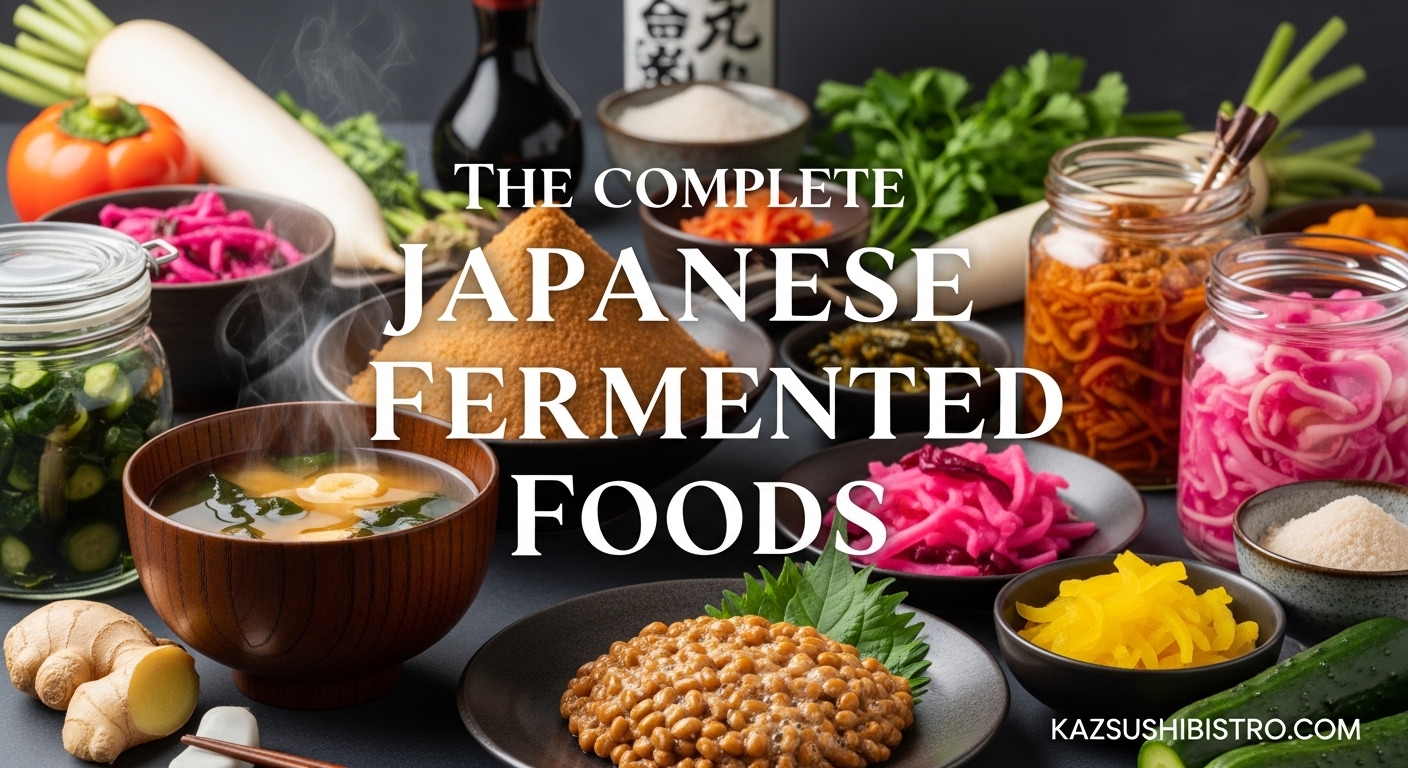
Walking through a traditional Japanese market, you will notice rows of wooden barrels, ceramic crocks, and glass jars filled with mysterious bubbling concoctions. These are not leftovers gone wrong. They represent one of Japan’s greatest culinary achievements: the art of fermentation. This Japanese fermented foods guide will walk you through everything you need to know about these transformative ingredients that have shaped one of the world’s healthiest cuisines.
At KAZ Sushi Bistro, we have spent years studying and working with these remarkable foods. The depth of flavor that fermentation creates cannot be replicated with modern shortcuts. Whether you are a home cook looking to expand your pantry or simply curious about the science behind that bowl of miso soup, this guide covers the full spectrum of Japanese fermented foods and their benefits for your health and cooking.
By the end of this guide, you will understand what makes fermentation special, know the difference between koji and lactobacillus fermentation, and feel confident adding these ingredients to your daily meals. Let us explore the world of hakko shokuhin together.
Table of Contents
What is Fermentation?
Fermentation is a metabolic process where microorganisms like bacteria, yeast, and mold break down organic substances. In Japanese cuisine, this typically involves converting carbohydrates into alcohol or acids, or breaking down proteins into amino acids. The result is food that lasts longer, tastes more complex, and delivers unique health benefits.
The Magic of Koji
Koji is the cornerstone of Japanese fermentation. Specifically, it refers to Aspergillus oryzae, a mold that has been cultivated in Japan for over 9,000 years. This remarkable fungus produces enzymes that break down starches into sugars and proteins into amino acids.
When rice, barley, or soybeans are inoculated with koji spores, they transform into a sweet, fragrant base for countless Japanese foods. The enzymes generated by koji create that unmistakable umami flavor that defines Japanese cooking. Without koji, there would be no miso, no soy sauce, no sake.
Other Fermentation Methods
While koji dominates soy-based ferments, other methods exist. Lactic acid fermentation powers Japanese pickles, with beneficial bacteria converting sugars into tangy acids. Bacillus subtilis bacteria transform steamed soybeans into natto. Each method creates distinct flavors, textures, and nutritional profiles.
Why Japan Embraces Fermented Foods?
Japan’s climate played a major role in developing its fermentation culture. Hot, humid summers created conditions where food spoiled quickly. Before refrigeration, fermentation was survival. It extended shelf life while actually improving flavor and nutrition.
Geography also mattered. As an island nation, Japan had abundant seafood but needed ways to preserve catches for inland communities. Fish fermentation techniques evolved to meet this need. Meanwhile, rice cultivation provided the perfect substrate for koji-based ferments.
Modern Japan continues this tradition because the health benefits became undeniable. With one of the highest life expectancies globally, Japanese researchers have extensively studied the connection between fermented food consumption and longevity. The scientific backing for probiotic benefits keeps these traditional foods relevant today.
Types of Japanese Fermented Foods 2026
Japanese fermented foods fall into several distinct categories. Understanding these groupings helps you navigate the options and choose ingredients that match your cooking style and health goals.
Soy-based ferments include miso and natto. Fish-based options range from katsuobushi to shiokara. Condiments like soy sauce, mirin, and rice vinegar form the flavor foundation of Japanese cooking. Pickles (tsukemono) offer probiotic benefits in countless varieties. Finally, fermented beverages provide both alcoholic and non-alcoholic options with unique health properties.
Soy-Based Fermented Foods
Miso: The Fermented Soybean Paste
Miso is Japan’s most famous fermented food. This thick paste combines soybeans, koji-inoculated grain (usually rice or barley), and salt. The mixture ferments for months or even years, developing complex flavors ranging from sweet and mild to robust and salty.
White miso (shiro miso) ferments for shorter periods, typically three months. It tastes sweet and works well in light soups and dressings. Red miso (aka miso) ages for up to three years, developing intense umami perfect for hearty stews and glazes. Mixed miso (awase) blends varieties for balanced flavor.
The fermentation process breaks down soy proteins into amino acids, particularly glutamic acid, which creates that savory umami sensation. A single bowl of miso soup delivers protein, vitamins, minerals, and millions of beneficial bacteria to support gut health.
Natto: The Polarizing Powerhouse
Natto divides people immediately. These fermented soybeans have a strong smell, sticky texture, and distinctive flavor that some love and others cannot tolerate. Do not let first impressions stop you from trying this nutritional powerhouse.
Bacillus subtilis bacteria ferment steamed soybeans into natto over 24 hours. The result contains more vitamin K2 than almost any other food, supporting bone and cardiovascular health. Natto also delivers nattokinase, an enzyme believed to support healthy blood flow.
Traditional natto service includes mustard, soy sauce, and chopped scallions over hot rice. The combination cuts through the intensity while delivering maximum probiotic benefit. Start with small portions if you are new to natto. Many people grow to love it after several tries.
Fish-Based Fermented Foods
Katsuobushi: Fermented Bonito Flakes
Katsuobushi might be the world’s most labor-intensive food. Fresh bonito fillets simmer, then smoke repeatedly over weeks. Finally, they undergo fermentation with mold for several months before drying into rock-hard blocks.
Shaved into delicate flakes, katsuobushi creates the foundation of dashi broth, essential to Japanese cooking. The fermentation process concentrates umami compounds while developing complex flavor notes impossible to achieve through simple drying. High-quality katsuobushi can cost hundreds of dollars per pound.
When making dashi, combine katsuobushi with kombu seaweed for the purest expression of Japanese flavor. The resulting broth forms the base for miso soup, noodle dishes, and countless sauces. Even a small amount of katsuobushi elevates simple dishes.
Shiokara: Salt-Fermented Seafood
Shiokara represents the intense end of Japanese fermentation. Small seafood like squid or fish ferments in its own guts with salt for weeks. The enzymes from the animal’s digestive system break down proteins into intensely flavored compounds.
This preservation method dates back centuries when fishermen needed ways to store catches without refrigeration. Today, shiokara serves as tsumami (bar snacks) alongside sake or beer. The intense saltiness and umami pair perfectly with alcoholic beverages.
Most non-Japanese find shiokara challenging at first. The texture and intensity require an acquired palate. However, small amounts add incredible depth to rice dishes and provide concentrated protein and minerals.
Fermented Condiments
Soy Sauce (Shoyu)
Soy sauce needs little introduction. This dark liquid seasons everything from sushi to stir-fries worldwide. Authentic Japanese soy sauce undergoes true fermentation, unlike chemically produced alternatives.
Traditional brewing combines soybeans, wheat, and koji in massive cedar barrels. The mixture ferments for six months to two years, developing over 300 distinct flavor compounds. The result balances saltiness, sweetness, umami, and subtle bitterness in a way synthetic versions cannot replicate.
Different varieties suit different purposes. Koikuchi (dark) soy sauce works as an all-purpose seasoning. Usukuchi (light) adds salt without darkening dishes. Tamari, made with little or no wheat, offers gluten-free intensity perfect for dipping.
Mirin: Sweet Rice Wine
Mirin brings sweetness and shine to Japanese cooking. This low-alcohol rice wine contains 40-50% sugar content, creating natural glaze without added sweeteners. The fermentation process produces complex sugars that caramelize beautifully during cooking.
True mirin (hon mirin) undergoes traditional fermentation with koji. Cheap alternatives called mirin-fu chomiryo contain alcohol, corn syrup, and flavorings without the benefits of real fermentation. Check labels carefully. Real mirin lists rice, koji rice, and shochu as primary ingredients.
Every teriyaki sauce, sukiyaki broth, and glazed fish dish relies on mirin. The sugar content creates that characteristic lacquered appearance while balancing salty and acidic flavors.
Rice Vinegar (Su)
Rice vinegar provides the gentle acidity essential to Japanese cuisine. Unlike harsh Western vinegars, rice vinegar offers subtle tang that enhances rather than overwhelms. The fermentation process converts rice alcohol into acetic acid using bacteria.
Seasoned rice vinegar (sushi vinegar or sushi su) includes salt and sugar, formulated specifically for sushi rice preparation. Plain rice vinegar works for pickling, dressings, and general cooking. Brown rice vinegar offers additional nutrients from the whole grain.
When making sushi at home, proper rice vinegar application transforms plain rice into seasoned foundation for fish and vegetables. The acidity preserves the rice while adding refreshing brightness that balances rich toppings.
Japanese Pickles (Tsukemono)
Nukazuke: Rice Bran Pickles
Nukazuke represents home fermentation at its most accessible. Rice bran (nuka) mixed with salt, water, and vegetable scraps forms a bed for lacto-fermenting vegetables. Once established, a nuka bed lasts indefinitely with proper care.
Vegetables buried in the nuka bed ferment for hours to days, developing tangy flavor and probiotic benefits. Common choices include cucumbers, daikon radish, eggplant, and carrots. The resulting pickles offer crunch, acidity, and digestive support.
Maintaining a nuka bed requires daily attention. Stirring the mixture and burying fresh vegetable scraps feeds the lactobacillus bacteria that drive fermentation. Many Japanese families pass down nuka beds through generations, each developing unique flavor profiles based on local bacteria and care routines.
Umeboshi: Pickled Plums
Umeboshi provides intense flavor in small packages. These pickled ume fruits (often called plums, though technically apricots) pack serious sourness and saltiness. One umeboshi can flavor an entire pot of rice.
Green ume fruits pickle in salt with red shiso leaves for several months. The salt draws out moisture while lactobacillus fermentation develops complex acids. The shiso imparts distinctive red color and aromatic notes.
Traditional belief holds that umeboshi neutralizes fatigue and aids digestion. Modern research confirms the citric acid content helps metabolize lactic acid that builds up after exertion. The high salt content means moderation matters, but the benefits are real.
Kasuzuke: Sake Lees Pickles
Kasuzuke pickles vegetables in sake lees, the solids left after pressing fermented rice for sake production. The lees contain residual alcohol, sugars, and amino acids that preserve and flavor vegetables simultaneously.
Common kasuzuke choices include cucumber, daikon, and fish. The resulting pickles have mellow sweetness, subtle alcohol notes, and soft texture distinct from salt-based alternatives. Kasuzuke works particularly well with ingredients that benefit from gentle handling rather than aggressive fermentation.
Sake lees (kasu) have gained attention recently as a sustainable ingredient. Rather than discarding this byproduct of sake production, Japanese cooks transform it into pickles, marinades, and even skincare products. The umami content makes kasu valuable in modern cooking.
Fermented Beverages
Amazake: Sweet Fermented Rice Drink
Amazake offers the benefits of fermentation without alcohol. This sweet, creamy drink results from koji breaking down rice starches into simple sugars. The process creates natural sweetness without added sugar.
Traditional amazake contains no alcohol and suits all ages. It delivers glucose for quick energy, plus the enzymes and amino acids generated by koji fermentation. Japanese tradition considers amazake a beauty food, supporting skin health through improved digestion and nutrient absorption.
Modern amazake comes in drinkable form or as a cooking ingredient. The porridge-like texture works in smoothies, oatmeal, or as a sugar substitute in baking. Amazake face masks have also become popular in Japanese skincare routines.
Sake and Shochu: Alcoholic Fermentation
Sake represents Japan’s iconic fermented beverage. Multiple parallel fermentation converts rice starch into alcohol simultaneously, a technique unique to sake production among major world alcohols. The result ranges from dry and crisp to sweet and rich depending on brewing methods.
Shochu takes a different path. Distillation of fermented ingredients (rice, barley, sweet potato, or other starches) creates a clear spirit with higher alcohol content. While sake fermentation produces complex aromatics, shochu distillation emphasizes clean, pure flavors.
Both beverages carry fermentation benefits. Sake contains amino acids and organic acids generated during brewing. Shochu offers fewer compounds but remains lower in calories than other spirits. Moderate consumption of either aligns with Japanese dietary patterns associated with longevity.
Health Benefits of Fermented Foods
Japanese fermented foods deliver measurable health benefits backed by scientific research. Regular consumption supports digestive health, immune function, and overall wellbeing through several mechanisms.
Probiotic Power for Gut Health
Fermented foods contain live beneficial bacteria that colonize your digestive tract. These probiotics compete with harmful bacteria, support nutrient absorption, and produce compounds that strengthen your intestinal barrier. Miso, natto, and unpasteurized pickles deliver billions of live cultures per serving.
Gut health research has exploded in recent years. Studies link balanced gut microbiomes to improved digestion, better mood, stronger immunity, and reduced inflammation. Japanese fermented foods provide diverse bacterial strains that support this balance naturally.
Enzyme Activity and Digestion
The enzymes produced during fermentation continue working in your body. Koji-generated proteases help break down proteins. Amylases assist carbohydrate digestion. Consuming fermented foods essentially borrows the digestive power cultivated during their production.
This enzymatic support reduces digestive burden, allowing your body to extract more nutrition from meals. Many people report reduced bloating and improved regularity after adding fermented foods to their diet. The enzymes also help break down anti-nutrients in soy and other plant foods.
Nutritional Enhancement
Fermentation creates nutrients that did not exist in the raw ingredients. Vitamin K2 appears during natto production. B vitamins multiply in many fermented foods. Amino acids become more bioavailable as proteins break down.
The process also reduces compounds that block nutrient absorption. Phytic acid in grains and legumes decreases during fermentation, freeing up minerals like iron and zinc for your body to use. Fermented soy delivers more usable calcium than unfermented versions.
Immune System Support
Your gut contains 70% of your immune system. By supporting gut health, fermented foods indirectly strengthen immunity. Additionally, specific compounds in fermented foods activate immune cells directly. Beta-glucans in koji and bioactive peptides in fermented soy both stimulate immune response.
Regular fermented food consumption correlates with fewer infections and milder symptoms when illness strikes. While not a replacement for medical care, these foods provide genuine immune support as part of a healthy lifestyle.
How to Store and Use Japanese Fermented Foods
Storage Guidelines
Proper storage preserves flavor and probiotic benefits. Miso belongs in the refrigerator after opening, where it lasts indefinitely. The salt content and active cultures prevent spoilage, though surface mold occasionally appears. Simply scrape off any mold and use the remainder.
Natto requires refrigeration and tastes best consumed quickly after opening. The texture degrades with time, though safety remains intact for weeks. Soy sauce stores at room temperature but keeps longer refrigerated. Unpasteurized pickles must stay cold to maintain live cultures.
Katsuobushi blocks last years when kept dry. Once opened, use within months for best flavor. Rice vinegar and mirin remain stable at room temperature for extended periods due to their acidity and alcohol content.
Where to Find Authentic Products
Finding authentic Japanese fermented foods outside Japan has become easier. Asian grocery stores stock miso, natto, and basic condiments. Japanese specialty markets offer wider selections including regional varieties and artisanal products.
Online retailers connect you directly to Japanese producers. Many small fermentation houses now ship internationally, offering products unavailable in local stores. When buying online, check production dates. Fermented foods have long shelf lives but taste best consumed reasonably fresh.
Look for products with short ingredient lists. Authentic miso lists soybeans, rice or barley, salt, and koji. Real soy sauce contains soybeans, wheat, salt, and water. Avoid versions with alcohol, preservatives, or artificial flavorings.
Beginner Tips for Trying Fermented Foods
Start with mild options. White miso offers gentle introduction compared to intense red varieties. Amazake provides sweetness without challenging flavors. Basic nukazuke pickles taste approachable for most palates.
Small portions work better than large servings. A teaspoon of miso in soup introduces your palate gradually. A few strands of natto on rice lets you acclimate to the texture. You can always increase amounts as appreciation grows.
Combine fermented foods with familiar flavors. Miso works beautifully in salad dressings and marinades, not just traditional soup. Natto pairs well with ingredients you already enjoy. Integration into existing meal patterns increases success more than forcing entirely new dishes.
Frequently Asked Questions
What are the main types of Japanese fermented foods?
The main types include soy-based foods (miso, natto), fish-based foods (katsuobushi, shiokara), fermented condiments (soy sauce, mirin, rice vinegar), Japanese pickles called tsukemono (nukazuke, umeboshi, kasuzuke), and fermented beverages (amazake, sake, shochu). Each category uses different fermentation methods and delivers unique flavors and health benefits.
What are the health benefits of Japanese fermented foods?
Japanese fermented foods provide probiotics that support gut health and digestion, enzymes that assist with nutrient absorption, enhanced nutritional content including B vitamins and vitamin K2, and compounds that support immune function. Regular consumption correlates with improved digestion, stronger immunity, and is associated with longevity in Japanese populations.
What is koji and how is it used in fermentation?
Koji is the common name for Aspergillus oryzae, a beneficial mold that has been cultivated in Japan for over 9,000 years. It produces enzymes that break down starches into sugars and proteins into amino acids. Koji inoculates rice, barley, or soybeans to create the base for miso, soy sauce, sake, and amazake. Without koji, most Japanese fermented foods would not exist.
How long does Japanese fermentation typically take?
Fermentation times vary significantly by product. Natto ferments in 24 hours. White miso takes 3-6 months while red miso ages 1-3 years. Soy sauce typically brews 6 months to 2 years. Nukazuke pickles develop in hours to days depending on temperature. Sake fermentation lasts 3-6 weeks. Longer fermentation generally produces deeper, more complex flavors.
What does natto taste like?
Natto has a distinctive flavor that divides people. It tastes earthy, slightly bitter, and savory with notes of coffee and ammonia. The texture is sticky and stringy, which some find challenging. The smell is strong and pungent, often described as similar to strong cheese. Many people grow to love natto after several tries, especially when combined with mustard, soy sauce, and rice.
How do I start with Japanese fermentation at home?
Start with simple projects like amazake, which only requires rice, koji, and a rice cooker. Nukazuke pickles are also beginner-friendly once you establish a rice bran bed. Begin with small batches, maintain clean equipment, and follow temperature guidelines carefully. Many beginners start by simply using store-bought fermented ingredients in cooking before attempting home fermentation.
Conclusion
This Japanese fermented foods guide has explored the incredible depth and variety of hakko shokuhin. From the foundational role of koji in creating miso and soy sauce to the polarizing power of natto, these foods represent thousands of years of culinary wisdom.
The health benefits are real and scientifically supported. Probiotic bacteria support gut health. Enzymes aid digestion. Unique compounds like nattokinase and vitamin K2 provide specific benefits. The connection between fermented food consumption and Japanese longevity continues to drive research and interest worldwide.
At KAZ Sushi Bistro, we incorporate these ingredients into our dishes because they simply taste better than alternatives. The umami depth, the complex aromatics, the satisfying richness, all result from patient fermentation. Whether you visit us to experience these flavors professionally prepared, or begin experimenting at home with quality miso and pickles, you are participating in one of humanity’s oldest and most beneficial food traditions.
Start your fermentation journey with one ingredient. Add miso to your soup. Try natto with breakfast. Experiment with rice vinegar in dressings. Each small step connects you to a tradition that has nourished generations. The world of Japanese fermented foods awaits.