
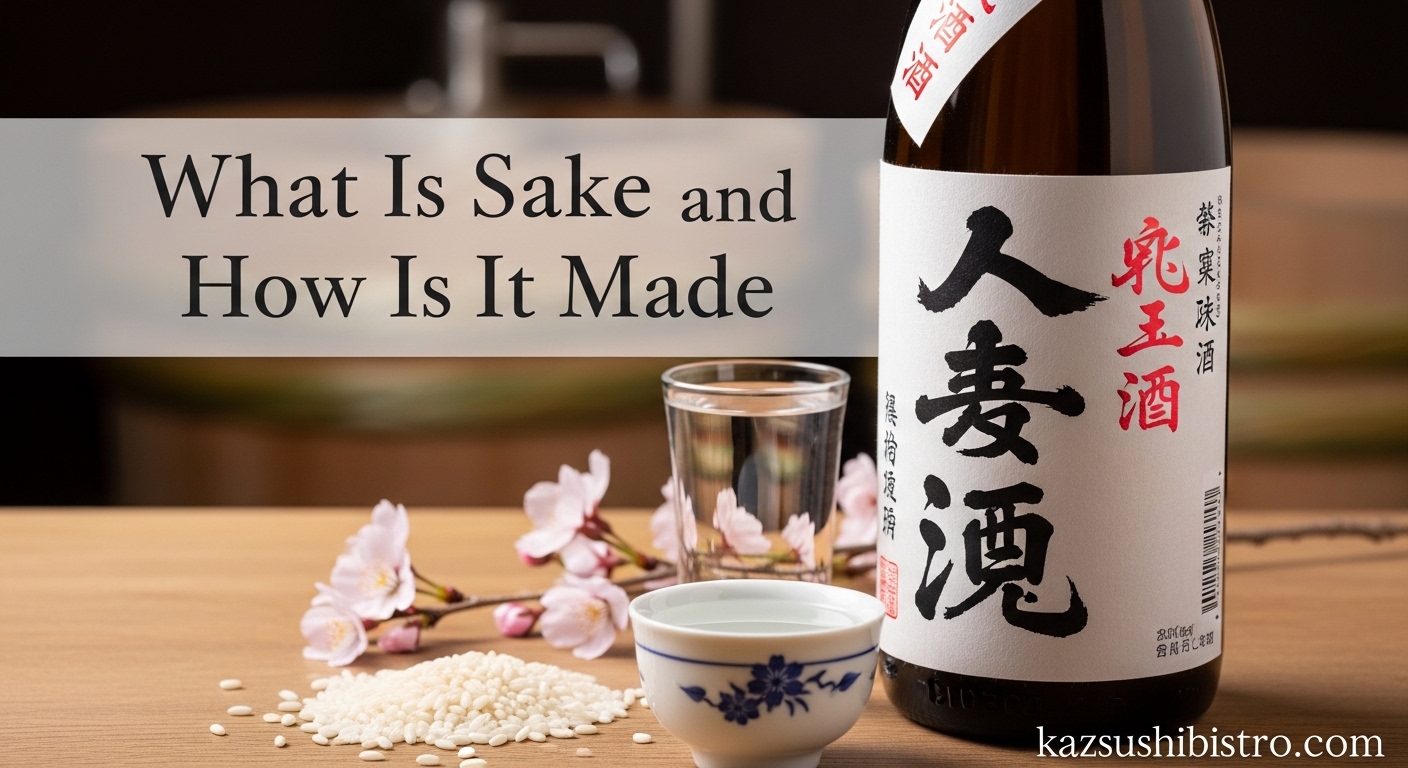
Sake is a traditional Japanese alcoholic beverage made from fermented rice, water, koji mold, and yeast. Despite commonly being called “Japanese rice wine,” sake is actually brewed more like beer through a unique fermentation process that produces an alcohol content of 15-17%. Understanding what sake is and how it is made opens up a world of flavor that has been refined over more than 1,000 years of Japanese craftsmanship.
At KAZ Sushi Bistro, we believe that appreciating your drink enhances your entire dining experience. This guide will walk you through everything from the four essential ingredients to the eight-step brewing process that makes sake unlike any other alcoholic beverage in the world.
Table of Contents
What Is Sake? A Clear Definition
Sake is a fermented alcoholic beverage originating from Japan, crafted from four simple ingredients: rice, water, koji (a beneficial mold), and yeast. The brewing process creates a smooth, aromatic drink with an alcohol content typically ranging between 15% and 17% ABV.
Despite the common nickname “rice wine,” sake is not a wine at all. Wine is made by fermenting sugars that naturally occur in fruit. Sake, on the other hand, must first convert rice starch into sugar before fermentation can begin. This makes the brewing process more similar to beer production, though sake’s unique multiple parallel fermentation sets it apart from both beverages.
Sake is also frequently confused with distilled spirits like vodka or soju. Unlike these spirits, which are created by distilling fermented liquids to increase alcohol concentration, sake is purely a product of fermentation. The higher alcohol content comes from the unique simultaneous conversion of starch to sugar and sugar to alcohol, not from distillation.
What truly distinguishes sake is its clean, smooth flavor profile. The smaller alcohol molecules in sake create a gentler drinking experience compared to wine. The beverage is naturally gluten-free, contains no sulfites, and develops complex umami notes from the koji fermentation process.
The Four Essential Ingredients of Sake 2026
Sake production relies on just four ingredients, yet the interplay between them creates an astonishing range of flavors and styles. Each ingredient contributes something irreplaceable to the final product.
Rice: Not Just Any Grain
Sake rice differs significantly from the table rice you eat at dinner. The grains are larger, with a soft, absorbent core surrounded by harder outer layers rich in proteins and fats. This structure allows brewers to polish away the exterior while preserving the starchy heart needed for fermentation.
While Japan grows specialized sake rice varieties like Yamada Nishiki and Gohyakumangoku, premium California-grown sake rice has become widely used even by traditional Japanese breweries. The quality of the rice contributes to about 20% of the final flavor, while the brewmaster’s skill accounts for the remaining 80%.
Regular table rice lacks the proper starch composition and grain size for optimal sake production. Attempting to brew sake with standard rice would result in a inferior product with muddled flavors and poor texture.
Water: The Hidden Ingredient
Water makes up roughly 80% of every bottle of sake, making its quality absolutely critical to the final product. Japanese breweries often site their operations near pristine water sources, with some famous brewing regions like Fushimi in Kyoto known specifically for their exceptional water.
The mineral content of water dramatically affects the brewing process and final flavor. Hard water, rich in minerals like magnesium and potassium, promotes vigorous fermentation and creates robust, dry sake with a crisp finish. Soft water produces slower fermentation, resulting in gentler, more delicate flavors.
Breweries may adjust their water chemistry to match the profile of famous Japanese brewing regions. This attention to water quality is one reason why premium sake commands higher prices.
Koji: The Magic Mold
Koji is the soul of sake brewing. This beneficial mold, scientifically known as Aspergillus oryzae, performs the critical task of converting rice starch into fermentable sugars. Without koji, there would be no sake.
The mold is cultivated by sprinkling koji-kin spores onto steamed rice in a special cedar-lined room called a koji muro. Over approximately 48 hours, the mold grows thread-like filaments that penetrate the rice grains, releasing enzymes that break down starch molecules into glucose.
Beyond its role in sugar conversion, koji contributes significantly to sake’s distinctive umami flavor. The enzymatic activity produces amino acids and other compounds that give sake its savory depth and complexity. The koji-making process is often called “the heart of the brewery” because it requires constant attention and experience to execute properly.
Homebrewers sometimes worry about the earthy, sweet aroma of developing koji. This distinctive smell is actually a sign of healthy fermentation and should not cause concern.
Yeast: The Alcohol Maker
While koji creates the sugar, yeast converts that sugar into alcohol. Sake brewers use specific yeast strains selected for their ability to thrive in the unique conditions of sake fermentation and contribute desired flavor characteristics.
Traditional sake yeasts work at lower temperatures than beer or wine yeasts, typically between 8C and 18C during fermentation. These cooler temperatures help preserve delicate aromatic compounds that would evaporate at higher temperatures.
Different yeast strains produce different flavor profiles. Some yeasts create fruity, apple or banana-like esters. Others produce cleaner, more neutral flavors that let the rice character shine through. Brewmasters carefully select yeasts based on the style of sake they want to produce.
How Is Sake Made: The 8-Step Brewing Process
The journey from rice grain to finished sake involves eight distinct steps, each requiring precision and expertise. The entire process typically takes between one and two months, though some premium sakes age longer before release.
Step 1: Rice Milling and Polishing
The process begins with milling the brown rice to remove the outer layers of bran, fat, and protein. This reveals the pure starch core needed for fermentation. The amount removed is expressed as the seimai buai, or polishing ratio.
For example, rice milled to 60% means 40% of the outer grain has been removed, leaving 60% of the original kernel. Premium grades require more extensive polishing: ginjo sake uses rice polished to at least 60%, while daiginjo requires 50% or less remaining.
More polishing creates cleaner, more refined flavors but also increases waste and labor costs. This is why daiginjo commands premium prices.
Step 2: Washing and Soaking
After polishing, the rice must be washed to remove bran dust and then soaked to achieve the proper moisture content. This step requires remarkable precision.
Soaking times vary from a few minutes to overnight depending on the rice variety, polishing ratio, and even the ambient temperature. Experienced brewers develop an intuitive feel for when rice has absorbed the right amount of water, testing grains by touch rather than relying solely on timing.
Over-soaking causes rice to crack, leading to inconsistent fermentation. Under-soaking prevents proper koji growth. Getting this step right requires years of experience.
Step 3: Steaming
The washed rice is steamed rather than boiled. Steaming preserves the grain structure while cooking the starch, creating the ideal texture for koji mold to penetrate.
Traditional breweries use large steamers called koshiki, while modern operations may use automated steam chambers. The steaming process typically takes 30 to 60 minutes. Properly steamed rice is firm on the outside with a soft, starchy interior.
The steamed rice is then divided into portions for different purposes: some for making koji, some for the fermentation mash, and some for the yeast starter.
Step 4: Koji Making (The Heart of Sake)
About 20% of the steamed rice is transferred to the koji muro, a cedar-lined room maintained at approximately 30-32C with high humidity. Here, brewers sprinkle koji-kin spores onto the rice and carefully monitor the mold’s growth.
Over the next 48 hours, the koji mold develops enzymes that will convert starch to sugar. Brewers periodically break up rice clumps and adjust temperature by moving koji beds around the room. This hands-on process requires constant attention and cannot be fully automated without sacrificing quality.
Traditional hand-monitoring produces better flavor than mechanized processes. The koji is ready when it has a distinctive sweet, chestnut-like aroma and the grains feel slightly firm but not hard.
Step 5: Fermentation (Multiple Parallel)
The koji rice, additional steamed rice, yeast, and water are combined in a fermentation tank to create the moromi mash. This is where sake’s unique multiple parallel fermentation occurs.
In the moromi, koji enzymes continuously break down rice starch into sugar. Simultaneously, yeast converts that sugar into alcohol. This process happens in the same tank at the same time, unlike beer production where mashing and fermentation are separate steps.
The fermentation typically lasts 18 to 32 days at cool temperatures between 8C and 18C. Brewers add rice, koji, and water in three stages over four days to gradually build up the mash. This staged approach keeps yeast healthy and prevents the high sugar concentration from shocking the cells.
By the end of fermentation, the moromi contains 15-17% alcohol, significantly higher than beer or wine achieve in primary fermentation.
Step 6: Pressing
Once fermentation completes, the moromi is pressed to separate the liquid sake from the solid rice lees. Traditional breweries use a fune, a box press that relies on gravity and gentle pressure from hanging bags of moromi.
Modern breweries often use automated presses called yabuta that squeeze the moromi more efficiently. The first liquid to emerge, called arabashiri, is often bottled separately as a fresher, more robust style.
The pressed liquid is roughly filtered to remove large particles. Some sake styles, like nigori, leave more rice solids in the final product, creating a cloudy appearance and creamy texture.
Step 7: Filtering and Pasteurization
The pressed sake may undergo charcoal filtering to remove color and off-flavors, creating a clear, refined appearance. However, many premium sakes skip this step to preserve more natural character.
Most sake is then pasteurized by heating it briefly to around 60C. This stabilizes the product by deactivating enzymes and killing bacteria that could cause spoilage. Pasteurization allows sake to be stored and transported without refrigeration.
Some sake, called namazake, skips pasteurization. These unpasteurized sakes must be kept refrigerated and have a shorter shelf life, but they offer vibrant, fresh flavors that many enthusiasts prefer.
Step 8: Bottling and Aging
The finished sake is diluted with water to adjust the alcohol content to the desired level, usually around 15-16%. Undiluted sake, called genshu, maintains its full 18-20% strength.
Sake is then bottled and may be aged for several months to allow flavors to meld and mellow. Unlike wine, most sake is not aged for years. The majority is intended to be consumed within a year of production when its fresh, delicate flavors are at their peak.
Some special styles, particularly certain junmai varieties, can benefit from longer aging and develop richer, more complex profiles over time.
Multiple Parallel Fermentation: Sake’s Unique Secret
The single most distinctive feature of sake production is multiple parallel fermentation. This process, found nowhere else in the alcoholic beverage world, is what allows sake to achieve its relatively high alcohol content through fermentation alone.
In beer production, brewing happens in two distinct stages. First, malt enzymes convert grain starches to sugar in the mash tun. Only then is the sweet liquid transferred to fermentation tanks where yeast converts sugar to alcohol. Wine skips the conversion step entirely since grapes already contain sugar.
Sake does both simultaneously. In the moromi mash, koji enzymes continuously saccharify rice starch into glucose. At the same time, yeast cells consume that glucose and produce alcohol and carbon dioxide. This parallel process keeps sugar concentrations moderate, preventing yeast stress while steadily building alcohol levels.
The result is a beverage that reaches 15-17% ABV purely through fermentation, something neither beer nor wine can achieve without distillation. This high alcohol environment eventually kills the yeast, naturally stopping fermentation when the right balance is reached.
This unique process also contributes to sake’s smooth character. The steady conversion prevents the harsh alcohol spikes that can occur in other fermented beverages.
Understanding Sake Types and Classifications
Sake is classified primarily by two factors: the polishing ratio of the rice and whether distilled alcohol has been added. Understanding these categories helps you choose the right sake for your palate and occasion.
Junmai: Pure Rice Sake
Junmai means “pure rice” and indicates that the sake contains only rice, water, koji, and yeast with no additives. Junmai sake tends to be full-bodied with pronounced rice flavors and a slightly higher acidity.
These sakes pair wonderfully with food because their robust character stands up to rich flavors. At KAZ Sushi Bistro, we often recommend junmai with heartier sushi rolls or grilled items. The natural umami in junmai complements savory dishes beautifully.
Ginjo and Daiginjo: Premium Grades
Ginjo and daiginjo represent the premium end of sake production. To qualify as ginjo, the rice must be polished to 60% or less of its original size. Daiginjo requires even more extensive polishing to 50% or less.
This extensive milling removes proteins and fats that could create off-flavors, leaving only the pure starch heart. The result is sake with refined, complex aromas often described as fruity, floral, or reminiscent of apples, bananas, or melons.
Daiginjo represents the pinnacle of the brewmaster’s craft. These sakes are best enjoyed slightly chilled to preserve their delicate aromatics. They pair elegantly with lighter fare like sashimi and delicate fish preparations.
Honjozo and Futsushu
Honjozo sake has a small amount of distilled alcohol added during production. This technique, developed centuries ago, helps extract more aromatic compounds and creates a lighter, cleaner taste profile.
The added alcohol amounts to only about 2-3% of the total volume and is not intended to increase strength. Instead, it aids in flavor extraction and stability. Honjozo is an excellent choice for warming, as the lighter body responds well to heat without becoming heavy.
Futsushu, meaning “regular sake,” represents everyday drinking sake that may have more alcohol added and uses less polished rice. While often overlooked, quality futsushu offers excellent value for casual enjoyment.
Special Styles Worth Exploring
Namazake is unpasteurized sake that must be kept refrigerated. It offers vibrant, fresh flavors that pasteurization would diminish. However, it has a shorter shelf life and should be consumed quickly after opening.
Nigori sake is coarsely filtered, leaving rice solids suspended in the liquid. This creates a cloudy appearance and creamy, slightly sweet taste. Nigori is often enjoyable with spicy food or as a dessert pairing.
Genshu is undiluted sake that maintains its full fermentation strength of 18-20% ABV. These sakes pack more punch and often have richer, more intense flavors.
Sake vs Other Alcoholic Beverages
Understanding how sake differs from wine, beer, and spirits helps explain both its unique characteristics and why it pairs so beautifully with Japanese cuisine.
Sake vs Wine
Despite the “rice wine” nickname, sake differs from grape wine in several important ways. Wine contains tannins from grape skins, which create astringency and structure. Sake has no tannins, resulting in a smoother, softer mouthfeel.
Sake’s acidity is also significantly lower, typically ranging from pH 4.3 to 4.7 compared to wine’s 2.8 to 3.8. This makes sake gentler on the stomach and potentially more suitable for those sensitive to acidic foods and drinks.
The alcohol molecules in sake are smaller than those in wine, creating a cleaner taste that doesn’t linger as long on the palate. This allows sake to complement delicate flavors without overwhelming them.
While wine expresses fruit flavors from the grapes, sake develops umami through koji fermentation. This savory quality makes sake exceptionally food-friendly, particularly with the clean flavors of Japanese cuisine.
Sake vs Beer
Both sake and beer are brewed from grains, but the similarities largely end there. Beer typically contains 4-6% ABV, while sake ranges from 15-17%. This difference comes from sake’s multiple parallel fermentation process.
Beer uses hops for bitterness and preservation, while sake contains no hops whatsoever. Sake’s flavor comes entirely from rice, koji, and yeast interaction.
The brewing timeline also differs significantly. Beer fermentation usually completes in days, while sake fermentation takes two to four weeks. This longer process develops greater complexity.
Sake vs Soju and Shochu
This comparison often causes confusion, but the distinction is simple: sake is fermented, while soju and shochu are distilled. Distillation creates spirits with higher alcohol content, typically 20-25% for soju and 25-40% for shochu.
Soju, Korea’s national drink, is usually made from sweet potatoes, rice, or tapioca. Shochu, its Japanese cousin, can be made from barley, sweet potatoes, rice, or other ingredients. Both are clear spirits more comparable to vodka than to sake.
Because sake is not distilled, it retains more of the original grain character and develops complex flavors through fermentation that distilled spirits cannot achieve.
How to Serve and Enjoy Sake
Serving sake at the proper temperature and in appropriate vessels enhances the drinking experience. At KAZ Sushi Bistro, we guide our guests to discover their personal preferences while respecting traditional practices.
Temperature Matters
Sake can be enjoyed across a wide temperature range, from chilled to warm. The ideal temperature depends on the style of sake and personal preference.
Daiginjo and other delicate, aromatic sakes are best served chilled between 5C and 10C. Cooling preserves their subtle fragrances and prevents the alcohol from overpowering the palate. These premium sakes lose character when warmed.
Junmai and honjozo styles work well at room temperature or slightly warmed to 40C-50C. Warming brings out richer flavors and can mellow sharper edges. However, overheating above 55C damages the sake’s character and should be avoided.
Sake Vessels
Traditional sake is served in small ceramic cups called ochoko. These small portions encourage sipping and savoring rather than gulping. The small size also means the sake stays at the proper temperature from first sip to last.
The masu is a square wooden box traditionally used to measure rice. When used for sake, the wooden surface imparts a subtle aroma and the square shape makes the drink easy to hold. Some establishments serve sake in a masu with a glass inside, pouring until the sake overflows into the box.
A tokkuri is the ceramic flask used to serve warmed sake. These vessels are designed to retain heat while allowing easy pouring into small cups.
Pairing with Sushi
Sake and sushi share a natural affinity. Both represent the Japanese culinary philosophy of celebrating pure, clean flavors without heavy seasoning.
Delicate white fish sashimi pairs beautifully with daiginjo, whose subtle aromatics complement without competing. Richer fish like salmon or tuna work well with junmai ginjo. Oily fish like mackerel find harmony with fuller-bodied junmai.
For sushi rolls with multiple ingredients or spicy sauces, a clean honjozo or even nigori sake provides enough body to stand up to the complexity. Tempura and fried items pair wonderfully with slightly warmed sake that cuts through the richness.
Frequently Asked Questions About Sake
Is sake good for GERD?
Sake is generally lower in acidity than wine, with a pH ranging from 4.3 to 4.7 compared to wine’s 2.8 to 3.8. This makes it potentially gentler for some people with acid sensitivity or GERD. However, individual reactions vary, and alcohol can still trigger symptoms in some individuals. Those with severe GERD should consult their healthcare provider before consuming any alcoholic beverages.
Is sake healthier than alcohol?
Sake offers some advantages over other alcoholic beverages. It is naturally gluten-free, contains no added sulfites, and has smaller alcohol molecules that may be easier to process. Sake also contains amino acids and peptides from koji fermentation that contribute to umami flavor. However, sake is still alcohol with 15-17% ABV and should be consumed in moderation like any alcoholic beverage.
Does sake have histamine?
Sake generally contains lower histamine levels than wine or beer. Because sake undergoes a different fermentation process without bacterial fermentation that produces histamines, it typically has minimal histamine content. This makes sake potentially suitable for those sensitive to histamines, though individual tolerance varies. People with histamine intolerance should start with small amounts to test their reaction.
Is sake just Japanese vodka?
No, sake is not distilled like vodka. Sake is brewed through fermentation similar to beer and wine, where yeast converts sugars into alcohol. The 15-17% alcohol content comes from multiple parallel fermentation, not distillation. Vodka and other spirits are created by distilling fermented liquids to concentrate alcohol, typically reaching 40% ABV or higher. Sake’s production method is fundamentally different from any distilled spirit.
Can you get drunk off sake easily?
Sake has a clean, smooth taste that can mask its 15-17% alcohol content. The smaller alcohol molecules create a gentle drinking experience that doesn’t feel harsh going down. This smoothness can lead to faster consumption than intended. Additionally, the clean flavor doesn’t provide the same warning signals as stronger-tasting spirits. Drinkers should be mindful of their pace and remember that one cup of sake contains more alcohol than a typical beer.
What exactly is sake made of?
Sake is made from four essential ingredients: rice, water, koji (Aspergillus oryzae mold), and yeast. Some styles, called honjozo, also include a small amount of distilled alcohol added during production to enhance aroma. Premium junmai styles contain only the four basic ingredients with no additives. The quality of each ingredient and the skill of the brewmaster determine the final character of the sake.
How is sake made step by step?
Sake is made through eight steps: 1) Rice milling and polishing to remove outer layers, 2) Washing and soaking to achieve proper moisture, 3) Steaming the rice, 4) Koji making where mold converts starch to sugar, 5) Fermentation where multiple parallel fermentation occurs, 6) Pressing to separate liquid from solids, 7) Filtering and pasteurization for stability, and 8) Bottling and aging. The entire process takes one to two months.
Why is sake not popular in Japan?
While sake consumption in Japan has declined from historical peaks due to changing demographics and economic factors, it remains culturally significant and is far from unpopular. Premium and craft sake are actually experiencing growth both in Japan and globally. The beverage remains central to ceremonies, celebrations, and traditional dining. International interest in sake has been steadily increasing, with more people discovering its versatility and food-pairing capabilities.
Conclusion
Sake is a remarkable beverage that represents over a millennium of Japanese craftsmanship and cultural tradition. Made from just four simple ingredients through an intricate eight-step process, it achieves a complexity and elegance that has captivated drinkers worldwide.
Understanding what sake is and how it is made enhances every sip you take. From the koji mold’s transformation of rice starch to the unique multiple parallel fermentation that creates its signature strength, each aspect of sake production contributes to its distinctive character.
At KAZ Sushi Bistro, we invite you to explore the world of sake with confidence. Whether you prefer the refined aromatics of a chilled daiginjo or the robust warmth of a gently heated junmai, there is a sake waiting to complement your meal and elevate your dining experience. Ask your server for recommendations and discover why this ancient beverage continues to win new admirers in 2026.