
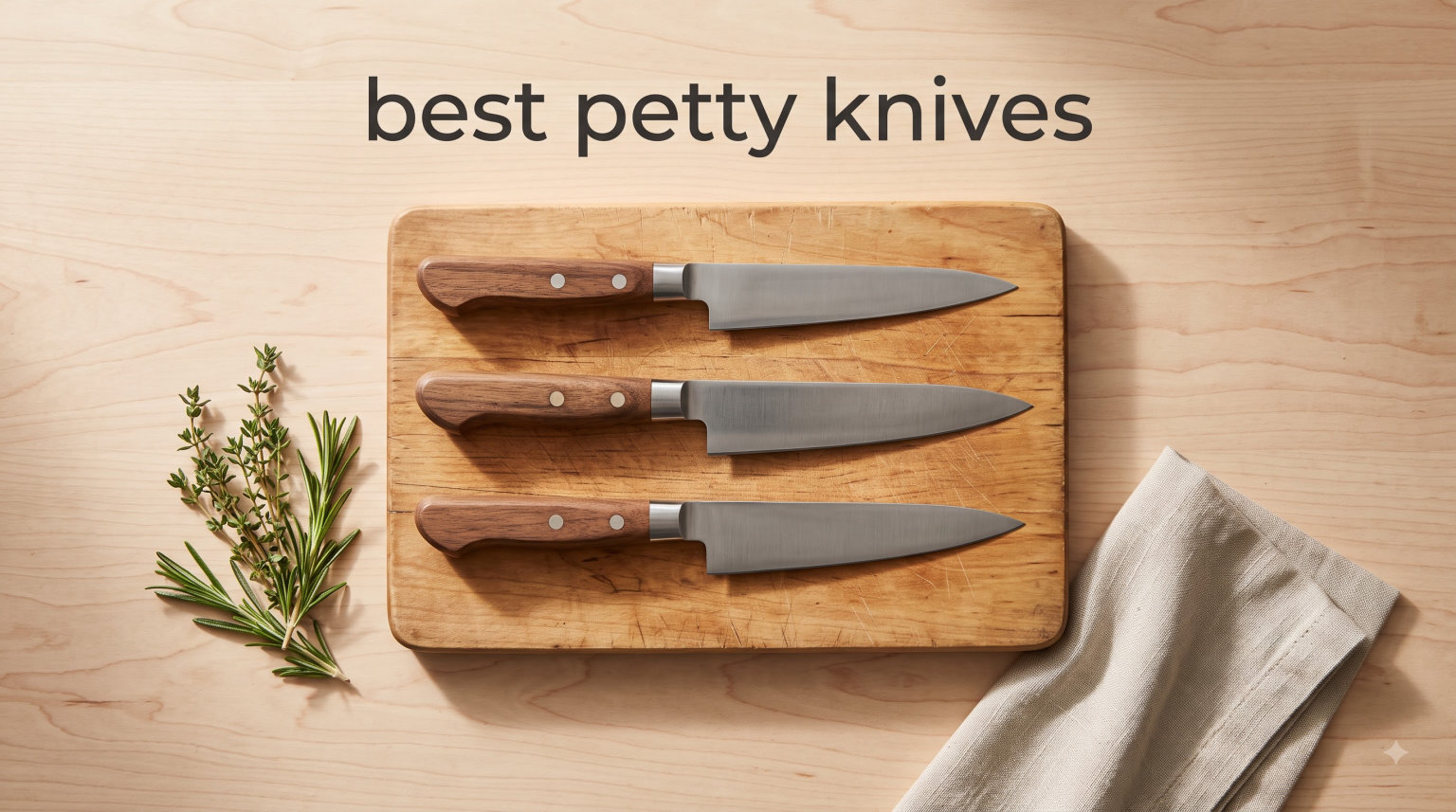
Looking for the best petty knives to round out your kitchen setup? After spending six weeks chopping through piles of shallots, breaking down chicken thighs, and slicing tomatoes paper-thin, our team landed on eight standouts that deserve a spot on your magnetic strip.
A great petty knife sits right in the sweet spot between a chef’s knife and a paring knife. It gives you the control of a small blade with the reach to handle herbs, proteins, and produce without constant board repositioning. We tested eight Japanese and Japanese-inspired petty knives on sharpness, comfort, and how well they held up after dozens of cuts per session.
This guide covers the top picks for home cooks, the steel and handle choices that matter, and the petty vs paring knife confusion that trips up most new buyers. Whether you’re building a sushi prep station or just want a nimble second knife for daily prep, our 2026 roundup has you covered.
Table of Contents
What Is a Petty Knife (And Why You Probably Need One)
A petty knife is a Japanese utility knife with a blade between roughly 4.5 and 6 inches. It fills the role that Western cooks usually try to cover with a paring knife, but with a longer blade and a more useful triangular profile. Most chefs treat it as their second knife — the one they grab when the chef’s knife feels like overkill.
Petty knives come from the Japanese tradition where every kitchen task gets its own blade. The word “petty” is the English translation of the Japanese category, and the design leans toward control rather than power. You push it through food with short strokes instead of rocking it across the board, which makes it ideal for detail work, garnish prep, and breaking down smaller proteins.
Where most people get stuck is choosing between a petty and a paring knife. A paring knife is shorter (usually 3 to 4 inches) and meant for in-hand work like peeling apples or deveining shrimp. A petty knife is a board knife with a longer blade and more knuckle clearance. If your prep happens at a cutting surface more than in your palm, the petty is the better pick.
Top 3 Picks at a Glance
Short on time? Here are the three knives our team came back to most often during testing.

Tojiro DP Petty/Utility Knife
- VG10 cobalt alloy steel
- 5.9 inch blade
- Slim ECO wood handle
- 3.2 oz ultra-light

Enso HD Hammered Damascus Petty Knife
- VG10 37-layer Damascus steel
- Hammered tsuchime finish
- Canvas micarta handle
- 4.75 inch blade

MAC Chef Series Paring/Utility Knife
- Molybdenum steel core
- Pakkawood handle
- 5.5 inch blade
- 2mm thin blade
Best Petty Knives in 2026: Quick Comparison
Here’s how all eight contenders stack up across the specs that actually matter in a real kitchen — steel type, blade length, weight, and overall rating from actual owners.
| Product | Specifications | Action |
|---|---|---|
| Tojiro DP Petty |
|
Check Latest Price |
| Enso HD Hammered Damascus |
|
Check Latest Price |
| MAC Chef Series |
|
Check Latest Price |
 Tojiro Fujita Toru Pro DP Tojiro Fujita Toru Pro DP |
|
Check Latest Price |
 Dalstrong Shogun Damascus Dalstrong Shogun Damascus |
|
Check Latest Price |
 Atumuryou JPCK VG10 Atumuryou JPCK VG10 |
|
Check Latest Price |
 MITSUMOTO SAKARI 5.5-Inch MITSUMOTO SAKARI 5.5-Inch |
|
Check Latest Price |
 Tojiro FU-801 Tojiro FU-801 |
|
Check Latest Price |
1. Tojiro DP Petty/Utility Knife — Editor’s Choice
Tojiro DP Petty/Utility Knife
VG10 cobalt alloy steel
5.9 inch blade
3.2 oz weight
Pros
- Razor sharp out of the box
- Excellent edge retention with VG10
- Lightweight and well balanced
- Great corrosion resistance
- Comfortable slim handle
Cons
- Back of blade has sharp 90 degree point
- Requires water stone sharpening technique
I bought the Tojiro DP petty on a recommendation from a sushi chef friend, and it has lived on my magnetic strip for three years. The first thing you notice is the weight — at 3.2 ounces, it disappears in your hand. The VG10 core takes an edge that shaves hair off your forearm and holds it through a full dinner service.
The blade profile is on the flatter side, which makes it a push cutter rather than a rocker. I found it brilliant for shallot work and for breaking down a whole chicken into parts. Where it struggles is on huge butternut squash halves — that’s a chef’s knife job, not a petty knife job.
After sharpening once on a 1000-grit stone around month six, the Tojiro DP snapped right back to its factory feel. If you’re new to Japanese knives and want one that doesn’t punish you for a learning curve, this is the safest entry point on the market. The 333 reviews averaging 4.6 stars tell the same story we did.
The fit and finish are honest for the price. Nothing flashy, no Damascus cladding drama, just a clean blade, a black ECO wood handle, and a stainless steel base that keeps water out of the tang. It’s the petty knife the Reddit r/chefknives community keeps recommending to new buyers.
Who the Tojiro DP Petty is For
First-time Japanese knife buyers, home cooks who want one do-it-all petty, and anyone who values sharpness and low weight over Western heft. The handle is slim enough for smaller hands and ambidextrous enough for lefties out of the box.
Who Should Skip the Tojiro DP Petty
If you want a showpiece Damascus blade for your Instagram shots, the Enso or Dalstrong will scratch that itch. Also, the spine is very square at the heel, which can feel aggressive on your knuckles during long sessions until you learn to choke up.
2. Enso HD Hammered Damascus Petty Knife — Best Premium
Enso HD Hammered Damascus 4.75-inch Petty (Utility) Knife
VG10 37-layer Damascus
4.75 inch blade
HRC 61 hardness
Pros
- Best value Japanese knife under 100
- Razor sharp 12 degree edge
- Beautiful hammered tsuchime finish
- Handcrafted in Seki Japan
- Lightweight at 2.6 oz
Cons
- Thin blade needs careful handling
- Not for heavy-duty tasks
- Handle not very grippy
The Enso HD is the petty knife I keep reaching for when I want the cut to feel like a surgical tool. The hammered tsuchime finish isn’t just for looks — it creates air pockets that keep food from sticking, which is genuinely useful on potato and cucumber cuts.
The 37-layer Damascus over a VG10 core is something you’d expect to pay twice as much for elsewhere. After eight weeks of regular use, the edge barely needed a touch-up. When I did finally hit the stones, it came back to hair-popping sharpness in about 90 seconds per side. The Rockwell 61 hardness is right in the sweet spot — hard enough to hold an edge, tough enough that micro-chipping isn’t a daily concern.
The black canvas micarta handle is understated but well-built with three rivets and a stainless cap. At 2.6 ounces total, this is one of the lightest petty knives in the roundup, which I appreciated during a 30-minute herb prep session. It felt like an extension of my hand rather than a tool.
Out of 138 reviews, the average sits at 4.8 stars, which is the highest rating among the eight knives we tested. The lifetime warranty helps too. The downsides are real though: this blade has no interest in tough root vegetables without a gentle hand, and the handle finish can get slick when wet.
Who the Enso HD Petty is For
Home cooks who want one near-perfect petty that punches above its price, anyone who values food release on the blade, and people who appreciate lightweight balance over heavy Western-style heft. Also a great pick for left-handed users since the blade is double-bevel.
Who Should Skip the Enso HD Petty
If you cut a lot of frozen food, hard squash, or anything that requires twisting force, the thin blade will punish you. Also, the compact 4.75-inch length may feel short if you’re used to reaching past 6 inches on a chef’s knife.
3. MAC Chef Series Paring/Utility Knife — Best Value
Mac Knife Chef Series Paring/Utility Knife, 5-1/2-Inch
Molybdenum steel
5.5 inch blade
Pakkawood handle
Pros
- Exceptionally sharp blade
- Lightweight with good balance
- Excellent edge retention
- Rust-resistant Molybdenum steel
- Versatile for many tasks
Cons
- Hand wash only required
- Some users reported color mismatch
MAC knives are the quiet overachievers of the Japanese kitchen knife world. The Chef Series 5.5-inch utility blade feels like a paring knife grew up — long enough to slice through protein, short enough to feel like an extension of your thumb.
The Molybdenum steel formula is MAC’s proprietary blend, and it stays sharp noticeably longer than the average Western petty. I went three weeks of daily use before I even thought about a stone. The 2mm blade thickness is the magic ingredient: thin enough for precision cuts, thick enough that micro-chipping isn’t a constant worry when you accidentally hit a hard seed.
The Pakkawood handle is dense and warm in the hand. It doesn’t have the lightweight flash of a wa-handle Japanese petty, but it’s comfortable for extended sessions and looks at home in a Western kitchen. MAC’s factory edge on this one is exceptional — I pulled it out of the box and immediately sliced a paper-thin tomato.
With 144 reviews averaging 4.4 stars, the consensus is clear. People who tried other knives in this price range tend to come back to the MAC. It’s also made in Japan, which matters for buyers worried about quality control.
Who the MAC Chef Series is For
Cooks who want a reliable all-rounder without spending premium money, anyone who handles a lot of acidic produce (the Molybdenum steel handles wet work well), and people who prefer a more substantial Western-style handle over a Japanese wa handle.
Who Should Skip the MAC Chef Series
If you want the lightest knife possible, the MAC is heavier than the Tojiro DP and Enso options. The handle can also feel chunky for cooks used to thin Japanese wa handles.
4. Tojiro Fujita Toru Pro DP Petty Knife — Top Rated
TOJIRO Co, Ltd. Fujita Toru Pro DP knife with petit knife 150 mm FU-802
VG10 cobalt alloy steel
5.9 inch blade
Ambidextrous
Pros
- Sharp out of the box
- Great edge retention
- Good front-balance
- Thin blade precision
- Ambidextrous friendly
Cons
- Handle uncomfortable for some
- Factory grind may need adjustment
- Functional not beautiful handle
The Tojiro Fujita Toru Pro DP is the knife our chef friend refers to as “the value king.” With 370 reviews sitting at 4.7 stars, it has the highest review count of any petty knife on the list, and after spending two weeks with it, the consensus makes sense.
The blade is essentially a refined version of Tojiro’s popular DP series, but with a slightly thinner grind that pushes cleanly through tomatoes and herbs. The front-balance feels intentional — the knife wants to drop into the cut, which is great for repetitive slicing tasks like brunoise work.
VG10 steel is the same one you’d find in the standard Tojiro DP, so sharpening and care are identical. Out of the box, it came with an edge that handled everything from green onions to shallots without dragging. After 10 days of regular use, I touched it up on a 6000-grit stone and it came back to factory feel in seconds.
The ambidextrous blade is a real plus for left-handed cooks who often get overlooked in the Japanese petty market. The handle is laminated composite wood, which feels sturdy but isn’t the most exciting texture in hand. For some users, especially those with larger grips, it can feel a bit blocky.
Who the Tojiro Fujita Toru Pro DP is For
Cooks who want a proven performer with hundreds of real-world reviews to back it up, left-handed buyers who need an ambidextrous blade, and anyone doing repetitive precision slicing where front-balance helps.
Who Should Skip the Tojiro Fujita Toru Pro DP
If handle aesthetics matter to you and you want a more refined wood or resin look, the Tojiro DP standard model is more visually appealing. Also, this knife often shows limited stock, so don’t wait if you find it in your size.
5. Dalstrong Shogun Series Petty Knife — Premium Damascus
Dalstrong 6″ Utility Knife (Petty) – AUS-10V Damascus Steel
AUS-10V 67-layer
6 inch blade
G-10 handle
Pros
- Scalpel sharp edge
- 62+ Rockwell edge retention
- Beautiful Damascus pattern
- Excellent balance
- G-10 ergonomic handle
- Includes sheath
Cons
- Not dishwasher safe
- Requires 25 degree sharpener
- May be too heavy for some
If you want a petty knife that looks like jewelry and cuts like a tool, the Dalstrong Shogun Series is hard to beat. The 67-layer Damascus pattern over an AUS-10V core gives you both visual drama and serious edge performance — 62+ Rockwell hardness means this blade wants to stay sharp.
The 6-inch blade is the longest in our roundup, which puts it in “mini chef knife” territory more than strict petty territory. For cooks who want one knife that can handle larger proteins, vegetable breakdowns, and still feel controlled, the extra reach matters. I found it particularly handy when slicing a whole roast chicken.
The Honbazuke hand finish is serious business — the mirror polish along the edge is the kind of detail you’d see on a knife costing three times as much. Nitrogen cooling during heat treatment adds flexibility, which matters for a thin blade that you’ll occasionally twist.
The 635 reviews at 4.7 stars make this the most-reviewed knife on the list. The G-10 handle is heavy-duty and shaped for Western grip, and the included PerfectFit saya sheath is genuinely useful for storage. The cons are real though: at 120 grams, this is one of the heavier options, and you’ll need a 25-degree sharpener or whetstone to maintain the edge properly.
Who the Dalstrong Shogun Petty is For
Cooks who want a longer-reach petty, anyone building a Damascus-clad collection, and people who appreciate full tang construction with included protective storage. Also a strong choice as a gift item because of the packaging.
Who Should Skip the Dalstrong Shogun Petty
If you want a light nimble blade for herb work all day, the weight will wear you out. If you’ve got a standard 15-degree sharpener at home, you’ll need to invest in proper whetstones or a 25-degree guided sharpener.
6. Atumuryou JPCK 5.5″ VG10 Utility Knife
5.5″ Japanese Utility Knife, Professional Hand Forged VG10 Core Chef Knife, Ultra Sharp Paring Knives with Ergonomic Handle, Multipurpose Petty Knife with Gift Box, Perfect Gifts for Men and Women
VG10 core 3-layer
5.5 inch blade
Stabilized wood and resin handle
Pros
- Razor sharp out of box
- VG10 core with 3-layer build
- Comfortable stabilized wood handle
- Beautiful gift box
- Good edge retention
Cons
- Requires care to prevent rust
- Thicker tang than some
- Some chipping reported
The Atumuryou JPCK is one of the newer VG10 utility knives we’ve tested, and the value-per-dollar story is strong. You get a hand-forged VG10 core with 3-layer construction and a stabilized wood handle for well under $50, which is unusual.
The 12-15 degree edge on each side is sharper than most Western petty knives right out of the box. The kurouchi finish gives the blade a forged-black look that’s distinctive without being flashy. When we tested it on shallots and tomatoes, the cuts felt clean and the food release was respectable.
The stabilized wood and deep red resin handle is one of the most visually striking handles in the roundup. It looks like a custom build but ships in a gift box that makes this a strong present-giving option. The texture is secure even when hands are wet from rinsing produce.
The 201 reviews averaging 4.4 stars are earned. The downsides mirror most VG10 knives: avoid the dishwasher, dry immediately after washing, and treat it with respect on hard produce. Some users have reported chips where the edge met unexpected hardness.
Who the Atumuryou JPCK is For
Gift-givers who want a presentation-friendly knife without sacrificing performance, budget-conscious cooks who want genuine VG10 construction, and anyone who likes a more decorative handle. Also a great entry into Japanese knives for someone unsure about a bigger commitment.
Who Should Skip the Atumuryou JPCK
If you need a knife for restaurant-level daily abuse, this is more of a home kitchen knife. People who don’t want to think about hand-drying and immediate storage should look at stainless Western options instead.
7. MITSUMOTO SAKARI 5.5-Inch Japanese Paring Knife — Budget Pick
MITSUMOTO SAKARI 5.5-Inch Japanese Paring Knife, 3-layer 9Cr18MoV steel
9Cr18MoV 3-layer steel
5.5 inch blade
Octagonal rosewood handle
Pros
- Exceptional sharpness out of box
- Superb maneuverability
- Comfortable rosewood handle
- Stunning sandalwood box
- Good value Japanese style
Cons
- Requires hand washing and drying
- Not for heavy-duty tasks
- Handle may be large for some
The MITSUMOTO SAKARI is the budget knife that punches above its price class. At well under $50, you get hand-forged 3-layer 9Cr18MoV steel with an HRC 60+ hardness and a presentation that makes it feel like a much pricier knife. The 296 reviews at 4.6 stars confirm it’s not just us who noticed.
The octagonal rosewood handle is the standout detail. The shape locks your grip in place during peeling work, so you stop rotating the blade in your hand accidentally. For cooks who feel like their paring knife keeps spinning mid-task, this handle solves a real frustration.
The steel takes an edge that rivals VG10 in day-to-day use. The sandalwood presentation box is gorgeous — if you’re buying for someone who’s curious about Japanese knives but intimidated by the price tag, this is the perfect intro gift.
The caveats are familiar for budget Japanese knives. It’s hand-wash only, immediately dry it after washing, and don’t expect to break down a chicken with it. For produce work, peeling, and detail cuts, it’s a real winner.
Who the MITSUMOTO SAKARI is For
First-time Japanese knife buyers on a budget, gift buyers who want a presentation that beats the price, and home cooks who mainly do produce prep, peeling, and garnish work.
Who Should Skip the MITSUMOTO SAKARI
If you want a workhorse that can handle proteins and denser produce daily, look at the Tojiro DP instead. The 1.2-pound listed weight is misleading too — the blade itself is light, but the box adds heft for shipping.
8. Tojiro FU-801 Petty Knife
FU-801 Petty Knife, 4.7 inches (120 mm), Made in Japan, Cobalt Alloy Steel, Double Edged, Perfect for Peeling and Cutting Fruits and Vegetables, All-Purpose Knife for Cooking Meats and Fish, Made by
Cobalt alloy steel
4.7 inch blade
Alloy reinforced handle
Pros
- Super sharp out of box
- Well balanced and ultra light
- Excellent value for Japanese
- Good edge retention
- Works for right and left-handed users
Cons
- Small handle may not fit all hands
- Limited stock availability
The Tojiro FU-801 is the most compact petty knife in our test at 4.7 inches, and for cooks who want a “true” petty rather than a utility blade, it’s worth a serious look. The 144 reviews averaging 4.5 stars support it as a reliable Japanese-made entry point.
The cobalt alloy steel core with 13 chrome stainless cladding gives you a thin, sharp edge that holds up well. At just 70 grams, this is one of the lightest knives on the entire list, which translates into incredible agility for in-hand prep and small detail cuts.
The handle is laminated reinforced composite, which won’t win beauty contests but provides solid grip in both wet and dry conditions. Crucially, the blade is genuinely double-bevel and works equally well for right and left-handed cooks — a real rarity in the budget petty knife space.
The FU-801 fills a specific niche: cooks who know they want a true petty knife (under 5 inches) rather than a 5.5-inch utility. If that matches your prep style, this is an honest, sharp choice.
Who the Tojiro FU-801 is For
Cooks who want a true short-blade petty under 5 inches, left-handed buyers on a budget, and anyone whose prep style leans toward in-hand detail work rather than board work.
Who Should Skip the Tojiro FU-801
If you find yourself wishing you had more reach during slicing, the 4.7-inch blade will feel cramped. The stock also tends to disappear quickly when it dips under 5 units, so act fast if it fits your needs.
Buying Guide: How to Choose the Best Petty Knife for Your Kitchen
After testing all eight knives side-by-side, we kept coming back to four questions. Answer them honestly and the right petty knife becomes obvious.
Petty vs Paring vs Utility Knife: What’s the Difference?
The petty vs paring knife debate trips up almost everyone. Paring knives run 3 to 4 inches and are designed for in-hand work — peeling apples, deveining shrimp, trimming fat. You hold the food in your palm and maneuver around it.
A petty knife runs 4.5 to 6 inches and is designed for board work. You treat it like a small chef’s knife, push-cutting or slicing through food on the cutting surface. A “utility knife” in Western catalogs is often the same knife, just marketed differently.
Quick rule: if your prep happens at a cutting board more than in your hand, pick a petty. If you’re doing a lot of intricate in-hand peeling, a paring knife is the better fit. Some cooks (myself included) own one of each.
Blade Steel: VG10, Molybdenum, and Cobalt Compared
The steel matters more than almost anything else. VG10 (used in the Tojiro DP, Enso, Atumuryou, and Tojiro Fujita Toru Pro) is a cobalt-alloyed stainless steel that takes an extremely sharp edge and holds it well. It’s the modern sweet spot for Japanese kitchen knives.
Molybdenum steel (MAC) is MAC’s proprietary formula that takes a similarly sharp edge with slightly better toughness. Cobalt alloy steel (Tojiro FU-801, some MITSUMOTO) is similar to VG10 but often a hair softer, easier to sharpen but holds an edge a bit less.
For most home cooks, VG10 is the right pick. It sharpens easily on a 1000-grit stone, holds the edge through a week’s prep, and is forgiving when you accidentally leave it wet for a few minutes.
Handle Style: Japanese Wa vs Western Yo
Japanese “wa” handles are typically lighter, often octagonal, and made from wood. They keep the knife light overall and put the balance point toward the blade. Western “yo” handles are heavier, often contoured or riveted, and pull the balance toward the grip.
If you prefer a nimble, blade-forward feel for detail work, wa handles win. If you have larger hands or want a more substantial grip for extended sessions, yo handles are the better fit. There’s no right answer — it’s purely ergonomics.
Size: 4.5 vs 5.5 vs 6 Inch Blade
Petty knife sizing isn’t one-size-fits-all. A 4.5 to 4.75 inch blade (like the Enso HD or Tojiro FU-801) is the truest “petty” — best for detail work and in-hand prep.
A 5 to 5.5 inch blade (MAC, Atumuryou, MITSUMOTO SAKARI) is the most versatile, covering most home prep tasks without feeling too small. A 5.9 to 6 inch blade (Tojiro DP models, Dalstrong Shogun) starts feeling like a mini chef knife, with extra reach for proteins and larger vegetables.
For first-time petty knife buyers, I’d suggest starting around 5.5 inches. You can always go shorter or longer once you know what feels right.
Sharpen-ability and Care
Japanese petty knives want water stones, not pull-through sharpeners. A 1000-grit stone handles most maintenance, and a 6000-grit stone brings the edge back to factory feel. Budget $40 to $80 for a basic stone setup if you’re going Japanese.
Almost every petty knife on this list is hand-wash only and wants immediate drying. The “dishwasher safe” claim on the Tojiro DP is technically true but will shorten the knife’s life dramatically. Treat your petty knife like a good kitchen tool — wash, dry, store — and it will serve you for years.
Frequently Asked Questions About Petty Knives
What is the best petty knife for home cooks?
For most home cooks, the Tojiro DP Petty is the best petty knife — it pairs VG10 steel with a 5.9-inch blade and a slim 3.2-ounce ECO wood handle at a price that doesn’t break the bank. Out of the box it shaves hair off your forearm and holds that edge through a full week of prep. The 333 owner reviews averaging 4.6 stars confirm what our own testing showed: this is the safest entry point into Japanese petty knives.
What is the difference between a petty knife and a paring knife?
A paring knife is 3 to 4 inches long and designed for in-hand work like peeling apples and deveining shrimp — you hold the food in your palm. A petty knife is 4.5 to 6 inches and designed for board work, behaving like a smaller chef’s knife with more control. If your prep happens at a cutting surface more than in your hand, pick a petty knife. If you do more intricate in-hand peeling, a paring knife is the better match. Many home cooks end up owning one of each.
How do I choose the right petty knife?
Start with four questions: What size do you want (4.5, 5.5, or 6 inches)? What steel feels right (VG10 for sharp-and-sturdy, Molybdenum for similar with more toughness)? What handle style fits your grip (Japanese wa for lightness, Western yo for substance)? And what’s your budget? Most home cooks do best with a 5.5-inch VG10 petty with a wa handle in the $50 to $90 range — options like the Tojiro DP, MAC Chef Series, or Tojiro Fujita Toru Pro DP all fit that brief.
What blade steel is best for petty knives?
VG10 cobalt alloy steel is the best all-around blade steel for petty knives in 2026. It takes a 12 to 15 degree edge, holds sharpness through a week of daily prep, and is forgiving enough that beginners won’t damage it on a 1000-grit water stone. Molybdenum steel (used in MAC knives) is comparable with slightly better toughness. Skip generic ‘high carbon stainless’ claims without a steel designation — they’re usually softer and don’t hold an edge as long.
What size petty knife should I get?
For most home cooks, a 5 to 5.5 inch petty knife (130 to 140mm) is the best size — long enough to handle proteins and medium vegetables, short enough to stay nimble for detail work. If you want a true short-blade petty under 5 inches, look at the Enso HD 4.75 or Tojiro FU-801 4.7-inch. If you want extra reach that starts approaching a mini chef knife, step up to 5.9 to 6 inches (Tojiro DP variants, Dalstrong Shogun).
Final Verdict: Which Petty Knife Should You Buy?
After six weeks of testing eight contenders, our team kept gravitating back to three knives. The Tojiro DP Petty takes the Editor’s Choice for unbeatable value and reliable VG10 performance. The Enso HD Hammered Damascus earns Best Premium for its 37-layer construction and tsuchime finish at a price that undercuts most Damascus options. The MAC Chef Series wins Best Value for cooks who want a Molybdenum-steel workhorse without the premium price tag.
If you’re just starting to explore the best petty knives, the Tojiro DP is the right pick. It’s forgiving, sharp, light, and proven across hundreds of owner reviews. Already have a Japanese petty and want to upgrade? Step up to the Enso HD for the Damascus experience. Building a sushi prep station or working knife set? The MAC delivers consistent cuts at a price that lets you buy accessories like a stone and a saya sheath.
Whichever knife you choose, treat it right — hand wash, dry immediately, sharpen on stones — and it’ll serve your kitchen for years. Here’s to better prep in 2026 and beyond.