
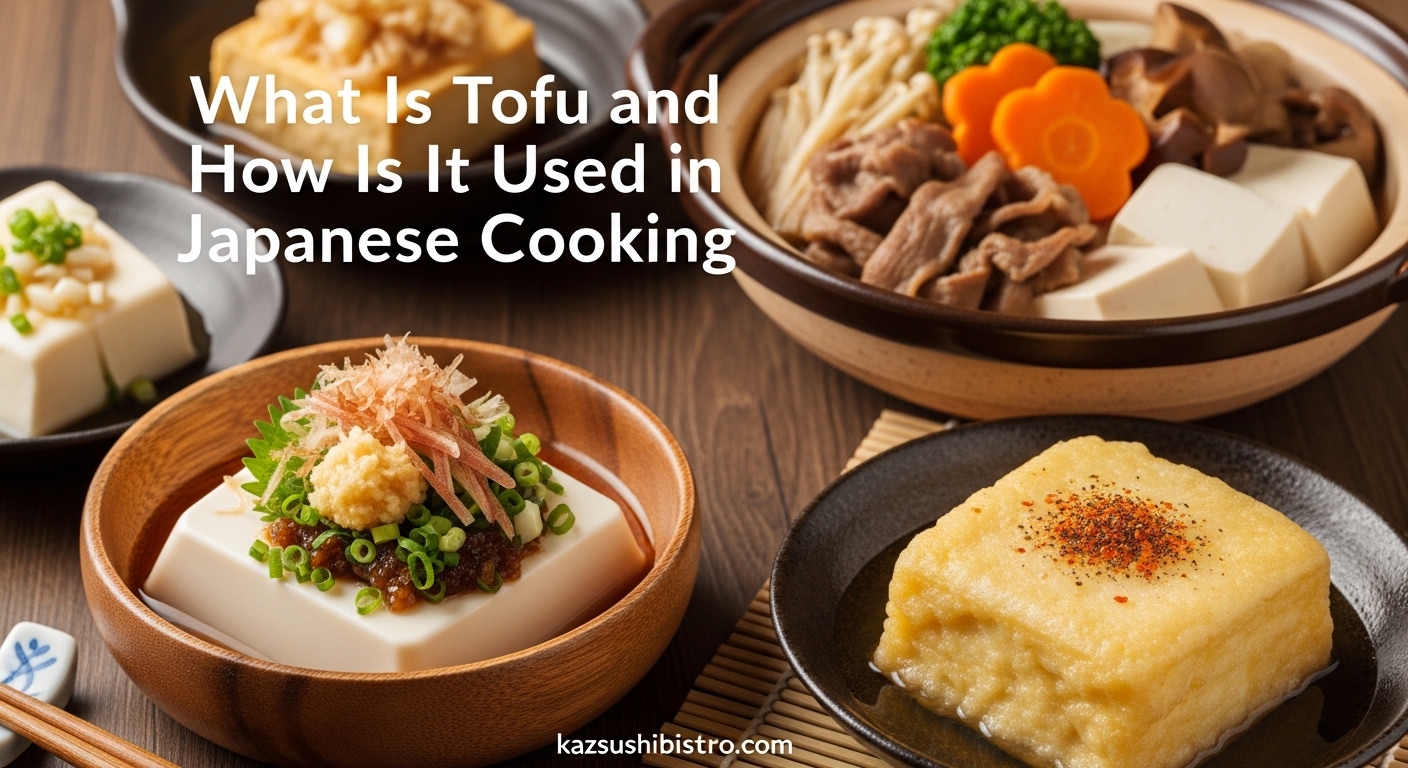
Tofu sits at the heart of Japanese cuisine in ways many home cooks outside Japan have yet to discover. At KAZ Sushi Bistro, we work with tofu daily. We see how this simple soybean curd transforms from a bland white block into something extraordinary with the right technique and seasonings.
Whether you are new to Japanese cooking or looking to expand your skills, understanding tofu opens doors to dozens of authentic dishes. This guide covers what tofu actually is, the types you will find in Japanese markets, and exactly how to use each one in your kitchen. By the end, you will know which tofu to buy for miso soup, how to get that restaurant-quality crispy texture, and why this humble ingredient has sustained Japanese cooking for centuries.
Table of Contents
What Is Tofu and How Is It Made?
Tofu is soybean curd made by curdling soy milk and pressing it into blocks, similar to how cheese is made from curdled milk. It is a good source of plant-based protein and has served as a staple in Japanese cuisine for over a thousand years.
The process begins with dried soybeans soaked in water until soft. These beans are ground with water to create a thick slurry, then boiled and strained to produce fresh soy milk. A coagulating agent, traditionally nigari (magnesium chloride derived from seawater) or calcium sulfate, is added to the hot soy milk. This causes the proteins to curdle, forming solid curds suspended in liquid whey.
The curds are then transferred to cloth-lined molds and pressed to squeeze out excess water. The amount of pressing determines the final texture. Less pressing yields soft, custard-like silken tofu. More pressing creates firm, dense blocks that hold their shape during cooking. The entire process takes about a day from dry beans to finished blocks.
In Japan, fresh tofu is often delivered daily to restaurants and homes, still moist and smelling faintly of sweet soy milk. While packaged tofu travels worldwide, the essential character remains: a mild, blank canvas ready to absorb whatever flavors you add.
Types of Tofu by Texture 2026
Japanese markets stock fresh tofu in several textures, each suited to specific cooking methods. Understanding these differences helps you choose the right tofu for your dish instead of guessing at the grocery store.
Silken Tofu (Kinugoshi Tofu)
Silken tofu contains the highest water content of all fresh varieties, giving it a custard-like texture that barely holds together. The name kinugoshi literally means “silk-strained,” referring to the smooth, fine cloth used during production rather than heavy pressing.
This is the tofu you want for miso soup, where it should fall apart into soft clouds that slip off your chopsticks. It also works beautifully in blended sauces, smoothies, and cold preparations like hiyayakko. Never try to stir-fry or grill silken tofu. It will crumble into an unappetizing mess.
Soft Tofu
Soft tofu sits between silken and firm in moisture content. It holds enough structure to scoop onto a plate while remaining tender and delicate. You might see this labeled as “medium” or “smooth” tofu in some markets.
Soft tofu works well in simmered dishes where gentle heat slowly infuses flavor without breaking the block apart. It is also the texture many Japanese restaurants use for their agedashi tofu, creating that perfect contrast between crisp exterior and yielding interior.
Firm Tofu (Momen Tofu)
Firm tofu, called momen in Japanese, undergoes more pressing than soft varieties. The name comes from the cotton cloth traditionally used to wrap and press the curds. This is the workhorse tofu you will use most often in Japanese cooking.
Firm tofu holds its shape during stir-frying, grilling, and baking. It absorbs marinades well and can be crumbled to mimic ground meat in mapo tofu or other savory dishes. When a Japanese recipe simply says “tofu” without specifying type, it usually means firm tofu.
Extra-Firm Tofu
Extra-firm tofu contains the least moisture and the densest texture. It stands up to aggressive cooking methods like deep-frying and high-heat grilling. The block feels substantial and meaty in your hand.
Use extra-firm tofu when you want distinct cubes that maintain their edges, or when pressing and marinating for maximum flavor concentration. Some cooks prefer this type for crispy tofu preparations because less water means faster browning.
Processed Tofu Products
Beyond fresh blocks, Japanese cuisine features several processed tofu products that expand your cooking possibilities. These prepared forms save time and offer textures you cannot achieve at home.
Aburaage (Fried Tofu Pouches)
Aburaage consists of thin tofu slices deep-fried until they puff into hollow, golden-brown pouches. The exterior turns crisp and slightly chewy while the interior remains tender. You will find these sliced open and simmered in broth, stuffed with vegetables, or most famously used for inari sushi.
To make inari sushi, the aburaage pouches are simmered in a sweet soy mixture, then opened and filled with seasoned sushi rice. The sweet-savory fried tofu skin contrasts beautifully with the vinegared rice inside. At our bistro, we prepare these fresh daily because the quality makes a noticeable difference.
Atsuage (Thick Fried Tofu)
Atsuage takes firm tofu blocks and deep-fries them until golden brown on the outside while remaining creamy within. Unlike aburaage, atsuage does not puff hollow. It stays solid and substantial.
This type works wonderfully in hot pot dishes, simmered in dashi broth, or simply grilled and glazed with teriyaki sauce. The fried exterior creates pockets that soak up surrounding flavors while the interior stays soft.
Koyadofu (Freeze-Dried Tofu)
Koyadofu originated centuries ago at Buddhist temples on Mount Koya, where monks developed the technique of freezing tofu outdoors in winter to preserve it. The freezing process creates a honeycomb structure throughout the tofu. When rehydrated, koyadofu becomes spongy and absorbent.
Modern production mimics this freezing process commercially. To use koyadofu, soak the blocks in warm water for about fifteen minutes until soft. Squeeze gently to remove excess water, then simmer in broth or sauce. The spongy texture absorbs flavors intensely, making it ideal for hearty winter stews.
Yuba (Tofu Skin)
When you heat soy milk, a thin skin forms on the surface as proteins coagulate. This skin is yuba, and it is considered a delicacy in Japanese cuisine. Traditional production involves carefully lifting each sheet as it forms, then drying or using it fresh.
Fresh yuba has a creamy, slightly chewy texture with an intense soy flavor. Dried yuba sheets rehydrate to wrap around vegetables or line hot pots. In Kyoto, specialized yuba restaurants serve multi-course meals celebrating this ingredient in various preparations.
Ganmodoki (Tofu Patties)
Ganmodoki combines mashed tofu with chopped vegetables like carrots, burdock root, and shiitake mushrooms, plus binding ingredients like egg and starch. The mixture is formed into patties and deep-fried until golden.
These savory fritters appear in Buddhist temple cuisine and oden (winter hot pot) throughout Japan. You can find pre-made ganmodoki at Japanese grocery stores, or make your own with leftover firm tofu and vegetable scraps.
The Role of Tofu in Japanese Cuisine
Tofu is not merely an ingredient in Japan. It carries cultural and religious significance that has shaped how Japanese food developed over centuries.
Shojin Ryori: Buddhist Temple Cooking
Buddhist monks in Japan follow a vegetarian diet known as shojin ryori, which prohibits meat and fish. Tofu provides essential protein in this cuisine, appearing in countless preparations from simple simmered dishes to elaborate multi-course meals served at temple lodgings.
The temples at Mount Koya remain famous for their tofu cuisine, particularly koyadofu and sesame tofu (goma-dofu), which uses ground sesame paste instead of soy. Visitors can still experience these traditional meals when staying at temple guesthouses. The cooking emphasizes seasonal ingredients, careful preparation, and mindful eating.
Tofu in Kyoto
Kyoto developed a particular fondness for tofu, partly due to the city’s large Buddhist population and partly because the soft water from local wells produces exceptional tofu. The district of Arashiyama on Kyoto’s western edge houses numerous tofu restaurants serving yudofu, where diners simmer fresh tofu at the table in light dashi broth.
Kyoto-style tofu tends to be softer and more delicate than varieties from other regions. Local producers still use traditional nigari coagulation and wooden molds, creating tofu with subtle sweetness and fine texture that mass-produced versions cannot replicate.
Everyday Home Cooking
Despite its historical and religious connections, tofu remains an ordinary, affordable protein in modern Japanese households. Families eat it several times weekly in various forms. A typical week might include miso soup with tofu, a cold tofu appetizer, stir-fried vegetables with tofu, and perhaps hot pot on the weekend.
The versatility explains its persistence. Tofu can be the main protein, a supporting ingredient, or a refreshing contrast to richer foods. It requires no special equipment to prepare and adapts to any season.
How to Cook With Tofu
Cooking with tofu successfully requires understanding a few basic techniques. Once you master these, you will produce restaurant-quality results at home.
Pressing Tofu: Why and How
Fresh tofu contains significant water, which prevents proper browning and dilutes marinades. Pressing removes excess moisture, allowing the tofu to absorb flavors better and develop crispy surfaces when fried or baked.
To press tofu, wrap the block in clean kitchen towels or paper towels. Place it on a plate, then set a heavy object like a cast iron skillet or several books on top. Let it sit for fifteen to thirty minutes. You will see water pooling on the plate as the towels absorb moisture from the tofu.
For extra-firm tofu, you may only need fifteen minutes. Softer varieties should not be pressed aggressively or they will collapse. Some cooks use a dedicated tofu press, but household items work perfectly well.
Seasoning the Blank Canvas
Tofu itself tastes extremely mild, almost bland. This is actually its strength. Think of tofu as a blank canvas that takes on the character of whatever seasonings you apply.
Japanese cooking favors subtle seasoning that enhances rather than masks the tofu. Common approaches include: soy sauce and wasabi for hiyayakko, dashi broth for simmered preparations, miso glaze for grilled tofu, and ponzu sauce for hot pot. The key is balance. Tofu can handle bold flavors, but the best preparations let the clean soy taste remain detectable beneath the seasonings.
Marinating works best when you remember that tofu absorbs flavors from the outside in. Cut tofu into smaller pieces or slices for faster seasoning penetration. Even a brief fifteen-minute marinade improves the final result significantly.
Achieving Crispy Tofu
The old trick for the crispiest tofu involves cornstarch. After pressing your tofu, cut it into cubes or slices, then toss lightly in cornstarch before pan-frying. The starch creates an extra-crispy exterior while the interior stays tender.
Heat a non-stick or well-seasoned cast iron skillet over medium-high heat. Add enough oil to coat the bottom thinly. When the oil shimmers, add your cornstarch-dusted tofu in a single layer. Resist the urge to move it immediately. Let it sear undisturbed for three to four minutes until a golden crust forms. Flip and repeat on the other side.
This technique works for stir-fries, grain bowls, or serving crispy tofu with dipping sauce. The cornstarch method outperforms plain frying every time, giving you that satisfying crunch people expect from well-prepared tofu.
Popular Japanese Tofu Dishes
Japanese cuisine features dozens of tofu preparations. These are the dishes you will encounter most often, both in restaurants and home kitchens.
Hiyayakko (Cold Tofu)
Hiyayakko showcases tofu in its simplest form. A block of chilled silken or soft tofu sits on a plate, topped with grated ginger, sliced green onion, and katsuobushi (dried bonito flakes). A drizzle of soy sauce finishes the dish.
This is summer comfort food in Japan. It takes five minutes to prepare, requires no cooking, and refreshes on hot days. The contrast between cool, delicate tofu and the sharp garnishes makes it perpetually satisfying. You can vary toppings with grated daikon, shiso leaves, or a dab of wasabi.
Yudofu (Simmered Tofu)
Yudofu brings the Kyoto tofu experience home. Fresh firm tofu is simmered gently in kombu dashi at the table, then dipped in ponzu sauce or sesame dressing before eating. The gentle cooking warms the tofu through while maintaining its delicate texture.
This dish appears at Japanese restaurants during winter months. The simplicity highlights tofu quality. When made with excellent fresh tofu, the subtle sweetness and clean soy flavor become the main attraction.
Agedashi Tofu
Agedashi tofu coats soft tofu cubes in potato starch or cornstarch, then deep-fries them until golden. The crispy tofu goes into a shallow bowl and gets covered with warm dashi broth seasoned with soy sauce and mirin. Grated daikon and green onion garnish the top.
The contrast defines this izakaya favorite: crunchy coating, soft interior, hot broth, cool garnishes. Making it at home requires a small pot of oil and careful temperature control, but the results reward the effort.
Miso Soup with Tofu
No Japanese meal feels complete without miso soup, and tofu is the standard protein addition. Silken tofu works best here, falling apart into tender pieces that slip gently onto your spoon. The tofu absorbs the savory miso broth while contributing its own mild sweetness.
Adding tofu to miso soup requires timing. Dissolve your miso paste in the dashi first, then add tofu cubes and heat gently. Boiling miso soup damages the delicate flavor and breaks apart the tofu unnecessarily.
Inari Sushi
Inari sushi represents the connection between tofu and sushi that many people overlook. Sweet simmered aburaage pouches are opened and filled with seasoned sushi rice, sometimes with additional fillings like sesame seeds or vegetables.
The fried tofu skin is first simmered in a mixture of dashi, soy sauce, mirin, and sugar until deeply flavored and slightly sweet. After cooling, the pouches are stuffed with rice and folded closed. You will find inari sushi at every sushi counter, convenience store, and homemade in Japanese households.
Mapo Tofu (Mabodofu)
Mapo tofu, adapted from Chinese cuisine into Japanese home cooking, combines crumbled firm tofu with ground pork and a spicy sauce built on doubanjiang (chili bean paste). Japanese versions tend to be less spicy than the Sichuan original, sometimes incorporating miso for additional depth.
The soft tofu cubes absorb the rich, spicy sauce while providing textural contrast to the meat. It is a fast weeknight meal that demonstrates tofu’s ability to stand up to bold, complex flavors.
Tofu in Hot Pot (Nabe)
Japanese hot pot dishes like yosenabe and sukiyaki always include tofu among the ingredients. Fresh firm tofu soaks up the savory broth while contributing protein to the communal meal. The tofu is added toward the end of cooking so it does not overcook and crumble.
In winter, families gather around a bubbling pot at the table, adding vegetables, meat, seafood, and tofu in batches. The tofu becomes increasingly flavorful as the meal progresses and the broth concentrates.
Selecting and Storing Tofu
Buying good tofu and keeping it fresh ensures your dishes taste their best. Here is what to look for.
Buying Fresh Tofu
Packaged tofu displays a production or expiration date. Look for the freshest block available, ideally made within the past few days. The package should feel firm and the tofu inside should look white and uniform without discoloration or off-odors.
Water-packed tofu sold in tubs typically tastes fresher than shelf-stable aseptic packages. If you have access to a Japanese grocery store, look for locally made tofu in the refrigerated section. The difference between mass-produced and artisanal tofu is immediately apparent in flavor and texture.
Proper Storage
Fresh tofu must stay refrigerated. Once opened, transfer any unused portion to a container with fresh cold water. Change the water daily to maintain freshness. Stored this way, tofu lasts about three to five days after opening.
Unopened water-packed tofu stays good until the expiration date printed on the package. Shelf-stable aseptic packages last months unopened but should be refrigerated after opening and used within a few days.
Freezing tofu changes its texture dramatically, creating a spongy, meaty consistency similar to koyadofu. Some cooks freeze firm tofu specifically for this effect, then thaw and press it before using in dishes where a chewy texture is desired.
Frequently Asked Questions
Is tofu used in Japanese cooking?
Yes, tofu is a staple ingredient in Japanese cuisine and has been for over a thousand years. It appears in daily home cooking, restaurant dishes, and Buddhist temple cuisine throughout Japan. From miso soup to hiyayakko to agedashi tofu, tofu plays an essential role in the Japanese diet.
What does tofu taste like?
Plain tofu has a very mild, slightly sweet, and subtle soy flavor. Many people describe it as bland or neutral, which is actually its strength. Tofu acts as a blank canvas that absorbs the flavors of whatever sauces, seasonings, or broths you pair with it.
What is an old trick to the crispiest tofu?
To achieve the crispiest tofu, press out excess water first, then toss the tofu pieces in cornstarch before pan-frying. The cornstarch creates an extra-crispy golden exterior while the inside stays tender. Fry in a hot, oiled skillet without moving the tofu for several minutes to develop a proper crust.
Should I marinate tofu before or after cooking?
You should marinate tofu both before and during cooking for the best flavor. Start with at least 15-30 minutes of marinating before cooking to allow initial absorption. Then, add the remaining marinade during the final minutes of cooking so the tofu absorbs the concentrated flavors as the sauce reduces.
Is there a downside to tofu?
For most people, tofu is a healthy, nutritious food. However, those with soy allergies must avoid it completely. Some people with thyroid conditions may need to moderate their soy intake. Additionally, highly processed soy products may contain additives, so choosing minimally processed tofu is generally recommended.
Is tofu okay for diabetics?
Yes, tofu is generally excellent for people with diabetes. It is low in carbohydrates and has a very low glycemic index, meaning it does not spike blood sugar. The high protein content helps with satiety and blood sugar control. As always, individuals should consult their healthcare provider about specific dietary needs.
Which tofu is best for IBS?
Firm or extra-firm tofu is typically better tolerated by people with IBS than silken varieties. The higher water content in silken tofu may trigger symptoms in some individuals. Additionally, choosing organic tofu may reduce exposure to additives that could irritate sensitive digestive systems.
Conclusion
Tofu in Japanese cooking offers endless possibilities once you understand the basics. From silken tofu floating in miso soup to crispy agedashi tofu in savory dashi, this humble soybean curd adapts to virtually any preparation you can imagine.
At KAZ Sushi Bistro, we appreciate tofu as both an everyday staple and a delicacy worthy of careful preparation. Whether you are making a five-minute hiyayakko on a hot summer day or attempting your first batch of homemade agedashi tofu, the principles remain the same. Start with the right type of tofu, remove excess water when needed, season thoughtfully, and cook with attention to texture.
Now that you know what tofu is and how it is used in Japanese cooking, you can explore the dishes that call to you. Visit your local Japanese market, pick up a few blocks of fresh tofu, and start experimenting. The best way to learn is simply to cook.