
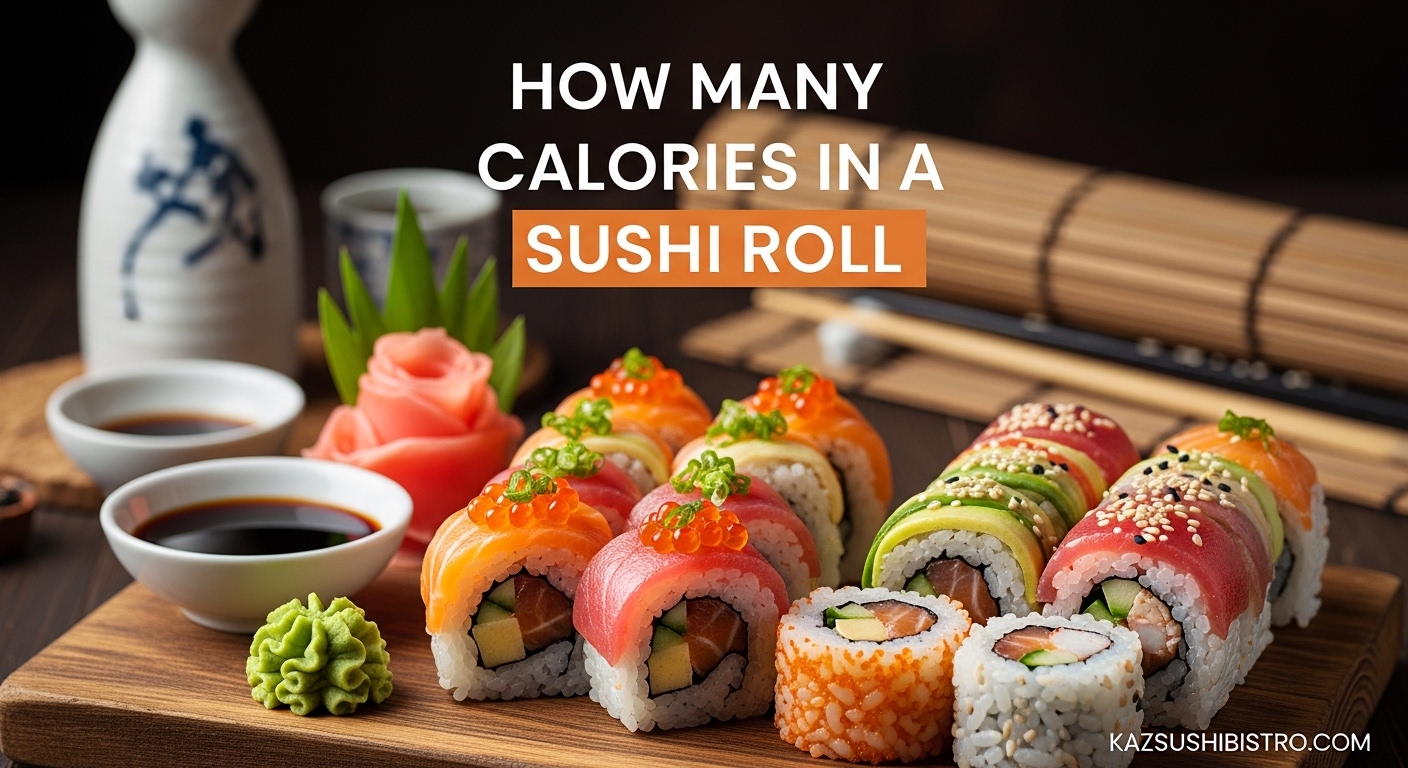
A standard 6-8 piece sushi roll contains 200 to 500 calories depending on the type and ingredients. If you are tracking calories for weight loss or managing health conditions, understanding the exact calorie content of different sushi rolls is essential. This guide breaks down the calories in every popular sushi roll, compares sashimi and nigiri options, and shares tips for healthier ordering.
Table of Contents
Quick Answer: Average Sushi Roll Calorie Count
Most sushi rolls contain between 200 and 400 calories per 8-piece serving. Simple vegetable rolls like cucumber maki sit at the lower end around 130 calories. Specialty rolls with tempura, cream cheese, or heavy sauces can exceed 500 calories per roll.
The calorie variation comes from three main factors: the rice base (about 200 calories per roll), protein choice (raw fish adds 30-100 calories, tempura adds 100+), and additional ingredients like avocado, cream cheese, or sauces (50-150 calories).
Sushi Roll Calorie Comparison 2026
This table shows calories per piece and per standard 8-piece roll along with macronutrient breakdowns. Use this as your reference guide when ordering.
| Roll Type | Calories per Piece | Calories per Roll (8 pc) | Protein | Carbs | Fat | Sodium |
|---|---|---|---|---|---|---|
| Cucumber Roll | 16 | 130 | 2g | 28g | 0g | 210mg |
| Avocado Roll | 28 | 220 | 3g | 38g | 7g | 310mg |
| California Roll | 28 | 225 | 6g | 38g | 4g | 350mg |
| Salmon Avocado Roll | 38 | 304 | 10g | 42g | 9g | 380mg |
| Tuna Roll | 35 | 280 | 9g | 42g | 1g | 340mg |
| Spicy Tuna Roll | 43 | 345 | 10g | 44g | 9g | 420mg |
| Spicy Salmon Roll | 47 | 376 | 11g | 45g | 12g | 460mg |
| Philadelphia Roll | 42 | 335 | 8g | 40g | 13g | 380mg |
| Rainbow Roll | 46 | 368 | 13g | 45g | 12g | 480mg |
| Spider Roll | 60 | 480 | 12g | 48g | 24g | 520mg |
| Dragon Roll | 56 | 450 | 14g | 52g | 16g | 580mg |
| Shrimp Tempura Roll | 65 | 520 | 15g | 58g | 22g | 620mg |
Values are approximate and can vary by restaurant portion sizes and preparation methods. Sodium content is especially variable based on how the rice is seasoned and whether additional salt is added.
Popular Sushi Roll Calories Explained
California Roll
The California roll is the most popular entry point for sushi beginners. It contains imitation crab (surimi), avocado, and cucumber wrapped in rice and nori seaweed.
An 8-piece California roll contains approximately 225 calories. The imitation crab contributes about 80 calories, while the rice adds roughly 200 calories. The avocado provides healthy fats but adds about 60 calories per roll.
Many people assume the California roll is low calorie because it contains no raw fish. However, the rice base still makes it a moderate-calorie choice at about 28 calories per piece.
Spicy Tuna and Spicy Salmon Rolls
Spicy rolls start with the same base as standard tuna or salmon rolls but add spicy mayonnaise. This sauce is where the extra calories hide.
A spicy tuna roll contains approximately 345 calories per 8 pieces. The spicy mayo adds roughly 50-80 calories compared to a plain tuna roll. Spicy salmon rolls run even higher at about 376 calories due to salmon’s naturally higher fat content combined with the mayo.
If you love the flavor but want to cut calories, ask for the spicy sauce on the side. You can control how much you use and often save 30-50 calories per roll.
Shrimp Tempura Roll
The shrimp tempura roll is one of the highest calorie options on most sushi menus. The shrimp is battered and deep-fried before being rolled, adding significant fat and calories.
An 8-piece shrimp tempura roll contains approximately 520 calories. The tempura batter and frying process adds about 120-150 calories compared to using raw or steamed shrimp. The roll is often topped with eel sauce, which adds another 20-30 calories.
If you want the crunch without all the calories, look for rolls with panko breadcrumbs on the outside instead. These add texture with fewer calories than full tempura frying.
Philadelphia Roll
The Philadelphia roll combines smoked salmon with cream cheese, creating a rich, creamy texture that many people love. It is named after the Philadelphia cream cheese brand that originated this combination.
An 8-piece Philadelphia roll contains approximately 335 calories. The cream cheese contributes about 100 calories, making this one of the higher-fat sushi options at 13 grams of fat per roll. The smoked salmon adds protein but also sodium.
Consider this an occasional treat rather than a regular choice if you are watching your calorie intake. The saturated fat from cream cheese makes it less heart-healthy than fish-focused rolls.
Rainbow Roll
The rainbow roll is essentially a California roll topped with assorted sashimi slices, typically tuna, salmon, yellowtail, and shrimp. The variety makes it visually appealing and nutritionally diverse.
An 8-piece rainbow roll contains approximately 368 calories. The extra fish on top adds protein but also increases the calorie count compared to a basic California roll. Each piece contains about 46 calories.
The rainbow roll offers excellent protein value at 13 grams per roll. This makes it a good post-workout option if you are not overly concerned about the moderate calorie count.
Dragon Roll
The dragon roll typically contains shrimp tempura and cucumber on the inside, topped with avocado slices and eel (unagi). The avocado is arranged to look like dragon scales, giving the roll its name.
An 8-piece dragon roll contains approximately 450 calories. The combination of tempura shrimp, eel, avocado, and eel sauce creates a calorie-dense roll. The eel sauce alone adds 30-50 calories per roll.
Dragon rolls taste delicious but pack nearly double the calories of simpler rolls. If you order one, consider sharing it or making it your only specialty roll of the meal.
Vegetarian Options: Avocado and Cucumber Rolls
For the lowest calorie sushi options, look to vegetarian rolls. These skip the fish and focus on vegetable fillings wrapped in rice and nori.
A cucumber roll contains approximately 130 calories for 8 pieces. It is primarily rice with refreshing cucumber filling. An avocado roll contains about 220 calories, with the healthy fats from avocado making it more satisfying despite the moderate calorie count.
Other good vegetarian options include asparagus rolls (about 160 calories) and sweet potato rolls (about 200 calories). These give you the sushi experience with fewer calories than fish-based specialty rolls.
Salmon Avocado Roll
The salmon avocado roll combines omega-3 rich salmon with creamy avocado. It is a nutritious choice that balances protein, healthy fats, and reasonable calories.
An 8-piece salmon avocado roll contains approximately 304 calories. The salmon provides about 10 grams of protein, while the avocado adds 5-6 grams of heart-healthy monounsaturated fat.
This roll offers excellent nutritional value for the calorie cost. The combination of protein and healthy fats helps you feel satisfied longer than lower-protein vegetarian options.
Sashimi and Nigiri: Lower Calorie Alternatives
If you want sushi flavor with fewer calories, sashimi and nigiri are your best options. These traditional Japanese preparations minimize or eliminate rice, cutting the calorie count significantly.
Sashimi is simply slices of raw fish without any rice. A typical serving of 5-6 pieces of salmon sashimi contains about 165 calories. Tuna sashimi is even leaner at about 140 calories for the same portion. Yellowtail and mackerel run slightly higher at 180-200 calories per serving.
Nigiri consists of a small rice ball topped with fish. Each piece of nigiri contains approximately 40-60 calories depending on the fish type. Salmon nigiri is about 55 calories per piece, while tuna nigiri is about 45 calories. An order of 6 pieces typically contains 240-360 calories total.
Choosing sashimi over rolls can cut your calorie intake by 30-50% while maintaining high protein content. If you are following a low-carb or keto diet, sashimi is the clear winner over rice-based rolls.
Some restaurants offer sashimi salads or poke-style bowls. These can be healthy options but watch for added sauces that add hidden calories.
How to Order Healthier Sushi
Ordering sushi does not have to derail your diet. Use these strategies to enjoy your meal while keeping calories in check.
Start with soup or salad. A bowl of miso soup contains only 50-70 calories and helps fill you up before the main course. Seaweed salad is another low-calorie starter at about 70-100 calories.
Ask for sauce on the side. Eel sauce, spicy mayo, and even soy sauce add calories and sodium. Getting them on the side lets you control how much you use. You can often save 50-100 calories per roll by using half the sauce.
Choose brown rice when available. Brown rice sushi has slightly more calories (about 10-20 more per roll) but provides more fiber. The fiber helps you feel full longer and may prevent overeating.
Limit fried rolls. Tempura anything adds 100-150 calories per roll. Stick to raw or steamed fish options for the majority of your order.
Use wasabi and ginger. These traditional accompaniments add flavor without calories. Wasabi may even boost metabolism slightly.
Control your portions. Two rolls plus a few pieces of nigiri or sashimi make a satisfying meal for most people. Ordering four or more rolls typically provides 800-1200 calories, which is half a day’s worth for many people.
Frequently Asked Questions
Is sushi good for weight loss?
Sushi can be part of a weight loss diet when chosen wisely. Simple rolls and sashimi provide lean protein with moderate calories. Avoid tempura rolls, cream cheese rolls, and heavy sauces. Stick to 1-2 rolls with sashimi or nigiri for a balanced, calorie-controlled meal.
Can type 2 diabetics eat sushi?
Type 2 diabetics can eat sushi but should monitor portion sizes due to the white rice content. White rice has a high glycemic index and can spike blood sugar. Choose sashimi, request brown rice if available, or limit to one roll with plenty of protein and vegetables.
How many pieces of sushi is a serving?
A standard serving is typically 6-8 pieces of sushi rolls, or 6-10 pieces of nigiri, or 5-6 slices of sashimi. For a complete meal, most people find 1-2 rolls plus 3-4 pieces of nigiri or sashimi satisfying. Four rolls or more is generally considered a large meal.
Is 4 rolls of sushi too much?
Four rolls of sushi is a large meal for most people, totaling 800-1200 calories depending on the types chosen. This exceeds what many people need for a single meal. A more moderate portion is 1-2 rolls plus sashimi or nigiri, which typically provides 400-600 calories.
How much sodium is in sushi?
Sodium content varies significantly by roll type. Simple vegetable rolls contain 200-300mg per roll, while specialty rolls with eel sauce or multiple fish can exceed 500mg. Soy sauce adds another 300-600mg per tablespoon. If monitoring sodium, request low-sodium soy sauce or use sparingly.
What is 300 calories worth of sushi?
300 calories equals approximately 10 pieces of California roll or 7-8 pieces of spicy tuna roll. It could also be one salmon avocado roll (304 calories) plus a small side of edamame. For lower calorie density, 300 calories buys you about 10 pieces of sashimi.
Conclusion
Understanding how many calories are in a sushi roll helps you make informed choices whether you are dining out or ordering takeout. Simple vegetable rolls contain as few as 130 calories, while tempura and specialty rolls can exceed 500 calories per roll.
Use the comparison table in this guide as your reference, and remember that sashimi and nigiri offer lower-calorie alternatives when you want the sushi experience with fewer carbohydrates. With mindful ordering, sushi can be a healthy, delicious addition to any diet.