
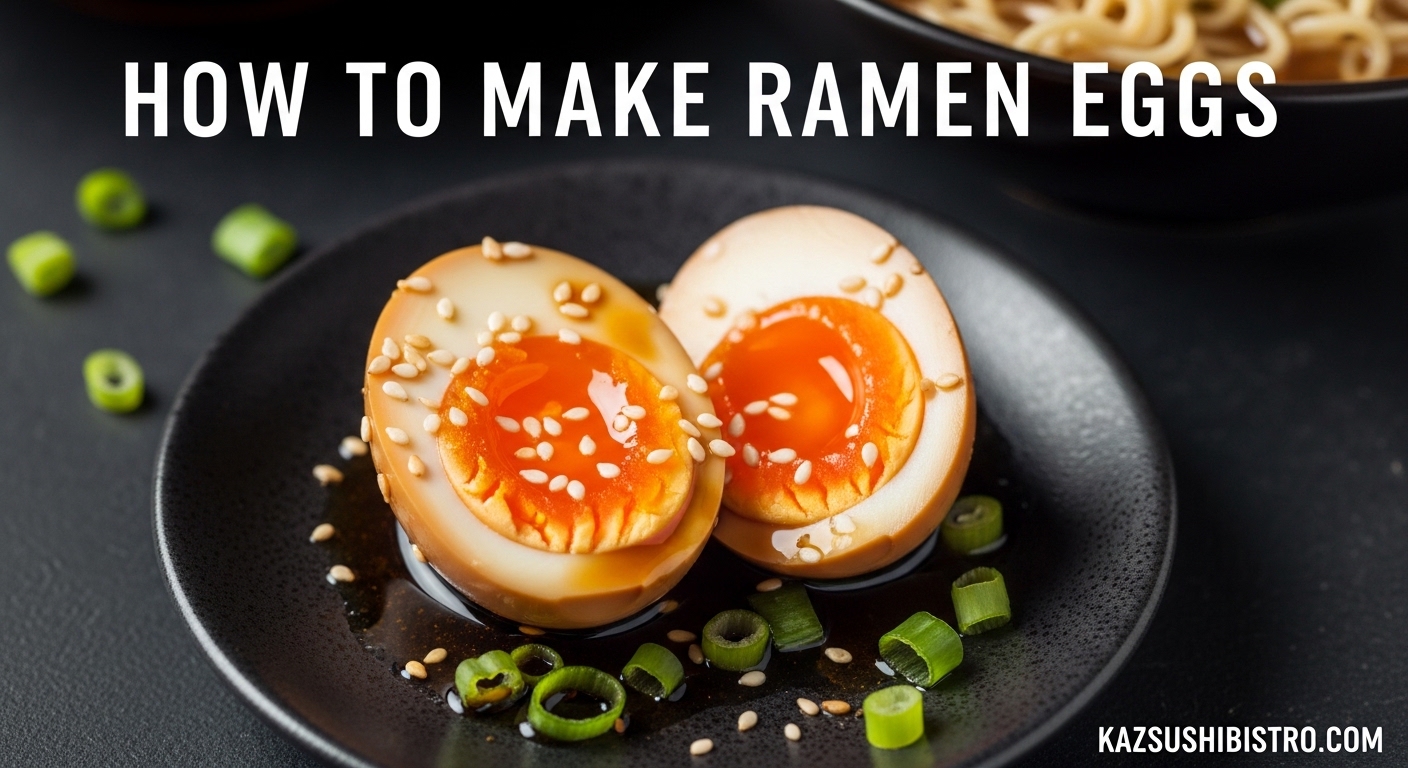
There is something magical about slicing into a ramen egg and watching that golden, custard-like yolk slowly ooze out. The creamy center practically melts on your tongue while the savory soy-mirin marinade adds an irresistible umami punch that transforms an ordinary soft-boiled egg into something extraordinary.
Ajitsuke tamago, which literally means “flavored egg” in Japanese, is the secret weapon that elevates homemade ramen from good to restaurant-quality. These marinated eggs are surprisingly simple to make at home, requiring just a handful of pantry staples and a bit of patience while they soak up all that delicious flavor.
Whether you are building the perfect bowl of tonkotsu ramen or simply want a protein-packed topping for your rice bowls, learning how to make ramen eggs is a skill that pays dividends. The best part? You can make a batch on Sunday and enjoy them throughout the week.
Table of Contents
What Are Ramen Eggs (Ajitsuke Tamago)?
Ramen eggs are soft-boiled eggs that have been peeled and marinated in a seasoned liquid typically made from soy sauce, mirin, and sake. The marinade imparts a beautiful amber color to the whites while infusing them with a savory-sweet flavor profile that complements rich ramen broth perfectly.
The hallmark of a proper ajitsuke tamago is the yolk consistency. Unlike a fully hard-boiled egg, the yolk should be jammy and custard-like with a slightly runny center. When you bite into it, the yolk should hold its shape initially, then slowly release that golden richness into your broth.
These eggs are also known as “ajitama” in Japan, a shortened version of the full name. While they are essential for authentic ramen, they are equally delicious served over rice, in salads, or even as a savory snack on their own.
Ingredients You Will Need 2026
The ingredient list for ramen eggs is refreshingly short. You likely have most of these items in your kitchen already.
- 4 large eggs – Use eggs straight from the refrigerator. Cold eggs are easier to time correctly.
- 1/4 cup soy sauce – Regular or low-sodium both work. Japanese soy sauce like Kikkoman provides authentic flavor.
- 1/4 cup mirin – This sweet rice wine adds sweetness and helps tenderize the egg whites.
- 1/4 cup sake – Adds depth and helps balance the saltiness. Water works as a substitute if you prefer not to use alcohol.
- 1 teaspoon sugar – Optional but recommended to round out the marinade.
If you cannot find mirin, you can substitute a mixture of 3 tablespoons rice vinegar plus 1 tablespoon sugar. For a non-alcoholic version, simply replace the sake with an equal amount of water or low-sodium chicken broth.
How to Make Ramen Eggs: Step-by-Step Instructions
Follow these steps carefully for perfect ajitsuke tamago every time. Timing is everything when it comes to achieving that ideal jammy yolk.
Step 1: Prepare the Marinade
In a small saucepan, combine the soy sauce, mirin, sake, and sugar. Bring the mixture to a gentle boil over medium heat, then immediately remove from heat. Stir until the sugar dissolves completely. Let the marinade cool to room temperature.
Transfer the cooled marinade to a container or zip-top bag. You want it completely cool before adding the eggs to prevent them from cooking further.
Step 2: Boil the Water
Fill a medium pot with enough water to cover the eggs by about one inch. Bring the water to a rolling boil over high heat. Do not add the eggs yet.
While waiting for the water to boil, prepare an ice bath. Fill a bowl with cold water and plenty of ice cubes. This stops the cooking process instantly and prevents overcooking.
Step 3: Cook the Eggs
Once the water is at a full rolling boil, carefully lower the cold eggs into the pot using a slotted spoon or ladle. Start your timer immediately.
For jammy yolks, cook for exactly 6 minutes and 30 seconds. If you prefer a slightly firmer center, go for 7 minutes. During the first 2 minutes of cooking, gently rotate the eggs occasionally with a spoon. This helps center the yolks for prettier presentation when you slice them.
Step 4: Ice Bath
As soon as the timer goes off, immediately transfer the eggs to the ice bath using a slotted spoon. Let them cool for at least 5 minutes. This rapid cooling stops the cooking process and prevents that dreaded gray ring around the yolk.
Step 5: Peel the Eggs
Gently crack the shell all over by tapping it on a hard surface. Start peeling from the wider end where the air pocket is usually located. The ice bath should have loosened the membrane, making peeling easier. Rinse peeled eggs under cool water to remove any shell fragments.
If you are having trouble, peel the eggs under running water. The water helps separate the membrane from the white.
Step 6: Marinate
Place the peeled eggs in the cooled marinade. If using a container, make sure the eggs are fully submerged. If using a zip-top bag, press out excess air and seal. The bag method requires less marinade and ensures even coverage.
Refrigerate for at least 2 hours for a light flavor, 8-12 hours for optimal results, or up to 24 hours for maximum intensity. If marinating longer than 4 hours, rotate the eggs or flip the bag halfway through for even coloring.
Cooking Time Guide for Perfect Yolks
The cooking time determines the texture of your yolk. Here is what to expect at different timing intervals:
- 6 minutes – The yolk will be very runny, almost liquid in the center. Perfect if you want maximum sauce potential.
- 6.5 minutes – The sweet spot for most ramen lovers. Jammy, custard-like yolk that holds shape but flows slowly when cut.
- 7 minutes – Half-set center, more firm than jammy but still moist and creamy throughout.
- 8-9 minutes – Fully set, custard-like yolk with no runniness. Still tender, not dry or chalky.
These times assume you are using large eggs straight from the refrigerator. Room temperature eggs will cook faster, so reduce times by 30 seconds if your eggs are not cold. Altitude also affects cooking time, so add 30 seconds if you live above 3,000 feet.
I recommend starting with 6.5 minutes for your first batch. It gives you that classic ramen shop experience with the perfect balance of runny and set yolk.
Pro Tips for Ramen Egg Success
After making hundreds of these eggs, I have learned a few tricks that make the process nearly foolproof.
Use older eggs for easier peeling. Eggs that are 7-10 days old have a more alkaline white that separates more easily from the membrane. Fresh eggs are notoriously difficult to peel cleanly.
Add baking soda to the boiling water. Just a half teaspoon raises the pH and helps the shells release more easily. This is especially helpful if you only have very fresh eggs.
Do not skip the ice bath. Not only does it stop the cooking, but the temperature shock helps separate the membrane from the white. Five minutes is the minimum, ten minutes is even better.
Use a zip-top bag for marinating. You need significantly less marinade since the bag hugs the eggs. It also makes it easy to rotate them for even coverage.
Mark your eggs before marinating. Use a pencil to lightly mark the date on the shell if you are marinating multiple batches. This helps you keep track of how long they have been soaking.
Troubleshooting Common Problems
Even experienced cooks run into issues sometimes. Here is how to fix the most common problems when learning how to make ramen eggs.
My Eggs Are Impossible to Peel
This is almost always because the eggs are too fresh. Next time, use eggs that are at least a week old. Try adding a half teaspoon of baking soda to your boiling water. Peel under running water, letting the stream get between the membrane and white.
My Yolks Are Overcooked and Dry
Your cooking time was too long or you did not transfer to the ice bath quickly enough. Use a timer and do not rely on guesswork. Get the eggs into ice water within 10 seconds of the timer going off.
The Marinade Color Is Uneven
Rotate your eggs halfway through the marinating time. If using a container, flip them over at the 4-hour mark. The bag method helps prevent this since the marinade surrounds the eggs completely.
My Eggs Taste Too Salty
You marinated them too long, or your soy sauce is particularly salty. Reduce marinating time to 4-6 hours next time, or use low-sodium soy sauce. You can also dilute the marinade with a bit of water.
Delicious Variations to Try
Once you master the basic recipe, experiment with these flavor variations.
Miso Marinade: Replace 2 tablespoons of soy sauce with white miso paste. Whisk it into the warm marinade until smooth. This adds a deeper, fermented flavor that pairs beautifully with miso ramen.
Spicy Ramen Eggs: Add 1-2 teaspoons of chili garlic sauce or sriracha to your marinade. You can also add a splash of sesame oil for extra aromatics.
Aromatic Infusion: Simmer your marinade with smashed garlic cloves, sliced ginger, or green onion pieces before cooling. Strain out the solids before adding eggs.
Mentsuyu Base: Use mentsuyu (Japanese noodle soup base) instead of making your own marinade. It is already seasoned and creates authentic flavor with zero effort.
Dashi-Enriched: Add a tablespoon of dashi powder or a small piece of kombu to your marinade for extra umami depth.
How to Serve Ramen Eggs
While ramen is the obvious choice, these eggs are incredibly versatile.
In ramen, slice the egg in half lengthwise and nestle it yolk-side up on top of your noodles. The yolk will slowly mix into the broth, creating an even richer experience. One egg per bowl is traditional, though nobody will judge you for adding two.
For rice bowls (donburi), slice the egg and arrange it over steamed rice with your protein of choice. Spoon a little extra marinade over the top.
They are also fantastic on avocado toast, in grain bowls, over salads, or simply halved and sprinkled with furikake seasoning as a quick snack.
I have even served them at brunch parties, slicing them in half and arranging on a platter with various toppings. Guests always ask for the recipe.
Storage Guidelines
Proper storage keeps your ramen eggs fresh and safe to eat.
Remove eggs from the marinade before storing. Leaving them in too long makes them increasingly salty and eventually tough. Transfer to an airtight container and refrigerate.
Stored properly, ramen eggs keep for 3-4 days in the refrigerator. Do not freeze them as the texture becomes rubbery and unpleasant upon thawing.
The marinade itself can be reused for about 2 weeks if stored in the refrigerator. Bring it to a boil before adding fresh eggs to kill any bacteria.
Always use clean utensils when handling the eggs to prevent contamination. When in doubt, use your nose. If they smell off, discard them.
Frequently Asked Questions
Can I make ramen eggs ahead of time?
Yes, ramen eggs are perfect for meal prep. Make a batch on Sunday and enjoy them throughout the week. Store peeled, marinated eggs in an airtight container in the refrigerator for up to 4 days. They actually taste better after the first day as the flavors continue to develop.
What can I substitute for sake in the marinade?
Water works perfectly as a 1:1 substitute for sake. You can also use dry sherry, Chinese cooking wine (shaoxing), or low-sodium chicken broth. The sake adds subtle depth but is not essential for delicious results.
How long should I marinate ramen eggs?
Minimum 2 hours for light flavor, 8-12 hours for the best balance, and up to 24 hours maximum. Beyond 24 hours, the eggs become too salty and the whites can get tough. If you need them faster, use the zip-top bag method which marinates more efficiently.
Can I reuse the ramen egg marinade?
Yes, you can reuse the marinade for about 2 weeks if kept refrigerated. Bring it to a boil before adding fresh eggs to ensure food safety. You may need to add a splash of fresh soy sauce and mirin after a few uses as the flavors dilute.
Why are my soft-boiled eggs so hard to peel?
Fresh eggs are notoriously difficult to peel because the pH of the white is too low. Use eggs that are at least 7-10 days old. Adding baking soda to your boiling water helps raise the pH and makes peeling easier. Always use an ice bath and peel under running water.
What is the best cooking time for jammy ramen egg yolks?
6 minutes and 30 seconds is the sweet spot for classic jammy yolks that are custard-like with a slightly runny center. This timing assumes large eggs straight from the refrigerator. Adjust by 30 seconds for room temperature eggs or if you live at high altitude.
Start Making Your Own Ramen Eggs Today
Now that you know exactly how to make ramen eggs, it is time to put this knowledge into practice. The process takes less than 30 minutes of active time, and the results are genuinely impressive. Your homemade ramen will never be the same once you start topping it with these silky, umami-packed eggs.
I encourage you to start with the basic recipe, master the 6.5-minute timing, then experiment with the variations I have shared. Once you get the hang of it, you will find yourself keeping a container of marinated eggs in the fridge at all times.
Have questions about your first batch? Or maybe you have discovered a flavor variation you love? I would love to hear about your ramen egg adventures in the comments below.