
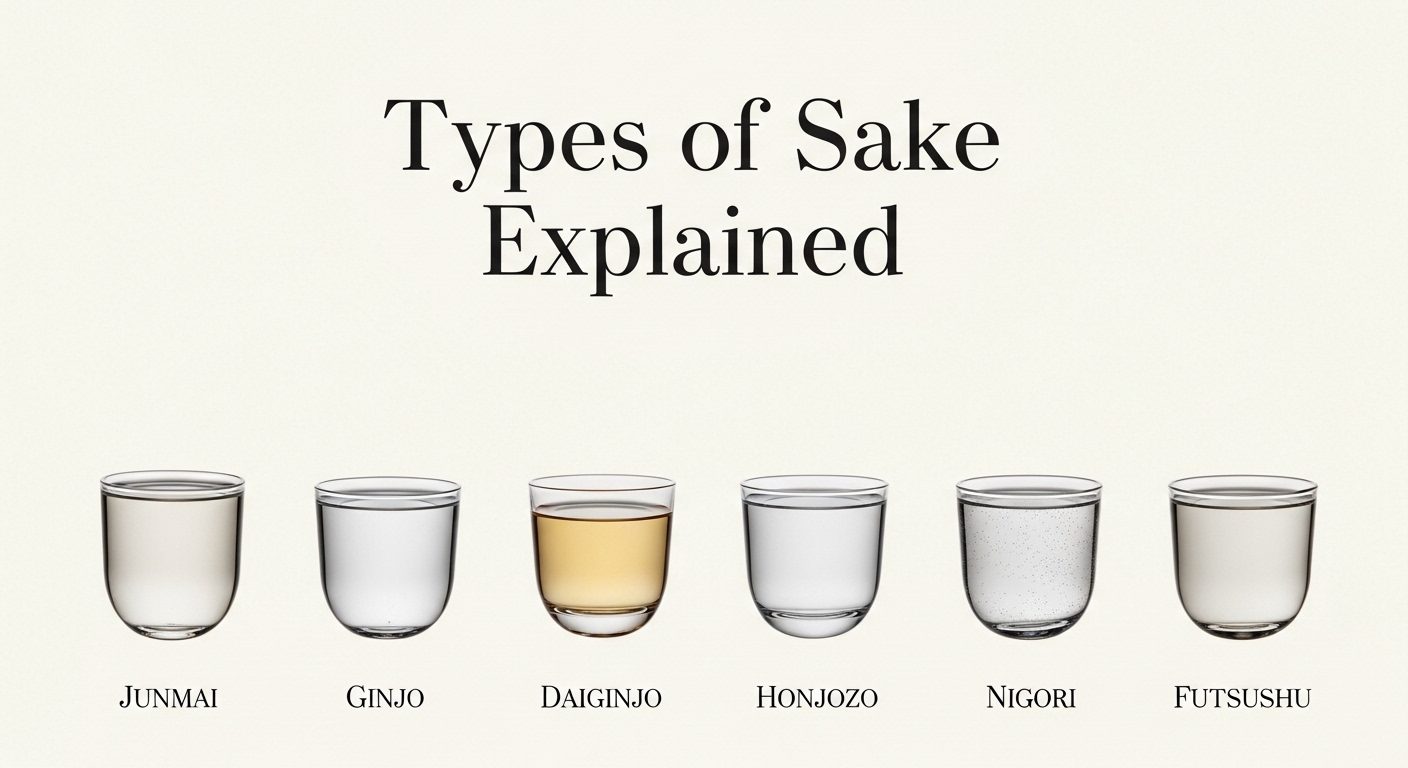
Walking into a sake shop or izakaya can feel overwhelming. Rows of bottles with Japanese labels, unfamiliar terms like junmai and daiginjo, and prices ranging from fifteen dollars to over two hundred dollars leave many drinkers confused about where to start. Understanding the types of sake transforms this experience from intimidating to exciting.
Sake, also called nihonshu (日本酒) in Japan, has a classification system based on rice polishing ratios and brewing methods. These categories tell you about flavor intensity, aroma complexity, and ideal serving temperature. This guide breaks down every major sake type so you can confidently choose bottles that match your taste preferences and dining occasions.
Table of Contents
Types of Sake Explained at a Glance 2026
Before diving into each category, here is a quick reference chart comparing the six premium sake grades. This table shows rice polishing ratios, key characteristics, and serving recommendations at a glance.
| Sake Type | Rice Polishing | Added Alcohol | Flavor Profile | Best Served |
|---|---|---|---|---|
| Junmai (純米) | 70% or less remaining | None | Full-bodied, earthy, umami-rich | Warm to hot |
| Honjozo (本醸造) | 70% or less remaining | Small amount | Light, smooth, dry | Warm to room temp |
| Junmai Ginjo (純米吟醸) | 60% or less remaining | None | Fragrant, fruity, complex | Chilled |
| Ginjo (吟醸) | 60% or less remaining | Small amount | Highly aromatic, elegant | Chilled |
| Junmai Daiginjo (純米大吟醸) | 50% or less remaining | None | Ultra-refined, delicate, layered | Chilled |
| Daiginjo (大吟醸) | 50% or less remaining | Small amount | Pinnacle of refinement, ethereal | Chilled |
These six grades represent tokutei meisho-shu (特別名称酒), or specially designated sake. They account for approximately thirty percent of all sake produced in Japan. The remaining seventy percent falls under futsu-shu (普通酒), or table sake, which has no minimum rice polishing requirements.
Understanding Sake Basics
Sake production differs from wine and beer in fundamental ways. While wine ferments fruit sugars directly, sake uses a process called multiple parallel fermentation. Starch in rice converts to sugar while yeast simultaneously converts that sugar to alcohol. This unique method creates the distinctive flavor profile that makes sake unlike any other beverage.
The most important factor determining sake type is seimaibuai (精米歩合), or rice polishing ratio. This percentage indicates how much of the rice grain remains after milling away the outer layers. The outer portion contains proteins, fats, and minerals that create rough flavors. Removing these layers leaves the starchy core that produces cleaner, more refined sake.
Lower seimaibuai numbers indicate more extensive polishing. A sake labeled fifty percent means fifty percent of the original grain remains, and fifty percent has been milled away. This intensive polishing requires precise craftsmanship and explains why daiginjo sakes command higher prices. The process takes longer and produces less usable rice per batch.
Another key distinction involves brewer’s alcohol. Sake brewers may add small amounts of distilled alcohol to certain types. This addition brightens aromas, lightens texture, and improves shelf stability. However, purists often prefer junmai (純米) styles that contain only rice, water, koji mold, and yeast with no additives.
Junmai (純米): Pure Rice Sake
Junmai translates literally to “pure rice.” These sakes contain the four basic ingredients with no added alcohol. The rice polishing ratio must leave seventy percent or less of the original grain, meaning at least thirty percent of the outer rice layers have been removed.
The flavor profile tends toward full-bodied and earthy with pronounced umami. You will detect notes of steamed rice, mushrooms, nuts, and sometimes earthy minerals. The texture feels richer and weightier on the palate compared to other types. These characteristics make junmai exceptionally food-friendly, particularly with savory dishes.
Junmai sake shines when served warm. Heating between one hundred and four degrees Fahrenheit (forty degrees Celsius) and one hundred and twenty-two degrees Fahrenheit (fifty degrees Celsius) releases aromatic compounds and softens acidity. Many izakayas serve house junmai warm by default. However, premium junmai also tastes excellent chilled or at room temperature.
We often recommend junmai as a starting point for wine drinkers exploring sake. The fuller body and savory complexity translate well for those accustomed to red wines or craft beers. Food pairings work beautifully with grilled meats, hearty stews, and aged cheeses.
Honjozo (本醸造): Light and Smooth
Honjozo shares the same seventy percent or less rice polishing requirement as junmai. The crucial difference lies in the addition of a small amount of brewer’s alcohol during production. This addition must stay below ten percent of the total alcohol content by volume.
The added alcohol creates a lighter, smoother drinking experience. Honjozo tends toward dryness with cleaner finishes and less pronounced rice character. You might notice subtle aromatic enhancement without the fuller body of junmai. The texture feels more delicate and approachable for beginners.
Temperature flexibility gives honjozo versatility. It works well warmed like junmai, though the ideal range skews slightly lower. Room temperature brings out subtle nuances, while gentle warming emphasizes the smooth, dry character. This adaptability makes honjozo popular at restaurants serving varied cuisines.
Both junmai and honjozo represent accessible entry points to premium sake. They generally occupy lower price points within the premium category while delivering quality experiences. The choice between them often comes down to preference for fuller body (junmai) versus lighter texture (honjozo).
Ginjo (吟醸): Aromatic and Fruity
Ginjo represents a significant step up in refinement. The rice polishing ratio reaches sixty percent or less, meaning forty percent of the grain has been milled away. This extended polishing removes more of the proteins and fats that create rough flavors.
The brewing process itself differs from standard methods. Ginjo uses ginjo-zukuri techniques including lower fermentation temperatures and longer brewing times. These methods encourage yeast to produce aromatic compounds called esters. The result is sake with pronounced floral and fruity notes.
Typical ginjo aromas include apple, pear, melon, and tropical fruits. You might detect floral notes like cherry blossom or white flowers. The palate feels lighter and more elegant than junmai styles. Acidity tends brighter, creating refreshing finishes.
Serving temperature matters significantly for ginjo. Chilling between forty-one degrees Fahrenheit (five degrees Celsius) and fifty degrees Fahrenheit (ten degrees Celsius) preserves delicate aromatics. Warming dissipates these volatile compounds, diminishing what makes ginjo special. Always serve ginjo chilled in a wine glass to concentrate aromas.
Junmai Ginjo (純米吟醸): Pure and Aromatic
Junmai ginjo combines the aromatic complexity of ginjo polishing levels with the purity of junmai production. No brewer’s alcohol gets added to these sakes. The rice polishing meets the sixty percent or less requirement using only the four basic ingredients.
This category bridges two worlds. You experience the fruity, floral aromatics characteristic of ginjo techniques while maintaining the rice-forward depth and umami of junmai. The combination creates layered, complex sakes that satisfy both aromatic seekers and purity advocates.
Price points typically run higher than standard ginjo due to the additional rice requirements. Producing the same amount of sake requires more raw rice when achieving ginjo-level polishing without alcohol addition. The result justifies the cost for many enthusiasts seeking uncompromised expressions of rice character.
Food pairings work beautifully with refined Japanese cuisine. Junmai ginjo complements sashimi, tempura, and delicate vegetable preparations without overwhelming them. The umami presence helps bridge the gap between aromatic sake and savory foods.
Daiginjo (大吟醸): Ultra-Premium Refinement
Daiginjo pushes rice polishing to fifty percent or less, sometimes reaching thirty-five percent or lower. This intensive milling removes over half the rice grain, leaving only the starchy heart. The resulting sake represents some of the most refined expressions in Japanese brewing.
The flavor profile becomes ethereal and delicate. Aromatics reach their peak intensity with complex layers of fruit, flowers, and sometimes subtle spice. The palate feels weightless and silky with extended finishes. These sakes demand attention and contemplative drinking.
Production requires exceptional skill. The remaining rice becomes fragile and difficult to work with after extensive polishing. Fermentation proceeds slowly at very low temperatures over extended periods. Daiginjo often commands the highest prices in sake shops due to these labor-intensive methods and low yields.
Occasion drinking suits daiginjo best. These sakes celebrate special moments, anniversaries, or significant meals. The subtlety rewards focused tasting without distraction. Serve in the finest glassware at proper chilled temperatures to honor the craftsmanship involved.
Junmai Daiginjo (純米大吟醸): The Peak of Purity
Junmai daiginjo occupies the apex of premium sake. It combines the fifty percent or less rice polishing of daiginjo with the pure rice integrity of junmai. No alcohol gets added to these expressions, making them the ultimate showcase of rice quality and brewing mastery.
The Japanese government officially designates only two types as “premium sake” in the highest tier: junmai daiginjo and regular daiginjo. Both achieve the most stringent production standards. Between them, junmai daiginjo represents the uncompromised traditional approach using only rice, water, koji, and yeast.
Is junmai daiginjo the best sake? That depends entirely on personal preference and context. For pure aromatics and delicacy, yes, it represents the pinnacle. However, many drinkers prefer the fuller body of standard junmai or the versatility of honjozo. Junmai daiginjo excels for celebratory toasts, gift-giving, and memorable dining experiences rather than everyday drinking.
Prices reflect the extraordinary effort required. Bottles typically start around forty dollars and extend well over one hundred dollars for limited editions. The cost per ounce exceeds other sake types significantly. For special occasions, the investment delivers an unmatched experience.
Specialty Sake Types
Beyond the six premium grades, several specialty categories offer unique drinking experiences. These types modify production methods or handling to create distinctive flavors and textures.
Nigori (濁り): Cloudy Sake
Nigori sake undergoes coarse filtration that leaves rice sediment suspended in the liquid. The result appears milky or cloudy with a creamy texture. Traditional nigori is pressed through loose mesh that allows fine rice particles to pass through.
The flavor tends sweeter than clear sakes. The remaining rice particles contribute sugars and starches that create softer, rounder palates. Many nigori sakes taste almost dessert-like with notes of coconut, vanilla, and tropical fruits. Shake the bottle before serving to redistribute the sediment.
Beginners often love nigori as an entry point. The sweetness and texture feel approachable and less intimidating than dry, clear sakes. Serve well-chilled as an aperitif or paired with spicy foods. The sweetness balances heat beautifully.
Namazake (生酒): Unpasteurized Sake
Most sake undergoes pasteurization (hiire) twice during production to stabilize flavor and extend shelf life. Namazake skips this heating process entirely. The result is vibrant, fresh, and sometimes slightly effervescent sake.
Fresh fruit aromatics dominate namazake. You might detect lively acidity and zesty character absent from pasteurized versions. The trade-off comes in stability. Namazake requires constant refrigeration and has shorter drinking windows. Once opened, consume within a few days.
Seasonal releases of namazake called shinshu or new sake arrive in late winter and early spring. These celebrate the completion of the brewing year. Look for them between February and April at specialty retailers.
Genshu (原酒): Undiluted Strength
Standard sake gets diluted with water before bottling to reach approximately fifteen to sixteen percent alcohol. Genshu remains undiluted, often carrying eighteen to twenty percent alcohol. The higher proof creates fuller bodies and more intense flavors.
The mouthfeel feels weightier and more substantial. Flavors concentrate without water dilution. Some drinkers appreciate the power while others find genshu overwhelming. Small pours work best for this style.
Genshu can come from any grade. You might find junmai genshu, ginjo genshu, or daiginjo genshu. The designation indicates strength rather than quality tier. Pricing varies accordingly.
Koshu (古酒): Aged Sake
Unlike wine, most sake does not benefit from bottle aging. Producers design sake for immediate consumption within a year of release. Koshu breaks this rule by aging sake for extended periods, often three years or longer.
The aging process transforms color and flavor. Koshu develops amber or golden hues. Aromatics shift toward dried fruits, nuts, caramel, and sometimes oxidative notes similar to sherry. The palate becomes richer and more complex.
Koshu remains relatively rare. Aging sake requires careful monitoring to prevent spoilage. Only certain base sakes age gracefully. The resulting bottles offer unique experiences for adventurous drinkers seeking something beyond typical fresh sake character.
Tokubetsu (特別): Special Designation
Tokubetsu means “special” in Japanese. This designation indicates that a sake meets higher standards than required for its base category. A tokubetsu junmai might use rice polished beyond the standard seventy percent, or it might employ special brewing techniques.
The term signals enhanced quality within a grade. However, specific requirements vary by producer. Always check the details on the label or ask your retailer what makes that particular tokubetsu special.
How to Serve Different Types of Sake
Serving temperature dramatically affects flavor perception. Understanding the right temperature for each type enhances your drinking experience significantly.
Chilled (41-50 degrees Fahrenheit / 5-10 degrees Celsius): Ginjo, daiginjo, and junmai daiginjo require chilling to preserve delicate aromatics. Use a wine glass to concentrate fragrances. Remove from refrigeration ten minutes before serving for optimal expression.
Room Temperature (60-68 degrees Fahrenheit / 15-20 degrees Celsius): Honjozo and some junmai styles work beautifully at room temperature. This range allows subtle aromatics to emerge without losing complexity. Many premium junmai benefit from this middle ground.
Warm (104-113 degrees Fahrenheit / 40-45 degrees Celsius): Standard junmai and honjozo traditionally served as “atsukan” hot sake work best here. Use a small ceramic ochoko cup. Heat gradually in a water bath rather than microwave to avoid overheating.
Hot (122-140 degrees Fahrenheit / 50-60 degrees Celsius): Some futsu-shu table sakes and hearty junmai styles tolerate higher temperatures. This range emphasizes warming comfort over flavor nuance. Common at casual izakayas during winter months.
How to Choose the Right Sake
Selecting your first bottle feels easier with these recommendations based on drinking preferences.
For wine drinkers: Start with junmai ginjo. The aromatic complexity and acidity translate well from white wine appreciation. Look for descriptions mentioning “fruity” or “elegant.”
For beer enthusiasts: Try junmai styles. The fuller body and umami character align with craft beer experiences. The rice-forward flavor provides familiar grounding.
For beginners wanting sweetness: Choose nigori. The cloudy texture and residual sweetness offer approachable entry points. Shake well and serve very cold.
For special occasions: Invest in junmai daiginjo. The pinnacle of sake craftsmanship rewards celebration moments. Serve chilled in your finest glassware.
For budget-conscious exploration: Honjozo and standard junmai deliver excellent value. Both categories offer quality expressions under twenty-five dollars. These workhorses suit weeknight dinners and casual gatherings.
Reading labels gets easier with practice. Look for the main type designation prominently displayed. Check the seimaibuai percentage if shown. Note any special designations like tokubetsu. When unsure, ask your retailer or server for guidance based on your preferences.
Frequently Asked Questions
What are the 4 types of sake?
The four most commonly referenced sake types are Junmai (pure rice), Honjozo (light with added alcohol), Ginjo (aromatic and fruity), and Daiginjo (ultra-premium). However, the complete classification system actually includes six premium grades when counting both pure rice (junmai) and alcohol-added versions of Ginjo and Daiginjo.
What is the difference between Ginjo and Daiginjo?
The difference lies in rice polishing ratio and resulting refinement. Ginjo requires rice polished to 60% or less remaining, producing fruity, aromatic sake. Daiginjo requires more intensive polishing to 50% or less remaining, creating even more delicate, ethereal flavors with complex layered aromatics. Daiginjo commands higher prices due to greater rice loss and extended brewing time.
What does Junmai Daiginjo mean?
Junmai Daiginjo combines two designations: Junmai meaning pure rice (no added alcohol) and Daiginjo indicating rice polished to 50% or less. Together they represent the highest tier of premium sake using only rice, water, koji mold, and yeast with the most refined milling standards.
Is Junmai Daiginjo the best sake?
Junmai Daiginjo represents the pinnacle of technical achievement in sake brewing, but best depends on personal preference and occasion. For pure aromatics and delicacy, junmai daiginjo excels. However, many drinkers prefer the fuller body of standard junmai for food pairing or the approachability of honjozo for casual drinking.
How many types of sake are there?
There are six premium sake grades (Tokutei Meisho-shu): Junmai, Honjozo, Junmai Ginjo, Ginjo, Junmai Daiginjo, and Daiginjo. Additionally, specialty types include Nigori (cloudy), Namazake (unpasteurized), Genshu (undiluted), Koshu (aged), and Taru (cedar-aged). Table sake (Futsu-shu) represents the non-premium category comprising about 70% of production.
What is the best type of sake for beginners?
Nigori (cloudy sake) offers the most approachable entry point due to its sweetness and creamy texture. Alternatively, Ginjo provides a middle ground with fruity aromatics that translate well for wine drinkers. Honjozo delivers light, smooth character that avoids overwhelming new drinkers. Start with chilled serving temperatures for the most accessible experience.
Conclusion
Understanding the types of sake explained in this guide opens a world of drinking experiences. From the earthy fullness of junmai to the ethereal delicacy of daiginjo, each category offers distinct pleasures. The six premium grades provide a framework, but personal exploration ultimately determines your preferences.
Start with approachable styles like honjozo or nigori if you are new to sake. Graduate to ginjo as your palate develops appreciation for aromatic complexity. Save junmai daiginjo for moments worth savoring slowly. Remember that temperature, glassware, and food pairings dramatically affect perception.
The best sake is simply the one you enjoy most. Armed with this knowledge, you can confidently navigate menus, select bottles, and share discoveries with friends. Kampai to your sake journey.