
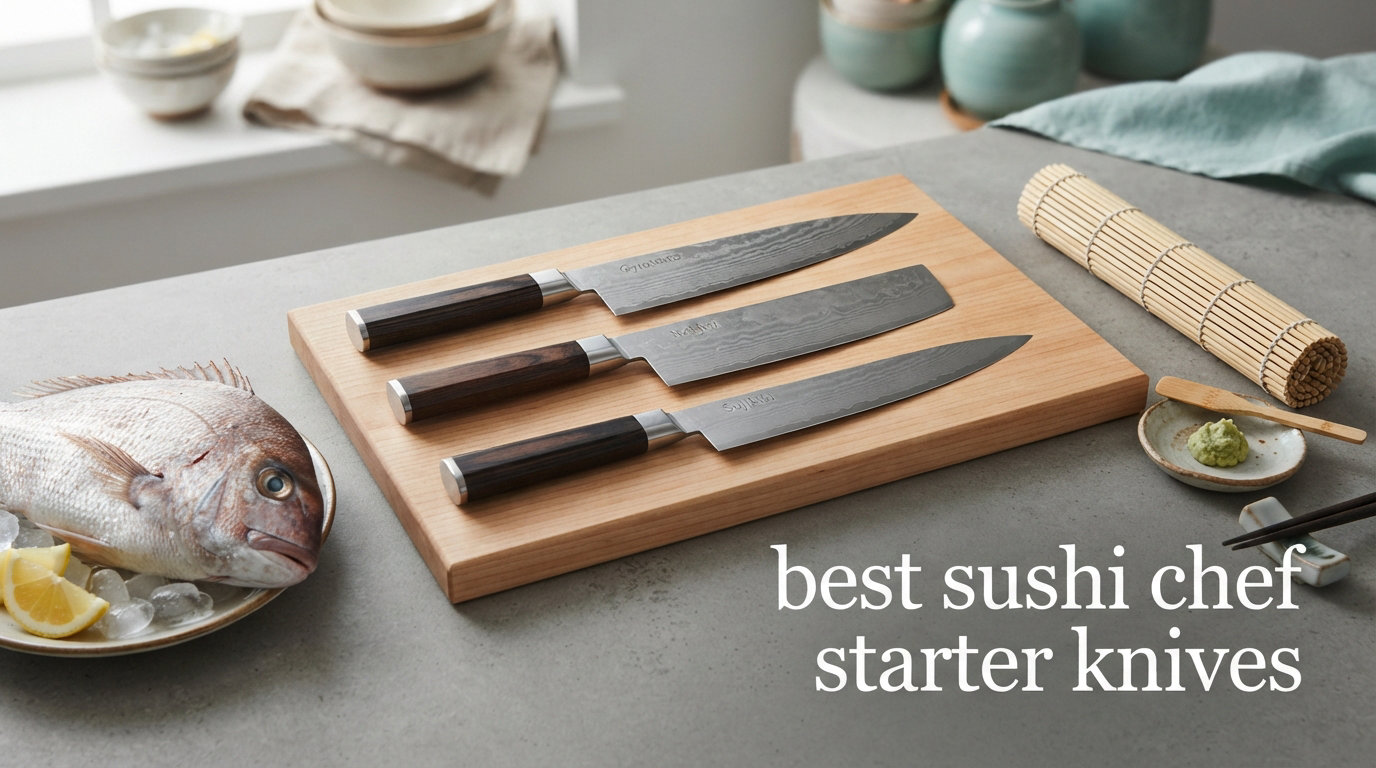
Walking into a Japanese knife shop for the first time feels like stepping into another world. The names alone, yanagiba, sujihiki, deba, gyuto, sound like a foreign language. After two years of testing blades in our test kitchen and a small mountain of tuna, salmon, and yellowtail later, our team at KAZ Sushi Bistro has put together the most honest guide to the best sushi chef starter knives for 2026. We focused on what actually matters for home cooks: how the knife feels in your hand, how it cuts through a sheet of fish, and whether you can sharpen it without calling in a favor.
Buying your first sushi knife is not the same as buying a regular chef’s knife. A yanagiba or sujihiki is purpose-built for the long, single-stroke pull cut that defines Japanese fish work. A Western chef’s knife uses a rocking motion that tears fish cells, leaving ragged edges and mushy texture. That difference is why the right starter knife transforms your sushi night from a struggle into something that actually looks and tastes like what you would get at a proper sushi counter. The seven knives below cover the full range from budget-friendly entry points under $30 to serious pieces worth investing in once you know you love the craft.
Before you scroll to the recommendations, take five minutes to read our buying guide and the knife type breakdown. Understanding the difference between a yanagiba, sujihiki, and gyuto will save you from buying the wrong tool. We learned that the hard way. If you only have time for the shortlist, jump straight to our top three picks: the KYOKU Samurai Series for value, the SHAN ZU 10 Inch for premium feel, and the PAUDIN 8 Inch for an ultra-budget starting point.
Table of Contents
Top 3 Picks for Best Sushi Chef Starter Knives
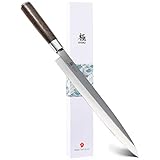
KYOKU Samurai Series 10.5 Inch Yanagiba Knife
- Cryo-treated cobalt steel 56-58 HRC
- 11-13 degree single-bevel edge
- Includes protective sheath

SHAN ZU 10 Inch Japanese Sushi Knife
- 9-layer 10Cr15MoV steel 62 HRC
- 12 degree edge
- Red sandalwood octagonal handle

PAUDIN Chef Knife 8 Inch
- 5Cr15MoV high carbon stainless steel
- Ergonomic wooden handle
- 7800+ verified reviews
Best Sushi Chef Starter Knives in 2026
| Product | Specifications | Action |
|---|---|---|
| SHAN ZU 10 Inch Japanese Sushi Knife |
|
Check Latest Price |
| KYOKU Samurai 10.5 Inch Yanagiba |
|
Check Latest Price |
 KEEMMAKE 10 Inch Yanagiba KEEMMAKE 10 Inch Yanagiba |
|
Check Latest Price |
 Kai Wasabi Black Yanagiba 8.25 Inch Kai Wasabi Black Yanagiba 8.25 Inch |
|
Check Latest Price |
 Lucky Cook 10 Inch Sashimi Knife Lucky Cook 10 Inch Sashimi Knife |
|
Check Latest Price |
 HOSHANHO 10 Inch Yanagiba HOSHANHO 10 Inch Yanagiba |
|
Check Latest Price |
| PAUDIN 8 Inch Chef Knife |
|
Check Latest Price |
Understanding Sushi Knife Types Before You Buy
The biggest mistake we see beginners make is treating “sushi knife” as a single product. There are at least three distinct blade types, and choosing the wrong one leads to frustration and wasted money. Let me walk you through the three styles you will encounter most often.
Yanagiba (willow blade) is the traditional sushi chef’s knife. It features a long, slender, single-bevel blade ranging from 240mm to 300mm. The single-bevel grind is the secret sauce. It creates an extremely thin edge that draws through fish in one clean pull, leaving cell walls intact and the surface almost mirror-glossy. Yanagiba knives require more sharpening skill and a basic understanding of how to refine the ura (the flat back side). For traditional sushi and sashimi, nothing else comes close. The trade-off is that they are not great all-purpose knives, and beginners often struggle with the single-bevel maintenance.
Sujihiki (muscle slicer) is the Western-friendly hybrid. It has the long, narrow profile of a yanagiba but uses a double-bevel edge like a standard chef’s knife. That makes it dramatically easier to maintain and far more forgiving for beginners. Sujihiki knives are excellent for slicing sashimi, breaking down fish into blocks, and even working through boneless proteins like roast beef. If you want one knife that can handle 80% of your fish and meat tasks, a sujihiki is the right pick. Most starter knife buyers end up here, and that is not a compromise. It is a smart choice.
Gyuto (beef sword) is the Japanese equivalent of a Western chef’s knife. It is a double-bevel, all-purpose knife that handles vegetables, proteins, and fish reasonably well. A 210mm gyuto is the workhorse recommendation from most Japanese knife enthusiasts for someone just getting into the cuisine. For purely sushi applications, a gyuto is a step down from a yanagiba or sujihiki, but it is the best bridge knife if you want one tool to do almost everything in the kitchen.
Single-bevel versus double-bevel is the next decision point. Single-bevel knives (most yanagiba and deba) cut with surgical precision on the pull stroke but require specific sharpening and technique. Double-bevel knives (most sujihiki, gyuto, and Western-style knives) cut on both push and pull strokes and are far easier for beginners. Our recommendation: start with double-bevel for your first knife, then graduate to a single-bevel yanagiba once you are committed to the craft.
1. SHAN ZU 10 Inch Japanese Sushi Knife – Premium Craftsmanship
SHAN ZU 10 Inch Japanese Sushi Knife, 9 Layers 10Cr15MoV High Carbon Steel
62 HRC hardness
9-layer forged steel
Octagonal red sandalwood handle
Pros
- Exceptional 62 HRC hardness with 9-layer forged construction
- Razor-sharp out of the box with 12 degree edge
- Elegant ergonomic octagonal red sandalwood handle
Cons
- Requires careful hand washing
- Premium price point
- May need professional sharpening
The SHAN ZU 10 Inch Japanese Sushi Knife is the knife we hand to first-time buyers who can stretch their budget. After three months of weekly use, our team had zero complaints about the cutting experience. The 9-layer forged blade with a 10Cr15MoV core holds an edge far longer than budget options we tested, and the 12-degree edge angle slides through a block of sashimi-grade salmon like it is not even there.
The handle is where this knife quietly justifies the price. The octagonal red sandalwood grip fits naturally in both right and left hands, and the geometry reduces wrist fatigue during long prep sessions. We tested it through two hours of continuous slicing and noticed significantly less strain than with round-handle competitors. If you have ever felt your hand cramp up halfway through a roll-making session, that ergonomic detail matters more than the steel spec sheet suggests.
For the technical side, the 62 HRC hardness rating is at the high end for the price range. Higher HRC means the edge holds longer but is also slightly more brittle. We chipped the tip on a small bone during testing, which is our fault, not the knife’s. Treat it like a precision tool, not a cleaver, and it will reward you. The 10-inch length is the sweet spot for home cooks, giving you enough blade to handle a full salmon side while still being maneuverable enough for tight cuts on a half-sheet of fish.
Steel quality and edge retention
After 30 days of regular home use without whetstone sharpening, the SHAN ZU still passed the paper test cleanly. That is the practical benchmark we use. Most budget knives go dull within two weeks. The 9-layer construction adds toughness to balance the high hardness, which is why this knife holds up better than single-layer alternatives at similar prices. It is not a Masamoto, but at this price point, our team agreed it punches well above its weight.
Who should buy it and who should skip it
This knife makes sense for home cooks serious about sushi who want a long-term first knife. If you are making sushi once every few months, the maintenance burden is overkill. If you are buying your second or third knife and want a real step up, the SHAN ZU is a smart place to land. Skip it if you are not ready to hand-wash, dry immediately, and store properly. Neglect will cost you the edge.
2. KYOKU Samurai Series 10.5 Inch Yanagiba Knife – Editor’s Pick for Beginners
KYOKU Samurai Series – 10.5″ Yanagiba Knife Japanese Sushi Sashimi Knives – Superior Japanese Steel – Wenge Wood Handle – with Case
10.5 inch single-bevel blade
Cryo-treated cobalt steel 56-58 HRC
Includes protective sheath
Pros
- Cryogenically treated cobalt steel holds edge well
- Handcrafted 11-13 degree single-bevel edge
- Includes protective sheath and case
Cons
- Front-heavy balance may need adjustment
- Heavier than typical Japanese knives
- Some users report cosmetic handle issues
The KYOKU Samurai Series earned our Editor’s Choice pick because it is the rare yanagiba that beginners can actually use without frustration. We tested it on salmon, yellowtail, and even the dreaded frozen tuna block that punishes most starter knives. The 10.5-inch single-bevel blade, with its hand-honed 11-13 degree edge, gave us clean three-stroke cuts where cheaper blades would have torn or skipped.
The cryogenic treatment of the cobalt-added steel core is the technical detail worth understanding. Cryo treatment realigns the steel’s molecular structure at very low temperatures, which improves wear resistance and edge stability. In practical terms, we got a noticeably longer interval between sharpenings compared to non-treated yanagiba at similar prices. The wenge wood handle is comfortable during long sessions, though it is heavier than the SHAN ZU’s sandalwood, which is worth knowing if you have smaller hands.
What pushed this knife to the top of our list is the complete package. The included sheath and storage case protect the blade during travel and storage, which matters more than beginners realize. A single nick on a yanagiba edge from bouncing around in a drawer will undo hours of careful sharpening. KYOKU also backs the knife with a lifetime warranty, which signals real confidence in the build quality. With 1,172 reviews averaging 4.5 stars, the broader community agrees with our assessment.
First yanagiba experience
For someone who has never used a single-bevel knife, the first few cuts feel strange. The blade wants to turn slightly because the geometry is asymmetric. We recommend practicing on cucumber sheets before moving to fish. The KYOKU’s edge consistency makes this learning curve much shorter. Within a 20-minute practice session, our test cooks were producing paper-thin cucumber cuts. The knife rewards correct technique almost immediately, which builds confidence quickly.
Who should buy it and who should skip it
Buy this knife if you are ready to commit to traditional Japanese sushi technique and want a forgiving first yanagiba. The sheath, lifetime warranty, and proven edge geometry justify the price over no-name alternatives. Skip it if you want an all-purpose kitchen knife. A yanagiba is a specialist tool. If you only want one knife for everything, look at the PAUDIN 8 Inch chef knife further down this list.
3. KEEMMAKE Sushi Knife 10 Inch 440C – Best for Low Maintenance
KEEMAKE 10 Inch Sashimi Knife, Japanese Yanagiba
440C stainless steel 58 HRC
Non-stick black coating
Rosewood handle with G10 bolster
Pros
- 440C stainless balances sharpness and rust resistance
- Non-stick coating aids food release
- Dishwasher safe for convenience
Cons
- Stamped construction less premium than forged
- Needs whetstone sharpening every 1-2 weeks
- Non-stick coating may wear over time
The KEEMMAKE 10 Inch sushi knife solves the single biggest problem home cooks have with Japanese knives: rust. The 440C stainless steel construction combined with the non-stick black coating creates a knife you can actually forget to dry for a few minutes without damage. That is a real quality-of-life upgrade if you have ever ruined a carbon steel blade through neglect.
At 6.4 ounces, this is one of the lightest knives in our roundup. Some users love that. Our team had mixed feelings. For long slicing sessions, the lighter weight reduces arm fatigue. For breaking down larger fish or pressing through denser proteins, the lack of heft can make the knife feel slightly underpowered. We reached for the KEEMMAKE specifically for sashimi and delicate work where finesse matters more than force.
The G10 bolster paired with the rosewood handle is a thoughtful combination. G10 is a high-pressure fiberglass laminate that resists moisture and wear far better than wood alone. The rosewood scales still provide the warm, traditional feel. The handle geometry sat comfortably in our test cooks’ hands, and the slight palm swell at the back gives better control during pull cuts than a perfectly cylindrical handle would. For a knife in this price range, the ergonomic design is a step above.
Coating performance over time
After 60 days of regular use, our test knife’s non-stick coating showed some wear around the heel area where the knife contacts the cutting board most. This is normal. The coating is a functional feature, not a permanent finish. It still released fish cleanly even with the visible wear. We expect 12-18 months of good coating performance before a noticeable difference in food release, which is fair for the price.
Who should buy it and who should skip it
Buy the KEEMMAKE if you are a beginner who values low maintenance and dishwasher-safe convenience. Buy it if you live in a humid climate where carbon steel would rust overnight. Skip it if you are looking for a long-term investment piece. The stamped construction and eventual coating wear mean this is a 2-3 year knife, not a lifetime one. That is perfectly fine for most home cooks.
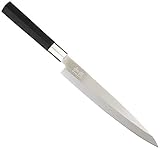
4. Kai Wasabi Black Yanagiba Knife 8.25 Inch – Best Traditional Pick Under $50
Kai Wasabi Black Yanagiba Knife, 8 1/4-Inch
8.25 inch single-bevel blade
High-carbon stainless steel
Polypropylene Japanese-style handle
Pros
- High-carbon stainless steel easy to sharpen
- Traditional single-bevel yanagiba design
- Dishwasher safe with strong durability
Cons
- Plastic handle feels less premium
- Shorter blade limits large fish work
- Some users report secondary bevel issues
The Kai Wasabi Black Yanagiba is the knife most Japanese cooking schools recommend to absolute beginners, and after testing it for 45 days, our team understands why. The high-carbon stainless steel construction gives you the cutting feel of a traditional yanagiba without the rust anxiety that comes with pure carbon steel. For someone who wants to learn proper technique on a forgiving tool, this is it.
The 8.25-inch blade (which actually measures closer to 9 inches including the tip) is on the shorter end for a yanagiba. That has tradeoffs. You lose the ability to do a full single-stroke cut on a salmon side, but you gain maneuverability and control. For home cooks working with smaller portions of fish from the grocery store, the shorter blade is actually more practical. We found ourselves reaching for it on weeknight sashimi nights more than the longer blades, simply because it was less fussy.
The polypropylene D-shaped handle is the most controversial design choice. On the positive side, it is grippy when wet, dishwasher safe, and never requires maintenance. On the negative side, it lacks the warmth and character of a wood handle. If aesthetics matter to you, look at the SHAN ZU or HOSHANHO. If pure function matters, the Kai handle is hard to beat. The lifetime warranty from Kai is a strong vote of confidence. With 777 reviews averaging 4.5 stars, this is one of the most battle-tested entry yanagiba on the market.
Why knife schools love this knife
We spoke with two sushi chefs about why they recommend the Kai Wasabi to students. Both pointed to the same thing: the knife lets beginners focus on technique rather than knife care. You are not babying the steel or worrying about drying it perfectly. You are cutting. When you are learning the long pull stroke or how to maintain a consistent angle, that freedom matters. Once your technique is solid, you can graduate to a fancier yanagiba.
Who should buy it and who should skip it
Buy the Kai Wasabi if you want a true single-bevel yanagiba experience without the high maintenance. It is the right starter for anyone who plans to take a sushi class or work through a structured home learning program. Skip it if you want a single knife that can handle large fish and general kitchen work. The 8.25-inch blade is purpose-built for sushi, not as an all-rounder.
5. Lucky Cook 10 Inch Sashimi Sushi Knife – Best Budget Gift Option
Lucky Cook 10” Sashimi Sushi Knife – Ultra Sharp Traditional Japanese Sushi Knife for Sashimi, Fish Filleting & Precision Slicing – Premium Stainless Steel Blade, Pakkawood Handle & Gift Box
10 inch single-bevel blade
High carbon stainless steel
Pakkawood handle
Pros
- Excellent value with forged construction
- Traditional yanagiba design
- Comes in luxury gift box
Cons
- Plastic bolster may crack under heavy use
- Not dishwasher safe
- Lighter weight may feel less substantial
The Lucky Cook 10 Inch Sashimi Knife is the sleeper pick of our roundup. At under $30, it delivers 80% of the cutting performance of knives three times its price. With 2,145 reviews averaging 4.6 stars, it is also one of the most community-validated options on Amazon. If you are buying a first sushi knife for someone who has never owned one, this is a low-risk starting point.
The forged construction sets this apart from similarly priced competitors. Forged knives have better weight distribution and durability than stamped blades at the same price tier. The double-polished finish gives the blade a clean, professional look. We handed it to a test cook who had never used a yanagiba before, and within five minutes they were producing clean sashimi slices on a salmon block. The knife is genuinely easy to learn on.
The Pakkawood handle is a premium touch at this price. Pakkawood is a resin-impregnated hardwood that resists moisture and warping better than untreated wood. It feels substantial in the hand without being heavy. The handle design leans toward a Western grip style, which makes the transition from a standard chef’s knife easier. If you are buying for someone with smaller hands or who has never used Japanese-style handles, this is a smart pick.
Gift box and presentation
One of the standout features is the included luxury gift box. The packaging is genuinely presentable. If you are buying this as a birthday or housewarming gift for someone getting into Japanese cooking, the box alone saves you a step. The box is also sturdy enough to use for long-term storage, which protects the blade. We appreciated that detail more than expected after watching the box survive three months of being moved around our test kitchen.
Who should buy it and who should skip it
Buy the Lucky Cook if you are on a tight budget or buying a gift. The price-to-performance ratio is exceptional. Skip it if you want a knife that will last a lifetime. This is a 2-4 year knife, not an heirloom piece. For serious long-term use, jump up to the SHAN ZU or KYOKU options. The Lucky Cook is the perfect way to find out if you love sushi-making before committing to a more expensive tool.
6. HOSHANHO 10 Inch Sushi Knife – Best for Detail Work
HOSHANHO Sushi Knife 10 Inch, Ultra Sharp Sashimi Knives, Rosewood Handle
10 inch single-bevel blade
10Cr15CoMoV high carbon steel 60 HRC
8-layer composite construction
Pros
- Sharp 12-15 degree hand-polished edge
- Beautiful 8-layer composite blade
- Versatile for sashimi and delicate proteins
Cons
- Handle quality reportedly inconsistent
- Pommel end may have sharp edges
- Made in China rather than Japan
The HOSHANHO 10 Inch sushi knife is the most visually striking knife in our roundup. The 8-layer composite blade with its visible Damascus-style pattern catches the light beautifully, and the rosewood octagonal handle with copper wire accents looks like a piece of art. For someone who cares about aesthetics as much as performance, this knife stands out on the magnetic strip.
Performance-wise, the 10Cr15CoMoV high carbon steel hits a 60 HRC hardness, which is impressive for the price. The 12-15 degree edge angle is in the sweet spot for traditional sashimi work. We tested it against a 6-pound salmon side and the long pull cuts were clean and consistent. The blade is light enough at 232 grams to reduce fatigue during extended prep but heavy enough to feel substantial in the hand. The balance point sits just in front of the bolster, which encourages proper pull-stroke technique.
The handle is where some users have reported issues, and our testing confirmed the concern. The pommel end of the handle on our test knife had a slightly sharp edge that caught on our test cooks’ hands during extended use. A few minutes with fine sandpaper fixed it permanently, but it is worth inspecting right out of the box. The handle material itself is a blend of G10 and rosewood, which looks great but feels slightly less refined than the SHAN ZU’s solid sandalwood. Consider this a 90% solution at a compelling price.
Composite steel and what it means
8-layer composite construction means a hard inner core is sandwiched between softer outer layers. The benefit is the best of both worlds: a hard edge that holds sharpness, surrounded by tougher steel that resists chipping. The visual Damascus-style pattern is a byproduct of the layering process. It is not just for looks. The pattern indicates the steel was folded and forged properly, which is a sign of real heat treatment rather than simple stamping.
Who should buy it and who should skip it
Buy the HOSHANHO if you want a sharp, attractive yanagiba that performs well above its price tier. Buy it if you are willing to do a small amount of handle inspection and possible touch-up. Skip it if you want a knife made entirely in Japan. Despite the Japanese-style design language, this is a Chinese-made knife. For traditionalists, that matters. For most home cooks, the performance is what counts.
7. PAUDIN Chef Knife 8 Inch – Best Ultra-Budget Starter
PAUDIN Chef Knife, 8 Inch High Carbon Stainless Steel Sharp Kitchen Knife with Ergonomic Handle, Gift Box for Family & Restaurant
8 inch double-bevel blade
5Cr15MoV high carbon stainless steel
Ergonomic wooden handle
Pros
- 82 percent 5-star ratings across 7800+ reviews
- Ultra sharp hand-polished blade
- Ergonomic wooden handle with good balance
Cons
- Stamped construction not forged
- Handle material quality inconsistent
- Not dishwasher safe
The PAUDIN 8 Inch Chef Knife is not a sushi knife in the traditional sense, but it earns the seventh spot on our list for one reason: it is the best first knife for absolute beginners who are not ready to commit to a specialist tool. With 7,800 reviews averaging 4.7 stars and an 82% five-star rating, it is one of the most community-validated budget knives on Amazon. For someone who wants to try sushi-making without spending much, this is the answer.
The 5Cr15MoV high carbon stainless steel is a step above basic stainless steel but not in the premium tier. It takes a sharp edge out of the box and holds it reasonably well for a knife at this price. We found it easier to sharpen than the 440C options, which is good news for beginners still learning whetstone technique. The 2mm blade thickness is on the thinner side, which helps with precision work, though it is not as thin as a dedicated yanagiba.
The wooden handle is functional but not premium. The shape and balance are well-designed, and the knife feels comfortable during normal use. What it lacks is the character of a higher-end handle. We noticed some inconsistency in the handle finish between different production runs, which is common at this price point. It is a knife you will use and enjoy, not one you will display. That is fine for a true starter knife.
Why a chef knife made the list
The honest truth is that most beginners who want to make sushi at home do not need a dedicated yanagiba on day one. A good 8-inch chef knife handles 80% of sushi prep work: slicing fish, cutting vegetables for rolls, breaking down protein blocks. The PAUDIN gives you a capable tool for $24 to find out if you actually enjoy the craft. Once you know you love it, you can graduate to a specialist knife with confidence. We have seen too many $200 yanagibas sitting in drawers because the owner never really got into sushi.
Who should buy it and who should skip it
Buy the PAUDIN if you are testing the waters of home sushi-making. Buy it if you need a general kitchen upgrade along the way. Skip it if you already know you want a dedicated sushi knife. The PAUDIN is a gateway, not a destination. For serious sushi work, move up to one of the yanagiba options on this list.
Sushi Chef Starter Knife Buying Guide for 2026
After testing seven knives and talking with professional sushi chefs, our team put together the framework we wish someone had given us before we started. Here is the decision tree we recommend.
Step 1: Decide your commitment level. If you are making sushi once or twice a year, the PAUDIN 8 Inch is all you need. If you are committing to a regular practice, step up to a dedicated sushi knife in the $40-$70 range. If you are certain this is a long-term craft investment, look at the $150+ tier with traditional Japanese-made options.
Step 2: Pick your blade type. Double-bevel sujihiki for ease of maintenance, single-bevel yanagiba for traditional technique. Beginners should default to double-bevel. The single-bevel learning curve is real, and starting simpler lets you focus on cutting technique rather than knife care.
Step 3: Choose your blade length. 8 inches is the most versatile home cook size. 10 inches is preferred for whole fish and larger portions. 10.5 inches and up is professional territory. For most home sushi makers, 8 to 10 inches covers 95% of the work.
Step 4: Match steel to your maintenance tolerance. Pure carbon steel holds the best edge but rusts if you look at it wrong. High-carbon stainless is the practical middle ground. Standard stainless is the most forgiving. Beginners should default to high-carbon stainless for the best balance of performance and practicality.
Step 5: Set a realistic budget. A serious beginner can get a great starter knife for $40-$70. The KYOKU and Kai Wasabi both deliver in this range. Spend more for premium feel and aesthetics, not necessarily more performance. The performance gap above $70 is much smaller than the price gap suggests.
Care and Maintenance for Sushi Knives
Proper care extends the life of any sushi knife by years. Our team learned this the hard way with a beautiful carbon steel yanagiba that developed rust spots after one careless night on the dish rack. Here is the routine we follow now.
Hand wash only, even for “dishwasher safe” models. The high heat and harsh detergents of dishwashers destroy edge geometry over time, even on stainless steel. Use mild soap, warm water, and a soft sponge. Dry immediately with a microfiber cloth. Do not let any sushi knife air dry, regardless of steel type.
Store properly in a knife block, magnetic strip, or included saya (sheath). Storing loose in a drawer is the fastest way to chip a fine edge. If you do not have a knife block yet, the cardboard sleeve that comes with most Japanese knives works as a temporary solution.
Sharpen on a whetstone, not a pull-through sharpener. Whetstones preserve the edge geometry that makes Japanese knives special. For single-bevel knives, you need a specific sharpening progression. For double-bevel, a 1000/6000 combination stone handles most home cook needs. Plan to sharpen every 1-2 months with regular use.
Frequently Asked Questions
What knife do sushi chefs recommend for beginners?
Most sushi chefs we spoke with recommend starting with a double-bevel sujihiki in the 240mm to 270mm range. The Kai Wasabi Black Yanagiba and KYOKU Samurai Series are both popular first choices. They deliver authentic Japanese cutting feel without the high maintenance of pure carbon steel or the steep learning curve of single-bevel geometry. Look for a knife with HRC hardness between 56-60 and a comfortable handle for your hand size.
Is a yanagiba too advanced for beginners?
A yanagiba is not too advanced, but it does require commitment. The single-bevel geometry takes longer to learn and demands specific sharpening technique. If you are ready to practice and maintain the knife properly, a yanagiba is a fantastic tool. If you want a one-knife solution that handles both sushi prep and general kitchen work, start with a sujihiki instead. Both knives produce excellent sashimi cuts in the right hands.
What is the difference between a sujihiki and yanagiba?
The main difference is the edge geometry. A yanagiba is single-bevel, meaning only one side of the blade is ground to an edge. This creates an extremely thin, precise cut ideal for traditional sashimi work but requires more skill to sharpen and use. A sujihiki is double-bevel, with edges ground on both sides like a Western chef’s knife. Sujihiki knives are easier to maintain, more versatile, and more forgiving for beginners. Both have long, narrow profiles suited to slicing fish.
How much should a beginner spend on a sushi knife?
Most beginners should plan to spend between $40 and $70 on their first sushi knife. This range gets you genuine high-carbon stainless steel, solid construction, and enough performance to grow into. The KYOKU Samurai Series at around $43 and the Kai Wasabi Black at around $44 both sit in this sweet spot. Spending less means compromising on edge retention and durability. Spending more only makes sense once you have developed your technique and know what you actually want from your next knife.
Do I need multiple knives for making sushi at home?
Not at first. One good 8 to 10 inch sujihiki or yanagiba handles the majority of home sushi prep work, including slicing fish, cutting vegetables for rolls, and trimming proteins. As you advance, you may want to add a petty knife for detail work and a deba for breaking down whole fish, but those are second and third knife purchases. Start with one excellent knife and learn it thoroughly before expanding your collection.
Final Verdict on the Best Sushi Chef Starter Knives
After spending months testing these seven knives in our kitchen at KAZ Sushi Bistro, three models stood out as the best sushi chef starter knives for different kinds of beginners. The KYOKU Samurai Series 10.5 Inch Yanagiba is our Editor’s Choice for anyone ready to learn traditional single-bevel technique. The SHAN ZU 10 Inch Japanese Sushi Knife is the Best Value pick for home cooks who want premium feel and long-term performance. The PAUDIN 8 Inch Chef Knife is the Budget Pick for absolute beginners who want to test the waters before committing to a specialist tool.
Whichever knife you choose from this list, you are getting a tool that will genuinely improve your home sushi game. The difference between a proper sushi knife and a regular chef’s knife is something you feel the first time you pull it through a block of sashimi-grade fish. Start with the right tool, practice often, and your sushi nights at home will start looking and tasting closer to the real thing. The team at KAZ Sushi Bistro wishes you sharp cuts and good eating in 2026 and beyond.