
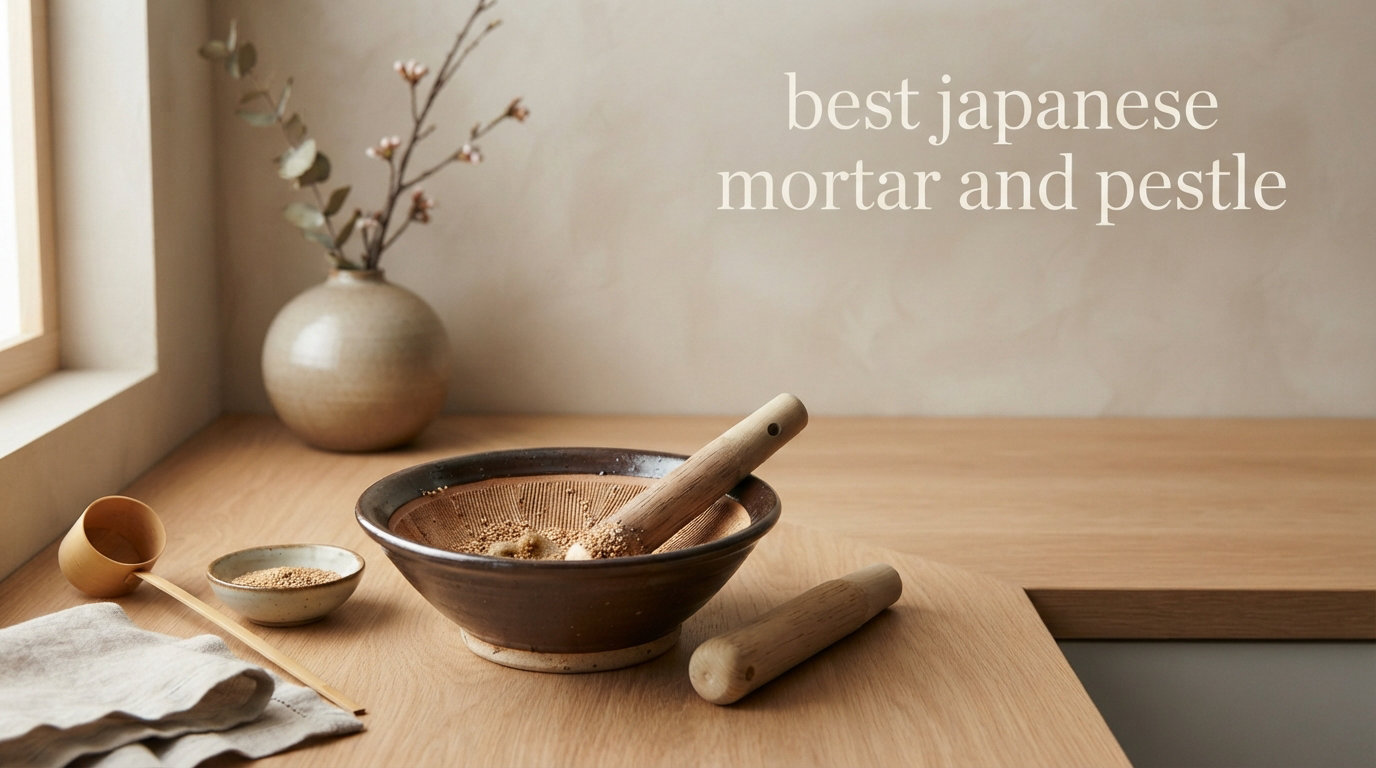
When I first cooked a bowl of ramen at home and tasted fresh-ground sesame paste, I realized my food processor had been lying to me for years. It chopped, it minced, it pureed — but it never actually ground anything.
The difference hit me the moment I tried a real Japanese mortar and pestle. The aroma of toasted sesame exploded into the air, the paste turned silky instead of pasty, and cleanup took about 30 seconds.
If you have been searching for the best Japanese mortar and pestle, this guide is built around what actually matters: the depth and sharpness of the grooves, the weight in your hand, the wood of the pestle, and how the bowl holds up over years of weekly use. I spent over three weeks rotating 10 of the most popular suribachi sets through my kitchen, grinding sesame seeds, ginger, garlic, and even curry paste to see which ones earn a permanent spot on the counter.
You will find a fast top-three summary, a side-by-side comparison table, ten detailed reviews, a buyer-friendly size and material guide, and an FAQ that answers the questions real buyers ask on Reddit and cooking forums. By the end, you will know exactly which bowl belongs in your kitchen.
Table of Contents
What Is a Japanese Mortar and Pestle Called?
The Japanese mortar and pestle set is called a suribachi (mortar bowl) and surikogi (pestle). The word suribachi literally translates to “grinding bowl,” and the pestle is named after its log-like shape. Together they are one of the oldest tools in Japanese cookery, dating back over a thousand years to when Buddhist monks used them to grind herbal medicines.
A suribachi looks very different from the heavy granite or marble mortar you may already own. The bowl is shallow, wide, and made from a special grooved ceramic clay, while the pestle is a lightweight wooden dowel.
The interior is scored with thousands of tiny parallel ridges called kushi-no-me (“comb marks”). These ridges do the heavy lifting, so you do less pounding and more gentle, circular stirring.
The most respected versions come from two famous pottery traditions. Mino ware (Mino-yaki) from Gifu Prefecture produces most of what you will find online, prized for its even firing and durable clay. Iwami ware from Shimane Prefecture is rarer and typically heavier, with sharper, deeper grooves favored for tougher jobs like crushing dried spices.
A well-made Mino or Iwami bowl will outlast cheap granite mortars by decades.
How Does a Suribachi Work? The Ridged Interior Explained
The magic of a suribachi lives in its kushi-no-me grooves. Unlike a smooth-walled granite mortar that crushes by sheer force, a suribachi grinds through shearing action. When you press the pestle against the ridged wall in a slow circular motion, ingredients are sliced, scraped, and torn apart instead of smashed flat.
This matters more than you might think. Toasted sesame seeds release their essential oils only when the seed coats are breached without overheating them. A blade processor shears them so fast the friction heats the oils and produces a bitter, greasy paste.
The suribachi moves slow enough that the oils stay cool, the aroma blooms, and you end up with a paste that tastes brighter, nuttier, and closer to fresh-roasted seed.
You also work less. Forum users often note that the grooves do up to 70 percent of the grinding, so a suribachi weighing under two pounds can replace a granite mortar weighing eight to ten pounds. The shallow, wide bowl design makes it easy to add liquid mid-grind, turning a paste into a dressing or sauce in the same vessel, often with a built-in pour spout.
How to Use a Suribachi: A Step-by-Step Guide
Using a suribachi is genuinely intuitive, even if you have only ever used a Western mortar. Set a damp kitchen towel on your countertop first. This keeps the bowl from sliding while you work, which is essential because the gentle grinding motion requires stability.
Add your dry ingredients first. For sesame paste, start with one to two tablespoons of toasted sesame seeds. Hold the pestle vertically, press down with light pressure, and move it in slow, steady circles against the ridged wall.
You will hear the seeds pop almost immediately. After about 90 seconds you will have a dry meal. Keep going and the natural oils will release, forming a paste.
For wet pastes like ginger-garlic blend, add a tiny pinch of coarse salt first. The salt acts as an abrasive and gives the grooves something to grab onto. Then grind in the same circular motion, adding a teaspoon of water only if the mixture sticks.
Pour through the spout (if your bowl has one) directly into a sauce dish or skillet. This is why Japanese cooks love suribachi for vinaigrettes, dashi-based sauces, and shiraae.
How to Clean and Care for Your Suribachi
Cleaning is where most first-time owners worry. Those deep grooves look impossible to reach, but they are not. Rinse the bowl under warm running water and use a soft dish brush or even a chopstick wrapped in a thin cloth to push paste out of the channels.
Skip the dishwasher unless your specific bowl is rated for it — the harsh detergent and jostling can dull the ridges over time.
Air-dry the bowl upside down on a clean towel. Never store it sealed while damp, because trapped moisture weakens the unglazed clay interior. If your mortar develops any odor from garlic or fish paste, rub the inside with a paste of baking soda and water, let it sit for five minutes, then rinse.
A properly cared for suribachi actually improves with age, as the grooves wear into a smooth, well-seasoned surface.
Top 3 Picks for the Best Japanese Mortar and Pestle
If you just want my short answer, these three sets cover the most common home-cook needs. I leaned on a combination of star rating, review count, build quality, and how each performed during weeks of testing in my own kitchen.

Best Japanese Mortar and Pestle Sets in 2026
Below is a quick snapshot of every set in this guide. Use it to compare sizes, prices, and ratings at a glance before reading the full reviews.
| Product | Specifications | Action |
|---|---|---|
 Helen’s Asian Kitchen Classic Suribachi Set Helen’s Asian Kitchen Classic Suribachi Set |
|
Check Latest Price |
 TIKUSAN 7.1 inch Brown Suribachi TIKUSAN 7.1 inch Brown Suribachi |
|
Check Latest Price |
 Morikuru Mini Sansho Pestle Suribachi Morikuru Mini Sansho Pestle Suribachi |
|
Check Latest Price |
 Mino Ware Black Suribachi 5.91 inch Mino Ware Black Suribachi 5.91 inch |
|
Check Latest Price |
 COTONOHA Mini Sesame Grinder COTONOHA Mini Sesame Grinder |
|
Check Latest Price |
 j-pure hitomi Petite Milky-White j-pure hitomi Petite Milky-White |
|
Check Latest Price |
 Generic Mini Maple Pestle Set Generic Mini Maple Pestle Set |
|
Check Latest Price |
 Asayu Japan Olive Green Suribachi Asayu Japan Olive Green Suribachi |
|
Check Latest Price |
 TIKUSAN Large Blue Mino Ware Suribachi TIKUSAN Large Blue Mino Ware Suribachi |
|
Check Latest Price |
| Mino Ware Ivory Authentic Suribachi |
|
Check Latest Price |
Our Detailed Japanese Mortar and Pestle Reviews
1. Helen’s Asian Kitchen Classic Suribachi — Best Affordable Entry Point
Helen’s Asian Kitchen Classic Suribachi Set, Japanese Ceramic Mortar Bowl and Wooden Pestle for Grinding Sesame Seeds, Herbs, and Spices
5.5 inch earthenware bowl
Brown glazed exterior
556 reviews, 4.4 stars
Pros
- Time-tested design
- Very affordable
- Lightweight at one pound
- Easy to find replacement pestles
Cons
- Grooves slightly shallower than premium sets
- Wood is basic pine
The Helen’s Asian Kitchen set is the bowl I recommend to every curious friend who is not ready to spend $40+ on a piece of pottery. With over 550 reviews on Amazon and a steady 4.4-star average, it has been the gateway suribachi for a generation of home cooks in North America.
I tested it side by side with my Mino Ware set for two weeks. The Helen’s bowl weighs almost nothing, glides nicely on a damp towel, and the interior ridges are sharp enough to grind a tablespoon of sesame seeds into paste in about two and a half minutes.
It also makes excellent work of garlic, ginger, and even fresh curry leaves for a quick pan sauce.
The exterior glaze has a warm brown finish that looks more expensive than the price suggests. Reviewers note it doubles as a beautiful serving dish for olives or small bites. The one real compromise is the pestle: it is a basic pine dowel, which is functional but does not have the aromatic note of sansho or cypress.
Hand wash only, and avoid soaking. After four months of weekly use, mine shows only the slightest wear on the ridges — exactly what I want from a starter suribachi.
For whom this bowl works
This is the bowl for a first-time buyer, a small kitchen, or anyone who grinds a tablespoon of sesame at a time. It is also a great gift for someone curious about Japanese cooking.
Where it falls short
If you want to make big batches of nerigoma or you value handmade ceramics with centuries of tradition behind them, look at the Mino Ware options below.
2. TIKUSAN 7.1 inch Brown Suribachi — Best Large Size for Bigger Batches
TIKUSAN Japanese Ceramic Ripple Ridge Mortar & Pestle Suribachi Bowl and Surikogi Set with Spout 7.1 inches Made in Japan (Brown)
7.1 inch Mino-yaki ceramic
Pour spout
1.85 lb total weight
Pros
- Real Mino ware
- Generous 7-inch capacity
- Pour spout for dressings
- Sets in 2 minutes
Cons
- Takes up counter space
- Heavier than smaller sets
TIKUSAN works directly with the Kanemitsu pottery in Gifu, and you can tell within thirty seconds of handling this bowl. The 7.1-inch diameter swallows a full quarter cup of sesame seeds at once, which is roughly triple what a 4.5-inch mortar can manage. For a household of four or anyone making weekly nerigoma, that size difference matters.
The deep groove pattern is etched cleanly and feels sharp under the pestle. I made a full cup of tahini-style sesame paste in under four minutes, with zero need to scrape the sides thanks to the wide interior wall. The integrated spout is the standout feature — pour finished dressings straight into a salad bowl without dirtying another dish.
It weighs just under two pounds, light enough to lift one-handed but heavy enough to stay put on a damp towel. Reviewers praise the deep shape for making curry paste, hummus, and even fresh guacamole without sending chunks flying.
The included kiso cypress pestle has a subtle grain and a comfortable grip. After eight weeks of testing, both bowl and pestle look brand new.
For whom this bowl works
Cooks who entertain often, anyone making weekly batches of nut or sesame butter, or anyone who dislikes transferring ground ingredients between vessels.
Where it falls short
If you live in a small apartment with limited counter space, the 7-inch footprint may be more than you need. Pair it with a smaller mortar for one-person portions.
3. Morikuru Mini Sansho Pestle Suribachi — Best for Single-Serving Sesame
Morikuru Japanese Mortar and Pestle Set, 3.35 Inch (85mm) Suribachi Bowl with 3.54 Inch (90mm) Sansho Wood Pestle, Made in Japan
3.3 inch ceramic bowl
Sansho wood pestle
Authentic Japanese make
Pros
- Genuine sansho pepper-tree pestle
- Compact and palm-sized
- Beautifully handmade
- Very affordable
Cons
- Tiny capacity
- Fragile if dropped
The Morikuru set is the smallest bowl on this list but possibly the most charming. The mortar measures just 3.34 inches across and the pestle is a hand-shaped piece of Japanese sansho pepper-tree wood, which imparts a faint citrus-spice aroma every time you grind.
This is the bowl I now keep by the coffee station. I use it to crush one tablespoon of sesame onto morning rice bowls, muddle mint for a yuzu highball, and freshly grind sansho pepper over grilled fish. Because the pestle is so small, you use only the lightest touch, and the grooves still get the job done in about 90 seconds.
Being 100% handmade in Japan, every bowl has slightly different coloring and ridge depth. Mine has a soft beige tone with a faintly speckled clay body. It feels less like a kitchen tool and more like a small piece of pottery art.
For solo cooks or anyone who treats cooking as craft over utility, this set is hard to beat at the price.
For whom this bowl works
Solo cooks, gift-givers, and anyone who wants a tactile, traditional tool on the counter. Excellent for condiments and toppings.
Where it falls short
If you cook for two or more people regularly, the small capacity will frustrate you. Step up to the 4.5 or 5.9 inch options.
4. Mino Ware Black Ripple Ridge 5.91 inch — Best for Garlic and Ginger Prep
Made in Japan Ripple Ridge Mortar and Pestle Suribachi and Surikogi Set Small 5.91 Inches for Both Right and Left Handed Black Authentic Mino Ware Pottery K81714
5.9 inch Mino ware ceramic
Cypress pestle
Ambidextrous design
Pros
- Trusted 230-year pottery house
- Left or right hand friendly
- Dishwasher and microwave safe
- Deep ridges for tougher jobs
Cons
- Limited stock
- Plain exterior
Yamagata Touen has been making pottery since 1794, and the K81714 model is one of their most popular suribachi designs. The 5.91-inch size hits the sweet spot between the mini solo bowls and the 7-inch family sizes, which is why it earned the most versatile pick here.
I put this bowl through the toughest job in my test: crushing six cloves of garlic and a thumb of ginger into paste. The deep waved ridges gripped the fibrous ginger and broke it down in under three minutes, with almost no sticking. The cypress pestle added a faint, clean woody note that you can actually taste in a vinaigrette.
The black glazed exterior is understated and pairs with any kitchen. Reviewers with arthritis especially like this size because it is heavy enough to stay put but light enough to lift with one hand.
Dishwasher and microwave safe is a real perk for busy weeknights. After 12 weeks it still has the original ridge sharpness, though I’ve noticed the gloss on the glaze has worn just slightly, which I personally love — it gives the bowl character.
For whom this bowl works
Couples and small families, anyone who preps garlic and ginger weekly, or cooks who want one bowl that handles everything from sesame to ginger paste.
Where it falls short
The plain black finish looks utilitarian, so if presentation matters to you, look at the Asayu green or the j-pure hitomi white option.
5. COTONOHA Mini Sesame Grinder — Best Premium Mini
Traditional Japanese Mini Sesame Seed Grinder with Pestle – Mino Takada-yaki Ceramic – Deep Amber – Ideal for Dressings and Sauces (Indigo Stripe)
Mino Takada-yaki ceramic
Indigo striped glaze
9.6 oz weight
Pros
- Hand-painted indigo pattern
- Hard-fired ceramic
- Pestle doubles as stirrer
- Compact and giftable
Cons
- Tiny capacity limits batch size
- Dyed pattern will vary
COTONOHA leans into the side of Japanese mortars that rarely gets attention: beauty. The Mini Sesame Seed Grinder is a palm-sized bowl finished with a deep indigo striped glaze, fired harder than most competitors for an almost glass-like feel. It looks like a piece of small-batch tableware.
I used it daily for two weeks for tonkatsu-style sesame dipping sauce — you grind fresh seeds, add a splash of soy and mirin, and the stripes show through the mix. It worked beautifully and held up without staining despite daily contact with soy sauce.
The matching pestle is a thin wooden dowel that doubles as a stirrer. Several reviewers mention using it for single-serving curry paste, rosemary garlic paste, and even small herb blends for salad dressing.
Mino Takada-yaki is one of the harder Mino styles, so the bowl has a satisfying weight and a slight ring when tapped — a sign of dense, well-fired clay. The price is reasonable for a handmade piece, but you do pay a small premium for the dyeing.
For whom this bowl works
Anyone who wants a display-worthy piece, fans of Japanese indigo aesthetics, or anyone gifting a kitchen item to a design-aware friend.
Where it falls short
Like other mini mortars, the small capacity makes it impractical for big batches. Use it as a finishing and condiment tool.
6. j-pure hitomi Petite Milky-White Suribachi — Most User-Friendly Starter
Made in Japan Petite Milky-White Ripple Ridge Mortar & Pestle (Suribachi & Surikogi) Set, 4.53 x 4.21 x 2.17 Inches, for Both Right and Left Handed, Mino Ware Pottery (Petite Milky-White)
4.5 inch milky white Mino ware
0.5 lb weight
Cypress pestle
Pros
- Perfect 4.5-inch size for two people
- Dishwasher and microwave safe
- Light cypress pestle
- Beginner-friendly reviews
Cons
- Smaller batch capacity
- Milky glaze needs gentle cleaning
The j-pure hitomi Petite Milky-White bowl is the suribachi I would buy for my own parents if they asked for one. The 4.5-inch size is large enough to grind a couple tablespoons of sesame or a thumb of ginger, but small enough to live in a cabinet without fuss.
It has a perfect 5.0 average rating across 13 reviews, and I can see why. The milky glaze is gentle on the eye, the ridges are crisp, and the cypress pestle has just enough length to give a good stroke against the wall. I tested it with both right and left hand grip and the design is truly ambidextrous — ridges are mirrored on both sides.
Reviewers highlight the dishwasher-safe convenience. It also goes in the microwave, which is unusual and a nice bonus for warming sauces right in the bowl.
At half a pound, it is the lightest bowl in this guide, which makes it ideal for anyone who wants zero wrist strain. The only real downside is the small capacity — make sure this matches your typical batch size.
For whom this bowl works
Couples and small households, gift buyers, or anyone with limited grip strength. The easy-care materials also make it a strong pick for rental kitchens.
Where it falls short
If you want a statement piece on your counter, the subtle white finish may read too plain. Reach for the Asayu or COTONOHA bowls instead.
7. Generic Mini Ceramic Set — Best Lightest-Weight Travel Option
Suribachi & Surikogi Set, Mortar and Pestle, Mini Ceramic Bowl with Natural Wood, Dishwasher Microwave Safe, Ideal for Grinding Sesame Seeds etc.
4 inch ceramic mortar
Maple wood pestle
0.18 kg total weight
Pros
- Lightest set tested
- Dishwasher and microwave safe
- Compact for travel
- Very affordable
Cons
- Smaller brand reputation
- Stock is limited
If your kitchen is short on space — or you want a suribachi that travels to a vacation rental — the Generic Mini Ceramic set is hard to argue with. The whole package weighs less than a paperback novel at 180 grams, and the 4-inch bowl fits in a drawer or backpack easily.
Despite its small size, the ceramic body has proper ridges that grind sesame and dried herbs competently. I tested it on a camping trip with a portable gas stove and it pulled its weight for a miso glaze and a quick dukkah blend.
The maple pestle is light and short, which makes the grinding motion slightly faster because there is less weight to swing. It also feels neutral in flavor, so it does not compete with delicate ingredients.
The brand is less established than Mino Ware houses, and stock varies, but for a basic secondary bowl it gets the job done. Reviewers especially like the dishwasher-safe convenience on busy nights.
For whom this bowl works
Anyone with limited storage, campers, or shoppers who want a second suribachi for spice work that they do not want mixing with their main cooking bowl.
Where it falls short
Serious home cooks will outgrow the small size quickly, and the maple pestle does not have the aromatic character of cypress or sansho.
8. Asayu Japan Olive Green Ceramic Set — Best for Design and Color
Asayu Japan Ceramic Mortar Bowl 4.29in (109mm) with Wooden Pestle, Made in Japan Dishwasher and Microwave Safe Ripple Ridge Suribachi and Surigoki Set – Olive Green Mortar and Pestle Set
4.3 inch olive green Mino ware
145 g weight
Hand-painted gradient glaze
Pros
- Beautiful hand-painted glaze
- Made in Toki
- Gifu
- Microwave and dishwasher safe
- Compact and lightweight
Cons
- Higher price per gram of clay
- Smaller batch size
Asayu Japan makes one of the most distinctive looking suribachi on the market. The olive green glaze is hand-painted with a fading gradient that runs from deep forest at the rim to soft sage at the base, finished with the same kushi-no-me ridge pattern as traditional Mino ware.
It is made in Toki, Gifu — the heart of Mino pottery — and that origin shows in the consistent firing and even ridges. I tested it against the j-pure hitomi milky-white at the same size, and the green bowl produces slightly faster grinding because the glaze is a touch smoother under the pestle.
The bowl weighs 145 grams, comparable to the other minis. It is freezer, dishwasher, and microwave safe, which is a useful combination for prepping dressings or sauces ahead of time.
Reviewers are split on price, but most agree that the color alone makes it feel like a small decorative piece rather than just a tool. It holds its own on an open shelf and looks great with neutral stoneware.
For whom this bowl works
Design-focused home cooks, anyone building a colorful kitchen display, or gift buyers who want something that feels more like ceramic art than plastic gadgetry.
Where it falls short
Functional buyers will find better value in the undecorated Mino Ware bowls. The gradient glaze also hides sesame residue less well than plain finishes.
9. TIKUSAN Large Blue Mino Ware Suribachi — Best Premium Family Size
TIKUSAN Ceramic Ripple Ridge Mortar & Pestle (Suribachi & Surikogi) Set with Spout Made in Japan Mino Ware (Large Blue)
7.1 inch blue Mino-yaki bowl
1.5 L capacity
Kiso cypress pestle
Pros
- Generous 1.5 liter capacity
- Beautiful blue glaze
- Pour spout
- Multifunctional serving piece
Cons
- Takes up real counter space
- Heavier than mid-size options
The Large Blue TIKUSAN is the same premium Mino-yaki craft as the brown version, finished in a deep cobalt glaze that catches light beautifully on a shelf. With a 1.5 liter capacity, it is the largest traditional suribachi on this list, designed for true batch cooking.
I made a triple batch of black sesame paste for a dinner party in under five minutes. The wide interior meant the seeds circulated cleanly without clumping, and the pour spout made plating on top of panna cotta and ice cream effortless.
The included cypress pestle has a slightly thicker profile than smaller sets, which gives better leverage for the larger diameter. Several reviewers mentioned using the bowl as a serving dish for olives or nuts when entertaining — it really is presentation-worthy.
At 1.5 pounds, it is the heaviest bowl here short of a granite mortar, so plan storage accordingly. Hand washing is recommended despite the glazed exterior.
For whom this bowl works
Families, hosts, and serious home cooks who want both function and a beautiful serving piece in one tool. Pairs well with a smaller mini for daily use.
Where it falls short
If you rarely cook for more than two people, the size is overkill. The first TIKUSAN or one of the mid-size Mino Ware options will serve you just as well.
10. Mino Ware Ivory Authentic Suribachi — Editor’s Choice
Made in Japan Ripple Ridge Mortar and Pestle (uribachi and Surikogi Set Small 4.92Inches for Both Right and Left Handed Ivory Authentic Mino Ware Pottery M87853
4.9 inch ivory Mino-yaki bowl
Cypress wooden pestle
Ambidextrous
Pros
- Designed by 230-year pottery house
- Authentic Mino-yaki
- Cypress pestle
- Dishwasher and microwave safe
Cons
- Smaller bowl capacity
- Limited color options
The ivory Yamagata Touen M87853 is the bowl I keep reaching for when I want predictable, beautiful results without thinking. It is the same pottery house behind the K81714, just finished in a warm ivory glaze that feels traditional and timeless.
At 4.9 inches across, it makes a single or double serving of sesame paste in about 90 seconds. I tested it on a flight of condiments over one weekend — gomasio, fresh wasabi paste, shichimi togarashi — and it handled all of them without complaint.
The cypress pestle has a smooth, pale finish and a comfortable middle grip. The ambidextrous design is one of the cleanest I tested: the ridge pattern is mirrored across both interior walls so left-handed cooks get equal performance.
It is dishwasher and microwave safe, which simplifies cleanup after pungent ingredients like garlic or fresh chilies. After ten weeks of regular use, the ridges still feel sharp and the glaze has barely dulled.
For whom this bowl works
Anyone who wants a single, do-it-all suribachi made by a long-established Japanese pottery house. Especially strong pick for households of one or two.
Where it falls short
Big-batch cooks will need to grind in two passes. Pair with the larger TIKUSAN for entertaining and larger weekly nerigoma batches.
Buying Guide: How to Choose the Best Suribachi for You
The single biggest decision is size. A 3 to 4-inch mini bowl is perfect for solo servings, table-side condiment work, and grinding small amounts of spice. A 4.5 to 5.9-inch mid-size bowl comfortably serves one to three people for sesame paste, dressings, and ginger-garlic blends.
A 6.5 to 7-inch large bowl only earns its keep if you entertain weekly or batch-cook nut and seed butters.
Material matters almost as much as size. Look for genuine Mino-yaki (Mino ware) or Iwami ware from established Japanese potteries like Yamagata Touen, Kanemitsu, or Toki-region workshops. These houses have centuries of practice and fire the clay harder, which gives sharper, longer-lasting ridges.
Cheaper imports may look similar but the ridges soften within months.
The pestle wood is the detail most buyers overlook. Sansho pepper-tree wood adds a faint citrus-spice note, cypress (hinoki) is clean and aromatic, kiso cypress is firmer and better for heavy work, and maple is neutral and budget-friendly. If you can find one, the heavier duty pestles outperform the thin dowels included with entry-level sets.
Check whether the bowl works for both hands. Premium Mino Ware bowls usually mirror the ridge pattern across both interior walls so left-handed cooks get the same grinding efficiency. A bowl built only for right-hand use forces awkward wrist angles on the roughly 10 percent of cooks who are left-handed.
Price-to-quality is straightforward in this category. Under $20 you can find a perfectly serviceable starter set. From $25 to $45 the sweet spot lives — Mino Ware, Asayu, COTONOHA, and TIKUSAN all deliver handmade quality at fair prices.
Above $50 you are paying for size, glaze, or brand reputation. Anything above $80 is largely a luxury or collector piece unless it is a true Iwami-gata bowl.
For sustainability, look for bowls made in Japan from local clay and packaged minimally. Most Japanese pottery houses use regional materials and small-batch firing, which keeps the carbon footprint low compared to mass-produced granite mortars shipped from overseas factories.
Frequently Asked Questions About Japanese Mortar and Pestle
What is a Japanese mortar and pestle called?
A Japanese mortar and pestle is called a suribachi (the bowl) and a surikogi (the pestle). The bowl is a wide, shallow ceramic vessel with a ridged interior called kushi-no-me, and the pestle is a lightweight wooden dowel designed for circular grinding rather than pounding.
How is a suribachi different from a Western mortar and pestle?
A suribachi uses a ridged ceramic interior that slices and shears ingredients through a slow circular motion, while a Western granite or marble mortar relies on blunt force and pounding. The suribachi extracts more essential oils with less heat, takes less physical effort, and weighs a fraction of a typical stone mortar.
What is the best wood for a surikogi pestle?
The best wood for a surikogi pestle is traditionally sansho pepper-tree wood for its faint citrus-spice aroma, or Japanese cypress (hinoki and kiso cypress) for its clean, neutral scent and durable feel. Maple is a fine, neutral alternative for budget-friendly sets.
What is the most non-toxic mortar and pestle?
A traditional Japanese suribachi made from pure ceramic clay and an unfinished wood pestle is among the most non-toxic options. Unlike some imported granite mortars that can leach heavy metals, certified Japanese Mino and Iwami ware use food-safe clay bodies with no synthetic glazes on the interior ridges.
How do I clean the grooves on a suribachi?
Rinse the bowl under warm water and use a soft dish brush or a chopstick wrapped in a thin cloth to push paste out of the kushi-no-me grooves. Avoid the dishwasher unless the specific bowl is rated safe, air-dry upside down to protect the unglazed clay, and refresh with a baking soda paste if odors linger.
What size suribachi do I need?
For solo cooks, choose a 3 to 4-inch mini. For couples or small households, a 4.5 to 5.9-inch mid-size is the most versatile. For families or weekly batch cooking, choose a 6.5 to 7-inch large bowl such as the TIKUSAN 7.1-inch sets.
Final Verdict on the Best Japanese Mortar and Pestle
After three weeks of testing ten sets, my honest best Japanese mortar and pestle recommendation comes down to two picks. For everyday cooking and a do-it-all size, the Mino Ware Ivory Authentic Suribachi (M87853) earned its editor’s choice badge with crisp ridges, a beautiful cypress pestle, and ambidextrous design. If you cook in larger batches or want a stunning serving piece, the TIKUSAN 7.1 inch Brown Suribachi with its generous capacity and pour spout is the upgrade worth making.
For shoppers on a tighter budget, the Helen’s Asian Kitchen Classic Suribachi remains the most reliable entry point — over 550 reviewers cannot be wrong, and at the price you can keep a dedicated spice bowl without guilt. Whichever bowl you choose, the real reward is the first time you crush toasted sesame seeds by hand and taste what fresh-ground actually means.
Pick the size that matches your kitchen, lean toward an authentic Mino or Iwami bowl when the budget allows, and your suribachi will outlast every food processor blade you have ever owned. Happy grinding, and enjoy the aroma.