
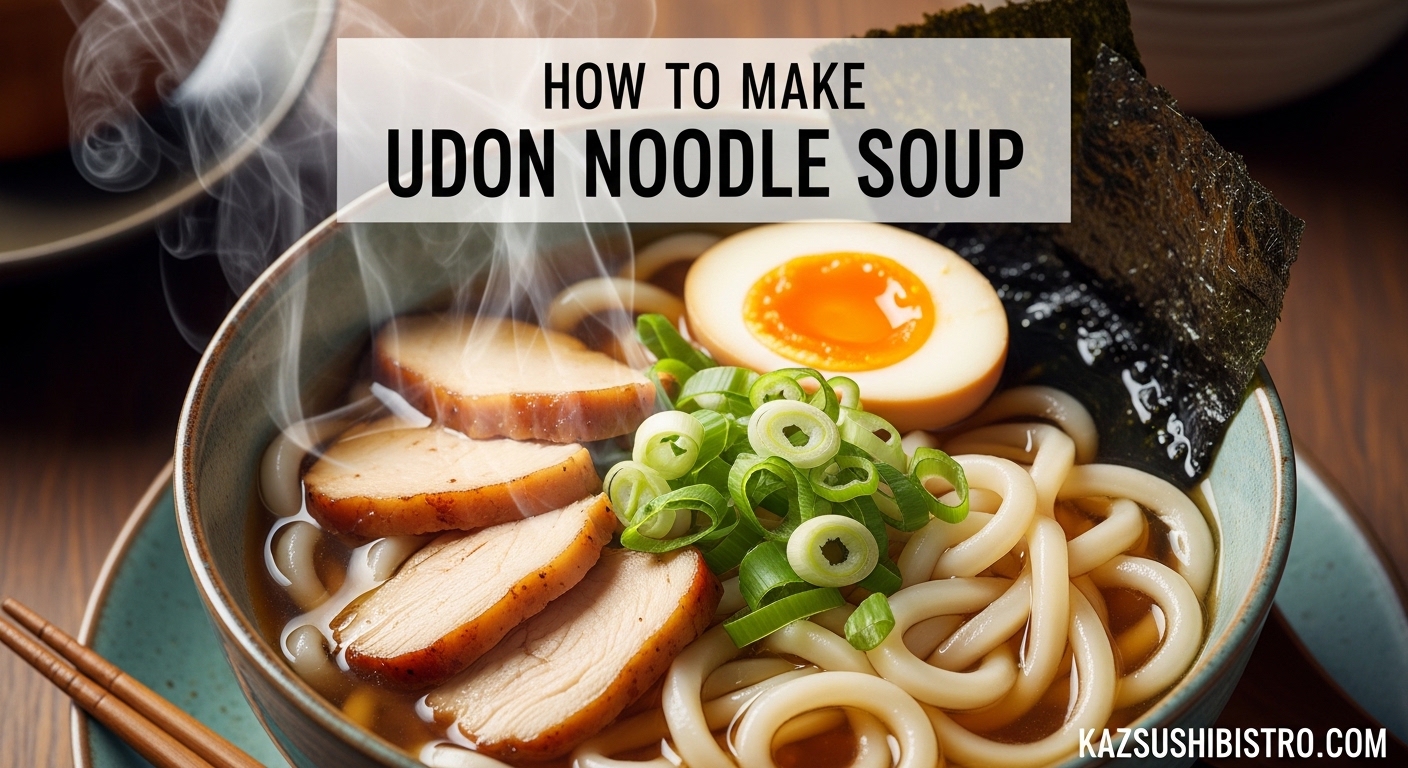
Learning how to make udon noodle soup at home opens up a world of Japanese comfort food that is surprisingly simple once you understand a few key techniques. I spent months perfecting this recipe, testing different dashi methods and noodle brands until I found the balance that matches what you get at authentic Japanese restaurants.
This guide will walk you through every step from selecting the right ingredients to achieving that signature chewy noodle texture (what the Japanese call koshi). Whether you are new to Japanese cooking or looking to refine your technique, you will learn how to make udon noodle soup that rivals your favorite ramen shop.
Here is the basic process in three steps: first, prepare a savory dashi-based broth; second, boil thick udon noodles separately until chewy; third, combine in a bowl with your chosen toppings and serve immediately.
Table of Contents
What You’ll Need: Ingredients and Tools 2026
The beauty of udon noodle soup lies in its simplicity. You do not need a long list of exotic ingredients to create an authentic bowl. Most items are available at Asian grocery stores, and I will share substitutions for anything you cannot find locally.
Core Ingredients
For the broth base, you will need dashi stock, soy sauce, and mirin. These three components create the savory, slightly sweet foundation that defines udon soup. Dashi is a Japanese stock made from simmered kombu (dried kelp) and katsuobushi (dried bonito flakes). If you cannot find these, I will share alternatives below.
Choose your udon noodles carefully. Frozen Sanuki udon from Japan offers the best chewy texture and holds up well during cooking. Fresh udon from the refrigerated section works well too. Dried udon is the most widely available but requires longer cooking and careful timing to maintain the right texture.
Essential Toppings
Traditional udon soup is garnished with thinly sliced green onions and a sprinkle of shichimi togarashi (Japanese seven-spice blend). These are not optional extras; they provide the fresh contrast and gentle heat that balance the rich broth. Kamaboko (fish cake) adds color and protein, while a soft-boiled egg creates a luxurious touch many home cooks overlook.
Substitutions When Authentic Ingredients Are Unavailable
If you cannot find dashi ingredients, use a high-quality low-sodium chicken or vegetable broth as a base. Add a piece of dried shiitake mushroom and a strip of kombu if available to approximate the umami depth. For mirin, mix two parts rice vinegar with one part sugar as a substitute. Regular wheat noodles work in a pinch, though they lack the characteristic chew of true udon.
How to Make Udon Noodle Soup
This recipe serves four people and takes about 30 minutes from start to finish if using the quick broth method. Making dashi from scratch adds 20 minutes but delivers noticeably better flavor. I recommend trying both methods to see which fits your schedule and taste preferences.
Step 1: Prepare the Dashi Broth
For homemade awase dashi, combine four cups of cold water with a four-inch piece of kombu in a pot. Heat over medium until small bubbles appear just before boiling, then remove the kombu. Add one cup of katsuobushi flakes and bring to a boil. Immediately remove from heat and let stand for two minutes. Strain through a fine-mesh sieve. Your dashi is now ready for seasoning.
For the quick method using mentsuyu (concentrated noodle soup base), mix one part mentsuyu with four parts water. This is where many home cooks go wrong; using mentsuyu undiluted creates an overly salty broth that masks the subtle flavors. Start with a 1:4 ratio and adjust to taste.
Step 2: Season the Broth
Add three tablespoons of soy sauce and two tablespoons of mirin to your prepared dashi. Bring to a gentle simmer over medium heat, then reduce to low and keep warm. Taste and adjust; the broth should be savory with a hint of sweetness, never aggressively salty. This seasoned broth is what the Japanese call kakejiru when served with udon.
If you prefer a vegan version, substitute the awase dashi with kombu-only dashi or a shiitake-kombu combination. Both create a satisfying umami base without any animal products. The soy sauce and mirin remain the same.
Step 3: Cook the Udon Noodles
Bring a large pot of unsalted water to a rolling boil. Unlike Italian pasta, udon noodles cook better in plain water that lets their natural flavor shine. Add your noodles and stir immediately to prevent sticking.
Frozen udon requires one to two minutes of boiling. Fresh udon needs two to three minutes. Dried udon takes eight to ten minutes. Start testing for doneness about thirty seconds before the minimum time. The noodles should be tender but retain a firm, chewy center. Overcooked udon becomes mushy and loses its satisfying texture.
Drain immediately and rinse under cold running water. This stops the cooking process and removes excess starch that can make the broth cloudy. Some traditionalists skip the rinse for hot udon, but I find it essential for maintaining the right texture in soup.
Step 4: Assemble and Serve
Reheat your rinsed noodles briefly in the warm broth or by pouring hot broth directly over them in the serving bowl. This brings everything to the perfect eating temperature without overcooking. Ladle generous portions of noodles into deep bowls, then pour the hot broth over top.
Add your toppings while the soup is steaming hot. Arrange sliced green onions, a piece of kamaboko, and any other garnishes artfully on the surface. Finish with a light sprinkle of shichimi togarashi. Serve immediately with chopsticks and a soup spoon.
The Secret to Perfect Udon Broth
After testing dozens of variations, I have learned that great udon broth is about balance, not complexity. The dashi provides depth, the soy sauce adds saltiness and color, and the mirin contributes sweetness and sheen. When these three elements harmonize, you get that addictive umami quality that makes udon soup so comforting.
Awase Dashi from Scratch
The combination of kombu and katsuobushi creates what the Japanese call awase dashi, or combined stock. Kombu provides glutamic acid for savory depth, while katsuobushi adds inosinic acid for complexity. Together they create a synergistic umami effect greater than either ingredient alone.
Never let kombu boil; this releases bitter compounds that ruin the delicate flavor. Remove it just as small bubbles start forming at the edges. The katsuobushi needs only a brief steep after boiling; leaving it too long creates a fishy taste that overwhelms the subtle broth.
Quick Mentsuyu Method
Mentsuyu is a concentrated soup base combining dashi, soy sauce, mirin, and sugar. It is designed for dilution, which is where many home cooks stumble. For udon soup, use a 1:4 ratio of mentsuyu to water. Start there and adjust based on your brand; some are saltier than others.
To use mentsuyu, simply mix with water in a pot and heat until warm. No additional seasoning is needed. This method produces reliable results in under five minutes, making it perfect for weeknight dinners when time is limited.
Vegan Dashi Alternatives
Create a satisfying vegan dashi using kombu and dried shiitake mushrooms. Soak two dried shiitakes and a four-inch piece of kombu in four cups of cold water for thirty minutes. Heat gently until just before boiling, remove the kombu, then simmer the shiitakes for five minutes. Remove the mushrooms and your vegan dashi is ready for seasoning.
The shiitakes provide a meaty depth that compensates for the missing bonito flakes. You can also add a tablespoon of white miso paste for extra complexity, though this creates a slightly different flavor profile than traditional kake udon.
Noodle Cooking Tips for Best Texture
The hallmark of great udon is its chewy, springy texture. This quality, called koshi in Japanese, separates authentic udon from disappointing mushy noodles. Getting it right requires attention to your noodle type and cooking time.
Fresh vs Frozen vs Dried Udon
Frozen Sanuki udon imported from Japan offers the best texture and is what most Japanese home cooks use. The flash-freezing process preserves the chewy quality of fresh noodles. Look for brands with short ingredient lists; quality udon contains only wheat flour, water, and salt.
Fresh refrigerated udon works well but varies widely in quality. Check the expiration date; fresher noodles cook more evenly. Dried udon is the most shelf-stable option but requires the most attention during cooking to prevent over-softening.
Proper Boiling Technique
Use plenty of water; overcrowding lowers the temperature and causes uneven cooking. A good rule is one gallon of water per pound of noodles. Stir immediately upon adding noodles to prevent them from clumping together at the bottom.
Do not salt the cooking water. Unlike Italian pasta, udon noodles are meant to absorb the seasoned broth later. Salting the cooking water creates an overly seasoned end result and can toughen the noodle exterior while leaving the center undercooked.
Maintaining Chewy Texture
The cold water rinse is crucial for stopping the cooking process. Even thirty seconds of residual heat can push noodles from perfect to overdone. Shake the colander well to remove excess water, which would dilute your carefully seasoned broth.
If you are serving the noodles immediately, you can skip the rinse and instead shock them with a quick dip in ice water before returning to the hot broth. This method is common in restaurants where speed matters.
Popular Udon Soup Variations
Once you master the basic kake udon, you can explore the many regional and stylistic variations that make this dish so versatile. Each version highlights different ingredients while maintaining the core elements of chewy noodles and savory broth.
Kitsune Udon
This variation adds aburaage, sweet seasoned fried tofu pouches, as the signature topping. The name kitsune means fox in Japanese, stemming from the folklore that foxes love fried tofu. To prepare, simmer the fried tofu in a mixture of dashi, soy sauce, mirin, and sugar until it absorbs the flavors and becomes glossy.
Place one or two pieces of seasoned tofu on top of your assembled udon. The sweet-savory tofu contrasts beautifully with the plain broth and adds protein to make the dish more substantial.
Niku Udon
Niku means meat, and this version features thinly sliced beef simmered in the broth until tender. Use well-marbled beef like ribeye or chuck, sliced paper-thin against the grain. The hot broth cooks the beef perfectly in just a minute or two.
Add the raw beef slices to the bowl just before pouring the hot broth over the noodles. The residual heat cooks the meat to a perfect medium while infusing the broth with rich beef flavor. This is my favorite version for cold winter evenings.
Tempura Udon
Top your udon with one or two pieces of freshly fried tempura for a textural contrast that elevates the entire bowl. Shrimp tempura is traditional, but vegetable tempura like sweet potato or eggplant works beautifully too.
The key is adding the tempura at the last moment so it remains crispy. Some diners prefer to let the tempura soften slightly in the broth; either way is acceptable depending on your texture preference.
Regional Styles: Sanuki, Kansai, and Kanto
Sanuki udon from Kagawa Prefecture is famous for its square shape and firm koshi texture. These noodles are traditionally served with minimal toppings to highlight the noodle quality itself. If you can find frozen Sanuki udon, you are experiencing the most revered regional style.
Kansai style (western Japan) uses a lighter, more subtly seasoned broth that lets the dashi flavor shine. Kanto style (eastern Japan including Tokyo) tends toward darker, more soy-forward broths. Neither is better; they represent different regional preferences worth exploring.
Serving and Topping Suggestions
The final presentation transforms a simple noodle soup into a restaurant-quality experience. Pay attention to the details that elevate your udon from home cooking to something special.
Classic Toppings
At minimum, you need thinly sliced green onions (scallions) and shichimi togarashi. Cut the green onions on a sharp bias for elegant presentation and better texture. The white parts add crunch while the green parts provide color.
Shichimi togarashi is a blend of seven spices including chili, sesame, and orange peel. It adds gentle heat and aromatic complexity. A small dish of additional shichimi at the table lets diners adjust the spice level to their preference.
Kamaboko, the pink and white fish cake slices, add protein and visual appeal. Narutomaki, the white fish cake with a pink spiral pattern, is particularly traditional. These can be found frozen at Asian markets and thaw quickly.
Stone Bowl Serving Tradition
Heated stone bowls, called nabe or ishiyaki, keep your udon piping hot throughout the meal. Preheat the empty bowl in a 400-degree oven for 20 minutes before serving. The hot stone continues cooking the broth slightly, creating a more intense flavor by meals end.
Warning: the bowl stays dangerously hot for thirty minutes. Use a wooden board or trivet underneath and remind diners to handle with care. This is the traditional way to serve udon in colder months and creates a memorable dining experience.
Pro Presentation Tips
Arrange toppings artfully rather than dumping them randomly. Place kamaboko slices leaning against the bowl edge for height. Create a small mound of green onions in the center. If using an egg, position the halved soft-boiled egg where the yolk is visible and inviting.
Serve with a small plate for discarding toppings if desired, though in Japan it is polite to eat everything provided. Provide both chopsticks and a soup spoon; the spoon helps with the last drops of precious broth.
Storage and Make-Ahead Tips
Udon noodle soup is best enjoyed immediately, but you can prepare components ahead for quick assembly later. The broth actually improves after a day as flavors meld, making this a practical meal prep option.
Store prepared dashi or finished broth in the refrigerator for up to three days. It also freezes well for up to three months; freeze in portion-sized containers for easy thawing. The broth may appear cloudy after refrigeration; this is normal and clears when reheated.
Never cook noodles ahead of time. Udon deteriorates rapidly after cooking and becomes gummy when reheated. If you must prepare in advance, slightly undercook the noodles, rinse thoroughly, toss with a teaspoon of oil, and refrigerate for no more than a few hours. Reheat by blanching in boiling water for thirty seconds before assembling.
Freeze uncooked fresh or frozen udon noodles for up to three months. Dried udon stores in the pantry for a year or more. Keep toppings like green onions and shichimi togarashi fresh for best flavor; these are not worth storing long-term.
Common Mistakes to Avoid
After teaching this recipe to dozens of home cooks, I see the same errors repeatedly. Learn from these common pitfalls to shortcut your path to perfect udon.
Over-salting the broth is the most frequent problem. Remember that soy sauce and mentsuyu both contribute saltiness. Taste as you go and err on the side of under-seasoning; you can always add more soy sauce at the table.
Overcooking noodles ruins the texture faster than anything else. Set a timer and test early. That slight resistance when you bite (the koshi) is what makes udon special. Mushy noodles cannot be saved.
Using undiluted mentsuyu creates an inedibly salty broth. Always dilute according to package directions, typically one part mentsuyu to four parts water. Different brands vary in concentration, so taste and adjust.
Skipping the cold rinse leaves excess starch that clouds your beautiful clear broth and creates a gummy texture. This thirty-second step makes a noticeable difference in the final bowl.
FAQs
How to make a simple udon soup?
Boil thick udon noodles in unsalted water for one to two minutes if frozen, then rinse under cold water. Prepare broth by mixing one part mentsuyu with four parts water, or make dashi from kombu and bonito flakes seasoned with soy sauce and mirin. Combine noodles and hot broth in a bowl, then top with sliced green onions and a sprinkle of shichimi togarashi.
How long should you boil udon noodles for soup?
Frozen udon noodles need one to two minutes of boiling. Fresh udon requires two to three minutes. Dried udon takes eight to ten minutes. Start testing about thirty seconds before the minimum time; noodles should be tender but still chewy in the center. Overcooking makes them mushy and loses the signature texture.
What broth is in udon noodle soup?
Udon soup broth is called dashi, a Japanese stock made from simmered kombu (kelp) and katsuobushi (dried bonito flakes), seasoned with soy sauce and mirin. This combination creates a savory, slightly sweet broth with deep umami flavor. Vegan versions use kombu and dried shiitake mushrooms instead of bonito.
What to add to udon noodle soup?
Classic toppings include thinly sliced green onions, shichimi togarashi (Japanese seven-spice), and kamaboko (fish cake). Popular additions are soft-boiled eggs, tempura, seasoned fried tofu (for Kitsune Udon), or thinly sliced beef (for Niku Udon). Some variations add vegetables like spinach, bok choy, or mushrooms.
Are udon noodles good for diabetics?
Udon noodles have a lower glycemic index than many wheat pastas due to their thickness and density, which slows digestion. However, they are still carbohydrate-heavy and should be consumed in moderation by those managing blood sugar. Pairing udon with protein-rich toppings like egg or beef helps balance the meal.
Is udon healthier than pasta?
Udon and Italian pasta have similar calorie and carbohydrate profiles since both are wheat-based. Udon is typically lower in sodium if you control the broth seasoning, and it contains no eggs making it suitable for more dietary restrictions. The key difference is portion size; udon is traditionally served in smaller portions than Western pasta dishes.
Can you make udon ahead of time?
You can prepare the broth up to three days ahead or freeze it for up to three months, which actually improves the flavor. However, cook the noodles just before serving as they become gummy when reheated. If necessary, slightly undercook noodles, rinse thoroughly, and refrigerate for a few hours maximum before reheating in boiling water.
Conclusion
Learning how to make udon noodle soup at home is one of the most rewarding skills for any home cook interested in Japanese cuisine. The combination of chewy wheat noodles and savory dashi broth creates a comfort food that satisfies on every level. With the techniques in this guide, you now have everything needed to create restaurant-quality udon in your own kitchen.
Start with the basic kake udon recipe, master the timing for perfect noodle texture, then explore variations like Kitsune and Niku udon. Remember that great udon is about balance: not too salty, not overcooked, with toppings that complement rather than overwhelm. The more you make it, the more intuitive the process becomes.
Gather your ingredients this week and give it a try. The first bowl you make will be better than most restaurant versions, and each subsequent attempt will bring you closer to that perfect harmony of flavors that defines authentic Japanese udon noodle soup.