
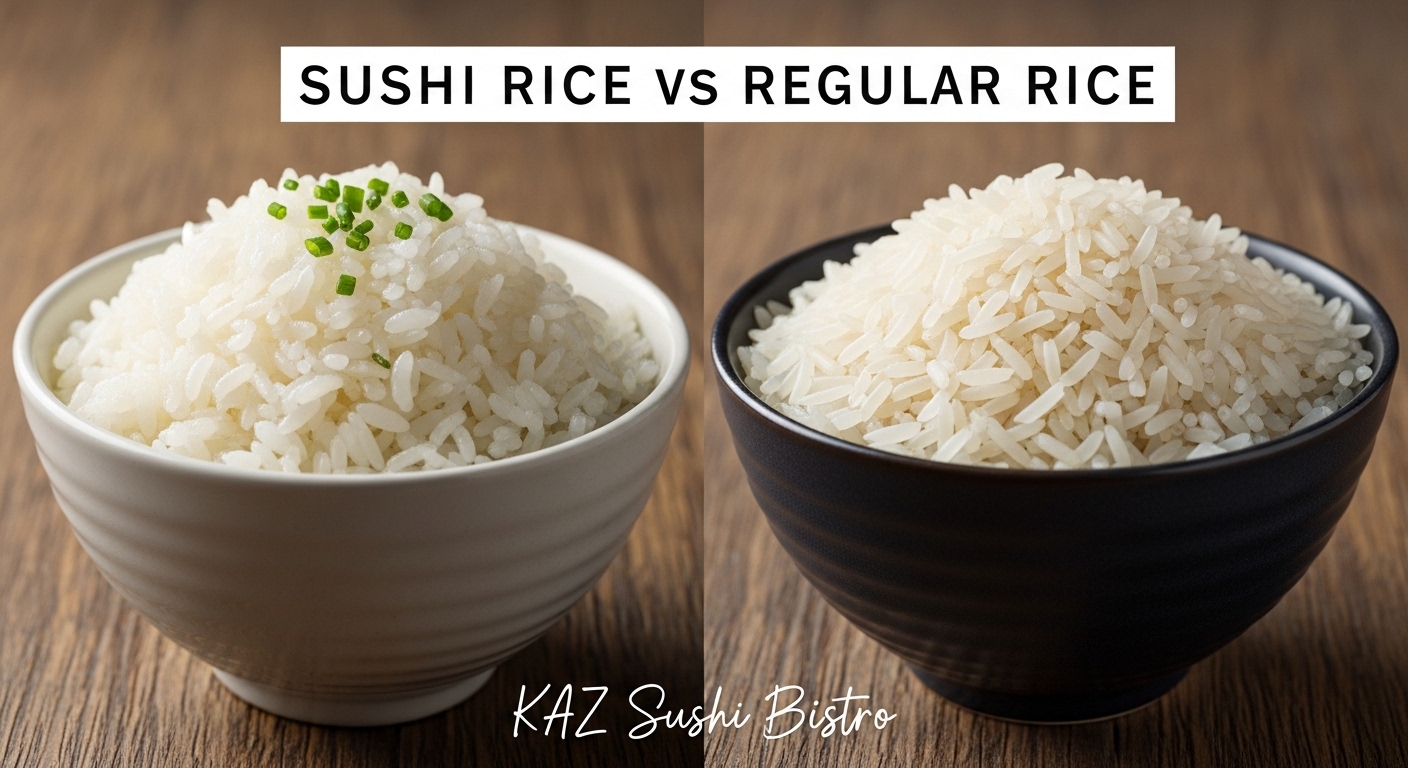
Quick Answer: Sushi rice is short-grain Japanese rice (Japonica variety) with high amylopectin starch content that creates a sticky texture when cooked, while regular rice is typically long-grain white rice with more amylose starch that cooks up fluffy and separate. Sushi rice is also seasoned with rice vinegar, sugar, and salt, whereas regular rice is served plain.
I have spent years working in Japanese kitchens and experimenting with different rice varieties at home. One question I hear constantly from home cooks is whether they can swap regular white rice for sushi rice when making rolls at home. The short answer is that these two rice types are fundamentally different in structure, texture, and purpose.
Understanding the differences between sushi rice vs regular rice will help you choose the right variety for your cooking projects and avoid disappointing results. Whether you are planning to make homemade sushi rolls or simply want to know why your rice never comes out quite right, this guide covers everything you need to know.
Table of Contents
What Is Sushi Rice
Sushi rice refers to short-grain Japanese rice varieties, primarily from the Japonica family, that are specifically cultivated for their sticky texture when cooked. In Japan, this rice is called shari or sumeshi when seasoned with vinegar.
The defining characteristic of sushi rice is its grain shape. Short-grain rice kernels are almost round, measuring roughly twice as long as they are wide. Popular varieties include Koshihikari (the premium Japanese variety), Nishiki, and Calrose (the California-grown equivalent).
When cooked properly, sushi rice becomes slightly translucent and has a firm yet sticky texture that holds together when pressed. This stickiness is not an accident. It is the result of specific starch composition that we will explore in detail later.
What Is Regular White Rice
Regular white rice typically refers to long-grain white rice varieties like those from the Indica rice family. These grains are slender and elongated, measuring four to five times longer than they are wide. Jasmine rice from Thailand and Basmati rice from India are two popular examples.
Medium-grain rice varieties fall somewhere between short and long grain. They are approximately three times longer than wide. While closer to sushi rice in size, they still contain more amylose starch than true short-grain varieties.
When cooked, regular white rice expands lengthwise and produces fluffy, separate grains that do not stick together. This makes it ideal for dishes where you want each grain to remain distinct.
Sushi Rice vs Regular Rice: Key Differences at a Glance
| Feature | Sushi Rice | Regular White Rice |
|---|---|---|
| Grain Type | Short-grain Japonica | Long-grain Indica |
| Grain Shape | Almost round (2x long as wide) | Slender (4-5x long as wide) |
| Amylopectin Content | ~80% | ~70% |
| Cooked Texture | Sticky, chewy, moist | Fluffy, separate, light |
| Water Ratio | 1:1.2 (rice to water) | 1:1.5 (rice to water) |
| Seasoning | Vinegar, sugar, salt | Plain or butter/salt |
| Best Uses | Sushi, onigiri, poke bowls | Stir-fries, curries, sides |
Grain Type and Texture: The Visual Difference
The most immediate difference you will notice between sushi rice vs regular rice is the grain shape. Uncooked short-grain sushi rice looks almost like tiny pearls. The grains are short, plump, and slightly opaque. Long-grain regular rice appears more like tiny needles, with a translucent quality.
When cooked, the textural difference becomes even more dramatic. Sushi rice clumps together naturally. You can easily pick up a portion and it will hold its shape. Regular rice falls apart into individual grains when scooped.
This textural difference is not just cosmetic. It determines what each rice can do. The stickiness of sushi rice allows it to hold together in sushi rolls without falling apart. The fluffiness of regular rice prevents it from becoming gummy in saucy dishes.
How to Identify Rice Types at the Store
Look for labels that say “short-grain,” “sushi rice,” or specific varieties like “Koshihikari” or “Calrose.” Avoid packages labeled “long-grain,” “jasmine,” or “basmati” for sushi making. Medium-grain rice can work in a pinch but produces less authentic results.
The Science of Starch: Why Sushi Rice Is Sticky
The texture difference between sushi rice and regular rice comes down to two types of starch molecules. Rice contains amylopectin and amylose in varying proportions. Understanding these helps explain why certain rices behave differently when cooked.
Amylopectin Creates Stickiness
Sushi rice contains approximately 80% amylopectin starch. This branched molecular structure breaks down during cooking and creates a gel-like consistency. The higher the amylopectin content, the stickier the cooked rice becomes.
This high amylopectin content is why sushi rice grains cling together naturally. When you press sushi rice, the amylopectin creates bonds between grains that hold your sushi rolls together without any additional binders.
Amylose Creates Fluffiness
Regular long-grain rice contains more amylose, typically around 20-25% of the total starch content. This linear starch molecule does not break down as readily during cooking. Instead, it helps rice grains maintain their structure and remain separate.
That is why jasmine and basmati rice expand to nearly double their dry length when cooked. The amylose molecules align and allow the grains to lengthen without sticking to neighbors.
Cooking Methods: Water Ratios and Techniques
The different starch compositions mean sushi rice and regular rice require different cooking approaches. Using the wrong water ratio can result in mushy sushi rice or undercooked regular rice.
Water Ratio for Sushi Rice
Use a 1:1.2 ratio of rice to water for sushi rice. That means 1 cup of rice needs 1.2 cups of water. The precise ratio matters because too much water creates mushy rice that falls apart when shaped.
Rinsing is crucial for sushi rice. Rinse the grains 3-4 times until the water runs mostly clear. This removes excess surface starch that would make the rice too gummy. However, do not over-rinse, as you want to preserve some starch for the right texture.
Water Ratio for Regular Rice
Regular long-grain rice typically needs a 1:1.5 ratio. One cup of rice requires 1.5 cups of water. Some varieties like basmati can use even more water, up to a 1:1.75 ratio.
Rinsing is optional for most regular rice. Jasmine rice is often sold pre-rinsed. If you do rinse, a single quick rinse is sufficient. Over-rinsing removes nutrients and flavor compounds.
Rice Cooker vs Stovetop
Modern rice cookers often have specific settings for white rice and sushi rice. If your rice cooker has a sushi setting, use it. Otherwise, the standard white rice setting works for both types, though you may need to adjust water slightly based on results.
For stovetop cooking, sushi rice requires a tight-fitting lid and precise timing. Bring to a boil, then simmer on low for exactly 12-15 minutes. Let it rest off-heat for 10 minutes before fluffing. Regular rice is more forgiving with timing.
Flavor and Seasoning Differences
Beyond texture, sushi rice and regular rice differ in flavor preparation. Sushi rice is seasoned after cooking, while regular rice is typically served plain.
Sushi Rice Seasoning
Traditional sushi rice is seasoned with a mixture called sushi-zu. This combines rice vinegar, sugar, and salt in a specific ratio. The warm rice absorbs this seasoning, creating the characteristic sweet-sour flavor profile.
The seasoning also affects texture. The vinegar slightly breaks down the outer starch layer, giving sushi rice its characteristic sheen and bite. Without this seasoning step, you have plain short-grain rice suitable for rice bowls but not for sushi.
Regular Rice Preparation
Regular white rice is typically cooked in plain water or broth. Some recipes add butter, salt, or oil, but the rice itself has a neutral flavor profile. The goal is usually to enhance the natural rice flavor rather than transform it.
The absence of vinegar seasoning allows regular rice to pair with strongly flavored dishes. It absorbs sauces and curries without competing flavors getting in the way.
When to Use Each Rice Type
Choosing the right rice for your dish can make the difference between success and disappointment. Here is when to reach for each type.
Best Uses for Sushi Rice
- Sushi rolls (maki): The stickiness holds the roll together when sliced
- Nigiri: Forms the compact base that supports fish toppings
- Onigiri (rice balls): Stays together when shaped into triangles
- Poke bowls: Provides the right texture for Hawaiian-style raw fish bowls
- Kimbap: Korean seaweed rice rolls require similar stickiness
- Chirashi bowls: Scattered sushi rice topped with various ingredients
Best Uses for Regular Rice
- Stir-fries: Individual grains mix well with vegetables and proteins
- Curries: Fluffy rice absorbs sauce without becoming mushy
- Fried rice: Day-old regular rice separates easily in the wok
- Rice pilaf: Long grains create the classic fluffy texture
- Side dishes: Neutral base for main courses
- Rice salads: Separate grains hold up to dressing
Can You Substitute Sushi Rice for Regular Rice (and Vice Versa)
This is the question that brings most people to articles like this one. The answer depends on which direction you are substituting and what you are willing to accept.
Using Sushi Rice as Regular Rice
Yes, you can use sushi rice in place of regular rice, but the result will be stickier than expected. Skip the vinegar seasoning if you want rice that resembles regular white rice. Use it for rice bowls, as a side dish, or even in fried rice if you do not mind clumpier results.
Many Japanese restaurants actually use the same short-grain rice for both sushi and rice bowls. The difference is the seasoning. Unseasoned short-grain rice is simply served as white rice.
Using Regular Rice for Sushi
Using long-grain jasmine or basmati rice for sushi is not recommended. The grains will not hold together, and your rolls will fall apart. I have seen frustrated home cooks on forums report exactly this problem after trying to substitute.
Medium-grain rice offers a compromise. While not ideal, it can work if you do not over-rinse it. You will get looser rolls that require a gentler hand, but the results are edible.
If you absolutely must make sushi without proper sushi rice, look for Calrose rice at your grocery store. This medium-grain California variety is widely available and produces acceptable results for beginner sushi makers.
Nutritional Comparison
From a nutritional standpoint, plain sushi rice and plain regular white rice are quite similar. Both are primarily carbohydrates with minimal fat and protein. A half-cup serving of cooked rice contains roughly 100-110 calories regardless of grain type.
The key nutritional difference appears when you consider seasoned sushi rice. The addition of vinegar, sugar, and salt increases the sodium and sugar content. Seasoned sushi rice typically contains 50-100% more sodium than plain white rice.
Glycemic index differs slightly between varieties. Short-grain rice generally has a higher glycemic index than long-grain basmati, meaning it raises blood sugar more quickly. This is relevant for people monitoring carbohydrate metabolism.
Storage and Leftover Considerations
Both rice types store similarly when raw. Keep uncooked rice in an airtight container in a cool, dry place. Properly stored rice lasts 1-2 years, though it is best within six months for optimal flavor.
Cooked rice requires refrigeration and should be consumed within 3-4 days. Sushi rice actually hardens faster in the refrigerator due to starch retrogradation. You can refresh refrigerated sushi rice with a quick microwave steam.
Leftover regular rice works excellently for fried rice dishes. The dried-out texture from refrigeration actually helps the grains separate in the hot wok. Leftover sushi rice is better suited for onigiri or rice bowls rather than fried rice.
Frequently Asked Questions
Can you use sushi rice as regular rice?
Yes, you can use sushi rice as regular rice, though the texture will be noticeably stickier. Skip the vinegar seasoning to get closer to regular white rice. Many Japanese restaurants use the same short-grain rice for both sushi and rice bowls, simply serving it unseasoned as white rice. The result works well for rice bowls, side dishes, and even fried rice if you do not mind clumpier results.
Is sushi rice healthier than regular rice?
No, plain sushi rice and regular white rice have nearly identical nutritional profiles. Both are primarily carbohydrates with similar calorie counts. However, seasoned sushi rice contains added sugar, salt, and vinegar, which increases sodium and sugar content. The glycemic index of short-grain sushi rice is slightly higher than long-grain varieties like basmati, meaning it may affect blood sugar more quickly.
Is sushi good for high triglycerides?
Sushi rice itself is not specifically beneficial for high triglycerides. White rice, including sushi rice, is a refined carbohydrate that can contribute to elevated triglycerides when consumed in large amounts. If you have high triglycerides, focus on the overall composition of your sushi meal. Choose rolls with more vegetables and fish, limit tempura-fried options, and watch portion sizes of rice-heavy items.
Is sushi rice safe for diabetics?
Sushi rice has a high glycemic index and can cause blood sugar spikes, so diabetics should consume it in moderation. The short-grain variety used for sushi typically has a higher GI than long-grain white rice. If you have diabetes, consider limiting rice portion sizes, pairing sushi with protein and vegetables, and monitoring blood glucose response. Brown rice sushi is a lower-GI alternative that some find easier to manage.
Can I use jasmine rice for sushi?
Jasmine rice is not recommended for sushi. This long-grain variety lacks the amylopectin starch content needed to create the sticky texture essential for holding sushi rolls together. Jasmine rice cooks up fluffy and separate, which means your sushi will fall apart. If you cannot find sushi rice, look for Calrose or other medium-grain varieties as a more acceptable substitute.
Why is sushi rice so sticky?
Sushi rice is sticky because it contains approximately 80% amylopectin starch, a branched starch molecule that breaks down during cooking and creates a gel-like consistency. This high amylopectin content is characteristic of short-grain Japonica rice varieties. The stickiness is essential for sushi making because it allows the rice to hold together when shaped into rolls, nigiri, or rice balls without additional binders.
Final Thoughts: Choosing the Right Rice for Your Kitchen
The difference between sushi rice vs regular rice comes down to grain type, starch composition, and intended use. Sushi rice is short-grain Japonica with high amylopectin content that creates the sticky texture essential for sushi making. Regular rice is typically long-grain Indica that cooks up fluffy and separate.
If you plan to make sushi at home, invest in proper short-grain sushi rice. The results are worth it. For everyday cooking and side dishes, regular long-grain rice is more versatile and less expensive. Keep both in your pantry if you cook diverse cuisines regularly.
Understanding these differences will help you make better choices at the grocery store and achieve better results in your cooking. The right rice makes all the difference.