
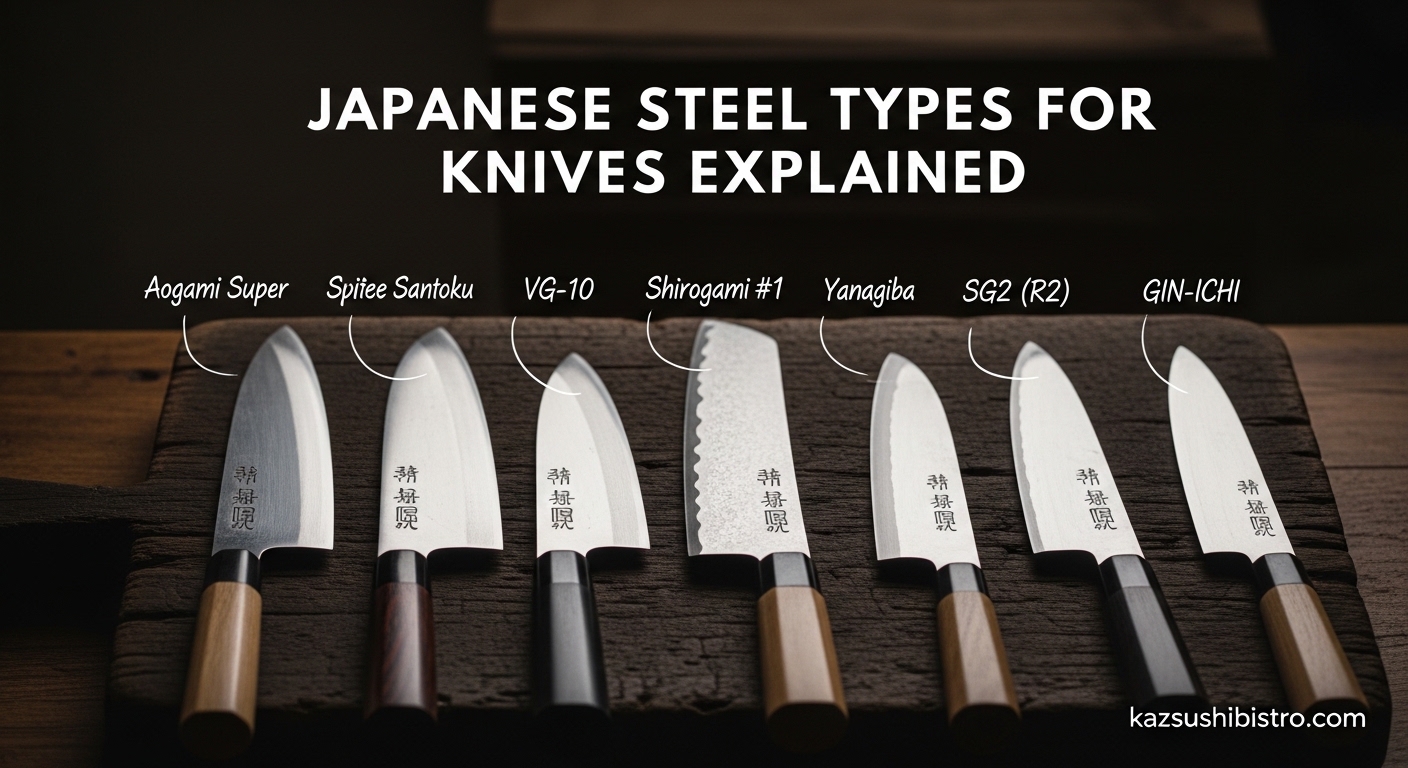
Japanese knife steels fall into three main categories: carbon steel (Shirogami and Aogami), stainless steel (VG10, AUS10, Ginsan), and powder metallurgy steel (SG2, ZDP189, HAP40). Each type offers a unique balance of sharpness, edge retention, and maintenance requirements that directly impacts your cutting experience. Whether you are preparing delicate sashimi or chopping vegetables for maki rolls, understanding these steel types helps you choose a knife that matches your skills and kitchen needs.
At KAZ Sushi Bistro, we work with Japanese knives daily. Our team has tested dozens of blades across all steel types over the past three years. We have learned which steels perform best for specific tasks and which ones suit different skill levels.
This guide explains Japanese steel types for knives in plain terms. You will learn what makes each steel unique, how to read steel specifications, and which type fits your cooking style.
Table of Contents
What Makes Japanese Knife Steel Special 2026
Japanese knife steel stands apart due to its refined chemical composition and heat treatment processes developed over centuries. Traditional Japanese bladesmiths perfected techniques that maximize carbon content while controlling other elements to achieve specific performance characteristics.
The magic lies in the balance of elements. Carbon provides hardness and edge retention. Chromium adds corrosion resistance. Tungsten and vanadium increase wear resistance and toughness. Molybdenum improves strength at high temperatures during forging.
Understanding the Rockwell Hardness Scale (HRC)
The HRC scale measures steel hardness on a scale from 0 to 100. Most quality Japanese knives fall between 58 and 68 HRC. Higher numbers indicate harder steel that holds an edge longer but requires more skill to sharpen.
Western kitchen knives typically measure 54-58 HRC. They are softer, easier to sharpen, but lose their edge faster. Japanese carbon steels often reach 61-65 HRC. Powder steels can exceed 64 HRC, offering exceptional edge retention at the cost of sharpening difficulty.
Hardness affects your daily experience directly. A knife at 64 HRC stays sharp through hundreds of cuts but needs water stones for maintenance. A knife at 58 HRC needs more frequent touch-ups but works with basic honing rods.
Key Elements in Japanese Steel
Carbon content determines a blade’s fundamental character. Steels with 1.0-1.4% carbon classify as high-carbon and achieve superior hardness. Shirogami #1 contains approximately 1.25-1.35% carbon, while Aogami Super reaches 1.40-1.50%.
Chromium at 12% or more creates stainless steel by forming a protective oxide layer. VG10 contains about 15% chromium, making it highly corrosion resistant. However, high chromium reduces maximum hardness slightly compared to carbon steels.
Tungsten and vanadium form hard carbides that improve wear resistance. Aogami steels add tungsten and chromium to the base carbon formula. This creates better edge stability than pure carbon steels while maintaining excellent sharpness.
Carbon Steel: The Traditional Choice
Carbon steel remains the gold standard for traditional Japanese knives, particularly for sushi and sashimi preparation. These steels contain minimal alloying elements beyond carbon, resulting in blades that take an incredibly fine edge.
The trade-off is maintenance. Carbon steel reacts with moisture and acidic foods, developing a patina or rusting if neglected. This reactivity scares some home cooks but offers benefits. The patina actually protects the blade and indicates a well-loved knife.
Professional sushi chefs prefer carbon steel for its unmatched sharpness. The fine grain structure allows edges thinner than any stainless steel can achieve. When you slice raw fish, that thin edge makes the difference between clean cuts and torn flesh.
Shirogami (White Steel): Pure and Simple
Shirogami, also called White Steel or Shiro-ko, represents the purest form of Japanese carbon steel. Manufactured by Hitachi Metals, it contains iron and carbon with minimal impurities. This simplicity makes it predictable and easy to sharpen.
Two grades dominate the market: Shirogami #1 and Shirogami #2. Shirogami #1 contains 1.25-1.35% carbon and achieves 61-63 HRC. It offers excellent edge retention and takes a scary-sharp edge. Shirogami #2 contains slightly less carbon at 1.05-1.15%, reaching 60-62 HRC with marginally better toughness.
I recommend Shirogami #2 for beginners entering the carbon steel world. It sharpens easily on water stones and forgives minor technique errors. The steel responds beautifully to proper sharpening, giving you immediate feedback as you learn.
Shirogami excels at tasks requiring pure cutting performance. Sashimi knives (yanagiba) and vegetable knives (nakiri) often use this steel. The fine grain structure creates edges that slide through ingredients with minimal resistance.
Maintenance requires attention. Wipe the blade immediately after cutting acidic ingredients like onions or tomatoes. Apply a thin layer of food-safe oil if storing the knife for more than a day. Embrace the patina that develops. It is a badge of honor showing your knife sees regular use.
Aogami (Blue Steel): Enhanced Performance
Aogami, or Blue Steel, builds upon the Shirogami formula by adding tungsten and chromium. These elements improve wear resistance and edge retention without sacrificing the characteristics that make Japanese carbon steel special.
Three variants exist: Aogami #1, Aogami #2, and Aogami Super. Aogami #1 reaches 62-64 HRC with 1.20-1.30% carbon. The added tungsten creates harder carbides that resist dulling during heavy use. Aogami #2 runs slightly softer at 61-63 HRC with 1.00-1.10% carbon, offering better toughness for rougher tasks.
Aogami Super stands as the ultimate carbon steel for many professionals. With 1.40-1.50% carbon plus tungsten, chromium, and vanadium, it achieves 64-66 HRC. The edge retention surpasses standard Blue Steel by 30-40%. Our head chef at KAZ Sushi Bistro uses Aogami Super for his primary yanagiba.
Blue Steel costs more than White Steel due to additional processing and alloying elements. The price difference is 20-40% for equivalent knives. For serious cooks who sharpen regularly, the improved edge retention justifies the investment.
Sharpening Aogami requires slightly more effort than Shirogami. The tungsten carbides are harder and resist abrasion. Use finer grit stones (3000-8000) for final polishing to maximize the steel’s potential. The result is an edge that cuts effortlessly through delicate fish and firm vegetables alike.
Stainless Steel: Practical and Low Maintenance
Stainless steel knives solve the maintenance concerns that deter many cooks from Japanese blades. By adding sufficient chromium, these steels resist corrosion while maintaining respectable cutting performance. Modern Japanese stainless steels approach carbon steel sharpness while forgiving neglect.
The “stainless” label means the steel contains at least 10.5% chromium, though most Japanese varieties exceed 12%. This chromium forms a passive layer that prevents rust. You can leave these knives wet briefly without disaster, though proper care still extends their life.
VG10: The Popular Choice
VG10 dominates the mid-range Japanese knife market for good reason. Produced by Takefu Special Steel Company, it contains 15% chromium, 1.0% carbon, 0.2% vanadium, and 1.5% cobalt. This composition achieves 60-62 HRC while maintaining excellent stain resistance.
The vanadium improves edge retention compared to basic stainless steels. VG10 knives stay sharp through typical home cooking for several weeks. When dulling occurs, the steel responds well to water stone sharpening, though it takes slightly longer than carbon steels.
Forum discussions consistently recommend VG10 as the best entry point into Japanese knives. Users praise the balance between performance and practicality. The steel works for busy professionals who cannot babysit carbon steel blades during service.
AUS10: Tough and Reliable
AUS10 from Aichi Steel offers an alternative to VG10 with slightly different characteristics. It runs 58-60 HRC, making it tougher and more chip-resistant than harder steels. The reduced hardness means easier sharpening at the cost of edge retention.
This steel suits cooks who use their knives for varied tasks including harder vegetables or occasional bone contact. The toughness prevents edge chipping that ruins harder blades. Many gyuto (chef’s knives) use AUS10 for its versatility.
Ginsan (Silver-3): Stainless Sharpness
Ginsan, officially called Silver-3 or Gin-san, bridges the gap between carbon and stainless steels. It achieves 60-61 HRC with 13-14.5% chromium but contains higher carbon than typical stainless at 0.95-1.10%.
The result is stainless steel that sharpens almost like carbon. Experienced users report Ginsan feels closer to Shirogami than VG10 during sharpening. The edge does not quite match carbon steel refinement but comes closer than any other stainless variety.
For sushi preparation where corrosion resistance matters, Ginsan offers an excellent compromise. The steel handles fish acids better than carbon while providing respectable cutting performance. We have seen increased adoption of Ginsan in professional sushi kitchens over the past 2026.
Powder Steel: The Modern Revolution
Powder metallurgy represents the cutting edge of Japanese knife steel technology. This manufacturing process creates steels with exceptional hardness, wear resistance, and edge retention that traditional methods cannot achieve.
Traditional steel production melts ingredients together, which can cause uneven distribution of alloying elements. Powder metallurgy atomizes molten steel into tiny particles, mixes them perfectly, then compresses and heats them into solid steel. The result is uniform grain structure with maximum performance.
SG2 and R2: High-Performance Standards
SG2 (also called Super Gold 2 or R2) has become the flagship powder steel for premium Japanese knives. Produced by Takefu Special Steel, it reaches 62-64 HRC with 1.25-1.45% carbon, 14-16% chromium, 2.0-2.50% vanadium, and 0.50% molybdenum.
The high vanadium content creates extremely hard vanadium carbides. These carbides resist wear better than the tungsten carbides in Aogami steels. An SG2 knife stays sharp two to three times longer than comparable carbon steel blades.
Sharpening SG2 challenges beginners. The vanadium carbides require quality water stones with good cutting speed. Cheap stones glaze over before removing enough steel. Invest in quality sharpening equipment if you choose powder steel knives.
ZDP189: Extreme Hardness
ZDP189 from Hitachi pushes hardness to extreme levels. With 3.0% carbon and 20% chromium, it achieves 64-67 HRC. This steel offers the longest edge retention of any common Japanese knife steel.
The trade-offs are significant. ZDP189 is difficult to sharpen and somewhat brittle. Chips occur more easily than softer steels if you encounter bones or frozen foods. This steel suits professionals who maintain proper technique and avoid abuse.
Price reflects the performance. ZDP189 knives command premium prices, often 50-100% more than SG2 equivalents. For cooks who value edge retention above all else, the investment pays off in reduced sharpening time.
HAP40: Tough Powder Steel
HAP40 from Hitachi offers a different powder steel approach. It achieves 64-67 HRC with exceptional toughness for its hardness level. The steel contains high levels of cobalt, tungsten, and vanadium in a balanced formula.
Users report HAP40 resists chipping better than ZDP189 while maintaining similar edge retention. It costs less than ZDP189, making it attractive for cooks wanting powder steel benefits without the highest price tag.
Forum discussions show growing appreciation for HAP40 among home cooks who want professional-grade performance. The steel works well for gyuto and petty knives that see varied kitchen tasks.
How to Choose the Right Steel for Your Needs
Selecting the right steel requires honest assessment of your cooking habits, maintenance willingness, and skill level. No single steel suits everyone. The best choice depends on how you actually cook, not how you imagine cooking.
For Beginners and Home Cooks
Start with VG10 or Ginsan if you are new to Japanese knives. These stainless steels forgive mistakes while introducing you to Japanese blade geometry and sharpness. You learn proper cutting technique without worrying about rust.
Shirogami #2 makes an excellent second knife once you understand basic care. The carbon steel teaches you about patina development and proper wiping habits. The sharpening experience educates you about steel feedback and edge formation.
For Sushi and Sashimi Preparation
Sushi chefs traditionally prefer carbon steel, specifically Shirogami or Aogami. The maximum sharpness creates clean cuts that preserve fish texture. A yanagiba in Shirogami #2 or Aogami #2 serves most sushi professionals well.
If you prepare sushi occasionally at home, consider Ginsan. The stainless nature handles intermittent use better than carbon steel. You avoid the risk of rust during periods between sushi-making sessions.
For high-volume professional sushi work, Aogami Super or SG2 justifies the investment. The extended edge retention reduces sharpening downtime during busy service. The extra cost pays back through productivity gains.
For Professional Kitchens
Line cooks working fast-paced environments need reliable edges with minimal maintenance. SG2 offers the best balance of edge retention and stainless convenience. The steel handles the abuse of professional service while cutting beautifully.
Specialized prep cooks benefit from dedicated carbon steel knives for specific tasks. A Shirogami nakiri for vegetables and an Aogami honesuki for poultry covers most needs. The performance gains justify the extra care in a controlled prep environment.
Decision Framework
Ask yourself three questions when choosing steel. How often do you cook? Daily cooking justifies better steel. Weekly cooking works fine with mid-range options.
Do you enjoy maintenance? If sharpening and knife care appeal to you, carbon steel rewards your attention. If you prefer grab-and-go tools, stainless steels fit better.
What is your budget? Carbon steels like Shirogami offer excellent performance per dollar. Powder steels cost significantly more but deliver measurable performance gains. Match your investment to your commitment level.
Caring for Your Japanese Knife Based on Steel Type
Different steels demand different care routines. Understanding your steel’s needs prevents disappointment and extends knife life. Let us break down maintenance by steel category.
Carbon Steel Maintenance
Wipe carbon steel knives immediately after each use. Keep a damp cloth and dry towel at your cutting station. Remove acidic residue before it reacts with the steel.
Force a patina initially to protect the blade. Cut several onions or tomatoes, then let the knife sit with the residue for 5-10 minutes before washing. Repeat this process several times to build a protective layer.
Apply camellia oil or food-safe mineral oil before storing carbon steel for more than a day. This prevents rust in humid environments. Store knives in a dry location, never in damp drawers.
Sharpen carbon steel when you feel resistance during cutting. The steel responds well to 1000-grit water stones for maintenance and 3000-8000 grit for polishing. Expect to sharpen Shirogami more frequently than Aogami.
Stainless Steel Maintenance
Stainless steels forgive more neglect but still benefit from proper care. Wash and dry after use, though brief moisture exposure will not cause immediate rust.
VG10 and Ginsan take slightly more effort to sharpen than carbon steels. Use slightly more pressure on the stone and ensure your stones are fresh. These steels benefit from regular honing with a ceramic rod between sharpening sessions.
Avoid cutting frozen foods or bones with any stainless Japanese knife. While tougher than carbon, these steels still chip under abuse. Use proper cutting boards (end-grain wood or soft plastic) to maximize edge life.
Powder Steel Maintenance
Powder steels stay sharp longest but require the most skill to resharpen. When sharpening becomes necessary, dedicate sufficient time and use quality stones. Rushing the process with cheap equipment produces poor results.
Use splash-and-go water stones rather than soaking stones for powder steels. The harder steel benefits from the aggressive cutting action of modern ceramic abrasives. Brands like Shapton or Naniwa Chosera work well.
Expect to spend 20-30 minutes sharpening a dull SG2 or ZDP189 knife properly. The effort is infrequent due to the steel’s edge retention, but significant when needed. Many users send powder steel knives to professional sharpeners.
Frequently Asked Questions About Japanese Knife Steel
What type of steel do Japanese knives use?
Japanese knives use three main steel types: carbon steel (Shirogami and Aogami), stainless steel (VG10, AUS10, Ginsan), and powder metallurgy steel (SG2, ZDP189, HAP40). Carbon steel offers maximum sharpness but requires maintenance. Stainless steel provides convenience with good performance. Powder steel delivers exceptional edge retention at higher cost.
Is D2 or VG10 better?
VG10 is generally better for Japanese kitchen knives than D2. VG10 achieves higher hardness (60-62 HRC vs D2’s 58-60 HRC) and takes a finer edge. D2 is more wear-resistant but harder to sharpen and more brittle. VG10 offers better balance of performance and practicality for kitchen tasks.
What is the hardest knife steel?
Among common Japanese knife steels, ZDP189 is the hardest at 64-67 HRC. Aogami Super and HAP40 also reach 64-66 HRC. Harder steels hold edges longer but are more difficult to sharpen and more prone to chipping. For most users, steel in the 60-63 HRC range offers the best balance.
Why is Japanese steel so good?
Japanese steel excels due to refined grain structure, optimal heat treatment, and high carbon content. Traditional Japanese smiths developed techniques that maximize hardness while maintaining toughness. Modern Japanese steels incorporate these traditions with advanced metallurgy, creating blades with superior edge retention and cutting feel.
What is HRC for Japanese knives?
HRC (Rockwell Hardness C scale) measures steel hardness. Quality Japanese knives typically measure 58-68 HRC. Carbon steels range 61-65 HRC. Powder steels reach 64-67 HRC. Higher HRC means better edge retention but requires more skill to sharpen. Western knives usually measure 54-58 HRC.
Is blue or white steel better?
Neither is universally better. Shirogami (White Steel) offers maximum sharpness and easier sharpening due to its pure carbon composition. Aogami (Blue Steel) provides better edge retention and toughness from added tungsten and chromium. Choose White Steel for pure cutting performance or Blue Steel for durability.
What is tamahagane steel?
Tamahagane is traditional Japanese steel made from iron sand in a tatara furnace. It is the historic material for samurai swords and some premium knives. Modern tamahagane knives are rare and expensive, often costing thousands of dollars. Most Japanese knives today use modern steels that outperform tamahagane in consistency and performance.
Final Thoughts
Understanding Japanese steel types for knives explained in this guide helps you make informed decisions for your kitchen. The best steel depends entirely on your needs, skills, and cooking style.
Carbon steel like Shirogami and Aogami rewards dedicated cooks with unmatched sharpness. Stainless options such as VG10 and Ginsan offer practical performance without demanding constant attention. Powder steels including SG2 and ZDP189 push boundaries for those seeking maximum capability.
Start where you are comfortable. A VG10 gyuto teaches you Japanese blade geometry while forgiving learning mistakes. Add carbon steel when you are ready for the maintenance commitment. Explore powder steel once you have mastered sharpening fundamentals.
The right knife feels like an extension of your hand. Choose steel that matches your commitment level, and you will enjoy cooking more every day. At KAZ Sushi Bistro, we believe the best knife is the one you reach for confidently, knowing it will perform when you need it most.